Octopus-Brain
See main link on Octopus.
The researchers have explained that octopuses have a massively expanded reserve of microRNAs or miRNAs, a class of non-coding RNAs that play important roles in regulating gene expression, and help cells control the kinds and amounts of proteins they make. These miRNAs are found in the neural tissues of octopuses. This shows that developments that occurred in vertebrates also took place in octopuses.
The genes of two octopus species show an increase in microRNAs -- which are linked to the development of advanced cells with specific functions -- over evolutionary time that has so far only been found in humans, mammals and other vertebrates.
"MicroRNAs are known as the 'dark matter' of the animal genome -- they don't make protein, but they regulate the expression of proteins,"
Cells in complex organisms perform specialized tasks, which means surrounding cells need to be calibrated to carry out additional functions, Fromm said. "MicroRNAs are like light switches or dimmers that can turn on and regulate the expression of thousands of proteins in a cell and specify what the cell can do," Fromm said. "This is a numbers game. Oysters and slugs have microRNAs, but in cephalopods -- and especially the octopus -- there is an explosion of them that correlates with their intelligence." (ANI)
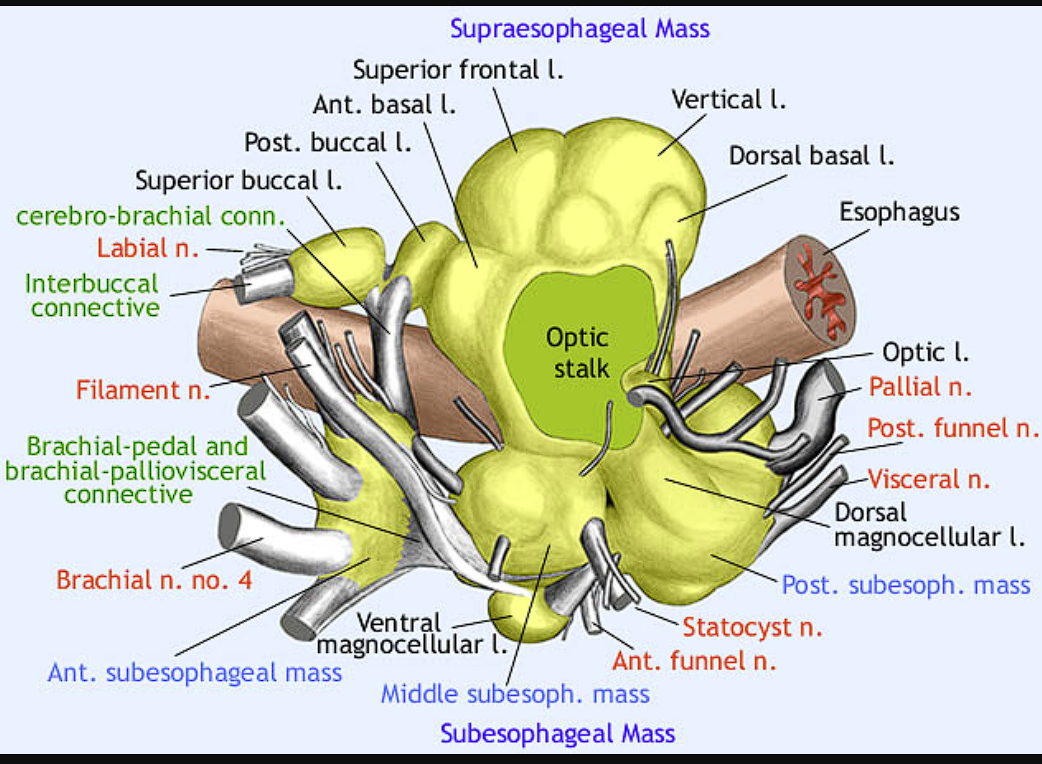
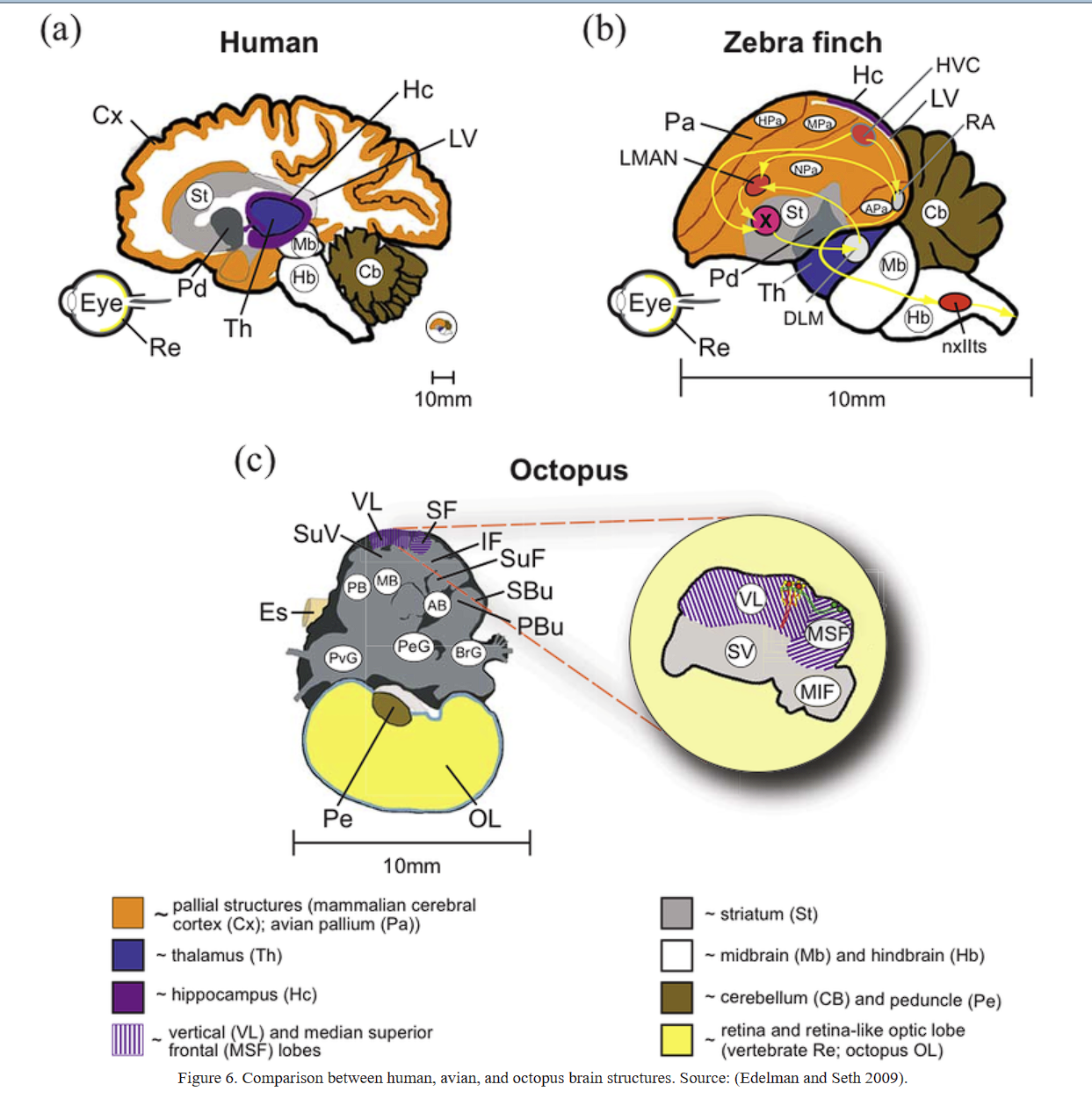
The nervous system is divided morphologically into three parts; the central brain, the optic lobe and the nervous system of the arms; the later two are located outside of the brain capsule and are fairly autonomous systems. The central brain contains 64 lobes, such as the vertical lobe (VL), which is similar to the hippocampus and is the key player in learning and memory. These lobes are lateralized and folded to increase surface ares (Williams 2011). Of the 500 million cells dedicated to an octopuses’ nervous system, 40-45 million are found in the central brain (Hochner 2006).
The optic lobes and locomoter system are both central fused ganglia. The optic lobes are the larger of the two ganglion systems and contain up to 65 million neurons (Edelman and Seth 2009). They are located right under the eyes (Lisieski 2010). Responsible for processing visual signals, researchers also believe the optic lobe is where visual memories are made and stored (Edleman and Seth 2009). In addition, researchers hypothesize the optic lobes are functionally similar to mammalian retinas (Lisieski 2010).
Whereas the central brain and optic lobes have functions and composition similar to vertebrates, the locomotor system is radically different from any system found in vertebrates. Researchers found when a detached tentacle will act in a realistic way, making the mostly autonomous locomotor system vastly different from other sensorimotor systems in vertebrates (Edelman and Seth 2009). The locomotor system, touched on in the section concerning anatomy, is connected to the central brain through a chain of fibers. An extraordinary large amount of neurons are dedicated to the locomotor system, approximately 2/3 of all neurons. In addition to controlling movements, the nervous system of the locomotor system processes sensory information gathered by the chemoreceptors and mechanoreceptors found in the suckers and skin along each tentacle (Hochner 2006).