WHAT IS COMMON LAW?
Common law (also known as judicial precedent, judge-made law, or case law) is the body of law primarily developed through judicial decisions rather than statutes.[2][3] Although common law may incorporate certain statutes, it is largely based on precedent—judicial rulings made in previous similar cases.[4] The presiding judge determines which precedents to apply in deciding each new case.[4]
Common law is deeply rooted in the principle of stare decisis ("to stand by things decided"), where courts follow precedents established by previous decisions.[5] When a similar case has been resolved, courts typically align their reasoning with the precedent set in that decision.[5] However, in a "case of first impression" with no precedent or clear legislative guidance, judges are empowered to resolve the issue and establish new precedent.[6][7]
The common law, so named because it was common to all the king's courts across England, originated in the practices of the courts of the English kings in the centuries following the Norman Conquest in 1066.[8][9] It established a unified legal system, gradually supplanting the local folk courts and manorial courts.[9][8] England spread the English legal system across the British Isles, first to Wales, and then to Ireland and overseas colonies; this was continued by the later British Empire. Many former colonies retain the common law system today. These common law systems are legal systems that give great weight to judicial precedent, and to the style of reasoning inherited from the English legal system.[10][11][12][13] Today, approximately one-third of the world's population lives in common law jurisdictions or in mixed legal systems that integrate common law and civil law.[14]
FYI: ENGLAND WAS BEING PAID OFF WITH THE TAX MONEY OF LEGAL, AMERICAN CITIZENS BECAUSE ENGLAND CONSIDERS THE UNITED STATES OF AMERICA AS ONE OF THEIR COLONIES. WE HAVE BEEN FINANCIALLY SUPPORTING ENGLAND AND OTHER COUNTRIES FOR HUNDREDS OF YEARS. THIS WAS DUE TO UNITED STATES, INC. WHICH PRESIDENT TRUMP ENDED. WE WILL NO LONGER BE PAYING THE "TEA TAX" MY FELLOW AMERICANS! rk.
Terminology
According to Black's Law Dictionary, common law is "the body of law derived from judicial decisions, rather than from statutes or constitutions."[15] Legal systems that rely on common law as precedent are known as "common law jurisdictions."[15][11]
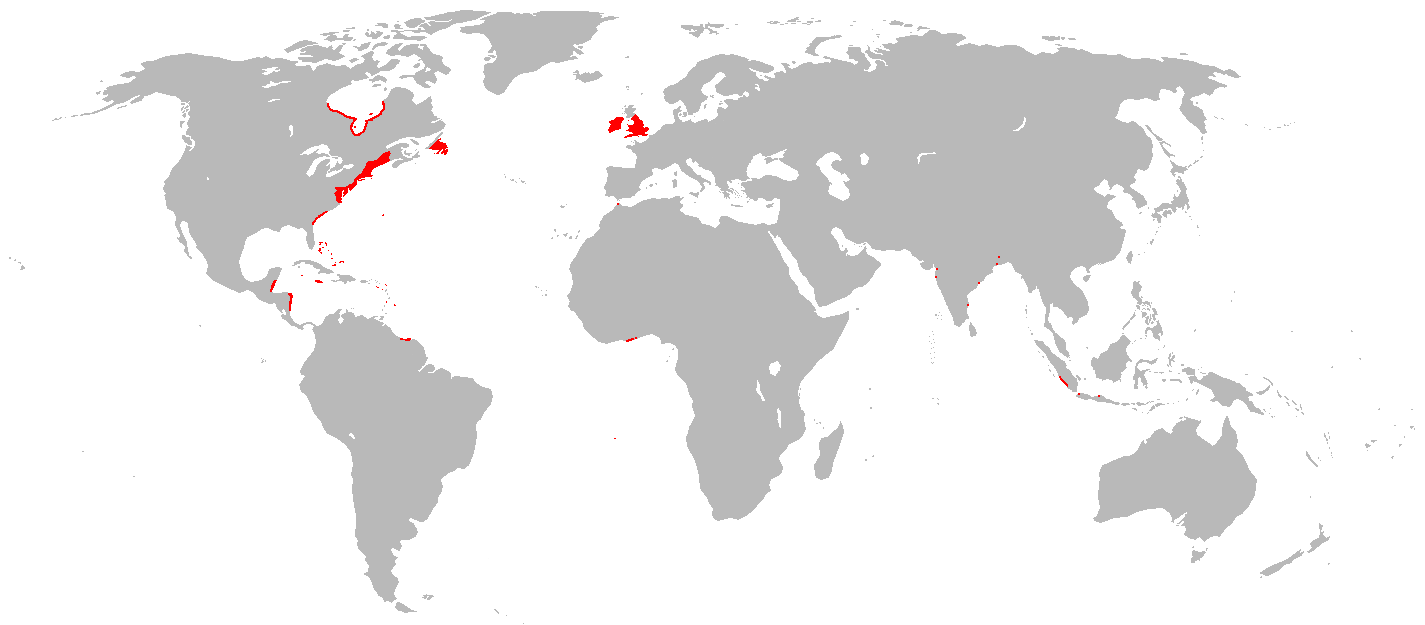
The English overseas possessions comprised a variety of overseas territories that were colonized, conquered, or otherwise acquired by the Kingdom of England before 1707. (In 1707 the Acts of Union made England part of the Kingdom of Great Britain. See British Empire.)
All English overseas possessions in 1700
Wednesday, October 15, 2025 08:26PM