Hybridization: Brightstorm
Hybridization
Introduction:
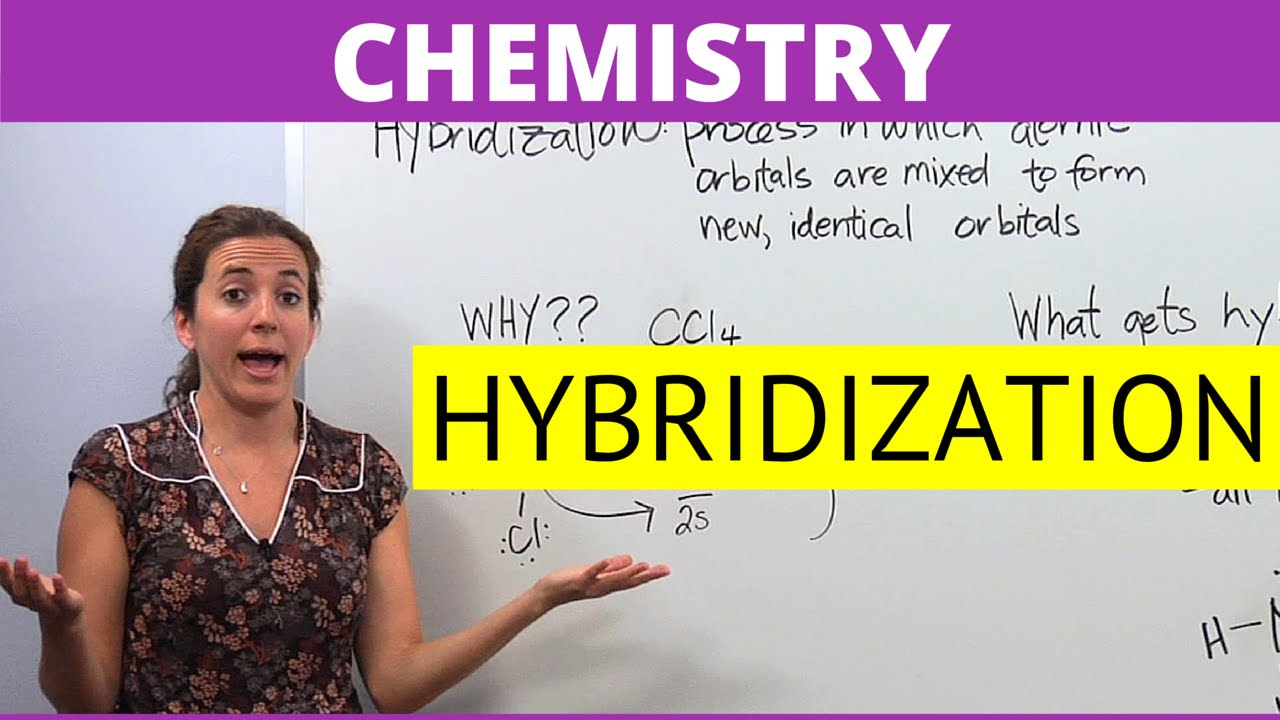
The video on "Hybridization" explains the concept of atomic orbital hybridization, likening it to the way hybrid cars or bikes combine elements from different sources to create something new. In chemistry, hybridization involves mixing two different atomic orbitals to form new orbitals that are identical in energy.
Main Points/Arguments:
- Need for Hybridization: The video begins by questioning why hybridization is necessary, using carbon tetrachloride as an example to demonstrate the need for equal energy bonds in molecules with multiple bonds. This is to ensure that all bonds in a molecule like carbon tetrachloride are equivalent in energy.
- Process of Hybridization: It explains that to have four equal places for chlorine to bond with carbon, carbon’s 2s and three 2p orbitals hybridize to form four new sp3 orbitals, which are identical in energy and configuration.
- Single and Multiple Bonds: The discussion extends to single and multiple bonds, noting that all single bonds are hybridized (sigma bonds) and that lone pairs are also hybridized. For multiple bonds, one of the bonds is a sigma bond (hybridized), and the remaining are pi bonds (unhybridized, involving only p orbitals).
- Examples: The video provides examples of hybridization in different molecules, explaining how the type of hybridization (sp3, sp2, sp) is determined by the number of sigma bonds and lone pairs around the central atom.
Conclusion:
Hybridization is a fundamental concept in understanding the structure and bonding of molecules. By combining orbitals to form new, identical orbitals, atoms can achieve the necessary geometry to form molecules with equal bond energies. This video clarifies the process and significance of hybridization in molecular chemistry, providing a solid foundation for further study in chemical bonding.