Alexander King
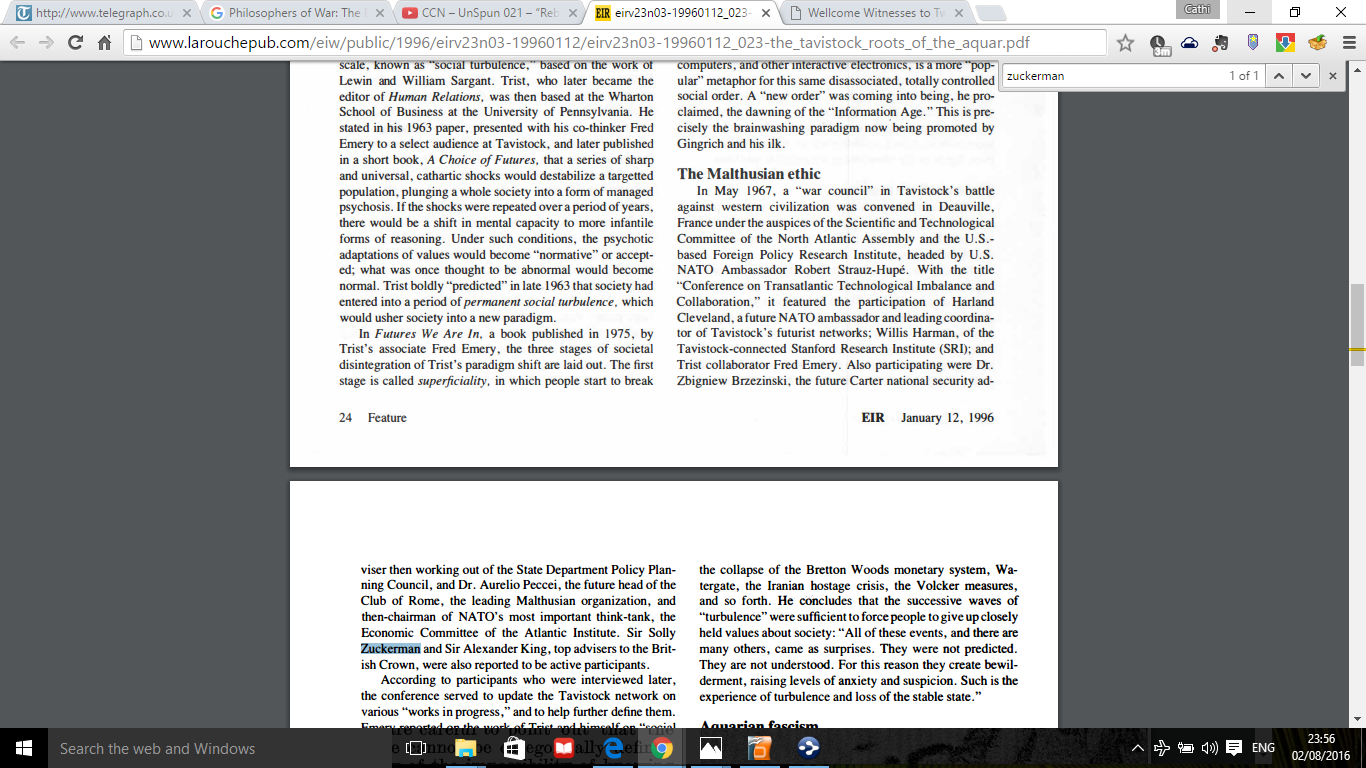
“In searching for a common enemy against whom we can unite, we came up with the idea that pollution, the threat of global warming, water shortages, famine and the like, would fit the bill. In their totality and their interactions these phenomena do constitute a common threat which must be confronted by everyone together. But in designating these dangers as the enemy, we fall into the trap, which we have already warned readers about, namely mistaking symptoms for causes. All these dangers are caused by human intervention in natural processes, and it is only through changed attitudes and behaviour that they can be overcome. The real enemy then is humanity itself.” King - co-founder Club of Rome (wikispooks)
At the OECD, "he initiated the Science Policy Surveys, which took a critical look at the state of science and technology in the OECD countries. Among other things, his initiatives encouraged new forms of education."[10
After Peccei's death, King served as the Club's President from 1984 to 1990. He was the recipient of many honours: in 1975 he was made a Companion of the Order of St Michael and St George (CMG) and in 1987 he was awarded the Erasmus Prize for his contribution to raising awareness of "the positive and negative impact of technological progress on society."[20]
King’s father became director of ICI
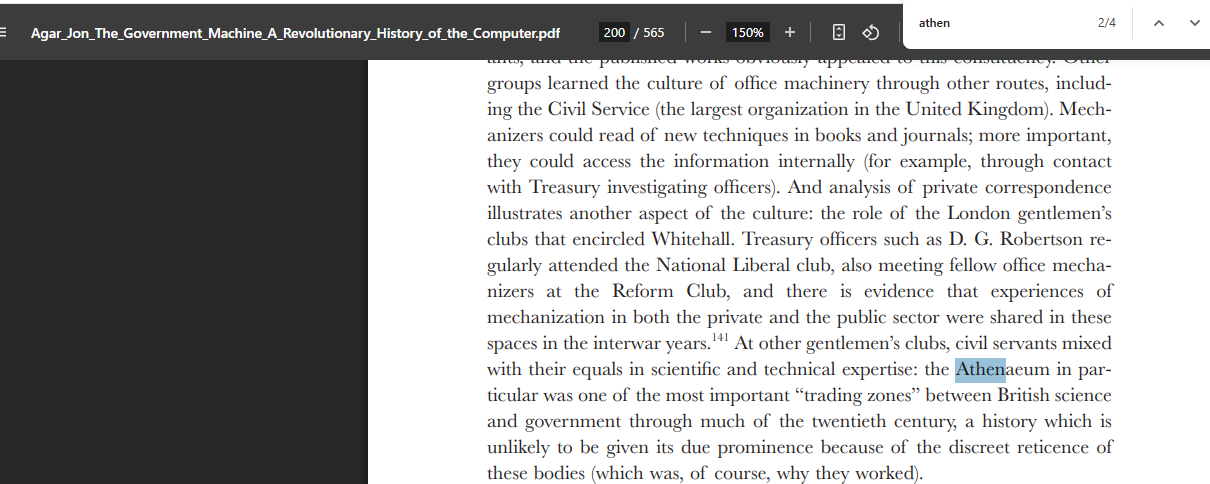
At other gentlemen’s clubs, civil servants mixed with their equals in scientific and technical expertise: the Athenaeum in particular was one of the most important “trading zones” between British science and government through much of the twentieth century, a history which is unlikely to be given its due prominence because of the discreet reticence of these bodies (which was, of course, why they worked).
The Government Machine A Revolutionary History of the Computer Jon Agar