Donald Wallis

From a book:danielsyearabroad
Essen und Trinken
In the mail one day at the Unit came a very official looking letter from the American Embassy in London. I kept wondering all the way up the steps what I’d done now. I had registered with the Cambridgeshire police, I hadn’t tried shopping in the Post Exchanges around Cambridge (although I’m sure my Navy Identification Card would have done the trick), nor had I pledged allegiance to the British flag.
The letter was in fact an invitation to present a paper in Germany for a meeting sponsored by the Ausschusz fur Funkortung. This is a government sponsored, industry endorsed Committee on Radio Navigational Aids. The topic for the 1960 annual meeting was Medical and Psychological Aspects of Radio Navigation Problems. If interested I was to contact a General Martini via the American Embassy in Bonn. When I read further that my travel expenses would be paid by the German Committee I was obviously interested.
In subsequent correspondence we agreed upon a title for the paper and I set to work and wrote a paper and submitted it six weeks in advance of the January meeting so that German and French translations could be prepared by the meeting time.
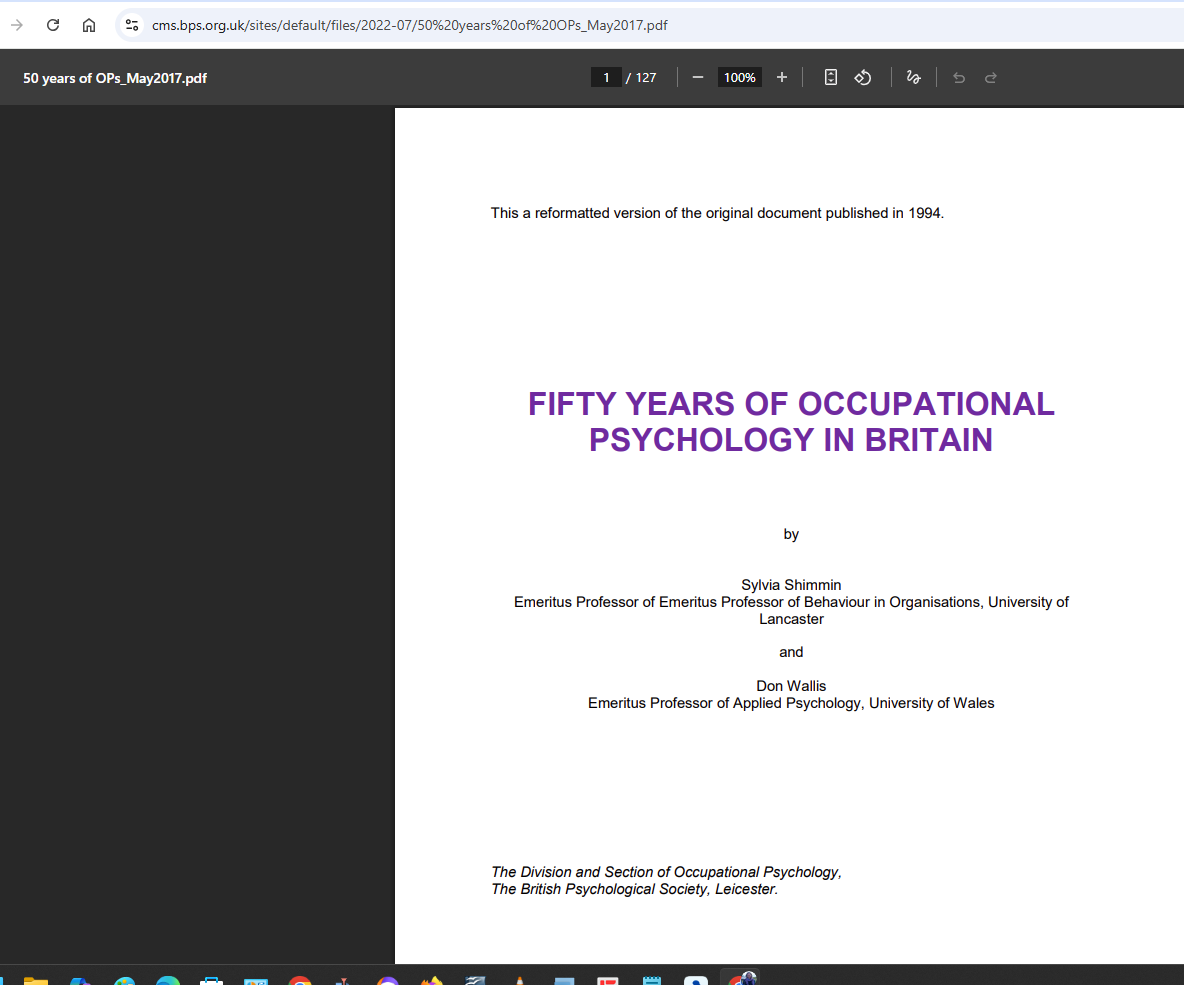
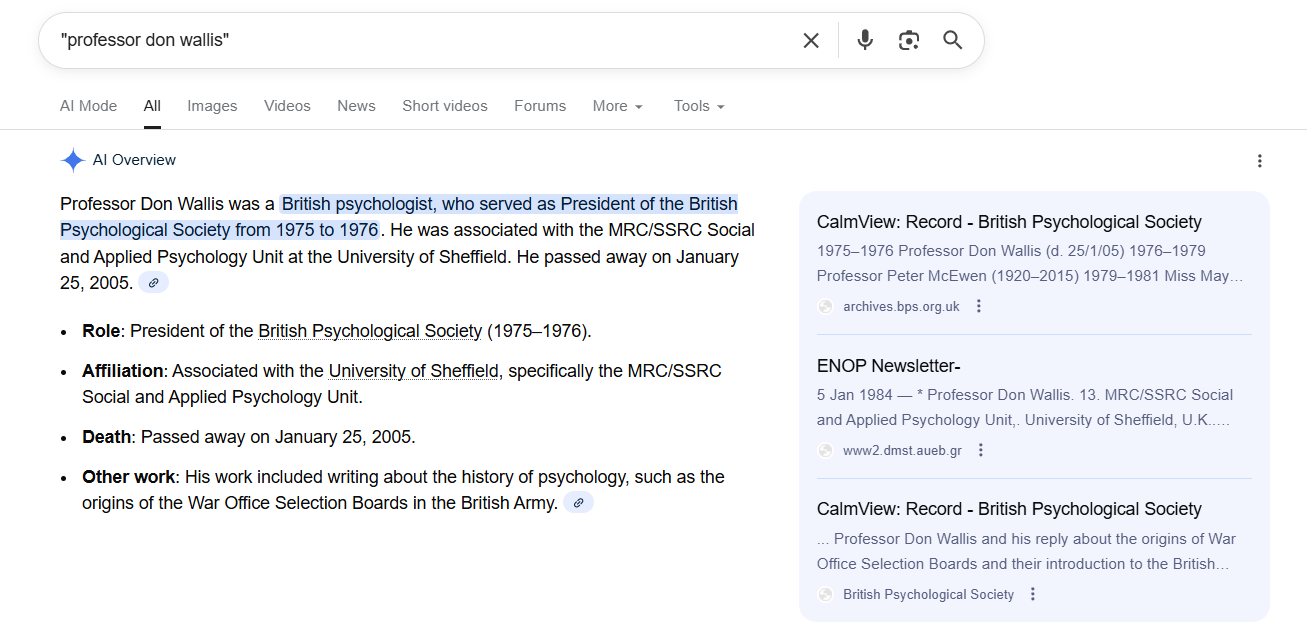
No one else from the Unit was going to the meeting but Donald Wallis from the Admiralty (Senior Psychologists Office) was going and we made arrangements by phone to go together. The meetings were the first full week in January and to get there we needed to leave London on Sunday morning. Donald suggested that in January it would be the better part of prudence to go by train and boat not by air. He obligingly got us First Class compartment seats on the 9 A.M. train Sunday, 3 January from Victoria Station to Dover with boat Connections and seats on the Trans Europe Express (TEE) from Ostend to Cologne connecting on to Essen.
Then I found out of course that there is no train from Cambridge that connects with early Sunday morning trains out of London. Weeks before all of these travel transactions I had purchased tickets for John, Tom, Bill, and I for Hansel and Gretel for Saturday, 2 January. Top level discussions and decisions came up with the plan that the whole family go up to London by train, stay over in a hotel and see me off Sunday morning. We phoned London’s hotel finding agency and got a hotel across Bayswater Road from Hyde Park, near the Queensway Tube Station. Another gala day in London and our first family hotel experience since 1 June in Hameln, Germany.
Everything progressed smoothly. We knew our way in and out of British Railway Coaches. We chose to go via Kings Cross Station. We expected to and did lose John for five minutes in the station while he went loco spotting. Then to save time we put Mom, Dan and Charlie in those squat, black London cabs and dispatched them for the hotel while the older boys and I took the Northern Line from Kings Cross to Angel and then walked to Sadlers Wells.
Hansel and Gretel was very pleasing to my boys and to all the other children in the audience. Even the witch didn’t really frighten them. In January it gets dark early but in the tube it really makes very little difference. We transferred at Bank to the Central Line and soon joined mom and the small boys at the hotel. The great thing was the subsequent double decker bus ride from Bayswater Road through Oxford Street to Oxford Circus, then down Regent Street through Piccadilly Circus and Haymarket to Westminster Bridge. A short walk and return. The Christmas lighting was still up and Regent Street in particular was lovely.
Our dinner in a little French restaurant near the hotel was also a success, no spilled milk, nor dropped forks. We did forget Charlie’s cap but returned forthwith and retrieved it. The hotel was not American. We had two adjacent rooms, one large one and next door a small twin bedded one. A shilling in the gas fire bought enough gas to heat the room comfortably for undressing. The bath rooms were reached down the hall. No problem in getting tired boys to sleep.
We strained the hotel people somewhat at breakfast, which is included in the price of the room. We were waiting at the door when they opened and our taxi was waiting for us when we were finishing. I finally had to make my decision about my Wellington boots. I’d come prepared to either wear regular shoes and stand the chance of freezing on the train and boat or wearing my old patent foot warming Wellingtons. The weather looked threatening so I chose the course of warm feet, First Class dress to the contrary. With our light weight cloth luggage I had brought along sizes 2 and 3 where 2 fits snugly into 3. If Wellingtons were not worn they would fit into bag 3. If worn, bag 2 fit into bag 3, and this is what I did.
We weren’t overly early at Victoria so the family just stayed in the taxi for their trip to Liverpool Street Station. I now gave up being father first class and became scientist and traveler First Class (except for the Wellington boots). I was soon seated in a compartment literally bulging with suitcases, parcels, baskets, boxes, and people, four to a side. As soon as I took my seat Donald Wallis sitting opposite introduced himself (all previous arrangements had been by letter and phone). His light weight highly polished shoes caught my eye immediately and I’m sure my black unpolished rubber Wellingtons complete with red brand on the inside of the instep, also caught his eye. Being a typically polite Britisher his expression did not convey the expression of, “Who’s this odd ball I’m to spend the next week with.” He was about my age; taller, slimmer, with thinning hair, and nicely dressed. He wore a continual smile, and his general facial contours were of the happy, turning up variety, not of the soured on life, turned down type.
We had lots to talk about and one of his first inquiries was, “How well do you speak German?” I told him I was no past master but had survived two previous trips although I was ready to stand down to his abilities if they were better. He said his competence was in French, that he knew no German. That took care of that. I found he was an ex Royal Navy officer and had spent most of WWII attached to the Canadian Navy. As such he was acquainted with New York City and some aspects of American life. In general we hit it right off and I could see this was going to be a successful trip.
At Dover I went through the alien line, and Donald went through the citizen line. We soon rejoined and went on board the Dover-Ostend Channel Ferry. We stayed topside and watched the white cliffs of Dover fade from view. He told me how during WWII a radar antenna scanned the channel here, and how the populace was generally moved inland from the immediate coast. He spoke of specific incidents like for example how the German battle cruiser Scharnhorst slipped through the channel one night while the radar was down for maintenance. He often wondered how they knew it was down.
We were soon beyond the three mile limit and with his money I purchased him beaucoup cartons of cigarettes. We then descended into the dining room and seeing no vacant tables joined another amiable man for lunch. Our table companion turned out to be an international civil servant working in Vienna on the joint Atomic Energy Commission. Since all of us were civil servants and scientists we had a fine talk on mutual problems. The journey was over much too quickly. At Ostend we parted.
Donald and I had reserved seats on the TEE but there were only about 6 people on the Cologne car, we certainly didn’t need reserved seats. There was still about an hour of daylight and I saw the skylines of Bruges and Ghent as we rushed past. As soon as it was dark we ambled up to the snack car for more sustenance. While enjoying the food an announcement came over the PA system auf Deutsch to the effect that Herr Wallis was wanted at the Gepackwagen (baggage car). He had registered (checked) a suitcase and the German customs people were getting their work done early. No trouble, he was soon back.
We pulled into Cologne before 8 P.M. and I ascertained from certain words I heard that the connecting train to Essen was directly ahead on the same track. This somehow didn’t seem to make good sense but it turned out to be so. The TEE is completely symmetrical, an engine at each end, and they pulled out of Cologne for Mainz and Frankfurt by reversing directions. We scurried forward and in a short time were detraining in Essen.
Our hotel was just across the square from the station and we were soon comfortably situated. Of course Donald’s registered bag hadn’t yet arrived but he had the things he really needed. The contrast between Essen and London began with the hotel. The Handelshof was new as was all of downtown Essen. The WWII bombers had made it easy to rebuild Essen. The Handelshof was centrally heated, with spacious halls and large, light and airy rooms. My room could have been in a Hilton hotel except it had no private bath. There was a sink (with hot water) for washing and shaving but no toilet, bathtub or shower. The rest rooms down the hall were spotless and perfectly adequate. Donald’s room though much smaller had a bath tub of sorts. I’d never seen a tub like it before. You sat in this one like on a chair and the water could come up to your waist. It also had a shower which could be taken standing or sitting. I always visited Donald for my bath, and he visited me if we wanted room to stretch out in.
We had had our day and after a short walk we turned in to get good night’s sleep before the meeting next morning at 9 A.M. in a hall a block up the street. Neither of us were much worried about the early hour. Ten A.M. is a more usual and a more respectable hour to open an American meeting, and British meetings might commence even later, at least on the opening day. And at American and English meetings 10 A.M. meetings really start about 10:15. Naturally we were not concerned when we walked into breakfast at 8 A.M. and noted we were nearly alone. Why not, no one in his right mind would be eating this early. Donald took time to check on his bag and at about 9 we left the hotel for the meeting.
Not unexpectedly the corridors were nearly empty of people. As we expected no one would show up at such an early hour. We roamed the deserted halls and found the large meeting auditorium. We thought we’d look in to see what it was like. It was like most large auditoria five minutes after the scheduled opening except that it was filled with people. And a speaker was holding forth down front. We suddenly realized we were in hard working, efficient Germany.
Donald couldn’t understand a word and I could only catch certain phrases like, “Our great city welcomes you ... production since 1950 has increased 50 percent ... we have an opera house ... a new shopping center ... enjoy your stay in our city”. On my program I noticed the word of welcome was from the Burgermeister himself. At the conclusion of this speech we noted some other men stumble in, and they were obviously fellow English speaking citizens.
We decided we’d better consolidate forces, so we all retreated and looked again for the registration desk. We finally found it just as the French delegation walked up. Everyone except the extremely attractive and German speaking secretaries were up in the meeting. My German got its first crucial test. We needed some earphones to hear the translation. The secretary asked us specifically whether we spoke English or French. Although I understood the question I couldn’t understand the point of it. The earphones aren’t going to know whether we speak English or French. Or are they? As it turns out there were 2 separate translating booths, German-English, and German-French. The outputs of these translations were radioed around the room so indeed the red earphones tuned into the French speaking output. The blue phones had self-contained receivers tuned to the English translation. And then the translators worked in reverse English or French to German all German listeners put on green earphones.
This system worked fine except the German-English translator was not a scientist nor did he really understand scientific terms. He did fine on the introductions but the interpretation of slides and other technical aspects were fairly sketchy. I did almost as well listening auf Deutsch and concentrating on reading the slides and interpreting them myself.
We soon found that not only do the Germans start on time but comes the question period and they lose all track of time. Many questions, which really were unscheduled papers in themselves eclipsed the original paper in time consumed. Nor did the original paper readers adhere even remotely to their time limits. It was soon evident that once you turn a German scientist on he doesn’t turn off easily.
The Monday noon luncheon was a conference wide dinner of formal proportions. I don’t quite remember why we were late this time and in fact we weren’t but a few minutes late. In any case as we walked in the Herr Conference Secretary grabbed us by the arm and paraded us to the head table to meet General Martini. I was slightly awe stricken by the whole procedure, but nearly dumbfounded when the General snapped his heels together and shot his hand out in a stiffly correct handshake. The photographer’s flash bulb at this point did not add to my peace of mind.
As it turned out Donald and I were two of about 6 English speaking participants and I was the only one in the whole assemblage that ate with my fork in my right hand, obviously from the USA. Our cordial greetings were occasioned by two facts; we hadn’t arrived at the usual greeting time at 8:30 in the morning and we were prophets from other lands.
The never ending barrage of only slightly understood verbage soon got us to the point of exhaustion and we got in the habit of leaving at the scheduled ending times in spite of the fact that were often only half finished. By doing this we found time for shopping (I was still looking for green Lederhosen for Charlie and some for Dan), making travel reservations back, getting tickets to the opera, arranging a trip to a lab in nearby Dortmund.
Essen has been beautifully rebuilt. Accepting the near total destruction from Allied bombers, the city planners have done a marvelous job. Pedestrians only are allowed in the large downtown shopping center, cars are parked on the edges. Broad, well lighted arcades and pathways meander among the various stores. The stores are large, are loaded down with goods and are well patronized. Like New York City they have people too busy to sit down to eat so some of their snack bars, where the snack would floor an elephant, have stand up counters.
One night we got the last three (together with a colleague from Holland) seats in the back row of the Opernhaus to see Mozart’s “Marriage of Figaro”. The opera was delightful; still funny after two hundred years and auf Deutsch. German efficiency showed itself again at the Interval. They must have taken a statistical sampling of how many coffees vs. teas vs. ales vs. soft drinks, because many tables were all set up with the drinks served. If you found essentially what your party wanted you sat at that table. If one or two drinks were wrong they switched drinks from an adjacent table or sometimes went to their source of supply. It did speed things up.
Another day we visited the Max Plank Institut fur Arbeitphysiologie (work physiology) in nearby Dortmund. The train ride, especially buying the tickets and finding what stop to get off at in Dortmund, was great sport. The visit was first rate and we were duly impressed by the quantity and quality of their equipment. I noted a drastic difference between my adopted Unit in England where essentially every scientist was his own designer, equipment fabricator, data collector, data analyzer, and report writer and this German lab. The Dortmund lab had essentially three top scientists who designed the experiments, supervised them, and wrote them up but a whole staff of subordinates to really run them.
Other nights we had Chinese food, ate in the Ratskeller, and had Italian food. In all cases I kept wondering what we would do after the meal and in all cases the leisurely meal with the proper wine and the talk it generated left no time for other entertainment afterwards.
Friday night was the formal cocktail hour. We had noted between the hotel and the hall a well lighted sign labeled Essen und Trinken in Essen, which puzzled Donald until I told him that Essen is not only the name of this city but also means “to eat” or “eating”. He found out what the Trinken meant at the cocktail hour. They served German Sparkling Wine known in France as Champagne. Actually we didn’t get more than a good sample because suddenly the German Navy showed up. Apparently some of the participants were Naval Officers in civvies. On cocktail night they came out in their full colours and saw to it that no one (else) over indulged in either drinking or in pampering the pretty secretaries of the German Ausschusz (committee). We found out that General Martini’s Executive Secretary, who organized this meeting had been the chief navigator on the Scharnhorst when she slipped through the channel. Donald asked him how he knew the English radar was down when the Scharnhorst made it through the channel. He said they had no idea it was down. It had been decided it was now or never. It was purely routine. He hadn’t even been awakened by the subordinate on watch to help her through.
Saturday morning we detoured to Cologne by way of Wuppertal. In Wuppertal we rode the monorail. In Cologne we visited the cathedral and the new Rhein bridge. It was mighty cold and we were on foot so we really didn’t do the town very well. On Sunday we took the train to Utrecht and visited the Institute for Perception at Soesterberg. Dr. Bouman a hard worker who also knows how to relax sandwiched our official visit into the morning and took us to a van Gough art museum in an erstwhile private estate in the middle of a large forest near Arnheim. We stopped for a pheasant dinner on the way back to our hotel.
Tuesday we stopped in Amsterdam for a look at Rembrandt’s “Night Watch” and proceeded on to Hook-of-Holland for the night channel ferry to Harwich. The British Railway ferry brought us back to reality from the newness everywhere evident in Germany and Holland.
Next morning Donald took the London train and I got on the Liverpool train. At Bury St. Edmund I changed to a diesel rail bus and was delivered right to the Fulbourn station (one stop out of Cambridge). Mary and the younger boys were there to meet me. As in Holland, England had a snow and Charlie was all for going into Cambridge for his sledge. We got the sledge but this was the only snow of the winter and was gone before the boys really knew what it was all about. And this the only snow they’d ever seen. Moral, if you want to play in the snow in Southern England, don’t leave for a week’s trip for purposes of Essen and Trinken.