Supplements that may improve chronic pain
Supplements That May Improve Chronic Pain: A Comprehensive Evidence-Based Review
Chronic pain affects millions of people worldwide and represents one of the most challenging medical conditions to treat effectively. While conventional pharmaceutical approaches remain the primary treatment modality, there is growing interest in nutritional supplements as complementary or alternative therapies for chronic pain management. This comprehensive review examines the scientific evidence supporting various supplements for different types of chronic pain conditions, their mechanisms of action, dosing recommendations, and safety profiles.
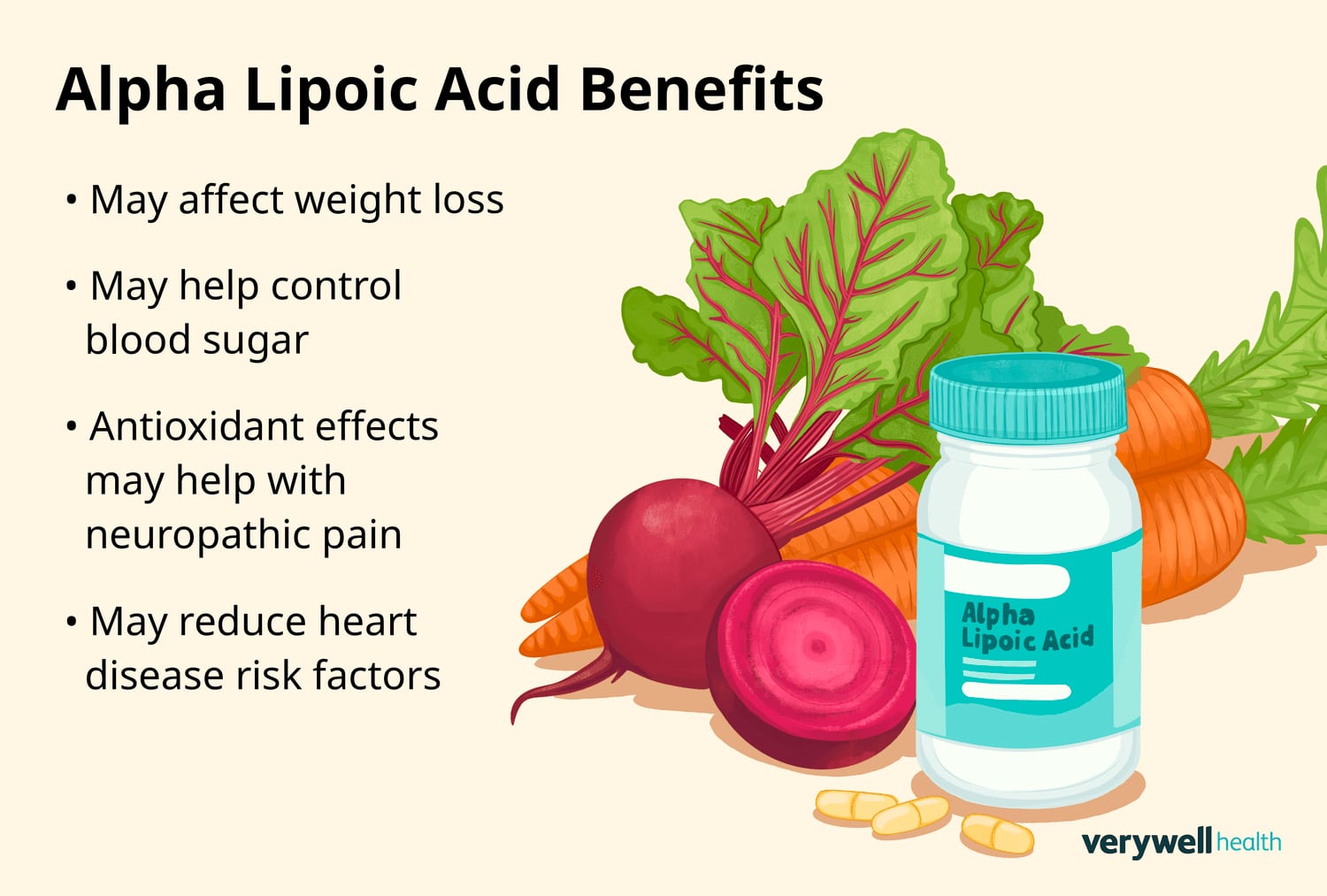
Alpha lipoic acid may help with neuropathic pain and other health benefits such as weight loss and blood sugar control
Understanding Chronic Pain and the Role of Supplements
Chronic pain, defined as pain persisting for more than three months, affects approximately 20% of adults globally and encompasses diverse conditions including neuropathic pain, fibromyalgia, osteoarthritis, and inflammatory pain syndromes. The complexity of chronic pain involves multiple pathophysiological mechanisms including inflammation, oxidative stress, central sensitization, and neuroplasticity changes. These varied mechanisms provide multiple potential targets for nutritional interventions.utswmed+2
Recent research has revealed that many chronic pain conditions share common underlying mechanisms, particularly neuroinflammation and oxidative stress. This understanding has led to increased interest in supplements with anti-inflammatory, antioxidant, and neuroprotective properties. Additionally, emerging evidence suggests that gut microbiome dysbiosis may contribute to chronic pain, opening new avenues for probiotic interventions.pmc.ncbi.nlm.nih+4
Evidence-Based Supplement Recommendations by Pain Condition
The strength of evidence varies significantly across different supplements and pain conditions. Based on comprehensive analysis of clinical trials and systematic reviews, the following evidence matrix provides guidance for supplement selection.
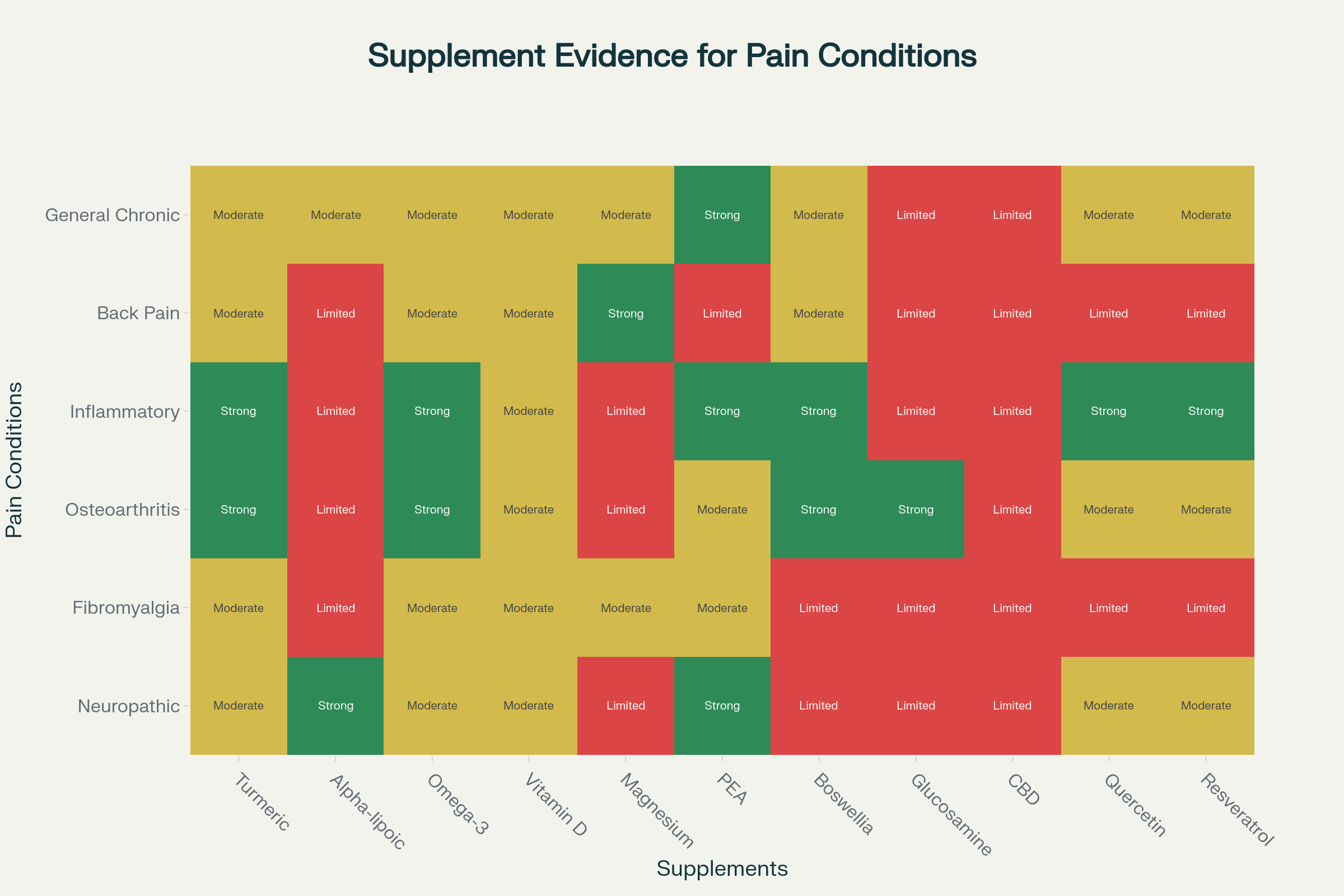
Evidence-based supplement recommendations for different chronic pain conditions
Supplements with Strong Clinical Evidence
Alpha-Lipoic Acid for Neuropathic Pain
Alpha-lipoic acid (ALA) represents one of the most well-researched supplements for chronic pain, particularly neuropathic pain. Clinical evidence demonstrates significant efficacy for diabetic neuropathy, with intravenous administration showing superior results to oral supplementation.pmc.ncbi.nlm.nih+1
Mechanism of Action: ALA functions as a potent antioxidant that can regenerate other antioxidants like vitamins C and E. It specifically targets oxidative stress pathways involved in neuropathic pain and may modulate neuronal T-type calcium channels, providing both neuroprotective and analgesic effects.pmc.ncbi.nlm.nih+1
Clinical Evidence: Multiple randomized controlled trials have demonstrated that intravenous ALA at 600 mg daily for three weeks produces clinically significant reductions in neuropathic pain scores. A systematic review and meta-analysis showed standardized mean differences of -2.26 for total symptom scores, with stronger effects observed with intravenous versus oral administration.pmc.ncbi.nlm.nih
Dosing: For neuropathic pain, the evidence supports 600 mg daily intravenously for acute treatment, with oral doses of 300-600 mg daily for maintenance therapy.pmc.ncbi.nlm.nih+1
Palmitoylethanolamide (PEA) for Multiple Pain Conditions
PEA has emerged as a highly promising supplement with broad applications across different chronic pain conditions. This naturally occurring fatty acid amide demonstrates excellent safety profiles and consistent efficacy across multiple studies.pmc.ncbi.nlm.nih+2
Mechanism of Action: PEA modulates the endocannabinoid system through interactions with peroxisome proliferator-activated receptors and other targets involved in pain and inflammation. It can reduce central sensitization and moderate pain modulation pathways.link.springer+1
Clinical Evidence: A systematic review and meta-analysis of 11 studies involving 774 patients found that PEA significantly reduced pain scores with a standardized mean difference of 1.68. The supplement demonstrated benefits across neuropathic pain, inflammatory pain, and musculoskeletal conditions.pmc.ncbi.nlm.nih
Dosing: Effective doses range from 300-1200 mg daily, with most studies using 600 mg twice daily. Benefits typically emerge after 4 weeks of treatment.academic.oup+1
Turmeric/Curcumin for Inflammatory Conditions
Curcumin, the active compound in turmeric, has extensive evidence supporting its use in inflammatory pain conditions, particularly osteoarthritis.utswmed+2
Mechanism of Action: Curcumin inhibits multiple inflammatory pathways including COX-2, 5-lipoxygenase, and NF-κB signaling. It also demonstrates direct antioxidant properties and can modulate neuroinflammation.pmc.ncbi.nlm.nih+1
Clinical Evidence: Clinical trials have shown curcumin supplementation significantly reduces pain and improves function in osteoarthritis patients. A clinical trial using turmeric supplements showed long-term improvement in pain and function in patients with knee osteoarthritis.healthline+1
Dosing: Effective doses typically range from 500-1000 mg of curcumin daily, preferably with piperine (black pepper extract) to enhance absorption.utswmed+1
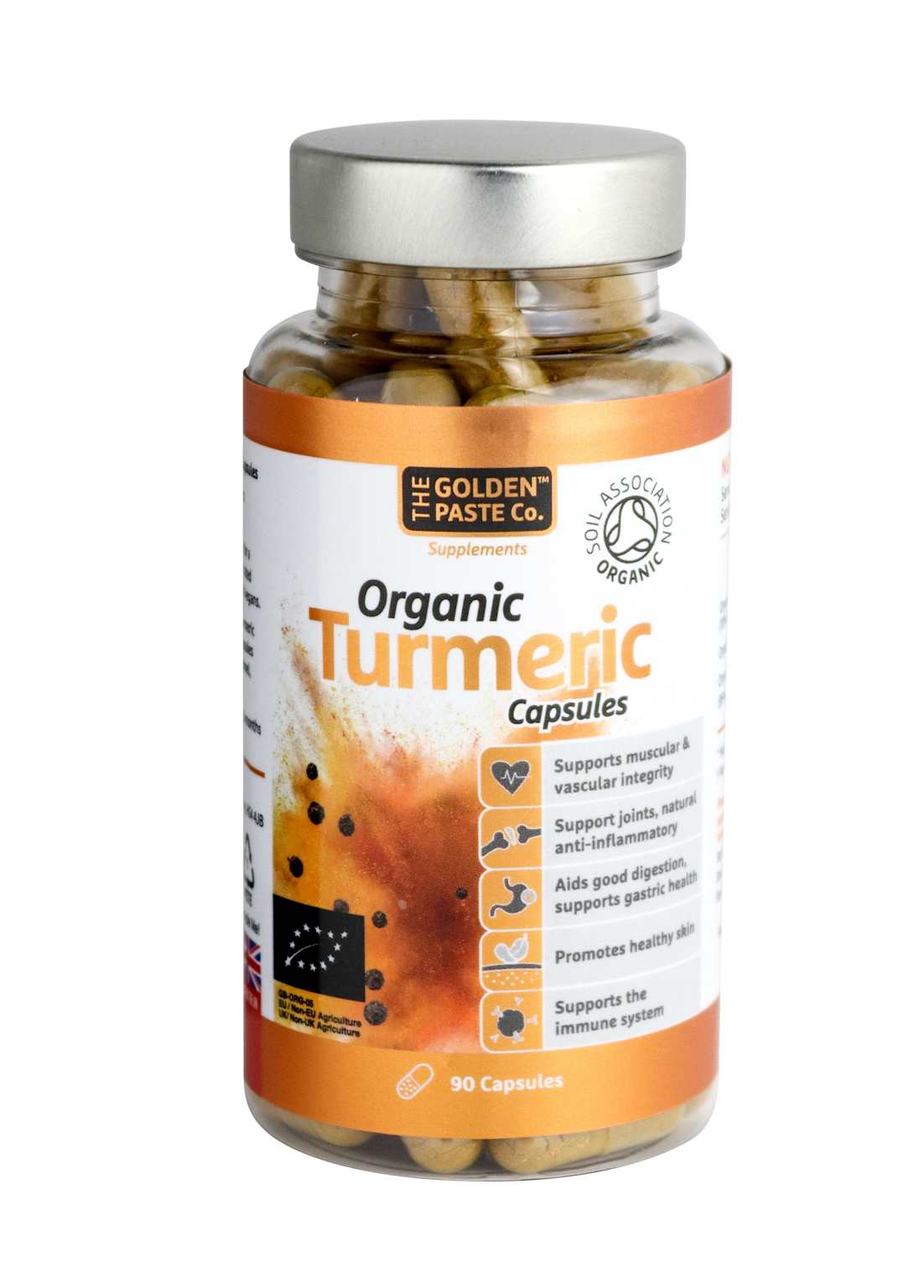
Organic turmeric capsules from The Golden Paste Co. labeled with benefits such as natural anti-inflammatory support and joint health
Supplements with Moderate Evidence
Omega-3 Fatty Acids for Inflammatory Pain
Omega-3 fatty acids, particularly EPA and DHA, have well-established anti-inflammatory properties that translate to modest benefits for inflammatory pain conditions.utswmed+2
Clinical Evidence: Studies demonstrate that omega-3 supplementation can reduce joint pain and stiffness in rheumatoid arthritis patients. A systematic review found omega-3 fatty acids to be as effective as NSAIDs for some inflammatory conditions while offering better safety profiles.arthritis+1
Dosing: Effective anti-inflammatory doses typically require 1-3 grams of combined EPA and DHA daily, with higher EPA content generally preferred for inflammatory conditions.utswmed+1
Vitamin D for Deficiency-Related Pain
Vitamin D supplementation shows particular promise in patients with documented deficiency and chronic widespread pain conditions like fibromyalgia.pmc.ncbi.nlm.nih
Clinical Evidence: While results are mixed, studies in vitamin D-deficient patients with diabetic neuropathy and fibromyalgia have shown significant pain reduction. However, supplementation appears most beneficial in those with documented deficiency.pmc.ncbi.nlm.nih
Dosing: Therapeutic doses range from 1000-4000 IU daily, with higher doses reserved for treating documented deficiency under medical supervision.pmc.ncbi.nlm.nih
Magnesium for Specific Pain Conditions
Magnesium demonstrates particular efficacy for migraine prevention and may benefit certain neuropathic pain conditions.medcentral+1
Mechanism of Action: As an NMDA receptor antagonist, magnesium can reduce central sensitization and pain transmission. It also supports normal nerve function and muscle relaxation.pmc.ncbi.nlm.nih
Clinical Evidence: While results are mixed, some studies show benefits for chronic lower back pain with neuropathic components, particularly when combined with conventional treatments.medcentral+1
A golden capsule releasing natural foods and nutrients that symbolize natural supplements for health and possibly for managing conditions like chronic pain
Emerging Supplements with Limited but Promising Evidence
Quercetin for Neuroinflammation
Quercetin, a flavonoid found abundantly in fruits and vegetables, shows significant promise in preclinical models of chronic pain through its anti-neuroinflammatory effects.pmc.ncbi.nlm.nih+1
Mechanism of Action: Quercetin suppresses neuroinflammation by inhibiting glial cell activation and reducing pro-inflammatory cytokine production. It also demonstrates antioxidant properties and can modulate pain signaling pathways.pubmed.ncbi.nlm.nih+1
Preclinical Evidence: Animal studies consistently demonstrate analgesic effects across inflammatory, neuropathic, and cancer pain models. Quercetin appears superior to gabapentin and morphine in some neuropathic pain models.pmc.ncbi.nlm.nih
Resveratrol for Neuropathic Pain
Resveratrol demonstrates significant potential for neuropathic pain management through its anti-inflammatory and neuroprotective properties.pubmed.ncbi.nlm.nih+2
Clinical Evidence: A clinical trial in knee osteoarthritis patients found that resveratrol supplementation significantly reduced pain and inflammatory markers when used as an adjunct to conventional therapy.liebertpub
N-Acetylcysteine (NAC) as Adjunctive Therapy
NAC shows promise as an adjunctive therapy, particularly for diabetic neuropathy and other oxidative stress-related pain conditions.pubmed.ncbi.nlm.nih+1
Clinical Evidence: A randomized controlled trial in diabetic neuropathy patients found that NAC as adjunct therapy to pregabalin significantly improved pain scores and oxidative stress markers compared to pregabalin alone.dovepress
Coenzyme Q10 for Fibromyalgia
CoQ10 demonstrates specific benefits for fibromyalgia patients, addressing the mitochondrial dysfunction commonly observed in this condition.pubmed.ncbi.nlm.nih+1
Clinical Evidence: Multiple studies have shown that CoQ10 supplementation (100-300 mg daily) can reduce pain, fatigue, and morning stiffness in fibromyalgia patients. When combined with pregabalin, CoQ10 enhanced pain relief and reduced brain activity associated with pain processing.pmc.ncbi.nlm.nih+1
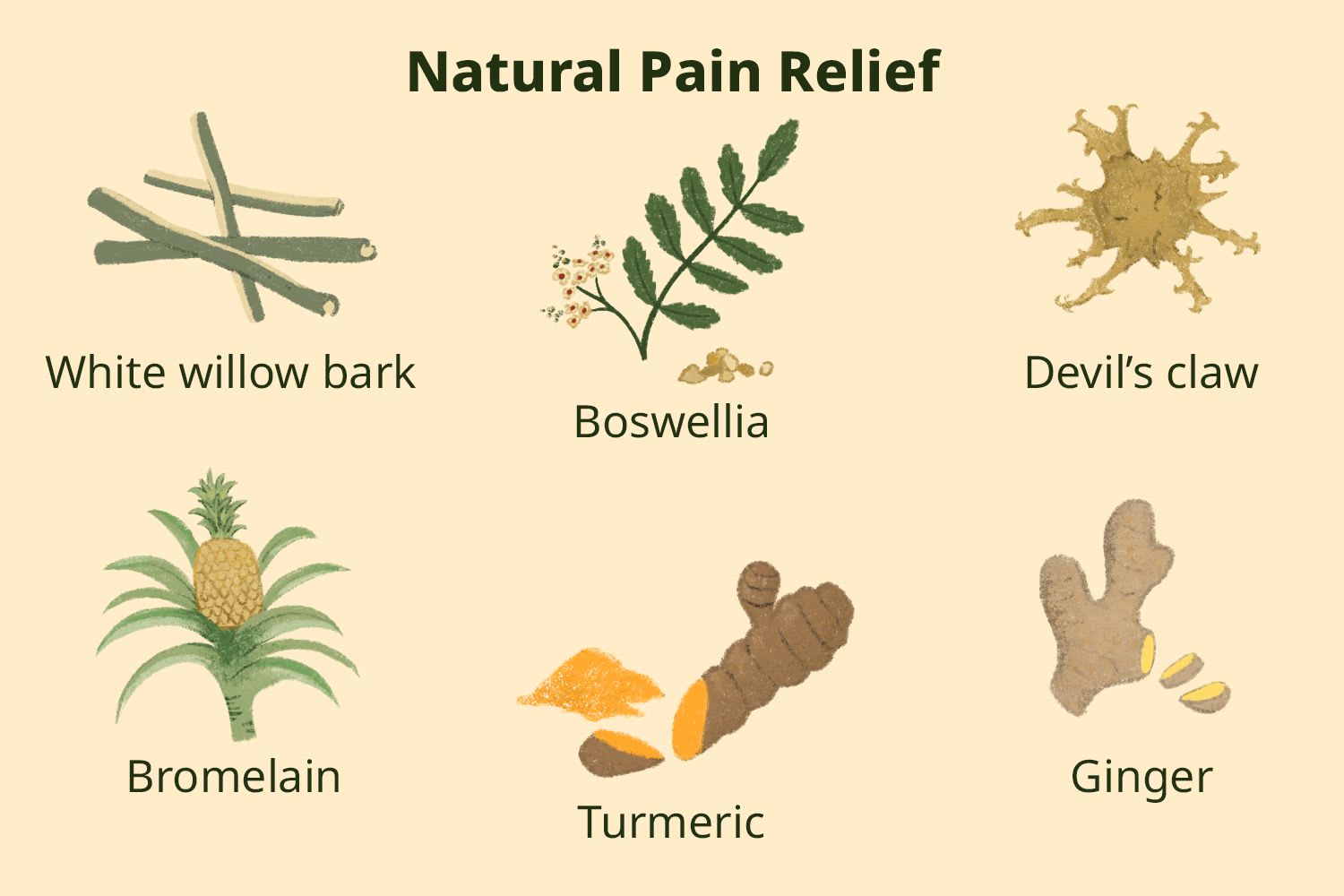
Illustrations of natural supplements such as white willow bark, boswellia, devil's claw, bromelain, turmeric, and ginger for pain relief
Mechanisms of Action and Therapeutic Targets
Neuroinflammation Suppression
Many effective supplements target neuroinflammation, the activation of glial cells and release of pro-inflammatory cytokines in the nervous system. This process plays a crucial role in chronic pain development and maintenance. Supplements like curcumin, quercetin, and PEA effectively suppress neuroinflammation through various pathways including NF-κB inhibition and direct glial cell modulation.pmc.ncbi.nlm.nih+1
Oxidative Stress Reduction
Oxidative stress contributes significantly to chronic pain, particularly neuropathic pain. Supplements with potent antioxidant properties, including ALA, NAC, and resveratrol, can protect neurons from oxidative damage and potentially reverse some pain-related changes.pmc.ncbi.nlm.nih+1
Mitochondrial Support
Mitochondrial dysfunction is increasingly recognized as a contributor to chronic pain conditions, especially fibromyalgia. CoQ10 supplementation directly supports mitochondrial function, leading to improved cellular energy production and reduced oxidative stress.pubmed.ncbi.nlm.nih+1
Endocannabinoid System Modulation
The endocannabinoid system plays a crucial role in pain modulation, and supplements like PEA can enhance this system's function without the psychoactive effects associated with cannabis-derived compounds.pmc.ncbi.nlm.nih+1
Gut Microbiome and Chronic Pain
Emerging research reveals a significant connection between gut health and chronic pain through the gut-brain axis. Gut microbiome dysbiosis can contribute to systemic inflammation and central sensitization, potentially worsening chronic pain conditions.pubmed.ncbi.nlm.nih+1
Probiotic Interventions: Specific probiotic strains, particularly Bifidobacterium and Lactobacillus species, have shown promise in reducing visceral pain and may benefit other chronic pain conditions. Clinical trials have demonstrated that certain probiotic formulations can reduce abdominal pain in irritable bowel syndrome and may have broader applications for inflammatory pain conditions.pmc.ncbi.nlm.nih
Prebiotic Support: Prebiotic fibers that support beneficial gut bacteria growth may also contribute to pain management by promoting anti-inflammatory bacterial metabolite production.pmc.ncbi.nlm.nih
A hand holding an easy-to-swallow omega-3 fish oil softgel capsule, highlighting its design to support ease of ingestion and potential health benefits
Dosage Guidelines and Safety Considerations
General Dosing Principles
Supplement dosing for chronic pain typically requires higher doses than those used for general health maintenance. Most effective protocols involve:
- Loading phases: Higher initial doses for 4-8 weeks
- Maintenance phases: Lower ongoing doses for sustained benefits
- Combination approaches: Multiple supplements with synergistic mechanisms
Safety Profiles and Interactions
Most evidence-based supplements for chronic pain demonstrate excellent safety profiles, particularly compared to conventional pain medications. However, important considerations include:pmc.ncbi.nlm.nih
Drug Interactions: Supplements like turmeric and omega-3s can enhance anticoagulant effects. St. John's Wort significantly affects drug metabolism and should be avoided with multiple medications.pmc.ncbi.nlm.nih
Contraindications: Patients with specific medical conditions may need to avoid certain supplements. For example, high-dose magnesium should be avoided in kidney disease.
Quality Considerations: Supplement quality varies significantly. Third-party tested products with standardized active compounds provide more reliable results.pmc.ncbi.nlm.nih
chronic_pain_supplements_reference.csv
Generated File
Clinical Integration and Personalized Approaches
Patient Selection Criteria
Supplement therapy appears most beneficial for:
- Patients with documented nutrient deficiencies
- Those experiencing inadequate relief from conventional treatments
- Individuals seeking to reduce pharmaceutical side effects
- Patients with multiple chronic pain conditions
Monitoring and Assessment
Effective supplement protocols require:
- Baseline pain and functional assessments
- Regular monitoring of treatment response
- Adjustment of doses based on individual response
- Integration with conventional pain management strategies
Combination Strategies
The most promising approaches often involve combining supplements with complementary mechanisms:
- Anti-inflammatory combinations: Curcumin + omega-3s + resveratrol
- Neuroprotective combinations: ALA + vitamin B complex + magnesium
- Comprehensive protocols: PEA + multiple targeted supplements based on specific pain condition
Future Directions and Research Needs
Gaps in Current Evidence
Despite promising research, several areas require further investigation:
- Optimal dosing protocols for different pain conditions
- Long-term safety data for high-dose supplementation
- Combination therapy studies with conventional treatments
- Personalized medicine approaches based on genetic factors
Emerging Supplement Targets
New research is exploring supplements targeting:
- Specialized pro-resolving mediators for inflammation resolution
- Microbiome modulators for gut-brain axis intervention
- Epigenetic modulators for long-term pain pathway changes
Conclusion
Nutritional supplements offer valuable complementary approaches for chronic pain management, with several compounds demonstrating significant clinical benefits. Alpha-lipoic acid for neuropathic pain, PEA for multiple pain conditions, and curcumin for inflammatory pain represent the strongest evidence-based options currently available.
The most effective approaches likely involve personalized protocols combining multiple supplements with conventional treatments, addressing the complex, multifactorial nature of chronic pain. While supplements cannot replace comprehensive pain management strategies, they offer safer alternatives or adjuncts to conventional medications with the potential for significant clinical benefits.
Healthcare providers should consider supplement therapy as part of integrated pain management approaches, particularly for patients with inadequate response to conventional treatments or those seeking to reduce pharmaceutical side effects. However, proper patient selection, quality product sourcing, and ongoing monitoring remain essential for optimal outcomes.
As our understanding of chronic pain mechanisms continues to evolve, supplement-based interventions will likely become increasingly sophisticated and personalized, offering new hope for the millions of individuals struggling with chronic pain conditions worldwide.
- https://utswmed.org/medblog/supplements-for-back-joint-muscle-pain/
- https://pmc.ncbi.nlm.nih.gov/articles/PMC8231824/
- https://pmc.ncbi.nlm.nih.gov/articles/PMC7151174/
- https://pmc.ncbi.nlm.nih.gov/articles/PMC9774895/
- https://pubmed.ncbi.nlm.nih.gov/39652283/
- https://pmc.ncbi.nlm.nih.gov/articles/PMC9659276/
- https://pmc.ncbi.nlm.nih.gov/articles/PMC3272801/
- https://pmc.ncbi.nlm.nih.gov/articles/PMC10053226/
- https://academic.oup.com/painmedicine/article/13/9/1121/1864240
- https://link.springer.com/article/10.1007/s40122-024-00685-4
- https://www.healthline.com/health/pain-relief/surprising-natural-pain-killers
- https://www.arthritis.org/health-wellness/treatment/complementary-therapies/supplements-and-vitamins/12-supplements-for-osteoarthritis
- https://www.arthritis.org/health-wellness/treatment/complementary-therapies/supplements-and-vitamins/vitamins-supplements-arthritis
- https://pmc.ncbi.nlm.nih.gov/articles/PMC7918078/
- https://www.medcentral.com/pain/alternative-therapies/patient-with-chronic-pain-is-asking-about-magnesium-should-i-recommend
- https://pmc.ncbi.nlm.nih.gov/articles/PMC9890298/
- https://pubmed.ncbi.nlm.nih.gov/35959909/
- https://pubmed.ncbi.nlm.nih.gov/26953646/
- https://www.frontiersin.org/journals/molecular-neuroscience/articles/10.3389/fnmol.2023.1116679/full
- https://pubmed.ncbi.nlm.nih.gov/40586387/
- https://www.liebertpub.com/doi/10.1089/jmf.2017.4176
- https://pubmed.ncbi.nlm.nih.gov/27075430/
- https://www.dovepress.com/ameliorative-effects-of-n-acetylcysteine-as-adjunct-therapy-on-symptom-peer-reviewed-fulltext-article-JPR
- https://pubmed.ncbi.nlm.nih.gov/31387429/
- https://pmc.ncbi.nlm.nih.gov/articles/PMC9598746/
- https://www.medicalnewstoday.com/articles/324572
- https://www.nature.com/articles/s41598-020-78075-x
- https://www.webmd.com/pain-management/features/chronic-pain-relief
- https://pubmed.ncbi.nlm.nih.gov/40219044/
- https://www.sciencedirect.com/science/article/pii/S2405844023073516
- https://clinicaltrials.gov/study/NCT02683850
- https://www.hollandandbarrett.com/shop/vitamins-supplements/condition/muscle-support-joint-pain/
- https://clinicaltrials.gov/study/NCT05896878?term=ergothioneine&viewType=Table&rank=10
- https://academic.oup.com/painmedicine/article/20/6/1236/5464930
- https://www.arthritis.org/health-wellness/treatment/complementary-therapies/supplements-and-vitamins/supplements-for-arthritis
- https://www.va.gov/WHOLEHEALTHLIBRARY/tools/supplements-for-pain.asp
- https://lloydspharmacy.com/blogs/pain-management/natural-pain-relief
- https://www.southwestspineandpain.com/blog/fibromyalgia-pain-different-chronic-pain
- https://www.nhs.uk/conditions/fibromyalgia/
- https://www.healthline.com/health/alpha-lipoic-acid-and-diabetes
- https://pmc.ncbi.nlm.nih.gov/articles/PMC5741304/
- https://www.sciencedirect.com/science/article/abs/pii/S1043661822000202
- https://pubmed.ncbi.nlm.nih.gov/39630391/
- https://www.moregooddays.com/post/chronic-fatigue-syndrome-vs-fibromyalgia
- https://www.webmd.com/vitamins/ai/ingredientmono-767/alpha-lipoic-acid
- https://www.webmd.com/vitamins/ai/ingredientmono-1596/palmitoylethanolamide-pea
- https://www.awakeningstreatment.com/blog/chronic-pain-syndrome-fibromyalgia/
- https://www.cochrane.org/evidence/CD012967_alpha-lipoic-acid-natural-antioxidant-better-no-treatment-or-dummy-treatment-nerve-damage-people
- https://painspecialistsaustralia.com.au/blog/pea-nerve-pain-treatment-australia
- https://www.sciencedirect.com/science/article/pii/S1357303921003522
- https://www.mayoclinic.org/diseases-conditions/diabetic-neuropathy/in-depth/diabetic-neuropathy-and-dietary-supplements/art-20095406
- https://systematicreviewsjournal.biomedcentral.com/articles/10.1186/s13643-018-0934-z
- https://pubmed.ncbi.nlm.nih.gov/38951902/
- https://bmjopen.bmj.com/content/12/9/e063613
- https://pmc.ncbi.nlm.nih.gov/articles/PMC9288157/
- https://www.sciencedirect.com/science/article/pii/S2590257125000057
- https://www.thelancet.com/journals/lanepe/article/PIIS2666-7762(23)00196-5/fulltext
- https://www.healthline.com/nutrition/quercetin
- https://www.thelancet.com/journals/lanepe/article/PIIS2666-7762(23)00210-7/fulltext
- https://www.aginganddisease.org/EN/10.14336/AD.2025.0530
- https://coremedscience.com/blogs/wellness/when-chronic-pain-becomes-too-much-try-quercetin
- https://www.bath.ac.uk/announcements/cbd-products-dont-ease-pain-and-are-potentially-harmful-new-study-finds/
- https://www.authorea.com/users/861970/articles/1244342-resveratrol-harnessing-nature-s-potential-for-chronic-pain-relief
- https://www.sciencedirect.com/science/article/abs/pii/S0753332217322345
- https://clinicaltrials.gov/study/NCT03215940
- https://caringmedical.com/prolotherapy-news/resveratrol-osteoarthritis/
- https://www.clinicalpainadvisor.com/news/meta-analysis-shows-n-acetylcysteine-not-effective-for-chronic-pain-and-safety-unknown/
- https://www.isrctn.com/pdf/21164124
- https://macombpainmanagement.com/the-role-of-gut-health-in-chronic-pain-can-probiotics-and-nutrition-help/
- https://researchonline.ljmu.ac.uk/id/eprint/14740/2/Targeted%20treatment%20of%20age-related%20fibromyalgia%20with%20supplemental%20coenzyme%20Q10.pdf
- https://pubmed.ncbi.nlm.nih.gov/33560443/
- https://www.meresearch.org.uk/mitochondrial-dysfunction-and-coq10-supplementation/
- https://www.sciencedirect.com/science/article/abs/pii/S1567576923000085
- https://clindiabetesendo.biomedcentral.com/articles/10.1186/s40842-024-00172-x
- https://ukfibromyalgia.com/blog/various-studies-and-case-reports-suggest-that-coq10-coenzyme-q10-may-be-helpful-in-treating-fibromyalgia
- https://www.frontiersin.org/journals/immunology/articles/10.3389/fimmu.2024.1342833/full
- https://www.sciencedirect.com/science/article/pii/S0304394014002626
- https://www.news-medical.net/news/20230828/Eating-your-way-out-of-pain-How-your-gut-microbiota-and-diet-can-help-manage-chronic-discomfort.aspx
- https://www.sciencedirect.com/science/article/abs/pii/S0197018619304826
- https://www.sciencedirect.com/science/article/abs/pii/S0899900712001426