Makani/ Saul Griffith
===
http://www.saulgriffith.com/
https://medium.com/@saulgriffith
2013
https://www.smithsonianmag.com/innovation/saul-griffiths-fascinating-ideas-about-the-future-of-energy-4470540/
...For all energy technologies, they are at such enormous scales that really the cost of the machines is somewhat equivalent to their weight. Anything you can do to make them lighter weight or more efficient means a very high cost reduction. Because they’re all made out of commodity materials: silicon, aluminum, and steel, and carbon—these are cheap bulk materials. You have to use them efficiently to cover vast surface areas. So we end up winning because we use a lot less material to point the same amount of light, and we use even cheaper materials and manufacturing processes.
We’re also working on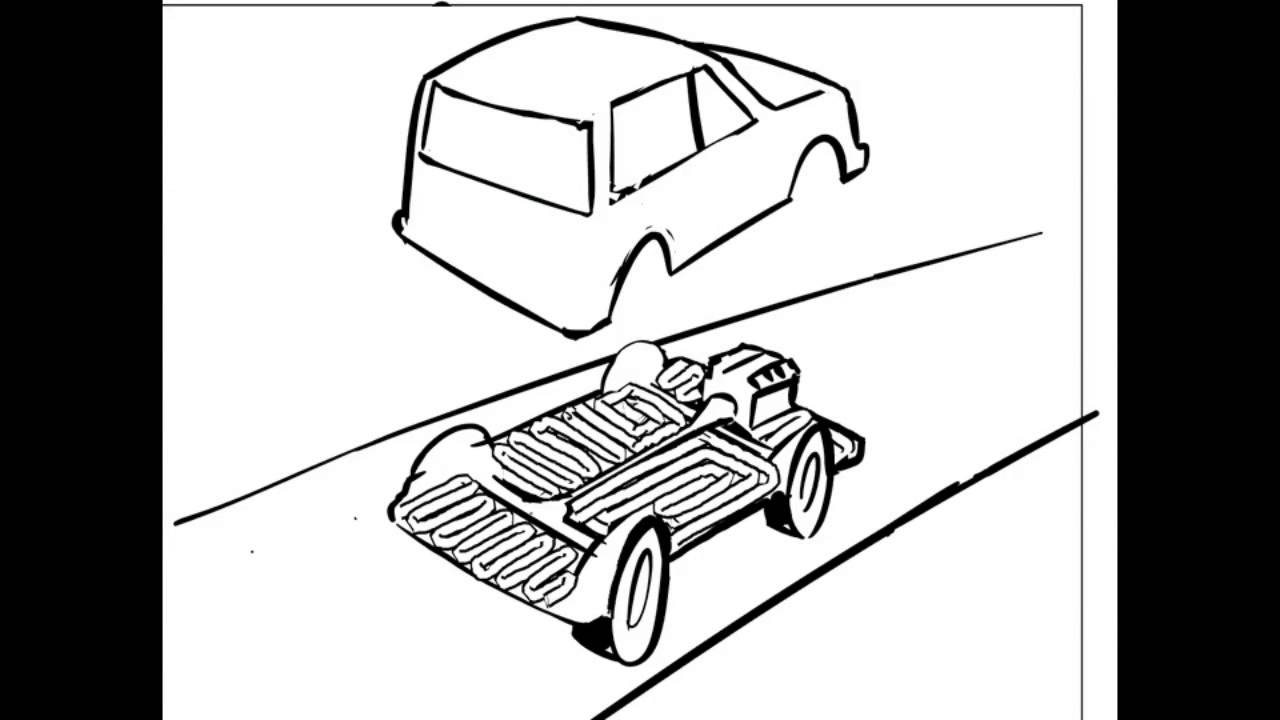 for substitutions for petroleum or gasoline tanks for cars and light trucks. Per mile, if you give me the same car, and I have a natural gas motor in one and a gasoline motor in the other, the natural gas car will produce about 25 percent less carbon per mile traveled. The only thing that would change that is if there are methane leaks in the extraction proce
...
How did you decide to approach the problem of natural gas cars from this particular angle, with tanks that can be conformed to the shape of a car?
In general, as an engineer or scientist, you have a certain set of tools, a certain set of hammers, and you bang all of the nails you see with that set of tools and hammers.
Within this building, we happen to be very good at geometry and computational geometry, and some arcane areas of mathematics, such as space-filling curves. Turns out, we were also do a lot of work on pressure vessels, because we were working on inflatable objects for a long time.
Through serendipity (I think we should ascribe a lot more of society’s invention to serendipity than to anything else) just because we were thinking about energy and space-filling curves and pressure vessels, this all came together. Because you needed to sort of be aware of those three things to have the insight to produce the particular new technology tanks that we’re doing. In some respects, every project in the building has an origin that’s serendipitous like that.
...
oops
:{SMITHSONIAN.COM
}:OCTOBER 23, 2013
Saul Griffith, founder and CEO of Otherlab, has a habit of building cool things, from a kite-like wind turbine to a smart rope that can sense strain and report frays. The MacArthur Foundation, which awarded Griffith a “genius” grant in 2007, has called him “a prodigy of invention in service of the world community.”
Griffith’s latest venture, Otherlab, is a research company reminiscent of the “invention factory” created by Thomas Edison. It operates in a former pipe organ factory in San Francisco, where redwood bannisters, multi-paned windows, scattered organ parts and plenty of machinery create the sense that a 19th-century inventor like Edison might feel perfectly at home tinkering in the lab’s sunlit rooms.
Among several projects in the works here are two energy technologies that could unlock a future of cheap solar power and mainstream natural gas cars. “The ultimate environmental problem to work on,” Griffith says, “is the way we create energy and use energy.”
In an upstairs room, just past a large, inflatable boxing robot, an Otherlab team is working on a new way to tilt mirrors for concentrating sunlight at large solar plants. The design positions a mirror atop plastic containers, which stretch and scrunch—but don’t buckle—as their internal pressure is adjusted using compressed air. The idea is to cut costs by using plastic and air to aim small mirrors instead of the motors and steel typically used today to tilt billboard-sized mirrors.
For natural gas cars, Griffith’s team wants to eliminate the bulky, cumbersome, and expensive fuel tanks used in natural gas cars today. Otherlab’s solution takes long, thin tubes and bends them like intestines into tightly packed shapes that conform to the available space in a vehicle. The company has received a $250,000 grant from the Department of Energy’s ARPA-E program for moonshot energy projects to develop the design over the past year.
Griffith has pursued energy inventions that seem like long shots before. In 2006, he co-founded a company called Makani Power, which devised an airborne wind turbine. Tethered like a kite at the end of a string, an aircraft flies in circles at high altitude. Wing-mounted rotors capture the rushing wind and convert it to electricity using small generators. The tether transmits this electricity to a station on the ground.
Griffith spoke with Smithsonian.com about the ingredients for energy innovation, why he’s excited about natural gas cars, and his vision for a massive network of small labs.
When did you start thinking about applying your skills toward energy problems?
The focusing moment probably came after I started Makani Power, which was a wind energy company. It was difficult to convince people why it was worthwhile doing this crazy sounding technology: We’re going to fly 767s at the ends of pieces of string and generate electricity from wind 5,000 feet up. Everyone just looks at you like you’re a space alien.
We knew it was totally possible and have now proven that it’s possible and in fact, we’re doing it. But in the early days, you need a lot of money to do these types of energy technologies. And when you’re trying to convince people to give you that money, you need a very good story. So that made me contextualize just how much transformation the energy system needs at the civil infrastructure level to meet the needs of climate change.
Tell me about the team and environment you’ve cultivated here at Otherlab. How are they helping to further those larger goals?
Otherlab is an independent research company. We create technologies. Sometimes those technologies become their own independent companies, and we spin them out, or sometimes we license those technologies to other companies to do things with.
We’re about 25 people. We’re right in the middle of urban San Francisco. We have about 95 percent walking or bicycling commuters to work. So we’re a low-carbon office, just in terms of the transportation we use.
We have a number of projects—two specifically in the energy space right now. We would like to have a dozen, partly because we’ve done so much research on how we use energy and how we create it, that we have this nice database of where technical contributions can be made to change that.
There are really two classes of solar energy generation: One is photovoltaics; the other is concentrated solar thermal, which means you heat something up and turn that heat into electricity [through] a turbine or some similar mechanism. We are working on a heliostat technology—which means a mechanism for following where the sun is in the sky—that will make photovoltaics more efficient, because the photovoltaics will be more ideally oriented towards the sun. You get about 20 or 30 percent more energy out of the same solar cell if you can cheaply track it.
Perhaps more importantly, it takes about 80 percent of the cost out of the heliostat field of traditional solar thermal. These are these huge plants in the desert. The heliostat field is about 50 percent of the cost of the whole plant, and we want to take about 80 percent of the cost out of that. So, net, hopefully make a 30 or 40 percent decrease in the cost of that type of electricity.
Is most of that cost in the materials, or in some advanced technology?
For all energy technologies, they are at such enormous scales that really the cost of the machines is somewhat equivalent to their weight. Anything you can do to make them lighter weight or more efficient means a very high cost reduction. Because they’re all made out of commodity materials: silicon, aluminum, and steel, and carbon—these are cheap bulk materials. You have to use them efficiently to cover vast surface areas. So we end up winning because we use a lot less material to point the same amount of light, and we use even cheaper materials and manufacturing processes.
We’re also working on for substitutions for petroleum or gasoline tanks for cars and light trucks. Per mile, if you give me the same car, and I have a natural gas motor in one and a gasoline motor in the other, the natural gas car will produce about 25 percent less carbon per mile traveled. The only thing that would change that is if there are methane leaks in the extraction process.
Which there are, right?
There absolutely are. If you have 3 to 4 percent parasitic leaks from the wellhead, then it’s net-zero better than gasoline.
Nevertheless, I’m super excited about it. I think the role of engineers in society is to provide technology options for society to choose yes or no. And as much as engineers would like to be the judge, jury, and executioner, we have to work with what society wants. So, I believe it’s worth developing this capacity because I think we can solve the wellhead problems of natural gas. I think it’s very important to have higher energy independence, so you have to weigh the moral conundrum of fracking, versus the moral conundrum of fighting oil wars in foreign nations.
The same technology that we’re developing in those tanks is also useful for large-scale compressed air and compressed steam energy storage. So we’re creating a technological capacity that’s useful in other domains in energy.
How did you decide to approach the problem of natural gas cars from this particular angle, with tanks that can be conformed to the shape of a car?
In general, as an engineer or scientist, you have a certain set of tools, a certain set of hammers, and you bang all of the nails you see with that set of tools and hammers.
Within this building, we happen to be very good at geometry and computational geometry, and some arcane areas of mathematics, such as space-filling curves. Turns out, we were also do a lot of work on pressure vessels, because we were working on inflatable objects for a long time.
Through serendipity (I think we should ascribe a lot more of society’s invention to serendipity than to anything else) just because we were thinking about energy and space-filling curves and pressure vessels, this all came together. Because you needed to sort of be aware of those three things to have the insight to produce the particular new technology tanks that we’re doing. In some respects, every project in the building has an origin that’s serendipitous like that.
You’ve**written recently**about the value of a research model based on a multiplicity of small, independent labs. Would you explain that?
The modern research model isn’t in fact the modern research model. Up until World War II, a majority of research was done in independent labs and commercial laboratories, and a little bit at universities. National labs really didn’t exist.
The two world wars and the success of the Manhattan Project and the Apollo mission kind of convinced everyone to centralize all the R&D resources into a set of national laboratories and into universities. Elite universities would become research universities.
I’m not saying that’s terrible. That has produced a lot of really good work. But we did it at the expense of small independent labs. Now we live in an age where collaboration across distance is very easy because of the Internet. Tools are cheaper than ever. And I think it’s time to ask the question: Is this way that we allocate society’s research resources as good as it could be? Meaning that we largely spend it at universities and in national labs.
I would love to see many, many more small labs because I think small teams of people are where the real innovation happens. And geographic diversity—having more people thinking about their local specific problems, in the context of the general research that society needs to do—would be really useful.
Where do you think the most exciting energy innovation is happening now?
In the energy space, the most exciting things are nearly all happening in little startups, I think, and well, big startups—I think Tesla is doing a great job. I think Makani now at Google [Google acquired Makani in May] is doing really interesting stuff in wind. I think there’s a bunch of interesting private companies doing biofuels research. I’m not a huge fan of biofuels, but I’m glad that they’re doing it and they’re doing work well.
The list is sadly short. Not a lot of kids grow up thinking, “Oh energy is the problem I want to work on.” Everyone wants to solve the climate problem, but very few teenagers are aware that you solve that by solving the way that we produce and use energy. I would like, for my four-year-old son and my newborn daughter’s sake, more good energy research.
You came to California from Sydney, Australia, by way of Cambridge, England. What brought you here, and what keeps you here?
I think the honest version is wanderlust— you know, spirit of adventure, travel the world and see where the winds take me. But if I did revisionist history, or thought about what was the magnetic pull that made me wind up in California, I could not do what we are doing in this building in Australia. Australia does not have the R&D funding or the culture of research and development that would enable this. It would be difficult to find the set of talent that we have in this building in Australia.
In this building, there are a number of foreign nationals who, like me, are in California because of two reasons: America has the right culture to do this work. And America has the right capital structures. There is risk capital available for crazy people like me in California.
Sadly, I think America’s at risk of losing both of those advantages. And they are huge advantages. Technology is really the frontier—it drives economic progress. America has won the last century because it had the best people. Think of the Manhattan Project—it was largely Eastern Europeans who did the physics and the math and the engineering. They were imports; same for the Apollo mission; same for a huge number of things.
America has traditionally pulled in the best and brightest people from the entire world and put them to creative effort in the interest of America. But due to security paranoia and immigration concerns, America is dropping the ball on that.
Would you say you’re optimistic that the world’s energy problems can be solved?
I am optimistic that the world’s energy problems can be solved, because I know that they can be solved. I’m not optimistic that we will solve them, because people are people, and we’re still fighting over whether it’s a problem.
I spent more than a year being quite depressed about this fact. Then I had my child and I realized, you know, the environmental future does not look as good for him as it did for me. It has shifted in my generation, and the Baby Boom generation before me.
You still have to be in the game. It’s worth fighting for the things, the world that you would like to create. Hopefully we’re just proving that you can do that, and we’ll get more people fighting on the side of solutions. I think that’s the best you can hope for. Maybe we’ll pull it off.
==
2010
https://www.inc.com/magazine/20100201/saul-griffiths-house-of-cool-ideas.html
...When the MacArthur Foundation handed Griffith one of its famous "genius grants" in 2007, it called him a "prodigy of invention in service of the world community." It cited his work at MIT, where as a graduate student he demonstrated how machines can self-assemble, and where he designed a membrane-based molding system that could be used to mass-produce cheap corrective lenses for the developing world (and that eventually became a company now known as OptiOpia); as well as his work educating children about science through the quirky, instructive cartoons known as Howtoons; and, lastly, for the many other clever and practical devices born at Squid Labs, the now-defunct Bay Area research laboratory that once served as his home base.
...
"We have some work that's good and paying," he says. "We have a whole bunch of intellectual property we're trying to get out in the world -- cool stuff that we've developed but never had time to push out. We do this superhigh abstract math and physics stuff, but then you're always thinking about its association with other things. We realized, Wow, we could use this to make amazing cardboard gorillas or jigsaw puzzles."
So that started as something else entirely?
"That started," Griffith says, "when DARPA said, 'We would like you to build us Terminator 2, quite literally.' [Terminator 2, if you're not familiar with the movie of the same name, was a sort of animate silver goo that looked like mercury and could fashion itself into any form it encountered, animal or otherwise.] Their example: Wouldn't it be great if our soldiers had a screwdriver that became a wrench that became an airplane?"
I laugh. He doesn't. "There's a deep relationship between information and structure," he says. "You need a certain amount of information to describe a 3-D structure."
This is not easy to grasp, but the gist is that Griffith and Bachrach haven't yet made T2, but in the early stages of fumbling in that general direction, they have made some cool 3-D gorillas that can easily be manufactured in pieces, and given a few more months, they might also change the way cars are assembled.
"We specifically have been working on this idea that we can build a mechanical synthetic analog to DNA," says Griffith. "Turns out, I can build a string that can fold any 3-D shape from a string of tetrahedra. By choosing a left- or right-hand fold at any hinge, it can make any shape. And we developed some pretty elegant math and theory that describes how you do that."
That has since become another puzzle -- a strand of plastic DNA that can be made, via a series of rights and lefts, into just about anything. It's out at toy fairs now and should be in stores sometime in 2010.
...
He has, he says, "every entrepreneur's problem. You're always trying to find the union of things you want to work on and things that are marketable and investable. And to find the overlap in that Venn diagram."
As the two of us eat lunch, Griffith wanders back around to the underlying question of all these conversations.
"Here's the business story," he says. "We're going to hit 450 parts per million" -- the scientific assessment of the maximum amount of carbon our atmosphere can handle -- "because we have no choice, and whoever invents technologies that allow people to increase their quality of life while hitting that number wins -- and wins big." He pauses.
"The business landscape looks like infinite possibility."
==
Makani Power was an Alameda, California-based company that developed airborne wind turbines with the support of Google and the U.S. Department of Energy office of :{ARPA:(style="background-color:#ffff66;"):}::{-E:(style="background-color:#ffffff;"):}:. According to some experts in the field, Makani is currently the world leader in the development of airborne wind powerextraction systems.[1] According to other experts and analysts, the early selected method of high complexity has severe problems.[2]
Makani was founded in 2006 by Saul Griffith, Don Montague, and Corwin Hardham.[3] It received funding as part of Google.org's Renewable Energy cheaper than Coal (RE[4] "Makani" is Hawaiian for "wind."[5] One of the founders, Corwin Hardham, died in 2012 at age 38.[6]
Mechanical progress for their kite system[edit]
In order to meet its goal of producing low-cost renewable energy, the Makani kite-energy system uses autonomous tethered wings which fly in a circular path and generate electricity via wind turbines mounted upon the main wing, a method already in public domain; expert Miles Loyd in 1980 analyzed that for large scale purposes flying the generators will be disfavored because of the need to fly the mass of the generators;[7] many of Makani Power competitors have generators kept on the ground, like KiteGen, Italy.[8] The electricity is transmitted to the ground via an electrical cable within the kite's tether.[9] Several patent applications have been made; some have been granted.
On the 23 May 2013, Makani Power was acquired by Google and will be folded into Google X.[10]
Saul Griffith is an Australian American inventor. He is the founder or co-founder of seven companies, including Otherlab (where he is currently CEO), Makani Power, and Instructables.
- 1 Early life and education
- 2 Current projects
- 3 Awards
- 4 Recent patents and publications (selected)
- 5 References
- 6 External links
Early life and education
Saul Griffith was born into an academic family, [dad did cloth?]and encouraged to question all around him, to experiment as a process of learning, and to communicate effectively. He was educated in the public school system at selective primary and secondary levels. He won a scholarship to study Material Science at the University of New South Wales where he graduated in 1997 with a B.MET.E. In 2000, Griffith graduated from the University of Sydney with a Master of Engineering degree.[1]
He won a scholarship to MIT Media Lab to study towards a PhD that he completed in 2004.
The subject of his PhD Thesis was "self-replicating machines". They were one of the first instances of artificial replication being demonstrated using real physics.[2]
Current projects
Saul is the co-founder and CEO of OtherLab, a research and development company working on computational manufacturing and design tools[3] and applying those tools to projects such as inflatable pneumatic robots and prostheses,[4] novel approaches to heliostat design,[5] and applications of computational origami to the design of pressure vessels (e.g. for compressed natural gas) in arbitrary shapes.[6]
Previously, he was a co-founder of Squid Labs, and its spinout companies and projects Makani Power, WattzOn, HowToons, Instructables, OptiOpia, Potenco and Monkeylectric.[7]
Saul Griffith leads the movement to explain simply and illuminate the technical and practical energy needs of the planet. He also worked closely with the OLPC team to develop a portable human-powered source sufficient to regenerate a battery in a low-cost laptop.
- 2008 co-Founder Wattzon — Developing personal energy audits to allow people and organizations to understand their power consumption. Role: Chief Scientist
- 2007 co-Founder Optiopia, Inc. — Developing low cost solutions for testing refractive error and supplying corrective eyeglasses.
- 2006 co-Founder Makani Power — Role: President & Chief Scientist TED talk video unveiling the invention what Makani Power has been working on: giant kite turbines that create surprising amounts of clean, renewable energy. See Kite power.
- 2006 co-Founder Potenco (www.potenco.com) —Human-powered solutions for electronic devices. Role: Advisor to CEO, Colin Bulthap
- 2005 co-Founder Instructables LLC (www.instructables.com) — Open source step-by-step hardware construction collaboration. Role: Advisor to CEO, Eric Wilheim, Ph.D.
- 2004 co-Founder Squid Labs LLC — “Do Tank” research lab based in Emeryville, California. Role: Inventor
- 2004 co-Founder HowToons LLC — A mischievous, informal science education through comic books. Role: Author with Joost Bensen and Nick Dragotta
- Technical Advisor: make magazine, Popular Mechanics magazine
- Author of HowToons 120-page graphic novel published by Harper Collins

Griffith now lives in San Francisco.[8]
Awards[
- 2007 – MacArthur Foundation "Genius grant".
- 2006 - WIRED “Rave” awards
- 2005 - Time Magazines “Top Inventions of 2005” (Smart electronic rope)
- 2005 - “Technologist in the aid of humanity” award, MIT Technology Review TR35, as one of the top 35 innovators in the world under the age of 35.[9]
- 2004 - Lemelson-MIT Prize $30,000 Student Prize for invention
- 2003 - MIT IDEAS competition award, Boeing Company Domestic Prize
- 2002 - Australian Academy of Technical Sciences and Engineering Symposium Fellow
- 2001 - National Inventors Hall Of Fame, National Collegiate Inventors Award
- 2000 - MIT LEGO Fellow
- 1998-2004 - Research Assistantship, MIT Media Laboratory
- 1994/5 - UNSW / UC Berkeley International Student Exchange
- 1993-98 - UNSW Co-Op Scholarship
Recent patents and publications (selected)[edit]
- Pat Pending: US Application 20030052425: Lens molding apparatus and related methods
- Pat Pending: US Application 20050231207: Electronic Elongation Sensing Rope
- Self-replication from random parts. S. Griffith, D. Goldwater, J.M. Jacobson. NATURE. Vol. 437,29 September 2005, pp. 636
- Nanostructure fabrication by direct electron-beam writing of nanoparticles. S. Griffith, M.Mondol, D. Kong, J. Jacobson. Journal of Vacuum Science & Technology B: Microelectronics and Nanometer Structures, Vol. 20, No. 6, pp. 2768–2772, November 2002
- High Resolution Micromachined Interferometric Accelerometer. E.B. Cooper, E.R. Post, S.Griffith, J. Levitan, S.R. Manalis, M.A. Schmidt, C.F. Quate. Applied Physics Letters, Vol. 76, No.22, May 2000
- Growing Machines. MIT PhD Thesis, Program in Media Arts and Sciences, September 2004 US 6,348,295; US 6,664,027: Methods for manufacturing electronic and electromechanical elements and devices by thin-film deposition and imaging
- Towards Personal Fabricators: Tabletop tools for micrometre and sub-micrometre scale functional rapid prototyping. MIT Master's Thesis. MIT Libraries, 2001
- Thinkcycle at MIT. Sharing Distributed Design Knowledge for Open Collaborative Design. N.Sawhney, S. Griffith, Y. Maguire, T. Prestero, TechKnowLogia, Jan-Mar 2002, pp. 49
References[edit]
- :{Jump up:(style="top:-99999px;clip:rect(1px 1px 1px 1px);overflow:hidden;position:absolute !important;padding:0px !important;border:0px !important;height:1px !important;width:1px !important;-webkit-user-select:none"):}:^ "Saul Griffith". MacArthur Foundation. Retrieved September 19, 2010.
- :{Jump up:(style="top:-99999px;clip:rect(1px 1px 1px 1px);overflow:hidden;position:absolute !important;padding:0px !important;border:0px !important;height:1px !important;width:1px !important;-webkit-user-select:none"):}:^ http://alumni.media.mit.edu/~saul/PhD/index.html
- :{Jump up:(style="top:-99999px;clip:rect(1px 1px 1px 1px);overflow:hidden;position:absolute !important;padding:0px !important;border:0px !important;height:1px !important;width:1px !important;-webkit-user-select:none"):}:^ "Projects". otherlab.com.
- :{Jump up:(style="top:-99999px;clip:rect(1px 1px 1px 1px);overflow:hidden;position:absolute !important;padding:0px !important;border:0px !important;height:1px !important;width:1px !important;-webkit-user-select:none"):}:^ :
 . youtube.com.}:
- :{Jump up:(style="top:-99999px;clip:rect(1px 1px 1px 1px);overflow:hidden;position:absolute !important;padding:0px !important;border:0px !important;height:1px !important;width:1px !important;-webkit-user-select:none"):}:^ "Novel, Disruptive Approaches to Heliostat Design". sunfolding.com.
- :{Jump up:(style="top:-99999px;clip:rect(1px 1px 1px 1px);overflow:hidden;position:absolute !important;padding:0px !important;border:0px !important;height:1px !important;width:1px !important;-webkit-user-select:none"):}:^ "Conformable Tank". otherlab.com.
- :{Jump up:(style="top:-99999px;clip:rect(1px 1px 1px 1px);overflow:hidden;position:absolute !important;padding:0px !important;border:0px !important;height:1px !important;width:1px !important;-webkit-user-select:none"):}:^ Holthouse, David (December 6, 2007). "How $500,000 can save the world". Fortune Small Business. Retrieved September 19, 2010.
- :{Jump up:(style="top:-99999px;clip:rect(1px 1px 1px 1px);overflow:hidden;position:absolute !important;padding:0px !important;border:0px !important;height:1px !important;width:1px !important;-webkit-user-select:none"):}:^ "September 15, 2010". The Colbert Report. September 15, 2010. Comedy Central.
- :{Jump up:(style="top:-99999px;clip:rect(1px 1px 1px 1px);overflow:hidden;position:absolute !important;padding:0px !important;border:0px !important;height:1px !important;width:1px !important;-webkit-user-select:none"):}:^ "2005 Young Innovators Under 35". Technology Review. 2005. Retrieved August 15, 2011.
External links[edit]
- TED Talks: Saul Griffith on everyday inventions at TED in 2006
- Howtoons toons his collaboration to produce how-to cartoons for kids
- http://www.treehugger.com/files/2009/02/saul-griffith-discusses-starting-from-the-global-warming-finish-line-video.php
https://www.ted.com/talks/saul_griffith_on_everyday_inventions
Saul Griffith is doing some of the most interesting work around energy. In this webcast, he'll take a scientific look (physics and chemistry based) at all of the earth's energy resources, both stored (nuclear and fossil fuels) as well as renewable (solar, wind, wave, geothermal, tidal, wave, photosynthetic). Looking at the sizes of each of these resources and comparing them to humanity's energy consumption is far from depressing. Although humanity uses a lot of energy, there are very large sources of non-carbon producing energy that can be tapped to meet our needs.this is a brilliant and funny 60 minute talk, plus 30 Q&A) at LongNow. Saul has multiple degrees in materials science and mechanical engineering and completed his PhD in Programmable Assembly and Self Replicating machines at MIT. He is the co-founder of numerous companies including: Low Cost Eyeglasses, Squid Labs, Potenco, Instructables.com, HowToons, Makani Power, and WattzOn, a free online tool to quantify, track, compare and understand the total amount of energy needed to support all of the facets of your lifestyle. Saul has been awarded numerous awards for invention including the National Inventors Hall of Fame, Collegiate Inventor's award, and the Lemelson-MIT Student prize. In 2007 he received a MacArthur Foundation "Genius Grant." fantastic TEDtalkon high altitude wind. Another TEDtalk on bio-mimicry, or actually, working from first principles, as did Bucky Fuller. At X Prize, he calls for a systems science for design, Terrarium Science (video). PARC talk video **** 9/12.