Robert Bradley Bak
bak estb 6 26
13 tags 4 22
NO MERRI
SEE AEA IER
SEE IHS
ENRON?
ECONOMISTS?
THOS PYLE BROOK BROS
see master resource BS blog
CU case OOPS NO SMITH
:{:{:{Supreme Court Justices Antonin Scalia and Clarence Thomas have attended these events. (According to Salon, "Thomas claimed he just made "a brief drop-by" at the Koch brothers' January 2008 Palm Springs political retreat to give a talk; in fact he was reimbursed for four days of “transportation, meals and accommodations” by the Federalist Society.[56]"). The attendance of Thomas and Scalia has sparked debate over judicial ethics and the2010Citizens United decision.[57]
}:
Common Cause filed a petition with the Justice Department in January 2011 alleging a conflict of interest for these Justices, as David and Charles Koch operate foundations that contribute to political groups, which might benefit from relaxed campaign finance rules. ^[58] Common Cause has also noted that the Cato Institute, which Charles Koch founded, filed an amicus brief in Citizens United opposing campaign finance. ^[59] The Center for Competitive Politics also filed a brief in the case; the Center is headed by Bradley Smith, who is affiliated with the Institute for Humane Studies where Charles Koch is Chair of the board and funder. ^[60] SW ^koch ^ind}:}:
===
GREENPEACE
Institute for Humane Studies (IHS)
Koch Industries Climate Denial Front Group
$36,886,734 from Koch foundations, 1997-2017.
The Institute for Humane Studies at George Mason University offers scholarships and career training to libertarian students. Charles Koch is the Chairman of the IHS board of directors.
Mother Jones called the Institute for Human Studies a “haven for climate change deniers.” Several climate deniers have prominent positions at IHS, including: Robert Bradley, member of the Academic Review Committee and author of *Climate Alarmism Reconsidered* (2003); and Fred Singer, Research Professor at IHS.
A number of climate deniers who share affiliation with other Koch-funded organizations are guest lecturers for IHS. Examples include Bruce Yandle of Clemson University, among Charles Koch’s most-funded universities, who also serves as Senior Associate with the Property and Environment Research Center (PERC). Another example is Kenneth Green, Resident Scholar with the American Enterprise Institute (AEI) and the defunct Environmental Literacy Council, a group that pushed for teachers to present climate science as controversial.
IHS is a member of the State Policy Network.
:{:{---}:
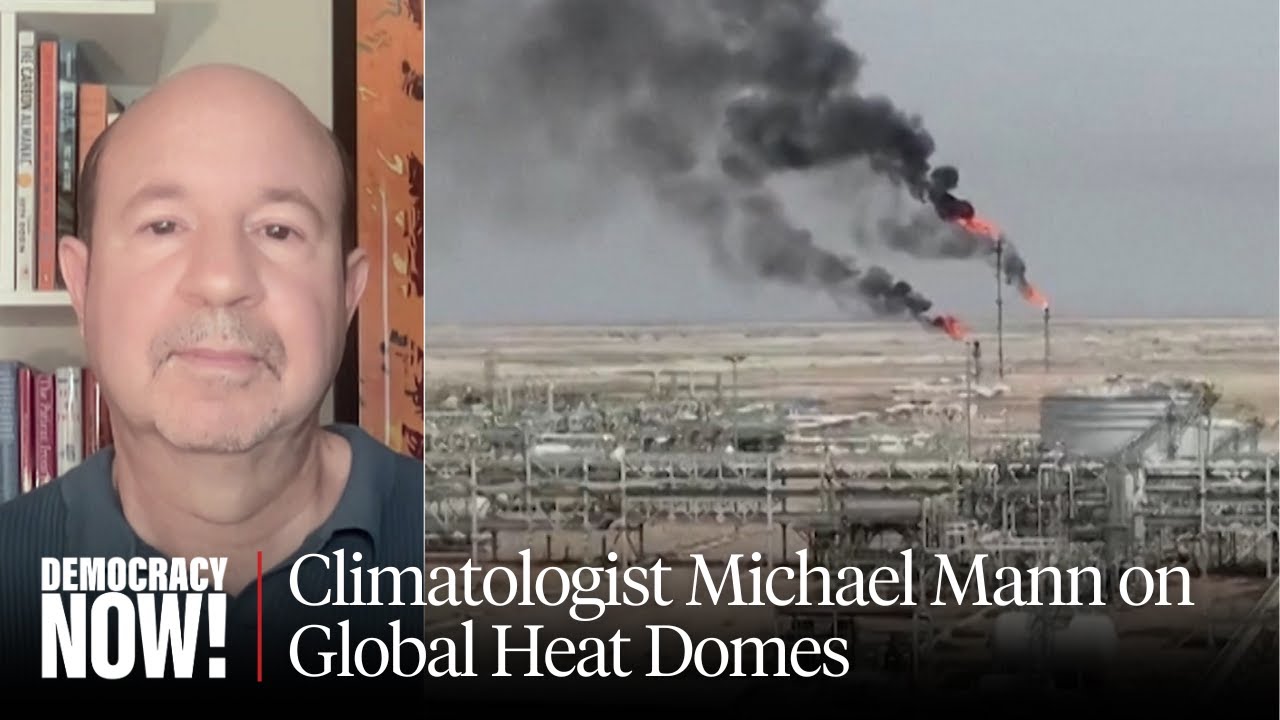
Michael Mann’s Social Media Rants Turn Anger Into Alienation
Angry Michael Mann isolates himself as climate exaggeration backfires.
:{:{[August 23, 2025, }:
in Energy, Extreme Weather, News and Opinion, Politics, Science

Michael “ClimateGate” Mann cannot get out of his own way.
His arrogant, condescending social tweets speak for themselves—just as the words, sentences, and paragraphs of the East Anglia emails did. [some emphasis, links added]
“And yes, there is empirical, peer-reviewed support for the conclusion that climate deniers, in general, are truly awful human beings.” (–Michael Mann, via X)
He is not the kind of person you would want in just about any endeavor, much less as a climate scientist trying to present a case.
This post traces Mann’s angst on X and then at BlueSky, his successor to X:
And how has that gone, Michael?
Here is a sampling of Mann’s anger and despair at his critics, and even the Left, which is weakening in the face of utter rejection from the political majority.
Start with this one:
And then his headlines:
“Scientists brace ‘for the worst’ as trump purges climate mentions from website…”
“The keys to the car have been given to the polluters and fossil fuel plutocrats and they intend to drive it off the climate cliff.”
“Conservative and Concerned about Climate Change? You’re Not Alone – A Conversation with Bob Inglis and Michael Mann”
“Humans brought the heat. Earth says we pay the price”
“‘They Know They’re Lying’: The Fossil Fueled War on Science, Humanity: Latest #BradCast“ ”The US is poised to become an authoritarian state ruled by plutocrats and fossil fuel interests.”
The US withdrawing from the Paris Agreement is unfortunate, but multilateral climate action has proven resilient and is stronger than any single countries politics and policies.”
“I just reported [X] as a ‘violent & hateful entity’. You can too.”
Mad at Allies
“@HuffPost has offered no explanation of why it has chosen to act as an enabler of fascism, racism, bigotry, misogyny, and authoritarianism.”
“The sad irony of an account that purports to speak for science (a) referring to the overwhelming evidence for human-caused climate change as a matter of “belief” while (b) ignoring what the science actually says here …
“To save the planet, stop reading The [Washington] Post.”
“Note to journalists: If you are writing about these wildfires and not mentioning climate change at all, you are complicit w/ an agenda-driven campaign of misinformation by the right.”
“one of the more dangerous forms of trollbot, the ‘divider’. They pose as climate activists but they are actually ‘agent provocateurs’, whose m.o. is to create conflict, discredit experts, and divide the community of climate advocates. Make sure to report and block!” (January 11, 2025 on X)
“A reminder, Bjorn Lomborg & the WSJ editorial page habitually team up to promote disinformation about climate change and extreme weather events, especially wildfire.”
“MAGA is everything that is evil in this world. And they must be viewed and dealt with as such.”
“These people constitute a threat to us and the planet: #PeterThiel#ElonMusk #VladmirPutin #MBS #RupertMurdoch #LeonardLeo#DonaldTrump #CharlesKoch“
“Actually, the greed of a small number of malicious plutocrats & autocrats we can count on the fingers of our hands: #Thiel #Musk#Putin #MBS #Murdoch #LeonardLeo #Trump.”
“The malicious lies spread by Musk, Putin, Trump & their MAGA parrots represent an existential threat to us and the planet.”
“Self-styled climate “centrists” deflecting attention from the PRIMARY underlying contributor to these disasters (fossil fuel burning and human-caused warming) are a free gift to polluters and petrostates.” January 11, 2025
‘Wildfires will get worse as the planet gets warmer.”
“Trump continues to be one of the most despicable people on the planet. He hates America and Americans (unless they bend the knee). An utter disgrace.”
“Well, @WSJ/Murdoch are a central cog in the fossil fuel disinformation machine, and Lomborg is their chosen liar-for-hire.”
“And yes, there is empirical, peer-reviewed support for the conclusion that climate deniers, in general, are truly awful human beings.” Source here
“The United States is now poised to become an authoritarian state ruled by plutocrats and fossil fuel interests. It is now, in short, a petrostate.”
More Recently (BlueSky)
“Scientists decry Trump energy chief’s plan to ‘update’ climate reports: ‘Exactly what Stalin did’ [yeah, that was me]” (12 days ago)
“Zeldin and EPA doing ‘opposite’ of protecting Americans from environmental threats with rollbacks. Lee Zeldin parrots discredited fossil fuel industry climate denier talking points.” (5 months ago)
“To be fair, the reputation and credibility of those five individuals [of the DOE science study] was already in tatters.” (17 days ago)
“There’s a reason it’s called the “enDANGERment finding”. Carbon pollution from fossil fuel burning represents a danger to both us and our planet.” (19 days ago)
“I don’t understand how any parent could so willingly serve as an enabler of the destruction of our world.” (20 days ago)
“I can’t think of anyone more qualified to present antiscientific [sic] climate denial propaganda than these five. And I can’t think of anyone more likely to seek out these fossil fuel apologists than Christopher Wright.” (22 days)
“It’s naive and unhelpful to argue this is just about some old man and his grudge against wind turbines. In fact, it’s in service of an agenda promoted by his deep-pocketed plutocrat backers. To ignore that connection is to play into their disinformation campaign. (23 days ago)
“Wondering why Trump is suddenly spending all his time bashing renewable energy? It’s to placate the petrostate actors & fossil fuel interests who installed him in the first place. He’s begging them to stand by him, knowing the very worst is yet to come….” (24 days ago)
“Sadly, it’s young American males who are buying into a really warped sense of masculinity (with plenty of help of course from a full court press by polluters, petrostates, plutocrats, and yes in many cases our press). Don’t simply blame the messenger.” (June 26, 2025)
“Trump (and more to the point, the polluters whose decades-old, focus-group-tested climate denial talking points he’s parroting) aren’t this ignorant. They’re banking on the fact that the American public is.” (2 months ago)
Final Comment
This is enough to keep a psychologist busy. Mann stepped into his own manhole, and he kept digging down.
Like Al Gore, he hurts his cause more than he helps it, as 97 percent of his colleagues (just an estimate) are more rational and quieter than he is on the same subject.
 *
Read more at Master Resource
---
---
enron green policy?!
http://www.politicalcapitalism.org/enron/ ~CSR
http://politicalcapitalism.org/wp-content/uploads/2016/09/CSR-and-Energy.pdf
on way to become biggest coal (broker?) sold wind to BP..."alarmist"
---
see master resource : https://www.masterresource.org/about/
hit man, retaliates if any FF crit? has quota or just trying to look relevant/effective to keep grants?
paul driessen blk death BS
---
OFF BS 6 26
Washington, DC Office
Robert L. Bradley Jr. is the founder of the Institute for Energy Research. As one of the nation’s leading experts on the history and regulation of energy markets, he has testified before the U.S. Congress and the California Energy Commission, as well as lectured at numerous colleges, universities, and think tanks around the country. Bradley’s views are frequently cited in the media, and his reviews and editorials have been published in the New York Times, Wall Street Journal, and other national publications.
Bradley is also a Senior Fellow at the American Institute for Economic Research and an Energy and Climate Change Fellow at the Institute of Economic Affairs in London. He is the author of eight books, including Energy: The Master Resource (2004); Edison to Enron: Energy Markets and Political Strategies (2011); and Enron Ascending (2018), where Bradley applies the classical liberal worldview to energy policies and related corporate controversies.
:{Bradley received a :{B.A. in economics}: from Rollins College, where he also won the S. Truman Olin Award in economics. He received an M.A. in economics from the University of Houston and a Ph.D. in political economy from International College.
Robert L. Bradley Jr. received his Ph.D. in political economy with distinction from International College in 1985, where renowned libertarian theorist Murray Rothbard served as his dissertation committee chairman. [1, 2]
Bradley also holds a B.A. in economics from Rollins College and an M.A. in economics from the University of Houston. He is best known as the founder and CEO of the Institute for Energy Research, a free-market think tank based in Washington, D.C. [1, 2, 3]
He has been a Schultz Fellow for Economic Research and Liberty Fund Fellow for Economic Research, and in 2002 he received the Julian L. Simon Memorial Award for his work on energy and sustainable development.}:
Areas of expertise: History of energy policy, history of the energy business, free market perspective on energy and environmental issues, public choice theory, resource economics, and social corporate responsibility
---
lI 6 26
I am a political economist and historian of government intervention in the U.S. energy industries with many books and articles published over the last four decades. I have also written a trilogy on the prehistory, rise, and fall of Enron Corp., where I worked for 16 years and was critical of their 'political capitalism' business model (see www.politicalcapitalism.org). I am a student of Austrian school economics, Public Choice, and Objectivist philosophy. I study the important works of neo-Malthusianism, from Peak Oil to climate alarm. Julian Simon has shaped my thinking into a worldview. Milton Friedman and Thomas Sowell are great thinkers for the ages in my view. I refer to myself as a classical liberal. I respect both economic and personal freedom. I am neither conservative nor Progressive but a liberal--in the classical sense. I now live in the Texas Hill Country. No battery, solar, or wind industrialization anywhere near, so I am blessed with Nature.
I’m old enough to remember when haughty people who call themselves “environmentalists” at least pretended to care about the actual environment. Those were some good times, weren’t they?
But those times started to fade when the climate alarm movement succeeded in convincing craven and gullible Western policymakers and judges that carbon dioxide, i.e., pl… https://blackmon.substack.com/p/saturdays-energy-absurdity-17-million
40 year veteran of the oil and gas industry. Long-time writer on energy issues. Widely recognized subject matter expert on energy. Contributor at Forbes.com, The Daily Caller, World Oil Magazine and The Petroleum Economist.
---
ENERGY POLICY?
Endorsements
[
Brandi Breeden
- 3rd
Growth Coordinator at Accordus](https://www.linkedin.com/in/brandi-breeden-78a84136/)
---
[
Georgina Villarreal
- 3rd
Chief of Staff at Ingenia Agency | Helping enterprises in Monterrey accelerate growth through digital transformation & strategy](https://www.linkedin.com/in/georgina-villarreal/)
---
[
Oleksandr Khudoteplyi
- 3rd
Tech Company Co-Founder & COO | Talking about Innovations for the Logistics Industry | AI & Cloud Solutions | Custom Software Development](https://www.linkedin.com/in/olkh/)
---
[
Jaime Saldarriaga, Ph.D.
- 3rd
Owner at Hydrology and Water Resource Science/Energy and Natural Resources/Climate/Utilities Regulation/Research/Mentoring/Global Issues/PEACE. Interest in GeoPolitics.](https://www.linkedin.com/in/jaime-saldarriaga-ph-d-9054219/)
---
[
Balakrishnan .
- 3rd
Co-Founder Avellon Intelligence | De-Risking Global Supply Chains from Geopolitical Chaos | Predictive Risk Strategy for Fortune 500s & Governments across the globe](https://www.linkedin.com/in/balakrishnansrini/)
SUSTAIN:
---
[
Joseph Gasper
- 3rd
Managing Director/CEO at A & A GLOBAL LTD](https://www.linkedin.com/in/joseph-gasper-a479102b/)
---
[Walter E. Grinder · 3rd
President Emeritus at Institute for Civil Society](https://www.linkedin.com/in/walter-e-grinder-42b7a462/)
---
[
Kenneth Chilton
- 3rd
Senior Environmental Fellow, CEE (Center for Economics and the Environment) at Lindenwood University](https://www.linkedin.com/in/kenneth-chilton-96a7427/)
---
The American Institute for Economic Research educates people on the value of personal freedom, free enterprise, property rights, limited government, and sound money.
NO LNX 6 26
Robert Bradley
Senior Fellow
Robert L. Bradley Jr., AIER Senior Fellow, is the founder and CEO of the Institute for Energy Research. He is author of eight books on energy history and public policy and blogs at MasterResource.
Bradley received a B.A. in economics from Rollins College, an M.A. in economics from the University of Houston, and a Ph.D. in political economy from International College.
He has been a Schultz Fellow for Economic Research and Liberty Fund Fellow for Economic Research, and in 2002 he received the Julian L. Simon Memorial Award for his work on energy and sustainable development.
The Daily Economy
2/27/26
Nuclear Power Needs Realism, Freedom
Decades of subsidies, regulation, and unmet promises have left nuclear power costly and uncompetitive.
Nuclear Power Needs Realism, Freedom
January 20, 2026
Nuclear Power: A Free Market Approach
Nuclear energy is a source of clean, dependable power. It is the only carbon-free energy source that can reliably deliver power day and night on a large scale. But its…
Nuclear Power: A Free Market Approach
September 16, 2024
Free Market Electricity: A Primer
Free-market electricity rests on time-honored theoretical and evidential foundations. Yet the classical-liberal alternative to heavy-handed regulation has been ignored for more than a century.
Free Market Electricity: A Primer
The Daily Economy
10/22/23
The Embargo at 50: Regulatory Causality vs. Anti-Oil Narrative
"What was obvious then should be more obvious today: Energy crises are governmental. Market challenges and solutions are entirely different from full-blown emergencies." ~Robert L. Bradley
The Embargo at 50: Regulatory Causality vs. Anti-Oil Narrative
The Daily Economy
9/14/23
Warm-Mongers vs. Classical Liberals
"Classical liberalism can stand proud on the climate issue—and offers the first-best policy of do no harm." ~ Robert Bradley
Warm-Mongers vs. Classical Liberals
The Daily Economy
7/13/22
Is Biomass “Green” Energy?
"Level field, no favor is a pro-consumer, taxpayer-neutral approach to energy policy. Voluntary transactions between consenting adults within a rule-of-law framework can be expected to arrive at efficient solutions." ~…
Is Biomass “Green” Energy?
The Daily Economy
4/1/22
Old Oil Ads Were Reasonable on Climate Change
"An impartial reading of them reveals rational commentary on the knowns and unknowns of energy and climate. The ads are hardly controversial." ~ Robert L. Bradley Jr. & Richard Fulmer
Old Oil Ads Were Reasonable on Climate Change
The Daily Economy
8/14/21
Energy Infamy: Nixon’s 1971 Price Controls Turn 50
"The 1970s stand as one of most grievous eras in the history of energy, and public policy in general. And it happened as a byproduct of a seemingly innocuous, temporary…
Energy Infamy: Nixon’s 1971 Price Controls Turn 50
The Daily Economy
6/23/21
Climate Models: Worse Than Nothing?
"Data continue to confound naïve climate models. Very difficult theory is slowly but surely explaining why. The climate debate is back to the physical science, where it never should have…
Climate Models: Worse Than Nothing?
The Daily Economy
5/1/21
Climate, CO2 Optimism
"Climate alarmism, never proven, is speculative—and increasingly so. Climate models are overpredicting real-world warming by half. For climate economists, lower-range anthropogenic warming flips the alleged externality from negative to positive.…
Climate, CO2 Optimism
The Daily Economy
4/2/21
Inside the Church of Climate
"Philosophy, not only economics and political economy, matters in the global warming/climate change debate. Start by checking your premises—and those of your intellectual opponents." ~ Robert L. Bradley Jr.
Inside the Church of Climate
The Daily Economy
3/16/21
Climate Alarmism Reconsidered
"Whatever the attraction, today’s climate alarm, now in its 33rd year, shows little sign of abatement within the green establishment or in government. The real threat is climate policy, not…
Climate Alarmism Reconsidered
The Daily Economy
2/22/21
W. S. Jevons (1865) on the Limits to Renewables
"William Stanley Jevons was the first intellectual to question the ability of renewables to serve as primary energies for industrial society. The deep, thorough insight of the father of energy…
eg from blog, note rubber glue reverse/mirroring
https://www.shaledirectories.com/blog-1/ecocide-reveals-the-totalitarian-heart-of-the-climate-cult/
Ecocide Reveals The Totalitarian Heart Of The Climate Cult
Robert Bradley, Jr.
Founder and CEO of the Institute for Energy Research
Principal, MasterResource: A Free-Market Energy Blog..
[Editor’s Note: Ecocide is the latest effort by the Church of Climate, a/k/a the Climate Cult; a totalitarian movement out to control every single aspect of others’ lives.]
The Climate Church of deep ecology has its hell-on-earth for nonbelievers–prison, and by insinuation, death sentencing. The crime is ecocide.
Enter Inside Climate News, a far-left climate website that features “the campaign to make ‘ecocide’ an international crime.” With nary a nod to private property rights to address some if not many commons problems (real, not manufactured), we the living are the culprit.
“On every continent,” the website explains, “humans have left their mark in the form of massive environmental destruction…”
…deforestation in Brazil; strip mining in Canada’s Tar Sands; the devastation of West Africa’s fisheries; the obliterations of landscapes and ecosystems by the wars in Iraq and Afghanistan. Pollution warms the planet, melting polar ice, bringing drought and wildfire to the land, intensifying hurricanes and raising sea levels. Scientists say there is worse to come. The idea of ecocide is a cri de cour for repair and reparation, against all odds. Inside Climate News, in partnership with NBC and Undark, report on the moral and legal case for accountability.
ICN founder David Sassoon pulls out the hammer [no sickle?] in “Ecocide: Should Destruction of the Planet Be a Crime?” with the descriptor:
To prosecute and imprison political leaders and corporate executives would require a parsing of legal boundaries and a recalibration of criminal accountability.
His analogy is Nazi war crimes:
At many moments in history, humanity’s propensity for wanton destruction has demanded legal and moral restraint. One of those times, seared into modern consciousness, came at the close of World War II, when Soviet and Allied forces liberated the Nazi concentration camps at Auschwitz and Dachau. Photographs and newsreels shocked the conscience of the world. Never had so many witnessed evidence of a crime so heinous, and so without precedent, that a new word—genocide—was needed to describe it, and in short order, a new framework of international justice was erected to outlaw it. Another crime of similar magnitude is now at large in the world. It is not as conspicuous and repugnant as a death camp, but its power of mass destruction, if left unchecked, would strike the lives of hundreds of millions of people. A movement to outlaw it, too, is gaining momentum. That crime is called ecocide.
Sassoon brings in the Catholic [as opposed to Baptist?] Popefor justification:
Pope Francis, shepherd of 1.2 billion Catholics, has been among the most outspoken, calling out the wrongdoing with the full force of his office. He has advocated for the prosecution of corporations for ecocide, defining it as the damage or destruction of natural resources, flora and fauna or ecosystems. He has also suggested enumerating it as a sin in the Catechism of the Catholic Church, a reference text for teaching the doctrine of the faith.
David Sasson’s profile, of an authoritarian and a totalitarian-in-waiting, follows in the way of explanation for these views:
David Sassoon is the founder and publisher of Inside Climate News. He has been a writer, editor and publisher for 30 years, involved with public interest issues: human rights, cultural preservation, healthcare, education and the environment. In 2003 he began researching the business case for climate action for theRockefeller Brothers Fund. … As an outgrowth of his research, Sassoon founded a blog in 2007 which has grown and evolved into Inside Climate News. He earned his undergraduate degree from Harvard University and a master’s degree from Columbia University’s Graduate School of Journalism.
Conclusion
The Church of Climate is ever more desperate, with a tripartite carbon-based energy boom underway (what is new?) and the climate math becoming impossible to reconcile with reality.Meanwhile scientific scrutiny grows toward climate modeling in general and the erroneous claims of negative climate trends, from temperature to droughts to floods to wildfires to sea level rise to ….
Climate authoritarianism is a dangerous fringe movement that must be exposed for its means and ends. Climate policy, not physical climate change, is the real risk and threat for better human living now and into the deep future.
Appendix: Deep Ecology Posts at MasterResource:
Editor’s Note: Remember precisely for whom David Sassoon, the promoter of thisStalinist “ecocide,” propaganda initiative, works. Like Bill McKibben, he is simply another paid shill for the Rockefeller family and its special interests. This is their latest attack on us.
Reposted, with permission, from Master Resource.
---
no lnx blog
review
“Let’s expose this dangerous charade. The Green New Deal is not green. It’s not new. And it’s not a good deal for America.” – Marc Morano, Green Fraud, p. 306.
Outside of a too-brief index, Marc Morano’s Green Fraud: Why the Green New Deal Is Even Worse Than You Think (Regnery: 2021) is a worthy addition to any library concerning today’s raging debate over climate and energy. It is one-stop shopping–400 pages worth–for a mount of eye-opening, sometimes amusing, but ultimately sad exaggerations and puffery from the Church of Climate.
A Shellacking
John Holdren, Bill Nye, Bill McKibben, and Joe Biden come in for a shellacking. The term central planning gets a lot of mention, as does bureaucracy and bureaucrats.
Greta and OAC get the most mentions of all. Al Gore goes unmentioned, as does James Hansen; they are taken care of in Morano’s other full-scale treatment, The Politically Incorrect Guide to Climate Change (2018).
Morano is a celebrity for the calm, reasoned side of the climate and energy debates. He is the proprietor of Climate Depot, a project of the Committee for a Constructive Tomorrow. With personality, he makes the crazy serious fun (how can you not?) in an era of ‘climate anxiety.’
One question the reader will have while turning the pages is how did all this get so far? The answer is a tsunami of Left foundation money, government push, politicized science (where believed-to-be theory trumps data), and mainstream media (MSM) bias. Stories about all this salt the book.
Flipping the Pages
Perhaps the best way to review this particular book is by random sampling (true–no cheating).
I just opened the book to page 183. There is a sidebar story, “Where is Fertilizer, Cement, Plastic Going to Come From?” It is about Bill Gates at a 2018 Stanford University Energy Forum calling out the modelers for a lack of realism about energy supply and demand.
Page 54 presents data on tornadoes and hurricanes. Good stuff as that time of year is either upon us or nearly so. Expect every example of extreme weather to be reported in the MSM as either the result of or consistent with man-made climate change.
One more toward the back of the book’s main text: pp. 246–47 on “Woke and Weeping Climate Scientists.” Examples of government scientists all-in on the politics. Church-of-climate scientists who cannot think in terms of economics, entrepreneurship, and adaptation. And ignorant scientists who do not (chose not) to understand energy 101.
Conclusion
Marc Morano is the fellow the other side just wants to cancel. Put him in any forum, and a rat-a-tat of arguments and examples will leave a Sci-Guy-Nye high-and-dry.
Of course, Morano doesn’t get the opportunities and attention he deserves against, say, the angry, dodgy Michael Mann. But the last laugh will always be his as the great climate alarm gets disentangled and critically reassessed as time goes on.
Judith Curry in her review of Green Fraud noted: “The response from the climatariat has been attempts to get the book ‘cancelled’.” But, she added:
Anyone who wants to understand the U.S. political debate over climate change should read this book. Climate activists should read this book to understand what they are up against (and also some of the foolishness in the name of climate activism). I would love to see a real attempt at critiquing this book (rather than attempts to cancel it or smear Morano).
The sorry present of the climate/energy debate will need some vital books come the autopsy. When that time comes, Green Fraud will serve as a go-to book. In the meantime, America, read away as part of a public opinion shift toward climate realism and energy basics.
Reposted, with permission, from Master Resource.
---
negin has reg arts on huffpo of aea/ier fuckery?
---
no lnx many
THE BLOG
Koch-Funded Climate Contrarians Make Mischief on Capitol Hill
With Congress about to head out of town for its summer recess, a Washington-based think tank is ramping up a campaign to foil any attempts to institute a tax on carbon emissions.
https://www.huffpost.com/entry/koch-funded-climate-contr_b_3620727
By
Elliott Negin, Contributor
Senior Writer, Union of Concerned Scientists
Jul. 19, 2013, | Updated Dec. 6, 2017
This post was published on the now-closed HuffPost Contributor platform. Contributors control their own work and posted freely to our site. If you need to flag this entry as abusive, send us an email.
Institute for Energy Research economist Robert P. Murphy criticized the Obama administration's calculation of the "social cost of carbon" at a recent Senate hearing.
With Congress about to head out of town for its summer recess, a Washington-based think tank is ramping up a campaign to foil any attempts to institute a tax on carbon emissions, The Hill, a Washington political trade publication, reported this week.
"We're hoping to put the final nail in the coffin of the carbon tax," said Benjamin Cole, the communications director for the Institute for Energy Research (IER) and its advocacy arm, the American Energy Alliance (AEA). "The proposal should be dead on arrival by the time lawmakers come back from August recess."
IER's campaign includes a survey of American attitudes about such a tax and a $120,000 to $150,000 radio ad buy targeting a handful of House members who, according to Cole, "are soft on the carbon tax issue."
The Hill story, however, merely described IER as a "conservative" group. That doesn't explain why a think tank named the Institute for Energy Research is so dead set against a carbon tax, given the initiative would certainly help some energy technologies, especially wind, solar and other renewables.
So why is IER so down on cutting carbon?
Because it's backed by the fossil fuel industry, that's why.
The Koch Connection
Over the last decade or so, IER and AEA have received hundreds of thousands of dollars from ExxonMobil; the American Petroleum Institute (API), the oil and gas industry's trade association; the Center to Protect Patient Rights, a secretive nonprofit group linked to Charles Koch and his brother David, the billionaire owners of the coal, oil and gas behemoth Koch Industries; and the Charles Koch-controlled Claude R. Lambe Charitable Foundation, one of a handful of Koch family funds.
Top IER-AEA officials also are well-entrenched members of the Koch brothers' climate change contrarian network. IER and AEA President Thomas Pyle, for example, is a former lobbyist for Koch Industries and the National Petrochemical and Refiners Association. IER and AEA Director of Regulatory and State Affairs Daniel Simmons, meanwhile, worked for the API-, ExxonMobil- and Koch-funded American Legislative Exchange Council (ALEC), a stealthy lobby group that has been trying to repeal state standards requiring electric utilities to use more renewable energy. Before his stint as director of ALEC's Natural Resources Task Force, Simmons was a research fellow at the Koch-founded and funded Mercatus Center at George Mason University.
Not to be outdone, IER founder and CEO Robert L. Bradley, Jr. -- a former public policy analysis director at the now-defunct Enron Corp. -- is an adjunct scholar at the Koch-founded and funded Cato Institute and the API- and Koch-funded Competitive Enterprise Institute.He also has been a featured speaker at the API- and Koch-fundedHeartland Institute's annual climate science-bashing conference, and is a member of the academic review committee at the Koch-funded Institute for Humane Studies at George Mason. The Institute for Humane Studies' chairman, I should add, is Charles Koch.
The Social Cost of Carbon
IER is doing more than trying to kill a carbon tax in its crib. Just yesterday, IER Senior Economist Robert P. Murphy testified on the "social cost of carbon" at a hearing on Capitol Hill. That's the official government estimate of the financial damage caused by carbon pollution, and it's important, as my colleague Rachel Cleetus pointed out in a recent blog, because it enables federal agencies to include the societal value of cutting carbon emissions, either directly or indirectly, when conducting traditional cost-benefit analyses of regulations.
The Obama administration recently boosted the monetary costs of carbon pollution to better reflect reality. According to Cleetus, a senior climate economist at the Union of Concerned Scientists: "The increase in the new social cost of carbon estimate is broadly consistent with what we're seeing in the scientific and economic literature on the growing risks and costs of climate change, and in fact is very likely an underestimate of the true cost of our carbon emissions.
"The increase is also consistent with the costs of climate change that we are already experiencing, such as those associated with sea level rise and rising temperatures," she continued. "Climate change is making coastal flooding, extreme heat, extreme precipitation, and other weather events worse, while we have more people and property in harm's way."
So what did Murphy tell the Senate Committee on Environment and Public Works?
In the same way that fossil fuel industry-funded contrarians are still trying to manufacture doubt about climate science, Murphy tried to poke holes in climate economics. He criticized the computer models and the methodology used to arrive at the new cost estimate and underscored the subjective nature of the exercise. "Before justifying economically damaging regulations by reference to 'the' social cost of carbon," he said, "policymakers must realize the dubious nature of this concept."
Cleetus's blog provides useful context for understanding some of the key issues Murphy brought up in his testimony. For example, Cleetus agrees that the computer models used to calculate the social cost of carbon are not perfect, but not because they overstate the potential damage.
"[The computer models] don't reflect just how devastating unchecked climate change will be," she writes. "For instance, some economic analyses assume that areas of the planet will remain economically productive, even under a worst-case warming scenario. It's hard to imagine people will want to keep doing business in an underwater city or that we'll still have economic activity in places that are too hot and humid for people to walk outside for more than a few minutes without suffering from heat stroke."
Cleetus also stressed that applying the social cost of carbon when calculating the costs and benefits of government regulation is just one tool in our arsenal to combat climate change. "Congress should also live up to its responsibilities," she says, "and put a price on carbon through legislation."
IER Says Let the Free Market Do Its Magic
IER's website features an essay that acknowledges that "climate change and energy security are issues of great concern for many Americans," but states unequivocally that policies to reduce carbon emissions "would be extremely expensive, consume resources that could be directed to immediate and profound problems, and have limited potential to affect climate...."Any sense of urgency to address climate change, the essay continues, has been fueled by media hype, profit-seeking renewable-energy and carbon-pollution-control companies, scientists on the research-funding gravy train, foreign nations plotting to undermine U.S. economic strength, and opportunistic politicians.
I kid you not.
I emailed IER's communication director, Benjamin Cole, yesterday morning to find out if his organization, given its opposition to a carbon tax, would endorse any government action on climate change.
His response: "Our approach would be to allow free markets and American consumers to balance most effectively the demands of America's energy needs with environmental concerns."
I asked him to elaborate: "Does that mean you are against all pollution regulations? You would want the free market to take care of environmental pollution?"
To which he responded: "The Institute for Energy Research has not endorsed any proposal that addresses climate change. As a 501c3 research organization, we provide analysis concerning the various proposals and their potential economic and environmental impacts. But we do not advocate for any specific legislation."
For some reason, I'm not surprised. Why advocate for specific legislation when the free market will take care of it? Isn't that just what Charles Koch would say?
Correction: The original blog published on Friday, July 19, included a passage that inadvertently mischaracterized economist Robert P. Murphy's July 18 Senate testimony by taking a portion of it out of context. The caption under his photo likewise mischaracterized what he said. Elliott Negin regrets the errors, which have been corrected.
Elliott Negin is the director of news and commentary at the Union of Concerned Scientists.In May, he published a six-part series in the Huffington Post, Unreliable Sources: How the Media Help the Kochs & ExxonMobil Spread Climate Disinformation," which documents that leading news organizations routinely fail to disclose the fossil fuel industry funding behind climate change contrarian think tanks.
RELATED TOPICS:
POLITICS
KOCH BROTHERS
KOCH INDUSTRIES
EXXON MOBIL
INSTITUTE FOR ENERGY RESEARCH
---
https://www.huffpost.com/entry/can-trumps-koch-funded-appointees-stall-clean-energy
huffpo no lnx
pOLITICS
DONALD TRUMP
SUSTAINABILITY
Can Trump’s Koch-Funded Appointees Stall Clean Energy Momentum?
By
Elliott Negin, Contributor
Senior Writer, Union of Concerned Scientists
May. 19, 2017, 09:02 AM EDT | Updated May. 19, 2017
This post was published on the now-closed HuffPost Contributor platform. Contributors control their own work and posted freely to our site. If you need to flag this entry as abusive, send us an email.
Energy Secretary Rick Perry and other Koch-funded appointees in his agency plan to put the squeeze on renewable energy.
When The Washington Post reported earlier this month that President Trump appointed Daniel Simmons to run the Office of Energy Efficiency and Renewable Energy at the U.S. Department of Energy (DOE), the paper called him a “conservative scholar.”
Conservative scholar? “Fossil fuel industry propagandist” would have been more accurate.
A veteran of Charles and David Koch’s climate science denier network, Simmons has spent much of his career disparaging clean energy. His most recent job was at the Institute for Energy Research (IER), where he served as the think tank’s vice president for policy. Prior to joining IER, he was the Natural Resources Task Force director for the American Legislative Exchange Council, a corporation-funded lobby group that, like IER, has been trying to repeal state standards that require electric utilities to use more renewable energy. And before that, he was a research fellow at the libertarian Mercatus Center at George Mason University. All three organizations have received substantial funding from the Koch brothers, owners of the coal, oil and gas conglomerate Koch Industries, who have spent more than $100 million over the last two decades on dozens of think tanks and advocacy groups to spread climate disinformation.
IER and its advocacy arm, the American Energy Alliance (AEA), are particularly indebted to the Kochs for both funding and staffing. Between 2010 and 2014, they received more than $5 million from Koch-controlled funds. And, like Simmons, top IER-AEA officials are well-entrenched members of the Koch network. IER founder andCEO Robert L. Bradley, Jr., for example, is an adjunct scholar at the Koch-founded and -funded Cato Institute and the Koch-funded Competitive Enterprise Institute. He also has been a featured speaker at the Koch-funded Heartland Institute’s annual climate science-bashing conference. IER-AEA President Thomas Pyle, meanwhile, is a former lobbyist for Koch Industries and the National Petrochemical and Refiners Association. Pyle oversaw the Trump Energy Department transition team, which included Simmons and Travis Fisher, an IER economist who also is now on the DOE staff.
Given Simmons’ résumé, it’s no surprise that he belittles efforts to address global warming, disingenuously asserting that the “economic damages” of curbing carbon emissions “would be greater than the damage caused by a warming world.” Never mind that if we continue to burn carbon at the same rate, U.S. property losses by 2050 from sea level rise alone would be astronomical, ranging from $66 billion to $106 billion.
Predictably, Simmons also is a staunch opponent of federal support for wind and solar power. He argues that the “government should get out of the business of betting taxpayer dollars on energy projects,” conveniently ignoring the fact that fossil fuels themselves are heavily subsidized. According to a new analysis by Management Information Services for the Nuclear Energy Institute, fossil fuels have received $666 billion (in 2015 dollars) in federal incentives since 1950, four times what renewable energy sources, including wind, solar, biofuels and biomass, have received. More than 80 percent of that fossil fuel support went to the oil and gas industry, which, according to a 2011 study by DBL Investors, has been receiving an average of $4.86 billion (in 2010 dollars) in federal subsidies every year since 1918.
Perry’s Anti-Renewables Study
Simmons will serve as acting assistant secretary for the Office of Energy Efficiency and Renewable Energy until the Senate confirms someone for the post. He will then settle in as the office’s principal deputy assistant secretary. While it’s too early to find his fingerprints on anything, his former IER colleague, Travis Fisher, has already raised some concerns. Energy Secretary Rick Perry, who also has received generous contributions from the Kochs over the years, tapped Fisher to conduct a study to assess if federal support for renewable energy threatens baseload power generators — nuclear and coal plants — and undermines electricity grid reliability.
Seven members of the Senate Energy and Natural Resources Committee have questioned the rationale for the study. In a letter to Perry, they complained that the “study, as you have framed it, appears to be intended to blame wind and solar power for the financial difficulties facing coal and nuclear electric generators” and criticized the fact that Fisher, who is clearly biased against renewables, was tasked with leading the study. Historically low natural gas prices are largely responsible for recent nuclear and coal plant closures, the senators pointed out, and several recent studies have found that wind and solar power facilities strengthen grid reliability.
The irony here, of course, is Texas — where Perry served as governor from 2000 until 2015 — is the nation’s leading state for wind energy. Lone Star wind turbines generate enough electricity to power 7 million average U.S. households and provide more than 24,000 jobs. On top of that, 10,000 Texans work in the solar industry and another 70,000 work in the energy efficiency field. By comparison, the coal industry employs only 50,000 workers nationwide.
Regardless, Perry likely plans to use Fisher’s grid reliability study as a pretext for rolling back incentives for wind and solar and boosting coal, one of President Trump’s campaign promises. Likewise, the study could give the Trump administration ammunition to attack state standards requiring utilities to increase their use of renewables.
Clean Energy Progress at the State Level
States are where the action is — and likely will continue to be — given the Trump administration’s aversion to renewable energy and years of gridlock on Capitol Hill.
“There’s a lot of clean energy momentum across the country, including in states where you might not expect it,” said John Rogers, a senior energy analyst at the Union of Concerned Scientists (UCS) and lead author of a recent report rating state-by-state progress. “The federal government has been playing an important role in encouraging renewable energy, efficiency and vehicle electrification—at least until recently—but we found that the states that have shown leadership are already reaping economic and environmental benefits, including new jobs, cleaner air and lower public health risks.”
Indeed, the growth of clean energy across the country has been nothing short of stupendous. Wind power generation, for example, increased more than tenfold over the past decade, according to the UCS report, while its cost dropped by two-thirds over the last six years. Wind farms in 41 states now provide enough electricity to power more than 20 million average U.S. households. Solar power capacity, meanwhile, has jumped more than 900 percent since 2011, while the cost of residential solar electric power fell by more than 50 percent since 2009 and large-scale solar costs declined even more.
The public is, by and large, on board. A new Pew Research Center poll found that 83 percent of Americans say expanding the use of renewable energy is a “top” or “important” national priority. Further, 54 percent of the survey respondents agree that “government regulations are necessary to encourage businesses and consumers to rely more on renewable energy sources.”
Renewable energy’s remarkable track record has encouraged a number of states to up the ante. Just a few years ago, ambitious states set a goal of generating 25 percent to 30 percent of their electricity from renewable energy. Today, six of the 29 states with renewable energy standards are aiming to generate 50 percent or more of their electricity from wind, solar and other clean sources.
That’s the good news. The bad news is Koch surrogates have been targeting these state standards for years, and now two former IER staff members — not to mention their new boss — are in a position to do something about them. Certainly it would be the height of hypocrisy for an administration that extols states’ rights to try to scuttle state renewable energy standards, but for the Trump administration, hypocrisy is the norm. With so much clean energy momentum in blue and red states alike, the open question is just how much damage Trump’s DOE appointees will be able to do.
Elliott Negin is a senior writer at the Union of Concerned Scientists.
---
sw
August 2011, Dr. Robert Bradley, founder and CEO of the IER, spoke at the Energy, Environment and Agriculture Task Force meeting of the American Legislative Exchange Council (ALEC) annual meeting in New Orleans, Louisiana.[3]
---
off bs MR
Bradley’s interest in energy began when he prepared a study on the oil-reseller boom for a Houston bank in 1980. This investigation into the interplay of business and 1970s oil price and allocation regulation led him to apply for a grant from the Cato Institute to write a history of U.S. oil and natural gas regulation, an anticipated 18-month project that turned into five years of full-time effort. After nearly a decade of trying to find a publisher for the 2,000-page tome, Oil, Gas, and Government: The U.S. Experience was published in two volumes in 1996 by Rowman & Littlefield. That beginning was followed by 16 years in the energy industry. In 1985, Bradley joined HNG-InterNorth (soon to be renamed Enron)as a Houston-based analyst with Transwestern Pipeline Company, which sold natural gas to the California market. An interstate gas transmission company, Transwestern was regulated by the Federal Energy Regulatory Commission (FERC), which provided Bradley with an education into cost-of-service, public-utility regulation. With natural gas as the swing fuel in California’s electricity generation, Bradley also became conversant with the electricity market and public-utility regulation of gas and electricity on the state level.
The California Public Utilities Commission was also active in environmental programs, as was the California Energy Commission. In 1995, Bradley left Transwestern to become director of public policy analysis at Enron, a corporate staff position. A primary job was preparing speeches for chairman and CEO Ken Lay, but Bradley also was involved in legislative and regulatory issues.It was here that he became very involved in the internal debate over global warming strategy and renewable energy. His criticism of climate alarmism and Enron’s “political capitalism” is evidenced by memos posted on the website, www.politicalcapitalism.org. HUH?
Today, Bradley is CEO and founder of the Institute for Energy Research; an adjunct scholar of the Cato Institute and the Competitive Enterprise Institute in Washington, D.C.; and a visiting fellow of the Institute of Economic Affairs in London. Bradley is also a senior research fellow of the Center for Energy Economics at the University of Texas at Austin,among other honorary affiliations. Bradley’s most recent book is Capitalism at Work: Business, Government, and Energy (M&M Scrivener Press), which applies the capitalist worldview to corporate and energy controversies. His website www.politicalcapitalism.org covers this work and two forthcoming books in his trilogy on political capitalism in the energy industry. Bradley’s other books are: The Mirage of Oil Protection (1989); Julian Simon and the Triumph of Energy Sustainability (2000); Climate Alarmism Reconsidered (2003); and (with Richard Fulmer) Energy: The Master Resource (2004).
==
$25,386,167 from Koch foundations, 1997-2014
The Institute for Humane Studies at George Mason Universityoffers scholarships and career training to libertarian students. Charles Koch is the Chairman of the IHS board of directors.
IHS is a member of the [State Policy Network](http://www.greenpeace.org/usa/en/campaigns/global-warming-and-energy/polluterwatch/koch-industries/state-policy-network-spn/?utma=1.834972712.1309880319.1345146585.1345148660.342&utmb=1.1.10.1345148660&utmc=1&utmx=-&utmz=1.1345137232.339.249.utmcsr=google|utmccn=%28organic%29|utmcmd=organic|utmctr=%28not%20provided%29&utmv=-&__utmk=254992904).
In a recent article, Mother Jones called the Institute for Human Studies a “haven for climate change deniers.” Several climate deniers have prominent positions at IHS, including: Robert Bradley, member of the Academic Review Committee and author of Climate**Alarmism** Reconsidered (2003); and Fred Singer, Research Professor at IHS.
A number of climate deniers who share affiliation with other Koch-funded organizations are guest lecturers for IHS. Examples include Bruce Yandle of Clemson University, among Charles Koch’s most-funded universities, who also serves as Senior Associate with the Property and Environment Research Center (PERC). Another example is Kenneth Green, Resident Scholar with the American Enterprise Institute (AEI) and the defunct Environmental Literacy Council, a group that pushed for teachers to present climate science as controversial.
http://www.greenpeace.org/usa/global-warming/climate-deniers/front-groups/institute-for-humane-studies-ihs/
==
Robert L. Bradley Jr.
Credentials
- Ph.D., political economy, International College, Los Angeles. defunct 1985
bucky! In the area of economics, the late Dr. Hans F. Sennholz was one of the tutors who participated over many years, graduatiing students of renown in the field of economic education and public policy. One example is Alejandro Chafuen, president and CEO of Atlas Economic Research Foundation since 1991 and president and founder of the Hispanic American Center of Economic Research. Another is Juan Carlos Cachanosky, a renowned professor in Argentina and Guatemala.
Also in the field of economics, Robert L. Bradley, Jr., founder of the Institute for Energy Research received his degree from leading libertarian theorist Murray N. Rothbard.
- M.A., economics, the University of Houston.
- B.A., economics, Rollins College.
Source:[1]
Background
Robert Bradley Jr. is the founder and CEO of Institute for Energy Research. He served previously as Director of Public Policy Analysis at Enron.
Bradley spent nearly 20 years in the business world, including 16 years at Enron, where for the last seven years he was corporate director for public policy analysis and speech writer for Kenneth L. Lay.
He runs the website Political Capitalism.org.
Stance on Climate Change
"It is as if the physical science is settled in favor of climate alarmism (it is not), and government intervention to 'stabilize climate' is cost-beneficial (it is not)." [2]
Key Quotes
"Voluntary actions by corporations should not go beyond innovative win–win 'no regrets' initiatives. Greenhouse gas control practices that are uneconomic penalize either consumers or stockholders while politicizing the issue of corporate responsibility. Few will be satisfied, and the ineffectual measures will eventually have to be abandoned." [3]
Key Deeds
March, 2008
Bradley spoke at the Heartland Institute's 2008 International Conference on Climate Change was titled, "Lessons Learned from Enron's Failed 'Green' Energy Policy." [4], [5]
Affiliations
- The Enron Corporation— Speech writer and regulatory advisor for Ken Lay, Enron’s CEO. [6]
Other Affiliations
Bradley is also affiliated with the following organizations: [10]
- Texas Public Policy Foundation (TPPF)
- Heritage Foundation.
- American Sound Science Coalition.*
- The Free Enterprise Institute.
- Institute for Humane Studies at George Mason University.
Publications
According to a search of Google Scholar, Robert L. Bradley Jr. has not published any articles in peer-reviewed journals on the subject of climate. The search does list numerous articles by Bradley done for theCato Institute.
The only article remotely related to climate by Bradley is published in an electricity journal:
- "Climate :{Alarmism:(style="background-color:#ffff66ff"):}: and Corporate Responsibility Robert L. Bradley Jr.", The Electricity Journal, Volume 13, Issue 7, August-September 2000, Pages 65-71.
Robert Bradley has authored numerous books regarding energy and climate change including The Mirage of Oil Protection (1989), Julian Simon and the Triumph of Energy Sustainability (2000), Climate Alarmism Reconsidered (2003), and Energy: The Master Resource (2004, with Richard Fulmer). His most recent book is Capitalism at Work: Business, Government and Energy (2008).
Climate Alarmism Reconsidered was published by the Institute of Economic Affairs (IEA), a right-wing think-tank, and distributed by the industry-funded Heartland Institute. In the book, Bradley claims (PDF) that theworld will never run out of fossil fuels, and that "a moderately warmer and wetter world from either natural or man-made causes promises more benefits than costs." In other words, he states that global warming is beneficial. [11]
Bradley founded the website politicalcapitalism.org, which covers his most recent books and work. The site also contains memos critical of the theory of man-made global warming. The site also summarizes Bradley's experience working with Enron.
Bradley is also a regular contributor to MasterResource, a free-market energy blog which is "dedicated to analysis and commentary about energy markets and public policy" and which claims to "better inform the energy debate in a civil but forceful manner." MasterResource regularly posts articles skeptical of climate change.
Resources
- "Staff: Robert L. Bradley Jr.", Institute for Energy Research.
- Robert Bradley Jr. "The Two Faces of American Capitalism" (PDF), The New Individualist, May 2008.
- "Climate Alarmism and Corporate Responsibility Robert L. Bradley Jr." (abstract), The Electricity Journal, Volume 13, Issue 7, August-September 2000, Pages 65-71.
- "Robert L. Bradley Jr." SourceWatch.
- "2008 International Conference on Climate Change: Audio," The Heartland Institute. Archived March 1, 2010.
- "The Fall of Ken Lay," The Atlas Society. Archived March 3, 2009.
- "Robert L. Bradley Jr.: Adjunct Scholar," Cato Institute. Accessed March 1, 2012.
- "Robert L. Bradley Jr.", Competitive Enterprise Institute. Accessed March 1, 2012.
- "Robert L. Bradley, Jr.," Profile at the Mackinac Center for Public Policy.
- "Enron Scandal Could Tar and Feather the Conservative Movement," America's Survival.
- "CLIMATE ALARMISM RECONSIDERED," (PDF), the Heartland Institute.
- "ExxonSecrets Factsheet: Robert L. Bradley Jr."
- "Robert L. Bradley," SourceWatch.
- "Bradley's Magnum Opus on Oil and Gas Published," Cato Policy Report, November/December 1995.
- ReasonTV.
 ," YouTube video, uploaded Nov 19, 2008.
Tags:
---
Robert L. Bradley Jr. - Wikipedia URL 6 26 NO TALK BUT EDIT BY PR FLAK
NEW VERSION
Robert L. Bradley Jr. (born June 17, 1955) is CEO and founder of the Institute for Energy Research, a think tank that supports fossil fuels.[1] and that has been described as a front group for the fossil fuel industry.[2] Bradley is a senior fellow at the American Institute for Economic Research (AIER), as well as Energy and Climate Change fellow of the Institute of Economic Affairs in London.[3]
Biography
Bradley grew up in Houston, Texas. He graduated from the Kinkaid School in 1973.[4] He received a B.A. in economics from Rollins College, where he received the S. Truman Olin award for the top student in economics. He attended Rollins on a full athletic scholarship and was captain and MVP of the men's tennis team in 1977.[5] He went on to receive a master's degree in economics from the University of Houston in 1980 (thesis: "Interpretations of the Wicksellian Idea"[6]) and in 1985 a Ph.D. in political economy (with distinction) from International College, Los Angeles, where the chairman of his dissertation committee was Murray Rothbard.[7] He spent the summer of 1977 in residence at the Institute for Humane Studies in Menlo Park, California, studying with Austrian-school economists, including Rothbard and Nobel Laureate F. A. Hayek.[8]
Career
Bradley spent nearly 20 years in the business world, including 16 years at Enron, where for the last seven years he was corporate director for public policy analysis and speechwriter for Kenneth L. Lay.[9] His opposition to the company's so-called "green" energy policy is recounted on his web site PoliticalCapitalism.org.[10]
He has been a senior research fellow at the University of Houston and at the Center for Energy Economics at the University of Texas at Austin. He received the Julian L. Simon Memorial Award in 2002 for his work on free market approaches to energy sustainability.[11]
He is the author of eight books on energy history and policy, including The Mirage of Oil Protection (1989); Oil, Gas, and Government: The U.S. Experience (2 vols.: 1996). Julian Simon and the Triumph of Energy Sustainability (2000); Climate Alarmism Reconsidered (2003); and (with Richard Fulmer) Energy: The Master Resource (2004), which Milton Friedman described as a "splendid" book that "effectively debunks the widespread predictions of energy doom."[12]
Bradley has edited two autobiographies: Done In Oil by J. Howard Marshall II (Texas A&M University Press, 1994) and Everyone Wins! A Life in Free Enterprise by Gordon Cain (Chemical Heritage Foundation, 1997).
Bradley is writing Political Capitalism: A Tetralogy, a business history and business best-practices book which documents the rise and fall of Enron.[13] His first book, Capitalism at Work: Business, Government, and Energy (2009), was followed by Edison to Enron: Energy Markets and Political Strategies (2011)[14] and Enron Ascending: The Forgotten Years, 1984–1996 (2018).[15] The final volume, Contra-Capitalism: Enron and Beyond, is planned for publication in 2026, the twenty-fifth anniversary of the company's fall.
In late 2008, Bradley founded the free-market and pro-fossil fuel energy blog MasterResource. It has supported greater fossil fuel use and pushed climate denial talking points.[16][17] In January 2014, it was ranked a top twenty-five 'green blog' by Technorati.[18]
Influence and think tank affiliations
Bradley is affiliated with several libertarian and pro-market think tanks that have been scrutinized for their funding structures and policy advocacy. These include the Institute for Energy Research (IER), the Institute of Economic Affairs (IEA) in London, and the American Institute for Economic Research (AIER), where Bradley holds formal fellowships.
Institute for Energy Research (IER)
Bradley founded and leads the IER, a nonprofit think tank that advocates for free-market energy policy. The organization has been linked to "Institute for Energy Research". DeSmog., which documents its funding from Donors Trust—a donor-advised fund used by conservative donors to anonymize contributions—and fossil fuel interests. IER has also been associated with Koch-funded networks and has published materials opposing renewable energy subsidies and climate regulations.[19]
Institute of Economic Affairs (IEA)
Bradley serves as a fellow at the IEA, a UK-based free-market think tank that was found in 2018 to have accepted funding from BP and other energy companies. A joint investigation by The Guardian and openDemocracy reported the IEA had been used to lobby for deregulation while receiving funding from corporate interests.[20]
American Institute for Economic Research (AIER)
Bradley is also a senior fellow at AIER, a libertarian think tank that gained prominence during the COVID-19 pandemic for opposing lockdowns and public health mandates. While AIER's funding details are opaque, its ideological alignment and publication record are consistent with organizations supported by Donors Trust and Koch network funders.[19]
Source reliability and editorial conflict
Bradley’s biographical Wikipedia page has been primarily edited by Rdonway (talk · contribs), identified as Roger S. Donway—Bradley’s long-time editor and researcher for his tetralogy on Enron.[21] Donway has made repeated attempts to revise the article, including removing critical references to climate change skepticism and replacing citations to investigative sources such as DeSmog.[22] These activities raise potential concerns under Wikipedia's conflict of interest and neutrality policies.
References
---
fluff
https://en**.wikipedia**.org/wiki/Robert_L._Bradley_Jr.
Robert L. Bradley Jr. (born June 17, 1955) is CEO and founder of the Institute for Energy Research (IER). An expert in the history and political economy of energy and energy corporations, Bradley is a senior fellow at the American Institute for Economic Research (AIER) and the Texas Public Policy Foundation in Austin, Texas, as well as Energy and Climate Change fellow of the Institute of Economic Affairs in London.[1]
Biography
Bradley grew up in Houston, Texas. He graduated from the Kinkaid School in 1973.[2] He received a B.A. in economics from Rollins College, where he received the S. Truman Olin award for the top student in economics. He attended Rollins on a full athletic scholarship and was captain and MVP of the men's tennis team in 1977.[3] He went on to receive a master's degree in economics from the University of Houston in 1980 (thesis: "Interpretations of the Wicksellian Idea"[4]) and in 1985 a Ph.D. in political economy (with distinction) from International College, Los Angeles, where the chairman of his dissertation committee was Murray Rothbard.[5] He spent the summer of 1977 in residence at the Institute for Humane Studies in Menlo Park, California, studying with Austrian-school economists, including Rothbard and Nobel Laureate F. A. Hayek.[6]
Career
Bradley spent nearly 20 years in the business world, including 16 years at Enron, where for the last seven years he was corporate director for public policy analysis and speechwriter for Kenneth L. Lay.[7] His opposition to the company's so-called "green" energy policy is recounted on his web site PoliticalCapitalism.org.[8]
He has been a senior research fellow at the University of Houston and at the Center for Energy Economics at the University of Texas at Austin. He received the Julian L. Simon Memorial Award in 2002 for his work on free market approaches to energy sustainability.[9]
He is the author of eight books on energy history and policy, including The Mirage of Oil Protection (1989); Oil, Gas, and Government: The U.S. Experience (2 vols.: 1996), which has been called "a landmark in regulatory studies";[10] Julian Simon and the Triumph of Energy Sustainability (2000); Climate Alarmism Reconsidered (2003); and (with Richard Fulmer) Energy: The Master Resource (2004), which Milton Friedman described as a "splendid" book that "effectively debunks the widespread predictions of energy doom."[11]
Bradley has edited two autobiographies: Done In Oil by J. Howard Marshall II (Texas A&M University Press, 1994) and Everyone Wins! A Life in Free Enterprise by Gordon Cain (Chemical Heritage Foundation, 1997).
Bradley is writing Political Capitalism: A Tetralogy, a business history and business best-practices book which documents the rise and fall of Enron.[12] His first book, Capitalism at Work: Business, Government, and Energy (2009), was followed by Edison to Enron: Energy Markets and Political Strategies (2011)[13] and Enron Ascending: The Forgotten Years, 1984–1996 (2018).[14] The final volume, Contra-Capitalism: Enron and Beyond, is planned for publication in 2022.
In late 2008, Bradley founded the free-market energy and climate change-denying blog MasterResource.[15] As of January 2014, it was ranked a top twenty-five 'green blog' by Technorati.[16]
References
- "Fellows and Academic Advisors". Institute of Economic Affairs. Retrieved 2019-10-14.
- "The Kinkaid School Annual Report, 2007–2008".
- "Robert Bradley '77" Rollins Magazine, Fall 2009
- Bradley Jr., Robert L. (2014-08-18). "Interpretations of the Wicksellian Idea". Mises Institute. Retrieved 2019-02-10.
- Robert P. Murphy (August 27, 2011). "Tributes to Murray Rothbard at MasterResource". Mises Economics Blog. Ludwig von Mises Institute. Archived from the original on September 20, 2011. Retrieved December 10, 2011.
- "Libertarianism and Energy (Part I: Robert L. Bradley Jr. Interview with Professor Stephen Hicks)", MasterResource, January 7, 2911.
- "The Robert Bradley Interview: Enron and Political Entrepreneurship" (PDF). Kaizen, Issue 13, August 2010, pp. 1-8. ethicsandentrepreneurship.org.
- "Political Capitalism". Political Capitalism.
- "Mitch Daniels To Deliver First Major Speech On Regulatory Reform". CEI.org. Competitive Enterprise Institute. May 17, 2002. Archived from the original on 2012-03-07. Retrieved 2012-08-31.
- "Bradley's_Magnum_Opus_on_Oil_and_Gas_Published". cato.org. Cato Policy Report. 1995-11-01. Archived from the original on 2011-03-30. Retrieved 2021-10-27.
- "Energy Policy 101". Cato Book Forum. January 24, 2005. Archived from the original on 25 Dec 2020. Retrieved 2021-10-27.
- http://www.scrivenerpublishing.com/series.php?id=Political%20Capitalism%20(A%20Tetralogy)
- Scrivener Publishing, Capitalism at Work, Edison to Enron.
- "Scrivener Publishing, *Enron Ascending*".
- "Master Resource - A Free-Market Energy Blog". Master Resource.
- "www.technorati.com". www.technorati.com. Archived from the original on January 4, 2014.
External links
- 1955 births
- Living people
- University of Houston faculty
- American libertarians
- Austrian School economists
- Cato Institute people
- The Kinkaid School alumni
- University of Houston alumni
- University of Texas at Austin faculty
---
SW 2019?
Robert L. Bradley, Jr. is president of the Institute for Energy Research in Houston, Texas; visiting fellow of the Institute of Economic Affairs in London; an adjunct scholar of the Cato Institute; and a member of the academic review committee of the Institute for Humane Studies at George Mason University. He has authored five books, including "Julian Simon and the Triumph of Energy Sustainability" (2000), "Climate Alarmism Reconsidered" (2003), and "Energy: the Master Resource" (with Richard Fulmer). Bradley is also a contributor to a "free market" energy group blog, MasterResource. ^[1][2]
Bradley's speech at the Heartland Institute's 2008 International Conference on Climate Change was titled, "Lessons Learned from Enron's Failed 'Green' Energy Policy." ^[3] Bradley served previously as Director of Public Policy Analysis at Enron, where he wrote speeches for Kenneth Lay. ^[4]
Bradley was a speaker at the International Conference on Climate Change (2009), organized by the Heartland Institute think tank. ^[5]
Bradley's training is in economics and political economy. He's an adjunct scholar of the Cato Institute, and has authored several books, including: The Mirage of Oil Protection (1989), Oil, Gas, and Government: The U.S. Experience (2 volumes: 1996), Julian Simon and the Triumph of Energy Sustainability (2000), Climate Alarmism Reconsidered (2003), and, with Richard Fulmer, Energy: the Master Resource (2004). ^[6]
Contents
Industry Ties
IER is a Houston, Texas-based free-market think tank. They have received over $200,000 in funding from oil giant ExxonMobil and have strong links to other well-known, industry-friendly organizations. ^[7] Bradley is also listed as an "Adjunct Scholar" for the DC-based free-market think tank the Cato Institute, which describes itself as an organization seeking to, "broaden the parameters of public policy debate to allow consideration of the traditional American principles of limited government, individual liberty, free markets and peace." The Cato Institute has received funding in the past from ExxonMobil, as well as well known energy industry-money backed charitable foundations like the Charles G. Koch Foundation. ^[7]
Finally, Bradley is listed as an "Expert" for another free-market think tank, the Competitive Enterprise Institute (CEI). CEI describes itself as a "public policy organization dedicated to advancing the principles of free enterprise and limited government." The organzation is well-known for its aggressive efforts to counter the scientific evidence for human-induced climate change, including an infamous set of television ads with the tag line "C02, We Call it Life." ^[7] Since 1998, CEI has received over $2 million in funding from ExxonMobil, although in 2007, ExxonMobil announced they would no longer be funding CEI. ^[7]
SourceWatch resources
- Heartland Institute
- The 2008 International Conference on Climate Change
- Global warming skeptics
- International Conference on Climate Change (2009)
- SourceWatch:Project:Creating Articles on Sponsors and Speakers at The 2008 International Conference on Climate Change
External resources
- Rob Bradley, "The Malthusian Virus in the Scientific Debate", Presentation to the Heartland Institute's International Conference on Climate Change (2009), March 10, 2009. (PowerPoint)
- Enron Scandal, America's Survival Inc., accessed April 2004.
- Robert L. Bradley, biography, Mackinac Center website.
- Mark Bartschi, Business Ethics: An Oxymoron?, The Sandspur, October 17, 2003.
References
- "About," MasterResource.org, accessed March 2009
- Conference speakers: 2008 International Conference on Climate Change (PDF), Heartland Institute, accessed March 2008
- 2008 International Conference on Climate Change (PDF), Heartland Institute, accessed March, 2008
- "Factsheet: Robert Bradley", Exxon Factsheet website, accessed February 2009
- Speakers, Heartland Institute website, accessed January 2009
- "Robert Bradley," Heartland Institute website, accessed March 2009
- "Robert J. Bradley, Jr." Desmogblog.com, accessed March 2009.
---
UNCLE MILTY BLURB VID?
Book Forum
January 24, 2005 11:00AM
Auditorium/Wintergarden
Featuring Robert L. Bradley Jr. Coauthor, Energy: The Master Resource and Moderated by Jerry Taylor, Cato Institute
The energy bill defeated in the last Congress is poised for a return in some form this year. Democrats and Republicans in Washington are convinced that the federal government has a vital role to play in the energy market due to market failures, but is that really so? In his new book Energy: The Master Resource, coauthor Robert L. Bradley Jr. provides an introduction to the history, technology, economics, and public policy of energy that puts the government’s role in a very different light.
Calling Energy: The Master Resource a “splendid book,” Nobel Laureate Milton Friedman writes that Bradley, an adjunct scholar of the Cato Institute, “effectively debunks the widespread predictions of energy doom. Its factual base is comprehensive, its exposition clear and straightforward, and its economic reasoning sound.” This primer is Bradley’s fifth book on the history and public policy of energy and related environmental issues.
Please join us for an informative discussion about the fundamentals concerning energy and energy policy.

 Listen to the Event in Real Audio (Audio Only)
---
[### Rob Bradley Managing Director, Climate Change and ...

EY
https://www.ey.com › en_us › people › rob-bradley](https://www.ey.com/en_us/people/rob-bradley)
In his role as a managing director for Climate Change and Sustainability Services at Ernst & Young LLP, Rob helps companies and governments develop and ...
---
rANDOM BS
Complex regulation in place of simple-rules capitalism disrupts market processes and corrupts business incentives.
Robert L. Bradley, Jr.
Simple, Incentives, Regulation
4 Copy quote
A new model of heroic capitalism based on principle-driven, free-market entrepreneurship deserves a central place in business-ethics thought and action.
Robert L. Bradley, Jr.
Principles, Ethics, Action
4 Copy quote
Voluntary actions by corporations should not go beyond innovative win - win 'no regrets' initiatives. Greenhouse gas control practices that are uneconomic penalize either consumers or stockholders while politicizing the issue of corporate responsibility. Few will be satisfied, and the ineffectual measures will eventually have to be abandoned.
Robert L. Bradley, Jr.
---
Robert Bradley.299 CEO of Institute for Energy Research (IER).
:{Bradley also holds positions at the:{ Cato Institute, Competitive}:
Enterprise Institute, and the Institute for Humane Studies at
George Mason University.}:
IER’s President Thomas J. Pyle previously worked as a lobbyist for Koch Industries, while IER’s CEO Robert L. Bradley was formerly Director of Public Relations Policy at Enron, where he served as speechwriter for Enron CEO Kenneth Lay.
---
ATLAS SOCIETY
[Challenging the Left: The Case for Intellectual Diversity
In 1978, the Supreme Court's Bakke decision banned overt racial discrimination in college admissions but left the door open to using racial
Jan 19, 2011
|
3 min](https://www.atlassociety.org/post/challenging-the-left-the-case-for-intellectual-diversity)
[The Two Faces of Capitalism
Readers of Ayn Rand ’s Atlas Shrugged , which so notably portrayed the American businessman as a hero, may well be wondering what to say
Jan 1, 2008
|
3 min](https://www.atlassociety.org/post/the-two-faces-of-capitalism)
---
bs
Robert L. Bradley Jr. is the CEO and founder of the Institute for Energy Research. As one of the nation’s leading experts on the history and regulation of energy markets, he has testified before the U.S. Congress and the California Energy Commission, as well as lectured at numerous colleges, universities, and think tanks around the country. Bradley’s views are frequently cited in the media, and his reviews and editorials have been published in the New York Times, Wall Street Journal,and other national publications.
Bradley is a visiting fellow at the Institute of Economic Affairs in London, an honorary research fellow at the Center for Energy Economics at the University of Texas at Austin, and an adjunct scholar at both theCato Institute and the Competitive Enterprise Institute. He is a member of the academic review committee at the Institute for Humane Studies at George Mason University.
As the author of six books, most recently Capitalism at Work: Business, Government, and Energy, Bradley has applied the classical liberal worldview to recent corporate controversies and energy policy debates. His energy primer (coauthored with Richard Fulmer) is Energy: The Master Resource.
Bradley received a B.A. in economics (with honors) from Rollins College, where he also won the S. TrumanOlin Award in economics. He received an M.A. in economics from the University of Houston: and a Ph.D. in political economy (with distinction) from International College. He has been a Schultz Fellow for Economic Research andLiberty Fund Fellow for Economic Research, and in 2002 he received the Julian L. Simon Memorial Award for his work on energy and sustainable development.
He is currently a member of the International Association for Energy Economics, the American Economic Association, Southern Economic Association, and the American Historical Association.
---
IER’s President Thomas J. Pyle previously worked as a lobbyist for Koch Industries, while IER’s CEO Robert L. Bradley was formerly Director of Public Relations Policy at Enron, where he served as speechwriter for Enron CEO Kenneth Lay.
http://www.desmogblog.com/institute-energy-research-admits-it-was-behind-anti-wind-study
---
[### Lessons from Enron" by Robert L. Bradley Jr.

Digital Commons@Lindenwood University
https://digitalcommons.lindenwood.edu › cee](https://digitalcommons.lindenwood.edu/cee/37/)
by RL Bradley Jr · 2008 · Cited by 6 — Bradley, Robert L. Jr., "Corporate Social Responsibility and Energy: Lessons from Enron" (2008). Center for Applied Economics. 37. https://digitalcommons.Read more
Missing: ESG | Show results with: ESG
[### ESG and All the Other Attempts at Replacing A Free Market in ...

Substack · Energy Security and Freedom
10+ likes · 8 months ago](https://energysecurityfreedom.substack.com/p/esg-and-all-the-other-attempts-at)
ESG and All the Other Attempts at Replacing A Free Market in Energy Are Imploding. Robert Bradley is proven correct yet again. Call it what you ...Read more
[### Solar, Wind ESG/ETC Closures Accelerate - Master Resource

masterresource.org
https://www.masterresource.org › solar-wind-etc-closur...](https://www.masterresource.org/environment-social-government-esg/solar-wind-etc-closures-accelerate/)
Solar, Wind ESG/ETC Closures Accelerate. By Robert Bradley Jr. -- October 7, 2025. “One of the great mistakes is to judge policies and programs by their ...Read more
[### Enron Was An ESG Pioneer, Too: That's the Danger We Face!

Shale Directories
https://www.shaledirectories.com › blog-1 › enron-was-a...](https://www.shaledirectories.com/blog-1/enron-was-an-esg-pioneer-too-thats-the-danger-we-face/)
Enron Was An ESG Pioneer, Too: That's the Danger We Face! Robert Bradley Founder and CEO of the Institute for Energy Research
Editor’s Note: How very quickly we forget! SVB was far from the first ESG disaster. No, that would be Enron, which was as politically correct as it got and that’s what killed it.]*
In the fall of 2001, Ken Lay set the tone for what would be Enron’s last Environmental, Health, and Safety Management Conference:
We believe that incorporating environmental and social considerations into the way we manage risk, govern our projects, and develop products and services will help us maintain our competitive advantage. As we move forward, we will leverage our intellectual capital and innovative capabilities to promote sustainable business practices around the world.
At this meeting, Enron’s Corporate Social Responsibility (CSR) task force listed its “Accomplishments to Date,” which were:
- Secured board oversight of social/environmental performance
- Expressed support for Universal Declaration of Human Rights
- Completed corporate responsibility task force
- Developed and pilot-tested human rights audit
- Developed security and human rights guidelines
- Established formal partnerships with WBCSD [World Business Council on Sustainable Development], IBLF [International Business Leaders Forum], and CI [Conservation International]
- Identified language to strengthen code of ethics
- Providing project support—Calypso, Transredes, Dabhol and Cuiabá
- Responding to stakeholder concerns on an ongoing basis
The goals for 2002 included:
- Formally adopt CERES Principles
- Complete indigenous peoples’ policy
- Specify social/environmental expectations in formal relationships with vendors and contractors
- Review results of stakeholder survey and develop strategy to address outcome
- Create awareness of social/environmental trends among [Enron’s] origination and investment groups
- Add corporate responsibility performance attribute to PRC [Performance Review Committee] process
- Present task force recommendations to Dr. Lay and senior management
Make no mistake—Enron was trying to practice CSR, so that it could monetize its “green” energy model. This had been Lay’s strategy for a decade with natural gas, as well as internationally, as with Enron Global Affairs’s 1999 launch of the Social and Environmental Responsibility Program.
Enron’s CSR initiatives came to a screeching halt in December 2001, along with all of the company’s other discretionary activities. The company was out of money and out of time. But the ship went down with its green lights on.
“Shhhh! A Little Coal”
“I have never known much good done by those who affected to trade for the publick good,” Adam Smith cautioned in 1776. “It is an affectation, indeed, not very common among merchants, and very few words need be employed in dissuading them from it.” Milton Friedman said the same in his 1970 essay on the social responsibility of business.
And on close inspection, Enron was trying to eat its cake and have it too. The company was building oil-fired power plants internationally and erecting (sans press releases) a profitable coal subsidiary. This created internal tensions, but Enron president Jeff Skilling assuaged the concerns of one of his coal executives with the words: “Mike, we are a green energy company, but the green stands for money.”
Still, with $300 million (and counting) invested in coal properties, and the imminent prospect of becoming the world’s leading coal trader, coming on top of a decision to sell the solar division, Enron’s head of European government affairs warned in 1999, “Our position as a ‘green’ company is getting thin.”
It was not easy being green in other ways too. Environmentalists lambasted Enron for building energy projects in pristine areas, even wind turbines in southern California. Wind (when blowing) was mostly backing out natural gas, the cleanest of the fossil fuels, which created a financial downside for natural gas giant Enron.
Enron stayed silent on the patent disadvantages of wind relative to natural gas in terms of cost and reliability. Wind is a free energy source, but turning wind into electricity is very capital intensive compared to generating electricity with relatively BTU-intensive fossil fuels. Wind power has been propped up by disproportionate tax subsidies, as well as by state-level mandates requiring that utilities buy renewable energy whether or not they need it.
In particular, the windpower boom in Texas was not about economics. It was about a successful lobbying effort by Enron Wind Company in 1999 to include the nation’s strictest renewable quota mandate in an electricity restructuring bill. Texas Governor George W. Bush aided Ken Lay on that one.
10/10 – (1 vote)
The post Enron Was An ESG Pioneer, Too: That’s the Danger We Face! appeared first on Natural Gas Now. This post appeared first on Natural Gas Now.
RELATED
- ## House Judiciary Committee Escalates Climate Lawfare Probe with First Subpoena
- ## The Far-Left Revives Its Favorite Bad Idea: A Windfall Profits Tax
- ## Amicus Briefs Urge SCOTUS To End Boulder’s Climate Lawsuit
---
bs:
Rob Bradley’s interest in energy began when he prepared a study on the oil-reseller boom for a Houston bank in 1980. This investigation into the interplay of business and 1970s oil price and allocation regulation led him to apply for agrant from the Cato Institute to write a history of U.S. oil and natural gas regulation,an anticipated 18-month project that turned into five years of full-time effort. After nearly a decade of trying to find a publisher for the 2,000-page tome,Oil, Gas, and Government: The U.S. Experience was published in two volumes in 1996 by Rowman & Littlefield.
That beginning was followed by 16 years in the energy industry. In 1985, Bradley joined HNG-InterNorth (soon to be renamed Enron) as a Houston-based analyst with Transwestern Pipeline Company, which sold natural gas to the California market. An interstate gas transmission company, Transwestern was regulated by the Federal Energy Regulatory Commission (FERC), which provided Bradley with an education into cost-of-service, public-utility regulation.
With natural gas as the swing fuel in California’s electricity generation, Bradley also became conversant with the electricity market and public-utility regulation of gas and electricity on the state level.The California Public Utilities Commission was also active in environmental programs,as was the California Energy Commission.
In 1995, Bradley left Transwestern to become director of public policy analysis at Enron, a corporate staff position. A primary job was preparing speeches for chairman and CEO Ken Lay, but Bradley also was involved in legislative and regulatory issues. It was here that he became very involved in the internal debate over global warming strategy and renewable energy. His criticism of climate alarmism and Enron’s “political capitalism” is evidenced by memos posted on the website, http://www.politicalcapitalism.org.
Today, Bradley is CEO and founder of the Institute for Energy Research; an adjunct scholar of the Cato Institute and the Competitive Enterprise Institute in Washington, D.C.; and a visiting fellow of the Institute of Economic Affairs in London. Bradley is also a senior research fellow of the Center for Energy Economics at the University of Texas at Austin, among other honorary affiliations.
Bradley’s most recent book is Capitalism at Work: Business, Government, and Energy (M&M Scrivener Press), which applies the capitalist worldview to corporate and energy controversies. His website www.politicalcapitalism.org covers this work and two forthcoming books in his trilogy on political capitalism in the energy industry.
Bradley’s other books are: The Mirage of Oil Protection (1989); Julian Simon and the Triumph of Energy Sustainability (2000); Climate Alarmism Reconsidered (2003); and (with Richard Fulmer) Energy: The Master Resource (2004).
=
mojo josh h
No. 12: Institute for Energy Research (A.K.A. American Energy Alliance)
Meet the 12 loudest members of the chorus claiming that global warming is a joke and that CO2 emissions are actually good for you.
—By Josh Harkinson
| Fri Dec. 4, 2009
Robert Bradley, the CEO of the Institute for Energy Research, is a former director of policy analysis at Enron, where he once wrote speeches for Ken Lay. While most experts blame Enron's failure on a lack of government oversight, Bradley cites too much government meddling. In his new book, Capitalism at Work: Business, Government, and Energy, he writes that Enron's collapse "is yet another case of unintended consequences from government intervention."
Bradley is now committed to keeping the government from regulating carbon. His 2003 book, Climate Alarmism Reconsidered, argues that carbon dioxide "is not a pollutant but a building block of a living and vibrant biosphere." He's even willing to diss his former employer to make his point, suggesting that CO2 foes are as self-centered as Enron was when it pushed for a climate treaty and subsidies for its wind and solar divisions. "The 'green' energy crusade that Enron in some ways fathered is much more about corporate welfare than true energy sustainability," he writes.
Since April, IER's advocacy arm, the American Energy Alliance, has beenairing television ads in the districts of key members of Congress, stressing the potential costs of Waxman-Markey.One ad claimed that an MIT study found that the bill "could cost our families more than $3,100 per year in new taxes." But the author of the study, professor John Reilly, has said that the number was a misrepresentation of his work and "just wrong."
Confronted with that response, Bradley replied that Reilly had since confirmed to the Weekly Standard "that households will in fact pay this amount." But Reilly told me that his estimate of Waxman-Markey's true cost is just $223 per household by 2020 and maintained that the use of the larger number "was incorrect." Other AEA ads have been called out for similar distortions.
The IER's American Energy Freedom Center is chaired by former Virginia Sen. George "Macaca" Allen. Thomas Pyle, the president of the American Energy Alliance, was a policy analyst for former Rep. Tom DeLay before becoming director of federal affairs for Koch Industries.
In 2007, the most recent year for which tax filings are available, IER had a budget of nearly $1 million. In May, the Guardian reported that IER has received donations fromExxon GUK KBR, and trusts set up by Koch. Asked who funds the Institute for Energy Research, Bradley would say only that its money comes from "individuals, foundations, and corporations—including energy companies."
Click here for the previous member of thedirty dozen.
Click here to return to the main page.
===
Lisa Linowes and the Disinformation of Industrial Wind Action Group
AUGUST 12, 2011 BY CHECKS AND BALANCES PROJECT 1 COMMENT
Lisa Linowes is the Founder and Executive Director of Industrial Wind Action Group, a group dedicated to “counteract misleading information” and provide “residents, as well as government officials, the information to make informed decisions” about wind energy projects.
However, the organization routinely promotes discredited problems and messengers instead of credible sources. On their website, the Industrial Wind Action Group links to articles and information from sources whose work is unscientific or has been linked to the fossil fuel industry – rather than objective sources that could help residents and government officials make informed decisions. According to our investigative research, the Industrial Wind Action Group continues to hype anti-wind rhetoric above reality.
Promotes Discredited “Problems”
| Claim | Reality |
|---|---|
| Wind energy installations cause “Wind Turbine Syndrome” by Nina Pierpont | Discredited by panel of scientists and medical professionals including a professor of audiology (Expert Panel Review, 2009) |
| Birds populations are disproportionately affected by wind turbines | Most construction including housing and skyscrapers impact bird populations. Wind’s impact on bird populations is much less than traditional energy sources, with coal being the largest risk to wildlife (New York State Energy Research and Development Authority, 2009) |
| The Shadow Flicker caused by spinning turbine blades are causing health problems | Expert panel for the National Academy of Sciences found shadow flicker to be harmless to humans (National Research Council, 2007) |
| Property Values decrease because of wind energy facilities | Wind energy facilities were found to have no evidence of widespread impacts on home property values (Lawrence Berkeley National Laboratory, 2009) |
“Experts” tied to the Fossil Fuel Industry
| “Expert” | Tied to |
|---|---|
Andrew P. Morriss <ul style="list-style-type: square; margin: 0px; padding: 0px 0px 15px;"><li style="list-style-type: square; margin: 0px 0px 0px 20px; padding: 0px;"><font size="4" face="Times New Roman" style="background-color: rgb(255, 255, 102);">Senior Scholar at the Mercatus Institute</font></li><li style="list-style-type: square; margin: 0px 0px 0px 20px; padding: 0px;"><font size="4" face="Times New Roman">Senior Fellow at the Institute for Energy Research</font></li></ul> |
|
Glenn Schleede <ul style="list-style-type: square; margin: 0px; padding: 0px 0px 15px;"><li style="list-style-type: square; margin: 0px 0px 0px 20px; padding: 0px;"><font size="4" face="Times New Roman">former Vice President of the New England Electric System</font></li><li style="list-style-type: square; margin: 0px 0px 0px 20px; padding: 0px;"><font size="4" face="Times New Roman">former Senior Vice President of the National Coal Association.</font></li></ul> |
|
Robert Bryce <ul style="list-style-type: square; margin: 0px; padding: 0px 0px 15px;"><li style="list-style-type: square; margin: 0px 0px 0px 20px; padding: 0px;"><font size="4" face="Times New Roman">Senior Fellow at the Manhattan Institute</font></li><li style="list-style-type: square; margin: 0px 0px 0px 20px; padding: 0px;"><font size="4" face="Times New Roman">Former Fellow at the Institute for Energy Research<strong></strong></font></li></ul> |
|
Robert Bradley <ul style="list-style-type: square; margin: 0px; padding: 0px 0px 15px;"><li style="list-style-type: square; margin: 0px 0px 0px 20px; padding: 0px;"><font size="4" face="Times New Roman">Adjunct Scholar, Cato Institute</font></li><li style="list-style-type: square; margin: 0px 0px 0px 20px; padding: 0px;"><font size="4" face="Times New Roman">Adjunct Scholar, Competitive Enterprise Institute</font></li><li style="list-style-type: square; margin: 0px 0px 0px 20px; padding: 0px;"><font size="4" face="Times New Roman">CEO and Founder, Institute for Energy Research</font></li></ul> |
|
Not Fulfilling The Mission
The Industrial Wind Action Group states its mission is to “counteract misleading information” and to “provid[e] residents, as well as government officials, the information to make informed decisions.” Unfortunately, the sources routinely cited on www.windaction.org spread misleading information and promote fossil fuel talking points through purportedly neutral third party sources.
RB MR no links in orig or cites
if all the policies instituted in 1975 in the previous figure are delayed until the year 2000, the equilibrium state is no longer sustainable. Population and industrial capital reach levels high enough to create food and resource shortages before the year 2000.”
– Donella Meadows et al. The Limits to Growth. New York: Universe Books, 1972, p. 169.
The New York Times headline screamed: “Trump Administration’s Strategy on Climate: Try to Bury Its Own Scientific Report.” Reporter Coral Davenport began her piece:
The Trump White House, which has defined itself by a willingness to dismiss scientific findings and propose its own facts, on Friday issued a scientific report that directly contradicts its own climate-change policies.
That sets the stage for a remarkable split-screen political reality in coming years. The administration is widely expected to discount or ignore the report’s detailed findings of the economic strain caused by climate change, even as it continues to cut environmental regulations, while opponents use it to mount legal attacks against the very administration that issued the report.
Davenport is referring to the just-released Fourth National Climate Assessment: Volume II: Impacts, Risks, and Adaptation in the United States, an alarmist Obama-designed study of the impacts of man-made climate change on the domestic economy. Her article was on the heels of another Times piece she authored (with Kendra Pierre-Louis), U.S. Climate Report Warns of Damaged Environment and Shrinking Economy (replete with a picture of the California’s Camp Fire).
President Trump bluntly said he does not believe the findings of the report. He should not. It is a garbage-in/garbage -out (Malthus-in, Malthus-out) exercise that has been aptly critized elsewhere.
What is relevant is that today’s controversial study is just the latest of dozens of similarly hyped academic exercises. To this end, I reproduce below a description of the 1972 Club of Rome study that was front-page news in its day, taken from my Capitalism at Work: Business, Government, and Energy (2008: pp. 234–36).
———–
The Limits to Growth (Club of Rome)
Paul Ehrlich’s The Population Bomb was just a warm-up for an international best-seller by a group of authors who claimed the prestige of the Massachusetts Institute of Technology (MIT) and the novelty of a computer model of world production and consumption. The Limits to Growth: A Report for THE CLUB OF ROME’S Project on the Predicament of Mankind (1972), destined to sell 9 million copies in 29 languages, calculated the exhaustion of a variety of natural resources, including oil and gas, by century’s end. The collision between “exponential growth” in resource demand and “a finite world” led to a confident, dark conclusion:
Although we have many reservations about the approximations and simplifications in the present world model, it has led us to one conclusion that appears to be justified under all the assumptions we have tested so far. The basic behavior mode of the world system is exponential growth of population and capital, followed by collapse.
The prescribed policy to avoid catastrophe was global equilibrium, a state of nongrowth. The book longed for “a totally new form of human society—one that would be built to last for generations.” What was needed was “a realistic, long-term goal [to] … guide mankind to the equilibrium society”—and the powers of government and personal transformation to get there.
Limits to Growth, critics noted, was “Malthus with a computer.” The sponsoring group, an “invisible college” of “intellectual technologists,” reflected the predilections of its founder, Italian industrialist Aurelio Peccei, who saw a “fundamental imperative” to “transform society” via renewable energy and energy conservation. The “astonishingly young (the oldest was 30), touchingly idealistic, very eager, naive, and bright” authors were true believers. Dennis and Donella Meadows retreated to a New Hampshire farm after completing the book “to learn about homesteading and wait for the coming collapse.” “We definitely felt like Cassandras,” Donella Meadows added, “especially as we watched the world react to our work.”
The study was unveiled to 250 opinion makers, government officials, and environmentalists at the Smithsonian Institution in downtown Washington in March 1972. “We dearly hope that the debate which starts here today will have wide repercussions, opening a new phase of awareness, inquiry, and finally, political action,” stated Peccei. Dennis Meadows, “the soft-spoken 29-year-old director of the project,” as the New York Times described him, pointed to computer-generated graphs hanging from the walls and claimed that even the most optimistic projections about future energy supply could not avert collapse.
One of the chief exhibits was a table showing the remaining years for the “known global reserves” of 19 minerals. Three estimates in consumption years were provided: reserves divided by current demand (“static years”), reserves divided by exponentially growing demand (“exponential years”), and reserves multiplied by five divided by exponential demand (“exponential index”).
Mineral Static Years Exponential Years Exp. Index Years
Aluminum 100 31 55
Chromium 420 95 154
Coal 2,300 111 150
Cobalt 110 60 148
Copper 36 21 48
Gold 11 9 29
Iron 240 93 173
Lead 26 21 64
Manganese 97 46 94
Mercury 13 13 41
Molybdenum 79 34 65
Natural Gas 38 22 49
Nickel 150 53 96
Petroleum 31 20 50
Platinum Group 130 47 85
Silver 16 13 42
Tin 17 15 61
Tungsten 40 28 72
Zinc 23 18 50
Limits to Growth was not derailed by problems that would have discredited less fashionable efforts. Science magazine dissected the unusual Xerox-financed public relations strategy behind the project. The project did not seek or receive any input from the top social scientists at MIT who could have sharpened the analysis—and likely reversed the findings.
One of the excluded, Robert Solow, an economist who would go on to win a Nobel Prize for his work in growth theory, ridiculed the computer model created by Jay Forrester, an engineer, inventor, and professor of system dynamics at MIT’s business school who scarcely understood economics. “‘Doomsday Models’ are worthless as science and as guides to public policy,” Solow argued.
Garbage-in, garbage-out—rephrased as “Malthus in, Malthus out” by one critic—plagued the computer runs behind the dire prognosis of Limits to Growth. Indeed, tweaked model algorithms generated contrary results. A book review in the Washington Post by two scholars at Resources for the Future (RFF) expressed “serious doubts” about an effort jerry-built on questionable assumptions and repeatedly referencing unpublished papers “housed somewhere at MIT.”
A follow-up study by the Club of Rome two years later, funded by Volkswagen, allowed for a modicum of economic growth, a “startling shift” that Peccei explained as an “evolving strategy.” Still, Mankind at the Turning Point (1974), alarmist and shrill, could not duplicate the splash of Limits to Growth. Malthusian studies had become old hat, and the Club’s message had become obtuse. A warning came from a 1976 Club of Rome event, for example, that unsustainable global trends would necessitate “a technocratic version of oriental despotism, of which Stalinism and Nazism have already given us an anticipated view.”
A retrospective on the limits-to-growth debate by Resources for the Future called for a clean break from the Club of Rome’s “fictitious data and dubious methodology,” harsh words indeed. Still, RFF, ever mindful of the middle ground, warned against the “didactic arrogance of the would-be prophets—whether of doom or utopia,” the latter characterized as having an “almost undiluted technological optimism.”
The authors of the original Club of Rome study would be heard from once more in full alarmist cry. The story of the Carter Administration’s swan song, Global 2000, is told in the next chapter [chapter 10: The Dark Decade].
*===
mashey aier -->
Update 06/13/13: A few of GWPF‘sAdvisors are also involved with the Instiute for Economic Affairs (IEA), another well-connected thinktank. From IEA‘s list, those in common include David Henderson, Professor Sir Gordon Peacock and Sir Samuel Brittan. IEA‘s list also included IER‘s Robert L. Bradley (on email list) and George Mason Unversity’s Walter E. Williams, for whom Nancy Mitchell Pfo[serious tobacco involvementtenhauer](http://www.sourcewatch.org/index.php/Nancy_Pfotenhauer) was a research assistant. Unlike GWPF, but like many US thintkanks, IEA has had , confirmed by checking the files mentioned in Fakery 2, fn203, and searching the LTDL. Clearly, IEA has been involved with Philip Morris, RJ Reynolds, and British American Tobacco since the 1980s and getting money.