eike eice bak
bit lost see clintel
---
11 24 cmd
In a coordinated effort to undermine climate science and slow environmental progress, prominent American climate change denial organizations recently teamed up with a conservative Austrian trade union known as the Union for Sovereignty and the German climate denialist European Institute for Climate and Energy to strategize on defeating climate solutions that threaten the fossil fuel industry or are otherwise deemed too radical.
The Heartland Institute, one of the leading climate denial organizations in the U.S., and the Committee for a Constructive Tomorrow (CFACT), a longstanding libertarian group, hosted the 16th International Climate Change Conference (ICCC), which took place from June 13–15 in Vienna — a new stronghold of the far right. It was the first time the conference had been held in Europe in almost a decade. According to CFACT, their intention was “to make the case for ‘climate realism,’” a phrase used by right-wing organizations to delegitimize climate change and downplay the urgency of the crisis.
Over the past few years, Europe has become a prime target for climate denialists, with fossil fuel lobbyists effectively peddling climate disinformation to far-right parties that oppose climate mitigation policies.
James Taylor, president of the Heartland Institute, that the new political climate in Europe — where the far right has been gaining traction in recent years — presents an opportunity to strengthen a global conservative “coalition” to push back against climate-friendly policies.
Spreading Misinformation and Conspiracy Theories
At the conference, speakers shared strategies for combating both “climate alarmism” and the growth of renewable energy. Craig Rucker, president of CFACT, participating in shareholder meetings to propose anti-green initiatives, drafting model bills against renewables, and drawing more attention to whale deaths to ramp up public opposition to offshore wind farms — using what experts have called a misinformation campaign.
Many presenters, including Taylor and Marc Morano of ClimateDepot.com, framed climate change as an anti-democratic, left-wing plot to consolidate global power, echoing conspiracy theories associated with recent Covid-19 measures.
Morano further claimed that sustainable farming policies would force American farmers to sell their land to tech-world billionaires such as Bill Gates and Jeff Bezos due to rising compliance costs. He also painted net-zero policies like restrictions on gas-powered cars as “corporate government collusion” aimed at benefiting the Chinese EV industry — a claim that echoes the rise in anti-China rhetoric used by Republican politicians and other conservatives. Morano further criticized Natural Asset Companies (NACs) — a boogeyman to conservatives for valuing ecosystems and natural resources — as a Wall Street plot to “take away available land from private citizens.”
The Supporting “Science”
The scientists who presented at the conference, including a Nobel laureate in physics and a former Trump administration scientific advisor, promoted denialist rhetoric by casting doubt on scientific evidence of global warming and the impact of greenhouse gasses. Some reiterated the fringe argument that carbon dioxide is not a pollutant but rather “plant food,” while others questioned mainstream climate models such as those used by the United Nations.
Many of the scientists who presented at the conference have ties to oil industry money and have been criticized for accepting but not disclosing industry funding for their research.
Willie Soon, an astrophysicist formerly associated with the Harvard-Smithsonian Center for Astrophysics, failed to disclose that he had accepted more than $1.2 million in research-related donations from corporate fossil fuel funders, including the Charles G. Koch Charitable Foundation, ExxonMobil, the American Petroleum Institute, and DonorsTrust, according to reporting by the New York Times.
William Happer and John F. Clauser, both of whom kowtowed to the fossil fuel industry by downplaying the role of carbon emissions on climate change, are members of the Koch-funded CO2 Coalition, which also receives funding from the Bradley Foundation, the Mercer Family Foundation, The 85 Fund (run by right-wing legal firebrand Leonard Leo), the Scaife Foundation, and other far-right donors. Additionally, Happer received $8,000 from Peabody Energy in exchange for testimony at a 2015 Minnesota state hearing claiming that carbon dioxide makes a positive impact on society, a Greenpeace investigation revealed.
Host Groups’ Industry Ties
Heartland and CFACT also receive significant funding from the fossil fuel industry. In 2019, a coalition of 19 U.S. Senators accused these groups of creating a “web of denial” to mislead the public about climate change and stymie legislative action. Heartland has received funding from fossil fuel companies such as Murray Energy and the American Fuel and Petrochemical Manufacturers. Since 2014, it has also received over $15 million from Donors Capital Fund and DonorsTrust, identity-scrubbing operations that give Big Oil a way to fund climate misinformation while avoiding bad press. These donor-advised funds have increasingly supported climate denial organizations as the traceability of funding from Big Oil has decreased, a correlation documented by Greenpeace.
Donors to CFACT have included ExxonMobil as well as the Scaife and Koch family foundations, which are largely funded by fossil fuel fortunes. Despite claims by its senior policy advisor that the group stopped accepting fossil fuel money as of 2010, data collected by DeSmogshows small grants from Charles Koch’s foundation and Murray Energy between 2014 and 2018. CFACT has also received more than $8 million from DonorsTrust and Donors Capital Fund over the past 20 years.
While these organizations claim to be “climate realists,” they play a major role in elevating and promoting arguments against net-zero initiatives and climate mitigation strategies critical to addressing the climate crisis. By reconnecting with their counterparts in Europe, they are expanding their global reach in ways that threaten serious efforts to radically reduce carbon emissions before it’s too late.
---
==
Alternative for Germany (AfD) & Heartland Institute Connections
In May 2019, Spiegel reported EIKEwas working closely with theright populist Alternative for Germany (AfD) party. Spiegel notes that “EIKE is not a scientific institute, but merely an association. There are no legal restrictions on the term ‘institute.’” [244]
“On its website, the group argues that climate policy is a ‘pretense’ for leaders to ‘control the economy and the population’ and to “burden people with taxes,” Spiegel ads. “It tries to stir up hatred against the ‘Friday for Future’ demonstrations and against Greta Thunberg, who some EIKE members refer to as ‘Greta Tuna’ or that ‘climate protection hussy.’ As far as institutes go, this one only seems to churn out unsophisticated propaganda.” [244]
Michael Limburg of EIKE claimed by phone that ”EIKE is unaffiliated with any political party.” However, “Limburg himself ran as an AfD candidate in the national election in Gerany and co-wrote a paper for the party’s federal committee on energy policy, which now serves as the basis for the party’s climate policy. EIKE spokesperson Horst-Joachim Lüdecke, a physicist, was invited by the AfD as an expert on multiple occasions.” [244]
Spiegel also highlights EIKE‘s connection to the Heartland Institute, which “which provides EIKE with support at conferences.” When asked about the ties to Heartland, Limburg confirmed thatEIKE was “loosely connected” to both Heartland and the Committee for a Constructive Tomorrow (CFACT). Both groups have recieved significant funding from both the oil industry (over $500,000 apiece from ExxonMobil) and right-wing foundations like the Mercers and Koch Family Foundations. [244]
==
https://www.washingtonpost.com/climate-environment/2020/02/23/meet-anti-greta-young-youtuber-campaigning-against-climate-alarmism/
no lnx vid
Climate and Environment
The anti-Greta: A conservative think tank takes on the global phenomenon
How a group allied with the Trump administration is paying a German teen to question established climate science.
Naomi Seibt poses for a portrait near her home in Munster, Germany. Seibt, 19, uses YouTube to denounce “climate alarmism,” countering the arguments of young climate activist Greta Thunberg.
Naomi Seibt poses for a portrait near her home in Munster, Germany. Seibt, 19, uses YouTube to denounce “climate alarmism,” countering the arguments of young climate activist Greta Thunberg. (Sebastien Van Malleghem for TheWashington Post)
By
Desmond Butler and
Juliet Eilperin
Feb. 23, 2020
For climate skeptics, it’s hard to compete with the youthful appeal of global phenomenon Greta Thunberg. But one U.S. think tank hopes it’s found an answer: the anti-Greta.
Naomi Seibt is a 19-year-old German who, like Greta, is blond, eloquent and European. But Naomi denounces “climate alarmism,” calls climate consciousness “a despicably anti-human ideology,” and has even deployed Greta’s now famous “How dare you?” line to take on the mainstream German media.
“She’s a fantastic voice for free markets and for climate realism,” said James Taylor, director of the Arthur B. Robinson Center for Climate and Environmental Policy at the Heartland Institute, an influential libertarian think tank in suburban Chicago that has the ear of the Trump administration.
In December, Heartland headlined Naomi at its forum at the UN climate conference in Madrid, where Taylor described her as “the star” of the show. Last month, Heartland hired Naomi as the young face of its campaign to question the scientific consensus that human activity is causing dangerous global warming.
“Naomi Seibt vs. Greta Thunberg: whom should we trust?” asked Heartland in a digital video. Later this week, Naomi is set to make her American debut at the Conservative Political Action Conference, or CPAC, a high-profile annual gathering just outside Washington of right-leaning activists.
If imitation is the highest form of flattery, Heartland’s tactics amount to an acknowledgment that Greta has touched a nerve, especially among teens and young adults. Since launching her protest two years ago outside the Swedish parliament at age 15, Greta has sparked youth protests across the globe and in 2019 was named Time magazine’s “Person of the Year,” the youngest to ever win the honor.
The teenager has called on the nations of the world to cut their total carbon output by at least half over the next decade, saying that if they don’t, “then there will be horrible consequences.”
“I want you to panic,” she told attendees at the World Economic Forum in Davos, Switzerland, last year. “I want you to feel the fear I feel every day. And then I want you to act.”
Naomi, for her part, argues that these predictions of dire consequences are exaggerated. In a video posted on Heartland’s website, she gazes into the camera and says, “I don’t want you to panic. I want you to think.”
Graham Brookie directs the Digital Forensic Research Lab, an arm of the nonprofit Atlantic Council that works to identify and expose disinformation. While the campaign “is not outright disinformation,” Brookie said in an email, it “does bear resemblance to a model we use called the 4d’s — dismiss the message, distort the facts, distract the audience, and express dismay at the whole thing.”
Brookie added: “The tactic is intended to create an equivalency in spokespeople and message. In this case, it is a false equivalency between a message based in climate science that went viral organically and a message based in climate skepticism trying to catch up using paid promotion.”
Naomi said her political activism was sparked a few years ago when she began asking questions in school about Germany’s liberal immigration policies. She said the backlash from teachers and other students hardened her skepticism about mainstream German thinking. More recently, she said that watching young people joining weekly “Fridays For Future” protests inspired by Greta helped spur her opposition to climate change activism.
“I get chills when I see those young people, especially at Fridays for Future. They are screaming and shouting and they’re generally terrified,” she said in an interview. “They don’t want the world to end.”
Naomi said she does not dispute that greenhouse gas emissions are warming the planet, but she argues that many scientists and activists have overstated their impact.
“I don’t want to get people to stop believing in man-made climate change, not at all,” she said. “Are manmade CO2 emissions having that much impact on the climate? I think that’s ridiculous to believe.”
Naomi argues that other factors, such as solar energy, play a role — though the amount of solar energy reaching the Earth has actually declined since the 1970s, according to federal measurements. A slew of peer-reviewed reports, from scientific bodies in the U.S. and elsewhere, have concluded that greenhouse gas emissions are the dominant cause of warming since the mid-20th century, producing a range of devastating effects from massive marine die-offs in South America to severe wildfires in Australia and sinking ground in the Arctic.
In addition to climate change, Naomi echoes far-right skepticism about feminism and immigration. The German media have described her as sympathetic to the nationalist Alternative for Germany (AfD), the biggest opposition party in parliament, whose leaders have spoken of fighting “an invasion of foreigners.” Naomi says she is not a member of AfD — she describes herself as libertarian — but acknowledges speaking at a recent AfD event.
Her path to Heartland began in November with a speech at EIKE, a Munich think tank whose vice president is a prominent AfD politician. By then, Naomi was already active on YouTube, producing videos on topics ranging from migration to feminism to climate change. In the audience was Heartland’s Taylor. He said he immediately recognized her potential and approached her about working with Heartland.
Founded in 1984 and funded largely by anonymous donors, Heartland has increasingly focused on climate change over the past decade. Its staff and researchers enjoy ready access to the Trump administration, and one of its senior fellows, William Happer, served as a senior director on the White House National Security Council between September 2018 and 2019.
An emeritus professor of physics at Princeton University, Happer has repeatedly argued that carbon emissions should be viewed as beneficial to society — not a pollutant that drives global warming. During his time with the Trump administration, he sought to enlist Heartland’s help in promoting his ideas and objected to a U.S. intelligence official’s finding that climate impacts could be “possibly catastrophic,” according to documents obtained by The Washington Post.
Why would an American think tank want to get involved in German politics? Because it worries that Berlin’s strong stance on reducing greenhouse-gas emissions could be contagious, according to a recent investigation aired on German television.
For two decades, Germany has been a leader in pressing other nations to curb carbon output and shift to renewable energy. Though it is falling short of its ambitious goals, Germany has pledged to cut its greenhouse gas emissions this year by 40 percent compared to 1990 — and by up to 95 percent by mid-century.
In December, during the Madrid climate conference, two undercover staffers from the nonprofit investigative newsroom CORRECTIV approached Taylor and claimed to work for a wealthy donor from the auto industry who wanted to give Heartland a half-million euros. Taylor took the bait, and followed up with a three-page proposal outlining a campaign to push back against German efforts to regulate emissions.
“These restrictive environmental programs are largely unnecessary,” says the document, a copy of which was obtained by The Post. “Worse, other nations — including the United States and European Union nations — are increasingly being influenced by unwise German policy.”
The proposal described Naomi as “the star” of a “Climate Reality Forum” organized by Heartland during the Madrid talks. With “over 100,000 people viewing her talk on climate realism,” the proposal said, Naomi was well-positioned to fight German climate policies.
“Funding for our Germany Environmental Issues project will enable Heartland to provide Naomi with the equipment and the sources she needs to present a series of effective videos calling attention to the negative impacts of overreaching environmental regulations,” the proposal says.
CORRECTIV aired its report on Heartland earlier this month on German TV. Taylor dismissed the report, saying, “Heck, I would have spoken with them if they told us who they were, and the answers would have been pretty much the same.”
The investigators filmed Naomi at a public event, posing as would-be donors. She struck back with her own video response. Invoking Greta, she said, “To the media, I have a few last words: How dare you?"
Greta Thunberg confronts world leaders at the U.N. climatre summit: 'How dare you?'
Despite echoes of Greta’s style, Naomi has objected to the comparison.
“The reason I don’t like the term anti-Greta is that it suggests I myself am an indoctrinated puppet, I guess, for the other side,” she says in one video. Asked if she meant that as a criticism of Greta, Naomi says: “That sounds kind of mean, actually.” She added: “I don’t want to shame her in any way.”
Taylor said the tendency to associate Naomi with Greta is “kind of natural” — and benefits Heartland’s message.
“To the extent that Naomi is pretty much the same, just with a different perspective, yeah, I think that it’s good that people will look at the two as similar in many ways,” he said.
Still, Naomi has a long climb to reach the level of global attention lavished on Greta. While Greta measures her social media following in the millions, Naomi counts slightly under 50,000 YouTube subscribers.
Through her spokespeople, Greta declined to comment.
==
https://correctiv.org/en/top-stories-en/2020/02/11/the-heartland-lobby/
ref
no lnx vid
A joint investigation from CORRECTIV and Frontal21 reveals how the American Heartland Institute is supporting climate change deniers in Germany with the goal of undermining climate protection measures. We went undercover to meet with the institute’s chief strategist. He told us how the network of climate change deniers works, how donations are disguised and how they intend to use a German YouTuber affiliated with the AfD to reach young people. In the end, he made us a concrete offer.
Shortly before the crucial conversation, shortly before Heartland’s chief strategist tells us how it’s all orchestrated, we sit together, some enjoying steaks. The German lobbyist and YouTuber, Heartland’s chief strategist from America, a British lord and Trump’s former security advisor are all present.
It’s the evening of Dec. 3, 2019. The location: Madrid, in the lobby of the Marriott Hotel. Gray marble flooring, expensive furniture high columns. A few kilometers away, heads of states and governments are negotiating at the World Climate Conference on how the global rise in temperature can be curbed.
We are tracking an international network of climate change deniers, ranging from conservative American billionaires to the German AfD. We want to understand their links and strategies. We tried to get the information by going through the normal channels, but we failed. There was only one way to get into the inner circle: We had to go undercover. That’s why we’re sitting at this table – and that’s why we’re nervous.
We keep checking the hidden cameras, one of them in Katarina’s pen, which she’s wearing on her conference blazer. We try to keep the cameras stable while acting naturally and making small talk.
The people around the table consider the negotiations at the Climate Conference nonsense – yet they have come to Madrid to meet in the shadows of the World Climate Conference with an international lobby of climate change deniers .
Their goal: to spread doubt about human responsibility for current global warming. Their opponents are anyone who recognize this responsibility: politicians, activists, journalists and climate researchers.
CORRECTIV reporters Jean and Katarina are not at the table. Instead, meet Mathias and Karina, two public relations consultants who work for a strategic communications agency in Berlin. We pretend to probe for potential donor opportunities for our clients in the automotive industry and energy sector, who want to anonymously support the work of climate deniers with money. Big money.
The New Right, particularly the AfD, put the fight against climate protection high on their agenda last year. They continue to fight against young activists like Greta Thunberg and present themselves as the defender of the diesel car. Former AfD leader Alexander Gauland recently proclaimed that climate change was a new key topic for his party: “Criticism of the so-called climate protection policy is the third major issue for the AfD after the Euro and Immigration”. It is a polarizing topic.
The AfD relies on an international network of climate change deniers. Here, in the hotel lobby, many of the key players have gathered. One of them is EIKE, aopaque German association that provides politicians with arguments against climate protection. We want to learn as much about them as possible, but we can’t be too pushy. We need to play our roles, discreetly and firmly. We can’t get busted.
At some point Mathias gets up and speaks to James Taylor, chief strategist and director of climate policy at the Heartland Institute, a libertarian thinktank based in the US. We suspect many of the threads that we’ve been following will convene at Taylor. If we want to learn how this network spreads doubts about human-induced climate change, we need to talk to him.
Mathias politely asks if he has a moment for a question.
Taylor understands: It’s time for business.
They get up and head to a seating area a few meters away. It’s not completely isolated, but sufficiently enough that nobody can eavesdrop. While walking, Mathias starts to explain:
“I have a client.”
Throughout the next half hour, Taylor shares the inner workings of his disinformation toolbox. He believes that Mathias, the PR agent sitting opposite him, wants to help his clients funnel cash into the intricate network of climate change deniers.
Taylor explains how he is able to raise awareness of topics in exchange for money, how people can make tax-deductible donations anonymously through a U.S. foundation, and how the Institute’s publications mimic the tone of the New York Times so obscure ideas are taken more seriously. He detailed how he intends to make a young YouTuber from Germany the star of climate denier, and how he works closely with German partners whose ideas are consistently cited by the AfD in the Bundestag.
Then a few weeks later, Taylor will send an offer in writing. It is something like a strategy document for a PR campaign in Germany: A campaign that the public will not recognize for what it really is, making it even more effective.
The goal: No more prohibitive climate laws. Diesel instead of electric cars, energy from coal instead of wind turbines, industry growth instead of environmental protection.
The document, a product of our joint investigation with ZDF Frontal21, gives exclusive insight into the million euro business of climate change deniers. It proves how disinformation is professionally scattered around society with the help of supposed experts, corrupt scientists, intentional spin and YouTube.
A Fight
Against Science
There is a worldwide consensus among climate researchers that climate change is largely caused by humans. Hundreds of climate researchers regularly evaluate the current state of scientific knowledge in the Intergovernmental Panel on Climate Change (IPCC). Their forecasts are conservative, yet dramatic.
Climate change deniers are disputing the results of the IPCC – supposedly based on the same methods. They call themselves “climate skeptics” or “climate realists” and conduct scientific studies to cast doubt on human-induced climate change. They write papers and magazines, organize conferences and dedicate time to lobbying. They are waging an information war to disseminate doubts about human-induced climate change.
If it were up to them, then their self-proclaimed “science“ would be confronting science. Thus, the question of whether human-induced global warming actually exists would be a question of opinion – with good arguments on both sides.
However, hardly any climate researchers or scientists agree with them. The facts speak clearly.
“The communication practiced by the Heartland Institute has nothing to do with science. These are definitely politically motivated statements,” said Kathleen Mar, a scientist at the Institute for Advanced Sustainability Studies in Potsdam.
Throughout the US there is a traditional belief that competition and continued growth are good for the economy. It is a mindset fundamentally intertwined with the rejection of state intervention in such economic matters. Libertarian think tanks like the Heartland Institute — financed by the foundations of wealthy entrepreneurs like the Mercer family and, until a few years ago, the Koch brothers – are founded in this tradition. In Germany, this current of opinion is relatively small. But it is getting louder when it comes to the topic of human-induced climate change.
The AfD is using the frustration over climate policy to gain momentum. It’s a good topic for populist politics, given that policies meant to halt climate change often involve placing restrictions that threaten personal comfort: less driving, less garbage production, less meat consumption, less travel. The AfD is increasingly using the arguments of climate change deniers at the EIKE association by inviting representatives to technical conferences and Bundestag committees. But the spin doctors are somewhere else.
There Is No Other Choice
But To Work Undercover
We wanted to understand the extent of the climate change denial network, exactly how it’s funded, and how it’s members think and work. So we started our investigation by looking into climate change deniers in Germany. We made the decision to go undercover because we believed it was the only way to get authentic insight. CORRECTIV is well known among the German EIKE association, as their publications regularly fail our fact checks– and they frequently publish furious counter-articles. In 2018, a journalist at CORRECTIV was banned from participating in one of EIKE’s conferences when she tried to obtain press credentials. Also that year, the head of EIKE violently threatened a reporter from the ARD magazine, Monitor. We carefully weighed our decision. In the end it was clear to us that we would not get very far following the typical path.
So we built our undercover identities: Karina and Mathias, two PR agents who, on behalf of a client from the automobile industry, wanted to learn how to send money to climate change deniers in Germany –discretely, without attracting attention.
We create a fictional agency called “Faidros”, printed business cards to reinforce our fake identities, got a second pair of cellphones with new numbers and set up a website. We pretended to be experienced consultants who increase public awareness of climate-skeptical arguments on behalf of industrial clients.
Our undercover journey started in Munich. To be able to participate in an EIKE conference as private individuals, we paid 220 euros each to the association. We used PayPal because it allows you to change your name without being immediately exposed by online searches. Then we received an email confirming that the money had arrived and the venue would soon be announced. A cumbersome way to organize a conference.
An Invitation
to Madrid
Munich, late November. The tables are organized in long rows. A desk and a large screen are in front. Roughly 250 people walk through the entrance hall of the closed Munich-Riem Airfield, the so-called Coat of Arms Hall. They are mostly older men, some with doctorates or professorships, many of them already retired. We stand among them, equipped with business cards, wearing conference clothing and hidden cameras. We are significantly younger than the average attendee. Karina is a woman under 30. We stand out.
EIKE’s annual conference had almost been canceled. After protests, the contract between the original hotel and EIKE was terminated. But shortly before the planned start, we received an email with the new venue.
EIKE stands for “Europäisches Institut für Klima und Energie” (European Institute for Climate and Energy). Many channels of self-proclaimed “climate realists” meet at this association in Germany, which states on its website that human-induced climate change is a “hoax affecting the general public”.
Like Heartland, the non-profit organization claims to be a scientific think tank and advertises its online studies as “peer reviewed”.
“They take scientific terms and misuse them for political purposes. They are not interested in scientific work at all,” said Potsdam sustainability researcher Mar about the self-appointed climate experts. “I would immediately ask myself who these scientists are, what their qualifications are.”
:{
}:
Holger Thuss, the chairman of EIKE who threatened the Monitor’s reporter last year, kicked off the Munich conference. He set the framework for the conference by saying climate protests have assumed “terrorist proportions”.
Then we saw James Taylor, the chief strategist of the Heartland Institute, for the first time. He went on stage in good spirits to give a lecture. He looks like a company manager, slightly stocky, black hair pulled back, ironed shirt, a smile on his lips. A smart man with a meaty American accent, and an engaging speaker. Standing on the stage, he congratulates everyone for making it to the conference and says that the original hotel’s cancellation is encroachment on freedom of expression.
Taylor is a successful lobbyist and spin doctor who says of himself that he is more libertarian than conservative. He considers hostility to be praise for his work. Taylor also appears frequently on American television, and for some time he wrote a column in Forbes magazine.
For the next two days, the group of almost exclusively white men present scientific-looking graphs, diagrams and tables. There are those who consider themselves to be on the side of science, presenting their methods, explaining, arguing and evaluating series of experiments.
:{
}:
And then there are the conspiracy theorists, the esotericists and the ultra-religious. A man sitting next to us in the audience says it is contempt of God to judge whether something God created is good or bad. He was talking about CO2.
EIKE was founded in 2007 and has close ties to the AfD.Michael Limburg, the organization’s vice-president, is employed by the office of Karsten Hilse, a member of the German Parliament, the Bundestag. He confirmed this to CORRECTIV. Limburg is an AfD member himself, and he participated in drafting of the AfD’s party program on climate policy as well as ran for the Bundestag in 2017 on the Brandenburg state list.
[graf]
The Transatlantic Network Over the past 20 years, the Heartland Institute has received funds from various companies and wealthy families
in the United States for the purpose of denying the climate change. It has also helped EIKE to spread its ideas in Germany.
Police officer Karsten Hilse sits on the environmental committee of the Bundestag on behalf of the AfD. He gave a speech in the Bundestag in March 2018. At the time, while being laughed at by members of other government parties, he declared war on the “false doctrine of human-induced climate change”. A year later, he distributed leaflets that contained a quiz to demonstrators of “Fridays for Future”, who he intended to embarrass.
Hans-Joachim Lüdecke, EIKE’s press officer, wrote an expert statement for the environmental committee at the invitation of the AfD. Now, members of EIKE’s entourage are writing for a new wave of right publications such as “Freie Welt” (Free World). The blog is run by the right-wing association “Zivile Koalition” (Civil Coalition), which is led by the deputy federal spokeswoman for the AfD, Beatrix von Storch.
We asked members of EIKE what kind of relationship the association has with the Heartland Institute. Michael Limburg, EIKE’s Vice-President, answered in writing: “We maintain a good relationship based on similar interests.”
After the conference, we invited Heartland lobbyist Taylor to dinner. We talked about his Institute, which is based in Chicago with just 40 employees.
While making small talk, Taylor explains that he knows how to convince people: “I think I present the actual logic, but people aren’t motivated by an actual logic. So you have to go and argue emotions.”
Things are going smoothly and we indicate our reason for meeting with him without revealing too much. We are successful, too: At the end of the evening we receive an invitation. In 10 days, climate change deniers will meet once again on the sidelines of the World Climate Conference in Madrid. The organizer of the counter-conference is the Heartland Institute.
“Our event will take place on December 3,” said Taylor. “We have eight or nine speakers and a five-hour program.”
The next stop for these consultants from “Faidros”: Madrid.
The Denial Lobbyists
Among Themselves
The “Climate Reality Forum” takes place on the first floor of the Marriott Hotel in Madrid, a small room with suspended ceilings. There are about 20 people, half of whom will give lectures today. Water in tetra packs with an environmental seal are on the tables.
The conference is significantly smaller than the one in Munich. It is shorter, without journalists, and the Heartland Institute does the filming and online streaming itself with two large cameras. The World Climate Conference was originally scheduled to take place in Chile, but a month earlier the Chilean President cancelled it due to protests against social inequality that took place throughout the capital city, Santiago de Chile. Climate change deniers also had to reschedule, rebook flights and hastily organize a new conference.
We met some acquaintances from Munich and greeted each other amicably. “It’s nice to see you again,” said one of the few women in the room. She is a YouTube influencer, 19 years old and blonde. Later on we would learn that she is supposed to become the star of the scene.
One of the speakers is William Happer, professor emeritus of physics and former security advisor to US President Donald Trump. In 2015, a team from Greenpeace, disguised as an oil and gas company, asked Happer to write a scientific paper to prove the benefits of high CO2 emissions for plants. Happer, then a professor at Princeton University, agreed – for an hourly rate of $250.
“I don’t know how far this shrillness will get,” said Happer, visibly aged, in Madrid. “First global warming, then climate change and now climate crisis and climate emergency – what else?”
German climate change deniers are also present. Wolfgang Müller, Secretary General of EIKE, praised the Heartland Institute before his lecture: “Heartland is a paragon in the fight against this climate madness.”
Christopher Monckton, an English lord residing in the Scottish Highlands, speaks later. Monckton advised neoliberal British Prime Minister Margaret Thatcher in the 1980s – and does the same today for the British right-wing populist party UKIP. His suggestions include asking to quarantine people who are HIV positive. Monckton is a dazzling character, always polite and eloquent, who happens to also represents some of the crudest beliefs.On stage he pretends to give a speech to country representatives at the World Climate Conference. The delegates, he says, promote a cult of death through their ignorance. “Everything on which this conference in Madrid is based is fundamentally wrong.”
A few hours later, when the conference is over, Lord Monckton sits contentedly at the grand piano in the hotel lobby, playing a few songs. The other speakers sit a few meters away, ordering drinks and snacks to their table.
We sit in between, asking questions, laughing, answering without getting too personal. Secretly, we check the undercover cameras we are carrying with us.
The YouTuber talks about studying economics in Münster: She stopped because the program was too socialist for her. She also says that she is going to work for the Heartland Institute soon.
The YouTuber did not respond to a request for comment after the conversation.
Later at the bar, Karina met Debbie, who introduces herself as a cattle rancher from the States. After a while Debbie pulls a pen out of her pocket and points to the hidden camera at the end. She says she intends to secretly film people at the official UN Climate Conference. “You have no idea about what people will tell you if they don’t know who you are.” The pen is the same model, even the same color as the pen tucked into Karina’s blazer pocket.
The Moment of Truth
Finally, Mathias asks Taylor for a private meeting. This is the moment we have been working for over the past few weeks. Taylor sits relaxed in the armchair, his white shirt unbuttoned at the top, with a glass of red wine in his hand.
Business talk.
From the start, Mathias directs the conversation towards the possibility of donating to groups that deny climate change anonymously. His client, he says, is interested in a long-term investment — but requires that under no circumstances can he be linked to the transactions.
If the donor does not want to be named, there are some groups in the US, Taylor says. “One is Donors Trust.” You can tell them which group the money should go to – Donors Trust will then channel the funds.
Donors Trust’s activities are not illegal, but they do bypass the otherwise quite extensive transparency regulations in the US. Both Donors Trust and Donors Capital Trust are tax-exempt foundations that redistribute corporate donations to conservative and market-liberal think tanks. US tax law requires them to disclose to whom the funds are given. However, they are allowed to keep the name of the donor undisclosed on the grounds of anonymous. In practice, this means oil and coal companies can support anti-climate campaigns via Donors Trust or Donors Capital without having to reveal their financial support.
In the past, big players in the fossil industry like Exxon Mobil and Koch brothers were among Heartland’s major donors — but they withdrew public support a few years ago. We checked this by looking at tax returns, which are largely public in the US.
Now, Donors Trust is now one of the association’s biggest donors. The American magazine “Mother Jones” described Donors Trust in 2013 as a “Black Box ATM”. You could say that the foundation lends its name to the actual donors. Taylor confirmed this during the conversation.
Donors Trust is now directing between two thirds and three quarters of its budget to Heartland to support its climate-skeptical positions, says Taylor. He sells this as his personal doing.
Soon after, Taylor starts to speak about the German YouTuber sitting at the table a few meters away.
“We’re looking to bring her on board,” says Taylor, pointing in her direction.
Mathias asks: “The young lady?”
“To do some videos for us. Presenting to young people.”
The young influencer is to start forming new groups. She should be a dropout from mainstream society, with whom as many as young people as possible should identify. According to a Facebook post by the Rhineland-Palatinate Association of “Junge Alternative” (Young Alternative), she is a member of the AfD’s youth organization. The AfD and its members regularly distribute her videos. Taylor says the fight against climate protection measures needs a better image, to move away from old white men and instead showcase a younger generation. The YouTuber is going be the new face of the movement. She is Taylor’s media strategy for the masses.
Taylor also knows how to reach those who are not on YouTube but do vote in parliament. For a long time, he published a monthly brochure that the Heartland Institute sent to politicians.
He says it was specifically written “We do it as if it were for The New York Times or any other leftist newspaper.”
He explains that the rule for their editors is to write it as if they were news stories. They cannot write anything that looks like it is opinion. “You present our angle on it, but you do it by who you decide to quote”, he says”.
Taylor’s team uses supposedly journalistic standards to raise doubts about human-induced climate change. What he is not interested is rigor and balance.
And he succeeds at that, or at least that’s what he says. There are people who will realise it is Heartland how is writing these articles, he explains, but others feel it is something they could use, and this is how they get to them.
Taylor repeatedly emphasizes the good work done by EIKE. He says it is amazing what they can do in a year with such a small budget, and claims that the organization has 200,000 euros available. They help each other, he says, by participating in each other’s conferences. Heartland also gave EIKE a small sum of money for the Munich conference in late November. When asked about EIKE’s budget, the organization’s representatives said that their “donation volume” per year is “significantly below the stated amount”.
But whenever Mathias steers the conversation toward our client’s possible investment, Taylor brings his own institution into play — even though Mathias emphasizes several times that the client wants to donate to EIKE because he is mostly concerned about the European market.
“Then he tries to convince me to give my client’s money directly to Heartland, instead of EIKE“, Mathias recalls. Taylor politely adds that EIKE could, of course, use it much better in Europe. Then, a few seconds later, he talks about the benefits of Heartland establishing and disseminating specific information at the request of the client in exchange for money.
A half hour has passed. Taylor and Mathias promise to stay in touch before returning to the other conference goers. Mathias writes down the conversation so he can jog his memory later.
This is far more than we had hoped for. Taylor has given us a deep insight into the business of climate change deniers. We now know about some of the strategies they use to disseminate disinformation.
But we want to have it in writing.
The Phone Call
A few weeks later, we call Taylor for a follow-up. How does Taylor intend to get into business in Germany? Would it even be possible to purchase content as a donor?
We mention our client from the auto industry and bring up the current diesel bans in Germany and the growing popularity of electric cars, which are hurting his business.
Again, Taylor advertises the 19-year-old YouTuber as a promising social media strategy in Germany.
:{
}:
Mathias asks: Can his client decide what she says in her videos?
:{
}:
Taylor hesitates, but doesn’t say no. Of course, she would have to agree with and feel comfortable with what is going to be said. And he’s pretty sure that everyone involved wants the same thing.
:{
}:
Mathias: “Perhaps we could agree on certain buzzwords. Disseminate certain information.”
Taylor: “Absolutely. Key points, keywords, the way to present something.”
Content in exchange for money. It’s like a deal in the advertising industry. The only difference is that the content is political.
Taylor thinks he’s in business with Mathias. Shortly after our phone call, we text Taylor to send us a written offer to convince our client.
He agrees.
Two Hours Later:
The Offer
The document arrives via email, just two hours after our conversation. It’s three pages long, with the title: “Funding Proposal: Germany Environmental Issues”.
In the proposal, Taylor summarizes what we discussed over the phone – and goes into even more detail. He outlines a plan for a possible campaign against climate protection policies in Germany. It’s an immoral offer formulated in the advertising language of a pitch. Recognize the problem, present the solution.
He describes German climate policy as “unwise”.Conventional power plants could be closed and replaced by expensive, unreliable wind turbine systems. Diesel vehicles could be banned. “These restrictive environmental programs are largely unnecessary”, says the proposal. Even worse: Other countries would be negatively impacted by Germany, which is often viewed as a pioneer.
Taylor suggests that the Heartland Institute instead draws attention to projects that “raise German living standards through common-sense environmental stewardship.”
For climate change deniers, this means one thing: As few environmental protection measures as possible.
Taylor uses the same language utilized by Heartland and EIKE, the same language pushed by climate change deniers on social media and also by the AfD in the Bundestag: Climate alarmists are thoughtless and hysterical people who jeopardize economic growth. So, in reaction, they stand up: the climate realists, the only sensible people in the debate.
The central pillar of the German campaign is to be the AfD-affiliated YouTube influencer praised by Taylor in Madrid, “(…) she is eager to direct her viewers to topics on environmental overreach that harm German households,” writes Taylor. The funding will allow Heartland to equip her in such a way that she can produce a series of effective videos.
For the first time, Taylor is also involving staff from his institute. Their titles and degrees are intended to ensure credibility beyond YouTube.
:{
}:
Peter Ferrara, a graduate in economics from Harvard University and former advisor to US Presidents Ronald Reagan and George Bush Senior, is to join the team. Ferrara can “(…) research and present important information on the severe economic costs of German environmental restrictions”.
Taylor also has a plan to counter the argument that diesel car emissions are harmful to health.
To tackle this particular issue, he plans to get a physician and a biostatistician in on the plan. The two scientific professionals, Dunn and Milloy,“are two of the science experts Heartland would – if properly funded – like to utilize calling attention to the minimal health impacts of diesel engines, coal power plants, and other conventional energy sources”
Their degrees and job descriptions will give off a supposed level of expertise.
The strategy is similar to the one used by Heartland US. Without mentioning EIKE explicitly, Taylor writes that “Heartland would proactively explore opportunities to galvanize our friends and allies to advocate in conjunction with our Germany Environmental Issues project.“
Taylor proposes two US trusts as payment vehicles, with confidentiality and legality guaranteed: Donors Trust and National Philanthropic Trust. “Donors fund an account with the organization and then direct the organization how it would like to distribute the funds” In exchange: One percent of the donated amount will be debited quarterly.
It is an offer designed to be convincing. And it actually is convincing, because it shows how strategically and discreetly the climate change denier network functions. It establishes topics, tailors communication strategies and offers entire campaigns while granting the donors and masterminds complete anonymity.
After the conversation, we offered the Heartland Institute the possibility to make a statement. However, they did not response to our comment.
The Influencers
Other people in the climate change denier network are, however, in the public eye: young influencers on YouTube as well as older men who present themselves as professionals at conferences, in interviews and in pseudo-scientific discussions.
The network of climate change deniers extends across the Atlantic and grows increasingly closer to the authorities. They use professional communication strategies, funded by anonymous donations.
Heartland functions as a kind of model for its German counterpart, EIKE – even if the latter has only a fraction of the budget at its disposal. Still, under German law, EIKE does not have to disclose its finances. The association itself reports that it has “almost only small and very small donors”.
In the US, Heartland’s ideas have reached the President. In Germany, EIKE benefits from the fact that the AfD now uses climate policy for itself, framing it in the context of the euro and immigration.
Heartland had already extended its hand into Europe before we went undercover. Our reporting confirms that for years, Heartland and EIKE jointly sponsored conferences, even though an EIKE spokesman said he was not aware of this when we reached out for comment. The German association is an ally to Heartland: they share the same goals and attend each other’s conferences. And on Heartland’s website, the chairman of EIKE, Holger Thuss, is listed as an “expert”. We also learned that that Heartland will run campaigns for German foundations and corporations in exchange for donations.
Climate change denial is spreading not just in the US, but also in Germany. Members of the movement do not outright deny climate change itself, instead preferring to question whether it is the fault of man’s fault, and if it even poses a serious risk. This frames their ideas as diverse, and presents the possibility that everyone else is simply hysterical. They paint their challengers as hotheads who want to introduce socialism instead of protecting individual freedoms.
Thus, the wording of the “false doctrine” of climate change, of the hysterical and erring “climate alarmists” – conceived and disseminated by institutions such as Heartland and EIKE – ends up on social media and in the Bundestag. Look no further than AfD member Karsten Hilse, who spoke of “the false doctrine of human-induced climate change” – the same language used by the YouTube influencer. Numerous members of EIKE and speakers at Heartland conferences use the same rhetoric.
A few weeks after the Madrid conference, a video appeared on Heartland’s YouTube channel. It shows fragments from the speech given by the 19-year-old influencer at the conference in Madrid, intermittent with statements by Greta Thunberg. The video ends with a question: Who do you believe more?
Comment on this investigation on Twitter or Facebook
The Heartland Lobby
Frontal21, 7 Min.
Reporting by: Katarina Huth, Jean Peters Text: Katarina Huth, Jean Peters, Jonas Seufert Video: Katarina Huth, Jean Peters, Philipp Schulte, Bastian Schlange Editorial: Olaya Argüeso, Justus von Daniels Design&Production: Benjamin Schubert, Belén Ríos Falcón Translation: Max Donheiser
Published: 11.02.2020
Vector material by macrovector and vectorpouch
==
https://www.desmog.co.uk/2019/09/06/climate-science-deniers-planning-coordinated-european-misinformation-campaign-leaked-documents-reveal
A coalition of climate science denial groups is gearing up for a European media blitz later this month, in an apparent bid to derail efforts to set an EU-wide “net zero” emissions target, documents obtained by DeSmog show.
Plans for a self-styled “European Declaration” include press conferences in Brussels, Rome and Oslo and a letter to be sent to leaders of EU and UN institutions, scheduled for mid-September.
The letter claims to have “400 independent Climate Scientists and Professionals” signed up so far.
Some notable signatories are part of a trans-Atlantic network of thinktanks pushing for environmental deregulation post-Brexit, and have a history of climate science denial. A number of former employees of the network’s member organisations are now staffers in Boris Johnson’s cabinet Brulle, Professor of Sociology at Drexel University and an expert on climate science denial, told DeSmog the campaign looked like a panicked response to recent high-profile efforts to highlight the climate crisis:
“The rise of the Extinction Rebellion movement, and the immense popularity and influence of Greta Thunberg, are having a significant impact on media coverage of climate change and concern about this issue. I would suspect that the aim of the campaign is to blunt the impact of these climate advocacy efforts.”
“The talking points are stale and patently scientific nonsense. That isn't critical. The point would be to keep the ‘contested’ nature of climate change alive.”
Geoffrey Supran, a Research Associate at Harvard University who gave evidence to the European Parliament in March on oil giant ExxonMobil’s historic promotion of climate science denial, said he thought the move was an attempt to distract from the various upcoming efforts to increase action on climate change globally, such as the UN Climate Action Summit at the end of the month:
“These people are the rhetorical equivalent to the kid in the classroom screaming ‘Look at me! Look at me!’ They're desperate for attention.”
“As always, they presumably hope to muddy the waters of public and political discourse on the climate crisis. To feed the echo chamber of sympathetic right-wing media and blogs, and to prey on naive and unsuspecting journalists who may be tempted to exercise false balance in their climate coverage.”
Coordinated effort
The campaign is being spearheaded by a new Netherlands-based climate science denial group called the Climate Intelligence Foundation (CLINTEL), launched in April with funding from Niek Sandmann, a multimillionaire real estate developer.
The group’s co-founder Guus Berkhout, an engineering professor who began his career at Shell and set up the Delphi Consortium in the 1980s to develop new exploration methods for the oil and gas industry, told DeSmog that interest in the campaign had been “overwhelming”.
Berkhout said there were plans to hold press conferences in European capitals and that the effort was being “expanded to a World Climate Declaration”. He declined to offer further details or comment.
In addition to CLINTEL, the international organising group includes some well-known figures from the climate misinformation world, including:
- Professor Richard Lindzen, former Distinguished Senior Fellow at the Cato Institute (USA)
- Viv Forbes, Chairman of the Carbon Sense Coalition (Australia)
- Professor Fritz Vahrenholt, Speaker at the European Institute for Climate and Energy (Germany)
- Professor Jeffrey Foss, Contributor to the Frontier Centre for Public Policy (Canada)
- Jim O’Brien, Chair and Co-founder of the Irish Climate Science Forum (Ireland)
- Terence Dunleavy, Founding Chairman of the International Climate Science Coalition (New Zealand)
In an email seen by DeSmog, Berkhout explains that “signatures are being collected from persons who give a valuable contribution to the climate debate and are recognised as such”. He goes on to boast that there are “already a lot of great names on the list”.
Of the 400 signatories, only a handful have a background in climate science, with the majority being writers, engineers and geologists with no direct expertise in the field.
In addition to the Cato Institute's Richard Lindzen,the list features numerous figures from US-based libertarian groups, including Patrick Michaels of the Competitive Enterprise Institute, and Charles Battig and Willie Soon from the Heartland Institute, which provides a total of 12 signatures alone. All three organisations are members of the Atlas Network, a Koch-funded international umbrella body of free-market groups.
UK affiliates of the network include the Institute of Economic Affairs (IEA), the Adam Smith Institute (ASI) and the Taxpayers’ Alliance. A number of former employees of these groups are now working in Boris Johnson’s government.
Taxpayers’ Alliance founder Matthew Elliott is reportedly advising new Chancellor Sajid Javid, whose Conservative leadership campaign he ran, while former employee Chloe Westley has joined Boris Johnson’s Number 10 team. International Trade Secretary Liz Truss has appointed two special advisors from the IEA and ASI.
UK support
The UK’s principal climate science denial group, the Global Warming Policy Foundation(GWPF), founded by former Chancellor Nigel Lawson in the run-up to the 2009 Copenhagen climate summit, is also well-represented in the campaign.
At least four members of its Academic Advisory Council feature in the letter’s signatories, and other contributors to the GWPF have also backed the “declaration”.
One is Northumbria University Professor Valentina Zharkova, who gave a lecture to the group last year claiming that climate change is caused by natural solar cycles. A paper Zharkova co-authored in June on the same subject was criticised for containing “basic errors” and an investigation into how it came to be published was launched by the scientific journal that printed it.
CLINTEL also has close ties to the GWPF. Berkhout wrote an essay for the UK group last year insisting that climate change was purely a natural phenomenon. And in February, the GWPF published an article by its Dutch counterpart that said: “Yes, the Earth is warming up. But that is business as usual. Earth’s history tells us that climate change has always happened.”
The following month GWPF director Benny Peiser spoke at a gathering in Amsterdam where CLINTEL announced its upcoming launch.
At that event, Berkhout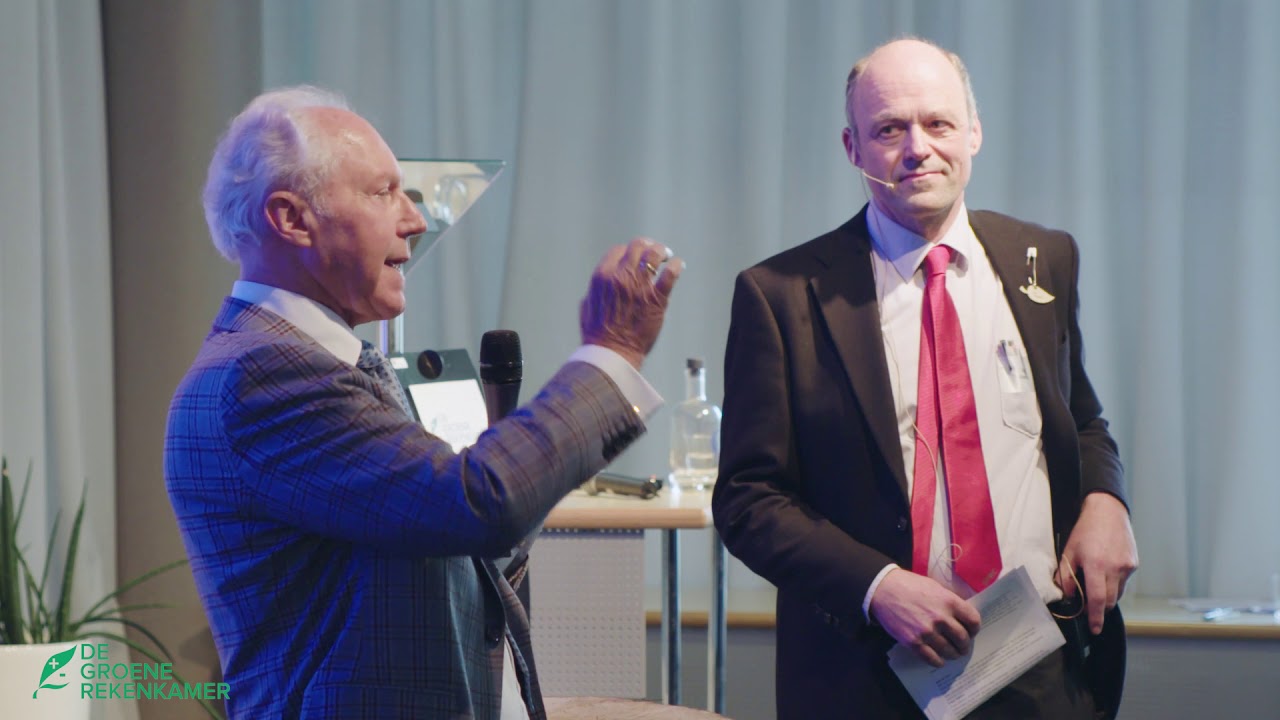 : “in this whole audience, apart from the organisation and a few brave ones, I don't see young people. So the first thing we are going to do is talk with the young people.” CLINTEL currently has a youth wing called “Young Clintel”.
The GWPF did not respond to a request for comment.
Other UK signatories include directors and former directors of lesser-known oil and gas companies, as well as five Fellows of the Geological Society, a professional body representing Earth scientists.
In addition to the EU “net zero” emissions target under consideration, planned “climate strike” protests and the upcoming UN Climate Action Summit, the media offensive may also, given its European focus, be timed to coincide with a crunch government meeting in Germany on how the country will meet its 2030 emissions target, set to take place on 20 September.
German signatories to the letter include a spokesperson for the European Institute for Climate and Energy (EIKE), which a Der Spiegel investigation earlier this year found had been working closely with the insurgent, far-right Alternative for Germany party to campaign against action on climate change.
alternative für Deutschland (AfD) - Germany
Since entering Germany’s parliament two years ago on an anti-Muslim and anti-immigration manifesto, the AfD has embraced climate science denial as a new campaign strategy.
Its election manifesto denies human-induced climate change and claims that rising levels of carbon dioxide in the atmosphere has meant “world food harvests have increased significantly”.
“We doubt that man has significantly influenced or even managed the recent climate change, in particular the current warming. Climate protection policy is therefore a mistake,” the manifesto states.
As such, the AfD rejects “all EU measures that justify the reduction of CO2 emissions with the protection of the climate”, including the Paris Agreement, which it describes as a “shift of funds from the highly industrialized countries to underdeveloped countries”.
Most recently, the AfD has conducted a targeted smear campaigns against the climate school strike movement and the 16-year-old Swedish activist Greta Thunberg.
Climate change barely got a mention on the AfD’s social media channels when the party was founded in 2013. But it mentioned climate change more than 900 times in the past year alone, mainly promoting anti-Thunberg rhetoric, according to a joint investigation by the counter-extremism organisation the Institute for Strategic Dialogue (ISD) and Greenpeace’s Unearthed.
Party chairman Jörg Meuthen, the lead candidate standing in the election, has repeatedly attacked Green politics and described climate change as “a replacement religion of all left green world parties and patronisers”.
Meuthen repeatedly accused those that want climate action of “Greta hype”, labelling them “CO2 believing disciples”.
Maximilian Krah, another AfD candidate, also targeted Thunberg 10 times in tweets between December 2018 and April 2019, describing the movement she inspired as a “psychosis” and the consequences of a post-Catholic age.
He also compared climate change to homeopathy, claiming the EU could soon declare the latter a science.
Earlier this year, coal miner Guido Reil, also a candidate, defended the party’s false claim that and that it is having no impact on the climate.
The AfD’s anti-climate campaign efforts have been backed by the European Institute for Climate and Energy (EIKE), a German-based climate science denial which is known for co-hosting a climate conference with the Heartland Institute, a US-based think tank which has been at the forefront of denying the scientific evidence for man-made climate change.
EIKE’s advisory board include Christopher Monckton, a former British politician and advisor to Margaret Thatcher, who was later affiliated with Ukip and a notorious climate science denier.