Dirk Sandefur hon
wow won 2016 ~ darks $
nb montana is a swing state
12 24 RETIRING? oct WIN 6:1
ATI
---
Montana Supreme Court - Ballotpedia
MONTANA
Justice
Born
Joined
Term ends
Appointed by
Law school
Mike McGrath, Chief Justice
August 22, 1947 (age 77)
January 5, 2009
2024
—[a]
Gonzaga
James A. Rice
November 15, 1957 (age 67)
March 11, 2001
2030
Judy Martz (R)
Montana
Beth Baker
November 29, 1961 (age 63)
January 3, 2011
2026
—[a]
Montana
Laurie McKinnon
January 4, 1960 (age 64)
January 7, 2013
2028
—[a]
Baltimore
James Jeremiah Shea
April 13, 1966 (age 58)
June 2, 2014
2028
Steve Bullock (D)
Montana
Dirk Sandefur
October 22, 1961 (age 63)
January 2, 2017
2024
—[a]
Montana
Ingrid Gustafson
December 11, 1961 (age 63)
January 1, 2018
2030
Steve Bullock (D)
Montana
---
2024
MONT FREE PRESS
Judicial candidates Cory Swanson and Katherine Bidegaray claimed victory Wednesday in races for two open seats on the Montana Supreme Court. Statewide vote counts showed them outstripping their respective competitors Jerry Lynch and Dan Wilson by margins of roughly eight percentage points.
About 90% percent of election precincts had finished reporting vote counts as of 8:30 a.m. The Associated Press called the races for Swanson and Bidegaray shortly after 9 a.m.
Swanson, the current Broadwater County attorney, will replace retiring Chief Justice Mike McGrath, while Bidegaray, a district court judge from Sidney, will take over the associate justice position held by Dirk Sandefur.
Swanson celebrated the outcome in a statement posted to Facebook Wednesday morning.
“Thank you to all the Montanans who supported us and made this victory possible,” Swanson said. “I will work every day to reward your trust by delivering fair and impartial legal rulings, and removing partisanship from justice.”
In a Wednesday afternoon statement, Bidegaray said she is “humbled and honored” by the show of voter support.
“I am committed to upholding the Constitution and approaching each case in a fair and impartial manner. I look forward to working with my new colleagues on the pressing matters before the court,” she said.
A spokesperson for Lynch had not provided a comment by Wednesday afternoon.
In a text to Montana Free Press, Wilson congratulated Bidegaray on her campaign.
“Running for the Supreme Court has been a great privilege for me and a rich experience I wouldn’t trade for anything. I congratulate Justice-elect Katherine Bidegaray on her victory and wish her every success and happiness serving Montana on the Supreme Court,” Wilson said.
The outcomes present a split result for conservative and liberal interest groups that flooded the race with outside spending in an effort to paint the candidates as in line or opposed to various agendas.
Swanson and Wilson were supported by a steady stream of mailers and digital advertisements from the Montana Republican State Central Committee, donations from the national Republican State Leadership Committee’s Judicial Fairness Initiative and repeated endorsements by high-up Republican officials on the campaign trail, including Gov. Greg Gianforte.
Lynch and Bidegaray, on the other hand, saw a surge of financial and advertising support from major trial lawyer organizations and progressive groups, including the American Civil Liberties Union, Wild Montana Voter Fund, Earthjustice Action, the Montana Federation of Public Employees and political committees affiliated with Planned Parenthood Federation of America.
In public forums across the state, all four candidates repeatedly said that support from third-party groups and partisan figures would not influence their decision-making if elected.
The election for the two Supreme Court seats coincides with a tumultuous political era for Montana’s high court. Since Republicans collected power in statewide offices and the Legislature in 2020, majority-party lawmakers have launched investigations and empaneled special committees to probe how the third branch of government operates, often alleging bias against Republican laws and officials....
---
RSLC SPENDING IN THE STATES
Most of the RSLC’s contributions are funneled to state PACs that runvicious attack ads. By channeling their money through the RSLC, corporate interests are able to distance themselves from the ugliest aspects of electioneering, while providing the financial means to make it possible.
In Nevada, the RLSC has given $600,000 to the Nevada Jobs Coalition, a PAC running attack ads that critics on both sides of the aisle submit“just keep getting nastier and more deceitful–the things they say in these ads simply aren’t true.”
In Colorado, the RSLC has given $800,000 to Colorado Citizens for Accountable Government, an organization that is being sued for sending out fortune cookies attached tomailers that falsely accuse a Democratic senate candidate of taking a taxpayer-funded junket to China. (“I’ve never been to China,” the candidate, Rachel Zenzinger has said repeatedly.)
In Minnesota, the RSLC has dumped $275,000 into Minnesota Jobs Coalition, an officially non-partisan dark money social welfare group that exclusively supports Republican candidates, and is spending big on attack ads against Democrats like State Representative Paul Marquart.
In North Carolina, the RSLC has given $500,000 to Truth and Prosperity Inc., a PAC formed “to support incumbent Republican Lt. Gov. Dan Forest,” and isrunning adstouting, not coincidentally, Forest’s pledge to eliminate corporate income taxes.
In Washington state, the RSLC has given $200,000 to the Leadership Council, which subsequently donated to the Working Families PAC, a group that is running ads against State Senator Mark Mullet in his race against Representative Chad Magendanz, a candidate who, unlike Mullet, opposes increasing the minimum wage to help real working families.
In New Mexico, the RSLC has given $100,000 to Advance New Mexico Now, a PAC that is supporting Republicans and their bid forstricter criminal sentencing laws. Of note, theRSLC filings show that the organization received over $70,000 from the private prison giants CCA and Geo Group.
In addition to funding state-based PACs, the RSLC has also contributed $2,695,223 to its own “Judicial Fairness Initiative,” a project the RSLC started in 2014 that producesattack ads in judicial races.
In Montana, the RSLC’s Judicial Fairness Initiative wasreprimanded and forced into compliance by the state’s campaign finance regulator for having “blatantly violated state law by not reporting $268,000 that was used for attack ads.”
The Montana advertisements in question have been condemned across the board for their sensationalism, and other advertisements the organization has aired (see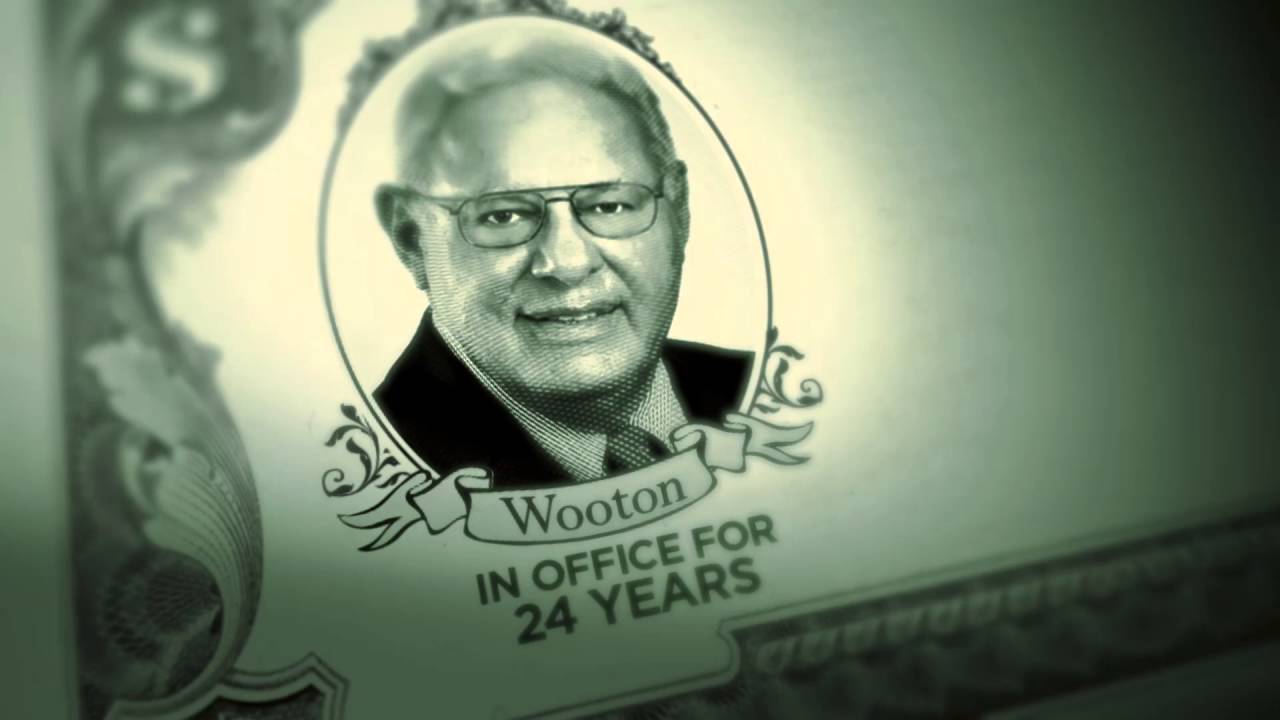 and

Although the Democrats have a partisan counterpart to the RSLC, the DLSC, the Republicans are far more eager, willing and systematically structured to solicit campaign donations from corporations.
By comparison to the RSLC numbers listed above, the DLSC has raised $8.25 million so far this year, with $3.14 million coming from trade unions, and $4.2 million coming from CEOs and corporations giving over $1,000 in aggregate contributions.
==
https://billingsgazette.com/news/state-and-regional/montana/supreme-court-candidates-suggest-their-opponents-have-been-bought
Questions of judicial ethics and fairness, along with the influences of campaign spending on courts, dominated the discussion at a Montana Supreme Court election forum in Missoula on Monday night.
Although only one seat on the ballot is contested, all four candidates appeared at the University of Montana School of Law to speak to a few dozen people, primarily students. Chief Justice Mike McGrath and Justice Jim Shea are unopposed but appear on the ballot for retention votes. Longtime Cascade County District Judge Dirk Sandefur and former UM adjunct professor of law Kristen Juras are competing for an 8-year term on the court after Patricia Cotter announced she would not be seeking re-election.
Shea, a former judge for the state’s Workers’ Compensation Court who was appointed by Gov. Steve Bullock to fill a vacant seat, opened the forum by calling for increased public interest in judicial elections. He noted that in 2014, when two seats were contested, 40,000 Montanans who cast a ballot “just skipped the Supreme Court races.”
“It’s like the third largest city in Montana just staying home,” he said. “We are the third co-equal branch of government in this state and there are only seven of us on the Supreme Court. These are important races.”
The seven-member court rules on hundreds of civil and criminal appeals that originate primarily in state district courts. The court also has jurisdiction over appeals from the Montana Water Court and the Montana Workers’ Compensation Court, among other limited duties. The court is the final arbiter on numerous important state issues, including criminal convictions, civil suits and the constitutionality of state law.
From wills to water rights, most cases draw little public attention but nonetheless are important to the individuals involved. A handful, however, are high profile, such as recent rulings to uphold 2011 legislative reforms to limit the sale of medical marijuana, to require online travel companies to collect state lodging taxes from customers and to strike down a 2012 law approved by voters to require employees offering state services to inquire about the residency status of clients.
Shea and McGrath spoke frequently about how the public and Legislature misunderstands the role of the court.
“We’re the only ones who don’t make decisions with an eye toward making everybody happy,” Shea said, echoing a similar remark by McGrath that the ability to make impartial decisions, regardless of personal beliefs or public reaction, is critical for a strong government. “To quote Justice Roberts, the job of a judge is to call balls and strikes. We don’t get to change the strike zone because the Mariners are one game back to the wild card.”
McGrath agreed.
“Our job is to be a backstop, to ensure the Constitution is enforced and enforced evenly, no matter what you’re accused of,” he said.
But the spike in spending on judicial campaigns has heightened public concerns over whether the justices who are elected can do that.
More than $1.1 million has been raised by Juras, Sandefur and organizations supporting their campaigns, according to state campaign finance records. The Republican State Leadership Committee’s Judicial Fairness Initiative, a DC-based political group funded primarily by large corporations, has bought ads to attack Sandefur, while various political action committees of the Montana Trial Lawyers Association have lined up to oppose Juras in what could be another record-setting fundraising year.
“We have out-of-state corporate money being dumped into Montana by the Koch brothers and major companies not in Montana, who don’t give a hoot,” Sandefur said. “Don’t give a hoot about crime victims. Don’t give a hoot about criminal justice."
McGrath called it “unfortunate” that the state’s strict rules on campaign contributions and disclosure were largely erased by the Supreme Court of the United States’ Citizens United ruling, leading to unlimited and often undisclosed independent expenditures in campaigns. He argued in an opinion that the nation's top court ultimately struck down that the ruling, which had focused on federal elections, did not consider the influence of big money on state-level judicial races. Federal judges are appointed.
“It’s easy to cherry pick somebody’s record, like they did Dirk (Sandefur)’s, and distort what they did in that particular case,” McGrath said, referencing advertisements paid for by the Republican State Leadership Committee, a national nonprofit that does not have to disclose its donors except sometimes in tax filings months after Election Day. “We don’t know who those people are or what the source of their money is.”
Sandefur suggested that spending was intended to buy the goodwill of his opponent.
"They’re doing it because they think she will best suit their needs do their bidding on our court," he said.
Juras defended her impartiality, saying the rule of law must prevail when making decisions, and tossed the accusation right back at Sandefur.
“I’d just as soon not have any independent expenditures in the race. Frankly, we have no control over it,” she said. “Through a PAC, a single law firm can donate hundreds of thousands of dollars.…Those same attorneys appear before the Montana Supreme Court. I do think that causes concern.”
Sandefur called the comparison “false equivalency” because the trial lawyers, unlike the GOP group and its corporate donors, actually live and work in Montana.
The opponents also contrasted their credentials for the Montana Supreme Court.
“I have relevant experience, she doesn’t,” Sandefur said, noting that he has spent thelast 14 years as district judge deciding the kinds of cases that end up before the state’s top court.
Juras disagreed.
“With all due respect, both Judge Sandefur and I have relevant experience. We have different experiences,” she said. “To suggest that representing farmers and ranchers in their daily issues, to suggest that water rights background, easement disputes, contract disputes, quiet title actions, is not relevant experience is wrong and I think small businesses would also agree.”
At the forum, the candidates broadly agreed on one issue: That many Montanans lack access to civil courts and often cannot afford legal representation.
"The biggest problem we have in the court system is all people don't have access and there are a lot of reasons for that," McGrath said, celebrating the expansion of legal aid programs and shifted procedure rules that have helped in recent years.
"It's a right," Shea said, arguing that legislative funding and cooperation was ultimately needed. "The problem with that is when you do have people who can't (access) or navigate the court system, it becomes more of an illusion."
:{
}:
==
Adjunct Faculty - Alexander Blewett III School of Law - University Of ...
www.umt.edu/law/faculty/adjunct/default.php?ID=3582
2.
Kristen Juras: 'A Diverse Court Is A Better Court' | MTPR
mtpr.org/post/kristen-juras-diverse-court-better-court
2.
Kristen Juras | The Federalist Society
https://fedsoc.org/contributors/kristen-juras
1.
Sandefur, Juras each claim proper experience for Supreme Court seat ...
https://missoulian.com/...juras.../article_204b02f1-3db2-5f88-9fd9-cf28e22858da.ht...
2.
UM prof prepares campaign for Montana high court | Politics ...
https://www.bozemandailychronicle.com/...prof...montana.../article_a16b9088-775a-5...
1.
Supreme Court candidates suggest their opponents have been bought ...
https://billingsgazette.com/.../montana/.../article_96edfd7c-00ef-58dd-9bf1-636d7f21...
2.
Supreme Court candidate accuses opponent of ... - Montana Standard
https://mtstandard.com/.../article_56340962-0f0e-51a4-b9e1-83de5be5eb7f.html
1.
Political spending in Supreme Court race set to break fundraising record
helenair.com/political.../article_2b40a022-1a42-5732-a04a-b06b1bec0bb0.html
1.
Supreme Court Candidate Says She Wants to Decide Religious ...
https://flatheadbeacon.com/.../supreme-court-candidate-says-wants-decide-religious-ca...
2.
Sandefur snags state supreme court seat - Montana Kaimin
www.montanakaimin.com/.../article_7ae0656e-a615-11e6-87fc-23d63856ee23.html
1.