SAB e p a bak
SABepa819
merri ok
new 616 hunch
see also CASAC sp tony cox API CoC wheeler
capt epa619 txt
see HACKS 2 for pruitt picks
primary 11/17
3/19 expand to other agy cf happer
see kid killer pesticide
---
see pruitt picks
---
wheeler on exit in bloomberg fluff sez proud of interagency coop and workflows, but got bought pest hacks to greenlight pfas, then got OMB vought to fasttrack it?!
---
---
negin
Polluter-Friendly Scientists May Soon Join a Key EPA Advisory Panel
Scott Pruitt's EPA may soon replace its scientific advisers with advocates for industry interests.
BY Elliott Negin | September 26, 2017
Polluter-Friendly Scientists May Soon Join a Key EPA Advisory Panel
A third of the Environmental Protection Agency’s Science Advisory Board, an influential panel that reviews the science the agency uses in formulating safeguards, could be succeeded by climate science-denying, polluter-friendly replacements when their terms expire at the end of this month.
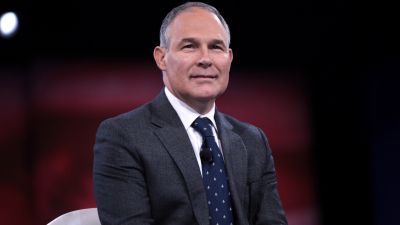
Scott Pruitt Will Make America Great Again — For Polluters
BY Bill Moyers | January 31, 2017
The board, which has been in existence for nearly 40 years, is traditionally populated by bona fide scientists from academia, government and industry who volunteer to serve three-year terms. This time around, as first reported by *E&E News, at least a dozen of the 132 candidates vying for one of the 15 open seats reject mainstream climate science. But that’s not all. There are at least 10 other equally inappropriate candidates on the list, and not all of them are scientists, despite the fact that it’s supposed to be a panel of *science advisers.
Among the 12 climate science deniers are Weather Channel co-founder Joseph D’Aleo, who wrongly claims global warming is due to natural oceanic, solar and volcanic cycles; and former Peabody Energy science director Craig Idso, now chairman of his family’s Center for the Study of Carbon Dioxide and Global Change, who insists “there is no compelling reason to believe that the rise in [average earth] temperature was caused by the rise in carbon dioxide.” D’Aleo, Idso and six of the other climate-fact-challenged candidates are affiliated with the fossil fuel industry-funded Heartland Institute, which has a long history of misrepresenting science.
The other 10 unsuitable candidates consistently side with industry when it comes to protecting the public from toxic hazards, regardless of the scientific evidence, and falsely accuse the EPA of being unscientific to try to undermine its credibility.
Soot Makes You Live Longer
One of the 10, toxicologist Michael Honeycutt, failed to secure a seat on the EPA’s seven-member Clean Air Scientific Advisory Committee when he was nominated for one last fall — with good reason. Over the last decade, Honeycutt, who heads the toxicology division of the Texas Commission on Environmental Quality, rolled back the state’s relatively weak protections for 45 toxic chemicals, including arsenic, benzene, formaldehyde and hexavalent chromium, the carcinogen that made Erin Brockovich a household name.
[
Who is Watching Out for the EPA?
BY BillMoyers.com Staff | June 27, 2017
Honeycutt also has attacked EPA rules for ground-level ozone (smog), which aggravates lung diseases, and particulate matter (PM) (soot), which has been linked to lung cancer, cardiovascular damage, reproductive problems and premature death. In October 2014, Honeycutt argued that there would be “little to no public health benefit from lowering the current [ozone] standard” because “most people spend more than 90 percent of their time indoors” and “systems such as air conditioning remove it from indoor air.” And despite the overwhelming scientific evidence directly linking fine soot particles to premature death, Honeycutt testified before Congress in June 2012 that “some studies even suggest PM makes you live longer.”
Better Living Through Chemistry
Another industry-friendly nominee, Kimberly White, is senior director of chemical products at the American Chemistry Council (ACC), the country’s largest chemical manufacturing trade association. Representing the interests of 155 corporate members, including chemical companies Dow, DuPont and Olin; pharmaceutical firms Bayer, Eli Lilly and Merck; and petrochemical conglomerates BP, ExxonMobil and Shell, the ACC has delayed, weakened and blocked science-based health, environmental and workplace protections at the state, national and even international levels.
Trump EPA Dismisses the People in Charge of Scientific Integrity
BY Ben Adler | June 22, 2017
For example, the ACC has lobbied against establishing federal rules on silica dust exposure and disclosing the chemicals used in hydraulic fracturing. It has been instrumental in limiting community access to information about local chemical plants. And it has played a key role in quashing government efforts to regulate bisphenol A (BPA), an endocrine-disrupting chemical used in plastics and can linings; flame retardants, which have been linked to birth defects and cancer; and formaldehyde, a known carcinogen. White downplayed formaldehyde’s risks in a September 2016 blog on the ACC website.
The ACC also lobbies to weaken existing environmental safeguards. In written testimony for a House Science, Space and Technology Committee hearing last February, for example, White charged that the EPA uses irrelevant or outdated data and procedures when drafting new regulations.
Who Needs a Cleaner Environment?
Finally, three of the pro-polluter candidates are economists with a distinct corporate tilt: Richard Belzer, whose clients include the American Chemistry Council and ExxonMobil Biomedical Sciences; Tony Cox, whose clients include the America Petroleum Institute, Chemical Manufacturers Association and Monsanto; and John D. Graham, dean of Indiana University’s School of Public and Environmental Affairs, who is currently doing contract work for the Alliance of Automobile Manufacturers on fuel economy standards and the libertarian Searle Freedom Trust on regulatory “reform.” All three emphasize the cost to industry to reduce pollution, discount scientific evidence of the risk of exposure, and ignore the benefits of a cleaner environment.
Despite Threats to Kids’ Health, EPA Delays Rule on Pollutants](https://billmoyers.com/story/tweeting-epa-suggests-letting-oil-gas-companies-poison-kids-two-years/)
BY John Light | June 14, 2017
Perhaps the best known is Graham, who ran the Office of Management and Budget’s (OMB) Office of Information and Regulatory Affairs (OIRA) for five years during the George W. Bush administration. His appointment to that position was hotly contested because in his previous job, directing the Harvard Center for Risk Analysis, he routinely understated the dangers of products manufactured by the center’s corporate sponsors by using questionable cost-benefit analyses.
As predicted, Graham applied that same simplistic, industry-friendly calculus at OIRA, which oversees all government rulemaking, and at the tail end of his tenure in 2006, he unsuccessfully attempted to standardize risk assessments across all federal agencies. Public interest groups and the scientific community, spearheaded by the American Association for the Advancement of Science, came out in full force against the idea, and a National Research Council (NRC) committee unanimously rejected it as “fundamentally flawed.”
“Economists like Graham are frustrated because the EPA has been conservative about risk,” said Center for Progressive Reform co-founder Rena Steinzor, who wrote a stinging indictment of Graham’s government-wide proposal in a May 2006 issue of Inside EPA’s Risk Policy Report. “The EPA gives more margin to safety. That drives economists crazy. They think it leads to over-protection. But there are not many examples of chemicals that turn out to be less harmful than we thought.”
Foxes Advising the Foxes in the Henhouse?
Putting climate science deniers and industry apologists on the EPA Science Advisory Board (SAB) would not only undercut the panel’s legitimacy, it also would provide cover for the corporate shills now in key positions at the agency, starting with Administrator Scott Pruitt, who has the final say on who is selected, and Nancy Beck, a deputy assistant administrator who most recently worked for the American Chemistry Council, and before that, for Graham at OMB.
“The Science Advisory Board has been providing independent advice to the EPA for decades, ensuring that the agency uses the best science to protect public health and the environment,” said Genna Reed, a policy analyst at the Union of Concerned Scientists. “SAB members have always been eminent scientists who are committed to the often-challenging public service of working through complex scientific topics to help guide EPA decision-making. They are the EPA’s scientific compass. The agency’s mission to safeguard our air and water will be further compromised if Administrator Pruitt winds up selecting these unacceptable candidates.”
TOPICS: Environment
TAGS: advisory, air pollution, american chemistry council, climate change, climate change denial, environmental protection agency, scott pruitt
---
---
Reset or Purge? Trump EPA Dismisses Agency Science Advisers - Inside Climate News
Reset or Purge? Trump EPA Dismisses Agency Science Advisers
BY MARIANNE LAVELLE
Critics fear the unusual clean sweep of panels is meant to ease the planned rollback of climate and environmental policy.
All members of the Environmental Protection Agency’s boards of outside advisers on science and clean air were dismissed in a letter emailed late Tuesday, an unusual step the Trump administration said was aimed at depoliticizing the panels.
Panel members expressed disappointment and confusion at the assertion in the letter signed by James Payne, a career EPA attorney Trump installed as acting administrator. Critics charged the Trump administration with politicizing the process by eliminating the current independent advisers and clearing the way for them to be replaced with hand-picked appointees.
“This is not about good governance, this is about rigging the system for polluters; corruption at the expense of the American people,” said Sen. Sheldon Whitehouse of Rhode Island, the ranking Democrat on the Committee on Environment and Public Works.
Similar efforts to remake science advisory panels came during the first Trump administration, with EPA leaders changing the eligibility rules for serving on boards. The result was fewer university researchers on the panels and more industry consultants and scientists who were supportive of Trump’s deregulatory efforts, like University of Alabama in Huntsville atmospheric scientist John Christy, taking seats.
A number of the now-dismissed panel members had two to three years remaining in their terms. It was not immediately clear who would be appointed as replacements on the advisory panels, both of which are required under federal law. Trump’s choice to head up the Environmental Protection Agency, former New York Congressman Lee Zeldin, won Senate confirmation on Wednesday, the day after the dismissals.
An EPA spokesperson said the move was in line with the agency’s purpose.
“EPA is working to update the Science Advisory Board (SAB) and Clean Air Scientific Advisory Committee (CASAC) to ensure that the agency receives scientific advice consistent with its legal obligations to advance our core mission,” the spokesperson said in an email. “The decision to reset these federal advisory committees emphasizes the importance of SAB and CASAC to EPA’s mission of protecting human health and the environment and seeks to reverse the politicization of SAB and CASAC made by the previous Administration.”
The dismissed chairs of both of the boards disputed that characterization.
“I was not appointed as a political appointee, but as a scientist that studies air pollution and health,” said Jeremy Sarnat, a professor at Emory University’s Rollins School of Public Health who had only begun serving as chair of the CASAC in October. He said the Clean Air Act, passed on a bipartisan basis more than 50 years ago and implemented under administrations of both parties, had been “one of the most successful public policies that has ever been enacted globally,” in part because of procedures that require the agency to rely on the best science.
“I know that so many other facets of American life and society have been politicized, and I hope that the CASAC and the advisory boards can remain above that and that the new administrator will adhere to the principles and practices, which have really worked so well for decades,” Sarnat said.
Kimberly Jones, an engineering professor and associate provost at Howard University, who has served as chair of the Science Advisory Board since 2023, said she was disappointed in the administration’s decision.
“It does seem to signal a shift in the decades-old accepted facts about how science should occur,” Jones said. “We should not be writing or interpreting science to meet anybody’s objectives. We should be independent, doing our best job to evaluate the science as scientists. This seems to go counter to that understanding.”
Although EPA’s science advisers are not decision-makers, their advice becomes important when the agency’s policy decisions face legal challenges. EPA’s 2024 decision to strengthen the National Ambient Air Quality Standard for fine particulate matter, for example, was bolstered because it was in line with the advice the agency received from the CASAC. Conversely, weak ozone standards passed during the first Trump administration were successfully challenged in court in 2021, in part because the EPA had received contrary recommendations from outside advisers.
It is not the first time there has been a clean sweep of scientific advisers. Biden’s EPA chief, Michael Regan, installed a new slate at CASAC when he took office in 2021 based on the findings by the GAO and others that the selection process had become compromised.
H. Christopher Frey, an associate dean at North Carolina State University who served as head of EPA’s Office of Research and Development during the Biden administration, said the circumstances are entirely different now. “This is really just a flat-out purge of the current membership,” he said.
Frey said the Trump administration seemed to be following the conservative policy platform Project 2025, which called for “resetting science advisory boards” at EPA.
“The administration seems to be wanting to promote loyalty and compliance with its policy agenda, but that’s not the mission of a science advisory board,” Frey said. “So if that’s the goal, it’s an inappropriate interference in an external, independent expert advisory board, and it’s also just setting more precedent for this to happen every time.”
---
---
see fact data for intro
https://highline.huffingtonpost.com/article/disappearing-data/#science
...
STOPPED COLLECTING CRUCIAL METHANE EMISSIONS DATA FROM OIL AND GAS COMPANIES
02.01
One of the Obama administration’s most ambitious environmental policies was an unprecedented drive to reduce emissions of methane, the main component in natural gas and a major contributor to climate change. Two days after Donald Trump was elected president, Barack Obama's Environmental Protection Agency began the process of gathering wide-ranging data from about 15,000 owners and operators of oil and natural gas facilities. Earlier that year, the EPA had introduced regulations on methane emissions at new or modified oil and gas operations. This data was intended to provide the basis for regulating emissions at existing operations, which produce far more methane.
In March, new EPA Administrator Scott Pruitt withdrew the requests—a move that came as no surprise. As attorney general of Oklahoma, Pruitt had joined a group of state AGs to sue the EPA in 2016 over the first round of rules on methane emissions. (The EPA weakened those regulations in August.) Pruitt’s decision to cancel the data collection signaled that, under Trump, the EPA would axe the plans to regulate existing facilities.
Methane dissipates much more rapidly than carbon dioxide, but the gas is at least 86 times more potent during its first 20 years in the atmosphere. The EPA estimates that the oil and natural gas industry is responsible for nearly 30 percent of U.S. methane emissions. A 2018 study found that the EPA may underestimate the industry's methane emissions by as much as 60 percent. Trump’s EPA has launched its own programs to collect information from the industry, but companies are not required to participate, and if they do, they only need to report successful efforts to reduce methane emissions.
wrongly CLAIMED THAT ROLLING BACK FUEL STANDARDS WOULD SAVE MONEY AND THOUSANDS OF LIVES
02.02
In 2012, the Obama administration embarked on a plan to nearly halve planet-warming emissions from new cars and light trucks by 2025. The joint rules from the Environmental Protection Agency and the Department of Transportation progressively tightened both fuel economy and emissions standards, a program the EPA described as “the most significant federal action ever taken to reduce greenhouse gas emissions and improve fuel economy.”
Donald Trump, who had campaigned on promises to revive the auto industry, declared just two months into his presidency that he intended to roll back that rule. In 2018, his EPA and DOT issued a proposal to freeze the standards at 2020 levels through 2026. That would have meant keeping the fuel economy standard at an average of about 37 miles per gallon, rather than increasing it to 54 miles per gallon by 2025.
The administration claimed this would serve both the economy and public safety—and it appeared to have the numbers to prove it. Its proposal said that Trump's rule would have a net economic benefit of up to $201 billion and would prevent nearly 12,700 deaths in car accidents.
There was just one problem: The calculations were chock-full of errors that skewed the outcome to Trump's benefit. A group of prominent economists described the analysis as being "at odds with basic economic theory and empirical studies." Together with DOT officials, Trump appointees at the EPA had blocked the agency's engineers from contributing to the study, The Atlantic later reported. When EPA staffers warned the White House about problems with the analysis, their criticisms were ignored.
The Trump administration's final rule, which was released in March 2020, does not entirely freeze the fuel economy and emissions standards. Instead, it requires automakers to increase fleet fuel economy by 1.5 percent annually—still a dramatic cut from the Obama standards, which would have been about 5 percent.
The accompanying analysis was radically different as well. Rather than the massive benefit claimed in the draft, the final version projects that Trump's rollback could actually cost the economy as much as $22 billion, as compared to the Obama-era standards. Some critics find even this far less favorable conclusion dubious. In June, a coalition of advocacy groups petitioned the EPA to stay the final rule, writing that it is "premised on an analysis riddled with errors and inconsistencies."
Dave Cooke, a senior vehicles analyst at the Union of Concerned Scientists, said some of the errors show evidence of the administration "putting its thumb on the scale towards a pre-ordained outcome." For instance, the petitioners claim that the new analysis added $27 billion in savings under the Trump rule by inflating the "cost of congestion"—an estimate of traffic's negative economic impact—under the Obama standards.
As with the draft, the administration was accused of sidelining EPA staff and ignoring their criticisms. In July, the EPA's inspector general announced that it would investigate "potential irregularities" in the agency’s work.
DIRECTED STAFF TO USE CLIMATE CHANGE MODELS THAT END BEFORE THE MOST SEVERE IMPACTS WOULD TAKE PLACE
02.03
In 2019, the Donald Trump-appointed director of the U.S. Geological Survey ordered agency staff to only use climate models that project the impacts of emissions through 2040 in their scientific assessments, according to The New York Times. Models with projections through 2100 had typically been used previously.
Scientists told the Times that the new assessments will give a misleadingly optimistic projection of the future—barring changes in current global emissions, models suggest the most severe impacts of climate change will start to be felt after the 2040 cutoff, around 2050.
Decision-makers such as resource managers, infrastructure and city planners, emergency response professionals, elected officials, farmers and the public rely on USGS, the sole science agency for the Department of the Interior, to produce information that provides the scientific foundation for planning around environmental threats to lives and livelihoods.
used flawed CALCULATIONS TO ARGUE THAT CURTAILING GREENHOUSES GASES WASN'T WORTH THE COST
02.04
The U.S. government has a calculation for the “social cost of carbon,” which measures the environmental, economic and public health damages associated with emitting carbon dioxide into the atmosphere. Federal agencies use this figure to evaluate the costs and benefits of new climate regulations. At the end of President Barack Obama’s tenure in office, that figure was $40 per metric ton (a number environmental groups argued was too low). The number is expected to increase as the planet experiences rapid global warming.
But shortly after taking office, President Donald Trump signed an executive order that scrapped the Obama-era calculation, putting the economic harm of emitting climate-warming carbon dioxide far lower, at between $1 and $7 per ton. A July report by the Government Accountability Office determined that Trump’s calculations of the social cost of carbonare about seven times lower than previous federal estimates. And while Obama-era estimates placed future climate damages at $82 per ton of carbon by 2050, Trump’s calculation put it at just $11, the report found.
The lower figure allows the administration to argue that the upfront costs of reining in greenhouse gas emissions outweigh any future benefit to property, agriculture, coastal ecosystems and human health.Trump's EPA has used the number to justify weakening environmental safeguards and to roll back Obama-era regulations that slashed carbon pollution from power plants and new vehicles. For example, the EPA claims that rescinding the Clean Power Plan would save the U.S. $33 billion in “avoided costs” by 2030, a calculation it came to by looking only at the domestic costs of carbon pollution and by downplaying the impact that emissions will have on future generations.
Meanwhile, the Trump administration has led a campaign to undermine the validity of climate modeling so it can ignore possible environmental threats when evaluating new infrastructure, such as pipelines, power plants, highways and airports. When more than a dozen federal agencies published a sobering 1,600-page report in November 2018 that warned of the dire threat of global climate change, then-White House press secretary Sarah Huckabee Sanders claimed the assessment was “based on the most extreme model scenario” and “not data-driven.” Trump flatly denied the science: “I don’t believe it,” he told reporters.
TRIED TO STOP COLLECTING PAY DATA BROKEN DOWN BY RACE, GENDER AND ETHNICITY
03.03
In 2016, after a protracted political fight, the Obama administration scored what looked like a win in its fight for equal pay for women and people of color: The Equal Employment Opportunity Commission finally got the go-ahead to start collecting pay data from large companies that was organized by gender, race and ethnicity.
The EEOC is supposed to enforce federal antidiscrimination laws, and has long collected demographic data from companies that helps the agency detect discriminatory hiring patterns. Pay was a logical addition: A similar effort in the United Kingdom revealed significant differences in how much men and women earn in a surprising number of fields. Simply forcing companies to collect and report this kind of information might even push some to address disparities, experts reasoned.
Alas, in the summer of 2017, the Trump administration nixed the whole thing. In a short memo, the Office of Management and Budget claimed with no evidence that collecting pay data would be too burdensome for companies and was of dubious utility. Ivanka Trump, a supposed proponent of equal pay, put out a statement supporting the move.
In March 2019, a judge ruled that the administration had acted arbitrarily and that companies needed to turn over two years worth of pay data. Incredibly, most companies produced the numbers by the summer of 2020. And yet, the ruling doesn’t compel the EEOC to actually do anything with this trove of never-before-collected information.
And so it hasn't. In what seems like an obvious stalling tactic, all the agency has done so far is announce that it will convene a panel of experts—merely to examine whether the data is of any use. Meanwhile, in the U.S., women on average continue to make 82 percent of what men earn and Black women make only 62 percent
...
SUPPRESSED AND DEFUNDED STUDIES ON THE HARMFUL EFFECTS OF TOXIC CHEMICALS
04.01
The Trump administration has proven itself an ally of chemical companies, at times sidelining science to preserve the industry’s ability to use toxic chemicals.
President Donald Trump’s Environmental Protection Agency refused to ban the agricultural use of chlorpyrifos, an insecticide linked to brain damage in children that has been used on a variety of crops since the 1960s. It’s a move that defied the EPA’s own scientists, who in 2015 recommended banning the pesticide due to its potential health risks. In September 2020, the agency released a new assessment of chlorpyrifos that excluded a number of epidemiological studies, including one showing exposure to the chemical in the womb is associated with abnormal brain development.
The chlorpyrifos example is part of the Trump EPA’s broader push to crack down on so-called “secret science.” It’s limiting the types of scientific studies that can be used to craft new policy in the name of "transparency."
The Trump EPA also blocked the release of a yearslong study of the health risks associated with environmental exposures toformaldehyde, a widely used chemical known to cause cancer in humans. And it cut off funding for more than a dozen research centers around the country that study, among other things, childhood leukemia and how exposure to chemicals and industrial pollution impact child development.
If there's no data about how these exposures might hurt Americans, well—then what we don't know can truly hurt us.
:{:{Even in cases where the Trump EPA does have the data, moves to hide it have often left the public in the dark. Take, for example, the efforts the agency often touts to address per- and polyfluoroalkyl substances, or PFAS, the cancer-causing “forever chemicals” that contaminate the drinking water of millions of American:(style="background-color:#ffff66ff"):}:s. In 2018, the EPA and White House attempted to block publication of a study into widespread PFAS contamination after a Trump aide warned it would be "potential public relations nightmare," according to an explosive Politico report.}:
That study, later released in June 2018, found that the chemicals threaten human health, even at levels seven to 10 times lower than EPA’s recommendations. Meanwhile, the Trump EPA has continued to approve new varieties of PFAS with little to no testing.
...
narrowed HOW IT MEASURES THE HEALTH BENEFITS OF REGULATIONS ON MERCURYEMISSIONS 04.02
Since the early days of Trump’s administration, his Environmental Protection Agency has been on a mission to neuter Obama’s landmark air pollution restrictions. One tactic has proved especially consequential: changing the way that agencies evaluate the economics of environmental regulations. If, on paper, the cost of a regulation suddenly outweighs its benefits, the administration can argue that the rule is too expensive to keep.
Changing these calculations is at the center of the EPA’s move to weaken a 2011 regulation curbing power plants’ mercury emissions, which can cause lasting brain damage in children and fetuses. After the rule was introduced, utility companies spent billions to meet the standards or switched to natural gas or renewable energy. Over the next six years, mercury emissions from power plants fell by more than 80 percent.
But the rule had a vulnerability. To withstand legal challenges, Obama's EPA had to establish that its new emissions restrictions were "appropriate and necessary." Its most powerful arguments were about the huge public health gains: Curbing mercury pollution would slash other forms of power plant pollution as well, potentially preventing 130,000 asthma attacks, 4,500 heart attacks, and up to 11,000 premature deaths annually. The agency projected that the rule could save society up to $80 billion each year.
To reach the opposite conclusion, Trump’s EPA simply decided to ignore almost all of the rule’s health benefits. EPA Administrator Andrew Wheeler argued that the agency should only measure the value of reducing mercury pollution, not any other indirect benefits that the rule would produce. After this mathematical sleight of hand, the rule was only projected to save $6 million annually—too little, the agency now said, to justify regulating mercury emissions. For now, the regulation remains intact, but the new assessment leaves it wide open to lawsuits from coal companies.
Former EPA Administrator Carol Browner warned that the move was a "sinister Trojan horse." Sure enough, in June, Wheeler proposed a new rule that would give little or no consideration to the indirect benefits of all pollution regulations under the Clean Air Act. “These economic cost-benefit analyses have been an important driver of Clean Air Act regulations for 40 years,” former EPA official Richard Morgenstern told The New York Times. “What this rule is doing is altering the math in such a way to potentially downplay the economic benefit to public health, so they are justified in writing weaker rules in the future.”
...
DISBANDED OR SIDELINED SCIENTIFIC ADVISORY COMMITTEES
05.01
Black people are dying from the coronavirus at a rate more than twice that of white Americans. One likely reason for this inequity is the very different air we breathe. People of color are more likely to live near highways and other sources of soot pollution—also known as fine particulate matter—which can cause health conditions that make people more vulnerable to the virus.
And yet on April 14, EPA Administrator Andrew Wheeler announced a preliminary decision not to issue tougher standards governing how much soot can be released into the air—a move that was cheered by the fossil fuel industry. Wheeler insisted that he was simply following the science. In December 2019, a majority of the Clean Air Scientific Advisory Committee—a group of outside experts that advises the EPA—recommended leaving the standards for fine particulate matter unchanged.
However, in the draft report that CASAC had reviewed to reach its recommendation, EPA scientists had advised tightening them, on the logic that long-term exposure to soot pollution was killing up to 52,100 people in the U.S. annually. As Gretchen Goldman, a research director at the Union of Concerned Scientists, explained to The Washington Post, “It’s not surprising they would retain the standards, because they broke the process.”
There are hundreds of advisory committees throughout the U.S. government, and they are part of a time-honored system that helps ensure that policy decisions are based on sound research. President Donald Trump’s administration has systematically sidelined, frozen and eliminated many of these committees.
The attack was particularly fierce at the EPA. Trump's first administrator, Scott Pruitt, and his successor, Wheeler, have replaced scientists on influential EPA committees with members sympathetic to the industries the agency was supposed to be regulating. Pruitt’s hand-picked chair for CASAC had worked as a consultant for groups such as the American Petroleum Institute and openly questioned whether air pollution causes serious health problems. For decades, CASAC had also convened panels of additional experts to help review the science on specific pollutants. Wheeler disbanded the panel that was assisting with the particulate matter standards. Six months later, CASAC said it lacked the expertise to carry out its review. But rather than reconvening the panel, Wheeler appointed a dozen new consultants. One of only two academic scientists on the committee pointed out that not a single expert in air pollution epidemiology was involved in the review. Inside Climate News reported that the recommendation to retain the soot standards partly rested on a widely criticized study based on unverified data.
Meanwhile, in May 2017, then-Interior Secretary Ryan Zinke temporarily halted the work of his department’s 200-plus committees. That year, committees dedicated to scientific and technical issues met the fewest times in any year since record-keeping began in 1997, according to an analysis by the Union of Concerned Scientists. At both the Department of the Interior and the National Oceanic and Atmospheric Administration, panels on climate science were shut down entirely, as was a food science panel at the Food and Drug Administration and a forensic science committee at the Department of Justice.
In June 2019, Trump took things a step further. The president instructed federal agencies to eliminate at least one-third of their committees and capped the total number across the government at 350. So far, the EPA, the Department of Energy and the Department of Commerce have each eliminated a handful. The Centers for Disease Control and Prevention shut down three.
A look at two of the former CDC panels reveals the vital functions that advisory committees perform behind the scenes. For example: In recent years, evidence has mounted that glyphosate, an herbicide used in weed killers, may cause cancer. The CDC does not collect countrywide data on Americans' exposure to glyphosate, despite having a system—the National Biomonitoring Program—that does just that for more than 300 other dangerous chemicals. So a now-disbanded committee that advised both the Agency for Toxic Substances and Disease Registry and the CDC's National Center for Environmental Health was working to have glyphosate and other herbicides added to the list, according to former member Dr. Aaron Bernstein, a pediatrician and interim director of the Center for Climate, Health, and the Global Environment at Harvard University’s school of public health.
The CDC also shut down its Advisory Committee to the Director, which consulted with agency leadership on big-picture strategy: Notably, it had advised CDC leaders during the Zika and Ebola outbreaks. “I'm looking at what's happening right now with COVID-19," said Dr. Lynn Goldman, a former committee member and dean of George Washington University's school of public health, "and I can't believe that the CDC director does not have a council of outside advisers that's able to serve as a sounding board for him.”
limited the TYPES OF SCIENTIFIC STUDIES THAT CAN BE USED TO CRAFT POLICY 05.02
In 1996, an enterprising tobacco industry lawyer named Chris Horner sent a memo to a client detailing a plan to stymie the Environmental Protection Agency’s crackdown on second-hand smoke. The idea was to “construct explicit procedural hurdles that the Agency must follow in issuing scientific reports”—in particular, requiring that agency data be transparent and independently reproducible. Sounds totally reasonable, right? In reality, it would disqualify a lot of peer-reviewed research. Steve Milloy, a lawyer with deep ties to tobacco and fossil fuel companies, became one of the biggest proponents of this war on so-called “secret science.”
Fast forward more than two decades, and this industry playbook is set to become standard operating procedure at the EPA. In April 2018, then-Administrator Scott Pruitt unveiled a proposed “transparency” rule to limit the types of scientific studies that the agency can use to craft new policy. It allows the EPA to ignore studies that don’t make their raw data public, effectively giving more weight to industry-backed research.
Most significantly, the latest version of the rule would disqualify public health studies that rely on keeping certain personal and medical information confidential. (This includes, for example, research on respiratory health that could be key to combating COVID-19.) The goal, experts say, is to make it harder for the government to enact more stringent protections for our air, water and environment.
Horner and Milloy, who served on Donald Trump’s EPA transition team, were both on hand for Pruitt’s announcement; Milloy has called it “one of my proudest achievements.” (The Interior Department later consulted him on a similar initiative.) The agency intends to finalize the rule this year—and although it is all but certain to face legal challenges, it would likely take a future Democratic administration months, if not years, to undo.
...
===
https://scholarship.law.duke.edu/cgi/viewcontent.cgi?article=3986&context=dlj
1722 DUKE LAW JOURNAL [Vol. 68:1719
DEREGULATION USING STEALTH “SCIENCE”
STRATEGIES
THOMAS O. MCGARITY & WENDY E. WAGNER†
ABSTRACT
In this Article, we explore the “stealth” use of science by the
Executive Branch to advance deregulation and highlight the limited,
existing legal and institutional constraints in place to discipline and
discourage these practices. Political appointees have employed dozens
of strategies over the years, in both Democratic and Republican
administrations, to manipulate science in ends-oriented ways that
advance the goal of deregulation.
Despite this bald manipulation of
science, however, the officials frequently present these strategies as
necessary to bring “sound science” to bear on regulatory decisions. To
begin to address this problem, it is important to reconceptualize how
the administrative state addresses science-intensive decisions. Rather
than allow agencies and the White House to operate as a cohesive unit,
institutional bounds should be drawn around the scientific expertise
lodged within the agencies. We propose that the background scientific
work prepared by agency staff should be firewalled from the evaluative,
policymaking input of the remaining officials, including politically
appointed officials, in the agency.
Copyright © 2019 Thomas O. McGarity & Wendy E. Wagner.
† McGarity is Joe R. and Teresa Lozano Long Endowed Chair in Administrative Law,
University of Texas School of Law; Wagner is Richard Dale Endowed Chair, University of Texas
School of Law. We are grateful to Jennifer Nou, Arti Rai, and the participants at the Duke Law
Journal 2019 spring symposium for helpful comments and suggestions. Special thanks go to the
Duke Law Journal editors, particularly Scott Grundei, for their wonderful work on this piece.
MCGARITY & WAGNER IN PRINTER FINAL (DO NOT DELETE) 4/25/2019 3:58 PM
1720 DUKE LAW JOURNAL [Vol. 68:1719
TABLE OF CONTENTS
Introduction .......................................................................................... 1720
I. Deregulatory Strategies .................................................................. 1724
A. Adjusting the Substance of the Science ........................... 1724
- Censoring Science ........................................................... 1725
- Limiting Scientific Input ................................................ 1728
- Safety in Models .............................................................. 1729
- Studying Rather than Acting and Raising the Burden
of Proof ................................................................................ 1733
- Rewriting Reports Relevant to Regulatory Issues ........ 1740
- Substituting Deregulatory Policy for Science ............... 1743
B. Adjusting Internal Resources and Procedures ............... 1747
- Cutting the Budgets for Technical Staff and Scientific
Research ......................................................................... 1748
- Changing Organizational Charts and Shifting
Personnel ....................................................................... 1752
C. Changing the Rules for Scientific Deliberations ............ 1756
- Marginalizing External Review of Agency Science ..... 1757
- Constraining the Staff’s Analysis of the Best Available
Science ............................................................................ 1767
II. Analysis ........................................................................................... 1769
A. Courts .................................................................................. 1772
B. Congress .............................................................................. 1773
C. Agency Counter-Pressure ................................................. 1774
- Science Integrity Policies ................................................ 1775
2. Science Advisory Boards ............................................... 1778
- Staff .................................................................................. 1779
D. The Scientific Community and the Media ....................... 1781
III. Reform ........................................................................................... 1783
A. Firewalling the Scientific Literature Review and Analysis
from Policy Input ............................................................... 1785
- Support for Firewalls ...................................................... 1787
- Precedent for a Firewall ................................................. 1789
- Practical Implementation ............................................... 1791
B. Reinforcing Reforms ......................................................... 1800
- Science Advisory Boards ............................................... 1800
- Deliberative Process Privilege ....................................... 1802
Conclusion ............................................................................................. 1802
INTRODUCTION
Any new president who, like President Trump, campaigns on a
deregulatory platform is in for some unpleasant surprises after the
election. Undoing regulation, particularly in the areas of health, safety,
and the environment, is not as easy as it might appear. Rolling back
most major rules is tedious because it requires notice-and-comment
rulemakings under the Administrative Procedure Act (“APA”),1
with...
One viable solution to this dilemma is to adopt stealth “science” strategies. By reaching into the science supporting past or ongoing regulatory actions and changing what the record says, a deregulatory president can sidestep at least the first two problems.5 Changing the science underlying a regulation allows the president to stay within the constraints of protective statutes. The president can show that the deregulatory action does not, on the face of things, compromise the statute’s protective goals, because the modified science demonstrates that his policies remain comfortably within those mandates. Equally important, manipulating the underlying science gives the public a false assurance that their health and environment are being protected. To this end, invoking “sound science” on behalf of an agency decision that in fact may be based on ends-oriented manipulations of the record can lend the patina of objectivity. Even if hurdles one and two can be overcome by playing games with science, the chief executive will still need to devise clever ways to grapple with hurdle three—the large number of career staffers, many of whom are scientists, who will most likely push back against efforts to manipulate science. Although overcoming this third hurdle can sometimes can be difficult, some well-worn paths by previous administrations to manipulate science to advance deregulation are becoming evident.6 This Article explores these strategies, uncovering a playbook of sorts that shows how deregulation-minded presidential administrations, including the current one, have reconfigured the science underlying regulations to advance deregulatory policies. In this Article, we trace out these stealth “science” strategies used to advance deregulation and assign them to three general categories.7 First, some political manipulation of science occurs deep within the...
1778 DUKE LAW JOURNAL [Vol. 68:1719
2. Science Advisory Boards. Several regulatory statutes create scientific advisory committees to review the work of agency scientists and provide advice on regulatory issues, and agencies frequently create science advisory boards on their own.325 A scientific advisory committee can lend the patina of objectivity to science-based agency decisions that can be very useful to an agency that is under attack in the political arena.326 At the same time, we have observed a number of instances—more than 30 percent of our accounts—in which scientific advisory committees have blown the whistle on low visibility attempts by upper-level decisionmakers to manipulate science to achieve predetermined outcomes.327In the course of judicial review, courts in fact sometimes rely on criticisms by scientific advisory committees to support conclusions that agency actions are arbitrary and capricious.328
EPA’s Clean Air Scientific Advisory Committee, for example, has on several occasions complained rather loudly that the administrator ignored its advice on NAAQS in an effort to make the standards less burdensome for the affected industries.329 A working group of EPA’s Science Advisory Board circulated a memorandum in May 2018 containing recommendations for full board review of several of the agency’s proposed deregulatory actions during the Trump administration.330 The memorandum, which was reported in the trade press,331 contained several rather strong criticisms of pending EPA actions, including the Agency’s reconsideration of its final determination of emissions standards for automobiles, national emission standards for hazardous air pollutants for hydrochloric acid production residual risk, and the repeal of emissions requirements for 325.
:{:{}:
}:
[See generally JASANOFF, supra note 207 (providing book-length treatment of the operation of science advisory boards in the United States).
...
“glider” trucks.332 The working group pointedly noted a “trend” in which the agency’s air office was providing less information to the Scientific Advisory Board about planned actions333 in an apparent effort to limit the Board’s input.
Yet once again, this particularly important shield against politicization of science is limited by the reality that political appointees usually though not always control when a science advisory board is consulted and how that board is staffed. With the exception of a few statutory programs,334 there are virtually no legal constraints over these decisions. Even the composition of such boards is largely subject to political manipulation.335
- Staff.
Career agency scientists provide another valuable institutional check on manipulation by upper-level political appointees.These career staffers can serve as the ballast that keeps the agencies operating in accordance with professional norms that resist ends-oriented political intrusions. The staff, whether or not its work is disclosed to the public, still creates the initial scientific record to inform policy; this record at least creates a speed bump that political appointees must find a way around to advance ends-oriented policies. In nearly half of the stealth tactics discussed in Part I, the role of staff was pivotal in calling attention to the political manipulation of science.336 Some career scientists have resisted political changes to their analyses or conclusions.337 Other scientists have called attention to attempted manipulations, sometimes by leaking the evidence and documents to the press or posting them on the internet and sometimes by formally blowing the whistle on inappropriate actions.338 Moreover,...
when career staffers are called upon for explanations by Congress, some have been quite forthright in acknowledging efforts by political officials to meddle with the scientific record underlying regulations.339 The groupPublic Employees for Environmental Responsibility (“PEER”) also uses reports from existing staff to probe into agency decisions. PEER files a FOIA request about once every three weeks, often to probe matters brought to its attention by government employees.340
Another group, called “314 Action,” has established a secure hotline and an encrypted email drop through which government scientists can report abuses to lawyers and receive advice on their legal options.341 In some cases, these staff reports can lead to adverse consequences for the offending political appointees. When Assistant Interior Secretary Julie MacDonald was caught bullying scientific staff into changing their scientific analyses involving endangered species, for example, the DOI’s Inspector General documented her activities and she resigned.342
Former agency staffers can also serve as valuable informants on the manipulation of science after they retire from service. One group of former EPA staffers, for example, has formed an organization called the “Environmental Protection Network” to keep an eye on that agency’s activities and comment publicly on abuses when its members detect them.343 Among other things, it wrote a lengthy critique of Administrator Pruitt’s “transparency” proposal.344 But even with these important innovations, there are limits to what the career staff can accomplish.
Political bullying of agency
339. One EPA senior science adviser testified before Congress, for example, that EPA Assistant Administrator for Pesticides and Toxic Substances asked her to employ a risk assessment model based on a scientific theory that she had never heard of to ensure a smaller risk estimate for the fumigant ethylene dibromide.
:{:{}:
}:
LASH, supra note 53, at 173. 340.
Amanda Reilly, Group, Firm Offer Pro Bono Help for Federal Scientists, E&E NEWS (Oct. 25, 2017), https://www.eenews.net/greenwire/stories/1060064627/search?keyword=Group %2C+Firm+Offer+Pro+Bono+Help+for+Federal+Scientists [http://perma.cc/TD9W-ZY3J].
- Nick Bowlin, Political Group Seeks Federal Whistleblowers, E&E NEWS (Nov. 2, 2017), https://www.eenews.net/eedaily/stories/1060065401/search?keyword=Political+Group+Seeks+F ederal+Whistleblowers [http://perma.cc/M2NX-ED6W].
- OFF. OF INSPECTOR GEN., U.S. DEP’T OF INTERIOR, INVESTIGATIVE REPORT: THE ENDANGERED SPECIES ACT AND THE CONFLICT BETWEEN SCIENCE AND POLICY 1–8 (2008).
- About Us, ENVTL. PROTECTION NETWORK, https://www.environmentalprotection network.org/about [http://perma.cc/2R7V-XEE6].
- ENVTL. PROTECTION NETWORK, COMMENTS ON EPA’S CENSORED SCIENCE PROPOSAL (2018), https://www.environmentalprotectionnetwork.org/wp-content/uploads/2018/ 08/EPN-Censored-Science-Summary.pdf [http://perma.cc/K7TY-BCHA].
scientists can still lead to scientifically compromised decisions.The White House has demanded changes to scientific records that even strong career staffers were not able to prevent.345
Moreover, since the political officials decide what counts as “deliberative process” privilege, the staff would seem relatively helpless—short of filing formal whistleblower complaints—to expose these tactics to the light of day.
D. The Scientific Community and the Media
The scientific community has been heavily involved in publicizing and disciplining political manipulation of science in the agencies.346 The UCS, editors of top scientific journals, and respected scientists have penned reports, articles, commentaries, and editorials that document numerous problems.347 Soon after the 2016 elections, for example, “[m]ore than 2,300 scientists, including twenty-two Nobel Prize winners, [wrote] an open letter to President-elect Donald Trump and the 115th Congress, urging them to adhere to high standards of scientific integrity and independence” in addressing environmental problems.348 Scientists are working with public relations experts to hone their communications skills to facilitate interactions with the public and the media.349 The annual meeting of the American Association for the Advancement of Science in February 2017 featured a panel on “Defending Science and Scientific Integrity in the Age of Trump.”350 345. See supra notes 26–34 and accomp...
===
---
https://theintercept.com/2020/01/12/cancer-trump-administration-epa-carcinogens-regulations/
the war on the war on cancer
no pix no lnx many no graf
Sharon Lerner
January 12 2020,
WHEN ANGELA RAMIREZ was 38, she felt a slight pain in her chest. At first she thought she had pulled a muscle, but when it didn’t go away, Ramirez went to her doctor, who diagnosed her with stage 2 breast cancer. A mother of three and a parent educator in a local public school in Lake County, Illinois, Ramirez had to undergo a double mastectomy, chemotherapy, radiation, and five follow-up surgeries.
Eight years since the diagnosis, her family is still recovering. Because of complications, Ramirez is awaiting several more reconstructive surgeries. Her daughter Ada, now 15, was recently diagnosed with PTSD, in part, Ramirez thinks, because she spent much of her childhood worrying that her mother wouldn’t survive. And her husband is working 80 hours a week to cover medical expenses and lost income. “Cancer changes your whole life,” she said recently.
Ramirez used to think of her ordeal as random bad luck — an inexplicable series of genetic mutations that just happened to derail her life. But that changed in 2018, after she learned that she both lived and worked near two facilities that were emitting a cancer-causing chemical called ethylene oxide.
Two years earlier, the Environmental Protection Agency released an assessment of ethylene oxide performed by a small division of the agency known as IRIS, which crunched numbers showing that exposure to ethylene oxide caused elevated rates of tumors in the brain, lungs, uterus, and lymph systems. The technical report from IRIS, which stands for the Integrated Risk Information System, changed the classification of ethylene oxide, an odorless gas used to make other chemicals and sterilize medical equipment, from probably carcinogenic to plainly carcinogenic to humans. Based in part on several studies showing that female workers exposed to ethylene oxide had higher breast cancer rates, the report calculated a safety threshold that was 30 times more sensitive than previous estimates. Combined with agency data about local emissions, the new threshold allowed the EPA Office of Air and Radiation to identify the census tracts where residents were at increased risk of cancer from breathing ethylene oxide.
As Ramirez could plainly see on the EPA’s interactive map, the cancer risk was elevated both where she lived and, even more extremely, at the office where she worked for several years before her diagnosis, which was less than a mile from one factory that emitted the carcinogenic gas and less than three miles from another. The news was like a missing puzzle piece. “I had always found it kind of strange that I was the only one in my family who ever had cancer,” said Ramirez, who had moved to the suburbs from Chicago in 2005 in part because she wanted to be closer to nature.
Ramirez still suffers from chronic back pain and weakness. But the realization that her cancer may have resulted from emissions from the local factories has caused a different kind of suffering. “Every time I open the windows I think about it now,” she said. “I’m so angry. My kids at 2nd and 3rd grade shouldn’t have had to wonder whether their mother was going to die.”
Angela Ramirez's neighborhood is seen in this photo. The neighborhood in Waukegan, Ill., is located in a census tract that is at high risk for cancer. Jan. 2, 2020. Pat Nabong for The Intercept.Construction at Medline's facility in Waukegan, Ill. is underway on Jan. 2, 2020. In May 2019, Medline submitted a proposal to build new equipment that would control air pollution, after they came under fire for emitting ethylene oxide, a gas linked to cancer. Pat Nabong for The Intercept.]
Left/Top: The Ramirez's neighborhood in Waukegan, Ill., is part of a census tract that is at high risk for cancer. Right/Bottom: Construction at Medline's facility in Waukegan, Ill. is underway on Jan. 2, 2020. In May 2019, Medline submitted a proposal to build new equipment that would control air pollution, after they came under fire for emitting ethylene oxide.Photos: Pat Nabong for The Intercept]
The chemical industry also reacted strongly to the reports on ethylene oxide. In September 2018, after the National Air Toxics Assessment pinpointed the areas affected by the chemical, the American Chemistry Council, or ACC, a trade group that represents U.S. chemical manufacturers, asked IRIS to change its assessment of ethylene oxide. Dow Chemical, the biggest producer of ethylene oxide in the country and the second biggest in the world, also disputed the EPA’s assessment.
Now, political appointees at the EPA are engaged in what appears to be an end-run around the agency’s own science. While IRIS, which is staffed by career scientists, hasn’t officially backed away from its 2016 report, theTrump EPA recently announced that it would not be calling for the level of pollution reductions IRIS laid out during the previous administration, leaving people around the country more vulnerable to the known carcinogen. And that’s only one of the changes made under the Trump administration that promise to weaken protections for Americans’ health, many of which were intended specifically to stave off cancers.
Virtually no sector of the EPA’s work has escaped reversals that will cause disease and death among the U.S. population. The agency scrapped the Clean Power Plan and a rule to improve fuel efficiency standards for cars, depriving the public of not just the climate benefits but also the improvements to air quality and health both would have brought. The EPA rejected its own science in deciding not to ban chlorpyrifos, a pesticide linked to autism and other neurodevelopmental problems in children. Dozens of other EPA rollbacks — including the gutting of the Clean Water Act, the undermining of guidelines on emissions of methane from landfills, the loosening of restrictions on toxic air pollution from industrial facilities, the disbanding of a panel on air pollution — will have dire health consequences, as will the dramatic reduction in the enforcement of environmental laws.
The erosion of these protections may leave Americans at greater risk of all kinds of health effects, including fertility issues, birth defects, and neurodevelopmental problems — all of which have been linked to chemical exposure. But among the most devastating of Trump’s legacies will be an increase in cancers.
Trump’s Cancer Gang
With the election of Donald Trump, a small and previously marginalized group of toxics apologists suddenly and unexpectedly took control over health and environmental regulations in the United States. Considered too fringe, too craven, and too fact-averse for mainstream politics, this closely connected group had long been dismissed for taking the idea of environmental deregulation well past the point of absurdity. Under Trump, the EPA has begun executing some of these extremists’ schemes to undercut the federal government’s ability to protect the public from life-threatening toxic chemicals.
Way back in 1996, a lawyer named Christopher Horner working for R.J. Reynolds Tobacco Company came up with an ambitious plan to fight back against scientific studies linking cancer to secondhand smoke. Such studies, he realized, were based on the private health data of thousands of individuals. And without that data, scientists would be unable to prove a connection between cigarette smoke and cancer. Imagine if the government required that the data used for regulations be public. If that were the case, none of the crucial private health information used by scientists would be usable. Problem solved!
Horner, who worked at the firm then called Bracewell & Giuliani, recognized that the approach had “global applicability to industry” beyond tobacco and could make it nearly impossible to regulate a wide variety of cancer-causing chemicals and pollution. Within a few years, a group funded by the Koch brothers tried to use the strategy to undermine the Clean Air Act, demanding that researchers produce their data so a pivotal study could be repeated.
That attempt to destroy air pollution protections ultimately failed, and the idea hovered on the sidelines until 2014, when a few Republican House members introduced the “Secret Science Act.” Because most members of Congress recognized the gambit as a bald attempt to subvert science — then-Sen. Barbara Boxer called it “insane,” Sen. Bernie Sanders dismissed it as “laughable” — the bill didn’t come close to becoming law that year or the next, when it was introduced again. Even in mid-2016, the only support for the idea came from the fringe.
But with the election of Donald Trump later that year, the prospects of the “secret science” scheme — and others hatched over the years to help free industry of what it saw as profit-hampering regulations — suddenly became deadly serious. Trump, who had already been dismissive of science, named Horner and others interested in undermining environmental protections to his EPA transition team and then staffed the agency with political appointees who used to work for the industries they would be regulating. In April 2018, then-EPA administrator Scott Pruitt proposed a rule based on the “secret science” plan, and Horner’s wildest dreams of dismantling environmental and health regulations were set to become reality.
Andrew Wheeler, administrator of the U.S. Environmental Protection Agency (EPA), speaks to members of the media after signing the Affordable Clean Energy Rule at EPA headquarters in Washington, D.C., U.S., on Wednesday, June 19, 2019. President Donald Trump is scaling back sweeping Obama-era curbs on greenhouse gas emissions from power plants burning coal, his biggest step yet to fulfill his campaign promise to stop a "war" on the fossil fuel. Photographer: Al Drago/Bloomberg via Getty ImagesEPA administrator Andrew Wheeler, center, speaks to members of the media at EPA headquarters in Washington, D.C., on June 19, 2019. Photo: Al Drago/Bloomberg via Getty Images]
The war on cancer was meant to help banish a disease that by 1970 had become the second-leading cause of death in the United States. The Environmental Protection Agency, created that year, was part of the government’s assault on the rising tide of cancer cases. For some contaminants, such as asbestos and chemicals used in dye-making, the link to cancer was already clear. Scientists were beginning to understand that even tiny amounts of certain chemicals could alter cells, setting off a series of mutations that grow into cancerous tumors. The hope was that the agency could counter increasing cancer rates by limiting environmental exposures.
Yet 50 years after the federal government took up arms against cancer, the disease is still the second-leading cause of death. Even though cigarette smoking, the leading cause of cancer in the 1970s, has declined sharply, the American cancer rate has actually gone up over the past 40 years. Among children, who are particularly vulnerable to environmental exposures, the cancer rate has risen dramatically, increasing nearly 50 percent since 1975.
During that time, environmental exposures have been mounting. More than 140,000 chemicals and pesticides have been introduced since 1950. Even though the vast majority have not been evaluated for safety, 5,000 of them are made in such great quantities practically everyone is exposed to them. Yet most of the government spending on cancer has remained focused on treating the disease rather than preventing cancer by limiting exposure to carcinogens, such as pesticides and other environmental contaminants.
graf:
Left/Top: Federal political contributions by members of the American Chemistry Council,including parent companies and individual employees, 2008 - 2019. Compiled for The Intercept by MapLight. Right/Bottom: Federal political lobbying expenditures by members of the American Chemistry Council, including parent companies and individual employees, 2008 - 2019. Compiled for The Intercept by MapLight.Graphics: Soohee Cho/The Intercept
Since the first major law that attempted to regulate toxic chemicals passed in 1976, chemical companies have spent billions of dollars on lobbying. The member companies of the American Chemistry Council have spent more than $1.4 billion on lobbying and $77.8 million on political contributions since 2008, according to an analysis by MapLight for this story. The ACC by itself has spent $103 million on lobbying. Though staggering, these numbers are a small fraction of the trillions generated by chemical sales over that same period.
Throughout its 50-year existence, the EPA has faced the daunting task of regulating industries that are far better resourced than the agency. But the effort to rein in powerful companies, which has been met with varying degrees of success under previous administrations, has been largely abandoned under Trump. The EPA, now headed by a former coal lobbyist and run by other former lobbyists, executives, and lawyers from polluting industries, has set about undoing health protections, some of which were specifically designed to prevent cancer.
Trump, who recently tried to take credit for a 2017 dip in cancer mortality rates and announced that he would be “curing childhood cancer very shortly,” at a rally in Cincinnati last August, presumably isn’t interested in actively causing disease and death. But his eagerness to please the polluting chemical and fossil fuel industries that support him comes at the expense of American lives.
A Mess in Texas
For ethylene oxide, the chemical that Ramirez was exposed to, the road to deregulation passes through Texas. It was there, in the summer of 2018, that regulators led by state toxicologist Michael Honeycutt began working with the producers of ethylene oxide on their own standard for the chemical.
Honeycutt, who has overseen chemical assessment for the Texas Commission on Environmental Quality since 1996, is known for his extremely industry-friendly approach to chemicals. Until this administration, Honeycutt made his name fighting the EPA, challenging the limits the agency tried to place on emissions of chemicals, particularly those released by the oil and gas industry. He has argued that particulate air pollution, which causes lung cancer and other diseases, can help people live longer. And working with his longtime colleague and fellow toxicologist Michael Dourson, Honeycutt loosened state protections on dozens of chemicals — rollbacks that were encouraged and welcomed by chemical manufacturers. Now, under Trump, Honeycutt’s Texas agency has essentially become a shadow EPA and he has assumed a national role in cancer policy.
The assessment of ethylene oxide that Honeycutt oversaw and the TCEQ released last year no doubt pleased the companies that make the chemical — not least because it appears to have been written by them. In June 2018, before issuing a new safety limit for ethylene oxide, Honeycutt and members of the TCEQ’s toxicology staff met in Austin with Joanna Klapacz, a toxicologist from Dow; Bill Gulledge, a senior director at the American Chemistry Council; and three scientists from Exponent, a consulting company paid by the ACC to help fend off regulation of the chemical, among them two toxicologists named Abby Li and M. Jane Teta. Representatives of Shell, BASF, and Balchem, which together with Dow released more than 200,000 pounds of ethylene oxide over the previous six years, joined the conversation by phone, according to emails of TCEQ staff released in response to a FOIA from the Sierra Club.
Dr. Mike Honeycutt is an Air Toxicologist for the Texas Commission on Environmental Quality, the world's second largest environmental agency. RALPH BARRERA/ AMERICAN-STATESMANTexas state toxicologist Michael Honeycutt. Photo: Ralph Barrera/Austin American-Statesman]
At the meeting, a presentation from the American Chemistry Council recommended adopting estimates of safety thresholds from a paper written by Ciriaco Valdez-Flores, a Texas-based consultant who received funding from both the ACC and the Ethylene Oxide Sterilization Association. The TCEQ had considered — and rejected — the paper in an assessment of ethylene oxide it released less than two years earlier because, it said, Valdez-Flores hadn’t captured all the cancer risk from ethylene oxide. Although an EPA summary of the 2016 IRIS report on ethylene oxide characterized its confidence in the breast cancer data as “particularly high,” and noted that the breast cancer component “is based on over 200 incident cases for which the investigators also had information on other potential breast cancer risk factors,” the Valdez-Flores paper didn’t include the breast cancer studies in its evaluation. And in a presentation to the group, Teta also argued against the inclusion of the breast cancer data.
Gulledge, who manages the ACC’s panel on ethylene oxide, emailed TCEQ toxicologist Jessica Myers after the meeting and offered to draft the assessment of the chemical for the state agency. “Thank you for hosting us this week,” Gulledge wrote. “We are working on several ‘white papers’ on the risk assessment modeling and our alternative approach that should be ready in the next month or so with the goal to have a draft risk assessment manuscript ready shortly thereafter.”
Asked about the email, Tom Flanagin, director of product communications for the American Chemistry Council, denied that the group drafted the risk assessment for the TCEQ. “Mr. Gulledge is referring to a separate, independent effort … for publication in a peer reviewed journal. TCEQ acted independently in preparing their risk assessment.” Flanagin did not explain why Gulledge would be communicating with TCEQ about a purportedly separate, independent effort. Ryan Vise, director of external relations for the TCEQ, also denied that the ACC drafted or edited the state agency’s assessment. Exponent did not respond to requests for comment.
Yet the proposed ethylene oxide standard that TCEQ released this summer included many of the elements that the ACC and its scientific consultants recommended at the Texas meeting. The state agency omitted the breast cancer studies and adopted the paper by Valdez-Flores as its key study, just as the industry scientists had recommended.
And minutes from a meeting of the Ethylene Oxide Sterilization Association held the next month also indicate that the chemical industry, led by Teta and Li, who were both at the Texas meeting, drafted the state’s assessment of the chemical. According to the minutes, first reported by the Chicago Tribune, the assessment, which would provide an alternative to the IRIS ethylene oxide value, was funded and led by the industry groups. “Jane Teta and Abby Li (Exponent) will be leading” the recasting of the assessment to the industry’s liking, the minutes explained, and “TCEQ has indicated its receptiveness to considering an alternative to the IRIS value.”
The result of this collaboration between the ethylene oxide industry and Texas was a proposed standard that was 3,500 times weaker than the IRIS threshold. The Texas number was also 50 times less protective than the standard the state had released only two years earlier. While Texas offered no scientific reason for weakening its 2017 standard, regulatory developments can help explain the oddly timed reassessment: the EPA’s recognition of ethylene oxide as a carcinogen in 2018 had led to public pressure on companies that emit the gas, which had in turn led to the industry group to ask the TCEQ to issue an alternate standard.
Just as the ACC has done, the Texas agency also attempted to justify its new number by arguing that IRIS’s calculations couldn’t be correct because the body produces some ethylene oxide on its own — an idea dismissed by scientists who are not supported by the ethylene oxide industry.
“They make a big deal of endogenous exposure and say that’s why EPA numbers can’t be meaningful,” said Jennifer Jinot, a toxicologist who worked for EPA for 26 years, 12 of which she spent working on the IRIS assessment of ethylene oxide. Jinot described the TCEQ’s focus on purportedly natural levels of the chemical as “disingenuous” and said it was just one of several tricks the state agency used to make the chemical appear safer than it actually is.
“Texas has done something completely unreasonable,” said Jinot. “They’re just low-balling the whole thing.”
In an emailed response to questions, Dow spokesperson Ashley Mendoza acknowledged that Joanna Klapacz attended the 2018 meeting at TCEQ, but noted that “she was not part of the technical presentation.” The email also said that “Dow has continued to improve our [ethylene oxide] emission reduction as part of our own sustainability goals. As science advances, our ongoing collaboration with other manufacturers and multiple agencies continues to ensure maximum human safety while delivering products consumers want and need.”
The TCEQ responded to questions for this piece with an email saying that its assessment of ethylene oxide was “on the side of the best available science.” The email also said that the more protective ethylene oxide standard, which the state agency issued in March 2017, was never intended to be permanent, but instead was “to be used until a thorough multi-year systematic review and dose-response assessment could be conducted under the extensive TCEQ toxicity factor guidelines.”
The proposed safety level could have a dramatic effect on people in Texas, where at least 27 facilities emit more than 48 tons of ethylene oxide every year. At one of these facilities, a Huntsman Petrochemical Plant in Conroe Texas, the EPA estimated the cancer risk due to the release of ethylene oxide and other chemicals to be 3,000 in a million, according to a risk assessment report the agency released in December. Nationwide, the average risk of cancer from air pollution is 32 in a million.
The Texas standard could also weaken protections for people far beyond Texas, since states often consider one another’s regulations when issuing their own. “It could mess with the legal landscape globally,” said Tracey Woodruff, a professor of obstetrics and gynecology at the University of California, San Francisco school of medicine who studies how chemical exposures affect health. “Even if other states don’t adopt Texas’ levels, they tend to average them.”
Scenes from Freeport, Texas on Wednesday, December 18th, 2019. Todd Spoth for The Intercept.Dow Chemical’s plant can be seen just beyond homes in Freeport, Texas, on Dec. 18, 2019. Photo: Todd Spoth for The Intercept]
While Honeycutt was once one of EPA’s main opponents, the Trump administration is now relying on his agency’s industry-biased assessment of ethylene oxide to guide the federal government’s approach to the carcinogen.IRIS spent years calculating its safety threshold for ethylene oxide and noted in its 2016 report that scientists have been studying the chemical’s “DNA-damaging properties” since the 1940s. Yet in early November, the EPA indicated it would not be calling for the reduction of emissions as much as the IRIS report would suggest is necessary. Instead, the EPA’s proposed rule, which it is required to finalize by March, calculated risk levels that were six to nine times weaker than those issued in 2016. An explanatory document released by EPA cited the Texas estimate as well as the request for correction from the American Chemistry Council and attributed its decision to change its safety level to “uncertainties” in the science.
The people who will be affected by the weakening of ethylene oxide protections are disproportionately poor and nonwhite, as the EPA’s own analysis shows. While the U.S. population overall is 12 percent African American, the areas with elevated cancer risks due to ethylene oxide are 21 percent African American, according to the document the agency released in November. Latinos are also at greater risk of exposure, making up 18 percent of the U.S. population and 31 percent of those living in areas with elevated cancer risk due to the chemical.
Those demographics aren’t unusual. While black and Latino people produce less pollution, people of color have a higher burden of pollution and are more likely to live near industrial facilities. Penny Dryden, who grew up near several polluting plants in the Rosegate section of Wilmington, Delaware, was for years unaware of the disparity. Dryden, 62, has had cancer three times. The first, breast cancer, was diagnosed when she was just 19. But this seemed to be a fact of life in her mostly African American neighborhood. Many of her friends and relatives as well as both of her parents had cancer.
In 2018, a facility near Dryden’s home that makes chemicals used in antifreeze and some processed foods released so much ethylene oxide into the air that the nearby Delaware Bridge had to be temporarily shut down. That was a temporary inconvenience to commuters, but for people who live within a three-mile radius of the plant — 52 percent of whom are people of color, and 31 percent of whom are below the poverty level — the chemical poses an ongoing health threat.
Although the cancers have taken a toll, Dryden still considers herself lucky. “Lots of people here have died of it, whole families, so many of my friends,” said Dryden, who has come to recognize and fight against the extra burden of both pollution and disease that are clustered in several communities of color in Delaware. And while she has no experience living in a pollution-free area, she feels certain the people making decisions that affect pollution levels around the country have no idea how it feels to live with polluted air. “The people in D.C. don’t go into communities like ours,” said Dryden. “They probably have never heard of Rosegate.”
For people like Dryden and Ramirez, who live near the facilities around the country — more than 100 — that emit the carcinogenic gas, the weakening of the ethylene oxide standard will result in even greater risks of cancer. “By undermining the way risk assessments are done, Texas has allowed these plants to put out more pollution because it’ll look like it’s safe when it’s not,” said Woodruff, the reproductive health professor. “They’re resetting the bar to allow more pollution going out into the world.”
Children will also disproportionately bear the burden of this additional pollution. As the EPA has pointed out, children may also be especially vulnerable to the mutagenic effects of ethylene oxide — as they are for other carcinogens. Simon Strong came to recognize kids’ particular vulnerability after his son, Oliver, died suddenly in June 2015. An exuberant 12-year-old who played saxophone and tended goal for his soccer team, Oliver was diagnosed with leukemia a week after he complained of his first symptom: a headache. He died just 36 hours later, leaving his parents bereft and filled with questions.
Oliver-1578521871Oliver Strong. Photo: Courtesy of Simon Strong]
“We were there with his oncologist in floods of tears, and I said, ‘What caused this?’ and she just burst out, ‘It’s the environment,’” Strong remembered recently. He had no idea what she meant and had never thought much about cancer before Oliver’s illness. But after his son’s death, Strong, a reporter turned investigator, began researching the causes of pediatric cancer. He read with dismay about the alarming numbers of soccer players, particularly goalies, who have developed cancer; about the connection between cancer and Roundup, a weed killer he had used liberally in the family’s backyard in Florida; and about several pediatric cancer clusters in his home state.
The problem, as he learned, was also worsening. While pediatric cancer rates were increasing overall, there had been a particularly large jump in the number of cases in infants and children under 5. Yet the government seemed to be doing little to understand what was causing these cancers or to prevent them.
So Strong launched a project along with the Baylor College of Medicine to collect information about the environmental exposures of children with cancer from their families. It’s work he wishes the federal government was doing. But as Strong’s urgency about the problem was growing, the Trump administration was going in the opposite direction, unraveling the little work that was being done on the issue.
Indeed, in May, the EPA decided to pull its funding for a network of centers that had researched the effects of various substances, including chemicals, on children. One of those research hubs, the Center for Integrative Research on Childhood Leukemia and the Environment at Berkeley, had found that exposure to pesticides, traffic emissions, tobacco smoke, and solvents are associated with childhood leukemia, the most common children’s cancer. Staff there were continuing to research the environmental causes of the disease and to educate parents and physicians, according to the physician and epidemiologist who directs the center, Catherine Metayer. “There is still so much work to do,” said Metayer. But the center lost the $1.5 million per year it had been receiving from the EPA and the National Institute of Environmental Health Sciences. Barring intervention from Congress, the last of its federal money will be spent by this summer. “After that, our work will have to stop,” she said.
Known Killers
The closure of the pediatric environmental health centers is only one of many backward steps we’ve taken in our decades-long battle against cancer and cancer-causing exposures. The first major one came after the EPA attempted to use the Toxic Substances Control Act to ban asbestos in 1989. The ban was exactly what the EPA and the chemicals law were created to do: protect Americans from a substance that had been known for decades to cause cancer. But after the agency began the process, asbestos mining and manufacturing companies sued. A court struck down most of the government’s ban in 1991 and, since then, the agency has been wary of taking on regulatory battles it might not win. As a result, the EPA has not regulated a single chemical under the law in the almost 30 years after the 1991 ruling.
So, while 67 countries have already banned asbestos, we’re still importing it. And last year, the Trump EPA decided — against the advice of its own scientists — to continue to allow its use.
In a statement, an EPA spokesperson wrote that the agency “along with our state partners, is covering ALL bases under our legal authority to protect people’s health from asbestos exposure.” The spokesperson went on to explain an April 2019 rule that allows the agency to restrict or prohibit the use of products containing asbestos. But she declined to say why the EPA had chosen not to ban the substance altogether, as its own scientists and attorneys had recommended.
While the continued use of asbestos has deadly consequences, causing an estimated 39,000 deaths in the U.S. each year, it is just one of the chemicals the Trump administration is now in a position to greenlight. In 2016, Congress tried to improve our abysmal record on chemicals by fixing the broken Toxic Substances Control Act. The update of the law aimed to bring about greater protections by requiring the EPA to identify and restrict the most dangerous substances.But under Trump, the opposite is happening— and the opportunity to fix chemical regulation, 40 years in the making, has instead turned into another massive step backward. The assessment process, begun in the Obama era, is being carried out by an administration that is friendlier to the chemical industry than any other administration in history.
“There is no daylight between this EPA and what the big chemical companies want,” said Daniel Rosenberg, director of the federal toxics program for the Natural Resources Defense Council, or NRDC. “Whatever the term is for government by corporation, that’s what we’ve been living under for three years.” Lots of small decisions are involved in implementing the new law, including the choice of which chemicals to assess, what sources of information about them to use, and how to quantify the risks they pose. “And these details are all essentially being worked out by companies like Dow and DuPont and Chemours,” said Rosenberg. “It’s the worst-case scenario.”
Asbestos is now one of 10 compounds the EPA began assessing in 2016 under the new law. In August, the EPA announced that it was considering assessing an additional 20 chemicals and added another five in September. How these chemicals are assessed will affect Americans’ exposure levels and ultimately their risks for a range of health outcomes.
Scenes from Freeport, Texas on Wednesday, December 18th, 2019.Todd Spoth for The Intercept.Dow Chemical’s Freeport plant is the largest chemical production facility in the western hemisphere. Photo: Todd Spoth for The Intercept]
Having the Trump administration at the helm during a once-in-a-generation reassessment of toxic pollutants is especially disastrous for the effort to protect Americans from cancer. Of the 35 chemicals the EPA is now scrutinizing under the updated TSCA, 19 are widely considered by researchers to be carcinogenic. While only a tiny exposure can set off disease, more than 135 million pounds of these carcinogens were released in this country between 2014 and 2018, according to the most recent data from the EPA. And how dangerous they are found to be may ultimately impact federal and state limits on their use.
Obama administration officials were scrupulous when they began the assessment process back in 2016. “They clearly said we have to look at all the ways people are exposed because if we ignore even a single pathway, that can result in the difference between acceptable and unacceptable risk,” said Eve Gartner, an attorney who directs the toxics program at Earthjustice. But when Trump appointees came in to replace them at the EPA, that changed. Nancy Beck, who had been trying to convince the EPA to narrow the range of exposures it considered in chemical assessments when she was director of regulatory policy for the American Chemistry Council, joined the EPA in April 2017 and remade the rule exactly as industry wanted it.
Just as the environmental advocates feared, the first of the assessments under Beck’s rule, which were released over the past several months and will likely be finalized within the coming year, have minimized the risks posed by chemicals. “We’re seeing massive exclusions of known pathways for exposure,” said Gartner. “EPA is finding that chemicals that are universally understood to present massive risk are fine.”
Environmental groups, including Earthjustice, NRDC, and the Environmental Defense Fund, sued the EPA, arguing that the agency was wrong to rule out certain pathways of chemical exposures. In November, a federal appeals court agreed with them. If the ruling stands, EPA will be forced to consider exposures to chemicals through uses that have been phased out, which will affect the assessment of asbestos, for example, andPFOA, an industrial contaminant found in drinking water, even though the chemical is no longer used in the U.S.
Excluding consideration of certain exposures is just one of the ways industry insiders at the EPA appear to be underestimating the harms of toxic substances. “The specifics vary from one chemical to another, but by ignoring certain evidence, EPA uses the risk assessment process to put its thumb on the scales and come out with a result that is weaker and less health protective than it would otherwise be,” said Richard Denison, lead senior scientist at the Environmental Defense Fund. “Each time we see one of these assessments, there are ways in which the science has been played with.”
Denison pointed to the EPA’s recent handling of a likely carcinogen called 1,4-dioxane, which is used to make other chemicals and forms spontaneously in some shampoos, cosmetics, and cleaning products. In 2013, IRIS set a safety threshold for the chemical based, in part, on studies showing that female mice exposed to it developed cancerous tumors in their livers. Yet when the EPA released its draft risk assessment of 1,4-dioxane under the new TSCA law in June, “they conveniently omitted those tumors,” said Denison. “They removed the most sensitive endpoint and as a result came up with five-fold less protective risk value.”
Another dishonest technique the EPA has used to deem chemicals safe is to change safety thresholds when chemicals don’t meet them. Although the 1963 Clean Air Act mandated that the lifetime cancer risk to an average individual should be no greater than 1 in a million, since 2008 the agency has used a much less protective risk standard for carcinogens in the air: 1 in 10,000. NRDC sued in an effort to get the EPA under George W. Bush to stick with the more protective number, but a three-judge panel that included Brett Kavanaugh ruled against the environmental group in 2008. “They gutted the law and set the course for the next two decades,” said John Walke, the NRDC attorney who argued the case. When testifying before the Senate Judiciary Committee in 2018, Kavanaugh lied about the case, describing it as one in which he’d ruled for environmentalists.
Although previous administrations have used the 1-in-a-million standard when evaluating the safety of toxic chemicals, the Trump administration recently began using the 1-in-10,000 standard, Denison said. In several recent reports issued under the updated chemicals law, including a draft assessment of the deadly paint stripper methylene chloride, the EPA inexplicably used this lower bar for determining when a cancer rate for workers is unacceptable. “It looks to me like some scientists were doing the number-crunching, and somebody came up and said, ‘Yikes, look at all this risk. How do we make it go away?’” said Denison.
The EPA insists that it “is following the legal process in TSCA, which ensures that our risk evaluations are transparent and include a robust review of the available science,” according to an emailed statement from an EPA spokesperson. The statement also said, “The draft risk evaluations released so far represent the agency’s preliminary conclusions on these chemicals. EPA goes beyond what TSCA requires by peer reviewing the risk evaluations it releases in order to increase public transparency in the risk evaluation process and receive expert feedback on the science that underlies the risk determinations. If EPA’s final risk evaluations find there are unreasonable risks associated with these chemicals, the agency will propose actions to address those risks within the timeframe required by TSCA.”
Scenes from Freeport, Texas on Wednesday, December 18th, 2019.Todd Spoth for The Intercept.Dow’s Freeport facility released more than 200 air pollutants in 2017 and has violated its permits in every quarter of the past three years, making it a high-priority violator of the Clean Air Act. Photo: Todd Spoth for The Intercept]
A Polluter’s Paradise
There may be no better place to see the consequences of the unraveling of chemical regulation than in Texas.Home to roughly two-thirds of the nation’s petrochemical industry and a fast-growing number of factories that make plastic and its feedstocks, Texas is a hub for the production of carcinogenic compounds as well as a leader in the movement to weaken regulations of them. For years, Texas has been a polluter’s paradise. As the oil, gas, and petrochemical industries have exploded throughout the state, the TCEQ’s Honeycutt has presided over an easing of restrictions on their emissions even as his staff has been reduced.
With 1.7 million new cases estimated for 2019 in the United States, cancer is a particular problem in Freeport, Texas.Rates of Hodgkin lymphoma are elevated in this small town on the Gulf Coast, as are cancers of the liver and bile duct, lung, stomach, and nasal cavity and middle ear, according to a report that the Texas Department of State Health Services quietly released in 2018.
The report makes no mention of pollution as a possible cause of the elevated number of cancer cases, yet Freeport is home to the largest chemical production facility in the western hemisphere: 12,800 acres of holding tanks, machinery, canals, deep-water ports, and pipelines, owned by Dow. Alongside it are chemical production facilities owned by other companies, including BASF, Shintech, Huntsman, and the Olin Corporation, the largest chlor-alkali producer in the world, which bought part of its Freeport manufacturing site from Dow in 2015.
Dow’s Freeport plant produces more than 40 billion pounds of chemicals and other products, including the components of much of the world’s plastics. In the process, the plant emits hundreds of toxic chemicals. The facility released more than 200 air pollutants in 2017 and has violated its permits in every quarter of the past three years, making it a high-priority violator of the Clean Air Act. Between 2015 and 2018, the complex emitted more than 3 million pounds of unpermitted air pollution on top of what it was allowed to release, according to a report by the Environmental Integrity Project.
Cancer-2-08-1578686568On-site manufacturing releases of 18 of the 19 carcinogens currently being reviewed by the EPA under the revised 2016 Toxic Substances Control Act. All data drawn from the EPA’s Toxics Release Inventory, 2014 – 2018, as reported by manufacturers. Locations include facilities within 50 miles. Data does not include releases at waste disposal/recycling facilities or on-site underground injection wells. Graphic: Soohee Cho/The Intercept]
Among the pollutants being released by Dow in Freeport are 11 carcinogens that are now being assessed or considered for assessment by the EPA under the new toxic chemicals law, according to EPA data. Of those chemicals, five have been shown to increase levels of the very cancers that are elevated in Freeport. Over the past five years, the Dow plant released more than 221,000 pounds of these five chemicals, including 1,2-dichloropropane, which causes bile duct cancer and is a probable cause of cancer of the nasal cavity and inner ear; 1,3-butadiene, which has been shown to increase rates of stomach cancers (and was recently released in an explosion at another chemical plant on the Texas coast); 1,1,2-trichloroethane and 1,1-dichloroethane, both of which have been linked to liver cancer in mice; and 1,2-dichloroethane, a probable carcinogen that has been linked to stomach, liver, and lung cancers.
But initial reports that the EPA recently released on the chemicals it’s investigating omit information that the agency has in its own databases about where and in what quantities these chemicals are produced, which companies make them, and how they’re used. As a result, most people in Freeport — and other polluted communities — do not realize that the industrial facilities near them are releasing dangerous amounts of these carcinogens. Also, because they omit this critical information, the assessments themselves may not reflect the true dangers posed by these substances.
Dow has done little to address the prevalence of cancer in the area, though the company did sponsor a “Sparkles and Spurs” fundraiser in 2018 to help buy a CT scanner for the CHI St. Luke’s Health cancer center in Brazosport, Texas, which is just a 15-minute drive from the Dow Chemical plant. Some residents call it the “Dow Cancer Center” because it was built on land donated by the giant chemical company. The evening of food, fun, and “foot stompin’” country music helped the center purchase the CT scanner, which the hospital is still using to diagnose new cancer cases.
Although they are more likely to get certain cancers, residents of Freeport — where the median household income is less than $37,000 a year — may have a difficult time getting care at the local hospital. “The Dow cancer center won’t take indigent patients,” said Melanie Oldham, a Freeport resident and physical therapist who said that she has worked with hundreds of clients in the area who have had cancer. “People who don’t have good insurance end up having to drive back and forth to either Galveston or to MD Anderson, which is an hour away.” Many of them are workers at the Dow plant, according to Oldham. “These are great jobs until you’re 50 or so,” she said. “That’s when a lot of my patients develop cancer.”
Physical therapist, Melanie Oldham, in her Freeport, Texas home, Wednesday, December 18th, 2019.Todd Spoth for The Intercept.Physical therapist Melanie Oldham at her home in Freeport, Texas, on Dec. 18, 2019. Photo: Todd Spoth for The Intercept]
Oldham pushed for years to get the state to conduct the cancer incidence study it released in 2018. The results confirmed her hunch that cancer rates in Freeport continued to exceed state and national rates. But the vindication brought no relief. “Dow could prevent a lot of these cancers,” said Oldham, “but instead it’s ‘Let’s put money into the local cancer center.’ It’s all about PR for them.”
The CHI St. Luke’s Health-Brazosport Hospital emailed a statement in response to inquiries from The Intercept saying, “CHI St. Luke’s Health is committed to serving all in our community including the poor and vulnerable. We have a consistent stewardship policy across our division that outlines our process for caring for underserved and vulnerable patients who can’t afford healthcare services.”
The Texas Department of State Health Services said it has not investigated the environmental causes of the increased number of cancer cases in Freeport. “Our protocol is to continue to monitor the situation and re-evaluate as more data becomes available,” department spokesperson Chris Van Deusen wrote in an email to The Intercept. In a separate email, Van Deusen wrote that the health department could not provide any earlier reports on cancer rates in Freeport because it doesn’t retain them after four years.
For Clarence Thompson, cancer came as no surprise. Many of the people he worked with at the Dow plant in Freeport have already died of the disease. Thompson, who was employed by a company that contracted with Dow, did pipe-fitting, welding, and machine operation at the Texas plant for more than 25 years and worked there when a cluster of brain cancer cases was identified among workers. Back then Thompson was in near constant motion, according to Eve Thompson, his wife of 43 years. “Even when he’d come in from work, he’d keep working, mow the yard, or tinker with something,” she recently recalled. “I did not marry a lazy man.”
Clarence Thompson stands outside of his Brazoria, Texas home assisted by a walking stick, on Wednesday, December 18th, 2019.Todd Spoth for The Intercept.Clarence Thompson stands outside of his home in Brazoria, Texas, assisted by a walking stick, on Dec. 18, 2019. Photo: Todd Spoth for The Intercept]
The front yard of Clarence Thompson’s home in Brazoria, Texas, Wednesday, December 18th, 2019.Todd Spoth for The Intercept.Willie Leona Willow applies lotion to her father, Clarence Thompson’s face prior to going outside, at Clarence’s home in Brazoria, Texas, Wednesday, December 18th, 2019.Todd Spoth for The Intercept.
Left/Top: The front yard of the Thompson’s home in Brazoria. Right/Bottom: Thompson's daughter, Willie Leona Willow, applies lotion to her father's face prior to going outside.Photos: Todd Spoth for The Intercept]
At 68, Thompson still wants to work, but these days he can barely walk. He has trouble remembering things and difficulty eating, and suffers from near constant pain in his lower back. At first Thompson thought his symptoms were just part of growing older. But Eve suspected that something was wrong. And when she took him to a doctor in June, he was diagnosed with multiple myeloma, a cancer of the white blood cells. In the months since, Thompson, who is almost 6 feet tall, has lost 50 pounds and has been hospitalized with several life-threatening infections. Thompson said he was exposed to several carcinogens while working at the Dow plant, including ethylene oxide and asbestos, both of which have been linked to multiple myeloma.
Yet even as his vitality is draining away, Thompson worries about the dangers that chemicals from the plant may pose both to other workers and neighbors.
Residents of Freeport are not the only people living dangerously near facilities that emit the carcinogenic chemicals now under scrutiny from the EPA. An analysis performed for this story by Material Research, an environmental data analysis company, shows that the chemicals are being released in particularly large quantities in eight hubs for the production and disposal of plastic. Among the most polluted hotspots are industrial areas in Lake Charles and Baton Rouge, Louisiana; Port Arthur and Houston, Texas; El Dorado, Arkansas; and Louisville and Calvert City, Kentucky.
Many people living in these highly polluted communities don’t know what chemicals they’re breathing, let alone the dangers they present, according to Wilma Subra, an environmental consultant who has worked in all of these hotspots. “But when you go there and say these are the chemicals and these are their known human health impacts, people start saying Oh, I have that, I have that, and I have that,” said Subra. “Most of those facilities have been there two or three generations and people are able to tell you not just what cancers they have but what cancers their parents and aunts and uncles had.”
More Leukemia, Please
While some carcinogenic chemicals that have already gone through the IRIS process are getting a more forgiving assessment through TSCA, the EPA is also refusing to release one IRIS report — on formaldehyde — even as it performs a new assessment of the chemical. Formaldehyde, used in building materials, glue insulation, and fabric, has been widely recognized as a cause of leukemia. In 2018, IRIS’s assessment of the chemical, which was expected to confirm the link to the blood cancer, was ready for “imminent release,” as then-EPA administrator Scott Pruitt told the Senate.
Formaldehyde already accounts for more than half the nationwide cancer risk from air pollution. Because it’s so widespread — more than 93 million pounds have been released in the U.S. since 2014 — and because its safety threshold is now 30 years old and evidence of its carcinogenicity has mounted during that time, updating the number IRIS calculated would likely increase the official cancer risk in many places around the country and drive up the number of census tracts where the cancer rate is officially problematic. But in April, EPA administrator Andrew Wheeler announced that the agency would not be releasing the IRIS report on the chemical, which had been in the works for more than a decade.
The IRIS assessment was one of 11 the agency withheld from publication, according to a March report from the Government Accountability Office. (In its statement, the EPA described these reports as “reduced from the IRIS workflow.”) Wheeler said that the EPA would instead assess formaldehyde through the new toxic chemicals law, thus indefinitely delaying the bad news about formaldehyde and cancer.
It’s worth noting that the Trump appointee who now heads the EPA’s Office of Research Development where IRIS assessments are produced, David Dunlap, used to work for Koch Industries. Georgia-Pacific Chemicals, a subsidiary of Koch, is one of the country’s largest producers of formaldehyde. Before working for Koch, Dunlap handled regulation for the Chlorine Institute, a trade group to which Dow and Olin belong. Dunlap also served on the ACC’s formaldehyde panel, which has disputed the link between the chemical and leukemia. Nancy Beck, the political appointee at the EPA who rewrote the rule determining how the agency would assess chemicals, also worked for the ACC. And David Fischer, the person who replaced her at the agency after she left this summer, is an ACC alum as well, having spent a decade working there on the TSCA.
Honeycutt, who gave the keynote address at the ACC’s “premier” regulatory conference in 2018, also has strong ties to the trade group. Even though he remains in Texas, Honeycutt has had an outsized impact on chemical policy beyond the state and is in close touch with EPA staff. Before the TCEQ publicly released its ethylene oxide assessment, Honeycuttsent it to Anne Idsal, a former TCEQ employee who is now running the EPA’s Air Office, which is steering the agency’s policy on ethylene oxide. A Texan with close ties to the oil and gas industry, Idsal’s father owned the ranch where Dick Cheney shot a Texas attorney while hunting quail.
Honeycutt also emailed an explanation of the assessment to Erin Chancellor, another former TCEQ employee who now heads the EPA’s regional office in Texas, telling her to “hold it close.” Texas’s top toxicologist may have written about ethylene oxide to other EPA staff and industry representatives, but the Texas agency has refused to provide some documents in response to a Sierra Club public records request specifically asking for communications between TCEQ staff and a long list of interested parties, including the American Petroleum Institute, the American Fuel & Petrochemical Manufacturers, Chevron Phillips, Exxon Mobil, Formosa, Georgia-Pacific, and Dow/DuPont. In September, after the Sierra Club pushed to get the documents the TCEQ had withheld, the attorney general of Texas ruled in its favor. In response, the TCEQ took the unusual step of suing the attorney general rather than complying with the decision. That case is now pending.
Asked about Honeycutt’s emails to Idsal and Chancellor, the TCEQ’s spokesperson wrote in an email that “TCEQ routinely interacts and share information with EPA.” His email also said that the state attorney general didn’t rule on whether certain documents “fall within exceptions to disclosure under the Texas Public Information Act” and that the only way to get him to address the question was to sue.
Meanwhile, Honeycutt is also making changes that will affect how all cancer-causing chemicals are treated throughout the country. In 2017, then-EPA administrator Scott Pruitt named Honeycutt chair of the agency’s influential Science Advisory Board. The group is supposed to provide scientific advice to the administrator, but under Trump it has been stacked with industry apologists. This summer, Honeycutt, along with fellow advisory board members from Dow Chemical, Exxon Mobil, and the American Chemistry Council, quietly began proposing profound and lasting changes to the EPA’s cancer guidelines.
Throughout the EPA’s almost 50-year history, the agency has held that there is no safe level of a carcinogen. But Honeycutt and his colleagues on the advisory board have proposed reversing that assumption. “They want to flip it so there can be safe levels of cancer-causing chemicals,” said Jen Sass, a senior scientist at NRDC, who sees the move as a ruse for allowing companies to freely release pollutants. “Their presumption is that low levels of carcinogens aren’t harmful and might even be good for you. And industry wants to define low level as whatever level you’re exposed to.”
In an emailed response to questions about the cancer guidelines, a spokesperson for the agency wrote, “The EPA is currently considering the SAB member’s individual comments as well as those provided by the public as they consider next steps for this project.”
Because the nation’s cancer guidelines are rewritten very infrequently — the most recent version was published in 2005 — Sass fears that the new ones will have an enduring impact. “Guidances like this last for decades,” she said. “I don’t know how this could be undone later.”
[A white substance resembling steam billows out of Vantage's factory in Gurnee, Ill. on Jan. 2, 2020. Vantage is one of the factories in Lake County that emits ethylene oxide, a gas known to cause cancer. Pat Nabong for The Intercept.Steam billows out of Vantage’s factory in Gurnee, Ill., on Jan. 2, 2020. Vantage is one of the factories in Lake County that emits ethylene oxide. Photo: Pat Nabong for The Intercept]
Making America Sick Again
Other hard-to-reverse plans that could result in increased cancers rates throughout the country are also quietly moving ahead. On December 31, the deregulatory dream of tobacco industry attorney Christopher Horner took another step closer to becoming national policy. While Trump was preparing to ring in the new year at Mar-a-Lago with Rudy Giuliani, Honeycutt released an analysis of the proposed secret science rule — now rebranded “Strengthening Transparency in Regulatory Science” — on behalf of the EPA’s science advisory board.The EPA now has to answer several questions the board posed in that document. Once it is finalized, the rule will have to undergo a 60-day comment period. But after that, the once pie-in-the-sky scheme is likely to become the law of the land.
If and when it does get finalized and survives the legal challenges it will certainly face, the secret science rule will be even more crippling to health-based regulations than Horner first envisioned. His original idea was to require that studies used to make regulatory decisions be reproducible — which sounds fine in theory until you understand that they are often based on confidential private health data of thousands of individuals. And an earlier version of the EPA’s proposed rule called for placing these restrictions only on certain studies. But the EPA amended the proposal last year to require that all raw data and models underlying regulatory decisions be made available for reanalysis, with exceptions possible only on the administrator’s whim.
The requirement would mean that even science that was used to guide past regulations may be up for grabs. The EPA’s 2016 ethylene oxide assessment was partially based on breast cancer incidence data that contained confidential personal information, so under the proposed secret science rule that data could be ruled illegitimate. The rule could also undercut the utility of all the data that Simon Strong is collecting in honor of his son. Because that information will be collected in accordance with standard privacy protocols, it wouldn’t be considered in regulatory decision-making.
And the EPA could be prevented from basing any regulation on studies of cancer clusters like the one near the Dow plant in Freeport, Texas. “The way you show a cluster is to go to a community and enter their confidential health information and compare that to other areas,” said Andrew Rosenberg, director of the Center for Science and Democracy at the Union of Concerned Scientists, one of dozens of groups that oppose the proposed rule. “But you wouldn’t be able to release that raw data because it’s confidential.”
The rule could render other groundbreaking science useless for protecting public health, too, such as studies showing the link between air pollution and lung cancer, between smoking and various cancers, or between the industrial contaminant PFOA and testicular and kidney cancer. The change would mark a profound shift both for the U.S. government and for the American people. “It’s saying what’s important is no longer the public interest but the industrial interest,” said Rosenberg. “Cancer is the most obvious and feared sign of ignoring public interest. And this will lead to more cancer.”
---
---
https://www.eenews.net/stories/1063720073
wheeler on way out the door 12/20 ignores sci
with six weeks left in President Trump's term, EPA has cemented plans to bypass tighter soot standards, despite agency career staff conclusions and concerns about tens of thousands of additional deaths every year.
EPA Administrator Andrew Wheeler has signed a final rule to keep the existing ambient air quality standards for soot in place at least another five years,according to people familiar with the matter both inside and outside the agency, who spoke on the condition that they not be identified. A formal public announcement is scheduled for later this afternoon.
An EPA spokesman declined to comment in advance of that announcement.
The decision, which marks a victory for the fossil fuel industry but is certain to be challenged in court, comes as no surprise. In signing the draft rule this spring, Wheeler said he believed the existing limits sufficed to protect public health (Greenwire, April 14).
But his determination bypassed the findings of EPA air office employees who concluded in a report this year that the existing annual limit on soot exposure could be too weak to prevent "a substantial number" of premature deaths each year. An overview of 30 urban areas, for example, tied exposure to as many as 45,000 annual deaths from heart disease and other causes, with minority communities at greater risk. Those findings didn't take into account more recent research suggesting that long-term exposure to soot may also heighten vulnerability to COVID-19 (Greenwire, April 30).
As E&E News has previously reported, critics are already angling to reverse the decision under the incoming administration of President-elect Joe Biden (Greenwire, Nov. 23). In a letter late last month, for example, Democratic attorneys general from 16 states urged EPA to reopen the review on the grounds that fresh evidence of soot's perils had surfaced.
Equally contentious was the process by which the Trump administration pursued the legally required review of standards for what is formally known as fine particulate matter or PM2.5.
Under a fast-track timetable put in motion in mid-2018, the review is ending roughly two years ahead of its previous schedule.
While Wheeler cited the recommendation of an agency advisory committee in opting to stick with the status quo, that committee is chaired by a consultant who had previously done work for the American Petroleum Institute TONY COX OR IS THAT CASC?] and was nominated for the position by the U.S. Chamber of Commerce. In late 2018, in what he later described as a streamlining move, Wheeler fired an auxiliary panel of researchers who were providing additional expertise to the review.
In statements today, environmental and scientific advocacy groups denounced his decision to stick with the status quo.
"The Trump administration rigged the rule-making process to achieve exactly this result by cutting science and scientists out of the picture at every turn," said Gretchen Goldman, research director of the Union of Concerned Scientists' Center for Science and Democracy, which last year reconvened the fired panel to conduct a competing unofficial review, which found the evidence warranted tighter standards.
"The worst part of all of this is that low income communities and communities of color will bear the brunt of Wheeler's heartless decision," said Al Armendariz, an Obama-era EPA official who is now a senior director at the Sierra Club. "We look forward to the new administration following the scientific evidence and setting the air quality standard that meets legal requirements to protect public health."
Soot is known as PM2.5 because it is no bigger than 2.5 microns in diameter, or one-thirtieth the width of a human hair; its formation is closely associated with the burning of coal and oil products. With an ability to penetrate deep into the lungs and even get into the bloodstream, the tiny particles are associated with an array of respiratory and cardiovascular problems, including a greater risk of premature death under some circumstances.
EPA's current annual exposure threshold for PM2.5, set in 2012, is 12 micrograms per cubic meter of air; the daily limit, dating back to 2006, is 35 micrograms. In this year's report, EPA career staff concluded that the evidence justified an annual standard as low as 8 micrograms per cubic meter of air.
Under the Clean Air Act, particulate matter is among a half-dozen common pollutants for which EPA must set and periodically review ambient air quality standards at least every five years. While the agency rarely meets that timetable, the newly signed final rule is intended to keep the existing standards in place through 2025 at a minimum.
On Friday, the White House Office of Information and Regulatory Affairs completed a routine review of the final draft rule, according to a government tracking website. In sending the rule back to EPA, OIRA officials canceled several meetings that had previously been scheduled with the California Air Resources Board, Environment America and the Natural Resources Defense Council, representatives for the three organizations confirmed in email messages and via Twitter.
---
---
https://www.ecowatch.com/trump-epa-rollbacks-covid-2648440328.html
as the days tick down to next month's presidential election, debate rages over the U.S. government's handling of the COVID-19 pandemic with critics of President Donald Trump calling for his ouster due to his failure to protect the American public.
And yet as mass media runs daily tallies of COVID-related cases and deaths, a more sinister threat to public health looms as the Trump administration rolls back regulations that govern the quality of our air, land and water. And though these actions are garnering little public outcry now, they pose grave danger to our children and their children for decades to come. It's a simple truth — a poisoned environment means poisoned people.
In recent months the Trump administration has**stripped protectionsfrom wetlands in ways that allow for the dumping of pesticides and other pollutants directly into millions of miles of streams and other waterways; relaxed rules on power plants designed to curb air emissions containing brain-damaging heavy metals such as mercury; altered automobile fuel efficiency standards to be "less stringent," allowed more emissions of climate-damaging carbon dioxide; and rolled back requirements governing how coal-fired power plants dispose of toxic wastewater, a move praised by coal industry executives but expected to add increased levels of lead, arsenic and other harmful contaminants to the environment.
If there was any doubt about how little Trump cares for the health of our children, that was made clear last month when the Environmental Protection Agency (EPA) announced it would continue to allow the neurotoxic chemical chlorpyrifos to be used to grow food despite years of scientific research showing the pesticide damages babies' brain development. Residues of chlorpyrifos are commonly found in food consumed by young children. A USDA report released last year documented chlorpyrifos residues in raisins, peaches, mangoes and asparagus, among other foods.
Amid the rush to ease regulations before the end of Trump's term, the EPA is also working to appoint new industry-friendly individuals to its scientific advisory board.In an October 14 announcement, the agency said the new vice chair of the board would be Dr. Barbara Beck, who works for an industry consulting company with a history of defending controversial chemicals and other substances. Beck has advocated for loosened restrictions on lead despite the fact that the Centers for Disease Control and Prevention (CDC) says lead exposure damages a child's brain and nervous system and can cause learning and behavior problems.
"Trump is burning down the house," Tim Whitehouse, a former senior attorney with the Environmental Protection Agency (EPA), told me. Whitehouse now heads an organization representing thousands of government employees called Public Employees for Environmental Responsibility (PEER), and says government scientists are being ignored as the administration pushes through favors for influential industries.
"I think it's beyond a difference in policy. It is a feeling that the people who are put in charge are robbing the house," Whitehouse said. "We're in a period of massive biodiversity loss and increasing chemical and toxic burdens on individuals, and the EPA is not responding to the crises at hand."
PEER has joined with other groups in suing the EPA over its elimination of clean water protections, charging in a formal complaint that Trump's political appointees are ignoring scientific evidence of the harms certain to be wrought by the rule changes.
To be sure, the EPA's fealty to industry is not unique to the Trump Administration. Indeed, the agency's loyalty to companies over consumers seems to be a longstanding bipartisan tradition. Trump's predecessor President Barack Obama also faced criticism for actions – and inaction – by his EPA.
And numerous administrations are to blame for allowing the broad spread of toxic chemicals known as PFAS (short for per- and polyfluoroalkyl substances) that are linked to an array of serious health problems.
But we simply cannot afford this political bargaining with our health anymore. In taking more than 200,000 lives in less than a year, the COVID-19 virus has underscored the already fragile condition of our health. People suffering from cancer, chronic kidney disease, obesity, and other problems are at increased risk of becoming seriously ill or dying if stricken with COVID-19, according to the CDC. Scientists have rightly pointed out that environmental pollution is a contributing factor to the vulnerability of many people to the COVID-19 virus.
Adding more toxins into the air we breathe and water we drink only ensures more vulnerability and more deaths.
We already are facing frightening levels of neurodevelopmental disorders, cancer and disease in our population: Autism spectrum disorder is now effecting roughly 1 in every 54 children, far more prevalent than 20 years ago. The rate at which children are diagnosed with cancer has increased 34 percent since 1975; in 2020 more than 16,800 kids are expected to be newly diagnosed. Overall, close to 40 percent of men and women in the United States will be diagnosed with cancer in their lifetimes. More than 600,000 people are dying every year from cancer and more than 1.7 million are diagnosed with new cancers each year.
As an environmental journalist, I am astonished at the brazenness with which this administration has made clear that corporate well-being is more valuable than the health and well-being of citizens.
And as a mother, I agonize over the suffering, sickness and struggles I know lie ahead for our future generations.
Years from now, when our children tell their children about this time, when they try to explain how much was lost, how cavalierly we allowed their health to be traded for the health of corporate profits, they will be right to blame us. They will also be right to not forgive us.
- Trump's Latest EPA Rollback Lets Polluters Spew More Lead ... ›
- Trump EPA Won't Regulate Toxic Drinking Water Chemical That ... ›
- States Sue Trump EPA for Suspending Environmental Regulations ... ›
- EPA Chief: Trump will roll back more environmental rules if reelected ›
- A running list of how President Trump is changing environmental ... ›
- The Trump Administration Is Reversing Nearly 100 Environmental ... ›
---
---
update
https://cei.org/content/cei-comments-epas-proposed-review-national-ambient-air-quality-standards-particulate-matter
CEI Comments on EPA's Proposed Review of the National Ambient Air Quality Standards for Particulate Matter
Docket ID No. EPA-HQ-OAR-2015-0072
Marlo Lewis, Jr. • June 29, 2020
Thank you for the opportunity to comment on EPA’s review of the national ambient air quality standards (NAAQS) for particulate matter (PM).[[1]](https://cei.org/content/cei-comments-epas-proposed-review-national-ambient-air-quality-standards-particulate-matter#_ftn1)
EPA proposes to retain the existing PM standards without revision. EPA’s proposal is consistent with the advice of the agency’s Clean Air Scientific Advisory Committee (CASAC) on the primary 24-hour PM2.5 standard, the primary PM10 standard, and the secondary standards. However, not all CASAC members agree with EPA’s proposal to retain the annual primary PM2.5 standard. That proposal, moreover, is strongly opposed by many blue state politicians, progressive punditry, and, for want of a better term, the Regulatory Industrial Complex.[[2]](https://cei.org/content/cei-comments-epas-proposed-review-national-ambient-air-quality-standards-particulate-matter#_ftn2)
Accordingly, this letter addresses only EPA’s proposal to retain the annual primary PM2.5 standard. The Competitive Enterprise Institute (CEI) strongly supports EPA’s proposed decision not to tighten the standard.
Summary of Argument...
==
---
reveal]
spring, air pollution researchers from around the world gathered to discuss their latest findings. Among them were scientists who led landmark studies linking smog and soot to deadly health problems.
So it was shocking when one speaker essentially told everyone in the room that they were wrong.
In his half-hour presentation, Tony Cox, a risk analyst from Denver, claimed that researchers are overstating the dangers of air pollution. He explained how his own statistical modeling of health data found no connection between dirty air and respiratory problems or heart attacks.
Scientists and others at the Health Effects Institute annual conference were appalled. Some added to their speeches what they had thought was obvious: Yes, air pollution really is dangerous.
Cox might have been just shrugged off as a provocateur, a denier of established science. But he leads the Trump administration’s panel of scientists that offers advice on how to protect the health of about 126 million Americans who live in smoggy and sooty places.
In that role, he’s in a prime position to spread his skepticism of the science of air pollution: The Environmental Protection Agency is poised this year to review its health standards for fine particles known as PM2.5 and ozone, the main component of smog.
These decisions, scientists say, literally could mean life and death for people in cities across the United States.
The EPA’s seven-member Clean Air Scientific Advisory Committee, which has been completely remade under President Donald Trump, is responsible for reviewing the science and advising the EPA on what level of pollution is unhealthy. Cox was appointed a year ago, and earlier this month, all remaining holdovers from the Obama administration were replaced with new appointees, including two who also downplay the threats of breathing polluted air.
Powerful industries—such as power companies, vehicle manufacturers and oil companies—oppose tighter health standards because they would force states to adopt costly rules that cut emissions.
According to documents obtained through the Freedom of Information Act, Cox was nominated for the science board’s top position by the US Chamber of Commerce, which has sued the EPA multiple times in an effort to loosen air pollution standards. The nomination came from Dan Byers of the chamber’s Global Energy Institute,who leads “efforts to promote and maintain coal’s vital role in America’s energy system.”
Cox has made his living challenging established science on behalf of industry. He has worked as a consultant for more than a dozen companies or industry groups that lobby against clean air or worker safety rules and are major sources of pollution, according to his website. He consulted for the American Petroleum Institute, which represents oil and gas companies, and the Truck and Engine Manufacturers Association, which represents makers of diesel and gasoline engines. He also consulted for the mining industry and tobacco giant Philip Morris.
“Industries hire Cox to sow doubt about the scientific evidence, to make the case that agencies don’t have any proof,” said Celeste Monforton, a worker safety advocate who worked at the Department of Labor in the 1990s. “Already, there’s some reticence around regulation. If you can introduce more doubt, it can be very effective.”
In an interview, Cox said there is no proof that cleaning air saves lives. He also has written that there’s no link between fine particle pollution and human health and that the health benefits from reducing ozone are “exaggerated.”
“Folks talk a good game and maybe fool themselves and others for a decade or so with feel-good projections and estimates, while all the time, the public gets zero actual measurable health benefits in terms of reduced death rates caused by the intervention,” Cox said.
Numerous scientific studies around the world have reported the same results for two decades: Fine particles and ozone raise the risk of people dying from asthma, heart attacks, pneumonia and other serious lung and heart ailments, and cleaning the air reduces deaths and hospitalizations.
Cox is “clearly outside the mainstream,” said Chris Zarba, who led the EPA staff overseeing the science boards for six years until he retired in February. “He is not someone I would have picked. You want some diversity (on the board), you want some outsiders, but only up to a point.”
Air pollution experts also have raised concerns about the expertise of the rest of the panel, with only one member with a medical or health background. None is an epidemiologist, the primary discipline that investigates human health effects of pollution. Five of the seven are engineers or toxicologists.
George Thurston, who served on a subcommittee of the clean air board under Presidents George W. Bush and Barack Obama, is worried that the changes under Trump will skew the panel’s nonpartisan science advisory work.
“Special interests get ahold of it and misrepresent the results,” said Thurston, who directs a program studying human health effects of air pollution at New York University’s School of Medicine. “And all the time, you’re delaying the public health benefits of regulation. That’s the goal.”
No medical or health training
Cox’s background as a statistician—with degrees in risk analysis, mathematical economics and operations research—makes him an unconventional fit compared with the doctors and scientists who traditionally have led the air pollution panel. His focus is risk analysis, a mathematical field designed to bring order to uncertain situations in which data is scarce or messy. He has no medical or health training.
Cox is the editor-in-chief ofRisk Analysis: An International Journa**l and was inducted into the National Academy of Engineering for “applications of operations research and risk analysis to significant national problems.” He designed a toolkit for analyzing cause and effect that he described as a “totally dispassionate and honest mechanical” means of clearing away statistical noise.
Cox relies on a strategy that’s commonly applied by major corporations seeking to limit regulation: He plays on the uncertainty inherent in all scientific analyses.
Take particulate matter, tiny pieces of soot a fraction of the diameter of a human hair, which come from burning fuel in smokestacks and vehicles. The particles can lodge in the lungs and enter the bloodstream, inflaming lung diseases such as asthma and raising the risk of a heart attack.
Long-term studies of multiple cities by Harvard University, the University of Southern California and other schools have linked reduced particulate levels to improved lung development and respiratory health in children and more deaths from heart attacks and lung diseases on days when fine particles increase.
But when Cox applies his statistical model to the same data, he reaches a different conclusion. That’s because he is searching for factors other than pollution that may drive deaths. For instance, when he analyzed data on 100 cities, he reported “no evidence that reductions in PM2.5 concentrations cause reductions in mortality rates.” Instead, his analysis concluded that it was temperature driving deaths. (Colder air can trap particles close to the ground, so the two factors often come together.) In other analyses, Cox pointed to income as a bigger factor than pollution.
Most of the evidence of health benefits “when looked at carefully turns out to consist of a mix of bad statistics, wishful thinking and irresponsible claims,” Cox said.
Epidemiologists say there’s a role for causal analysis like Cox’s. But they say it can’t replace the large studies that show what happens to people’s health when real-world pollutant levels rise and fall, combined with controlled experiments exposing people and animals. Cause and effect is extremely difficult to prove in public health; instead, scientists search for repeated associations between sickness and pollution levels.
For instance, when a Utah steel mill that was releasing soot into the air shut down for 13 months, the number of children admitted to hospitals for asthma attacks and bronchitis dropped, according to one study. Once the mill reopened and the emissions returned, admissions nearly doubled.
The researchers couldn’t declare without a doubt that closing the mill improved children’s health. But C. Arden Pope, a Brigham Young University professor and the study’s author, said the evidence leaves no other conclusion. He said no one has found a “magical confounder” that could explain why twice as many children are hospitalized with asthma attacks when the steel mill operates.
“A lot of what (Cox) says is manufactured uncertainty,” said Gretchen Goldman, research director of the Center for Science and Democracy at the Union of Concerned Scientists. “If there’s a science-based rule, opponents will try to emphasize the uncertainty in the science to obscure its benefits.”
Industry ties on science boards
The air pollution board isn’t the only one the Trump administration has overhauled. Cox’s appointment came after then-EPA Administrator Scott Pruitt booted scientists from all advisory panels if they had received EPA research grants. That means most academics no longer qualify, while people with ties to polluting industries swamp the panels.
An investigation by Reveal from the Center for Investigative Reporting found that 16 of the Trump administration’s 18 replacements for the EPA’s larger, broader Science Advisory Board last year had industry ties. The board’s new chairman, Texas Commission on Environmental Quality toxicology director Michael Honeycutt, hascast doubt on the effectiveness of EPA clean air rules. Another member, Robert Phalen, once said modern air is “a little too clean for optimum health.”
Cox’s work for industry often has disputed science supporting regulations. In 2014, Cox spoke at a public hearing on behalf of the American Chemistry Council, which represents chemical companies, arguing against a proposed federal rule tightening limits on worker exposure to silica dust. He called the government’s assessment, which linked low levels to lung disease, “not ready for prime time.”
His testimony prompted a fiery retort from a nationally known scientist: Robert Park of the National Institute for Occupational Safety and Health told the hearing audience that it was “ludicrous” for Cox to question “100 years of research” showing silica’s health effects.
“We aren’t stupid,” Park told him.
For diesel engine manufacturers, Cox criticized science that links diesel exhaust to lung cancer. Diesels are a major source of the fine particles that his panel will review.
A 2012 study by Cox, partially funded by Philip Morris, found that smoking 10 or fewer cigarettes per day didn’t raise the risk of heart disease.According to his website, he also consulted for the tobacco company multiple times between 2004 and 2009, including questioning whether smoking causes lung cancer and other lung diseases.
The National Mining Association retained him in 2011 to testify against a rule that would limit miners’ exposure to coal dust to combat black lung disease. In addition, the National Stone, Sand and Gravel Association funded a 2013 paper he wrote questioning the links between cancers and proximity to California rock mines.
Industry representatives often have served on EPA panels. George Wolff, a scientist for General Motors, led the clean air panel for three years in the 1990s. But under previous administrations, they were in the minority, outweighed by voices from academia.
EPA Acting Administrator Andrew Wheeler earlier this month disbanded a large subcommittee of scientists that reviewed health effects of particulates and scrapped plans to create one for ozone. That means the EPA will rely on the seven panelists rather than two dozen or more specialized experts when it decides whether to loosen or tighten air standards.
“You can’t say you are serious about the views of the scientific community and then limit the expertise at the table,” said John Bachmann, a former EPA director for science policy on air quality under the George W. Bush administration. “It is a travesty.”
One new air pollution board member is Timothy Lewis, an aquatic ecology engineer with the Army Corps of Engineers whose work focuses on controlling invasive species in waterways. He has no apparent expertise in human effects of air pollution.
Another new member is Sabine Lange, a Texas Commission on Environmental Quality toxicologist who has publicly questioned the impact of ozone pollution on health and collaborated with Honeycutt on astudy criticizing the EPA’s benefits analysis for the standard.
Joining them is Steven Packham, a Utah Division of Air Quality toxicologist. Even though Salt Lake City has some of the nation’s worst particulate pollution, Packham said in 2016, “We don’t have enough data to say PM2.5 is causing the health effects that we’re attributing to it.”
The sole medical voice on the panel is Dr. Mark Frampton, a pulmonologist with the University of Rochester Medical Center who has studied the health effects of air pollutants, including leading the largest systematic study exposing patients to ozone. In a 2011 editorial in a medical journal, Frampton said that as health effects emerge at lower levels of ozone, the economic costs could become untenable, so “we need to consider new regulatory approaches in achieving the cleanest air possible and minimizing harm.”
Stakes are high in many cities
There’s a lot at stake for the public: More than 124 million people in 201 US counties live in places where the air is considered unhealthy for ozone, and more than 23 million people breathe air with unhealthful levels of fine particles. Included are the Los Angeles region, Houston, New York, Phoenix, Pittsburgh and Sacramento, California. The elderly, children and people with cardiovascular or lung diseases are most at risk.
The clean air panel is the scientific filter for EPA policymakers who set the health standards. First, the panelists review a massive collection of studies assembled by EPA staff to say where the science is strongest and where uncertainty exists. That’s followed by an assessment of what the potential health effects are at various pollution levels.
Finally, the panel produces a recommendation for a safe air quality level. The federal Clean Air Act mandates that the standards be bounded strictly by science, not costs. The EPA does not have to adopt the recommendation, but a definitive scientific review from the panel is hard for the agency to ignore.
“Cox is someone who can go out and put in all kinds of weasel words,” said Bachmann, the former EPA official. “He can weaken all the evidence we have.”
Cox said he isn’t trying to stop the EPA from reducing pollution, but wants to offer “a more accurate and nuanced understanding of what we can control.” He said he hopes he can “help clarify and communicate clearly and precisely about what is known and what remains uncertain.”
But the new makeup of the science panel comes with other changes to the EPA’s review process for clean air standards. Pruitt in May outlined a streamlined review—removing some opportunities to challenge faulty assumptions—and asked the science panel for the first time to advise the EPA on adverse “social, economic or energy effects” of attaining standards.
Zarba, the former EPA official, worries that those changes could give air pollution skeptics such as Cox more power to bake in their conclusions from the start.
“If you cherry-pick the science a certain way,” Zarba said, “you can get whatever answer you want.”
==
==
covid // partic holo
icn 820
...As Covid-19 cases and fatalities were escalating in the United States, the Trump administration took several actions on pollution that—in the researchers' view—lent urgency to their work. On March 26, EPA Administrator Wheeler took the extraordinary step of announcing a suspension of environmental law enforcement because of Covid-19—relief that had been sought by the oil and gas industry. Wheeler insisted that companies were only being relieved of reporting requirements, not their pollution limits.But in fact, without self-reporting by the companies EPA would not know whether they were violating pollution limits or not.
On March 30, the EPA finalized a rollback in vehicle fuel economy standards, a step the administration's own regulatory analysis concluded would increase adverse health impacts due to PM 2.5. Meanwhile, any day Wheeler was expected to open for public comment his decision not to strengthen the national air quality standard for PM 2.5.
"At the time of a pandemic that attacks the lungs, it's really inconceivable not to clean the air," Dominici said. "I wanted to put this study out there as soon as possible—considering all of the limitations, and being very open about discussing the limitations—to raise the urgency and the importance of this issue.
"We are in the middle of a pandemic, which honestly, we don't know how to fight, even without what I think are really unwise decisions by the Trump administration," she said.
Dominici checked with some of the major scientific journals, and was assured that they would still be eligible to submit their manuscript for peer review and publication if it was posted as a preprint first.
In New York, mobile morgues were set up outside strained hospitals. U.S. Surgeon General Jerome Adams said that it would be the "hardest and the saddest" week for "most Americans' lives."
Shortly after 8 a.m. on April 7, New York City's deadliest day in the pandemic, with 597 coronavirus fatalities, the Harvard team's study was posted on MedRxiv. The paper didn't mention the Trump administration by name, but took its Covid enforcement policy to task.
"Despite the inherent limitations of the ecological study design, our results underscore the importance of continuing to enforce existing air pollution regulations to protect human health both during and after the COVID-19 crisis," the authors wrote.
By noon, The New York Timesposted a story about the new study, noting it could have "far-reaching implications" in regard to the Trump administration's environmental rollbacks.
Controversy, and a Revision of Findings
Reaction to the Harvard study was swift, and divided.
Joe Biden, then close to securing the Democratic presidential nomination (Bernie Sanders would drop out of the race the next day), shared the Times story on Twitter. "We're starting to see evidence that long-term exposure to air pollution—which disproportionately affects communities of color & low-income communities—is linked to COVID-19 death rates," he posted. "It's past time we treat pollution like the threat to our health it is."
Fifteen environmental groups cited the Harvard research in the lawsuit they filed the following week against the Trump administration over its pandemic-related rollback of environmental enforcement. "EPA's policy is especially dangerous in light of recent research showing that increased air pollution causes a statistically significant increase in the COVID-19 death rate," said the complaint led by the Natural Resources Defense Council.
Meanwhile, former coal industry executive Steve Milloy, who served on Trump's EPA transition team and is a vocal supporter of the president's environmental rollbacks, blasted the study as "totally absurd" on his web site, junkscience.com. He repeated his oft-stated position, which conflicted with the consensus science and even the stance of Trump's EPA, that PM 2.5's link to premature death was not "biologically plausible."
For his part, EPA Administrator Wheeler dismissed the Harvard results as preliminary, then lit into the researchers.
"We look forward to reviewing the Harvard study once it's completed and peer reviewed, but at this point, it's not," he said on April 14, the day he announced his long-anticipated decision not to strengthen the air quality standard for PM 2.5.
"I have to say, at least in the press, that the scientists seem to have a bias," Wheeler added. "They are talking about our enforcement discretion memo, and either they didn't read it or they didn't understand it." Wheeler repeated that there would be no pollution increase due to the enforcement memo, an assertion impossible to document at that point.
Dominici, in an interview, defended the rigor of the team's scientific results, given the limitations of the available data. But she bristled at the notion that concern over the health impacts of air pollution was an improper bias.
"I've worked with EPA and I've been funded by EPA," said Dominici. "My own bias is that I'm biased in favor of protecting the public. And I'm biased in favor of protecting the most vulnerable. So yes, you know, this is a bias I'm really proud to have."
But the Harvard researchers also faced criticism from within the scientific community.
Two scientists who have published extensively on the associations between air pollution and adverse health effects said the Harvard research had so many shortcomings they were not convinced of its results. In an essay on April 21 for The Conversation, Paul Villeneuve, an epidemiologist at Carleton University, and Mark Goldberg, a professor of medicine at McGill University, noted why county-level data was inadequate for drawing conclusions. They brought up a number of potentially problematic factors that the Harvard study had not taken into account, including varying physical distancing policies and the possible underreporting of deaths. Interactions among the factors were so complex, they argued, it was impossible to account for them without information about individuals.
"Proper peer review must not be bypassed—and the onus for respecting its role falls not just on journalists but also on scientists to communicate the correct information accurately," Villeneuve and Goldberg wrote.
The following week, on April 27, the Harvard team updated and revised their results. They added three more weeks worth of coronavirus fatalities and nearly doubled the number of potentially confounding variables in the analysis—including, for example, the stage of the pandemic and the state stay-at-home orders. The result was a slightly weaker but still significant association between PM 2.5 and Covid-19 deaths:an 8 percent—instead of 15 percent—greater risk of death for every 1 microgram per cubic meter increase in PM 2.5.
"As soon as you get the preprint out, you can receive feedback from scientists all around the world," said Wu. "As a result we have much stronger models in the second version of the paper."
The American Petroleum Institute, however, argued that the revision was evidence of the study's underlying weakness. The update was "an action that suggests some fragility in the overall study results, and sets a precedent that the findings will likely continue to change due to the preliminary nature of the work," API said, inan analysisof the Harvard study that the industry trade group submitted to EPA's science advisory committee.
Cox, chair of the EPA's Clean Air Scientific Advisory Committee, had harsher words, in an interviewwith The Washington Examiner.
"This whole thing is a bogus piece of analysis," he said. "It's technically unsound. It has sensational policy implications, none of which are trustworthy."
Views on the Harvard study—and on the connection between air pollution and Covid-19—were hardening along political fault lines.
"In his inaugural address, Trump spoke of 'American carnage.' He is delivering just that," said former New York Mayor Michael Bloomberg and NRDC president Gina McCarthy, who served as EPA administrator under Obama, in an editorial on May 4. Citing the Harvard study, they blasted Trump for "his push to increase air pollution in the midst of an unprecedented respiratory pandemic—jeopardizing people's ability to survive it."
The reliably conservative editorial page of The Wall Street Journal shot back the same day, lamentingthat "opponents of fossil fuels are flogging a sloppy study that ties pollutants to coronavirus deaths.
"It may be that long-term exposure to PM 2.5 modestly raises the coronavirus death risk, but more rigorous studies are needed to prove this, and shutting down fossil-fuel production now won't save lives," the Wall Street Journal said. "It will deny livelihoods to hundreds of thousands of people."
'A Bit of a Wild West Out There' ...
==
---
secret sci BS jammed thru
https://insideclimatenews.org/news/23032020/trump-epa-health-secret-science-coronavirus
With the nation in a state of emergency over the coronavirus and Americans confronting a pandemic, the Trump administration has moved to expand and fast-track a proposal to limit the use of human health science in environmental decision-making.
:{:{}:
}:
The move by the Environmental Protection Agency on Wednesday has prompted an outcry from public health officials and environmental activists. California's top environmental official, the chair of the House Science Committee, the Union of Concerned Scientists and others have called for the EPA either to abandon the potentially far-reaching proposal or to extend the public comment period on the plan.
The Trump EPA's proposal, called the "Strengthening Transparency in Regulatory Science" rule, would restrict the agency's use of studies that rely on confidential human health data, including some of the seminal studies linking air pollution to premature death. The effort has been in the works for two years, but the Trump EPA published a "supplemental" notice last week that substantially extends the rule's scope—and then gave the public only until April 18 to comment.
Andrew Rosenberg, director of the Union of Concerned Scientists'Center for Science and Democracy, called for the EPA to schedule at least three virtual public hearings and extend the comment period at least 30 days beyond when the federal government lifts the national emergency. Although agencies are not always required to hold public hearings on regulatory proposals, the EPA must do so for proposals related to the Clean Air Act—a mandate some agency critics cited in their call for more time.
"Bringing this extensive proposal forward during the COVID-19 pandemic is reckless and would divert critical public health expertise from the singular mission of protecting the public and controlling the pandemic," Rosenberg wrote in a letter to the agency. "The supplemental greatly expands the scope of the draft rule and the researchers whose work would be subject to it."
California Secretary of Environment Jared Blumenfeld also requested in a letterthat the comment period be extended at least 90 days: "A comment period that short would be inadequate for such a complex and consequential rule even in ordinary circumstances and is especially so in light of the global COVID-19 pandemic," Blumenfeld wrote.
Dena Adler, legal fellow for theEnvironmental Defense Fund,in a letter of protest to the agency, wrote, "It is unconscionable, dangerous and in contravention of due process under our nation's laws, that you would take this action today and require the public—including public health experts on the front lines of saving lives imperiled by the coronavirus, and the millions of Americans heeding government and private sector responses to prevent harm by sheltering in place, closing schools and working remotely—to comment" by the proposed deadline.
An EPA spokeswoman said in an email that the agency is considering all public comments it received on its original 2018 proposal, which numbered some 600,000. The agency said it will also consider the comments received in response to the recently published supplement notice. The spokeswoman noted that after the rule is finalized, there will be additional scientific review; Congress, in approving the agency's budget for the current fiscal year, directed that the EPA commission a National Academy of Sciences assessment of how the rule alters the agency's ability to use publicly available peer-reviewed scientific and medical studies.
"These additions and clarifications to the proposed rule will ensure that the science supporting the agency's decisions is transparent and available for independent validation while still maintaining protection of confidential and personally identifiable information," said EPA Administrator Andrew Wheeler, a former coal industry lobbyist, in a statement earlier this month announcing his plan to amend the proposed rule.
In one sense, the amendments acknowledge the problems that were raised in the wake of its original 2018 proposal—including the logistical andethical issues in making public raw data from all studies used by the EPA in decision-making. The new EPA proposal calls for a "tiered" approach, laying out a process for the regulated industry ("stakeholders," in the words of the proposal) to obtain access to health science data for reanalysis, even if it cannot be made available to the general public.
But Gretchen Goldman, research director of the Union of Concerned Scientists' Center for Science and Democracy, argued that this provision lays bare the Trump administration's motive in advancing the proposal.
"This was never about promoting transparency," she wrotein a blog last week. "It was always about finding ways for those outside of the scientific community to undercut the science supporting EPA decisions."
In its effort to restrict the EPA's use of health science, the Trump administration is taking up a cause that the fossil fuel industry and its allies have been championingfor two decades, ever since studies by the American Cancer Society and researchers at Harvard University established the connection between exposure to particulate matter pollution and premature death.
If the Trump administration succeeds in pushing the regulation through and barring the EPA from using those two studies, it will make it more difficult for the agency to show that the benefits of air pollution regulations outweigh the costs. Without the data to show that reducing air pollution saves lives, the EPA would be more vulnerable to fossil fuel industry challenges of its actions on the basis that they impose unreasonable costs.
When Republicans led the House, it passed legislation three times seeking to restrict the EPA's use of health science based on confidential data, but the Senate never took up any of the bills.
After the Trump EPA published its original proposal in 2018, the agency received an unprecedented response from the academic and scientific community. The editors of four major scientific journals published a rare joint statement in opposition to the move, and Harvard President Lawrence Bacow signed a letter on behalf of nearly 100 other administrators and researchers—the first time such an array of Harvard's most prestigious faculty joined in opposition to any EPA proposal.
The agency's Science Advisory Board requested an opportunity to weigh in, but the board is still working on its final advice to the agency after a contentious public teleconference in January. That advice is not expected to be complete until some time in April, making it unlikely that the board will have an opportunity to weigh in on the revised proposal before the April 18 deadline. An EPA spokeswoman said that the agency expects to receive and consider the SAB's advice before finalizing the rule.
Public comments are a key part of U.S. regulatory decision-making, and the feedback that agencies receive during the comment period can make or break rules in the almost inevitable litigation that follows any major agency decision.
Agencies must catalog and respond to all of the comments that they receive in their final actions on proposed rules. Not doing so would bolster the case that opponents of those rules could muster in federal court to have an agency's actions overturned as "arbitrary and capricious" under the Administrative Procedure Act.
A shorter comment period could mean that the EPA will have fewer public comments to address on the new aspects of its proposal. That could prove important in Wheeler's effort to finalize the rule by the end of this year.
Editor's Note: The story has been updated to add additional comment from the EPA.
PUBLISHED UNDER:
ENVIRONMENTAL PROTECTION AGENCY
==
---
abc
for months into the Trump administration, Environmental Protection Agency Administrator Scott Pruitt's allies from Oklahoma contacted Pruitt and his chief of staff trying to get jobs for family friends and a chemical industry lobbyist – and Pruitt himself tried to recruit from the oil and gas industry, according to internal EPA emails.
One of the allies was Oklahoma lawyer Gentner Drummond, who is vying to take Pruitt's former position as state attorney general in the GOP primary runoff in August. The emails were obtained by the Sierra Club through a public records request and provided to ABC News.
"I am aware that you have visited with [redacted] regarding a position within the EPA. I have known [redacted] for most of [redacted] life, and would love to see another Oklahoman at the Agency," Drummond wrote in a June 29, 2017 email to EPA Chief of Staff Ryan Jackson, who is also from Pruitt’s home state of Oklahoma. "I am pleased to call or email Scott. What is your recommendation? The last cell number that I have for Scott is [redacted]."
Although the name of the person being recommended is redacted in the body of the email, the subject of the email reads "RE: Katherine English." Drummond told ABC News that English is a niece of one of his former law partners, and that she had asked him to recommend her for the EPA job.
The exterior of the headquarters of the United States Environmental Protection Agency (EPA) in downtown Washington, D.C., April 2, 2017.
English’s name was hardly unfamiliar at the EPA. For nearly a decade, she had lobbied the EPA and Congress on behalf of chemical corporations. Most recently, she was the director of government affairs at Dow Chemical, and one of the company's leading lobbyists.
In less than an hour, Jackson replied in an email, "Thank you. I know [redacted] really well and that would be fine. Thanks and hope all is well."
Jackson and English go back more than 10 years, when Jackson was chief of staff at the Senate Committee on Environment and Public Works in Washington and English was a counsel at the committee. They are both alums of the University of Oklahoma as well.
Drummond told ABC News that he didn't know which position English was seeking at the EPA, but said that he just knew that English was a qualified lawyer who had worked in Washington for a long time dealing with environmental matters. Drummond said he had not personally interacted with Pruitt, but knew of him as his capacity as a former state attorney general.
A couple of weeks later, Drummond emailed Jackson again: "I have left Scott a voice message and a text but have not heard back, which is understandable given his ever-expanding role. What are your thoughts on a position for [redacted] within the Agency?"
Drummond said he never heard back from Jackson after that last email.
English was not reachable for an immediate comment.
The emails show that Drummond was just one of many of Pruitt's old allies asking about positions at the EPA.
For example, the emails reveal details about contacts between Jackson and lobbyist J. Steven Hart, a longtime Pruitt supporter. Pruitt rented a Capitol Hill condofrom Hart’s wife Vicki Hart – also a Washington lobbyist – for a below market rate. In the emails, Hart invited Jackson out to dinner and often asked him for favors – including trying to get jobs at the EPA for Hart's friends. Both Hart and Pruitt have denied Hart tried to guide and influence EPA decisions.
Hart sent an email to Jackson in April 2017 about a family friend who had applied for a job at the EPA. Jimmy Guiliano was seeking a policy position at the agency when Hart wrote to Jackson that his wife, Pruitt's landlord, spoke to Pruitt directly and he was following up on the matter.
"He [Pruitt] told Vicki to talk to you about how to handle this," Hart wrote Jackson.
Jackson responded "on it" after Hart wrote that Guliano was "important to us." In a statement to ABC News, EPA spokesman Jahan Wilcox said "the Agency accepts career recommendations from a number of acquaintances. Ultimately, Mr. Guiliano was not hired."
According to the emails, Hart also recommended candidates for the Science Advisory Board on behalf of a client, Dennis Treacy, currently a board member of the Smithfield Foundation – the charitable arm of Smithfield Foods. The EPA also sought recommendations for the advisory board from major Trump donor Doug Deason and a former advisory board member Bryan Shaw.
The emails also appear to indicate that the EPA has been recruiting agency employees from the oil and gas industry, which has backed Pruitt since his time as attorney general in Oklahoma.
According to an email from ConocoPhillips lobbyist Kevin Avery, Pruitt "made a plea for candidates to fill some of the regional director positions within the agency" when he met with the American Petroleum Institute executives in March last year. ConocoPhillips was one of the oil companies that met up with Pruitt at the meeting.
On March 27, just a week after the meeting, Avery reached out to one ofPruitt's closest aides, Samantha Dravis,with recommendations from the company.
"As the communique indicates API member companies were asked to consider providing names of candidates who may be interested in government service," ConocoPhillips spokesperson Daren Beaudo said in a statement to ABC News. "We submitted two candidates for consideration at the EPA’s request. We were not involved in any other aspect of the process, and neither was ultimately appointed."
Meanwhile, Henry Darwin, a former state of Arizona Chief of Operations who joined the EPA as the assistant deputy secretary in July last year, also got his wife a job at the agency.
While negotiating his potential job offer at the EPA in May 2017, Darwin expressed concerns about the potential salary to Jackson, and asked if his wife, who is a "legitimate environmental professional" can also have a job at the EPA.
"It would help our financial decision immensely," Darwin wrote to Jackson. "If not out of the question, I would be happy to forward her resume and references (which I would suggest you check - everyone loves her almost as much as I do)."
Henry Darwin's wife, Veronica Darwin, eventually got a job at the EPA as a senior adviser to the administrator for Land and Emergency Management.
“Veronica Darwin has spent more than 18 years working extensively on environmental waste issues that included roles as a compliance officer with EPA’s Region 9 office and as deputy division director for the Arizona Department of Environmental Quality’s Waste Divisions Program," EPA spokesperson Kelsi Daniell said in a statement to ABC News. "As EPA was looking to bolster its Superfund program and OLEM team, Ms. Darwin was an ideal fit for her current role."
An anti-nepotism statute to a presidential appointment in the executive branch, a public official may not "advocate for appointment, employment, promotion, or advancement, in or to a civilian position in the agency in which he is serving or over which he exercises jurisdiction or control any individual who is a relative of the public official."
It is unclear whether there is a statute that prohibits a candidate for a politically appointed position from recommending a family member for a job at the same agency.
---
---
new 1119
Trump adds academics to industry-stacked science panel
Kelsey Brugger, E&E News reporter
Published: Friday, November 15, 2019
The White House announced that two academics will join thePresident's Council of Advisors on Science and Technology,a recently created panel stacked with industry professionals.
---
Industry dominates Trump’s new council of science advisers
The Washington Post – PCAST’s members investigate the country’s pressing scientific questions at the president’s direction. Typically, academic members of a PCAST outnumber its industry scientists.
==
new 1119
1119 LCV
...story is still developing. It's just been leaked out of the EPA that the Trump administration is preparing to drop a new rule that will disallow the use of vast quantities of data in its policy making.
In effect, the new rule could virtually end meaningful implementation of significant parts of the Clean Air Act and many more bedrock environmental laws....
details: The new rule would prevent policy makers from using any study if the study's data, code, and models aren't made public.
It sounds innocuous enough, but in practice, the EPA currently relies on public health studies based on confidential medical information — data that is incredibly private and should never be made public. These public health studies are absolutely critical to implementing virtually every law that protects the water we drink and the air we breathe.
Scientists within the EPA are raising the alarm. This policy has been designed and pushed forward by lobbyists for the oil industry and big tobacco. Politically-appointed leaders within the EPA have pushed aside the agency's Science Advisory Boardin an end-run to stop the EPA from fulfilling its mission.
==
---
In unprecedented move, EPA to block scientists who get agency ...
https://www.washingtonpost.com/.../in-unprecedented-shift-epa-to-prohibit-s...
Oct 30, 2017 - John D. Graham, who now serves as dean of Indiana University's ... would allow for a dialogue on how best the SAB can work to ensure the ...
a-chrono
Democracy Dies in Darkness
Climate and Environment
In unprecedented move, EPA to block scientists who get agency funding from serving as advisers
Environmental Protection Agency Administrator Scott Pruitt is altering the makeup of the agency’s outside scientific advisers.(Pablo Martinez Monsivais/AP)
By Brady Dennis ,
Juliet Eilperin and
Chris MooneyOctober 30, 2017
Scott Pruitt, the head of the Environmental Protection Agency, is poised to make wholesale changes to the agency’s key advisory group by jettisoning scientists who have received grants from the EPA and replacing them with industry experts and state government officials.
The move represents a fundamental shift, one that could change the scientific and technical advice that historically has guided the agency as it crafts environmental regulations. The decision to bar any researcher who receives EPA grant money from serving as an adviser appears to be unprecedented.
A list of expected appointees to the EPA’s Science Advisory Board, obtained by The Washington Post from multiple individuals familiar with the appointments, include several categories of experts — voices from regulated industries, academics and environmental regulators from conservative states, and researchers who have a history of critiquing the science and economics underpinning tighter environmental regulations. They would replace a number of scientists who currently have agency grants and whose terms are expiring.
The formal list of appointees is scheduled to be announced Tuesday.
Terry F. Yosie, who was the advisory board’s director during the Reagan administration, said the changes “represent a major purge of independent scientists and a decision to sideline the SAB from major EPA decision-making in the future.”
The EPA could not immediately be reached for comment, but Pruitt suggested in a speech this month at the Heritage Foundation that he planned to rid the agency’s scientific advisory boards of researchers with EPA funding. He argued that the current structure raises questions about their independence, though he did not voice similar objections to industry-funded scientists.
“What’s most important at the agency is to have scientific advisers that are objective, independent-minded, providing transparent recommendations,” Pruitt said at the time. “If we have individuals who are on those boards, sometimes receiving money from the agency . . . that to me causes questions on the independence and the veracity and the transparency of those recommendations that are coming our way.”
Among the likely appointees are sharp proponents of deregulation who have argued both in academic circles and while serving in government that federal regulators need to raise the bar before imposing new burdens on the private sector.
John D. Graham, who now serves as dean of Indiana University’s School of Public and Environmental Affairs, launched a major deregulatory push while head of the Office of Management and Budget’s Office of Information and Regulatory Affairs under George W. Bush. He repeatedly informed agencies that they had not sufficiently justified the rules they wanted to enact, establishing a process under the Data Quality Act that allowed petitioners to ask agencies to withdraw information that did not meet OMB standards for “quality, objectivity, utility and integrity.”
In an interview with The Post in 2004, Graham said regulations are “a form of unfunded mandate that the federal government imposes on the private sector or on state or local governments.”
Anne Smith, who serves as managing director of NERA Economic Consulting and co-heads its environmental practice, belongs to a firm that has done extensive work for groups that fought the Obama administration’s regulatory agenda. In June, President Trump cited a report NERA produced for the American Council for Capital Formation and the U.S. Chamber of Commerce when announcing his decision to exit the international Paris climate agreement. The report projected that meeting America’s commitment under the accord would mean “as much as 2.7 million lost jobs by 2025.”
That study was based on several assumptions, including the idea that the United States would meet its emissions targets not by maximizing energy efficiency or other low-cost approaches but by forcing the industrial sector to cut emissions by 40 percent between 2005 and 2025. The report did “not take into account potential benefits” from cutting greenhouse gas emissions or technological advances that could make cutting carbon emissions cheaper.
After Trump’s use of these statistics drew criticism, NERA issued a statement saying that the 2016 report “study was not a cost-benefit analysis of the Paris agreement, nor does it purport to be one.”
At least three of the listed appointees have backgrounds working for large corporations whose activities are or could potentially be regulated by the EPA, including the French oil giant Total, Phillips 66 and Southern Co., one the largest U.S. utilities.
One of them, Larry Monroe, was previously chief environmental officer at Southern, which has millions of customers in the Southeast. Monroe has particular expertise in how the EPA regulated emissions from coal-fired power plants and criticized the Obama administration’s Clean Power Plan, which Pruitt is trying to roll back. Monroe argued that the plan, which was intended to reduce carbon emissions, was “unworkable and would increase electricity prices to customers while hurting reliability.”
In addition, the group of new appointees include those who have, like Pruitt, battled the EPA in the past. They include Michael Honeycutt, head of the Texas Commission on Environmental Quality’s toxicology division; he has suggested that the health risks associated with smog are overstated. Another expected appointee is Donald van der Vaart, the former secretary of the North Carolina Department of Environmental Quality, who has called Obama-era efforts to slash carbon dioxide emissions from power plants and to regulate water quality in the nation’s rivers and wetlands “glaring examples of federal overreach.”
The move to prohibit anyone receiving EPA grant money from serving on the board has prompted questions and criticism from independent researchers and from some of the agency’s current advisers, who noted that they follow strict ethics procedures to avoid conflicts of interest.
Robyn Wilson, an Ohio State University professor and an advisory board member who specializes in risk analysis, said in an interview Monday that she received a grant this year to work on a project evaluating the extent to which federal funds spent on restoring the Great Lakes have made an impact. The agency approved a roughly $750,000 grant that will be divided among about 10 researchers at three different institutions; about $150,000 would go to Ohio State.
“You want people there with expertise, who have experience with the issues EPA is dealing with,” Wilson said, adding that with each assignment board members must “go through a pretty elaborate conflict of interest process” to make clear that they don’t have a stake in the outcome.
“I just study how farmers make decisions,” she added. “Whether EPA regulates something or not, that doesn’t play into what I do.”
Angela Nugent, who previously worked for the EPA as the designated federal officer for the board, said that the determination regarding EPA grants would differ from how the agency used to determine when a conflict of interest had occurred.
“It would be a major departure from current policy” to assume that board members have a conflict of interest based on their grants without looking at the actual situation in which they are being asked to do their work and how those grants might affect it, she said.
In the past, Nugent said, the board has required financial disclosures from members in relation to each particular study or project on which they were advising. Determinations of conflict of interest were then made relating to the specifics of the subject matter conflicts, rather than a blanket bar because an individual had an EPA grant.
Current advisory members reached out to Pruitt on Sept. 13, formally asking him to meet with them so they could discuss his agenda and their role in advising the agency.
“Such a meeting would afford you the opportunity to highlight EPA activities and priorities and would allow for a dialogue on how best the SAB can work to ensure the highest quality science supports Agency’s policies and decisions,” wrote board chair Peter Thorne, a professor of occupational and environmental health at the University of Iowa. “The SAB stands ready to serve and encourages you to take full advantage of the vital resource we can provide.”
Pruitt has not met with the group.
Read more:
Scott Pruitt suggests he will restrict scientists who get EPA grants from advising the agency
‘Let us do our job’: Anger erupts over EPA’s apparent muzzling of scientists
EPA just gave notice to dozens of scientific advisory board members that their time is up
Pollution kills 9 million people each year, new study finds
==
EPA's new science advisers add more industry experts, conservatives ...
https://www.washingtonpost.com/.../pruitts-new-science-advisers-add-more-i...
Nov 4, 2017 - The 44-member SAB has two representatives from environmental groups: the ... John D. Graham, who worked to raise the bar for new federal ...
Sections
Democracy Dies in Darkness
Climate and Environment
EPA’s new science advisers add more industry experts, conservatives to the mix
Scott Pruitt, administrator of the Environmental Protection Agency, stands for a photograph in his office at the EPA headquarters in Washington, on Oct. 25. (Andrew Harrer/Bloomberg)
By Juliet Eilperin November 4, 2017
Environmental Protection Agency Administrator Scott Pruitt appointed more than five dozen new scientific advisers to the agency Friday, a move that is likely to shift the EPA’s research objectives as well as the recommendations that form the basis for key regulations over the next few years.
Pruitt has placed 66 new experts on three different EPA scientific committees, many of whom hail from industry or state government, and espouse more conservative views than their predecessors. Two of the new chairs — Texas’s top toxicologist, Michael Honeycutt, who will helm the Scientific Advisory Board (SAB), and consultant Louis Anthony “Tony” Cox, who will chair the Clean Air Scientific Advisory Committee (CASAC) — have harshly criticized the way the EPA has conducted science in the past.
Honeycutt has accused the EPA of “overstating” the risks associated with mercury, a neurotoxin, and of disregarding “good science which demonstrates a chemical is not as toxic as it thinks it is.” Cox wrote that the EPA’s methods for calculating the public health benefits of stricter national smog standards are “unreliable, logically unsound, and inappropriate for drawing causal inferences.”
Under a policy Pruitt instituted last week, scientists receiving EPA funding cannot serve as the agency’s advisers. Seven advisers stepped down rather than relinquish their grants, agency officials said, while two opted to forego the federal money in order to continue serving.
Clark University economics professor Robert Johnston, who had one year left to serve on the Scientific Advisory Board, said in a phone interview he did not want to give up his portion of a nearly $800,000 grant he and his colleagues share with researchers at Virginia Tech and the University of New Hampshire. The project, which has been underway for more than two years, seeks to evaluate how water quality is understood and valued by the public through a case study of river quality in New England.
“The research is too important,” Johnston said, adding that he is concerned that the litmus test now in place will bar some qualified scientists from helping advise the EPA. “Until recently people serving on the board were the top scientists in their field, and often these are often the people who were funded by federal agencies. So by systematically excluding those scientists, you have effectively knocked out the top scientists, most of them, in many fields.”
Johnston added that these panels are different from policymaking bodies, where a diversity of policy perspectives is critical.
“It’s supposed to be guiding on the science. Not providing policy advice, not offering our own opinions,” he said. “If the board becomes about something else, about people’s particular opinions about how they think policy should be made, that would really change what the board is about.”
Pruitt said the appointments to the Scientific Advisory Board and its clean air panel, along with the even-larger Board of Scientific Counselors (BOSC), would bring new perspectives to the agency. He told reporters last week that he was seeking to diversify the groups’ geographic representation, to include more experts from the Midwest and West.
“To ensure that EPA is receiving the best independent scientific advice, I am appointing highly-qualified experts and scientists to these important committees,” he said in a statement.
[Trump administration releases dire climate science report, faults humans for recent warming]
Several of the new appointees hail from industries that the EPA regulates, including the French oil giant Total, Phillips 66, the utility Southern Co., Dow Chemical and Procter & Gamble. One current executive from the American Chemistry Council industry group, Kimberly White, will join the SAB, while the ACC’s former senior toxicologist, Richard Becker, will serve on BOSC’s Chemical Safety for Sustainability Subcommittee.
ACC’s senior director for advocacy communications Scott Openshaw praised the appointment of White, Becker and others, saying Pruitt’s new directive will “help ensure EPA’s scientific review panels are well balanced with perspectives from qualified scientists of diverse backgrounds and board members … free of any disqualifying conflicts of interest.”
White’s “fresh perspective,” he added, “reinforced by her scientific background, will help stimulate robust discussion and debate about the matters brought before the panel, which will result in well-vetted advice and recommendations to the administrator.”
The 44-member SAB has two representatives from environmental groups: the Environmental Defense Fund and the ClimateWorks Foundation.
Reactions to the appointments split sharply between Republicans and industry officials who welcomed the shift, and environmentalists and academics who decried it.
Gretchen Goldman, research director for The Center for Science and Democracy, noted in an email that Pruitt had “nearly halved the number of university scientists and tripled the number of industry and consulting firm scientists” on the Scientific Advisory Board.
“With the gutting of key science advisory committees this week, the EPA has replaced independent scientists with air pollution conspiracy theorists and industry-tied individuals with direct conflicts of interest,” Goldman said. “What was previously a committee of scientific all-stars giving freely of their time to provide dispassionate science advice is now dominated by individuals who are less qualified and in some cases openly hostile to the agency’s mission.”
Frank O’Donnell, who heads the advocacy group Clean Air Watch, said that when it came to the clean air advisory panel, “Pruitt has deliberately excluded very qualified scientists from California and the Northeast in the name of regional ‘diversity,’ which he obviously believes is more important than scientific qualifications.”
But Senate Environment and Public Works Committee Chairman John Barrasso (R-Wyo.) praised the overhaul. He called the appointment of Cara Keslar, who serves as the monitoring section supervisor for the air quality division of Wyoming’s Department of Environmental Quality, as an “outstanding addition.”
“Her expertise and perspective will ensure that Wyoming and other Western states are part of the EPA’s decision making process,” Barrasso said.
John D. Graham, who worked to raise the bar for new federal regulations while heading the Office of Management and Budget’s Office of Information and Regulatory Affairs under George W. Bush, said in an email that he was “honored” to be tapped by Pruitt to serve on the Science Advisory Board, “as EPA is an accomplished agency.”
“I join SAB with no predispositions as to what our priorities will be,” said Graham, who now serves as dean of Indiana University’s School of Public and Environmental Affairs. “I will look for guidance from the agency and veteran members of SAB.”
==
Who Not to Pick for the EPA’s Science Advisory Board
GENNA REED, LEAD SCIENCE AND POLICY ANALYST | SEPTEMBER 26, 2017,
In its effort to fill fifteen positions on the Science Advisory Board, the EPA has posted a list of 132 nominees to be a part of the esteemed EPA Science Advisory Board (SAB). The SAB is a group of over forty scientists, experts in a range of disciplines, who provide peer review and expert advice on EPA issue areas.
While many of the nominees are highly qualified and distinguished in their fields, there are a handful of individuals that are extremely concerning due to their direct financial conflicts, their lack of experience and/or their historical opposition to the work of the EPA in advancing its mission to protect public health and the environment.
The SAB was established by the Environmental Research, Development, and Demonstration Authorization Act of 1978 and operates as a federal advisory committee under the Federal Advisory Committee Act of 1972. Note that board members should be experts in their fields, with the training and experience to evaluate EPA-relevant scientific and technical matters. Source: U.S. GPO
Many of these concerning individuals were nominated by Heartland Institute—an organization that has actively worked to sow doubt about climate change science—and have the seal of approval by Trump EPA transition team member and Heartland staffer, Steve Milloy. When interviewed about some of the names on the nominee list, Milloy said that he is glad that EPA administrator Scott Pruitt is in office since he’ll be brave enough to reconstitute the SAB. A “thumbs up” from Milloy is an immediate red flag for me.
My colleague, Andrew Rosenberg, categorized questionable political appointees in three distinct buckets: the conflicted, the opposed, and the unqualified. The same can be said of nominees for the SAB. You don’t have to dig too deep to find individuals who may appear to be qualified on paper, but have a track record of undermining the work of the EPA and advancing policies that benefit special interests over the general public. Appointing these individuals to the SAB would be in direct opposition to the critical work of the SAB itself and to the EPA’s mission.
Take Dr. Michael Honeycutt, lead toxicologist at the Texas Commission on Environmental Quality, for example. Industry representatives, including at the American Chemistry Council, ExxonMobil, and the Texas Oil and Gas Association launched a campaign to get Honeycutt appointed to the CASAC in 2016, which fortunately was unsuccessful. Now Honeycutt’s name is on the list for the SAB.
He co-authored an article in 2015 that argued that available science did not support the EPA’s assertion that tighter ozone standards would provide significant public health benefits. In criticizing the scientific studies used by the EPA, Honeycutt has cherrypicked studies to exaggerate uncertainty on risks of ozone pollution, including making hay of the argument that ozone pollution isn’t a huge issue because “most people spend more than 90 percent of their time indoors,” which has been picked up and spouted off by climate deniers, like Michael Fumento.
Honeycutt has also served on the steering committee of the Alliance for Risk Assessment (ARA), along with President Trump’s nominee to head the Office of Chemical Safety and Pollution Prevention, Michael Dourson. The ARA was created by the TERA, an organization founded by Dourson that does research for industry and maintains a database of risk assessments.
According to its website, about a third of TERA’s funding comes from the private sector, including the American Chemistry Council and Coca-Cola. Rena Steinzor, professor at the University of Maryland School of Law has accused TERA of “whitewashing the work of industry.” The TCEQ has awarded TERA at least $700,000 in contracts between 2010 and 2014. As a steering committee member, Honeycutt oversaw ARA scientific reviews of TCEQ work. While Honeycutt claims that he recused himself from those projects, the quagmire of ties between TCEQ, ARA, and TERA are hard to dispute, especially when you consider that during those same years, the TCEQ loosened two-thirds of the already-weak protections for the 45 chemicals it chose to reassess between 2007 and 2014. In 2013, The TCEQ paid $1.6 million to another industry-friendly consulting firm, Gradient, to review EPA’s science on ozone.
Honeycutt has spent his career at TCEQ politicizing the EPA and actively working to obstruct science used to inform important standards at the agency, so it seems out of character for him to want so badly to be a member of an EPA science advisory committee. Unless, of course, he is interested in the platform or the ability to provide formal advice to his personal friend, Michael Dourson.
What does Honeycutt have in common with fellow nominee, Dr. John Graham? Under Graham’s leadership in January 2006, The White House Office of Management and Budget (OMB) released a proposed Risk Assessment Bulletin which would have covered any scientific or technical document assessing human health or environmental risks.
OMB asked the National Academy of Sciences’ National Research Council (NRC) to conduct an independent review of the document. Its study gave the OMB a failing grade, calling the guidance a “fundamentally flawed” document which, if implemented, would have a high potential for negative impacts on the practice of risk assessment in the federal government. Among the reasons for their conclusions was that the bulletin oversimplified the degree of uncertainty that agencies must factor into all of their evaluations of risk. This idea for standardized risk assessment is of interest to regulatory reform advocates like Graham and has made its way into the dangerous Regulatory Accountability Act in Congress and into the new toxic substances rules under the Frank Lautenberg Chemical Safety for the 21st Century Act that Graham’s protégé and former ACC staffer, Nancy Beck, is now crafting from her position as Deputy Assistant Administrator of the EPA.
Before his stint at OMB, Graham led the Harvard Center for Risk Analysis, which notably skewed risk analyses in favor of industry: costs saved by not regulating versus lives saved regulating. In one case, Graham’s OMB rejected a National Highway Transportation Safety Administration rule that would reduce the toll of vehicle rollovers by requiring that automakers install tire pressure warning systems. Graham made this decision despite the direct conflict of interest as his Harvard think tank was funded by General Motors Corp., Ford Motor Co., Volvo Car Corp. and the Alliance of Automobile Manufacturers.
Another individual that the SAB should steer clear of is Dr. Richard Belzer, an agricultural economist and, like Graham, is a cost-benefit-analysis enthusiast who worked for the OMB’s Office of Information and Regulatory Affairs (OIRA)from 1988 to 1998. In 2000, Belzer criticized SAB’s role in peer reviewing the EPA’s evaluation of costs and benefits of the Clean Air Act. Belzer and his co-author called SAB’s reviews “ineffective” because, in their opinion, they couldn’t force the agency to change the direction of policy.
Belzer appears to misunderstand the purpose of the SAB which is to simply advise the agency on its science. The EPA has the discretion to heed that advice and apply it to policies. SAB members are not decision-makers, they are esteemed scientists whose expertise is best suited to evaluate scientific considerations, not political ones. In 2010, Belzer participated in a panel on “The EPA’s Ambitious Regulatory Agenda” sponsored by the American Enterprise Institute, the description of which includes the erroneous statement: “all major EPA decisions are contentious.” According to his bio, his clients include ExxonMobil and American Chemistry Council. And speaking of American Chemistry Council…
Kimberly White, senior director of chemical products and technology at the ACC is among those nominated to serve on the SAB. She has been summoned by House Science Committee Majority Staff, Lamar Smith, to testify at the hearing called “Making EPA Great Again” earlier this year where she spoke about the need to improve the SAB’s transparency and peer review methods and accused the EPA of being too involved in the SAB’s peer review process: “conversations that are happening in that peer review get stymied by [the] EPA’s input during the peer-review process so it’s not as independent as it should be.”
She also agreed when one member of congress suggested that the SAB was not truly balanced and that there should be a devil’s advocate on the committee. Perhaps Dr. White wants to fill that very role. The problem with that, however, is that the American Chemistry Council and her previous employer, the American Petroleum Institute, are organizations that actively work to spread disinformation about a range of scientific topics to thwart the EPA’s work to keep us safe. Dr. White has criticized an EPA assessment on formaldehyde, for example, because it wasn’t inclusive enough of science. Formaldehyde is a known carcinogen and thanks in large part to ACC, the EPA’s emissions standard for wood products set to be enforced in December has been delayed at least four months.
Who Pruitt appoints for the fifteen open positions will be a test to see whether he is going to continue seeking exclusive counsel from polluters. There are a handful of qualified scientists who have only served one term that can be easily reappointed for a second, which is common practice for the board. For the sake of continuity, it would behoove Pruitt to keep those experts on. For the other positions, it would be in the agency’s best interest for Pruitt to choose a balanced roster of new members from the dozens of well-qualified scientists on the list, rather than stack the committee with folks who have spent their careers working to undermine the mission of the EPA and weaken policies that are supposed to keep us safe.
All members of the public can submit comments encouraging the EPA to appoint independent and qualified scientists as advisors. You have until Thursday, September 28th at 11:59pm to email your comment to Thomas Carpenter, the Designated Federal Officer of the SAB, at carpenter.thomas@epa.gov.
Posted in: Science and Democracy Tags: American Chemistry Council, American Petroleum Institute, EPA Science Advisory Board, Heartland Institute, OIRA, Regulatory Reform, Science Advisory Committees
==
The Fix Is In: EPA Packs Science Advisory Boards with Industry ...
https://www.environmentalintegrity.org/news/epa-packs-sab-with-industry/
Nov 3, 2017 - Both the SAB and the CASAC were created by Congress in the 1970s to provide ... John D. Graham also has a dangerous ideological agenda.
Who Not to Pick for the EPA's Science Advisory Board - Union of ...
https://blog.ucsusa.org/.../who-not-to-pick-for-the-epas-science-advisory-b...
Sep 26, 2017 - The SAB is a group of over forty scientists, experts in a range of ... does Honeycutt have in common with fellow nominee, Dr. John Graham?
In unprecedented move, EPA to block scientists who get agency ...
https://www.washingtonpost.com/.../in-unprecedented-shift-epa-to-prohibit-s...
Oct 30, 2017 - John D. Graham, who now serves as dean of Indiana University's ... would allow for a dialogue on how best the SAB can work to ensure the ...
EPA's new science advisers add more industry experts, conservatives ...
https://www.washingtonpost.com/.../pruitts-new-science-advisers-add-more-i...
Nov 4, 2017 - The 44-member SAB has two representatives from environmental groups: the ... John D. Graham, who worked to raise the bar for new federal ...
[PDF]
June 28, 2018 EPA-SAB-18-003 The Honorable E. Scott Pruitt ...
https://yosemite.epa.gov/sab/sabproduct.../EPA-SAB-18-003+Unsigned.pdf
Jun 28, 2018 - Subject: Science Advisory Board (SAB) Consideration of EPA .... Dr. John D. Graham, Dean, School of Public and Environmental Affairs, ...
Trump-Pruitt EPA Vets Industry Anti-Scientists for SAB | NRDC
https://www.nrdc.org/.../trump-pruitt-epa-vets-industry-anti-scientists-sab
Sep 28, 2017 - John Graham - Founding director of the Harvard Center for Risk Analysis which was partially supported by tobacco, chemical, pharma and ...
---
==
not so much suppressed as ignored
trump epa fail OMG
https://www.alternet.org/2019/07/a-total-disgrace-outrage-as-trump-epa-says-it-wont-ban-pesticide-linked-to-brain-damage-in-children
no lnx
' A total disgrace’: Outrage as Trump EPA says it won’t ban pesticide linked to brain damage in children
Written by Jake Johnson / Common Dreams July 19, 2019
In a move environmentalists denounced as yet another case of the Trump administration putting industry profits over public health, the Environmental Protection Agency announced on Thursday that it will not ban chlorpyrifos, a pesticide linked to brain damage in children.
“By allowing chlorpyrifos to stay in our fruits and vegetables, Trump’s EPA is breaking the law and neglecting the overwhelming scientific evidence that this pesticide harms children’s brains,” Patti Goldman, attorney with Earthjustice said in a statement. “It is a tragedy that this administration sides with corporations instead of children’s health.”
EPA chief Andrew Wheeler’s decision to reject a petition by environmental groups calling for a ban on the neurotoxic chemical ignores the assessments of his agency’s own scientists, said Tiffany Finck-Haynes, pesticides and pollinators program manager for Friends of the Earth.
“The EPA’s refusal to ban chlorpyrifos ignores decades of science showing that this pesticide has irrevocable effects on human health and the environment,” said Finck-Haynes. “The EPA is endangering the lives of children to protect pesticide industry profits.”
Friends of the Earth
@foe_us
Today Trump's @EPA announced that it will not #BanChlorpyrifos — a brain-damaging pesticide that EPA's own scientists have deemed unsafe at any level.
"The EPA is endangering the lives of children to protect pesticide industry profits."https://foe.org/news/trumps-epa-continues-delay-federal-ban-brain-damaging-pesticide-chlorpyrifos-leaving-states-take-action/ …
Trump’s EPA continues to delay federal ban on the brain-damaging pesticide chlorpyrifos, leaving...
Today, the Environmental Protection Agency announced that it will not ban the neurotoxic, brain-damaging pesticide chlorpyrifos. Last summer, a three-judge panel of the 9th Circuit Court of Appeals...
foe.org
Chlorpyrifos has been banned for household use since 2000, but the pesticide is still used by farmers on “more than 50 fruit, nut, cereal, and vegetable crops,” according to the New York Times.
“In 2016,” the Times reported, “more than 640,000 acres were treated with chlorpyrifos in California alone.”
The Obama administration in 2015 proposed banning use of the pesticide on food crops, but former EPA administrator Scott Pruitt authorized its continued use in 2017.
“This is a total disgrace,” Rep. Mike Levin (D-Calif.) tweeted in response to the EPA’s decision on Thursday.
Finck-Haynes of Friends of the Earth said that as the federal government continues to work on behalf of chemical interests, states must take immediate action to protect the public and the environment.
“While the federal government refuses to act, we urge states to step in, ban chlorpyrifos, and demonstrate that they will safeguard public health and the environment,” said Finck-Haynes. “We call on [New York] Governor [Andrew] Cuomo to sign the chlorpyrifos ban bill sitting on his desk and protect New Yorkers from this toxic pesticide.”
In a statement on Thursday, the Natural Resources Defense Council (NRDC) highlighted the Trump administration’s ties to Dow Chemical, the largest producer of chlorpyrifos in the United States.
“The relationship between President Trump and Dow Chemical… has been called into question,” the group said. “Among other things, the chemical manufacturing giant reportedly donated $1 million for Trump’s inauguration, and its CEO previously played a chief advisory role to the president, heading up his now defunct American Manufacturing Council.”
Erik Olson, senior director of health and food at NRDC, said the effort to achieve a ban on chlorpyrifos will continue.
“Until EPA gets this stuff out of our fields and off our food,” said Olson, “this fight is not over.”
---
---
mojo
He e has done it again. President Donald Trump just found a new way to undermine science—and benefit industry—from the federal level. On Friday evening, when it was unlikely to receive much coverage, the president issued an executive order directing federal agencies to “evaluate the need” for and severely limit the number of expert panels that advise them.
According to the executive order, Trump wants agencies to gut at least one-third of their advisory committees within a few months:
Each agency shall, by September 30, 2019, terminate at least one-third of its current committees established under section 9(a)(2) of FACA, including committees for which the:
(i) stated objectives of the committee have been accomplished;
(ii) subject matter or work of the committee has become obsolete;
(iii) primary functions have been assumed by another entity; or
(iv) agency determines that the cost of operation is excessive in relation to the benefits to the Federal Government.
Agencies have turned to experts for guidance on “everything from air and water pollution to drug safety and foodborne illnesses,” according to the Union of Concerned Scientists. There are about 1,000 advisory committees governmentwide, according to the U.S. General Services Administration.
The Environmental Protection Agency will be further crippled by the executive order. An EPA spokesperson told The Hill that the agency will “will review its [Federal Advisory Committee Act] obligations in line with the President’s executive order.” Similarly, a spokesperson from the Interior Department, which has more than 100 federal advisory committees, told the publication that it “looks forward to another opportunity to review” their committees, in order to “improve the utility of these advisory committees.”
This move culminates a concerted effort by the Trump administration to remove science from the government that began almost immediately after he was sworn in. “For the past two years they have been shrinking and restricting the role of federal science advisory committees,” Gretchen Goldman, the research director with the Center for Science and Democracy at UCS, said in a statement. “Now they’re removing the possibility of even making decisions based on robust science advice. It’s no longer death by a thousand cuts. It’s taking a knife to the jugular.”
==
---
EPA Science Advisers Push Back on Wheeler, Saying He's Minimizing Their Role
BY: MARIANNE LAVELLE
Under Trump, the EPA administrator — a former coal lobbyist — is also pushing a plan to reduce the use of science in policy making. Read More
https://insideclimatenews.org/news/05062019/epa-wheeler-science-advisory-board-meeting-limiting-scientific-studies-trump-methane-rule
Environmental Protection Agency Administrator Andrew Wheeler vowed on Wednesday to make greater use of the agency's official board of science advisers. But soon after he spoke, some of those advisers and other outside experts protested that the agency was instead limiting their role.
Wheeler took the unusual step of addressing the first meeting in a year of the Science Advisory Board (SAB), a group of advisers established by law who should be holding six to eight meetings annually, according to its charter. The reason he was there, Wheeler said, was to show his commitment to a better process.
"I'm glad to be here to lay out a new direction for how EPA interacts with and uses the SAB," he said. "I will be the first to admit we have not utilized you the way that we should. We can and we will do better."
The Science Advisory Board has become a center of controversy as President Donald Trump's administration has sought to remake the federal agencies. Researchers who receive EPA grant money have been barred from serving on the board, while several industry consultants and contrarian scientists have been brought aboard. Although some holdovers remain from previous administrations, Trump-era appointees now make up a large portion of the 44-member body. Some of them are known for their outlying views beyond the prevailing scientific consensus, or for representing the interests of regulated businesses.
Noting the lengthy vetting process for appointees, Wheeler said, "Why should we have talented public servants go through all of that only to use you sparingly? Today we are beginning the transition to a new process. It's no secret that the process was broken, and was not beneficial to the EPA, the board, or the public we all serve."
But some members of the board parried with Wheeler and other EPA officials at the meeting over exactly what part of the process is broken—the advisory process, or how the Trump administration is proceeding with a deregulatory agenda that gives less weight to some of the science that has guided the agency for years.
One SAB member who is a holdover from before Trump, Steven Hamburg, chief scientist of the Environmental Defense Fund, asked Wheeler why the Science Advisory Board had not had an opportunity to weigh in on some of the latest science in the agency's repeal of the Obama administration's regulations on control of methane emissions from oil and gas operations. The SAB raised concerns over that proposal when it met a year ago, and it had an opportunity to confer with another group of outside EPA experts, the Clean Air Science Advisory Committee, but Hamburg said their focus was more on technology than science. EDF, an environmental group, has been involved in a number of large scientific studies on the extent of methane, a potent greenhouse gas, released by the oil and gas industry.
Wheeler said that in the future, he hoped to involve the Science Advisory Board earlier in the process—soon after proposals are made public, but he couldn't change what happened in the past.
"The one you cite—I'm sorry, it's too late in the regulatory process," Wheeler said. "I can't go back and reopen some of the regulations we've already done." The agency finished taking public comment on its methane proposal last December, but has not yet finalized a rule.
One public commenter, John Bachmann, a 33-year veteran of the EPA who is now retired, said that under the 1978 law that governs the EPA's use of its science advisory board, the agency is actually required to provide its regulatory proposals and the underlying science to the Science Advisory Board before a proposal is made public. Bachmann now works with the Environmental Protection Network, a group of former agency scientists and other staffers who have been critical of the EPA's moves under the Trump administration.
Wheeler's Controversial 'Secret Science' Plan
But much of the debate at the first day of a two-day meeting centered on a controversial policy proposal that Wheeler said he was committed to finalizing this year even though it had provoked an outcry that left him "a little shocked."
The proposal, called "Strengthening Transparency in Regulatory Science," would limit the kinds of science the agency can use in its decision-making. The agency received some 600,000 comments on the proposal, including from leading scientific journals, professional organizations and universities. Because many human health studies rely on information gathered under confidentiality agreements, and the raw data has not been made public, the proposal could prevent the agency from using some of the seminal studies underpinning air pollution regulations, for example.
Barbara Morrissey, of Washington State's Department of Health, sitting on the board on an ex officio basis as chair of another advisory group, the Children's Health Protection Advisory Committee, told Wheeler she was concerned about how EPA could meet its legal requirement of using the best available science, if that science can't be replicated in the manner the EPA envisions.
Wheeler said there would be "a safeguard" in the system, giving the EPA Administrator the discretion to include an important study even if it can't be replicated. "I do fundamentally believe that the more information we put out, the more sound our decisions will be and the more easily understood and accepted by the public," Wheeler said.
But one public commenter, Veena Singla, associate director of the reproductive and environmental health program at the University of California, San Francisco, said her concerns about the proposal were not assuaged.
"Having a political appointee deciding what science is in or out of policymaking is not a safeguard, but rather a fundamentally biased process," Singla said.
Before the meeting, the EPA had given the Science Advisory Board a charge to weigh in on two narrow aspects of that rule—how the agency should deal with confidential business information, and how to shield personally identifiable information in the large health studies that in the past have been the basis for much of the agency's decision-making.
SAB 'Should Be Giving an Independent Look'
Allison Cullen, associate dean of the school of public policy and governance at the University of Washington, was one of several board members who objected to the fact that the scope of comments that the EPA sought from the SAB was being limited—in contrast, she said, the public had been asked to comment on the proposed regulation broadly.
"The SAB is an independent body that should be giving an independent look at this, not necessarily responding to what the public comments are," Cullen said.
Hamburg said that the time frame that the SAB had been given to weigh in on the measure was also too compressed for the board to weigh in effectively. "There's a lack of transparency about this 'transparency' proposal," said Hamburg. "It's inconsistent with what the administrator says about wanting to fix a broken system."
New Appointees Side with Wheeler
But several of the board members who were appointed by Wheeler and by his predecessor, former EPA administrator Scott Pruitt, praised the agency for its effort.
New SAB member Robert Phalen, an air pollution researcher at the Irvine campus of the University of California, has long been critical of the air pollution studies that the EPA has relied on, which use raw data not available to the public. "A short cut—if a study cannot be replicated for privacy concerns, probably the alternative is to simply drop that from consideration and rely on the vast amount of other studies. That's just a raw suggestion from an SAB member."
Stanley Young, a statistician who did work for the pharmaceutical industry and others before being appointed to the SAB by Pruitt, said that there should be no privacy concerns in epidemiology studies that track mortality. "Once a person is dead, they are not considered a person," he said. He said he hoped that the agency was prepared for "epidemiological foot dragging and stonewalling" about release of its data.
The SAB will be holding a teleconference with the EPA later this summer to further discuss the transparency rule.
PUBLISHED UNDER:
REGULATION
ANDREW WHEELER EPA DONALD TRUMP
==
YAY
Science, Space, and Technology — Eddie Bernice Johnson
In December at an American Geophysical Union meeting, a conference of top physicists, geologists, and atmospheric scientists, Rep. Eddie Bernice Johnson (D-TX) told the gathering that climate change would be front and center for the House Committee on Science, Space, and Technology, which she will chair.
“As we look forward to next year, with a change in leadership on the Science Committee, you can expect to see a renewed focus on climate change,” Johnson said.
It will be a stark shift from the tenure of her predecessor, retiring Rep. Lamar Smith (R-TX), who has denied that humans are changing the climate and spent years subpoenaing climate scientists for research documents, emails, and correspondence. Critics, including Johnson, described the subpoenas as “harassment.”
Come January, Johnson said the committee will instead focus more on how federal agencies under the Trump administration are handling climate science and research matters — scrutinizing, for instance, the EPA’s ousting of science advisers and its proposals to limit the kinds of research that can be used to make regulations.
---
---
https://thehill.com/policy/energy-environment/434157-dem-lawmakers-introduce-bill-to-protect-science-research-from
Sen. Brian Schatz (D-Hawaii) and Rep. Paul Tonko (D-N.Y.) introduced legislation on Thursday to prevent political interference with public science research amid what they called "President Trump's multi-agency assault."
The lawmakers said in a press release that political interference has been a "longstanding concern that has taken on newfound urgency" in the current administration.
Provisions in the "Science Integrity Act" intend to make it so that political considerations do not factor into scientific conclusions, to prohibit the suppression of scientific findings and to allow scientists to answer media inquiries about their work without prior agency approval.
“Independent, rigorous scientific research is one of the most powerful tools we have for advancing the public interest and keeping the American people safe,” Tonko said in the statement.
“President Trump’s multi-agency assault on environmental standards has hinged on efforts to distort, bury and even rewrite credible public scientific findings, including his absurd denial of the growing climate crisis and efforts to cover up evidence that the American people are being exposed to dangerous toxins," he added.
Schatz in the statement said that we are facing "unprecedented times" for science.
"While it’s not the first time it has been under attack, this time feels worse," he said. "That’s why we need to answer the call of our times and stand up for science.”
==
https://insideclimatenews.org/news/15032019/air-pollution-trump-epa-science-advisers-health-risk-fossil-fuel-chemical-tobacco-industry
For two years, the Trump administration has been planting seeds of change in the Environmental Protection Agency—installing allies of regulated industries onto its elite panels of science advisers. That effort now has borne fruit in dramatic fashion.
The EPA's new science advisers, sweeping aside decades of research on the grave health risks of fine particle air pollution, have launched a drive to force the agency to give greater weight to a handful of contrarian studies that dispute the harmful effects of soot.
Particulate matter is the pollution caused by combustion, a mixture of solid and liquid droplets that forms in the burning of fossil fuels or wood. The health risks of particulate matter have been an underpinning of the EPA's cost-benefit analysis of a number of air pollution regulations, including those meant to address climate change, like the Obama administration's Clean Air Act.
The science is well-established—the World Health Organization estimates that there are 4.2 million premature deaths a year due to fine particle pollution, making it one of the leading environmental health risks globally. But allies of the fossil fuel industry have vigorously disputed the validity of fine particle pollution studies since they first emerged in the 1990s.
Significantly, the health damages from particle and other pollution coming from the combustion of fossil fuels have also been used by the EPA to justify controls on carbon dioxide, the main greenhouse gas. Controlling climate change has important co-benefits, the agency has reasoned. The Trump administration and its industry allies oppose this logic.
More Weight for 'Discordant' Claims?
The latest scientific dispute centers around the EPA's draft assessment of the science on particulate matter (PM), a comprehensive review that the agency is required by law to conduct every few years to update the state of the science on several key pollutants. EPA released its draft review last fall.
It affirmed the agency's previous findings that the science points consistently and overwhelmingly to a "causal relationship" between PM pollution and premature deaths. The assessment concludes the greatest risk is due to particles less than 2.5 microns in width, and that PM2.5 is associated with a range of cardiovascular and respiratory effects.
For the first time, the EPA concluded that the evidence was strong enough to show a "likely" causal relationship between long-term PM2.5 exposure and cancer, as well as nervous system effects. The EPA concluded, as it has in the past, that there is evidence of health risks even at extremely low levels of PM exposure.
Now, in a harshly worded draft review, the Trump administration's science advisors are blasting those findings as based on "unverifiable opinions" and lacking in scientific support.
The advisers are members of a seven-member panel called the Clean Air Science Advisory Committee. Although it is clear the members are not unified in their critique—individual members attached separate letters—the document calls for "substantial revisions" to EPA's assessment of PM, including giving more weight to what it called the "discordant" evidence among the 2,800 published studies cited in the EPA's 1,900-page science assessment.
"Substantial discordant and conflicting evidence remains ignored or unresolved," the Trump administration-appointed CASAC wrote, "leading to repeated assertions that the literature shows consistent and coherent positive associations when in fact it shows a mixture of positive and negative results."
When asked for comment on the critique, a spokesperson for the EPA said by email: "We appreciate the work of the CASAC and we will review the report."
Who Are New Committee Members Listening To?
The CASAC, now chaired by Louis Anthony "Tony" Cox, Jr., a Denver-based consultant, offers a few examples of the studies it wants to see the EPA give more weight to. Among them are studies that are authored, in fact, by Cox himself—whose clients have included the American Petroleum Institute, the tobacco industry and the chemical industry.
Other studies mentioned by the CASAC are by S. Stanley Young, a former pharmaceutical industry statistician based in Raleigh, N.C., who is an adviser to the Heartland Institute, a conservative think tank that has led a years-long campaign to discredit climate science. Young is now also an EPA science adviser.
The CASAC also pointed to the work of James Enstrom, a Los Angeles epidemiologist who for years has questioned the health risks of particulate matter. A former tobacco industry researcher, Enstrom was a plaintiff in a 2016 lawsuit brought by the fossil fuel industry-funded Energy and Environment Legal Institute that challenged the makeup of the previous CASAC.
Many of the environmental scientists who were appointed to EPA's advisory panels had received funding from EPA at some point in their careers, which the Enstrom suit said was a conflict of interest. In 2017, Trump's first EPA administrator, Scott Pruitt, made the same argument when he replaced scientific experts from the existing science advisory boards with new appointees—including a number of industry allies and consultants, like Cox and Young.
'CASAC Itself Lacks Necessary Expertise'
One scientist who was among those removed from the CASAC last year, H. Christopher Frey, an environmental engineer at the University of North Carolina, said the harsh science critique from the Trump administration-appointed committee comes amid "numerous major changes to the [air quality standards] review process that collectively undermine its quality, integrity and credibility."
"Most astonishing is the arrogant and insulting tone of this letter toward EPA scientific staff," Frey, a former chairman of the CASAC, said in an email to InsideClimate News. Frey dismissed as "patently absurd" the document's assertion that the EPA's approach on particulate matter was unscientific. "The statement is ironic given that the CASAC itself lacks necessary expertise," he said.
In fact, the CASAC recommended that it be given access to additional technical expertise in order to complete its review of EPA science on particulate matter. Two members of the CASAC called for the EPA to reconstitute a 20-member special review panel on particulate matter that EPA Administrator Andrew Wheeler disbanded in October, just prior to the start of the peer review. That panel included experts in the science of particulate matter and health effects—expertise that is now missing on the CASAC. Although much of the science on the health risks of particulate matter is from large human studies, there are no epidemiologists on the current CASAC.
In one striking passage of its draft peer review, the CASAC said it is unable to reach consensus on the link between particulate matter and mortality—the "causality determination of mortality from PM2.5 exposure." Some members "are of the opinion that, although uncertainties remain, the evidence supporting the causal relationship between PM2.5 exposure and mortality is robust, diverse, and convincing," the document said. But other committee members think EPA should provide a better justification for its determination that there is a causal relationship between PM exposure and premature death.
Daniel Greenbaum, president of the Boston-based Health Effects Institute (HEI), a research institute that has conducted major studies on air pollution, said that he was surprised at that passage.
"Given that there is more than a decade worth of work now looking at the epidemiology, the toxicology, and a number of other things to see whether or not PM can contribute to mortality, there's pretty robust literature that says that," said Greenbaum. HEI has offered its own critiques of some aspects of EPA's assessment—for example, it does not agree with EPA's conclusion on nervous system effects. But HEI does not dispute EPA's fundamental conclusion on mortality risk. "By most standards, people would say that the evidence has strengthened over the last 20 years," Greenbaum said.
But Greenbaum noted that the committee's review document is only a draft. The CASAC has set a conference call for March 28 to discuss the document and the next steps before submitting its final recommendations to Wheeler.
---
---
https://www.ecowatch.com/epa-science-panel-air-pollution-2611852549.html
no lnx
EPA Cuts Science Panel That Reviewed Deadly Air Pollutants
It seems that every day scientists discover more about the dangers of air pollution. It is well known that it causes heart and lung disease, but studies this year have linked it to dementia and found soot particles in placenta. Most recently, a study published in the Journal of Investigative Medicine found a connection between particulate matter and mouth cancer risk.
But the U.S. Environmental Protection Agency (EPA) doesn't seem to be paying attention. The agency, under the direction of former coal lobbyist Andrew Wheeler, is moving to disband a panel of scientists that advise the agency on setting safe levels of particulate matter pollution, The New York Times reported Wednesday.
An EPA official confirmed to The New York Times that the 20-person Particulate Matter Review Panel, which advises the agency on setting safe levels of the microscopic pollutants, was not listed as continuing to meet next year.
"To me this is part of a pattern," Union of Concerned Scientists (UCS) Research Director Gretchen Goldman told The New York Times. "We're seeing EPA trying to cut science out of the process."
Goldman cited recent agency decisions such as nixing the senior science advisor position and issuing a proposal that would limit the types of scientific studies the EPA can use to make decisions. In the case of particulate matter, this could have deadly consequences, as Goldman explained in a Twitter thread about the decision.
"The end result here could be a weaker particulate standard, not based on science and not protective of public health. PM is responsible for thousands of premature deaths annually in the US. A weaker standard does not help," she wrote.
In a separate blog post, Goldman explained more of the nuances of the EPA's most recent polluter-friendly move.
The U.S. has succeeded in reducing deadly particulate matter pollution because of the National Ambient Air Quality Standards (NAAQS), which are reviewed every five years with the help of scientific experts. The teams working on those reviews include the Clean Air Scientific Advisory Committee (CASAC) and the separate pollution review panels.
Goldman explained why both are essential:
These review panels are comprised of experts on the pollutant under review specifically, allowing the agency to benefit from subject matter expertise. For example, CASAC will include folks with air pollution modeling or monitoring expertise and epidemiologists, but the PM review panel might include experts on the toxicology of particulates or an expert on particulate measurement error. This is especially important because CASAC is small (seven people). No matter how expert, it would not be possible for this group to have working expertise of all elements of the relationship between a pollutant and health AND have that knowledge for all six criteria pollutants under CASAC's purview. As a result, EPA decisions on pollution standards can benefit from scientific expertise on all facets of the science on particulates and health.
But in a Wednesday news release, Wheeler announced that he would add five people to CASAC and task that group with revising particulate matter and ozone standards, with no mention of the separate advisory panels.
Goldman speculated that the Trump administration was attempting to fast-track the air quality standards review process in order to set new standards before the end of its time in office. That would be a boon to polluting industries at the expense of America's lungs.
==
==
this all seems so carefully orchestrated, by? myron? lamar? particulate
https://thehill.com/policy/energy-environment/358043-epa-blocks-scientists-who-get-grants-from-advisory-boards
The Trump administration rolled out a new policy Tuesday that states scientists receiving Environmental Protection Agency (EPA) grants cannot serve on the agency's advisory boards, a move critics decried as part of a war on independent science.
The policy, rolled out at an EPA event by Administrator Scott Pruitt, bars hundreds of expert scientists working in environmental and health fields at universities from serving on the boards. Conversely, it would almost certainly increase the representation from companies and industry groups on the panels.
The policy change was quickly denounced by Democrats and environmental groups, who called it a poorly disguised attempt to push out experts at odds with industry.
But Republicans, who have long been seeking the same goals through other means, applauded the policy.
Pruitt presented the move as a way to reduce conflicts of interest. EPA grantees, he said, inevitably are conflicted because of the money they receive from the agency.
“Those advisory committees have given us the bedrock of science to ensure that we’re making informed decisions,” Pruitt said at the event.
“And when we have members of those committees that have received tens of millions of dollars in grants at the same time that they’re advising this agency on rulemaking, that is not good and that’s not right,” he said.
EPA advisory committee members have gotten $77 million in EPA grants over the last three years, Pruitt said.
"We want to ensure that there’s integrity in the process, and that the scientists who are advising us are doing so with not any type of appearance of conflict," he said. "And when you receive that much money … there’s a question that arises about independence."
Pruitt cited a Bible verse from the book of Joshua, in which Joshua led the people of Israel to the promised land but asked them to choose between worshipping God or their "false gods."
"Choose this day whom you will serve," Pruitt said, quoting Joshua.
"This is sort of like the Joshua principle," he said. "Either service on the committee to provide counsel to us in an independent fashion or choose the grant. But you can’t do both."
Pruitt had teased the grantee policy earlier this month at a Heritage Foundation event.
The directive issued Tuesday also seeks more state, local and tribal government representation on the advisory boards, more geographic diversity and new candidates with “fresh perspectives” on the matters before the committees.
State, local and tribal government representatives also get an exemption to Pruitt’s ban on grantees.
The committees at issue include the Science Advisory Board and the Clean Air Safety Advisory Committee.
Those panels do not have the power to issue regulations on their own. But they are often called upon by the administrator and others at the EPA for their expertise on regulatory and other matters.
Pruitt did not announce the membership of the boards at Tuesday’s event with lawmakers and activists, saying instead that announcement would come in the next week.
Pruitt did, however, name the chairmen of each of the three most high-profile panels: Michael Honeycutt, head toxicologist at the Texas Commission on Environmental Quality, will chair the Science Advisory Board; Tony Cox, an independent consultant, will lead the Clean Air Safety Advisory Committee; and Paul Gilman, chief sustainability officer at waste-to-energy company Covanta Energy, will head the Board of Scientific Advisers.
Each man has extensive experience and education in their fields; each has also disagreed with the scientific basis of major Obama administration policies.
The American Association for the Advancement of Science, one of the nation’s foremost scientific societies, slammed the policy rolled out Tuesday.
Rush Holt, the group’s CEO, said it “denounces the EPA administrator’s decision to disallow qualified scientific experts from providing evidence-based information as members of its science adviser boards.”
“This EPA decision is motivated by politics, not the desire for quality scientific information,” he said.
Democrats and environmentalists joined in.
“Scott Pruitt’s latest move to reject qualified scientists to make room for industry-sponsored individuals isn’t fooling anyone,” said Sen. Tom Carper(Del.), the top Democrat on the Senate Environment and Public Works Committee.
“Since he arrived at the agency, Mr. Pruitt has repeatedly worked to silence EPA scientists, deny the facts and discredit science inconvenient to his agenda; now he’s trying to get rid of the scientists altogether,” Carper said.
But Republicans, who are actively pushing legislation that would enforce similar standards, applauded the move.
It answers their years-long complaints that the Obama administration was creating an echo chamber and shutting out dissenting voices from panels.
“For too long, the agency’s advisory committees were not representative of the whole country,” said Sen. John Barrasso (R-Wyo.), the environment committee’s chairman.
“Today’s directive from Administrator Pruitt will ensure that the unique perspectives of Wyoming and other rural states are not left out of the conversation,” he said.
Myron Ebell, head of the Competitive Enterprise Institute’s energy and environment center, said his group “strongly supports EPA Administrator Scott Pruitt’s sensible and long overdue reforms of the agency’s numerous advisory boards.”
Ebell also led President Trump’s transition team operation at the EPA.
“The fact that some of the EPA’s advisory boards are filled with members whose research receives millions of dollars of funding from the EPA is an obvious conflict of interest that should never have been allowed to develop," he said.
==
https://www.democracynow.org/2018/7/6/as_scott_pruitt_resigns_former_epa
...we’re joined in Washington, D.C., by two former EPA officials who have left the agency under Pruitt. Mustafa Ali is the former head of the environmental justice program at the Environmental Protection Agency. And Chris Zarba is a career EPA employee, who retired in February after leading the agency’s Scientific Advisory Boards. Also joining us from Washington, D.C., is Kristin Mink, the mother and teacher in Washington, D.C., who confronted Pruitt earlier this week at a restaurant, calling on him to resign. Also with us, Emily Atkin, staff writer at The New Republic whose latest piece is headlined “Scott Pruitt Is Gone. His Assault on the Environment Continues.”
We welcome you all to Democracy Now! Let’s begin with Mustafa Ali. You were one of the first to quit the EPA when Scott Pruitt became its chief. Talk about your response. What do you think brought him down?
MUSTAFA ALI: Well, I think it was a number of things, Amy, that brought him down. Folks should definitely be focused on the policy and how the choices that were being made were placing our country and our citizens in much greater harm. So I think that that’s the first place that we should always start, because that actually affects public health and the environment. You know, the scandals that he was a part of also were just the extra added incentive for him to need to leave. I think that he actually didn’t understand what the job description was, which was to protect public health and the environment. So, if he couldn’t do that, he should have never accepted the position.
AMY GOODMAN: And what was the spark for you to leave, Mustafa Ali? And when was that? It was almost at the very beginning of his term.
MUSTAFA ALI: Yeah, I left on March the 8th of 2017. And, you know, I took a look at some of the decisions that were being proposed and actions that were being moved forward on. And I knew that the vulnerable communities that I had worked for—communities of color, low-income communities and indigenous populations—would sort of be placed in a much more dangerous situation by the things that they were proposing. So I knew that I could not be a part of that, and I decided to walk away.
AMY GOODMAN: Chris Zarba, you left in February. Talk about the reasons you left. You’re ex-director of the EPA’s Science Advisory Board.
CHRIS ZARBA: Actually, I was planning on retiring a year before I really retired. And I had identified a number of excellent candidates that I would recommend for people to take my position when I retired. After the election, those people who were interested in the position backed down. And I actually decided to stay an additional year, because I truly believed in the agency and the mission of the Science Advisory Board, and I thought if I stayed another year, I could be helpful in helping the organization get through a very difficult time.
AMY GOODMAN: And what was your reaction yesterday when President Trump tweeted that Scott Pruitt was out?
CHRIS ZARBA: Well, my immediate reaction was—I mean, I think there’s 12 or 14 individual investigations on his ethical behavior. And while I think they all should continue, they really are quite trivial compared to some of the other things that Scott Pruitt was pushing for. And that’s why I’m here. And at the top of that list is the bill that he has proposed that’s called transparency in regulatory science. And the implications are huge to the health of the American public. And it’s important that that message get out there and people be aware of what’s happening.
AMY GOODMAN: Talk about the EPA Science Advisory Board and what was happening to it, Chris Zarba.
CHRIS ZARBA: So, the Science Advisory Board—anything that EPA does that is based on science of consequence, it really requires—sometimes it’s by law, and sometimes you just have to do it—an independent science review. So the Science Advisory Board consists of—and the panels and the standing committees underneath it—200 to 300 nationally recognized scientists. They’re all cleared for ethics conflicts of interest. They come from industry, academia, state and local government. They conduct independent reviews, and they write reports that summarize the strengths and limitations of the science that the EPA is going to be using.
What happened in the past year, the rules of governing the Science Advisory Board changed quite substantially as a result of an October 31st directive from Scott Pruitt. And there were a variety of changes, but some of the key ones were that the term limit for SAB members went from six years to three. So each year we went from an 18 percent turnover rate to over a 36 percent turnover rate. The second thing was, is that any SAB member that had an active EPA grant needed to be terminated. So I had to pick up the phone and fire quite a few of these nationally recognized scientists. And at the same time, if these scientists had a grant from industry, there was no issue with that. It was only if you had an EPA grant. And the third and most concerning thing that we had to do is that in considering new members of the SAB, we couldn’t consider anyone that had an active EPA grant, which meant that a huge portion of some of the most qualified scientists in the nation could not even be considered for these positions. And when you put all those three things together, it certainly leads to the perception that the Science Advisory Board could be compromised, and it would make people question the reports that will be coming out in the coming months.
AMY GOODMAN: Can you tell us who Steven Milloy is, the architect of the tobacco industry’s defense of the dangers of cigarette smoke?
CHRIS ZARBA: Yeah. So, in the past several years, Congress has tried to pass a bill called the HONEST Act. And it was an act that would apply just to EPA, and it would limit the kind of data that we could use to set policy. It never passed. But it then was proposed by Scott Pruitt, and it’s called the transparency in—transparency in regulatory science. And what that does is it prevents EPA from using any data where all the information is not made publicly available.
So, much of the data EPA uses is human subject data, where people, let’s say, in a community were accidentally exposed to contaminated drinking water. They were—got sick, had problems with that. It was found out, unfortunately, and then scientists would come in and study what happened and what exposures people had and what the consequences were. Well, while that was a terrible—those things are terrible, they do provide a unique opportunity for scientists to get real data on what’s safe—what the safe level is or dangerous level is for different contaminants. In getting the public to agree to let the scientists use their data, they frequently sign confidentiality agreements, which means that we, the scientists, cannot share the person’s name or phone number or address, so that they have that anonymity. And basically, this act is proposing that if all of that data isn’t made publicly available, scientists and EPAcan’t use it to set regulations, which means that the vast majority of science that EPA has to set clean levels for different contaminants and classes of contaminants in the environment goes away, and all of those rules go away.
There was a recent study done by a group called the Environment Protection Network, and they calculated that if this law had passed 20 years ago, approximately 50,000 Americans would have died each year in the past 20 years. So, if you add that up, it comes out to about a million Americans could have died prematurely as the result of that bill. So, when I said earlier that the ethical issues with Scott Pruitt are trivial compared to some of these bigger issues, this is what I’m referring to. A million Americans is important.
AMY GOODMAN: We’re talking with Chris Zarba, ex-director of the EPA’s Science Advisory Board—he left the EPA in February—and Mustafa Ali, one of the first to resign last year after EPA chief Scott Pruitt started. Well, yesterday, it was announced Scott Pruitt is out. When we come back, we’ll speak to the mother who confronted Scott Pruitt this week in a restaurant, demanding he resign.
...
---
---
Agency could move rules before science board weighs in
By Sean Reilly in Greenwire 2:10 PM EDT
An EPA official acknowledged this morning that the agency could advance a number of high-profile rulemakings even as an outside advisory panel finds that the underlying science is inadequate.
Trump team wanted to kill agency authority on CO2 — emails
Trump administration officials had a plan to pull EPA climate regulations out by the roots. A document last year laid out a strategy for reconsidering its 2009 endangerment finding.
By Robin Bravender in Climatewire 7:25 AM EDT
==
https://insideclimatenews.org/news/23052018/scott-pruitt-epa-climate-change-clean-power-plan-scientific-review-board-trump-administration
Pruitt, the embattled head of the Environmental Protection Agency, faces a broadening challenge to his efforts to roll back greenhouse gas regulations, as agency science advisers expand the list of policies they want to vet at an upcoming meeting.
A work group of the EPA's Science Advisory Board, in a May 18 memo, has added three more of his actions to a list they want reviewed by the full board: the weakening of auto efficiency and emissions standards, Pruitt's elimination of a rule to curb truck pollution, and the cost-benefit analysis underpinning the Clean Power Plan, which the Trump administration is trying to undo. In an April 30 memo, the work group called for the full board to review Pruitt's repealing of the Clean Power Plan
The main purpose of the board is to review the quality and relevance of scientific research used by the EPA to draft regulations.
The group's actions signal that the full board's May 30 meeting will be partly devoted to the scientific community's harshest critiques of President Donald Trump's deregulatory agenda.
The same 10-member work group, which includes four of Pruitt's own appointees, already had called for a full board review of his effort to restrict the agency's use of scientific studies.
In the new memo, the agency science advisers—all outside academics and consultants with expertise in the science and technology related to the proposed EPA actions—picked apart the Pruitt proposals.
In every case, they noted that the assertions Pruitt's EPA made to support its regulatory rollbacks lacked peer review or independent evaluation. They also noted the agency's failure to take into account the impact of its actions on future greenhouse gas emissions, public health and safety due to climate change, or the indirect impact due to an increase of other pollutants.
"These would seem to be logical and necessary areas for scientific and technical assessment," the work group said. "Such information must be transparent, accessible to the public, and appropriately peer-reviewed."
As for one of the more arcane actions they challenged—a recalibration of what economists call the "social cost of carbon," a calculation of the future damages of climate change expressed in today's dollars—they warned that he was writing off the costs that global warming would inflict on "future generations which will be most impacted."
Holes in Pruitt's Fuel Efficiency Claims
The work group pointed to holes in Pruitt's evidence for his "final determination" that President Obama's vehicle fuel efficiency plan for the 2022-2025 model years went too far and should be revised.
Pruitt said, for instance, that electric car sales had decreased, an assertion based on a single public comment to the agency. But the work group noted that was based on "incomplete information," not taking into account the increase in electric car sales after 2015, or the shift to plug-in and battery-electric vehicles from hybrids.
Pruitt also said electric car sales would be necessary to meet the Obama standards. But the work group said a number of the peer-reviewed studies "do not support this assumption." The National Research Council, they noted, has shown how the standards could be met with downsized turbocharged engines and other technologies to reduce gasoline consumption.
The work group members also questioned Pruitt's purported concern about fuel economy standards' impact on the poor.
"EPA expressed concern about the affordability of new vehicles to low income households, but did not express concern regarding the disproportionate impact on low income households from GHG emissions insofar as those households are less able to adapt to climate change than high-income households," the work group said.
A Dangerously Polluting Truck
The work group also challenged Pruitt's plan to repeal the emissions standards for so-called "glider" trucks—trucks that are manufactured without engines and later are retrofitted with rebuilt ones.
These have been found to be 40 to 55 times more polluting than new trucks. And although they constitute only 5 percent of heavy-duty vehicles on U.S. roads, if not regulated they would generate a third of the U.S. truck fleet's emissions of smog-forming nitrogen oxides, according to the Obama administration's analysis. Pruitt's planned repeal, announced last November, is opposed not only by environmentalists, but by most of the trucking industry as well as former EPA administrators—both Republican and Democratic.
But it would benefit one manufacturer—Fitzgerald—owned by a politically connected Tennessee family.
EPA's science advisers noted that the agency itself said that "there is uncertainty about what scientific work, if any, would support" the decision to rescind the regulation on glider trucks. In response to a question submitted to the EPA by the work group about its plans for scientific peer review, EPA wrote: "N/A," meaning "not applicable."
The work group said even EPA's assertions that glider trucks cost less than new trucks was without basis, and contradicted by some of the evidence in the record.
"It is clear that this proposed rule is based on claims and assumptions about glider vehicle emissions, safety, and cost that could be assessed via rigorous technical analysis, but it appears that EPA has not attempted to undertake relevant analyses," the work group said.
Jettisoning the Social Cost of Carbon
The work group also urged the Science Advisory Board to review the cost-benefit analysis that underpinned the decision to repeal the Clean Power Plan.
That document, a complex appendix to the final rule, is known as the "regulatory impact analysis," and the Pruitt team manipulated several of its core calculations to justify jettisoning the Obama regulation.
The social cost of carbon was one of the cost-benefit estimates that Pruitt's team radically revised. For example, they skewed the discount rate—the economic formula at the heart of converting future costs to current terms—in a way that converts huge expenses in the distant future to mere pennies on the dollar. That makes it seem as if today's adults should be willing to pay only trivial amounts to head off catastrophic harm to their grandchildren.
This "essentially drives assumed benefits towards zero for the future generations which will be most heavily impacted by current GHG emissions," the work group said. It noted that the National Research Council, in comprehensive reviews of the matter, concluded that such discounting would lead to "much weaker policy than would otherwise be the case."
The Trump administration's reckoning of the social cost of carbon, the work group noted, is 87 percent to 97 percent below previously accepted estimates, "which had been developed and revised over many years by a multi-agency work group of scientists and economists, and was recently subject to extensive reviews by the National Research Council."
The change made by Pruitt's EPA "is not consistent with the NRC recommendations," the group said.
The work group said EPA's new approach of considering only benefits to the United States, and not the world, in its cost-benefit analysis, was a flawed method of analyzing the cost of regulation. "If each country considered only local climate-related benefits of reducing its local GHG emissions, none would act," the work group wrote.
The call to review the science behind Pruitt's attempt to repeal the Clean Power Plan addressed actions on his regulatory agenda early last year.
The work group complained that they had been given "limited information" on a replacement for the regulation, and challenged the EPA's contention that it was "too early in the process" to examine the science behind a draft regulation that is at the White House for review.
The scientific rationale for his changes to regulations on methane, a potent greenhouse gas, also needed to be reviewed, this memo said, because EPA had previously presented scientific findings in support of stricter regulations.
EPA's Science Advisory Board has a long-standing process of assigning work groups to review the adequacy of the science supporting regulatory actions, and to report to the larger board.
The critique from the group is striking because four of the members of the work group are new appointees of Pruitt, including the SAB's new chairman, Michael Honeycutt, who is Texas's chief state toxicologist, and John D. Graham, dean of the School of Public and Environmental Affairs at Indiana University, who was a senior regulatory official in President George W. Bush's White House. It is not clear what sway they will have with the full 44-member board, which includes both Pruitt appointees and holdovers who served during the Obama administration.
PUBLISHED UNDER:
REGULATION POLITICS CLIMATE SCIENCE
SCOTT PRUITT DONALD TRUMP EPA CLEAN POWER PLAN
==
https://insideclimatenews.org/news/17052018/scott-pruitt-epa-secret-science-health-fossil-fuel-industry
nvironmental Protection Agency Administrator Scott Pruitt faces harsh criticism from members of the agency's Science Advisory Board (SAB)—including from some he named to the panel himself—over his plan to restrict the types of scientific evidence the agency can use in writing EPA rules.
Ten members of an SAB work group, in a signed memorandum, called for the full board to scrutinize Pruitt's proposal at a meeting on May 31, saying his approach was designed without necessary input from the scientific community. Leading national science organizations have mounted a campaign to reject Pruitt's approach.
Pruitt's proposal would no longer allow the EPA to use scientific studies where the underlying data is not public. The move could rule out health studies that promised participants confidentiality—some of which have served as the underpinning of regulations, especially clean air standards. The policy takes up a cause long-championed by the fossil fuel industry and its allies in Congress.
"The era of secret science has come to an end," Pruitt said in announcingthe proposal on April 24.
The SAB advisers, all outside experts in a range of environmental sciences, said curbing EPA's use of epidemiological health studies could skew regulatory outcomes with long-term consequences.
"The development of guidelines and rules in this arena requires careful collaboration between the government and the scientific community," the science advisers said in the memo, first reported by InsideEPA.
Although the advisers applauded the purported goal of transparency, they said "the precise design of the rule appears to have been developed without a public process for soliciting input from the scientific community."
according to the advisers, Pruitt's proposal did not take into consideration previous steps that the EPahad taken to enhance transparency, nor efforts by the scientific community to ensure greater public access to data. The group said the proposal also "oversimplifies" the effort that would be involved in redacting scientific data to meet the new EPA requirements.
"Without access to the restricted data, regulatory programs could become more or less stringent than they otherwise would be, with consequences for both regulatory costs and benefits," the memo said. It noted that a similar proposal had stalled in Congress for several years.
"The rule could have the effect of removing legal, ethical, and peer-reviewed studies of health effects as sources to support the agency's regulatory efforts," it added.
Appointed by Scott Pruitt Himself
Four of the 10 SAB work group members who criticized the proposal are new members of the Science Advisory Board, appointed by Pruitt. They are the SAB's new chairman, Michael Honeycutt, who is Texas's chief state toxicologist; John D. Graham, dean of the School of Public and Environmental Affairs at Indiana University, who was a senior regulatory official in President George W. Bush's White House; Arkansas environmental official Bob Blanz; and Robert W. Merritt, a retired oil industry geologist and independent consultant from Houston.
They are among the 66 new experts Pruitt has placed on three different EPA scientific committees. Many of them are critics of the agency and come from industry or state government. The six other members of the group, including its chair, Allison Cullen, a professor at the University of Washington, were members of the SAB before the Trump administrationtook over.
EPA's SAB has a long-standing process of assigning work groups to review the adequacy of the science supporting regulatory actions, and to report to the larger board.
John Walke, clean air director for the Natural Resources Defense Council, who has called Pruitt's proposal an effort "to censor science," said the work group's harsh review was significant.
"It's encouraging that EPA's scientific advisors are standing up for independent, peer-reviewed research, and leveling strong criticisms at Pruitt's harmful proposal," he said. "Let's hope this important critique from EPA's scientific advisors will convince Pruitt to abandon this insidious idea."
Can Pruitt Be Influenced?
It is unclear how the full SAB will review the agency's science proposal, or whether its input will come soon enough to influence Pruitt's plan. The 30-day public comment period on the proposal is set to close on May 30, a day before the SAB meeting.
EPA's press office did not reply to queries on whether the agency was considering extending the comment period, or whether the memo would be part of the agency's consideration on the rulemaking.
he press office did provide a short statement, asserting it was "on background," a condition of attribution that InsideClimate News had not agreed to.
"EPA's Science Advisory Board plays an important role in informing EPA actions on policy and regulatory matters," the press office said. "We value the Board's expertise, and we welcome feedback from the chartered panel on areas in which they are interested in getting additional scientific information that is relevant to the rulemaking process."
PUBLISHED UNDER:
REGULATION
SCOTT PRUITT EPA DONALD TRUMP
---
no many lnx
https://www.nytimes.com/2018/05/01/climate/epa-kelly-perrotta-resignations.html
Two top aides to Scott Pruitt, the Environmental Protection Agency chief who is facing an array of investigations related to his spending and management practices, have resigned amid widening scrutiny of their roles at the agency.
The departures include Pasquale Perrotta, who served as Mr. Pruitt’s chief of security and helped facilitate the costly and unusual team of bodyguards and other protective measures provided to Mr. Pruitt — measures that critics have called unnecessary.
Also departing was Albert Kelly, a longtime friend of Mr. Pruitt’s and a former banker who received a lifetime ban from the finance industry last year following a banking violation. Mr. Kelly ran the agency’s Superfund program, which oversees the cleanup of hazardous waste sites.
The resignations of Mr. Kelly and Mr. Perrotta follow a string of reports of Mr. Pruitt’s lavish spending and alleged conflicts of interest, including his office’s illegal purchase of a secure telephone booth, his condominium-rental agreement with the wife of an energy lobbyist, and accusations that he demoted or sidelined E.P.A. employees who questioned his actions.
Mr. Pruitt, who is the subject of 11 federal investigations, is now seeking to establish a legal defense fund, according to four people familiar with his plans, who spoke on condition of anonymity because they were not directly involved with setting up the fund. These people said they expect Mr. Pruitt to operate the fund privately, with no E.P.A. affiliation.
When asked about the fund, Jahan Wilcox, an E.P.A. spokesman, said, “E.P.A. does not set up a legal expense fund for any employee.”
The people familiar with Mr. Pruitt’s legal defense fund said they did not know what legal or financial form the fund would take.
The practice among administration officials of setting up some form of outside fund or account to help defray the cost of legal expenses dates back to at least the Nixon administration, said Robert Rizzi, a tax attorney who specializes in government ethics with the firm Steptoe. Mr. Rizzi noted that Mr. Pruitt would hardly be the first member of the Trump administration to set up such a fund. “This has come up more often in this administration than in previous administrations,” he said.
Mr. Rizzi also said the creation of such a fund could cause further headaches for Mr. Pruitt should energy companies or other industries regulated by the E.P.A. contribute to it. “These funds raise a lot of uncertainties in the tax area and the ethical area,” he said.
Also on Tuesday, new details emerged about the lobbying of the E.P.A. by J. Steven Hart, the lobbyist whose wife had last year rented a $50-a-night condo to Mr. Pruitt. Congressional investigators on Tuesday provided The New York Times with an email in which Mr. Hart asked Mr. Pruitt for help in getting three people appointed to the E.P.A.’s prestigious Science Advisory Board. They had been recommended by Smithfield Foods, a company that was a client of Mr. Hart’s lobbying firm?, and its Smithfield Foundation, a charitable subsidiary.
The email was sent in August 2017, a few weeks after Mr. Pruitt had moved out of the apartment, but at a time when he still owed money to Mr. Hart’s wife.
Representative Frank Pallone Jr. of New Jersey, ?the leading Democrat on the House committee that helps oversee E.P.A. operations, ?called the email “further proof that Administrator Pruitt has consistently misled Congress and the public about the extent to which the special interests providing him with gifts have sought specific favors from E.P.A. in return.”
The E.P.A. press office did not respond to a request for comment. A spokesman for Williams & Jensen, the lobbying firm that Mr. Hart left last month, did not respond to a request for comment.
---
https://insideclimatenews.org/news/18012018/science-climate-change-advisory-board-epa-interior-trump-administration
==
==
see epa frack cadmus study ignored
==
1/18 update
https://www.alternet.org/environment/national-parks-epa-trump-administration-stiff-arms-science-advisers
=
https://www.alternet.org/news-amp-politics/majority-national-park-service-advisory-panel-resigns-trump-administration
NEWS & POLITICS
Majority of National Park Service Advisory Panel Resigns from Trump Administration
The move came after Interior Secretary Ryan Zinke consistently refused to meet with them.
By Elizabeth Preza / Raw Story January 16, 2018, 11:23 PM GMT
Nine out of 12 members of the National Park System Advisory Board on Tuesday quit out of “frustration” after Interior Secretary Ryan Zinke refused to meet with them, the Washington Post reports.
In a letter to Zinke, former Alaska governor Tony Knowles said the board members “have stood by waiting for the chance to meet and continue the partnership,” slamming the interior secretary for ignoring their “requests to engage.”
“We understand the complexity of transition but our requests to engage have been ignored and the matters on which we wanted to brief the new Department team are clearly not part of its agenda,” Knowles wrote. “I wish the National Park System and Service well and will always be dedicated to their success.”
Knowles told the Washington Post the board members “were frozen out” of recent Interior Department decisions to raise entrance fees and reverse a decision to ban plastic water bottles from the national park system.
==
OMG
Reporter Elizabeth Grossman died from ovarian cancer in July.
https://www.revealnews.org/article/epa-swaps-top-science-advisers-with-industry-allies/
By Liza Gross, Lindsey Konkel and Elizabeth Grossman / November 17, 2017
Eleven new members of the Environmental Protection Agency’s Science Advisory Board have a history of downplaying the health risks of secondhand smoke, air pollution and other hazards, including two who have spun science for tobacco companies, according to an investigation by Reveal from The Center for Investigative Reporting.
Earlier this month, EPA Administrator Scott Pruitt fired all board members who currently receive EPA grants for their research, saying they cannot remain objective if they accept agency money. In replacing them, Pruitt transformed the board from a panel of the nation’s top environmental experts to one dominated by industry-funded scientists and state government officials who have fought federal regulations.
Pruitt removed 21 members of the advisory board, mostly academics, and replaced them with 16 experts with ties to industries regulated by the agency and two with no industry ties. Fourteen of the new members consult or work for the fossil fuel or chemical industries, which gave Pruitt nearly $320,000 for his campaigns in Oklahoma as a state senator and attorney general.
Under the Obama administration, industry-affiliated scientists made up 40 percent of the Science Advisory Board, or 19 of its 47 members. Under President Donald Trump, 68 percent of the board, 30 of its 44 current members, now has ties to industries. That leaves 14 with no industry ties, including two Obama appointees who work for environmental groups.
The Science Advisory Board, established by Congress in 1978, helps the EPA ensure it has the best available science when crafting regulations and standards that address the nation’s drinking water, air pollution, toxic contamination and other environmental problems that threaten public health.
“If memberships are weighted toward viewpoints that support the agenda of the administration, then the administration is signaling that it’s not asking for advice, but for a rubber stamp,” said environmental scientist Deborah Swackhamer, who was chairwoman of the board under Presidents George W. Bush and Barack Obama.
“That’s a complete misuse.”
A history of separating politics and science
Keeping drinking water safe. Shielding vulnerable populations from air pollutants that trigger asthma and heart attacks. Protecting communities from cancer-causing chemicals. These are the EPA’s mandates. And when making key decisions about science to follow these mandates, the agency relies on panels of advisers.
The Science Advisory Board is arguably the most important panel among22 federal advisory committees that report to the EPA. The board gives the agency advice on specific matters, such as the impacts of fracking on drinking water supplies, factors that drive algae blooms in the Great Lakes and whether the agency’s risk assessments are scientifically sound.
The board doesn’t give guidance on proposed regulations. Rather, it vets the scientific foundations on which those recommendations are built, such as how dangerous the air pollutant ozone is at certain exposures or at what dose an industrial chemical would raise the risk of cancer.
To get the best science to policymakers, the EPA long has relied on a diversity of experts and a tradition of keeping politics out of scientific deliberations. In establishing the Science Advisory Board, Congress called for experts from academia, industry, nongovernmental organizations and federal, state and tribal governments. Most board seats over the past several decades have been held by government-funded university researchers.
But in February, Lamar Smith, chairman of the House Committee on Science, Space and Technology, convened a hearing called “Making EPA Great Again” to investigate what he called the EPA’s “political agenda.” Smith, a Texas Republican who disputes climate science, said Science Advisory Board experts under Obama had “become nothing more than rubber stamps who approve all of the EPA’s regulations” because they receive millions of dollars in government grants.
Last month, Pruitt said experts who serve on the EPA’s scientific advisory boards can’t provide objective advice if they receive agency grants. Hepromised an audience at The Heritage Foundation, an anti-regulatory think tank that questions climate change, that he was “going to fix that” by restoring the “independence and transparency and objectivity in regard to the scientific advice we are getting at the agency” by prohibiting scientific advisers from taking EPA grants.
In a news release, Pruitt said the new makeup of the board shows the “EPA’s commitment to science and openness to expertise from a diverse array of perspectives.”
Pruitt has required advisory board members to remain “financially independent” of the EPA, but has placed no such restrictions on scientists with ties to industry.
“To say that academics have more conflicts because they get (government) grants is turning the idea of conflict of interest on its head and is patently absurd,” said Andrew Rosenberg, director of the Union of Concerned Scientists’ Center for Science and Democracy. “If a scientist working at a high level did not receive government funding, how would they have achieved that?”
New advisers criticize mainstream science
A Reveal investigation shows that several new board members have a history of criticizing mainstream science to cast doubt on the health risks of commercial and industrial air pollutants and products.
One new appointee, Kimberly White, is a senior director at the American Chemistry Council, a trade group that represents chemical manufacturers, including Dow Chemical Co., Exxon Mobil Corp. and DuPont Co. The group for decades has fought EPA regulations on widely used chemicals linked to health effects, including flame retardants, formaldehyde, asbestos and plasticizers.
In an email to Reveal, White said that in the past, the EPA science board “lacked sufficient balance among its members, and they have missed out on valuable insight from important perspectives from industry.” She said her goal is to ensure that board recommendations “are objective and grounded in the highest quality and most relevant scientific evidence.”
The new appointees also include scientists who have served as expert witnesses for industries regulated by the EPA. Dr. Samuel Cohen, a cancer expert at the University of Nebraska, testified on DuPont’s behalf in a lawsuit holding the company liable for illnesses related to drinking water contaminated with perfluorooctanoic acid, or PFOA, a chemical DuPont used in a West Virginia plant that made Teflon. Cohen testified that the plaintiff’s kidney cancer was caused by her obesity, not PFOA, yet an independent science panel has found a probable link between the chemical and serious health conditions, including kidney cancer.
Cohen did not respond to a request for comment.
Two of Pruitt’s new appointees helped companies defend their products or fight restrictions on secondhand smoke, and another sought more than $300,000 in tobacco industry funding but was rejected.
John Graham, dean of the Indiana University School of Public and Environmental Affairs and founder of the Harvard Center for Risk Analysis, asked a top Philip Morris executive for $25,000 in 1991 to support his center, which he said had exposed “serious weaknesses in the federal government’s risk assessment process.”
Graham told the executive that he launched the center with gifts from several corporations, all with a financial interest in minimizing environmental regulations, including BP, Chevron Corp., Dow and Exxon. He ended his pitch by saying, “It is important for me to learn more about the risk-related challenges that you face.”
Graham got his $25,000 and later served as an adviser to The Advancement for Sound Science Coalition, a group created by Philip Morris to discredit an EPA report that identified secondhand smoke as a carcinogen.
Graham told Reveal in an email that he received larger amounts of funding from the EPA and Centers for Disease Control and Prevention to run his Harvard center.
“Since I have extensive experience with both government and industry,” he said, “I look forward to providing unbiased advice to EPA.”
He also said he worked to reduce particulate pollution while head of the Office of Information and Regulatory Affairs under President George W. Bush.
But Graham instituted an approach to risk analysis, according to a reportby the Union of Concerned Scientists, that challenged the scientific consensus underlying regulations on ozone, fine particulate matter and formaldehyde pollution. The EPA decided not to tighten its health standard for fine particulate matter in 2006 under Graham, rejecting the recommendations of its expert panel for the first time on ambient air pollution.
Another new board member, Louis Anthony Cox, early in his career worked for consulting firm Arthur D. Little, which contributed to the industry’s discredited effort to develop a “safer” cigarette. He later testified on behalf of Philip Morris and three other tobacco giants against a smoker’s husband who sued the companies for lying about the dangers of cigarettes.
Cox received at least $22,000 for his services from tobacco industry law firm Shook, Hardy & Bacon – the same firm that helped Philip Morriscreate “sound science” guidelines to challenge the EPA’s listing of secondhand smoke as a carcinogen and in 2016 sued the EPA on behalf of the coal industry to prevent the agency from enforcing carbon emission reductions under its recently repealed Clean Power Plan.
In addition to his membership on the Science Advisory Board, Cox has been tapped as chairman of a separate EPA board, the Clean Air Scientific Advisory Committee.
Cox, who runs consulting firm Cox Associates, told Reveal in an email that he’s used models to calculate the “excess risk of lung cancers caused by different smoking exposure histories” for various private- and public-sector organizations, including Philip Morris and the EPA. That work, he said, has helped him “appreciate some of the most common errors, heuristics and biases that can affect the judgments of scientists … in interpreting data.”
In addition to his work on behalf of the tobacco industry, Cox also has questioned the benefits of reducing particulate pollution in a paper sponsored by the American Petroleum Institute.
New board member Robert Phalen, who directs the Air Pollution Health Effects Laboratory at the University of California, Irvine, asked the Center for Indoor Air Research – a tobacco industry body founded to counter evidence that secondhand smoke causes cancer – to fund a grant of more than $311,000 to study “interactions among indoor aerosols.” Phalen submitted his proposal three times, but the group rejected his request in 1997, saying his hypothesis “seems implausible.”
The center was disbanded in 1998 after the tobacco companies agreed to stop sponsoring research as part of a landmark settlement of a federal lawsuit that charged the industry with conspiring to hide the dangers of smoking for decades.
In an email to Reveal, Phalen said he did not recall seeking any grants from the tobacco-funded group.
Phalen also has discounted some of the health effects of air pollution. In a2004 report, he wrote that the risks of breathing particulate pollution “are very small and confounded by many factors.”
He told the American Association for the Advancement of Science in 2012, “Modern air is a little too clean for optimum health.” Children’s lungs, he was quoted as saying, need to be exposed to irritants to learn how to ward them off.
But studies repeatedly have shown that children are highly susceptible to air pollution for a variety of reasons, including because they breathe more air per pound of weight, have immature immune systems and spend more time exerting themselves outdoors.
Another new board member, Stanley Young – a statistician who advises The Heartland Institute, an anti-regulatory think tank that showcases global warming deniers at its annual conference – recently has questionedevidence underlying EPA regulations on air pollutants.
Young also is an adviser to the American Council on Science and Health, which describes itself as a “pro-science consumer advocacy organization” but is funded by free-market foundations and the chemical, fossil fuel and tobacco industries and challenges evidence supporting regulations.
Young did not respond to a request for comment.
Research from around the world has reported a link between air pollutants and deaths and hospitalizations from respiratory disease and heart attacks. Young published a critique of this evidence in Regulatory Toxicology and Pharmacology, a journal known for publishing industry-friendly science.
Former board members fear ‘grave danger’
The new board members’ dismissal of well-established science about air pollutants worries former board member and Princeton University air pollution expert Denise Mauzerall, who was removed by Pruitt.
“I fear the protection of our environment is in grave danger,” she said.
Mauzerall said links between air pollutants and health effects have “been well established in the epidemiological literature now for decades. … The World Health Organization has found air pollution to be one of the largest risk factors in the world for premature mortality.”
Peter Thorne, chairman of the Science Advisory Board before Pruitt’s purge, cited the panel’s guidance to the EPA about strengthening standards for ozone and fine particulates as an example of how science protects public health.
“With that science,” he said, “we save lives, and we do it in a cost-effective way for the American people.”
Thorne is an occupational and environmental health expert at the University of Iowa College of Public Health who also was removed from the board. The EPA has funded some of his research.
“The job of the Science Advisory Board is to ensure that the EPA is using the best science in all its decision-making,” he said. “It’s an insult to fine research programs to say that those of us funded by those programs are not qualified to advise on these issues.”
Earlier this month, 10 senators – nine Democrats and an Independent – asked the head of the Government Accountability Office to review the EPA’s move to purge the board of agency-funded scientists, noting that it appears to strengthen the voice of industry-funded scientists.
Former board chairwoman Deborah Swackhamer said Pruitt’s upending of the board signals the EPA’s shift away from using scientific evidence to guide policy.
“There has always been a very strong culture of trying to make sure this committee remains objective in its role,” said Swackhamer, professor emerita at the University of Minnesota’s School of Public Health and Humphrey School of Public Affairs.
She voiced particular concern about the appointment of Michael Honeycutt as the newest chairman. Honeycutt, director of the toxicology division of the Texas Commission on Environmental Quality, rejected evidence that the EPA’s proposal to tighten the ozone standard will yield health benefits.
“The chair of the (Science Advisory Board) has historically been a researcher from academia, as they typically pose the least chance of conflict of interest,” said Swackhamer, who still serves on a separate EPA advisory board. “This appointment doesn’t follow that pattern.”
She called Honeycutt “a bureaucrat without a strong science background, who openly rejects most of the science used in standard-setting.”
Honeycutt declined to comment.
Thomas Burke, director of the Johns Hopkins Risk Sciences and Public Policy Institute and a former science adviser and deputy assistant administrator at Obama’s EPA, said the goal in determining the makeup of the board should be an “appropriate balance of perspectives, as long as the high bar of scientific expertise is met.”
“What’s happening, unfortunately, is many polluters’ interest groups are taking a page out of the tobacco playbook, casting doubt on the science to delay decision-making,” Burke said.
==
==
https://insideclimatenews.org/news/09112017/scott-pruitt-epa-investigation-scientists-advisory-board-gao-congress
A group of Senate Democrats is calling for an expanded investigation into efforts by the Trump Environmental Protection Agency to effectively push independent scientists off key EPA advisory boards and replace them with scientists from the fossil fuel and chemical industries.
In a letter sent to the Government Accountability Office on Thursday, the 10 senators asked the GAO to investigate a new directive, issued by EPA Administrator Scott Pruitt on Oct. 31, that restricts any scientist who has received EPA funding from serving on the agency's scientific advisory panels.
Pruitt said the move was intended to clear up conflicts of interest and to rid advisory panel members of financial ties to the agency. But scientific groups, academics and advocacy organizations have all pointed out that it will mean the most experienced scientists—whose qualifications earn them government grants in the first place—will no longer be able to serve in these roles.
"The double-standard is striking: an academic scientist that receives an EPA grant for any purpose cannot provide independent advice on a completely different subject matter on any of EPA's science advisory boards," the senators wrote, "while industry scientists are presumed to have no inherent conflict even if their research is entirely funded by a company with a financial stake in an advisory board's conclusions."
Five days after Pruitt issued the directive, The Washington Post reported that he appointed 66 new members to advisory panels, many of them with ties to industries the agency regulates. Several panel members stepped down.
"Under this new policy, EPA will be replacing representatives of public and private universities including Harvard, Stanford, Ohio State University, and the University of Southern California with scientists who work for Phillips 66, Total, Southern Company, and the American Chemistry Council," the senators wrote.
In response to a request for comment, an EPA spokesperson replied: "The Administrator has issued a directive which clearly states his policy with regard to grantees." The agency did not respond to questions about whether new members will be required to sign conflict of interest declarations or undergo a review process.
Earlier this year, the EPA said it would not renew the terms of members of its broader Board of Scientific Counselors, and beyond EPA, the administration has allowed other scientific boards to expire altogether. In August, the acting head of the National Oceanic and Atmospheric Administration (NOAA) told members of an advisory panel for the National Climate Assessment that it would allow the panel's charter to lapse.
The recent Pruitt directive is similar to legislation long pushed by Republicans in Congress, including a bill introduced earlier this year called the EPA Science Advisory Board Reform Act.
Science organizations have pointed out that anyone receiving a federal grant undergoes a merit review, which scrutinizes their professional standards and ethics, and that grant applicants have to declare they have no conflicts of interest before receiving government grants.
"EPA's decisions have real implications for the health and well-being of Americans and in some cases people worldwide," wrote Chris McEntee, the executive director of the American Geophysical Union. "By curtailing the input of some of the most respected minds in science, Pruitt's decision robs the agency, and by extension Americans, of a critically important resource."
The senators' letter on Thursday follows a previous request to the GAO, the investigative arm of Congress, to investigate the EPA's policies and procedures related to advisory panels.
==
see
e&e schnare horner enstrom PM 2.5
==
https://www.alternet.org/environment/scott-pruitt-has-more-doubled-number-polluter-friendly-members-epas-science-advisory
...Instead of picking the best experts for his agency’s Science Advisory Board to protect public health, Pruitt appointed candidates who oppose the very laws the EPA is supposed to enforce.
To make matters worse, Pruitt did not renew terms for a number of respected members and even dismissed several independent scientists before their terms were up. All told, Pruitt shrunk the SAB from 47 to 42 participants and more than doubled the number of its polluter-friendly members.
Undermining the SAB’s integrity might make sense to a former Oklahoma attorney general who openly promotes the interests of the fossil fuel industry. But doing so jeopardizes the independent science the agency needs to protect American health and safety.
Pruitt’s Ill-Advised Appointments
The Science Advisory Board was established by Congress nearly 40 years ago as an impartial reality check. As Michael Halpern, deputy director of the Center for Science and Democracy at the Union of Concerned Scientists, recently explained, the board “doesn’t make policy recommendations or decisions. It holds no veto power. It should exist as a check on anyone with an agenda, from environmentalists to oil companies. If the science is on your side, the board validates it. If you make unsupportable claims, the board calls you out.”
The SAB’s role as “arbiter of scientific fact” has proven to be invaluable. Over the last five years, for instance, the board provided the EPA recommendations for integrating science more effectively into its decision making process; advised the agency on the best model to use when evaluating the health threats posed by perchlorate, a likely carcinogen; and determined that the EPA’s preliminary finding that the hydraulic fracturing drilling process has not led to “widespread, systemic impacts” on drinking water resources was not supported by the best available science. The final version of the fracking study, released in December 2016, correctly concluded that the technique has indeed contaminated some drinking water supplies across the country.
As reconstituted by Pruitt, however, the SAB is more likely to come down in favor of industrial polluters than public health.
Take the new board chairman, Michael Honeycutt, who directs the Texas Commission on Environmental Quality’s toxicology division. Over the last decade, Honeycutt rolled back the state’s protections for 45 toxic chemicals, including arsenic, benzene and formaldehyde. He also attacked EPA rules for ground-level ozone (smog), which aggravates lung diseases, and particulate matter (PM) (soot), which has been linked to lung cancer, cardiovascular damage, reproductive problems and premature death. Despite the overwhelming scientific evidence linking fine soot particles to premature death, Honeycutt testified before Congress that “some studies even suggest PM makes you live longer.”
Many of Pruitt’s other appointees to three-year terms on the SAB share a similar disregard for established science.
Kimberly White is senior director of chemical products at the American Chemistry Council, the country’s largest chemical manufacturing trade association. Representing the interests of 155 corporate members, including BP, Dow, DuPont and ExxonMobil, the ACC has delayed, weakened and blocked science-based health, environmental and workplace protections at the state, national and even international levels.
Samuel Cohen, a professor at the University of Nebraska College of Medicine, produces industry-friendly papers and testimony for chemical companies and trade groups, including the American Chemistry Council. He has downplayed the risks of monosodium methanearsonate (MSMA) for the arsenic-based weed killer’s manufacturers and testifiedon behalf of Dupont during a kidney cancer trial involving perfluorooctanoic acid (PFOA), the main ingredient in Teflon.
Economist John D. Graham, who ran the Office of Management and Budget’s Office of Information and Regulatory Affairs for five years during the George W. Bush administration, has a long history of emphasizing industry’s costs to reduce pollution, while discounting scientific evidence of exposure risks and ignoring the benefits of a cleaner environment.
Anne Smith, a senior vice president at NERA Consulting, is another economist with a pronounced corporate bias. Over the past few years, NERA has written reports for the U.S. Chamber of Commerce, National Association of Manufacturers and other industry trade groups arguing that the EPA underestimates the cost of its rules, including ones designed to lower mercury emissions and reduce ground-level ozone. In February 2015, Smith testified before Congress against the Clean Power Plan to curb coal-fired power plant carbon emissions.
Donald Van der Vaart, former secretary of North Carolina’s Department of Environmental Quality, was the agency’s point man against federal air quality rules, including a cap on nitrogen oxide emissions, a major component of ground-level ozone. Last November, he sent a letter to then President-elect Trump denouncing “federal overreach” and asking him to all but eliminate the EPA. “By returning responsibility for implementing these laws to the states,” Van der Vaart wrote, “your administration can avoid the agenda-driven federal regulatory process that has stifled our country’s competitiveness.”
Pruitt also enlisted Richard Smith and S. Stanley Young to serve on the board. The two statisticians co-authored an August 2017 study claiming there is “little evidence” of a connection between fine particulate pollution and premature death, ignoring established scientific understanding of air pollution and health risks. Three other appointees, meanwhile, directly represent the energy industry: Merlin Lindstrom is vice president of technology at Phillips 66, Robert Merritt was a geology manager at Total, and Larry Monroe was the chief environmental officer at Southern Company.
Independent Scientists Shut Out
Perhaps most shocking, Pruitt upended four decades of precedent by banning scientists who have received EPA grants from serving on the SAB or any other agency advisory panel. Why? In Pruitt’s estimation, they have a conflict of interest. He followed through by kicking at least a half-dozen EPA-funded scientists off the SAB before their terms were over.
Pruitt’s attack on EPA grantees particularly rankled Andrew Rosenberg, director of the Center for Science and Democracy at UCS and a former regional administrator for the National Marine Fisheries Service.
“The suggestion that federal research grants would conflict with advisory board work is frankly dishonest,” Rosenberg said. “Pruitt is turning the idea of ‘conflict of interest’ on its head by claiming that federal research grants should exclude a scientist from an EPA advisory board while industry funding shouldn’t. The truth is, EPA grants don’t come with strings. They’re meant to help promote the best independent science.
“Independent science is absolutely critical to making good policies that keep our air and water clean and our communities safe,” he added. “But this administration — particularly Administrator Pruitt — seems to have taken every opportunity to cut science out. Pruitt’s Halloween announcement is a blatant effort to stack the board and put narrow industry interests ahead of public health and safety. We will pursue all legal options available to us to prevent any scientist ban from remaining in place.”
Elliott Negin is a senior writer at the Union of Concerned Scientists.
==
In unprecedented move, EPA to block scientists who get agency funding from serving as advisers
By Juliet Eilperin, Brady Dennis and Chris Mooney October 30
Environmental Protection Agency Administrator Scott Pruitt is altering the makeup of the agency’s outside scientific advisers. (Pablo Martinez Monsivais/AP)
Scott Pruitt, the head of the Environmental Protection Agency, is poised to make wholesale changes to the agency’s key advisory group by jettisoning scientists who have received grants from the EPA and replacing them with industry experts and state government officials.
The move represents a fundamental shift, one that could change the scientific and technical advice that historically has guided the agency as it crafts environmental regulations. The decision to bar any researcher who receives EPA grant money from serving as an adviser appears to be unprecedented.
A list of expected appointees to the EPA’s Science Advisory Board, obtained by The Washington Post from multiple individuals familiar with the appointments, include several categories of experts — voices from regulated industries, academics and environmental regulators from conservative states, and researchers who have a history of critiquing the science and economics underpinning tighter environmental regulations. They would replace a number of scientists who currently have agency grants and whose terms are expiring.
The formal list of appointees is scheduled to be announced Tuesday.
Terry F. Yosie, who was the advisory board’s director during the Reagan administration, said the changes “represent a major purge of independent scientists and a decision to sideline the SAB from major EPA decision-making in the future.”
The EPA could not immediately be reached for comment, but Pruitt suggested in a speech this month at the Heritage Foundation that he planned to rid the agency’s scientific advisory boards of researchers with EPA funding. He argued that the current structure raises questions about their independence, though he did not voice similar objections to industry-funded scientists.
“What’s most important at the agency is to have scientific advisers that are objective, independent-minded, providing transparent recommendations,” Pruitt said at the time. “If we have individuals who are on those boards, sometimes receiving money from the agency . . . that to me causes questions on the independence and the veracity and the transparency of those recommendations that are coming our way.”
Among the likely appointees are sharp proponents of deregulation who have argued both in academic circles and while serving in government that federal regulators need to raise the bar before imposing new burdens on the private sector.
John D. Graham, who now serves as dean of Indiana University’s School of Public and Environmental Affairs, launched a major deregulatory push while head of the Office of Management and Budget’s Office of Information and Regulatory Affairs under George W. Bush. He repeatedly informed agencies that they had not sufficiently justified the rules they wanted to enact, establishing a process under the Data Quality Act that allowed petitioners to ask agencies to withdraw information that did not meet OMB standards for “quality, objectivity, utility and integrity.”
In an interview with The Post in 2004, Graham said regulations are “a form of unfunded mandate that the federal government imposes on the private sector or on state or local governments.”
Anne Smith, who serves as managing director of NERA Economic Consulting and co-heads its environmental practice, belongs to a firm that has done extensive work for groups that fought the Obama administration’s regulatory agenda. In June, President Trump cited a report NERA produced for the American Council for Capital Formation and the U.S. Chamber of Commerce when announcing his decision to exit the international Paris climate agreement. The report projected that meeting America’s commitment under the accord would mean “as much as 2.7 million lost jobs by 2025.”
That study was based on several assumptions, including the idea that the United States would meet its emissions targets not by maximizing energy efficiency or other low-cost approaches but by forcing the industrial sector to cut emissions by 40 percent between 2005 and 2025. The report did “not take into account potential benefits” from cutting greenhouse gas emissions or technological advances that could make cutting carbon emissions cheaper.
After Trump’s use of these statistics drew criticism, NERA issued a statement saying that the 2016 report “study was not a cost-benefit analysis of the Paris agreement, nor does it purport to be one.”
At least three of the listed appointees have backgrounds working for large corporations whose activities are or could potentially be regulated by the EPA, including the French oil giant Total, Phillips 66 and Southern Co., one the largest U.S. utilities.
One of them, Larry Monroe, was previously chief environmental officer at Southern, which has millions of customers in the Southeast. Monroe has particular expertise in how the EPA regulated emissions from coal-fired power plants and criticized the Obama administration’s Clean Power Plan, which Pruitt is trying to roll back. Monroe argued that the plan, which was intended to reduce carbon emissions, was “unworkable and would increase electricity prices to customers while hurting reliability.”
In addition, the group of new appointees include those who have, like Pruitt, battled the EPA in the past. They include Michael Honeycutt, head of the Texas Commission on Environmental Quality’s toxicology division; he has suggested that the health risks associated with smog are overstated. Another expected appointee is Donald van der Vaart, the former secretary of the North Carolina Department of Environmental Quality, who has called Obama-era efforts to slash carbon dioxide emissions from power plants and to regulate water quality in the nation’s rivers and wetlands “glaring examples of federal overreach.”
The move to prohibit anyone receiving EPA grant money from serving on the board has prompted questions and criticism from independent researchers and from some of the agency’s current advisers, who noted that they follow strict ethics procedures to avoid conflicts of interest.
Robyn Wilson, an Ohio State University professor and an advisory board member who specializes in risk analysis, said in an interview Monday that she received a grant this year to work on a project evaluating the extent to which federal funds spent on restoring the Great Lakes have made an impact. The agency approved a roughly $750,000 grant that will be divided among about 10 researchers at three different institutions; about $150,000 would go to Ohio State.
“You want people there with expertise, who have experience with the issues EPA is dealing with,” Wilson said, adding that with each assignment board members must “go through a pretty elaborate conflict of interest process” to make clear that they don’t have a stake in the outcome.
“I just study how farmers make decisions,” she added. “Whether EPA regulates something or not, that doesn’t play into what I do.”
Angela Nugent, who previously worked for the EPA as the designated federal officer for the board, said that the determination regarding EPA grants would differ from how the agency used to determine when a conflict of interest had occurred.
“It would be a major departure from current policy” to assume that board members have a conflict of interest based on their grants without looking at the actual situation in which they are being asked to do their work and how those grants might affect it, she said.
In the past, Nugent said, the board has required financial disclosures from members in relation to each particular study or project on which they were advising. Determinations of conflict of interest were then made relating to the specifics of the subject matter conflicts, rather than a blanket bar because an individual had an EPA grant.
Current advisory members reached out to Pruitt on Sept. 13, formally asking him to meet with them so they could discuss his agenda and their role in advising the agency.
“Such a meeting would afford you the opportunity to highlight EPA activities and priorities and would allow for a dialogue on how best the SAB can work to ensure the highest quality science supports Agency’s policies and decisions,” wrote board chair Peter Thorne, a professor of occupational and environmental health at the University of Iowa. “The SAB stands ready to serve and encourages you to take full advantage of the vital resource we can provide.”
Pruitt has not met with the group.
Scott Pruitt suggests he will restrict scientists who get EPA grants from advising the agency
‘Let us do our job’: Anger erupts over EPA’s apparent muzzling of scientists
EPA just gave notice to dozens of scientific advisory board members that their time is up
Pollution kills 9 million people each year, new study finds
==
Trump’s EPA has blocked agency grantees from serving on science advisory panels. Here is what it means
By Warren CornwallOct. 31, 2017 ,
Scientists receiving grants from the U.S. Environmental Protection Agency (EPA) in Washington, D.C., many of them leading university researchers, are being purged from the agency’s advisory boards. The move, announced today by EPA Administrator Scott Pruitt, bars scientists from serving on these boards if they are now receiving money through an agency grant. It marks a major change in who can serve on the committees, which help steer EPA research and regulations by providing input on scientific questions.
Pruitt’s move comes after he signaled earlier this month that he would take this step, and acted earlier this year to end the service of numerous researchers on several EPA advisory bodies. (Read more here and here.)
ScienceInsider breaks down today’s announcement, why it matters, and how people are reacting.
What exactly did Pruitt do?
Pruitt announced a new policy, effective immediately, restricting who is eligible to serve on agency advisory panels. It bans scientists from sitting on the committees while they are receiving EPA grant funding. Pruitt said the new policy was designed to prevent a conflict of interest. “When we have members of those committees that received tens of millions of dollars in grants at the same time that they are advising this agency on rulemaking, that is not good,” Pruitt said.
HE HAS NOT RAISED SIMILAR CONCERNS ABOUT POTENTIAL CONFLICTS OF INTEREST FOR SCIENTISTS WHO WORK FOR REGULATED INDUSTRIES OR STATE AND LOCAL GOVERNMENTS SUBJECT TO EPA REGULATION. A MAJORITY OF THE SCIENTISTS ON THE EPA COMMITTEES HAVE TRADITIONALLY HAILED FROM ACADEMIA, WITH A HANDFUL FROM PRIVATE INDUSTRY, ENVIRONMENTAL GROUPS, AND STATE AND LOCAL GOVERNMENTS.
What do the committees do?
Pruitt’s actions today specifically addressed three major committees:
The Scientific Advisory Board, a panel of approximately 45 scientists, examines key scientific issues related to EPA regulations, and produces reports telling EPA what the current state of the science is. In recent years, that has included review of agency assessments of toxic chemicals, fracking’s effects on drinking water, and the use of models to measure the costs and benefits of air pollution regulations.
The Board of Scientific Counselors, with an executive committee of about 20 people, works more intimately with agency scientists, advising the agency’s Office of Research and Development on its research programs.
The Clean Air Scientific Advisory Committee provides technical guidance specifically related to air pollution standards, such as questions about the potential health effects of different pollution levels.
Why does this matter?
Regulated industries have been pushing for years to boost their presence on these advisory boards. The U.S. House of Representatives earlier this year passed a Republican-backed bill that mirrors much of what Pruitt did today. One of its main sponsors was Representative Lamar Smith (R–TX), chairperson of the House science committee and a frequent critic of the science behind environmental regulations, particularly climate change. That bill won the support of industry-backed groups including the American Chemistry Council in Washington, D.C. But similar measures have failed to gain traction in the Senate, and have never become law. So, in essence, Pruitt took administrative action to accomplish what Republicans in Congress could not.
Smith appeared with Pruitt today and praised the new policy, saying it will enable “honest government, sound scientific opinions, and a more responsive EPA.”
Environmental groups, meanwhile, have warned that restricting grant-funded researchers will weaken the scientific rigor of the panels and tilt the balance toward people representing the groups that have a financial stake in less-restrictive regulations.
Who’s being kicked off the panels?
EPA didn’t provide a list of current board members who are disqualified. But people recently dismissed from the main advisory board before completing their terms include scientists from the University of Washington in Seattle; Harvard University; Stanford University in Palo Alto, California; the University of Southern California in Los Angeles; and Clark University in Worcester, Massachusetts.
How many people might the new rule affect?
The agency is one of the primary sources of environmental science funding in the country. Much of that research is done by the agency itself, through the Office of Research and Development. It also gives external grants, including approximately $50 million a year through its Science to Achieve Results program. The new policy would ban current recipients of those grants, many of them university researchers. In 2016, the agency listed grants with 36 principal investigators to scientists at eight universities. In his remarks today, Pruitt said committee members included people receiving a total of about $77 million in EPA funding over the past 3 years.
Who will be on the panels instead?
Though the agency didn’t release a full list today, Pruitt introduced the new heads of the three main committees.
Michael Honeycutt, lead toxicologist for the Texas Commission on Environmental Quality in Austin, takes over as chairperson of the Science Advisory Board. Honeycutt has challenged EPA moves to tighten standards for ozone pollution. He replaces Peter Thorne, head of the University of Iowa’s Department of Occupational and Environmental Health in Iowa City.
The new head of the scientific counselors panel is Tony Cox, an expert in risk analysis whose private consulting firm in Colorado lists industry clients in the oil and chemical industries. It was previously led by Deborah Swackhamer, a professor at the University of Minnesota in Minneapolis who studies toxic chemicals in the environment.
On the clean air committee, it’s Paul Gilman, an executive at Covanta, a New Jersey company that handles waste, including incinerating waste to produce energy. He worked at EPA during former President George W. Bush’s administration as the agency’s science adviser. He replaces Ana Diez Roux, an epidemiologist at Drexel University in Philadelphia, Pennsylvania.
How are people reacting to the news?
“Allowing scientists funded by the very industries the agency is tasked with regulating to participate on independent science review panels, while prohibiting leading scientists simply because they have received funding through EPA grants, is the height of hypocrisy.” —Representative Eddie Bernice Johnson (D–TX), ranking minority member on the House science committee
"The changes announced today will help ensure EPA’s scientific review panels are well balanced with perspectives from qualified scientists of diverse backgrounds and board members are free of any disqualifying conflicts of interest." —American Chemistry Council, Washington, D.C.
“Pruitt’s actions today are the height of hypocrisy. He is trying to gaslight Americans into believing that industry-funded scientists can offer EPA impartial advice, while those with EPA research grants are biased." —Steven Hamburg, chief scientist of Environmental Defense Fund in Washington, D.C., and a former EPA Science Advisory Board member
"I think this has a potential consequence of removing the best and the brightest from the deliberations on the nation’s most pressing environmental science and public health issues." —Tom Burke, epidemiologist at Johns Hopkins Bloomberg School of Public Health in Baltimore, Maryland, and former EPA science adviser and past member of EPA Science Advisory Board?
"The move to remove scientists with EPA funding is, simply put, scientific censorship. He [Pruitt] is applying this directive in the name of ethics, when in fact he is only applying it to independent academic scientists and not to industry, who may in fact have a much greater conflict of interest. Current EPA ethics practices do not allow a scientist to comment or advise on a subject they are funded on, so he this directive is totally unnecessary and clearly political, not ethical. By doing this, he is ensuring a board that will back up his very selective use of science that is used to support his policies—he does not want and is eliminating independent science advice.” – Deborah Swackhamer, former chair of EPA Science Advisory Board and chair of the EPA Board of Scientific Counselors until replaced by new Pruitt appointee. Professor at the University of Minnesota in Minneapolis and expert in toxic chemical exposure
---
negin
https://www.alternet.org/environment/dozen-climate-science-deniers-nominated-epas-science-advisory-board
A third of the Environmental Protection Agency’s Science Advisory Board, an influential panel that reviews the science the agency uses in formulating safeguards, could be succeeded by climate science-denying, polluter-friendly replacements when their terms expire at the end of this month.
The board, which has been in existence for nearly 40 years, is traditionally populated by bona fide scientists from academia, government and industry who volunteer to serve three-year terms. This time around, as first reported by E&E News, at least a dozen of the 132 candidates vying for one of the 15 open seats reject mainstream climate science. But that’s not all. There are at least 10 other equally inappropriate candidates on the list, and not all of them are scientists, despite the fact that it’s supposed to be a panel of scienceadvisers.
Among the 12 climate science deniers are Weather Channel co-founder Joseph D’Aleo, who wrongly claims global warming is due to natural oceanic, solar and volcanic cycles; and former Peabody Energy science director Craig Idso, now chairman of his family’s Center for the Study of Carbon Dioxide and Global Change, who insists “there is no compelling reason to believe that the rise in [average earth] temperature was caused by the rise in carbon dioxide.” D’Aleo, Idso and six of the other climate-fact-challenged candidates are affiliated with the fossil fuel industry-funded Heartland Institute, which has a long history of misrepresenting science.
The other 10 unsuitable candidates consistently side with industry when it comes to protecting the public from toxic hazards, regardless of the scientific evidence, and falsely accuse the EPA of being unscientific to try to undermine its credibility.
Soot Makes You Live Longer
One of the 10, toxicologist Michael Honeycutt, failed to secure a seat on the EPA’s seven-member Clean Air Scientific Advisory Committee when he was nominated for one last fall — with good reason. Over the last decade, Honeycutt, who heads the toxicology division of the Texas Commission on Environmental Quality, rolled back the state’s relatively weak protections for 45 toxic chemicals, including arsenic, benzene, formaldehyde and hexavalent chromium, the carcinogen that made Erin Brockovich a household name.
Honeycutt also has attacked EPA rules for ground-level ozone (smog), which aggravates lung diseases, and particulate matter (PM) (soot), which has been linked to lung cancer, cardiovascular damage, reproductive problems and premature death. In October 2014, Honeycutt argued that there would be “little to no public health benefit from lowering the current [ozone] standard” because “most people spend more than 90 percent of their time indoors” and “systems such as air conditioning remove it from indoor air.” And despite the overwhelming scientific evidence directly linking fine soot particles to premature death, Honeycutt testified before Congress in June 2012 that “some studies even suggest PM makes you live longer.”
Better Living Through Chemistry
Another industry-friendly nominee, Kimberly White, is senior director of chemical products at the American Chemistry Council (ACC), the country’s largest chemical manufacturing trade association. Representing the interests of 155 corporate members, including chemical companies Dow, DuPont and Olin; pharmaceutical firms Bayer, Eli Lilly and Merck; and petrochemical conglomerates BP, ExxonMobil and Shell, the ACC has delayed, weakened and blocked science-based health, environmental and workplace protections at the state, national and even international levels.
For example, the ACC has lobbied against establishing federal rules on silica dust exposure and disclosing the chemicals used in hydraulic fracturing. It has been instrumental in limiting community access to information about local chemical plants. And it has played a key role in quashing government efforts to regulate bisphenol A (BPA), an endocrine-disrupting chemical used in plastics and can linings; flame retardants, which have been linked to birth defects and cancer; and formaldehyde, a known carcinogen. White downplayed formaldehyde’s risks in a September 2016 blog on the ACC website.
The ACC also lobbies to weaken existing environmental safeguards. In written testimony for a House Science, Space and Technology Committee hearing last February, for example, White charged that the EPA uses irrelevant or outdated data and procedures when drafting new regulations.
Who Needs a Cleaner Environment?
Finally, three of the pro-polluter candidates are economists with a distinct corporate tilt: Richard Belzer, whose clients include the American Chemistry Council and ExxonMobil Biomedical Sciences; Tony Cox, whose clients include the America Petroleum Institute, Chemical Manufacturers Association and Monsanto; and John D. Graham, dean of Indiana University’s School of Public and Environmental Affairs, who is currently doing contract work for the Alliance of Automobile Manufacturers on fuel economy standards and the libertarian Searle Freedom Trust on regulatory “reform.” All three emphasize the cost to industry to reduce pollution, discount scientific evidence of the risk of exposure, and ignore the benefits of a cleaner environment.
Perhaps the best known is Graham, who ran the Office of Management and Budget’s (OMB) Office of Information and Regulatory Affairs (OIRA) for five years during the George W. Bush administration. His appointment to that position was hotly contested because in his previous job, directing the Harvard Center for Risk Analysis, he routinely understated the dangers of products manufactured by the center’s corporate sponsors by using questionable cost-benefit analyses.
As predicted, Graham applied that same simplistic, industry-friendly calculus at OIRA, which oversees all government rulemaking, and at the tail end of his tenure in 2006, he unsuccessfully attempted to standardize risk assessments across all federal agencies. Public interest groups and the scientific community, spearheaded by the American Association for the Advancement of Science, came out in full force against the idea, and a National Research Council (NRC) committee unanimously rejected it as “fundamentally flawed.”
“Economists like Graham are frustrated because the EPA has been conservative about risk,” said Center for Progressive Reform co-founder Rena Steinzor, who wrote a stinging indictment of Graham’s government-wide proposal in a May 2006 issue of Inside EPA’s Risk Policy Report. “The EPA gives more margin to safety. That drives economists crazy. They think it leads to over-protection. But there are not many examples of chemicals that turn out to be less harmful than we thought.”
Foxes Advising the Foxes in the Henhouse?
Putting climate science deniers and industry apologists on the EPA Science Advisory Board (SAB) would not only undercut the panel’s legitimacy, it also would provide cover for the corporate shills now in key positions at the agency, starting with Administrator Scott Pruitt, who has the final say on who is selected, and Nancy Beck, a deputy assistant administrator who most recently worked for the American Chemistry Council, and before that, for Graham at OMB.
“The Science Advisory Board has been providing independent advice to the EPA for decades, ensuring that the agency uses the best science to protect public health and the environment,” said Genna Reed, a policy analyst at the Union of Concerned Scientists. “SAB members have always been eminent scientists who are committed to the often-challenging public service of working through complex scientific topics to help guide EPA decision-making. They are the EPA’s scientific compass. The agency’s mission to safeguard our air and water will be further compromised if Administrator Pruitt winds up selecting these unacceptable candidates.”
ucs
---
OMG graham, enstrom, dreissen .... RISK (137 x in 71 pp), SOUTHERN CO
one pow brag ~ our childrens trust (montana?)
https://www.ecowatch.com/epa-science-advisors-2489804993.html
no link
Will Pruitt Choose Polluter-Friendly Replacements for EPA Science Advisory Board?
By Elliott Negin
A third of the U.S. Environmental Protection Agency's (EPA's) Science Advisory Board, an influential panel that reviews the science the agency uses in formulating safeguards, could be succeeded by climate science-denying, polluter-friendly replacements when their terms expire at the end of this month.
The board, which has been in existence for nearly 40 years, is traditionally populated by bona fide scientists from academia, government and industry who volunteer to serve three-year terms. This time around, as first reported by E&E News, at least a dozen of the 132 candidates vying for one of the 15 open seats reject mainstream climate science.
But that's not all. There are at least 10 other equally inappropriate candidates on the list, and not all of them are scientists, despite the fact that it's supposed to be a panel of science advisors.
Among the 12 climate science deniers are Weather Channel co-founder Joseph D'Aleo, who wrongly claims global warming is due to natural oceanic, solar and volcanic cycles; and former Peabody Energy science director Craig Idso, now chairman of his family's Center for the Study of Carbon Dioxide and Global Change, who insists "there is no compelling reason to believe that the rise in [average earth] temperature was caused by the rise in carbon dioxide." D'Aleo, Idso and six of the other climate-fact-challenged candidates are affiliated with the fossil fuel industry-funded Heartland Institute, which has a long history of misrepresenting science.
The other 10 unsuitable candidates consistently side with industry when it comes to protecting the public from toxic hazards, regardless of the scientific evidence, and falsely accuse the EPA of being unscientific to try to undermine its credibility.
Soot Makes You Live Longer
One of the 10, toxicologist Michael Honeycutt, failed to secure a seat on the EPA's seven-member Clean Air Scientific Advisory Committee when he was nominated for one last fall—with good reason. Over the last decade, Honeycutt, who heads the toxicology division of the Texas Commission on Environmental Quality, rolled back the state's relatively weak protections for 45 toxic chemicals, including arsenic, benzene, formaldehyde and hexavalent chromium, the carcinogen that made Erin Brockovich a household name.
Honeycutt also has attacked EPA rules for ground-level ozone (smog), which aggravates lung diseases, and particulate matter (PM) (soot), which has been linked to lung cancer, cardiovascular damage, reproductive problems and premature death. In October 2014, Honeycutt argued that there would be "little to no public health benefit from lowering the current [ozone] standard" because "most people spend more than 90 percent of their time indoors" and "systems such as air conditioning remove it from indoor air." And despite the overwhelming scientific evidence directly linking fine soot particles to premature death, Honeycutt testified before Congress in June 2012 that "some studies even suggest PM makes you live longer."
Better Living Through Chemistry
Another industry-friendly nominee, Kimberly White, is senior director of chemical products at the American Chemistry Council (ACC), the country's largest chemical manufacturing trade association. Representing the interests of 155 corporate members, including chemical companies Dow, DuPont and Olin; pharmaceutical firms Bayer, Eli Lilly and Merck; and petrochemical conglomerates BP, ExxonMobil and Shell, the ACC has delayed, weakened and blocked science-based health, environmental and workplace protections at the state, national and even international levels.
For example, the ACC has lobbied against establishing federal rules on silica dust exposure and disclosing the chemicals used in hydraulic fracturing. It has been instrumental in limiting community access to information about local chemical plants. And it has played a key role in quashing government efforts to regulate bisphenol A (BPA), an endocrine-disrupting chemical used in plastics and can linings; flame retardants, which have been linked to birth defects and cancer; and formaldehyde, a known carcinogen. White downplayed formaldehyde's risks in a September 2016 blog on the ACC website.
The ACC also lobbies to weaken existing environmental safeguards. In written testimony for a House Science, Space and Technology Committee hearing last February, for example, White charged that the EPA uses irrelevant or outdated data and procedures when drafting new regulations.
Who Needs a Cleaner Environment?
Finally, three of the pro-polluter candidates are economists with a distinct corporate tilt: Richard Belzer, whose clients include the American Chemistry Council and ExxonMobil Biomedical Sciences; Tony Cox, whose clients include the America Petroleum Institute, Chemical Manufacturers Association and Monsanto; and John D. Graham, dean of Indiana University's School of Public and Environmental Affairs, who is currently doing contract work for the Alliance of Automobile Manufacturers on fuel economy standards and the libertarian Searle Freedom Trust on regulatory "reform." All three emphasize the cost to industry to reduce pollution, discount scientific evidence of the risk of exposure, and ignore the benefits of a cleaner environment.
Perhaps the best known is Graham, who ran the Office of Management and Budget's (OMB) Office of Information and Regulatory Affairs (OIRA) for five years during the George W. Bush administration. His appointment to that position was hotly contested because in his previous job, directing the Harvard Center for Risk Analysis, he routinely understated the dangers of products manufactured by the center's corporate sponsors by using questionable cost-benefit analyses.
As predicted, Graham applied that same simplistic, industry-friendly calculus at OIRA, which oversees all government rulemaking, and at the tail end of his tenure in 2006, he unsuccessfully attempted to standardize risk assessments across all federal agencies. Public interest groups and the scientific community, spearheaded by the American Association for the Advancement of Science, came out in full force against the idea, and a National Research Council (NRC) committee unanimously rejected it as "fundamentally flawed."
"Economists like Graham are frustrated because the EPA has been conservative about risk," said Center for Progressive Reform co-founder Rena Steinzor, who wrote a stinging indictment of Graham's government-wide proposal in a May 2006 issue of Inside EPA's Risk Policy Report: "The EPA gives more margin to safety. That drives economists crazy. They think it leads to over-protection. But there are not many examples of chemicals that turn out to be less harmful than we thought."
Foxes Advising the Foxes in the Henhouse?
Putting climate science deniers and industry apologists on the EPA Science Advisory Board (SAB) would not only undercut the panel's legitimacy, it also would provide cover for the corporate shills now in key positions at the agency, starting with Administrator Scott Pruitt, who has the final say on who is selected, and Nancy Beck, a deputy assistant administrator who most recently worked for the American Chemistry Council, and before that, for Graham at OMB.
"The Science Advisory Board has been providing independent advice to the EPA for decades, ensuring that the agency uses the best science to protect public health and the environment," said Genna Reed, a policy analyst at the Union of Concerned Scientists. "SAB members have always been eminent scientists who are committed to the often-challenging public service of working through complex scientific topics to help guide EPA decision-making. They are the EPA's scientific compass. The agency's mission to safeguard our air and water will be further compromised if Administrator Pruitt winds up selecting these unacceptable candidates."
Elliott Negin is a senior writer at the Union of Concerned Scientists.
omg dreissen 71 pp risk bs
https://yosemite.epa.gov/sab/sabproduct.nsf/0/09ED9DB7B1C5BFF18525814B00711533/%24File/SAB%202017%20biosketches%20LOC%20post%2009062017.pdf
==
Graham, John D. Indiana University John D. Graham has been Dean of the School of Public and Environmental Affairs (SPEA) at Indiana University (Bloomington and Indianapolis) since 2008. His previous academic roles include Dean of the Pardee RAND Graduate School in California (2006-2008) and tenured Professor of Policy and Decision Sciences at the Harvard School of Public Health (1985-2001), where he founded and led the Harvard Center for Risk Analysis. At the request of President George W. Bush, Dean Graham also served in the Executive Office of the President as Administrator of the U.S. Office of Management and Budget’s Office of Information and Regulatory Affairs (2001-2006). In this capacity, Dean Graham led the regulatory-review, statistical, and information-policy functions of the federal government. Dean Graham earned his BA in economics and politics from Wake Forest University (1978), his MA in public affairs from Duke University (1980), and his Ph.D. in public affairs from Carnegie-Mellon University (1983). As an EPA-funded post-doctoral fellow in environmental health at the Harvard School of Public Health (1984-5), he was trained in the methods of risk assessment. He is an author or co-author of over 200 scientific articles and ten books, several that focus on environmental science and public policy: In Search of Safety: Chemicals and Cancer Risk (Harvard University Press, 1988), Harnessing Science for Environmental Regulation (Praeger Press, 1991), Risk Versus Risk: Tradeoffs in Protecting Health and the Environment (Harvard University Press, 1995), The Greening of Industry: A Risk Management Approach (Harvard University Press, 1997), and Persistent, Bioaccumulative, and Toxic (PBT) Chemicals: Technical Aspects, Policies and Practices (CRC Press, 2016). As a professor, Dr. Graham has taught courses in risk analysis, decision analysis, benefit-cost analysis, and policy analysis. Dean Graham is an elected fellow of the National Academy of Public Administration, has served on several NRC/NAS Committees on various topics, has served the EPA Science Advisory Board as a committee member, and is the recipient of the highest honor of the Society for Risk Analysis, its distinguished lifetime achievement recognition for contributions to the field of risk analysis. During the last two years, Dean Graham has been principal List of Candidates with Biosketches for 2017 SAB Annual Membership 24 investigator of two grants, one on the economics of fuel-economy regulation (Alliance of Automobile Manufacturers) and another on regulatory reform (Searle Freedom Trust). Dr. Graham has consulted widely with government agencies and leg
==
omg off bs
Monroe, Larry Southern Company Dr. Larry Monroe is an energy and environmental consultant in Braselton, GA. Dr. Monroe recently retired as the Chief Environmental Officer of Southern Company, a large public utility based in Atlanta, GA. Simultaneously, he served as the Senior Vice President responsible for leading Southern’s research and development department. Dr. Monroe received a Bachelor of Science in chemical engineering from Auburn University and a Doctor of Philosophy in chemical engineering from the Massachusetts Institute of Technology. He has served in the electric utility industry in various roles in research of emissions control technologies, demonstrating the first project to control mercury from a full scale power plant in the US. Dr. Monroe also served as a general manager of air compliance and analytical services for Georgia Power. He specializes in forward looking strategic research investments, water and air emission controls for power plants, environmental and business strategies, and environmental regulation and compliance. Over the past two years, Dr. Monroe – on behalf of the Southern Company research organization – received research funding from the US Department of Energy, the Electric Power Research Institute, and other utilities. He is currently a member of the External Advisory Council of the National Renewable Energy Laboratory. Dr. Monroe has served in various leadership positions in national utility organizations including the Electric Power Research Institute, the Utility Air Regulatory Group, and the Coal Utilization Research Council. He has direct experience as a stakeholder in the regulatory process at the Environmental Protection Agency, participating as an industry representative in the Environmental Protection Agency’s Clean Air Act Advisory Committee stakeholder process for developing regulations for controlling mercury emissions from coal-fired power plants and for greenhouse gas Best Available Control Technology guidance.
---
The skeptics who could snag science adviser slots
Scott Waldman, E&E News reporter
Climatewire: Thursday, September 14, 2017
Climate skeptics may soon join a key science advisory panel at U.S. EPA.
A number of people who reject the findings of mainstream climate science are being considered by the Trump administration for spots on EPA's Science Advisory Board, a voluntary but influential panel that reviews science used in environmental regulations.
At least one nominee hopes to use a position on the board to challenge the science undergirding many environmental regulations. One has said in a statement that the world must "abandon this suicidal Global Warming crusade." Another compared people concerned about climate change to "Aztecs who believed they could make rain by cutting out beating hearts."
EPA has submitted 132 names for public comment as possible members of the panel. About a dozen of them have made comments rejecting mainstream climate science. Many have connections to the fossil fuel industry or conservative think tanks, and some have received funding to attack the findings of mainstream scientists that humans are warming the globe at an unprecedented pace through the burning of fossil fuels.
The selection of any of those researchers would be the beginning of a very different advisory board that would bear the hallmark of the Trump administration's position on climate change, said Steve Milloy, an attorney and longtime EPA foe who worked on President Trump's transition team for the agency.
"Had some other Republican won the presidency and a swamp creature taken over the EPA, this would not be happening," he said, "but thank God for Scott Pruitt that he's got the courage to do this."
The Heartland Institute — a Chicago-based free-market think tank that pushes alternative climate science — nominated many of the current prospects.
Heartland Institute spokesman Jim Lakely said in an email: "We applaud any effort by Administrator Pruitt to bring qualified non-alarmist scientists onto the EPA's advisory boards. There is a vigorous debate over the causes and consequences of climate change, and it's vital that EPA acknowledge that fact and have a more balanced approach to the agency's rule-making."
The long list of nominees — identified by EPA staff members who oversee the advisory board — also includes mainstream climate scientists who have extensive experience working with the United Nations and EPA on climate change. Former top Obama EPA science official Paul Anastas made the list.
The deadline for public comment is set to expire Sept. 28. After that, EPA boss Pruitt will have final approval on the candidates. The board has 48 member slots, 15 of which expire at the end of the month. It's not clear how many positions will be filled.
The SAB, created in 1978, is tasked with "independent advice and peer review on the scientific and technical aspects of environmental issues to the EPA's Administrator." An EPA spokesman has said the agency wants industry to have a greater role than it has had previously in evaluating the science used by EPA to craft regulations.
Traditionally, most of the SAB members are from academia, though some have also come from industry and environmental groups.
The SAB is essential to the functioning of EPA because it is chartered by law to ensure the agency is using the best available science for regulations, said Peter Thorne, the board's current chairman and director of the Environmental Health Sciences Research Center at the University of Iowa. He said the SAB has a wide range of tasks that touch on almost every aspect of EPA's functioning. He said it's not just EPA that draws on its work — it's also state governments, nongovernmental organizations and private companies.
"The EPA Science Advisory Board needs to have people who are well-versed in the science that underlies the decisions that EPA makes, so if there are people who end up on the board who have views that are not grounded in solid science, then that is a problem," Thorne said.
Pruitt's prospects
Here are some of the skeptical nominees under consideration:
Joseph D'Aleo, a certified consultant meteorologist and co-founder of the Weather Channel: He has run climate skeptic websites and has appeared as a speaker at Heartland conferences. D'Aleo said his priority on the board would be attacking the endangerment finding, the legally binding document that holds that carbon dioxide and other greenhouse gases harm human health and must be regulated by the executive branch. He said he wants to challenge the finding because it could otherwise be used later to build back Obama-era environmental regulations.
Edwin Berry. edberry.com
"We're going to push for reconsideration, start from scratch and put together the best science," he said. "If CO2 is not a serious pollutant, let's focus the attention of the EPA on other issues."
Edwin Berry, a meteorologist and atmospheric scientist: He has funded his own climate research and says human carbon dioxide emissions do not cause climate change. He has compared those who believe in human-caused climate change to "Aztecs who believed they could make rain by cutting out beating hearts and rolling decapitated heads down temple steps." On his Twitter account, he has called Islam "a death cult" and has encouraged motorists to drive into protesters.
Berry, in an email to E&E News today, described his tweet as a joke and said he does not advocate violence.
"Clearly, my tween says to slowly drive to not hurt anyone," Berry said in the email, misspelling "tweet."
brn
Kevin Dayaratna. Heritage Foundation
Berry, who confirmed that he and a number of other skeptics were nominated by Heartland, said he wants to use his position on the board to show that humans barely contribute to atmospheric carbon dioxide levels, which he claimed are mostly driven by natural factors.
"Let's get over this whole thing about climate change being an important thing, because in fact we humans have a negligible impact on climate," he said. "And if we had the Paris Agreement and everything else, it wouldn't do any good anyway."
Alan Carlin, a retired EPA employee who is affiliated with Heartland: He fought the agency's crafting of the endangerment finding. Carlin, an economist, was at the center of a political firestorm under Obama after he produced a widely criticized 93-page report comprising cherry-picked scientific data and blog entries concluding that regulating carbon dioxide was "the worst mistake that EPA has ever made."
Kevin Dayaratna, a statistician at the conservative Heritage Foundation: His report was cited by Trump as a reason to withdraw from the Paris climate accord. It claimed that the agreement could shrink U.S. gross domestic product by $2.5 trillion within two decades (though Trump stated the impact as coming within a decade). The report was criticized by some as being misleading, because that amount is less than 1 percent of the aggregate GDP over that period and the report did not account for the cost of taking no climate change action. Dayaratna was invited to attend Trump's withdrawal announcement in June in the White House Rose Garden.
Craig Idso, a senior fellow at the Heartland Institute: He has researched the benefits of atmospheric carbon dioxide. His work has centered on highlighting how increased carbon dioxide will benefit plants.
Paul Driessen, a senior policy adviser at the Committee for a Constructive Tomorrow, a libertarian environmental think tank: His organization handed out leaflets at a climate protest this year in Washington, D.C., that said, "CO2 is not the 'control knob' of the climate." He also co-founded Climate Exit, or "Clexit," which criticized the science behind the Paris climate agreement and holds that spiking levels of atmospheric carbon dioxide benefit the Earth. "The world must abandon this suicidal Global Warming crusade," the group stated in its founding statement. "Man does not and cannot control the climate."
Gordon Fulks, a physicist and adviser to the Cascade Policy Institute, an Oregon-based libertarian think tank: He has denied that net sea ice melt is occurring and that the Earth is warming. He has said those who express concern about climate change are like a "societal pathogen that virulently spreads misinformation in tiny packages like a virus."
Anthony Lupo, another founding member of Clexit: He has received support from the Heartland Institute and helped in the unsuccessful fight against the endangerment finding in court.
Leighton Steward, a former energy company executive and a founder of groups that promote the rise of carbon dioxide as a benefit: He has also encouraged the United States to drop out of the Paris climate accord and says that natural warming is raising the temperature of the Earth.
David Legates, a professor of climatology at the University of Delaware: He has denied that human-caused climate change could have catastrophic consequences and has co-authored climate research claiming polar bears are not harmed by human-caused climate change that was quietly funded, at least in part, by Koch Industries Inc.
Critics want to boot EPA 'cronies'
Republican lawmakers and other conservatives have long wanted to revamp the board.
House Republicans have repeatedly tried to increase industry's role on the board, and this year they passed a perennial bill, the "Science Advisory Board Reform Act." Some conservative lawmakers have accused the board of being politically biased. Critics of the legislation say it's designed to make it harder for academics to serve on the board.
Pruitt seems determined to leave his mark on EPA's advisory boards.
In April, EPA dismissed about half of the 18 members of its Board of Scientific Counselors, just weeks after they had been told that they would be appointed to a second term — which is generally the practice. That board is largely tasked with technical and management reviews of EPA research programs. By contrast, the SAB has a more significant role: It was created by law and evaluates science that informs regulations, including those that affect the fossil fuel industry.
EPA did not respond to requests for comment for this story.
The Trump transition team at EPA recommended a complete reworking of all of its science advisory boards, and this is part of that process, Milloy said. He added that he expects the panel's composition will change even more as additional spots open and Pruitt can stamp it with his influence. And while think tanks have typically been excluded from the SAB, Milloy said, he expects that will now change.
Milloy accused the panels of being rubber stamps and said they should be "reconstituted" because they lean toward environmentalism and liberal politics.
"They're cronies of EPA, they fall in line, they do what EPA wants," he said. "It's extraordinarily rare that they dare to question the EPA and, if they do, then the EPA just ignores them. If they're not rubber stamps, then they're useless."
==
zinke gutting restocking his version?
==
A climate change science advisory group assembled by the Obama-era Interior Department is dead for now. If it's revived by the Trump administration, it will likely have a new mission.
The Advisory Committee on Climate Change and Natural Resource Science was established in 2013 to offer advice to the Interior secretary about climate change. Its 25 members included federal scientists, state experts, environmentalists and business representatives.
But that group is now in limbo. A scheduled meeting planned for April was canceled. The panel's charter was allowed to quietly expire in June. And the committee's website refers to the group in past tense.
Interior officials say the panel has been stalled as the new administration considers what to do with advisory groups more broadly. If it's revived, Interior officials signaled it will have fewer members and a different objective.
The committee's charter was slated to expire two years after its inception on June 17, 2015, unless it was renewed.
After Trump's November election, some members wondered about the fate of the group, but they were hopeful it would survive.
At the group's last meeting, held right after the election, members generally thought the committee and its efforts to inform Interior's Climate Science Centers would continue.
Some former participants recalled being told there was "no doubt" their individual two- or three-year terms would be reauthorized.
"We recognized that climate change mitigation might not be a big priority with the administration, but we thought there might be an interest in climate change adaptation," said Aimee Delach, a senior policy analyst for Defenders of Wildlife and former committee member. "Unfortunately, I think that is not proving to be the case."
The panel had prepared an extensive action plan for 2017 and beyond and had a meeting on the books for April of this year.
"After the election, they said, 'Hold off, we don't know what's going to happen. Don't buy any tickets yet,'" said Paul Beier, a professor with the School of Forestry at Northern Arizona University and former committee member.
But two weeks before the scheduled meeting date, Beier said, members were told to go ahead and buy tickets. Days later, in April, an email advised members the meeting was canceled.
After the cancellation, T. Douglas Beard, then chief of the National Climate Change and Wildlife Science Center, told committee members that Interior "would like us to redevelop a charter with a slightly different tasks and a reduced membership that brings more professional societies onto the committee."
"The revised committee will focus its efforts on science priority development, stakeholder and partner engagement and operation as network," he said in an email sent April 28.
Then in July, Beier and others abruptly received a letter thanking them for their service.
"It raised some concerns that the committee was being particularly singled out," former Chairman Bruce Stein, the chief scientist for the National Wildlife Federation, said in an interview.
Revival possible?
Interior Department officials say the move came as part of a broader departmental review of its 200-plus advisory committees.
"Final decision on the boards will not be made until we thoroughly review each board and conclude the review period in September or thereafter," Interior spokeswoman Heather Swift said.
Stein said he believes "there is still support within the Interior Department for reconstituting the committee," adding that he hopes it happens because "it's been really helpful."
Some former committee members are worried about how an overhauled panel would be structured under the new administration.
"Obviously, this administration has been, among other things, exceptionally slow in addressing all manner of issues related to science and informing policy and federal agencies," said former committee member Peter Frumhoff.
Frumhoff, who's now director of science and policy at the Union of Concerned Scientists, said officials may be "undermining the straightforward way in which climate science might inform public lands and public policy."
Some of the anxiety seems to stem from the Trump administration's proposed budget cuts to Interior's Climate Science Centers. In the fiscal 2018 budget, the White House slashed their budget by 34 percent and proposed eliminating half the facilities.
The administration is requesting $17.4 million for the "National and Regional Climate Adaptation Science Centers" in fiscal 2018, about $8 million less than what the hubs received for fiscal 2017. The fiscal 2016 enacted funding level for the climate science centers was $26.4 million, which the April omnibus reduced to $25.3 million (Greenwire, June 7).
Former committee member Beier said that in his mind, it's clear the disbandment of the advisory committee is directly tied to the Trump administration's stance on climate change. Otherwise, he asked, why dissolve a working group that costs basically nothing?
"A few airplane tickets to get 20 smart people working for you — what a deal," he said.
Many of the Interior Department panels under review deal with parochial and low-profile issues, like the Captain John Smith Chesapeake National Historic Trail Advisory Council. The climate change and science panel, with its authorized 25 members, was different. It could find itself immersed in high-profile scientific and political issues.
Officials, for instance, made what former committee member Kyle Powys Whyte, a professor of philosophy and community sustainability at Michigan State University, said was a "concerted effort to have at least two members who represent and can speak to tribal interests regarding climate science."
"This led to some very compelling sections of reports and documents ... that improved the way in which tribes can exercise their voices in actionable science and have better access to the benefits of climate science," Whyte said.
The committee advised the Interior secretary on the U.S. Geological Survey National Climate Change and Wildlife Science Center and on Interior's eight Climate Science Centers. Its last three-page charter, adopted in 2015, stated as its first priority: "Advising on the contents of a national strategy identifying key science priorities to advance the management of natural resources in the face of climate change."
Its 2015 recommendations — the first deliverable the group was tasked with — included suggestions for boosting communication across Interior agencies on climate change, supporting tribes in their efforts to adopt science-based adaptive strategies and prioritizing the production of actionable science that would be useful to land managers on the ground.
The advisory committee was also gearing up to develop a detailed science agenda, with a focus on providing resource managers with concrete adaptive strategies, according to a strategic planning update the committee posted from its November 2016 meeting.
==
swackhammer TRMS says almost all fired, no meeting sched b/c not enough ppl, will lose at least a year
==
==
https://www.nytimes.com/2017/06/26/us/politics/epa-official-pressured-scientist-on-congressional-testimony-emails-show.html
cf trms intrview
The Environmental Protection Agency’s chief of staff pressured the top scientist on the agency’s scientific review board to alter her congressional testimony and play down the dismissal of expert advisers, his emails show.
Deborah Swackhamer, an environmental chemist who leads the E.P.A.’s Board of Scientific Counselors, was to testify on May 23 before the House Science Committee on the role of states in environmental policy when Ryan Jackson, the E.P.A.’s chief of staff, asked her to stick to the agency’s “talking points” on the dismissals of several members of the scientific board.
“I was stunned that he was pushing me to ‘correct’ something in my testimony,” said Dr. Swackhamer, a retired University of Minnesota professor. “I was factual, and he was not. I felt bullied.”
Dr. Swackhamer’s testimony came two weeks after the dismissals, which were met with fierce pushback from a scientific community that saw it as evidence that the Trump administration is seeking to weaken the role of academic science in environmental policy. That criticism has sharpened in recent weeks, after the E.P.A. administrator, Scott Pruitt, and the energy secretary, Rick Perry, openly questioned the established science of human-caused climate change, and as the E.P.A. has taken down websites about climate change. Scientists have also expressed concern that Mr. Pruitt has staffed his senior offices with several former senior staff members of Senator James Inhofe of Oklahoma, a prominent denier of human-caused climate change. Mr. Jackson also came from Mr. Inhofe’s staff.
Among other requests in his May 22 emails, Mr. Jackson asked Dr. Swackhamer to note that “a decision had not yet been made” about whether to dismiss her colleagues on the agency’s scientific review board. However, at that time, several scientists on the board had already received notices that their terms would not be renewed. Since that testimony, the E.P.A. has sent out dozens more notices to academic scientists that their terms on the board will not be renewed.
“The Board of Scientific Counselors had 68 members two months ago. It will have 11 come Sept. 1,” Dr. Swackhamer said. “They’ve essentially suspended scientific activities by ending these terms. We have no meetings scheduled, no bodies to do the work.”
Newsletter Sign UpContinue reading the main sto
James Thurber, the founder and former director of the Center for Congressional Studies at American University, said he had never heard of an administration pressuring a witness, particularly a scientist, to alter testimony already submitted for the official record.
“It’s shocking and insulting to be told before you go in to alter your testimony to what the administration wants,” he said. “This just shows a certain amount of amateurishness about how these hearings work. They’re supposed to be places where you get objective views. You don’t go around telling people what to say.”
Mr. Jackson and the E.P.A. communications office did not respond to emailed questions about Mr. Jackson’s communications with Dr. Swackhamer.
Representative Lamar Smith of Texas, the chairman of the committee, dismissed the accusations.
“It’s disappointing that the minority is politicizing what seems to be nothing more than a federal agency making sure that information provided to Congress is accurate,” he said in a statement. “Dr. Swackhamer and the Minority have repeatedly stated that she was testifying in her personal capacity and not in connection with her role as chair of the E.P.A. Board of Scientific Counselors. However, it is clear that the Minority invited her in an attempt to hijack the stated purpose of the Committee’s hearing on states’ role in E.P.A. rulemaking and shift the focus to recent E.P.A. actions involving the” Board of Scientific Counselors.
“Any attempt by E.P.A. to ensure that what Congress heard in testimony about official E.P.A. matters included the full breadth of information seems entirely appropriate,” Mr. Smith continued. “Unfortunately, the Minority has made the choice to waste taxpayer dollars as part of a politically motivated agenda.”
Dr. Swackhamer said she had already submitted her testimony to the congressional committee by the time she received Mr. Jackson’s email. She had also told the Science Committee and the E.P.A. that she planned to speak in her role as an independent scientist rather than an E.P.A. employee, and that she would make this plain at the outset of her testimony.
Dr. Swackhamer made her emails with Mr. Jackson available to the committee’s Democrats. On Monday, the panel’s Democrats, led by the ranking member, Eddie Bernice Johnson of Texas, sent a letter to Mr. Pruitt expressing concern that Mr. Jackson’s attempt to shape Dr. Swackhamer’s testimony may have been improper or even illegal. The Democrats requested that the agency’s inspector general investigate the matter.
“We contend that Mr. Jackson, and perhaps other senior E.P.A. employees, attempted to interfere with the testimony of an independent scientist to the Science Committee and may have sought to mislead Congress,” they wrote
==
==
Top EPA Official 'Bullied' Scientist to Change Congressional Testimony
The U.S. Environmental Protection Agency's (EPA) chief of staff pressured the leader of its Board of Scientific Counselors to change her congressional testimony to downplay the impact of the agency's mass dismissal of scientists from the board, the New York Times reports.
According to emails obtained by the Times, EPA chief of staff Ryan Jackson requested that Dr. Deborah Swackhamer, a retired science and public policy professor, keep to agency "talking points" on the dismissals ahead of a May 23 appearance before the House Science Committee.
Jackson also requested Swackhamer tell the committee a "decision had not yet been made" on final dismissals, despite notices being sent to multiple scientists earlier that month.
"I was stunned that he was pushing me to 'correct' something in my testimony," Swackhamer told the Times. "I was factual, and he was not. I felt bullied."
For a deeper dive:
New York Times $, Gizmodo
---
https://www.ecowatch.com/scientific-advisory-board-notice-2445590872.html
EPA Gives Notice to Dozens of Scientific Advisory Board Members, Plans to Offer Buyout to 1,200 Employees
Dozens of scientists on the U.S. Environmental Protection Agency's (EPA) Board of Scientific Counselors and board subcommittees have been informed that they will not be renewed for their roles advising the agency, the Washington Post reported.
The move, which would dismiss 38 of the 49 remaining subcommittee members, "effectively wipes out [the board] and leaves it free for a complete reappointment," board executive committee chair Deborah Swackhamer told the Post.
This signals a troubling attitude toward the EPA's scientific work, according to Ken Kimmell, president of the Union of Concerned Scientists.
"By sacking dozens of scientific counselors, [EPA Administrator Scott] Pruitt is showing that he doesn't value scientific input and the benefits it offers the public," Kimmell said.
"The administrator has an important job to do—and this includes listening to the best independent science and to make decisions that protect our health, our safety and our environment. Instead, he's delaying important public protections, denying the facts of climate change, and now, dismissing expert researchers who could help EPA do its best work. It's appalling to see an administrator so directly attack the effectiveness of his own agency."
For a deeper dive:
Board: Washington Post, Politico Pro. EPA buyouts: Washington Post, Politico Pro
==
https://www.ecowatch.com/epa-under-siege-2444990496.html
50+ Interviews With EPA Staff: Trump Poses 'Greatest Threat' to Agency in 47-Year History
From repealing and replacing Obamacare to constructing that border wall, President Donald Trump has broken a lot of promises that he made on the campaign trail. However, there is one area where Trump has been seemingly true to the his word—crippling the U.S. Environmental Protection Agency (EPA).
According to the first of a series of reports from the Environmental Data and Governance Initiative (EDGI), the Trump administration poses the greatest threat to the EPA's 47-year history.
The group's stunning analysis, The EPA Under Siege, draws on institutional history and the insight of more than 50 interviews with long-term EPA staff, who are unidentified in the report for their protection. The report's authors have identified plummeting morale, mutual distrust between political appointees and career staff, and
paralysis of operations within the EPA under current Administrator Scott Pruitt.
"Twice before, presidential administrations in North America have targeted their own environmental agencies with comparable aggression, in the early Reagan administration (1981-1983) and under Canadian Prime Minister Stephen Harper (2006-2015)," the EDGI report's authors state. "Trump's assault is on track to surpass these."
The EDGI is an international coalition of academics and nonprofits organizations that formed after Trump's election to address potential threats to federal environmental and energy policy. You may know of their detailed work on tracking changes to federal websites.
There are many unsettling revelations from the report, but this section says it all:
"From their front row seats, many agency veterans now think they see a gathering profile of the Trump administration's long game: to abolish the EPA. 'I think there's a general consensus among the career people,' one tells us, 'that at bottom they're basically trying to destroy the place.' Another, working in a different office, elaborates: 'I think this is just phase one … I think there's a much bigger master plan [discernible] if you read into what came out of restructuring ... we're going to be structured out. I think they're either going to break us up again and send us back to the ... programs we came from, or combine us with Energy or strip even further programs from us so that there's just a real exceedingly small base that's doing this work. I think the plan is to get rid of EPA.'"
Here are some of the other allegations from the EPA staff (you can read the whole collection of quotes here):
Pruitt has never met with environmental groups. "I don't believe he's met with any environmental groups to date, so he's still kind of sticking with his core business, government groups." Almost no one interviewed in the report has had contact with Pruitt himself or seen him around the office. Rather, they take note of his frequent trips around the country and visits with like-minded constituencies, such as Western governors, farmers and coal miners.
Pruitt has banned staff from taking notes. "There's a premium on, I would say secrecy. Meaning senior managers that are going into meetings with Pruitt…. aren't [allowed to compile] written materials. They're asked not to take notes, not to take a computer in and type notes… Everything is just verbal. If it's just verbal, then there's no record that you can get a FOIA to see what happened."
Pruitt has requested around-the-clock security. "Pruitt is requesting in the 2018 budget that he have a security team, 24/7, made up of 10 people because he feels his life is I guess at risk because there's such internal hatred at EPA. This is scary and unfounded."
Pruitt's first speech to the agency was carefully stage-managed to avoid dissent. His speech also never alluded to the EPA's longstanding work in safeguarding human health, science, scientists, ecology or even climate change. One staff member recalled, "I can say that many of us were seething after watching his speech. Well, watching it 'live' from the EPA TV. Junior staff were not permitted to attend in person. All staff were provided with the opportunity to rsvp to attend but apparently the rsvp list was reviewed with a fine toothed comb so only those certain to not cause a disruption during the speech, would be there. I assume that means old people with suits (which is what we saw on the EPA tv while watching the speech). Yes, I too was wondering when he would mention human health. Apparently never!"
Trump's visit to the EPA was met with frustration from staff employees. During Trump's March 28 visit to the agency's headquarters to sign "new energy revolution" executive order to undo Obama's climate policies he was flanked by coal miners, Pruitt, Vice President Mike Pence and the new Secretaries of Energy Rick Perry and Interior Ryan Zinke. However, few people at the EPA were invited. One interviewee said, "We were frankly insulted that the President would come to EPA to announce that he is overturning the work to battle the most urgent environmental problem of our generation—climate change. It was beyond comprehension that an Administration could be so arrogant and callous." Another veteran official described it as an "in-your-face, insulting [a] thing as I've experienced in my time here."
Some staff believe that Trump's draconian 2018 EPA budget proposal was influenced by conservative think-tanks. One EPA worker's "personal opinion" was that "it's all from the Heritage Foundation's report, almost verbatim ... they just literally went through the list and said well this is climate change, boom this goes. EJ [environmental justice] we couldn't care less about that, this goes."
---
==
sci adv bd update
https://insideclimatenews.org/news/08052017/epa-science-advisory-board-dismissed-scott-pruitt-donald-trump
==
==
http://www.ecowatch.com/epa-scientists-resign-2404972806.html
==
https://thinkprogress.org/epa-makes-room-for-industry-scientists-237f4038f1ab
no links img
Scott Pruitt removes scientists from EPA advisory panels to make room for industry advocates
In unprecedented move, EPA chief declines to renew scientists for a second term.
EPA administrator Scott Pruitt, shown here meeting with coal miners in Pennsylvania in April, wants to bring more industry scientists onto his agency’s scientific advisory boards. CREDIT: AP Photo/Gene J. Puskar
The Environmental Protection Agency has started notifying members of a scientific review board that their terms as EPA advisers would not be renewed, a move experts in the field are calling unprecedented.
Scientists who serve on advisory boards at the EPA and other federal agencies typically are allowed to serve two full terms. But late last week the agency, under the leadership of administrator Scott Pruitt, informed several scientists on its 18-member Board of Scientific Counselors that they would not be permitted to serve a second term.
Robert Richardson, an ecological economist and an associate professor at Michigan State University’s Department of Community Sustainability, said that in almost all cases, scientists are re-appointed for a second three-year term. In January, Richardson was told that he and the other eight members of the panel who were nearing the end of their first term would have their positions extended for a second term.
“But on Friday, at 6:20 p.m., I received an email saying, ‘We’ve submitted paperwork to request that your appointment be renewed. However, the agency has decided not to renew your appointment,’” Richardson told ThinkProgress.
Pruitt reportedly plans to consider replacing the academic scientists with representatives from industries that the agency is required to regulate. Scientists see potential harm in allocating a certain number advisory panel seats to industry scientists.
“Frankly, it represents a fundamental misunderstanding of what the Board of Scientific Counselors does,” Richardson said. “I’ve seen quotes from EPA spokespersons that have said that we need a different mix on this board because they have a heavy hand in approving regulations.”
Trump-tied Texas group petitions EPA to reconsider whether greenhouse gases are a problem
The EPA’s endangerment finding is the cornerstone for U.S. policy on climate change.
thinkprogress.org
But members of the advisory panels have no authority in approving regulations, don’t review regulations, and don’t make recommendations with regard to regulations, Richardson explained.
Courtney Flint, a professor of natural resource sociology at Utah State University, also was notified by email that her appointment to the Board of Scientific Counselors was not going to be renewed. “This came as a surprise as I had been told that the appointment would be renewed. No other reason was given,” Flint said in a statement emailed to ThinkProgress.
A total of nine board members were affected by this decision, according to Flint. “It’s clear from the reports in the media that the current administration has said that they want to replace board positions held by academic scientists with members from industry, so I do not think I am speculating when I say that this is a political move,” she said.
In 1978, Congress directed the EPA to establish a Scientific Advisory Board (SAB), which today is a 47-member panel, to provide scientific advice to the administrator. The Board of Scientific Counselors, part of the EPA’s Office of Research and Development, was established as a discretionary federal advisory committee in 1996. Members of these advisory panels often work anywhere from 30 hours to hundreds of hours a year.
“Frankly, it represents a fundamental misunderstanding of what the Board of Scientific Counselors does.”
The EPA contends the removal of scientists from the advisory panels is not unusual. “We’re not going to rubber-stamp the last administration’s appointees. Instead, they should participate in the same open competitive process as the rest of the applicant pool,” agency spokesman J.P. Freire said in a statement emailed to the Washington Post. “This approach is what was always intended for the board, and we’re making a clean break with the last administration’s approach.”
House Science Committee Chairman Lamar Smith (R-TX) held a hearing on the issue in February, arguing that the composition of the SAB should be expanded to include more non-academics.
Christine Todd Whitman, who served as EPA administrator under George W. Bush, showed respect for the scientific process, experts say
In late March, the House passed the “EPA Science Advisory Board Reform Act of 2017,” a bill that calls for “a well-balanced expert panel, increased transparency, public participation to empower” the agency’s SAB to “provide meaningful and unbiased scientific advice, and better responsiveness to the public and Congress.”
The Washington Post reported in April that the SAB is facing an 84 percent cut, or $542,000, from its operating budget. The funds typically cover travel and other expenses for outside experts who attend the board’s public meetings.
Andrew Rosenberg, a marine scientist and director of the Center for Science and Democracy at the Union of Concerned Scientists, expressed dismay that the EPA wants to get more scientists from regulated industries on the agency’s advisory panels.
“Science advisory boards are not representational bodies,” Rosenberg told ThinkProgress. “You are there as an expert. You’re rendering your view as an expert on scientific programs and scientific evidence. If you turn it into a representational body, why would you have only regulated industries? What about NGOs? What about public health organizations?”
Pruitt has been forthright about the fact that the EPA’s primary constituents, under the Trump administration, are going to be industry, not the public, Rosenberg said. “If they are proposing that the decisions not be based on science, what is it they are proposing they be based on? The alternative is pure politics. Who has the most influence? That’s the wrong way to go. You don’t want to set a precedent that we make decisions based solely on influence in politics,” he argued.
Joe Arvai, a member of the SAB and director of the University of Michigan’s Erb Institute for Global Sustainable Enterprise, said regular turnover on these advisory boards is common, as scientists sometimes choose not to serve a second term. “What is unusual is not re-appointing people after their first term,” he told ThinkProgress.
“It’s general practice that if you have the credentials and if you are a credible scientist and serve on these boards for one term and you’re willing to be reappointed, I’ve never heard of an instance where someone wasn’t re-appointed for a second term,” he said.
Trump administration scrubs climate science pages from EPA website
“Updating language to reflect the approach of new leadership.”
thinkprogress.org
Between 2003 and 2008, Arvai served as an adviser to the staff office that manages the EPA boards. But times have changed from when he worked with Christine Todd Whitman, EPA administrator under President George W. Bush. “She was a Bush appointee but was very interested in what science had to say and what it would bring to her agency.” However, since Trump entered the White House, Arvai said he’s never seen an administration “come in with more disdain for mainstream science.”
Arvai said he’s never seen an administration “come in with more disdain for mainstream science.”
The membership of these advisory panels has always included “credible scientists” from industry, nonprofits, non-governmental organizations and think tanks, he noted. “There has never been any restriction against appointing people with credentials from a non-academic sector,” he added.
By making these changes, Pruitt and the Trump administration are hoping to “look like tough guys, like they’re getting tough on the all the liberal scientists,” he said. “But in a reality, it’s all for political show with no real practical change being implemented,” he added. “In reality, the board never stood in the way of industry. The board was an adviser to the administrator. And the administrator gets to choose whether or not to accept any advice or recommendations from the SAB."
---
---
https://newrepublic.com/article/141227/republicans-war-science-just-got-frighteningly-real
n obvious solution, for those seeking to avoid such regulation, would be to prevent that science from seeing the light of day. That’s exactly what Lamar Smith, a Republican congressman from Texas, is trying to do. On Thursday, the House Science Committee passed two of Smith’s bills: The Honest and Open New EPA Science Treatment Act (HONEST Act) and the Science Advisory Board (SAB) Reform Act. Combined, they would significantly change how the Environmental Protection Agency uses science to create rules that protect human health.
The HONEST Act is essentially a re-brand of Smith’s notorious Secret Science Reform Act, a bill that would have required the EPA to only use scientific studies for which all data is publicly available and the results are easily reproducible. The SAB Reform Act would change the makeup of the board that reviews the “quality and relevance” of the science that EPA uses: Scientists who receive EPA grants would be forbidden from serving, while allowing the appointment of industry-sponsored experts who have a direct interest in being regulated—so long as they disclose that interest.
In a press release, Smith said these bills would help promote “an open and honest scientific process” at the EPA. He says past regulations have been “based on hidden science” and that the SAB needs “a more balanced group of scientists to assist EPA in fulfilling its core mission.”
---
==
did right thing on fracking water study 12/16?
https://www.washingtonpost.com/news/energy-environment/wp/2016/12/13/fracking-can-harm-drinking-water-in-some-circumstances-epa-says
---
http://www.ecowatch.com/monsanto-cancer-lawsuits-epa-2290270946.html
...ormer U.S. Environmental Protection Agency (EPA) official Jess Rowland may have to testify over claims that he covered up evidence that glyphosate, the main ingredient in Monsanto's top-selling herbicide Roundup, could cause cancer.
A federal judge said at a hearing in San Francisco on Monday that he is likely to grant the deposition of Rowland, a key figure named in multi-district cancer lawsuits alleging that Monsanto failed to warn about the cancer risks associated with exposure to glyphosate.
"My reaction is when you consider the relevance of the EPA's reports, and you consider their relevance to this litigation, it seems appropriate to take Jess Rowland's deposition," U.S. District Judge Vince Chhabria said at the hearing.
The plaintiffs' lawyers argue that Rowland had a "highly suspicious" relationship with Monsanto, Bloomberg reported.
Rowland, a former deputy division director at the EPA, chaired the agency's Cancer Assessment Review Committee (CARC). The CARC determined that glyphosate was "not likely to be carcinogenic to humans," which differs from the International Agency for Research on Cancer conclusion that glyphosate was a probable human carcinogen. Rowland left the agency just days after a copy of the CARC report was leaked to the press in May 2016.
This new development in the case—Roundup Products Liability Litigation, MDL 2741, U.S. District Court, Northern District of California (San Francisco)—is yet another litigious nightmare for the St. Louis-based agrochemical giant, which is pending acquisition from Bayer AG. Incidentally, the German pharmaceutical company recently signaled that its $66 billion mega-merger with Monsanto may face delays amid regulatory concerns.
...
A Feb. 10 court filing includes correspondence dated March 4, 2013, from a 30-year career EPA scientist Marion Copley accusing Rowland of playing "political conniving games with the science" to favor pesticide companies such as Monsanto.
Citing evidence from animal studies, Copley wrote, "It is essentially certain that glyphosate causes cancer." Copley went on to say that Rowland and another official "intimidated staff" into changing reports related to the glyphosate findings.
According to Bloomberg, Raven M. Norris, a lawyer at the U.S. Attorney's Office in San Francisco representing the EPA, said it was "premature" to take Rowland's testimony.
The EPA has until March 28 to file written arguments opposing Rowland's deposition.
RELATED ARTICLES
EPA May Soon Have 3,000 Empty Desks
Trump Seeks 'Massive' EPA Cuts to Climate Programs to Boost Military Spending
Nation's First Lawsuit Filed Against EPA's Scott Pruitt
==
==
http://www.alternet.org/food/epa-succumbs-monsanto-pressure-delays-glyphosate-cancer-review
U.S. Environmental Protection Agency (EPA) was slated to hold four days of public meetings, Oct. 18-21, focused on essentially one question: Is glyphosate, the world's most widely used herbicide, safe?
However, the EPA Scientific Advisory Panel (SAP) meetings were "postponed," just four days before they were suppose to meet, after intense lobbying by the agrichemical industry, including Monsanto. The industry first fought to keep the meetings from being held at all, and argued that if they were held, several leading international experts should be excluded from participating, including "any person who has publicly expressed an opinion regarding the carcinogenicity of glyphosate."
As the meetings drew near, CropLife America, which represents the interests of Monsanto and other agribusinesses, specifically took issue with at least two scientists chosen for the panel, alleging the experts might be unfavorably biased against industry interests. On Oct. 12, the group sent a letter to the EPA calling for Dr. Kenneth Portier of the American Cancer Society to be more deeply scrutinized for any "pre-formed conclusions" about glyphosate. More notably, CropLife called for leading epidemiologist Dr. Peter Infante to be completely disqualified from panel participation.
"EPA should replace Dr. Infante with an epidemiologist without such patent bias," CropLife told the EPA. The chemical industry group said Infante was unlikely to give industry-sponsored research studies the credibility the industry believes they deserve. CropLife said Infante has testified in the past for plaintiffs in chemical exposure cases against Monsanto.
Croplife also argued that because Infante was the "only epidemiologist on the glyphosate SAP" he would have enhanced influence in the evaluation of epidemiological data about glyphosate and cancer. The CropLife letter was dated Oct. 12 and by Oct. 14, the EPA announced it was looking for additional epidemiology expertise to ensure "robust representation from that discipline." The EPA also said one panelist had voluntarily departed, though the agency refused to say who that panelist was.
Challenging Infante's role is a gutsy move. After all, Infante spent 24 years working for the Occupational Safety and Health Administration helping determine cancer risks to workers during the development of standards for toxic substances, including asbestos, arsenic and formaldehyde. His resume includes a stint at the National Institute for Occupational Safety and Health where he conducted epidemiological studies related to carcinogens, and he has served as an expert consultant in epidemiology for several world bodies, including the EPA and the World Trade Organization.
According to sources close to the situation, Infante remains a panelist as of this week, but there is no certainty when the meetings might be rescheduled, and what the panel membership might look like when they are rescheduled. The EPA has refused to discuss who remains on the panel, but some onlookers believe that the EPA was clearly bowing to agrichemical industry interests.
"This is outrageous. The industry wants to say that our own government scientists, the top ones in their fields, aren't good enough for these panels," said Michael Hansen, senior staff scientist at the Consumers Union. "If the EPA wants to add extra epidemiologists that is great but why didn't they do it before? They are doing this because of pressure from industry."
The industry clearly has much at stake, as does the public. Glyphosate is the key ingredient in Monsanto's branded Roundup herbicides as well as herbicides marketed by numerous agrichemical companies around the world. It is also the key to what has been 20 years of sales of genetically engineered glyphosate-tolerant crops developed by Monsanto. The future sales of both the chemical and the crops are being jeopardized by the mounting concerns that glyphosate can cause cancer and other illnesses or disease.
Scientists around the world have been raising red flags for years over worrisome research findings, and last year the International Agency of Research on Cancer, said glyphosate was a probable human carcinogen. More than three dozen lawsuits have been filedagainst Monsanto by people claiming Roundup gave them non-Hodgkin lymphoma, and both European and U.S. regulators are evaluating the chemical for continued use.
Since the International Agency of Research on Cancer classification, Monsanto has asked the EPA to back industry assurances that glyphosate is safe, and so far, the EPA has done exactly that, issuing a series of reports and memos that dovetail with Monsanto's position. Monsanto also has sought to bolster arguments for glyphosate's safety by pointing to supportive research papers published in late September in Critical Reviews in Toxicology. Monsanto hired the group that arranged for the panel, and most of the 16 scientists involved are former Monsanto employees or Monsanto consultants. At least one, Gary Williams, has also consulted for Monsanto on litigation matters involving glyphosate.
It seems more than a little hypocritical that those scientists are presented as credible by the industry, but scientists like Infante and Portier are said to be unfit to advise the EPA because of suspected bias. Like Infante, Portier has a long track record as an independent scientist. He is vice president of the Statistics & Evaluation Center at the American Cancer Society. He has participated in more than 60 other SAP meetings and has served on expert and advisory panels for the National Institutes of Health, National Institute of Environmental Health Sciences, the National Toxicology Program, and the World Health Organization Food and Agriculture Organization.
Portier also would not comment about the industry concerns about him, the postponement or changes to the makeup of the SAP, other than to say that as of today, he remains on the panel. EPA said it is "working to reschedule as soon as possible." But the delay and the maneuvering by industry to influence panel participation does little to bolster consumer confidence for the likelihood of an objective outcome.
---
==
http://www.desmogblog.com/2016/08/12/scathing-review-epa-s-science-advisors-tell-agency-not-downplay-fracking-related-water-contamination
On Thursday, the Environmental Protection Agency's scientific advisors finished their review of EPA's national study on fracking and sternly rebuked the EPA for claiming that its draft study had found no evidence of “widespread, systemic” impacts to drinking water.
The EPA had not provided the evidence to support that claim, the Science Advisory Board (SAB) peer review panel found. The phrase was widely quoted in the press, but appeared only in a press release and the Executive Summary of EPA's draft study of the impacts of fracking on drinking water.
Environmentalists challenged EPA's summary of the data, arguing that the agency's conclusion wrongly ignored the thousands of spills, leaks, and other problems described in the body of the draft report.
The science advisory panel, in a letter signed by 26 of the 30 panelists, agreed. “The SAB is concerned that these major findings as presented within the Executive Summary are ambiguous and appear inconsistent with the observations, data, and levels of uncertainty presented and discussed in the body of the draft Assessment Report,” the SAB wrote.
“The SAB finds that the EPA did not support quantitatively its conclusion about lack of evidence for widespread, systemic impacts of hydraulic fracturing on drinking water resources,” the SAB wrote, “and did not clearly describe the system(s) of interest (e.g., groundwater, surface water), the scale of impacts (i.e., local or regional), nor the definitions of 'systemic' and 'widespread.'”
The SAB's 180-page letter makes clear that if the Obama administration claims that fracking has not led to “widespread, systemic impacts” to water, it bears the burden of proving that their assessment is actually supported by evidence.
“The SAB concludes that if the EPA retains this conclusion, the EPA should provide quantitative analysis that supports its conclusion that hydraulic fracturing has not led to widespread, systemic impacts on drinking water resources,” the reviewers wrote.
Environmental advocates welcomed the science panel's findings as vindication.
“EPA didn’t provide/have a scientific basis for its controversial line, and today EPA SAB is calling them out for that,” Dr. Hugh MacMillan, a senior researcher for Food and Water Watch, told DeSmog in an email.
The controversial language from EPA's 998-page draft fracking study's Executive Summary had said: “We did not find evidence that these mechanisms [which included wastewater spills or treatment problems as well as underground water contamination] have led to widespread, systemic impacts on drinking water resources in the United States.”
The EPA was asked by Congress to investigate fracking's impacts on drinking water back in 2009.
That “widespread, systemic” language matters beyond headlines. When state and federal regulators decide whether fracking requires regulation or restrictions like bans, it matters enormously whether the EPA says that problems with fracking are severe enough to require action.
“This, of course, goes to the very heart of the issue, because it’s one thing if, occasionally, there have been some unfortunate accidents — but another if there is something inherent to the entire process of unconventional gas development that harms drinking water,” the Washington Post explained in its coverage of the SAB's scathing letter.
The EPA's study had long been under fire for apparent coziness between researchers and the shale industry. Repeatedly, news outlets obtained drafts of the EPA's study plans that showed a powerful industry influence over the study and a steady narrowing of the study's scope — which would mean that real-world problems would not make it into EPA's on-paper review of fracking's potential hazards.
“'[Y]ou guys are part of the team here,' one EPA representative wrote to Chesapeake Energy as they together edited study planning documents in October 2013, 'please write things in as you see fit,'” DeSmog previously reported.
The SAB science advisory panel, which worked for over a year on reviewing EPA's draft study, included scientists from academia, government, and the industry. Four of the 30 advisors dissented, writing their own opinion. “While the report could have articulated the agency’s statistical assessment more clearly, there has not been any facts or evidence demonstrating a systemic or widespread impact to existing drinking water resources or other water resources,” the four dissenters wrote.
So what is in the body of EPA's study that was left out of its executive summary? DeSmog reviewed and found that the EPAdescribed numerous problems, including the following:
Meanwhile, accidents keep on happening, both above-ground and under, by the hundreds or thousands. One in a dozen spills by drillers wasn't contained before it hit drinking water sources – and the spills that hit water supplies tended to be much larger spills than those that didn’t (p. 38). Although gas wells are generally depicted as having numerous layers of concrete and steel casings to prevent the gas, wastewater and chemicals inside the well from interacting with the environment outside it, two thirds of wells had no cement along some portions of their bores (p. 275), an EPA review found. And conditions underground, which can leave wells under high pressure, high temperatures or in “corrosive environments” sometimes caused well casings to have “life expectancies” that run out in under a decade (p. 281) – but the oil and gas industry has told investors that shale wells are expected to keep pumping for 30 years or more.
In its letter yesterday, the SAB peer-review panel also took the EPA to task for neglecting some of the nation's highest-profile cases of water contamination, like Pavillion, WY, Parker County, TX and Dimock, PA. People from those towns whose water was contaminated had testified before the SAB in November, questioning the panel about the EPA's apparent decision to ignore what had happened to their communities.
“I feel that the EPA abandoned me,” Steven Lipsky, of Parker County, Texas, who faces a defamation lawsuit from driller Range Resources after EPA dropped its investigation into the flammable water at his home, told the SAB in November.
In its peer review, the SAB called on EPA to include those three high-profile incidents and questioned the EPA's decision to zoom out the lens by focusing on “widespread” problems. ” These local-level potential impacts have the potential to be severe, and the final Assessment Report needs to better characterize and recognize the importance of local impacts, especially since locally important impacts are unlikely to be captured in a national -level summary of impacts,” the SAB toldEPA.
On Thursday, oil and gas advocates sought to closely parse the SAB's language, suggesting that the EPA did not necessarily have to change its language. “The panel does not ask EPA to modify or eliminate its topline finding of ‘no widespread, systemic impacts’ to groundwater from fracking – it asks EPA to provide more details or a ‘quantitative analysis’ of how the agency came to that conclusion,” Energy in Depth wrote in a blog post on the study.
Dr. David Dzombak, a member of the SAB who helped prepare the SAB's opinion told reporters that the SAB was backing a call for the EPA to drop the “widespread, systemic” phrasing.
One option for the agency would be to drop that conclusion,” he told StateImpact. “The SAB is asking here for clarification of an ambiguous statement.”
In a statement, the EPA said it would take its peer-reviewer's comments into consideration as it moved to finalize its study draft. “EPA will use the SAB’s final comments and suggestions, along with relevant literature published since the release of the draft assessment, and public comments received by the agency, to revise and finalize the assessment,” the EPA said.
Environmental groups called on the EPA to listen closely to the SAB's recommendations and to take action to address the problems that the EPA's draft study described.
“The science is in. EPA knows that fracking pollutes drinking water,” said Lauren Pagel, Policy Director for Earthworks. “Now is the time for us to move away from this dirty fossil fuel and replace it with clean energy that does not harm public health.”
==
yikes
Environmentalists, scientists fret over Republican bills targeting EPA science
By Puneet KolliparaNov. 21, 2014 , 11:15 AM
Over objections from the White House and many science and environmental groups, the Republican-controlled U.S. House of Representatives this week approved two bills that would change how the Environmental Protection Agency (EPA) obtains and uses scientific data and advice. The bills aren’t likely to become law this year, but they are fueling an intense political battle that is likely to resurface when the new Congress convenes in January.
Proponents of the bills, which the House passed almost entirely with GOP votes, say they would increase transparency in how EPA uses data to justify its regulations and result in better, more balanced scientific advice for the agency. “EPA has an extensive track record of twisting the science to justify their actions,” and so reform is needed, said Representative Lamar Smith (R–TX), head of the House science committee, in a statement supporting one of the bills.
But opponents say the legislation would do more harm than good. “These bills are the culmination of one of the most anti-science and anti-health campaigns I’ve witnessed in my 22 years as a member of Congress,” said Representative Eddie Bernice Johnson (D–TX), top Democrat on the House science committee, in a statement.
White House officials say they would recommend that President Barack Obama veto the legislation if it reaches his desk. That’s unlikely in the current Congress, which ends next month, given that Democrats still hold a majority in the Senate. That makes the votes largely symbolic. But observers say they represent another salvo in a long-standing battle over therelease of scientific data that underlines key regulations—and a sign of battles to come once Republicans assume control of both chambers of Congress in January.
One bill, approved 18 November on a mostly party-line 229 to 191 vote, would overhaul rules regarding the membership and meetings of EPA’s Science Advisory Board (SAB). That federally chartered body of scientists, economists, and other scholars reviews agency risk assessments and scientific documents and advises the agency on other matters. The EPA Science Advisory Board Reform Act (H.R. 1422), sponsored by Representative Chris Stewart (R–UT), would require the agency to make SAB’s membership “fairly balanced,” add more public comment opportunities, require more acknowledgment of dissenting panelists’ views, bar panelists from discussing their own research, and limit nonscientific advice from the panel. “Ensuring that the [board] is balanced and transparent will help instill more confidence in the EPA’s decision making process,” Stewart said in a statement.
The bill would seek to balance membership by setting a quota for state, local, and tribal government officials on SAB panels and clarify that industry experts aren’t barred from membership as long as their potential conflicts of interest are disclosed.
The second bill, the Secret Science Reform Act (H.R. 4012), would require that the data from any study that EPA draws upon to inform its regulations, risk assessments, and guidance documents be “reproducible” and released publicly as long as the law doesn’t forbid it. “If you’re going to make public policy, do it by public data,” said Representative David Schweikert (R–AZ), the bill’s lead sponsor and chair of the House science committee’s environmental subpanel, on the House floor on 19 November. The House approved the measure on a mostly party-line 237 to 190 vote.
Trade associations in key industries—from chemicals to oil to natural gas—support the bills, saying that boosting data transparency and changing SAB’s composition would result in more scientifically sound, and thus publicly trusted, regulations.
Opponents, however, say the bills are thinly disguised efforts to make EPA’s job more difficult.
For instance, the EPA SAB reform act could “turn conflict of interest on its head” by opening the door to more representation from industry scientists, says Andrew Rosenberg, director of the Center for Science and Democracy at the Union of Concerned Scientists, a science and environmental advocacy group, in Cambridge, Massachusetts. A White House statementargues that the new membership requirements “could preclude the nomination of scientists with significant expertise in their fields.”
Public health groups, scientists, and environmental groups warned in a letter to lawmakersthat the bill would grind SAB to a halt by requiring an “endless loop” of public comment and responses from the panel to almost every comment. “At best, the SAB will be reduced to busy work. At worst, the SAB’s assessments will address the concerns of corporations, not the desires of citizens for science-informed regulation that protects public health,” the letter argues.
The “secret science” bill could drastically cut the number of studies that EPA would be allowed to use in developing rules, the advocates’ letter argues. By requiring “reproducible” data, the bill “seems to adopt a very narrow view of scientific information solely based on laboratory experiments,” it argues, noting that many studies that EPA traditionally relies on involve modeling or analyzing real-world health data, which can be hard to replicate.
H.R. 4012 could also rule out EPA’s use of other studies involving confidential health information, which can be important, critics say. And the bill’s requirements “could be used to prevent EPA from finalizing regulations until legal challenges about the legitimate withholding of certain scientific and technical information are resolved,” a White House statement warns.
Rosenberg argues that the real purpose of H.R. 4012 is to enable EPA critics to obtain data and turn it over to their own analysts, in order to pick apart studies they don’t like and produce findings more favorable to their views. “The problem they’re trying to fix is, they don’t like the answer” provided by certain studies, he says.
Both bills, or similar versions, are likely to resurface in the new Congress.
http://www.sciencemag.org/news/2014/11/environmentalists-scientists-fret-over-republican-bills-targeting-epa-science
=-
http://ecowatch.com/2016/06/10/epa-fracking-methane-emissions/
whistleblower
...
An environmental watchdog alleges that the answer may be a years-long, systematic cover-up of the true data surrounding these toxic emissions. That cover-up, the group says, was at the hands of at least one EPA researcher who accepted payments from the oil and gas industry.
In an incendiary federal complaint filed on Wednesday with the EPA’s Inspector General, the 28-year-old North Carolina-based group NC WARN wrote that “there has been a persistent and deliberate cover-up that has prevented the agency from requiring the natural gas industry to make widespread, urgently needed and achievable reductions in methane venting and leakage (’emissions’) across the nation’s expanding natural gas infrastructure.”
“Studies relied upon by EPA to develop policy and regulations were scientifically invalid,” the organization charged.
Specifically, wrote NC WARN in a press statement, “Dr. David Allen, then-head of EPA’s Science Advisory Board, has led an ongoing, three-year effort to cover up underreporting of the primary device, the Bacharach Hi-Flow Sampler and a second device used to measure gas releases from equipment across the natural gas industry. Allen is also on the faculty of the University of Texas at Austin, where he has been funded by the oil and gas industries for years.”
“The EPA’s failure to order feasible reductions of methane leaks and venting has robbed humanity of crucial years to slow the climate crisis,” said Jim Warren, director of NC WARN. “The cover-up by Allen’s team has allowed the industry to dig in for years of delay in cutting emissions—at the worst possible time.”
The cover-up was discovered by NC WARN, the group wrote in its complaint, when it became aware that the very inventor of the Bacharach Hi-Flow Sampler, an engineer named Touché Howard, had been attempting to blow the whistle for years on the crucial instrument’s malfunctioning. The critical failure causes the instrument to under-report methane emissions “up to 100-fold,” the organization wrote.
Studies have shown the EPA underestimating methane leaks from fracked gas production for years and Howard’s own research found that the agency has been “hugely underestimating” methane emissions specifically as a result of the faulty instrument, asCommon Dreams reported.
“In the extreme, that kind of failure could lead to catastrophic explosions,” Howard told the Los Angeles Times.
The complaint describes Howard’s repeated attempts to warn the EPA and Allen about the instrument and the silence he received in response.
“It appears that the goal of the [University of Texas] team was not to critically examine the problems but to convince [Environmental Defense Fund, who co-authored the study] and its production committee members that no problems existed,” NC WARN added.
“We believe Mr. Howard was specifically prevented from providing input because the [University of Texas] team knew that he would be able to show that their counterarguments were faulty and the resulting studies scientifically invalid,” the group concluded.
Howard’s concerns and the specific mechanical problems of the measurement instrument he has repeatedly pointed out have to this date never been addressed, “resulting in the failure of the EPA to accurately report methane emissions for more than two years, much less require reductions,” the complaint noted. “Meanwhile, the faulty data and measuring equipment are still being used extensively throughout the natural gas industry worldwide.”
Indeed, a graphic included in the complaint demonstrates that the malfunctioning Bacharach Hi-Flow Sampler is relied upon to measure methane emissions at nearly every point in the fracked gas production process:
==
---