Shires, S
==
ati ties to stafford lefer dmitri sorenson bribe for rand paul
capt 816
shiresATI
cowgirl july 2010
Embattled former Montana legislator John Sinrud’s Western Tradition Partnership has been targeting pro-conservation candidates in both parties for the last few years, and specializes in nasty (and potentially illegal) campaign tactics. Sinrud, a former Belgrade legislator, has been previously identified in connection with the shadow group in the Montana press. Correction: I had earlier written that former Speaker of the House Scott Sales was someone behind this group. That was incorrect. Sales was among those endorsed/backedby the group. Now, the shadow group is making headlines in other states for their tactics. The Colorado Independenthas the story, including how the group was
formed by Montana political activists but registered to GOP operative Scott Shires in Aurora, Colo. That group denies advocating for any particular candidate in any particular race, insisting its campaign surveys legally gauge for the voters where candidates stand on the issues.
Shires has been fined and censured by Colorado officials in past elections, including the 2008 Garfield County commissioners’ races, which saw Democrats targeted by the oil and gas industry. Shires’ Colorado League of Taxpayers was fined $7,150 for spending $2,400 on mailers in that race without filing proper electioneering reports with the Colorado Secretary of State.
Nearly two years later, Shires still hasn’t paid his fine. “At this point, collections hasn’t been able to get that money yet,” Secretary of State spokesman Rich Coolidge said.
==
http://www.denverpost.com/**2008/**10/29/garfields-oil-and-gas-boom-draws-outside-money-to-local-politics/
mcinnis
GLENWOOD SPRINGS — “Despicable,” “sleazy,” and “slimy” are not words commonly thrown around during political seasons in Garfield County.
But this year’s election is anything but pat-each-other-on-the-back politics as usual — not in a swing county that has taken on added importance because it is home base for an oil and gas boom.
“What we are seeing right now is terrifying,” said Bruce Cristensen, mayor of Glenwood Springs.
Cristensen is talking about shadowy outside money — in amounts that trump previous races — being spent to ostensibly tip the board of county commissioners in favor of the energy industry that now has 4,850 wells pumping in the county.
Nearly $50,000 has been poured into TV, radio and mailed advertising focusing on two commissioner races in Garfield County — or, as some disgruntled residents have taken to calling it, “Gasfield County.”
Most of the money is coming from outside the county, and even outside the state in some cases. A large chunk has been tied to big-oil interests.
The bulk of it is being spent in support of the two Republican candidates. Parts of it have gone to ads that either stretch or just flat out ignore the truth. And some of the spending is being done illegally, according to county and city officials.
Political veterans here said few, if any, previous races cost more than $10,000 and none drew so-called 527 political committees, named for a section of the IRS tax code.
The increased politicking has riled many officials and voters here who are more accustomed to campaigns being carried out in festival parades and town-hall debates.
“We are a small county. We have a lot of shared interests,” said Carbondale Mayor Michael Hassig. “What is happening here is a tragic step in the wrong direction.”
As Colorado Mountain College student Evan Miller put it: “It’s messed up.”
The campaign advertisements that have caused the most angst come from groups with innocuous names such as Small Town Values; Coalition for Energy and the Environment Action Fund; Western Heritage; and Colorado League of Taxpayers.
Campaign ads that have landed in mailboxes and been jarring TV viewers from Rifle to Carbondale call commissioner candidate Stephen Carter “a Boulder liberal.” Carter, an attorney and former judge, attended high school and college in Boulder but hasn’t lived there in 36 years. One mailing lists an official website for Carter, a Democrat. But the website is not Carter’s. It’s a site that criticizes him.
Glenwood Springs artist and blacksmith Steve Bershenyi is knocked for voting against measures like “providing clean, cheap energy.” Bershenyi never had a chance to vote on that. The Democrat has not held office.
The spending has been tracked to organizations that in some cases have not filed the proper documentation.
“That’s a problem. I don’t know who to yell at,” said Carter.
Two 527 political groups — the Colorado League of Taxpayers and the Coalition for Energy — are connected to GOP operative Scott Shires. Shires has not registered with the Colorado secretary of state as required by law and has failed to disclose financial backers. Shires has been fined in the past by the secretary of state for similar campaign attacks in Weld County and has been charged with failing to file tax returns for his fuel research and development firm.
Shires could not be reached for comment Wednesday.
Small Town Values is registered as a 501(c)4 advocacy group by Republican attorney John Zakhem of Denver.
Western Heritage, a recently created Denver-based 527 political organization, has spent about $30,000 in the county, with $20,000 of that coming from the chief executive of Antero Resources Inc., an energy company doing business in Garfield County.
Some of the money from that group went to TV ads featuring former Rep. Scott McInnis,a Glenwood Springs native, stumping for incumbent John Martin, a Republican commissioner widely viewed as being accommodating to the energy industry. McInnis donated $10,000 to the organization.
“I’m not pulling any dirty tricks,” said McInnis, who once worked with Martin when both were police officers.
He said he is backing Martin because he thinks he is the best candidate, not because of oil and gas. And he is doing so openly.
Martin and Republican commissioner candidate Mike Samson have criticized the outside spending they say they did not solicit.
As mayors of four Garfield County towns held a news conference in front of a “GarCo for Sale” sign this week, Martin leaned on a lamppost in the background.
“Who’s calling the kettle black here?” he said of the mayors — three Democratic and one independent — in the lineup. “I have only taken local money. I have two people in my political organization — two.”
Martin pointed out that more than $14,000 has been spent in support of Democratic candidates by the Western Organization of Resource Councils, a coalition of environmental and conservation groups from Western states.
The Democrats respond that environmental groups do not stand to benefit financially from the election as oil and gas companies do. The environmental groups have properly disclosed spending and have not resorted to untrue smear ads.
Nancy Lofholm: 970-256-1957 or nlofholm@denverpost.com
==
apr 2016
Campaign finance, dark money debate take center stage in presidential race
Revisiting infamous case involving Montana attack mailers, meth and Miss Colorado
he topic of campaign finance reform got some serious airtime Sunday as actor George Clooney admitted the amount of money he’s raised for presidential candidate Hillary Clinton is “obscene,” and Vermont Sen. Bernie Sanders on Monday continued to attack Clinton for raising “her money in a different way.”
Sanders, the Democratic socialist who’s providing a surprisingly stiff challenge to Clinton for the party’s nomination, continued to pile up Democratic delegates in Colorado over the weekend, scooping up 25 more to 14 for former New York Sen. Clinton at three congressional district contests Friday and the state assembly Saturday in Loveland.
At the three congressional district contests Friday — including the 3rd (CD3), which encompasses much of the state’s Western Slope — Sanders landed 10 more delegates to six for Clinton. Then on Saturday at the statewide assembly, Sanders picked up another 15 (nine at-large and six party leaders and elected officials, or PLEO’s), while Clinton landed another eight (five at-large and three PLEO’s).
Overall, Sanders got 62.6 percent of the vote to 36.9 for Clinton on Saturday in Loveland. Sanders, who won the Colorado caucuses 59 percent to 40 percent on Super Tuesday (March 1), now has 41 Colorado delegates to 25 for Clinton. But nationally, ahead of Tuesday’s New York primary, Clinton still holds a sizeable lead.
Schwartz previously represented state Senate District 5, which encompasses a huge swatch of Colorado’s Western Slope, and left office after eight years due to term limits. She faced withering attacks from Republicans and was the target of a nasty dark-money campaign that led her to try and tackle the thorny issue of campaign finance reform at the state level.At Friday’s CD3 assembly in Loveland, Crested Butte resident and former state Sen. Gail Schwartz won the nomination over Eagle veterinarian Steve Sheldon for the Democratic right to challenge incumbent Republican U.S. Rep. Scott Tipton. No other candidate won enough delegates (30 percent) to make it on the primary ballot against Schwartz. CD3 is comprised mostly of the state’s mountainous Western Slope and the city of Pueblo on the Front Range.
The now-defunct Denver i Journal in 2013 produced a series of articles on a dark-money group called Western Tradition Partnership (later American Tradition Partnership) that was responsible for attack mailers against Schwartz, who at the time was a major proponent of renewable energy and a vocal critic of fossil fuels. Part of that series also appeared on The Huffington Post.
With Schwartz now running for U.S. Congress, the Rocky Mountain Post is publishing that series again, starting with Part 1, which first ran on March 18, 2013, and concluding with Part 3, which ran on April 8, 2013:
Scott Shires offers an insider’s guide to gaming, fixing the political system
Part 1 — March 18, 2013
Scott Shires, an Aurora businessman who first registered one of the most notorious political nonprofits in U.S. history, says he’s merely the financial victim of a badly broken political system but he knows how to fix what he called the “symbol of what’s wrong in America.”
In an exclusive interview with the Denver i Journal, Shires said his relationship with Western Tradition Partnership ended about the time that Denver law firm Hackstaff Gessler LLC – the former firm of Colorado Secretary of State Scott Gessler – took over :{and renamed the 501(c)4 nonprofit American Tradition Partnership in 2010:(style="background-color:#ffff66;"):}::{ (pdf).:(style="background-color:#ffffff;"):}:
American Tradition Partnership (ATP) challenged a Montana Supreme Court ruling in favor of that state’s ban on corporate campaign spending — eventually winning a 2012 U.S. Supreme Court case seen by many asvalidation of the high court’s controversial Citizens United ruling.
Now ATP is the subject of a federal grand jury probe after a cache of documents allegedly showing illegal campaign coordination between the nonprofit and candidates in Montana was found in an Aurora meth house in 2011.
And two Washington, D.C. watchdog groups have filed a complaint against ATP for allegedly misleading the Internal Revenue Service when Shires first sought nonprofit status for the so-called “social welfare group,” which by law doesn’t have to reveal its donors. However, the primary purpose of such groups must be educational and cannot be political.
A ProPublica and PBS Frontline series last fall revealed that when Shires first sought nonprofit status for the group in 2008 it promised not to try to “sway elections” and also asked for its application to be expedited in order to obtain a $300,000 grant from American Furniture Warehouse owner Jake Jabs, who later denied any knowledge of the group.
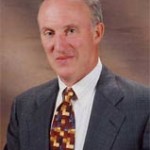
Scott Shires
Shires, speaking by phone late last week, said he was only the registered agent for WTP because that’s what he used to do for a living. His former company, Campaign Compliance Center, registered campaign committees and other groups, received email invoices, paid the bills and filed required reports with the secretary of state’s office.
“I don’t even know who they are anymore,” he said of ATP. “The board of directors was being expanded and changed at the time that I was let go. They sent a messenger over to pick up my box of financial records and I gave it to them and then they didn’t bother to pay me my last $1,200, so I’ll stand in line with some of those assholes [on the political left, filing complaints]. Pay your damn bills, asshole.”
Shires, now a contract chief financial officer who runs Shires Financial Group, said backlash over ATP wound up costing him business.
“I took unbelievable shit and heat and lost commercial revenue when the attacks began anew for American Tradition Partnership,” Shires said. “I had a commercial life. I had employees. I lost nearly $12,000 a month in revenue when those attacks started because the attacks were, ‘I don’t pay my bills. I’m slime.’”
How to fix the system? Shires, who at one time controlled the checkbooks for 65 different groups registered with the state, said it’s simple:
“Sure, you eliminate any and all committees in the country except the candidate committee,” Shires said, adding corporations would be allowed unlimited contributions as long as they’re fully disclosed. “They can raise all the money they want. They can raise a half a billion dollars. They just have to give it to the candidate and the candidate is responsible for how he spends it.”
That way, Shires argued, “dark money” groups can’t sway elections with campaign ads that voters can’t trace back to donors.
 Many of the donors to WTP and ATP were revealed when Frontline and ProPublica got a Montana court to release a list of previously anonymous contributors. But even now Shires won’t name names of WTP’s board or officers, citing his values as a former U.S. Army ranger: “Code of honor actually means something to me.”
Western Tradition Partnership was active in a 2008 Garfield County commissioners race in which unprecedented amounts of outside money poured in at the 11th hour to help defeat two Democrats running on pro-environmental platforms during a massive natural gas-drilling boom.
Another Shires-registered group, Colorado League of Taxpayers, was found guilty of illegal electioneering in that race and fined $7,150 after the Denver-based watchdog group Colorado Ethics Watch filed a complaint. A spokesman for Secretary of State Gessler last week said Colorado League of Taxpayers, which was represented by Gessler’s former law firm, still has an outstanding balance of $8,437 – the original fine plus $1,287 in collections fees.
The same spokesman did not respond to a request for a direct comment from Gessler on the loophole in Colorado law that allows political groups to ignore fines and dissolve without any individual board members or officers liable for penalties levied for illegal campaign practices. In the past, the secretary of state’s office has admitted to being hobbled in terms of enforcement.
“I know the Department of State had considered from time to time asking for an amendment to the Fair Campaign Practices Act that would require committees to have someone be liable for things like this, but it has never become an official legislative proposal, as far as I know,” said Luis Toro, executive director of Colorado Ethics Watch.
“I doubt the current SOS [Gessler] would be in favor of such a proposal. Personally, I don’t think it matters what a particular SOS did before they took office, but I would hope that any SOS would want to make the system more effective.”
Shires doesn’t dispute the unpaid fine but said he’s in no way responsible for paying it.
“I don’t have a problem with the fine being levied in the first place,” Shires said. “Lehman Brothers, Arthur Andersen and Enron — do you think the registered agents should be personally held liable or villainized for the fact that they went out of business owing a lot of people a lot of money? End of my story.”
The fix is simple, Shires said: “Every committee requires two people, two names [when it’s registered].” And at least one of them has to be either an officer or on the board of directors, he added.
Julie Steab, an investigator with the Montana Commissioner of Political Practices, is looking into five separate complaints against WTP/ATP stemming from state legislative races in Montana. Although she said she can’t comment on ongoing investigations, Steab said she keeps coming across the activities of groups first registered in Colorado.
“It seems like Scott Gessler and Scott Shires were kind of hand in hand on a lot of these for a long time,” Steab said.
For years, Shires and Gessler worked in lockstep to register and run a variety of groups.
“[Hackstaff Gessler] would hire me to be the money guy because they knew I’d get it right,” Shires said. “And in most cases I never met anybody. I deliberately never ever asked people to send me copies of your mailing lists. Do not include me on your mailing list, please. I don’t want to know what you’re doing. Not my responsibility.”
:{
Shires said labor unions and Democratic political operatives are some of the biggest offenders when it comes to hiding behind issues groups and coordinating with candidates. And he added that the ultimate cover for any wrongdoing is now attorney-client privilege.}:
Colorado Ethics Watch’s Toro has asked the office of the Montana Commissioner of Political Practices — which in 2010 found that WTP violated disclosure laws in that state — to turn over the meth house documents to see if there are examples of illegal Colorado campaign coordination between candidates and the nonprofit group. But for now those documents are tied up in the ongoing and highly secretive grand jury investigation.
“When you form these [issues groups] you have a law firm form them and then it’s attorney-client privilege and everybody, especially Democratic legislative bodies and the trial lawyers’ association, will never, ever, never waive attorney-client privilege for anything,” Shires said. “To do so is probably the end of western civilization.”
Colorado dithers on dark-money reform despite mounting public frustration
Part 2 — March 20, 2013
Colorado’s Democrat-dominated state legislature is hammering out new laws on everything from guns to civil unions to gas fracking, but so far lawmakers have been loath to tackle campaign-finance reform even though for years getting the “dark money” out of local elections has been a top priority.
“I think that the public is very frustrated with the level to which we’re seeing outside groups come in and create such a negative environment under the guise of issues,” saidstate Sen. Gail Schwartz, a Democrat who narrowly won reelection in 2010 despite a notorious mailer from a nonprofit social welfare group called Western Tradition Partnership.
That group — now American Tradition Partnership after its name was changed by the former law firm of Colorado Secretary of State Scott Gessler – is at the center of a firestorm of controversy in Montana, where lawmakers on Monday voted in favor of a “dark money” bill aimed at forcing such groups to disclose their donors.
“Montana voters need to know that their voice counts most, and we need to send a strong message to the backers of dark money organizations that our elections and our government is not for sale,” said Montana state Sen. Jim Peterson, a Republican who worked with Democratic Gov. Steve Bullock to draft the TRACE Act.
Whether Peterson’s bill will pass another Senate vote and then make it out of the House remains to be seen, and there’s speculation the entire process is pointless because the new law would be deemed unconstitutional by the courts. Still, Schwartz applauds Montana for taking some sort of action against groups like ATP, which made national headlines for its activities in Montana.
Colorado state Sen. Morgan Carroll, a Democrat, tried unsuccessfully to close a loophole that allows 501(c)4 groups to pass money through to 527 groups (named for another section of the tax code). Those groups, thanks in part to the efforts of Carroll in 2007, have far more stringent reporting requirements than social-welfare groups like ATP.
Colorado lawmakers, including Schwartz, havetried but failed for years to pass legislation that would compel 501(c)4 social welfare groups to disclose their donors if they engage in political activity. Federal tax laws protect such issues groups from disclosure if their primary purpose is educational, not political, but it’s often difficult to distinguish between the two.
“We haven’t really found the path to go after [dark money], but we’re grateful that the courts in Montana are willing to do it,” Schwartz said, referring toefforts by the office of the Montana Commissioner of Political Practices, which has repeatedly taken on ATP and other groups for illegal campaign tactics.
An investigator with Montana’s political practices office said she was working on five separate complaints against WTP/ATP for questionable campaign practices in state legislative races, although she could not comment on their status while the cases are pending.
The question of why Montana – a red state – is so much more aggressive than Colorado on the campaign-finance front, including funding a political practices office at all, comes down to money and political will, Schwartz said.
“It’s a budget piece, and it really would be a commitment to spending money on that and then, with our secretary of state [Gessler], the question is how can we effectively put that into place?” Schwartz said.
Gessler is a former Republican campaign-finance and elections attorney whose firm represented WTP/ATP and many other issues groups. He tried unsuccessfully to continue to work for his old firm after being elected secretary of state in 2010. A spokesman for Gessler’s office did not return emails requesting comment for this story.
A federal grand jury in Montana is currently investigating a cache of campaign materials and documents allegedly related to ATP. Found in an Aurora meth house in 2011, the documents were turned over to Schwartz’s husband Alan, an Aspen attorney, and allegedly show illegal coordination between the nonprofit and specific candidates.
The materials were then turned over to the Montana Commissioner of Political Practices, which in turn relinquished them to the grand jury after being subpoenaed. Before that, though, multiple parties – including an attorney for ATP – claimed the documents after a joint PBS Frontline andProPublica investigation aired last fall. And there was a break-in at the political practices office.
The political watchdog group Colorado Ethics Watch also requested the ATP documents but not necessarily because of potential connections to Gessler.
“I doubt there is anything against Scott Gessler personally, because he was just the lawyer,” said Luis Toro, executive director of Colorado Ethics Watch. “Our interest is more in seeing evidence of coordination between Western Tradition Partnership and candidates here in Colorado.
“That would be barred by the statute of limitations [180 days for campaign-finance violations], but we would want to use it to raise awareness and advocate for more effective regulation of that kind of thing.”
Scott Shires, an Aurora businessman who for years worked closely with Gessler setting up issues groups, was the first registered agent for WTP in 2008 before Gessler’s law firm changed the name to ATP in 2010. In an exclusive interview with the Denver i Journal last week, Shires said the way to fix the system is to ban issues groups altogether.
Shires, whose groups have been fined for illegal electioneering but haven’t paid up years later, said there won’t be any meaningful campaign-finance reform coming out of a Democrat-controlled legislature because they’re just as guilty of gaming the system. As for WTP, he maintains he was just the registered agent.
“They’ve become the symbol of what’s wrong in America,” Shires said. “Somehow the Democratic Party has carte blanc [sic] dodged that bullet and so it rests with Western Tradition Partnership. What can I say?”
Bernie Buescher, a former state lawmaker who served as secretary of state before Gessler, also called the system completely broken and badly in need of a total overhaul. It’s been suggested that the secretary of state’s office needs to be given more power to investigate campaign-finance violations in Colorado because the office is currently hobbled.
“We have strong laws on the books but very weak enforcement,” Toro said, “partly because of the secretary of state’s rules and partly because it’s so difficult for private parties to pursue these claims under the system if you have to file a lawsuit and have your proof already lined up before you even file — with no power of subpoena.”
Dark money in recent years has trickled all the way down to county commissioner races in places like Garfield County, where it’s alleged that oil and gas money helped defeat Democrats who wanted more controls put in place to mitigate the environmental impacts of natural gas drilling.
==
11/08
:{
}:
Tens of thousands of dollars from outside political groups have flowed into Garfield Countyelections this year, mostly in favor of Republican candidates. It appears to be the first time such outside money has entered a county race in Colorado, and while these groups have been secretive, they may be operating perfectly legally.
“The fact that they haven’t filed anything doesn’t necessarily mean they have broken any laws,” said Luis Toro, general counsel for the watchdog group Colorado Ethics Watch.
He said his organization is looking into concerns about the groups operating in Garfield County, but it’s not clear they’ve violated the law.
At least six outside political groups have muscled in on the county races, where oil and gas issues have become a sharp dividing line between Republicans and Democrats. Most have disclosed very little about their donors, and most don’t have to.
Several appear to be registered as 501c4 nonprofit groups, which have to disclose very little about who their donors are or how their money is spent.
“It’s a new development to see these groups down at the county commissioners level,” Toro said. “This is the only one I’ve seen.”
The latest to enter the fray is Western Tradition Partnership, a conservative nonprofit group based in Bozeman, Mont., that favors natural resource extraction. The group has sent out mailings that criticize Democratic commissioner candidate Stephen Bershenyi, linking him to environmental groups and noting his opposition to the controversial Red Feather Ridge development that was shot down outside Glenwood Springs.
Bershenyi questions the legality of these groups.
“I think what the larger concern is their presence in the race to begin with,” he said, “and for them to be so secretive just heightens my suspicion about who they are and where the money’s coming from.”
It’s not clear that they are doing anything illegal, though.
:{
Under state law, so-called 527 groups, political groups that work on behalf of candidates or issues without being directly involved with their campaigns, don’t have to report their activities until after they’ve started work. Those that got under way after Oct. 23 won’t have to file until Dec. 4, long after the races are decided.}:
Groups that are 501c4 nonprofits have to disclose very little.
Most political groups have 60 days file an electioneering report with the state. Only three groups have done so, so far.
At least four of the six groups appear to be 501c4s, meaning little may be known about their fundraising and expenditures.
These nonprofit groups have come to replace so-called 527 organizations as the favored shell for political contributions, Toro said. They have no contribution cap and don’t have to reveal who their donors are. They became popular after 527s faced greater disclosure requirements at the state and national level, Toro said, but unlike other political groups, they have to spent at least half of their money on non-political activities.
So-called 527s, because of the section of the tax code they fall under, lack the spending caps that other political groups have, but they must now release contribution and expenditure information.
According to filings with the secretary of state’s office, WORC Colorado Rural Voters has spent $15,000 on door-to-door campaigns, mailings and phone banks on behalf of Democrats Bershenyi and Steven Carter. The group is a 501c4, and an arm of the Western Organization of Resource Councils, an umbrella group of environmental organizations including Western Colorado Congress and the Grand Valley Citizens Alliance.
The group Western Heritage, funded by the chairman of the energy company Antero Resources and Scott McInnis, an energy company lobbyist and Glenwood Springs native who was a popular Republican legislator, appears to have spent $10,000 each on advertising campaigns for Republicans John Martin and Mike Samson. State records indicate it is a 501c4, but it has indicated its donors.
The group Small Town Values, a Denver-based group registered to John Zakhem, the attorney to the state Republican Party, has spent $7,250 on advertising for Samson and Martin. It is also a 501c4, and like the other two groups, has filed electioneering reports, but it hasn’t listed its donors.
Zakhem said the organization had not authorized him to release information about its members.
Other groups have spent undocumented amounts of money on behalf of Republican candidates and have so far filed no electioneering reports.
Western Tradition Partnerships is a 501c4, and although it is based in Montana, it has an office in Denver. A message seeking comment was not returned, but its Web site describes its interest in local elections.
“There’s no question that decisions at the State and County Commission level can be even more unexpected — and more damaging — than those taking place in Congress,” it says. “Many well-heeled organizations are taking aim at the independent Western way of life.”
The group was founded by former Rep. Scott Marlenee, R-Mont., and Montana state Rep. John Sinrud, also a Republican.
Two other groups, the Colorado League of Taxpayers and the Coalition for Energy and Environment, have no records with the secretary of state’s election division, but IRS records list them as 527 groups.
Those groups have listed Scott Shires, a GOP operative, as its registered agent. Shires has been fined in the past for his attack ads. He did not return a message seeking comment.
dfrey@aspendailynews.com
==
WTP, which has since changed its name to American Tradition Partnership (logo above), :{describes:(style="background-color:#fff200"):}: itself as a “no-compromise grassroots organization dedicated to fighting the radical environmentalist agenda.” It was first registered as a Colorado nonprofit in 2008 by Scott Shires, a Republican operative with a checkered past: He was**fined**over $7,000 for campaign finance violations in Colorado, pleaded guilty in a**scheme**to fraudulently obtain federal grants for developing alternative fuels, and was**tied**to an illegal gambling ring.WTP was active on behalf of oil and gas industry interests in the 2008 commissioners race in Garfield County, a center of Colorado’s energy industry.
===
sturgis: Interestingly, Scott Shires -- the political consultant with the criminal past who signed ATI's Form 990 on file with the IRS --told CPI that his reputation suffered after signing ATP's official documents:
“The operatives writing these stupid ads and mailings don't want to be identified,” said Shires. “I was the screen that allowed them to hide -- plausible deniability is something a lot of these groups are interested in.”
http://www.southernstudies.org/2012/10/conservative-group-demanding-climate-scientists-emails-is-less-than-transparent-about-its-ow
http://www.southernstudies.org/2012/07/climate-science-attack-group-turns-sights-on-texas-professors.html
Climate science attack group turns sights on Texas professors
The American Tradition Institute, a conservative think tank with financial ties to fossil fuel interests, made headlines last year for a controversial freedom of information lawsuit against the University of Virginia targeting former UVA professor and leading climate researcher Michael Mann, who's now at Penn State.
Now ATI's campaign to discredit mainstream climate science is targeting professors at two Texas universities -- and it's particularly interested in their communications with journalists.
ATI recently sent requests under the Texas Public Information Act to Texas A&M University seeking all emails to or from a university account used by Andrew Dessler (photo at left), a professor in the school's Department of Atmospheric Sciences whose research focuses on climate systems and climate change policy. As the Climate Science FOI report blog observed,ATI's requests were unrelated to scientific data.
The group's initial request for Dessler's emails was made on May 1, the day after the New York Times ran a critical story quoting Dessler about MIT meteorology professor Richard Lindzen, who is part of a small minority of climate researchers who argue that mainstream science exaggerates global warming trends. (Lindzen is also a skeptic about the well-documented link between smoking tobacco and lung cancer.) That request sought emails that mentioned Lindzen and Mann, among other things.
Then earlier this month, ATI sent a**second information request**to Texas A&M expanding the emails it sought from Dessler's account to include any exchanges with New York Times reporter Justin Gillis, who wrote the Lindzen story, as well as any communications with the PBS investigative journalism show Frontline, Frontline producer Catherine Upin, Associated Press science reporter Seth Borenstein, and Suzanne Goldenberg, U.S. environment correspondent for the British newspaper The Guardian. Also covered in that request were any communications Dessler had with the watchdog groupUnion of Concerned Scientists and**Richard Ades**, a public affairs professional who directed the Project on Climate Science, which worked to disseminate high-quality scientific climate research to media and lawmakers.
Late last year ATI sent out a similar information request to Texas Tech seeking information on professor Katharine Hayhoe(photo on right), an atmospheric scientist who directs that school's Climate Science Center. Hayhoe wrote a chapter on climate for a book about the environment by former Georgia congressman and GOP presidential hopeful Newt Gingrich only to have him cut it after criticism from conservative talk radio host Rush Limbaugh, who refers to Hayhoe as a "climate babe."Other scientists targeted by ATI include NASA climatologists James Hansen and Gavin Schmidt, co-founder of the**RealClimate blog**along with Mann.
ATI's initial lawsuit targeting Mann came on the heels of a similar effort by Virginia Attorney General Ken Cuccinelli (R), a global warming skeptic who sought to investigate whether Mann defrauded taxpayers by using manipulated data to win government funding. That case went all the way to Virginia's Supreme Court, which ruled against Cuccinelli earlier this year.
In a recent opinion piece in the conservative Washington Examiner, Christopher C. Horner, ATI's director of litigation and a senior fellow at the fossil fuel-funded Competitive Enterprise Institute, described ATI's efforts as part of a "transparency campaign using federal and state freedom of information laws to learn more about how taxpayer-funded academics use their positions to advance a particular agenda."
But others take a different view. Jeff Ruch, an attorney with the Climate Science Legal Defense Fund, which has helped Mann and others with legal fees, told the Guardian that the requests represent a "new chapter" in ATI's ongoing campaign against mainstream climate scientists:
"Before they were going after interactions between individual scientists. This is basically a spying operation to see who are you talking to, but presumably the idea is the same: to find material that is potential[ly] of use in discrediting a scientist."
Originally known as the Western Tradition Institute, ATI is the 501(c)(3) charitable nonprofit arm of the American Tradition Partnership, a 501(c)(4) "social welfare" nonprofit that was founded in Colorado in 2008 with backing from fossil fuel interests. ATP, which changed its named from Western Tradition Partnership, was registered by Scott Shires, a Republican operativewho was fined over $7,000 for campaign finance violations in that state, pleaded guilty in a**scheme**to fraudulently obtain federal grants for developing alternative fuels, and was**tied**to an illegal gambling ring.
ATP was the plaintiff in a recent U.S. Supreme Court case that overturned state bans on corporate and union spending in elections under the court's 2010 Citizens United decision. That case originated in the group's challenge to a Montana law that aimed to limit the influence of the state's powerful mining industry.
By Sue Sturgis on Thu, 07/19/2012 - 11:38
Scott Gessler, Republican candidate for Colorado Secretary of State
Scott Gessler, the Republican Party’s ever-so-slick choice to run for Secretary of State this November has a dossier that only an authoritarian father-party could love.
While moaning and groaning, ranting and raving, over the influence of soft (527) money, he is up to his neck inside these organizations.
The 527 designation applies to political organizations that have tax-exempt status under section 527 of the Internal Revenue Service code. They are organized and operated “primarily for the purpose of directly or indirectly accepting contributions or making expenditures” with the intent of influencing the “selection, nomination, election, or appointment of any individual to Federal, State, or local public office or office in a political organization, or the election of Presidential electors.”
Gessler’s group, Coloradans for Changeis a 527 that took at least one massive donation of $125,000 from the **Senate Majority Fund** and another donation of $100,872 from the **Colorado Leadership Fund**. Both groups were defendants in a lawsuit by Colorado Ethics Watch for sponsoring unethical campaign ads and skirting campaign finance laws.
Money, however, appears to flow both ways with some of these 527s. On two occasions funds flowed from Coloradans for Change to the Colorado Leadership Fund, in one instance for $46,125. Might this be a case of “political money laundering” or are we merely talking about political incest? And where Scott Gessler is concerned, there’s certainly a lot of the latter going on.
Gessler is also the man behind the curtain for Colorado Conservative Voters, a 527 whose purpose is “to education Colorado citizens about issues, officeholders, and political candidates that further conservative values.”
And if all this 527 hypocrisy isn’t enough, he’s rubbing questionable elbows with a guy named Scott Shires, also connected to Coloradans for Change and the Senate Majority Fund.
Shires, along with Scott Gessler, is also listed as Western Tradition Partnership’s registered agent.Western Tradition Partnership is registered with the IRS as a nonprofit 501c4. According to Luis Toro, general counsel for Colorado Ethics Watch, these nonprofit groups have come to replace 527 organizations as the favored shell for political contributions. They became popular after 527s faced greater disclosure requirements at the state and national level.
Gessler joined this shell game with Western Skies Coalition and Coloradans for Economic Growth, both of which have had complaints filed with the IRS presenting evidence that these organizations might have spent more of their total resources on actions that influence elections in Colorado rather than on social welfare activities, in violation of their federal tax-exempt status.
Shires, the Republican operative and front man for many 527s, has a history of violating campaign reporting regulations. Shires has also been indicted on an alleged money laundering scheme to hide an illegal gambling operation.
Scott Shires is behind yet another 527, the Colorado League of Taxpayers who attacked Longmontcouncil candidate Richard Juday in a January 2008 mailer. A similar event occurred in Garfield County. Colorado Ethics Watch sued Shires for campaign violations in that case and he was fined in excess of $7,000.
So these two “Scotts” are joined at the political hips. Both Republican operatives. Both of whom appear to have never met an election law for which they didn’t have contempt.
Flying further under the radar are Gessler’s other political bedfellows. He’s allied with Coalition for a Conservative Majority (founded by Tom DeLay,who has been indicted on felony conspiracy and money-laundering charges) and he is a frequent “guest” at rightwing reactionary groups, such as the Tea Party.[santos?]
Scott Gessler has the political gall to think we should make him Colorado’s next Secretary of State, the position that guarantees the security and legitimacy of our elections. No way, Mr. Gessler. You aren’t qualified. It’s a matter of trust. It’s a matter of common sense. It’s a matter of integrity
Who benefited from outside influence?
February 12, 2010
(as it appeared in Longmont Ledger, November 8, 2009)
Longmont has been under political attack from outside of Longmont and outside of Colorado. Aligned with these powerful and well-funded entities are individuals and groups within Longmont who have been furious since the November 2007 election produced a progressive-leaning majority. They are using outside money and their own deep pockets to “take back Longmont.” And they have succeeded resoundingly.
Western Tradition Partnership (WTP), headed by Bozeman, Montana Republicans (former US representative Ron Marlenee and state representative John Sinrud) is the lead plaintiff in the lawsuit against Longmont over electioneering provisions and independent expenditures in the Longmont Fair Campaign Practices Act.
WTP is rabidly anti-environmental and absolutist on property rights with the stated purpose to target local and state governments. It receives its backing primarily from the oil-gas-coal industries.
Longmont Leadership is a party to this lawsuit along with former mayors Julia Pirnack and Bob Askey, both Republicans, the Longmont Area Realtors Association, and Republican activist Chris Rodriguez. It was formed to unseat current mayor Roger Lange and Ward 2 councilmember Karen Benker, and did so with a contribution in excess of $10,000 from Western Tradition Partnership, almost the entirety of Longmont Leadership’s funding.
Western Tradition Partnership is registered with the IRS as a nonprofit 501c4. According to Luis Toro, general counsel for Colorado Ethics Watch, these nonprofit groups have come to replace 527 organizations as the favored shell for political contributions. They became popular after 527s faced greater disclosure requirements at the state and national level.
Aspen Daily News reports that “527s…lack the spending caps that other political groups have, but they must now release contribution and expenditure information.” 501c4s are allowed “greater anonymity but are required to pursue mostly nonpolitical activities, which they don’t always do. Groups that get involved late in the process don’t have to disclose much at all until December, long after the races are decided.”
The Colorado registered agent for Western Tradition Partnership is their attorney Scott Gessler, who is also the Republican candidate for Secretary of State in 2010. It is not at all coincidental that Gessler is likely to use WTP’s lawsuit over Longmont’s Fair Campaign Practices Act as a platform for further degradation of campaign financing regulations.
Scott Shires is also listed as a WTP registered agent. He is a Republican operative and front man for many 527s and he has a history of violating campaign reporting regulations. Shires has also been indicted on an alleged money laundering scheme to hide an illegal gambling operation.
Shires is behind the Colorado League of Taxpayers who attacked Longmont council candidate Richard Juday in a January 2008 mailer. A similar event occurred in Garfield County. Colorado Ethics Watch sued Shires for campaign violations in that case and he was fined in excess of $7,000.
Western Tradition Partnership also had an electioneering violation complaint filed against it with the State of Montana’s Commissioner of Political Practices in October 2008.
Reporting for the Missoulian State Bureau on 5/4/08, Charles S. Johnson asked WTP who else was helping the organization and was told that Christian LeFer was helping with graphics and web design work. (LeFer is a public figure in both the Montana and Colorado Right-to-Work organizations.)
LeFer is also the web registrant for the “Greeley Report” with a striking similarity to the anonymous “Longmont Report” that appeared in January 2008 to defeat Juday in favor of current councilmember and former Rep. Tom DeLay staffer Gabe Santos. After the election it targeted Benker and councilmember Sean McCoy. .
Stephanie Baum, “Take Back Longmont” blogger and wife of mayor-elect Bryan Baum, wrote to Doug Wray about the person responsible for Longmont Report, saying that she “knows who he is” because she “met with the owner of Longmont Report.” Baum and Chris Rodriguez move in the same political circle. Rodriguez is well known for his blog vitriol.
Who benefitted—politically and financially—from the Western Tradition Partnership lawsuit and other suits targeting the City of Longmont? Who benefitted from the bombardment of expensive mailers that are appeared in mail boxes all over Longmont? Who benefitted from attack blogs, push-polls and robo-calls against candidates? With the results of the November 3rd election now in, the answers are self-evident.
Kaye Fissinger is a former educator and a retired business woman with experience in marketing, communications, and strategic planning.
A similar version appeared on YourHub.com under the title “Big Money, Republican Machine Buys Longmont Election”(http://denver.yourhub.com/Longmont/Stories/Elections/Story~705977.aspx)
Schwartz, a Democrat, said late last week she still hasn’t determined whether to file a formal complaint with current Secretary of State Bernie Buescher’s office regarding themailers sent out by Western Tradition Partnership(WTP) depicting her as Donald Trump. But she said she will pursue tougher disclosure laws in the next legislative session.
“We absolutely need to do everything we can at the state level,” Schwartz said. “It’s probably one of my top priorities to go and see how we can put in place some controls, and then the irony is to have Scott Gessler come in and be in office when he is apparently part of the problem.”
The Western Tradition Partnership Education Fund was registered on Oct. 13 by Mario Daniel Nicolais II of the Hackstaff Gessler law firm in Denver. No electioneering communication report in Schwartz’s successful state Senate bid was filed, and the group lists no contributions or expenditures during that time period.
Western Tradition Partnership sent out the mailers, with Schwartz’s face on Donald Trumps body and the tagline “You’re Fired!” in late September or early October, and then commented on her reaction on their website on Oct. 4. By Colorado law, anyone spending more than $1,000 to do any electioneering communication within 60 days of a general election must report it to the secretary of state’s office.
Buescher spokesman Rich Coolidge confirmed no such report comes up under Schwartz’s name, which also is required.
“I didn’t see any Western Tradition Partnership come up as a result of that search,” Coolidge said. “If you do any independent expenditures or electioneering communications, you need to flag that box either on your reports or just come into our system and do that.”
The secretary of state’s office is not empowered to file its own enforcement actions, needing a candidate or an outside group to file a formal complaint. Coolidge said late last week no such complaint had been filed. If one is, it will be forwarded to an administrative law judge for a ruling.
Luis Toro, director of Colorado Ethics Watch, said his organization also is weighing whether to file a complaint in the case. He declined to discuss the specifics of the Schwartz case, but did say Gessler’s connection to it is not surprising.
“His career [as a Republican attorney for conservative political groups] has been chipping away at these disclosure laws and chipping away at campaign finance laws and arguing that the First Amendment means that corporations can spend unlimited money to influence elections without disclosure,” Toro said.
Gessler defended Republican operative Scott Shires — who first registered Western Tradition Partnership as a Colorado nonprofit in 2008 — in a case in which Shires failed to file electioneering communications reports for a group called the Colorado League of Taxpayers.
That group campaigned on behalf of pro-oil and gas Republicans in the 2008 Garfield County commissioner’s race. A judge fined the Colorado League of Taxpayers more than $7,000 in that case, and the fine – still unpaid – now tallies more than $8,000.
Toro says that unpaid fine is more significant than a much-publicized $528,500 tab for a Gessler-registered group called the Colorado Independent Auto Dealers Association, which was fined for failing to file required reports for nearly three years.
“When you put it in comparison to the Colorado League of Taxpayers, where they just didn’t register at all and they just jumped in with both feet and were influencing the election and got fined $7,100, that’s actually a pretty big fine in a litigated campaign finance case,” Toro said.
For instance, the record fine for a litigated campaign finance case is the $17,500 levied against Republican Dan Maes in the recent gubernatorial race.
Gessler would not comment specifically on his connections to Western Tradition Partnership, the Schwartz case or the Colorado League of Taxpayers and its unpaid fine.
“I generally do not comment on client matters, past or present,” Gessler said in an email. “You’ll have to keep trying those respective organizations.”
Western Tradition Partnership Executive Director Donald Ferguson did not return a call requesting comment. Shires hasn’t returned numerous calls and emails requesting comment on his unpaid fine.
“With respect to me being ‘linked’ to 527’s, you may be aware that I am an attorney,” Gessler added. “As such, I represent clients. Some of my clients are occasionally accused of violating Colorado’s reporting requirements. I represent them in those matters. Ergo, a ‘link’”
Schwartz said outside corporate influence and lack of disclosure “strikes at the heart of our democracy.”
“That whole thing, ‘all politics are local,’ well, maybe that’s not the case anymore since the Supreme Court [Citizens United] decision came in,” Schwartz said. “Maybe it’s ‘all politics are who has the biggest war chest.’ You can come in and impact races that typically weren’t played in. The commissioner’s race in Garfield Countywas a perfect example. It just totally blew away the competition in terms of basic resources.”
Schwartz added she’ll do everything in her power to increase the consequences for scofflaw groups like the ones connected to Gessler.
“I don’t care what office you hold,” she said. “You need to be held to the same standard everyone else in the state is, and if the penalties are not stiff enough or the consequences are not stiff enough, then we need to go after that.”
It’s been nearly eight months since former Garfield County Judge Steve Carter says he was ambushed by oil and gas money in his unsuccessful bid for county commissioner, but the Democrat is clearly still seething about what he considers a “stolen election.”
“If somebody parks in your parking place, you can call the police department and they’ll come and investigate it and give the guy a ticket. But if someone steals an election, the way it’s set up right now, neither the attorney general, the secretary of state, the local [district attorney] or the local police department have the power to investigate it, and I think that should be changed,” Carter said in an interview.
Formal complaints about illegal electioneering by so-called 527 political committees or nonprofits are typically left up to the losing candidate — who may or may not have the resources to pursue a complaint — and usually are filed after the fact.
“A crime is committed when somebody does those things and fails to disclose where they’re getting their money — the kind of political things that [Republican operative] Scott Shires’ group did,” Carter said. “However, unless somebody like Colorado Ethics Watch spends the time, money and effort to file a formal complaint, nobody will do anything.”
A judge in April fined Shires and his Aurora-based Colorado League of Taxpayers $7,150 for failing to file an electioneering communications report for money it spent to influence the race, which pitted two Democrats seeking more control over natural gas drilling against Republicans running on pro-drilling platforms. Garfield County is a hot-bed of natural gas production, with more than 5,000 active wells at one point last year.
At least five other groups, both 527s — named for a section of the federal tax code and not bound by traditional fund-raising limits that govern other political groups — and 501(c)4 nonprofits, spent heavily on that 2008 race. Carter and fellow Democrat Stephen Bershenyi said they were the subject of last-minute lies and personal attacks about past business dealings and political positions.
It was an unprecedented flurry of outside spending for a local race — including some money from liberal environmental groups — and some observers are worried it set a new standard for election spending on the Western Slope.
“Industry decided they had a candidate that they already owned that they were going to protect at any cost and they wanted to make sure stayed in place, and they spared basically no expense to get that done,” said Bershenyi, referring to incumbent Republican John Martin. “I’ve been told by reliable sources who shall remain anonymous that industry spent well over $100,000 making sure that happened.”
Martin fairly firmly denounced the attack ads, fake newspapers and other tactics targeting the Democrats, saying he didn’t need the help, didn’t appreciate the outside influence — by either the industry or environmentalists — and preferred to run on his record and the issues.
But in an April interview, he also predicted such tactics are here to stay, and that groups on both sides of the energy debate will spend heavily in the 2010 election.
“All of that is going to come to light, and you’ll have many, many arguments, and should we say accusations, as well as explanations in the political arena from the governor to the locals in two years,” Martin said.
Bershenyi, a blacksmith and artist who grew up in Glenwood Springs, ran unopposed and won an at-large city council seat in his hometown in April. He said he learned a lot from his run against Martin and now has a much thicker political skin, but he wants to focus on city government before considering running for commissioner again in 2012.
“What you saw in that race was probably something unprecedented in terms of it never having been seen in a local race like this,” Bershenyi said. “County commissioner races in Garfield County have traditionally been races about issues, races about voting records and direction, and not about personality, and this was a radical departure from that.”
Carter, a Rifle attorney, said he won’t run again in 2012, hoping instead a younger candidate steps into the fray. He doesn’t blame his 2008 Republican opponent, Rifle High School Dean of Students Mike Samson, for the industry tactics, but feels bad for the oil and gas workers who were lured to the polls by false promises on Election Day.
“The workers were all told that if these two guys get elected you’ll be laid off tomorrow, and as a result, not just in my election but also in Bershenyi’s, it was a complete turnaround,” Carter said, referring to early returns and absentee ballots that had both Democrats leading. “So they voted the way they were told and they got laid off anyway.”
A slowdown in natural gas drilling, brought on by the recession and declining commodity prices, has led the laying off of hundreds of contract workers across the Western Slope since the 2008 election.
Got a tip? Send us an e-mail. Follow The Colorado Independent on Twit
==
error on status?
, *Roll Call* reports:
Former Rep. Bob Schaffer (R-Colo.) has been named as a possible witness by prosecutors in the sentencing phase of a federal tax evasion and embezzlement case involving a former business associate who was found guilty of illegally using funds from a 2002 Congressional earmark...
At issue is a 2002 earmark tucked into what was at the time the Veterans Affairs, Housing and Urban Development, and Independent Agencies appropriations bill. The provision provided $3.7 million for the National Alternative Fuels Foundation for the development of a new type of fuel, and was to be administered by the Environmental Protection Agency.
NAFF was run by Orr, a Colorado businessman who operated a number of fuel- and energy-related companies and nonprofits in the state.
According to sources familiar with the case, the EPA's inspector general launched an investigation into the case shortly after the contract was awarded in response to concerns that NAFF was not properly managing the grant. Although no formal public report was ever written, IG investigators eventually concluded that Orr had been misusing federal funds, using them to pay himself a $250,000 salary, and that the work the foundation had been doing was not substantial, according to these sources.
Schaffer, who lost a 2004 GOP Senate primary to beer magnate Pete Coors, left Congress in 2002 and took a position on NAFF's board of directors in October 2004, according to his personal finance filings with the House.
According to Wadhams, Schaffer joined NAFF in part because of his interest in the development of alternative fuels.
Schaffer is "intrigued by the technology that the company was working on ... the fact is Bob has had a longstanding interest in renewable fuels technology," Wadhams said.
Wadhams also said Schaffer's interest in NAFF - and his decision to join the board in 2004 - came about on the recommendation of longtime political associate Scott Shires.
Shires ran some of Schaffer's local and statewide political campaigns, including fundraising operations and campaign committees.
However, Schaffer's relationship with NAFF was short lived. According to his disclosure forms, Schaffer left the board in March 2005. Wadhams said his departure was a direct result of news that federal investigators were looking into the group and Orr's handling of the earmark.
- See more at: http://coloradopols.com.lb.soapblox.net/diary/6250/#sthash.fFL5ZweB.dpuf
=
The total amount raised by WTP, now known as American Tradition Partnership, was not large, compared to the tens of millions of dollars dark money groups like Crossroads GPS and Americans for Prosperity have collected in the 2012 election cycle.
But the details available on WTP, which has worked to elect conservatives in Montana and Colorado and has won national attention for a lawsuit that led the Supreme Court to apply its *Citizens United* ruling to states, are striking.
The bank records highlight WTP’s ties to groups backing libertarian Ron Paul. The Conservative Action League, a Virginia social welfare nonprofit run at the time in part by John Tate, most recently Paul’s campaign manager, transferred $40,000 to WTP in August 2008, bank records show. Tate was also a consultant for WTP. In addition, WTP gave $5,000 to a group called the SD Campaign for Liberty, affiliated with Paul and the national Campaign for Liberty.
The bank records also illustrate how cash passes between dark money groups, further obscuring its original source: $500,000 passed from Coloradans for Economic Growth to WTP to the National Right to Work Committee, over a few days in October 2008. Coloradans for Economic Growth and the National Right to Work Committee are social welfare nonprofits that don’t have to disclose their donors. Tate and others paid by WTP were also once associated with National Right to Work.
WTP’s biggest donation that wasn’t simply a pass-through, for $110,000, was from the Spur Education Fund, an obscure nonprofit with no website, about which little information is available. Incorporated in June 2010, out of the same Denver law firm address as Coloradans for Economic Growth, the fund transferred money to WTP four times between July and September 2010.
Scott Shires, the man who incorporated WTP in Colorado in 2008, appeared to have signed off on one of those contributions, raising questions about whether WTP was also affiliated with Spur. A handwritten note on a transfer document for $40,000 from Spur, dated Sept. 2, 2010, said: “Deposit into Western Tradition Partnership acct ending 5610 as per Scott Shires phone request.”
Shires, who says he has been the public face of about 600 committees over the past 20 years, has maintained he had very little involvement with WTP. On Sunday, he said he wrote some checks for the Spur Education Fund but didn’t remember anything else.
“It’s a game,” he said. “There are people that don’t want their names connected to certain committees, and I was the public name period. And that was case with WTP.”
Social welfare nonprofits, unlike super PACs, are allowed to keep their donors secret. Although they can spend money on politics, their primary purpose is supposed to be social welfare, or helping the community at large. ProPublica has written extensively about how some of these groups exploit gaps between election authorities and the Internal Revenue Service, the regulatory agency for social welfare nonprofits, to spend millions of anonymous dollars on political campaigns.
===
https://www.propublica.org/article/did-the-dark-money-group-that-spurred-a-landmark-ruling-mislead-the-irs
Jan. 16 2013 Update: Two campaign-finance watchdog groups urged the IRS on Wednesday to investigate whether Western Tradition Partnership submitted false information to obtain its social welfare status in 2008. Democracy 21 and the Campaign Legal Center cited reporting done by ProPublica and PBS “Frontline” that showed the group claimed it would not participate in elections in its IRS application, even though it had already spent money on elections
The two watchdog groups also cited reporting that showed Western Tradition Partnership, now known as American Tradition Partnership, asked the IRS to expedite its request for tax-exempt status because otherwise, its major donor would pull funding. That alleged donor, Jake Jabs, told ProPublica and Frontline that he never pledged money to the group, and bank records that were later released revealed no donations from Jabs.
:{
}:
Interactive Features
How Much Did Independent Groups Spend Per Vote?
:{
}:
Free The Files: Help ProPublica Unlock Political Ad Spending
:{
}:
How Some Nonprofit Groups Funnel Dark Money Into Campaigns
:{
}:
Do You Get Campaign Emails? Send Them to Us.
:{
}:
A Tangled Web: Who’s Making Money From All This Campaign Spending?
:{
}:
Who are the Super PACs’ Biggest Donors?
:{
}:
PAC Track: What and where are the super PACs spending?
:{
}:
Related Coverage
Free the Files
:{
}:
Here is a copy of the watchdogs' letter to the IRS.
A western nonprofit that played a key role in freeing corporate spending on elections nationwide appears to have misled the IRS when it applied for the tax-exempt status that shields its donors from being publicly disclosed.
Documents obtained by ProPublica and Frontline show that Western Tradition Partnership, now known as American Tradition Partnership, said it would not attempt to sway elections when it asked the IRS to recognize it as a tax-exempt social welfare organization in late 2008.
Shortly before submitting the application, however, Western Tradition Partnership, which bills itself as a "grassroots lobbying" organization dedicated to fighting radical environmentalists, and a related political committee sent out fliers weighing in on candidates for Montana state office. The mailers blitzed districts in Montana days before the Republican primary.
Donny Ferguson, listed as the national director of media of American Tradition Partnership on the group's website, did not return a call or an email for comment.
Social welfare nonprofits — also called dark money groups because they are not required to identify their donors — have poured tens of millions of dollars into state and federal elections in recent years.
As spelled out in the tax code, the primary purpose of such groups is not supposed to be political. Yet a ProPublica story published in August showed that dozens of social welfare nonprofits, some formed in the run-up to the 2010 election, had underreported the extent of their political spending and activities to the IRS.
Western Tradition Partnership, though little-known outside Montana and Colorado, is not just any social welfare nonprofit.
Its lawsuit challenging Montana's ban on corporations buying independent political ads led to a ruling this June by the U.S. Supreme Court that effectively extended the court's 2010 Citizens United decision to all states.
For the last two years, Western Tradition Partnership has been locked in a dispute with Montana authorities over whether it should be subject to the state's rules for political committees.
After its mailings before the 2008 primary, the group and its political committee, the Coalition for Energy and the Environment, which uses the same federal employer identification number, sent out more fliers criticizing or praising candidates in the general election.
The group engaged in similar activities before state elections in 2010 in both Montana and Colorado. One of its fliers featured the face of Colorado state Sen. Gail Schwartz, a Democrat, grafted onto Donald Trump's body, with the tagline, "You're Fired!"
In October 2010, Montana's Commissioner on Political Practices issued a report finding that the group's purpose was "to directly influence candidate elections through surreptitious means." The commissioner determined that the group should have registered as a political committee and reported its donors and should be fined.
Western Tradition Partnership has sued the state over the ruling. The case is set for a hearing in March.
When it applied for IRS recognition in the latter half of 2008, Western Tradition Partnership explicitly said it would not be involved in elections.
"The organization will not directly or indirectly participate or intervene on behalf of or in opposition to a candidate for public office," the group wrote in its application, submitted under penalty of perjury.
Western Tradition Partnership also asked the IRS for expedited recognition, saying that without it, the group's principal donor, Jacob Jabs, would pull a planned grant of $300,000.
Identifying Jabs was a highly unusual step: Social welfare nonprofits almost never disclose their donors.
Jabs appears to be the head of American Furniture Warehouse in Colorado, the state's largest furniture retailer. He did not return calls made to his office.
Athena Dalton, who signed the request letter, and Scott Shires, a Republican operative from Colorado who signed Western Tradition Partnership's IRS application, also did not return calls for comment.
The IRS recognized the group on Oct. 2, 2008, three days after its request.
Despite the media attention prompted by the Supreme Court's ruling this summer, Western Tradition Partnership does not appear to have drawn scrutiny from the IRS for the statements in its application.
Though the group remains active, the IRS could locate no tax returns for it after 2008. Nonprofits that do not file tax returns for three consecutive years can lose their tax-exempt status.
:{
}:
* * *
On Oct. 30, in a special investigation in collaboration with Marketplace, FRONTLINE travels to the remote epicenter of the campaign finance debate for a tale of money, politics, and intrigue. How has the Supreme Court’s Citizens United decision changed campaigns in America? Ask Montana, which has tried to challenge the ruling in court, is investigating alleged campaign abuses, and is playing host to a bitter race that could decide control of the U.S. Senate. FRONTLINE correspondent and Marketplace host Kai Ryssdal reports.
==
Energy-backed front groups turn up the heat in Garfield County | The ...
www.coloradoindependent.com/.../energy-backed-front-gr...
1.
Colorado political group Western Tradition linked to nasty Montana race
www.coloradoindependent.com/.../colorado-political-grou...
1.
Colorado pro-business group gets Montana corporate campaign ...
www.coloradoindependent.com/.../colorado-pro-business-...
1.
:{[PDF]:(style="font-weight:bold;cursor:auto;margin:0px 3px 0px 0px;float:left"):}:Graybill v Western Tradition Partnership & Coalition for Energy ...
politicalpractices.mt.gov/.../GraybillvWTPandCoalitionforEnergyandEnviron...
2.
Garfield's oil and gas boom draws outside money to local politics ...
www.denverpost.com/.../garfields-oil-and-gas-boom-draws-outside-...
1.
Energy & Environment Legal Institute - SourceWatch
www.sourcewatch.org/index.php/Energy_%26_Environment_Legal_Institute
2.
[May 29, 2015 - The Energy & Environment Legal Institute (E&E Legal) (formerly the ... as a Coloradononprofit [501(c)(4)] in 2008 by Scott Shires, a Republican .... action committee The Coalition for Energy and the Environment that ran attack ...](https://www.google.com/search?biw=1600&bih=775&q=related:www.sourcewatch.org/index.php/Energy_%2526_Environment_Legal_Institute+coalition+for+energy+and+environment+scott+shires+colorado&tbo=1&sa=X&ved=0ahUKEwi98M3E-6jOAhUJ7IMKHSSjBn4QHwhEMAU)
Obscure nonprofit threatens campaign finance limits beyond Montana ...
https://www.publicintegrity.org/.../obscure-nonprofit-threat...
1.
Did the Dark Money Group that Spurred a Landmark Ruling Mislead ...
https://www.propublica.org/.../did-the-dark-money-group-that-spurred-a-la...
1.
State Probe Opens Lid on Secretive Political Group - Huffington Post
www.huffingtonpost.com/.../state-probe-opens-lid-on-_b_77423...
1.
American Tradition Partnership's Dirty Campaigns To Stop Clean Energy
opposethefuture.tumblr.com/post/3505922838/atp
Earlier this week, the organization attacked the Environmental Protection ... As noted by TheColorado Independent - which has done an enormous ... was registered in that state by political operative Scott Shires, a character straight ... that WTP created a group called Coalition for Energyand the Environment to hide activity.