David Valadao rep
see main
see house Rep 2018 close
==
California Republicans faced a full-blown disaster in the midterm elections. In the south of the state, Reps. Steve Knight and Dana Rohrabacher of California's 25th and 48th Congressional Districts were unseated, Rep. Mimi Walters of the 45th District is trailing with more votes left to count, Democrats picked up outgoing Rep. Darrell Issa's open 49th District, and will probably also net Rep. Ed Royce's open 39th District as well.
But another huge red flag for the GOP was in the north of the state, where they lost another seat: Rep. Jeff Denham, who represents California's 10th District in the northern San Joaquin Valley, lost to venture capitalist Josh Harder.
In one sense, this race was like many of the other Democratic pickups in California. Harder aggressively tied Denham to his vote to repeal the Affordable Care Act. Denham, aware his district voted for Hillary Clinton, played up his opposition to President Donald Trump's immigration agenda and tried to run as a moderate, even though he voted with Trump 98 percent of the time.
But in another sense, this race — and this district — is a bellwether for broader cultural and demographic trends that are isolating Trump supporters and turning the suburbs from a GOP bastion into a Democratic one.
California's 10th District is home to many rural farming communities that produce much of America's agriculture. The Central Valley is full of such communities, which tend to be very conservative and distrustful of the urban coasts — other districts in this region include the 22nd and 23rd held by GOP Reps. Devin Nunes and Kevin McCarthy, who decisively won their elections, and the 21st held by David Valadao, who is favored to win but whose heavily-Latino district is extremely close.
One of the big differences with the 10th District is that it sits directly to the east of the Bay Area. The region's hyper-competitive job growth, combined with decades of anti-poor, anti-minority "not in my backyard" zoning laws, has resulted in a housing affordability crisis in San Francisco and Silicon Valley, with the median home price in the Bay Area soaring to over $900,000. As a consequence, upper-middle-class professionals in the region are pushing outward in search of affordable living, and people are increasingly choosing to move all the way out to the San Joaquin Valley and endure a long commute.
As a consequence of this, districts like Denham's are undergoing demographic change — and as all the new suburbanites are coming from some of the most liberal parts of California, a political change too.
And what is happening in California is not unique. Suburbs used to be heavily Republican, and the shift of political gravity from cities to the surrounding communities toward the end of the 20th century was once seen as a herald for Republican dominance. But one by one, suburbs have turned blue as college-educated voters have turned their backs on Trump. The realignment is also rearing its head in longtime GOP-controlled Sun Belt states like Georgia, where gun control activist Lucy McBath defeated Karen Handel a year after the GOP claimed the special election, and Texas, where Senate candidate Beto O'Rourke surprised everyone by winning the deep-red suburbs of Tarrant County.
If this trend continues, Democratic territory will gradually spread out from cities into smaller towns suburbs, with GOP support focused into the broad, sparsely-populated areas in between. Denham's loss should serve as a warning to Republicans that their brand is in retreat in growing parts of the country — and their old coalition rests on shaky foundations.
AN
==
==
mojo
Two years later, with a federal judge now restricting Delta pumping for the sake of the smelt, the Resnicks began raising their concerns with friends in Washington. At the top of that list was California's senior senator, Dianne Feinstein. (The Resnicks threw a cocktail party for Feinstein when the Democratic Convention came to Los Angeles in 2000; Feinstein and Arianna Huffington once spent New Year's with the Resnicks at their home in Aspen, Colorado.) Feinstein, who chairs the Senate Appropriations Committee's powerful energy and water panel, typically serves as the key negotiator on California-related water bills.
Responding to prodding from Stewart Resnick, Feinstein sent a letter to the secretaries of the interior and commerce urging their agencies to reexamine the science behind the Delta environmental protection plan. The agencies spent some $750,000 studying the issue anew—only to have researchers again conclude the 2007 restrictions on Delta pumping were warranted.
Lynda Resnick rejects the idea that the couple wields any political power on matters of water policy. "We have no influence politically—I swear to you," she told me. "Nobody has political influence in this. Nor would we use it."
Yet that's hard to square against the Resnicks' approach to state politics. They've given six-figure sums to every California governor since Republican Pete Wilson. They donated $734,000 to Gray Davis, including $91,000 to oppose his recall. Then they gave $221,000 to his replacement, Arnold Schwarzenegger, who has called them "some of my dearest, dearest friends." The $150,000 they've sprinkled on Jerry Brown since 2010 might not seem like a lot by comparison, but no other individual donor has given more. The Resnicks also have chipped in another $250,000 to support Brown's pet ballot measure to fund education.
Now, in a throwback to the sort of massive public-works projects built during his father's governorship, Brown envisions a bold, silver-bullet solution to the state's water crisis. He recently unveiled a $15 billion plan to construct two 40-foot-wide tunnels that could carry 67,000 gallons of water per second from the Sacramento River to the Central Valley. The tunnels would completely bypass the ecologically sensitive Delta, eliminating much of the smelt-endangering pumping—and, by extension, many of the restrictions on Delta water diversions that have crimped the Resnicks' supply.
A win for fish and a win for farmers? Not so fast. Environmentalists fear that removing so much freshwater from the Delta will make it too salty. "You could effectively divert just about every single drop of water before it gets to the estuary in dry years," says Doug Obegi, a staff attorney with the Natural Resources Defense Council's water program. There are laws on the books to prevent that from happening, but Central Valley farmers are working diligently to overturn those laws. In June 2015, Rep. David Valadao, a Republican from the Valley, introduced a bill that would force federal regulators to release more Delta water for agriculture. (The Resnicks have given more than $18,000 to Valadao's campaigns since 2011.) "They really are trying to sacrifice one region for another," says Restore the Delta's Barrigan-Parrilla, who will testify against the plan this fall in hearings before the State Water Resources Control Board. "If these plans come to pass, [the tunnels] are a complete existential threat to our communities, our people, and to the environment."
But the Resnicks have never been ones to let details get in the way of a good marketing campaign. In the summer of 2014, their employees quietly began conducting polling and focus groups to figure out the best way to sell Brown's plan. Months later they launched Californians for Water Security, a coalition of business and labor interests that promotes the tunnels as an earthquake safety measure. "An earthquake strikes a vulnerable place—the heart of California's water distribution system," cautions the group's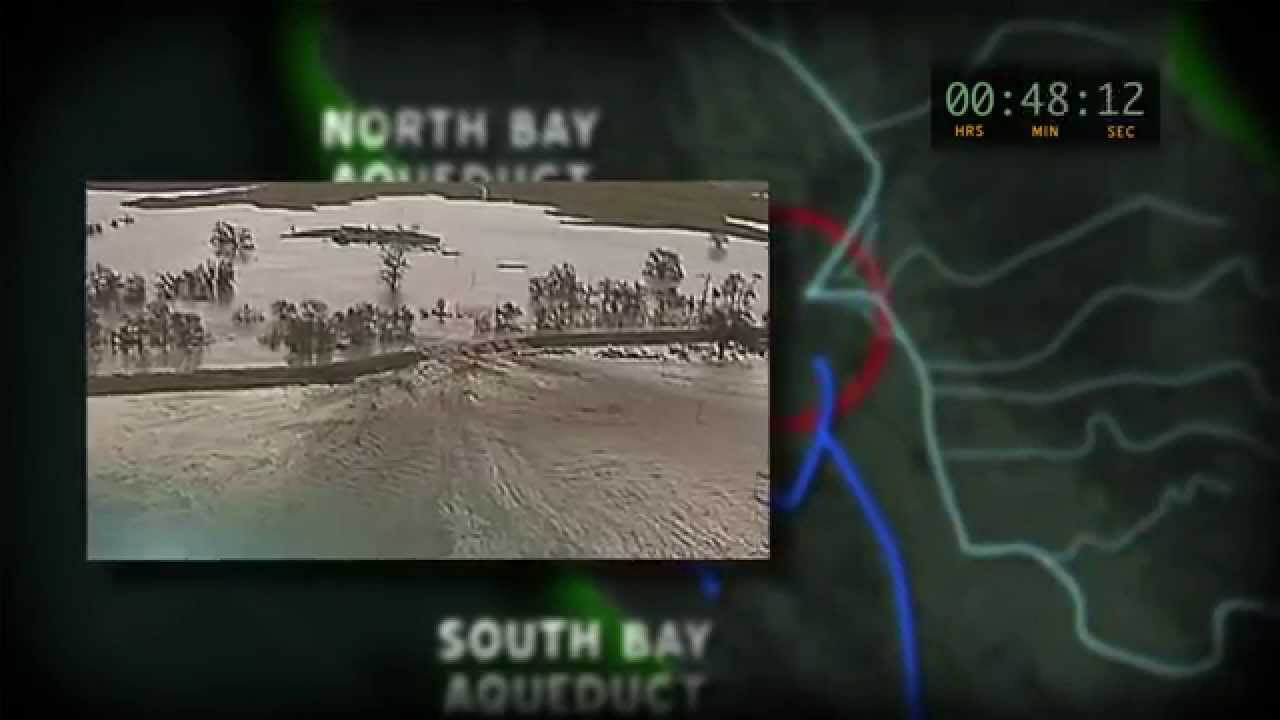 . "Despite expert warnings, crumbling water infrastructure has not been fixed...Aqueducts fail. Millions lose access to drinking water...Our water doesn't have to be at risk! Support the plan. Fix the system."
Three weeks after the ad went live, Gov. Brown held a press conference in which he rebranded his plan as the California Water Fix.