Burtka Isi
---
---
li 12 25

3rd degree connection3rd
President at Intercollegiate Studies Institute

Intercollegiate Studies Institute

Hillsdale College
Washington, District of Columbia, United States Contact info
- 500+ connections
About
Johnny is the President of ISI. Formerly the Executive Director and Acting Editor of The American Conservative, he is a graduate of Hillsdale College and the Faculté Jean Calvin in Aix-en-Provence, France. He has appeared on Fox News and Fox Business. His writings have appeared in the Washington Post, First Things, The Intercollegiate Review, American Theological Inquiry, Touchstone, and The American Conservative.Johnny is the President of ISI. Formerly the Executive Director and Acting Editor of The American Conservative, he is a graduate of Hillsdale College and the Faculté Jean Calvin in Aix-en-Provence, France. He has appeared on Fox News and Fox Business. His writings have appeared in the Washington Post, First Things, The Intercollegiate Review, American Theological Inquiry, Touchstone, and The American Conservative.
FeaturedFeatured
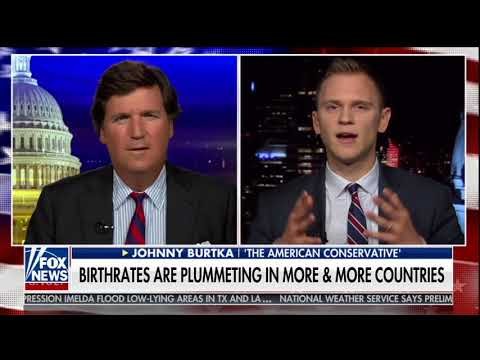
Johnny Burtka defends pro-family policy on Tucker Carlson TonightJohnny Burtka defends pro-family policy on Tucker Carlson Tonight
YouTubeYouTube
Watch The American Conservative's executive director Johnny Burtka talk family policy with Tucker Carlson, August 20th, 2019.Watch The American Conservative's executive director Johnny Burtka talk family policy with Tucker Carlson, August 20th, 2019.](https://www.linkedin.com/in/john-a-burtka-iv-43834687/overlay/1569345690056/single-media-viewer?type=LINK&profileId=ACoAABJhwuwBg5QluOCKVcWZzl2YTV-Whpl1pg8)
ActivityActivity
1,007 followers1,007 followers
John A. hasn’t posted yetRecent posts John A. shares will be displayed here.
ExperienceExperience


The American ConservativeThe American Conservative 4 yrs 3 mos4 yrs 3 mos
- Executive DirectorExecutive Director Jan 2018 - Sep 2020 · 2 yrs 9 mosJan 2018 to Sep 2020 · 2 yrs 9 mosWashington DC-Baltimore AreaWashington DC-Baltimore Area
- Vice President Of DevelopmentVice President Of Development Sep 2017 - Jan 2018 · 5 mosSep 2017 to Jan 2018 · 5 mosWashington, District of ColumbiaWashington, District of Columbia
- Director of DevelopmentDirector of Development Jul 2016 - Sep 2017 · 1 yr 3 mosJul 2016 to Sep 2017 · 1 yr 3 mosWashington, District Of ColumbiaWashington, District Of Columbia


EducationEducation

- Grade: 3.604Grade: 3.604
- Activities and societies: Greek Inter-Varsity Vision Team, Hillsdale Prison Ministry, Pi Delta Phi French Honorary, Hillsdale College Academic Honesty Review Board, Delta Tau Delta Fraternity Executive BoardActivities and societies: Greek Inter-Varsity Vision Team, Hillsdale Prison Ministry, Pi Delta Phi French Honorary, Hillsdale College Academic Honesty Review Board, Delta Tau Delta Fraternity Executive Board
- Faculté Jean Calvin
- Activities and societies: Vice President, Faculté Jean Calvin Office of Residential LifeActivities and societies: Vice President, Faculté Jean Calvin Office of Residential Life
SkillsSkills
- [-
Endorsed by Michael Bauman who is highly skilled at thisEndorsed by Michael Bauman who is highly skilled at this](https://www.linkedin.com/in/john-a-burtka-iv-43834687/overlay/urn:li:fsd_skill:%28ACoAABJhwuwBg5QluOCKVcWZzl2YTV-Whpl1pg8,642092103%29/endorsers?profileUrn=urn%3Ali%3Afsd_profile%3AACoAABJhwuwBg5QluOCKVcWZzl2YTV-Whpl1pg8&tabIndex=1&modalTabIndex=1)
- [-

- [-
Endorsed by 2 colleagues at Intercollegiate Studies InstituteEndorsed by 2 colleagues at Intercollegiate Studies Institute](https://www.linkedin.com/in/john-a-burtka-iv-43834687/overlay/urn:li:fsd_skill:%28ACoAABJhwuwBg5QluOCKVcWZzl2YTV-Whpl1pg8,642092103%29/endorsers?profileUrn=urn%3Ali%3Afsd_profile%3AACoAABJhwuwBg5QluOCKVcWZzl2YTV-Whpl1pg8&tabIndex=2&modalTabIndex=2)
LanguagesLanguages
- EnglishEnglish
Native or bilingual proficiencyNative or bilingual proficiency
- FrenchFrench
Professional working proficiencyProfessional working proficiency
InterestsInterests
Top VoicesTop VoicesCompaniesCompaniesGroupsGroupsSchoolsSchools

[Daniel GolemanDaniel Goleman · 3rdThird degree connection
Director of Daniel Goleman Emotional Intelligence Online Courses and Senior Consultant at Goleman Consulting GroupDirector of Daniel Goleman Emotional Intelligence Online Courses and Senior Consultant at Goleman Consulting Group5,811,444 followers5,811,444 followers](https://www.linkedin.com/in/danielgoleman)
- Follow

[Bill GatesBill Gates · 3rdThird degree connection
Chair, Gates Foundation and Founder, Breakthrough EnergyChair, Gates Foundation and Founder, Breakthrough Energy39,423,455 followers39,423,455 followers](https://www.linkedin.com/in/williamhgates)
- Follow
---
33,649 views Aug 19, 2025 #Politics #Conservatism #ProjectCosmos
:{In the debut episode of Project Cosmos, Christopher Rufo, Patrick Deneen, Christopher Caldwell, Curtis Yarvin, and Johnny Burtka (President of ISI) gather for a provocative roundtable on one of the most urgent questions of our time: 👉 What is the future of executive power and can it serve the common good? This wide-ranging discussion covers: -The meaning of the common good in a pluralistic 21st-century America -Whether liberalism has failed, and what comes next -The origins and growth of the administrative state -Should bureaucracy be dismantled, reformed, or used for populist ends? -The role of DOGE reforms, tech, and MAGA in shaping political power -How the Civil Rights revolution reshaped executive authority -Is America an oligarchy—and what can be done about it? -Historical lessons from Hamilton, Jefferson, Jackson, and Lincoln -And the bold question: Should Americans embrace Caesarism?
📌 Project Cosmos is ISI’s new flagship series—intimate, living-room-style conversations where today’s leading thinkers tackle the deepest political and cultural challenges facing America. Guests: Christopher Rufo – writer, senior fellow at the Manhattan Institute Patrick Deneen – political theorist, author of Why Liberalism Failed Christopher Caldwell – journalist, author of The Age of Entitlement Curtis Yarvin – political theorist and blogger Johnny Burtka – President, Intercollegiate Studies Institute (ISI)}:
---
DAD? III PPG
n the early days of World War II, before America entered the war, President Franklin D. Roosevelt knew we urgently needed more planes, ships, tanks and other military equipment to aid Great Britain and defend ourselves.
“The Nazi masters of Germany have made it clear that they intend not only to dominate all life and thought in their own country, but also to enslave the whole of Europe, and then to use the resources of Europe to dominate the rest of the world,” he told America in a “fireside chat” on Dec. 29, 1940. If the Axis powers conquered Great Britain, “all of us, in all the Americas, would be living at the point of a gun — a gun loaded with explosive bullets, economic as well as military.”
Facing this threat, “We must be the great arsenal of democracy,” he said. “For us this is an emergency as serious as war itself. We must apply ourselves to our task with the same resolution, the same sense of urgency, the same spirit of patriotism and sacrifice as we would show were we at war.”
He called on Henry Ford, who transformed Michigan farmland into the Willow Run plant, employing thousands to build a bomber every hour. The plant was built and began building the B-24 bomber the next June.
It helped turn Detroit into an arsenal of democracy almost overnight, in production terms. Other industries followed, producing tanks and munitions at a pace that stunned the world.
Millions, including iconic “Rosie the Riveters,” were quickly trained to meet demand. Detroit’s automakers produced 297,000 aircraft, 2.7 million machine guns, and 41 billion rounds of ammunition.
America couldn’t do that today.
The American arsenal
The Arsenal of Democracy succeeded because all its essential components, including steel, dies, and machine tools originated from American production facilities.
Growing up in the Rust Belt part of Michigan, almost everyone I knew was involved in manufacturing. Our parents received employment from the automotive sector which offered them both financial stability and complete benefits packages including medical coverage and pension plans. We were America’s thriving middle class. But that dream shattered.
Detroit’s auto industry and our vital steel industry, once the backbone of America’s middle class, was hollowed out by poor trade deals and an obsession with quarterly profits over lasting prosperity. The decline started in 1965 with the Canada-U.S. Auto Pact, luring foreign automakers to Canada with subsidies and no tariffs.
Then came NAFTA in 1994. Ross Perot warned of a “giant sucking sound” of jobs fleeing south, and he was right. Factories rushed to Mexico for cheap labor, lax regulations, and minimal social costs.
As a result, today we can’t mobilize as we did in WWII. Closed factories and lost skills force reliance on foreign suppliers for critical parts like tools and chips, risking our security.
The disappearing tool-and-die industry, crafting precision tooling for car parts and missile casings, is manufacturing’s backbone. We once had thousands of tool and die shops, producing precision dies to thousandths of inch. Now only a fraction of companies remain.
The U.S. now imports more than 60% of its industrial dies, with China supplying over $2.5 billion worth of these products. Agile production changes depend on domestic dies. In WWII we converted our facilities into tank and bomber production sites within a few months because we had a national supply of industrial dies. Today, one imported die stuck at sea could halt production for months.
Machine Tools such as lathes, mills, grinders, and robots power manufacturing. In the 1960s, the U.S. produced 28% of the world’s machine tools. That rate dropped below 10% in 2020, while China’s share has risen to over 25%.
Most American builders have closed or been acquired abroad. Toolmakers and CNC operators, the craftsmen keeping factories running, are aging out with few young replacements. Today’s factories function primarily with equipment from foreign manufacturers which require extended delivery periods and often have poor support.
Crippled in a crisis
In a crisis, our military would be crippled if it had to rely on critical foreign supplies for its wartime operations.The shortage of skilled labor is perhaps our greatest loss. The training programs of WWII transformed new recruits into skilled machinists during a period of just months. The U.S. currently lacks 800,000 manufacturing workers and experts predict this shortage will expand to 2.4 million by 2030.
Today’s wars, from Ukraine to potential Taiwan conflicts, rely on weapons, drones, and electronics, all needing precise parts and chips. Yet 90% of advanced chips come from Asia.
Recent chip shortages have exposed our supply chain’s fragility. The impending conflict in the Taiwan Strait would create an immediate crisis for U.S. defense manufacturing operations.
Our global interdependence and just-in-time logistics make us vulnerable. Reshoring efforts like TSMC’s Arizona chip plants are promising, but years from full capacity.
Reviving the American Arsenal of Democracy demands bold action now. We must support domestic die making operations with grants and tax credits to restore tool and die shops throughout the Midwest and use Section 232 tariffs to protect them from unfair trade practices and prevent illegal trade evasion. Current steel and aluminum tariffs must be aggressively enforced.
Additionally, reviving our once great machine tool industry will also require the strategic use of Section 232 tariffs to level the playing field against unfair foreign competition.
To meet our skilled labor shortage, we must also establish national apprenticeship programs that follow the “Training Within Industry” model from World War II.
America’s strength
I have lived through many factory shutdowns and the disappearance of essential skills in my home state of Michigan. The Arsenal of Democracy serves as both an historical account of what was possible for America and a warning about what might happen in the future.
America’s strength has always come from its ability to design and manufacture. We need to restore that ability before the damage becomes permanent and irreparable. If that happens, America will see our sovereignty dangerously diminished and our security, economic as well as military, possibly fatally weakened.
John Burtka III is an entrepreneur and former Michigan manufacturing executive now living in Oxford, Pa.