NORQUIST 2 ATR
oddly? blank11 23
SEE INTUIT FREE FILE ~ BS --> WHO BROKE AMERICA?
---
Tax Day Could Be Easy. They’re Fighting To Make It Hard.
4 26
RR -->
[00:09:54] David Sirota: We'll be right back. Welcome back to Lever Time. It took another decade for this issue to pop up again. In 1998, democratic President Bill Clinton and the Republican Congress passed a law reviving the possibility of a return free system. That's right. Buried in an IRS overhaul Bill was a provision instructing the Treasury Secretary to quote, develop procedures for the implementation of a return free tax system.
This proposal sat at the IRS for the next few years until George w Bush's Republican administration took a baby step. They didn't implement return free filing. It was something much smaller than that. A proposal just to let you go online and file your taxes to the IRS for free.
[00:10:40] Ken Dam: Paying taxes is really a responsibility of every citizen, but because it's a responsibility, it doesn't mean it has to be arduous, slow, cumbersome, mysterious.
[00:10:53] David Sirota: This was Bush Treasury Department official Ken Dam, describing the initiative
[00:10:57] Ken Dam: Free File Promises to reduce the needless frustrations of millions of dutiful citizens. As they carry out this duty of citizenship, preparing and filing their tax returns,
[00:11:08] David Sirota: and yet even this simple idea really pissed off the tax prep industry.
Intuit, the owner of TurboTax launched a counter attack and mobilized, enlisting the help of a guy named Bernie McKay, a bigwig lobbyist, and former Carter administration official, who did a full court press on Capitol Hill. According to a ProPublica investigation, the industry basically argued that the IRS could not be counted on to roll out such a big program and the argument.
Really resonated with some folks on Capitol Hill. A group of Republican lawmakers wrote to the IRS claiming that there was no reason for the government to compete with quote well-established tax prep companies. The lobbying worked in 2003, the Bush administration and the tax prep companies made a compromise.
It was called the Free File Alliance. An IRS Blessed Consortium of Tax Prep Companies would help some taxpayers file their taxes for free. But the catch was in the federal contract. Which obligated the IRS to not compete with the consortium in providing free online tax return preparation and filing services to taxpayers
[00:12:22] Julie Story: crash and burn.
[00:12:24] David Sirota: Yep, another crash and burn. But after getting reelected. George W. Bush went back to the tax complexity fight once again. In January, 2005, he announced a whole new advisory panel to evaluate ways to simplify the tax system.
[00:12:40] George W Bush: These fine, distinguished citizens will be taking a good hard look at the tax code....
[00:13:22] David Sirota: The new advisory panel devoted an entire day of public testimony to reviewing Reagan's original return free tax filing idea, which seemed like a really encouraging sign.
We're going ballistic, ma. Go get 'em. But then came the testimony of anti-tax power broker Grover Norquist, a conservative then at the zenith of his political power in Washington. The transcript of the hearing shows him excoriating the idea in what would become a set of talking points that Norquist and others would repeat.
Over and over again in the ensuing years, it's like playing in Las Vegas. Norquist said the house sets the rules and the house has its fingers on the scales. Do you really want to go and argue with the IRS? If they've sent you a bill that's higher than you think it ought to be. It also gives the advantage just as the house in Las Vegas.
He said the interests of the government. Is to maximize its revenue. That testimony casting return free filing as a stealth tax increase, it set the idea back into another free fall. Sub controller, losing controller return free filing officially crashed and burned again when George w Bush's advisory committee left it out of its final report.
Then in 2007, Barack Obama picked up the cause of return free filing. The then presidential candidate was seemingly ready to fight the tax prep industry. ProPublica reported that Obama gave a speech to an audience full of tax wonks in Washington, where he said quote. The government already collects wage and bank account information, so there's no reason the IRS can't send Americans prefilled tax forms to verify.
This means no more worry, no more wasted time, no more extra expenses for a tax preparer. But Obama quickly learned his lesson too. The tax prep lobby was not to be messed with. Bernie McKay and the band of Intuit lobbyists got to work pushing Congress to introduce a series of bills to prohibit the IRS from building its own free tax filing system.
As campaign cash from the tax prep industry flowed to lawmakers, the public opposition was led in part. By Grover Norquist, casting it as a scheme to jack up everyone's taxes.
[00:15:42] Grover Norquist: When this is was done in other places, the government makes a lot of money. Why? Because when the government does your taxes for you, they maximize their revenue, not getting your tax returns accurate.
[00:15:54] David Sirota: That's Norquist in a newsmax interview from 2014.
[00:15:58] Grover Norquist: I think the idea of of having the government do your taxes for you is dead. Dead, dead. That's an important part of tax reform. Killing this idea of the government reaching out, knowing everything about you doing your taxes for you.
[00:16:12] David Sirota: When around this time, Republican lawmakers caught wind, that the IRS might be looking into a realtime data collection system that might later be needed for a return free system.
They pounced.
[00:16:24] IRS Oversight: This subcommittee has placed report language in our annual appropriations bills, by the way, since 2 0 9 Pro prohibiting the IRS from using any funds on a simple tax return pilot program.
[00:16:34] David Sirota: This was a Republican congressman interrogating Obama's IRS Chief at a congressional hearing in 2014.
[00:16:40] IRS Oversight: Are you aware of any further exploration and implementation by the IRS
[00:16:44] David Sirota: Obama's IRS Chief Quickly backed down.
[00:16:47] John Koskinen: The thing that has been the focus of a lot of external societies is the idea of could we pre-populate a return form, get information in pre-populate so you could look at it, and then you could make decisions or the IRS could even file your return for you.
We're not doing anything with that. We have no, uh, no program going forward that I know of, and, uh, certainly we don't intend to do anything like that without talking to you
[00:17:06] David Sirota: once again, after briefly taking flight, the idea of a return free tax system fell out of the sky. The
[00:17:13] Top Gun Clip: goddamn plane has creed into the mountains.
[00:17:17] David Sirota: There was of course, one more test flight as part of the 2022 Inflation Reduction Act that President Biden signed. The IRS budget was significantly increased after years of cuts, and the legislation included a new direct file system, which was rolled out in 2024.
[00:17:35] WPRI: This year, there is a new software pilot program being offered in 12 states called Direct File.
It opens to qualifying taxpayers in mid-March.
Your eligibility for direct file does not depend on your income.
[00:17:49] David Sirota: Direct file was a free online service that allowed taxpayers to file their federal tax returns directly with the IRS. Again, this wasn't return free filing. But it was the government's strongest attempt to at least give you a way to file your taxes without the added fees and shady upsells of private companies.
The program was run by the IRS itself, and it ended up being a policy experiment that went surprisingly well. It was rolled out slowly and intentionally so that issues could be seen and addressed quickly. At first, it was limited to really simple filings, and then additional tax complexities were added later on, making it more accessible to more and more taxpayers Overall, the pilot program showed.
Big promise with 94% customer satisfaction that gave a green light for the program to expand beyond the first 12 states it started in. But at this point, I'm guessing, you know what happened when Donald Trump won his second presidential term
[00:18:55] NBC10: starting 2026, the program will no longer be available for taxpayers.
President Trump has said he was looking into getting rid of direct file. He claimed it was. A waste of taxpayers' money because commercial tax preparation companies already offer free filing programs.
[00:19:12] David Sirota: The campaign to kill the successful and popular direct file program was fast and furious as soon as Trump won the 2024 election, nearly 30 house Republicans sent a letter to Trump in December, 2024, just after he'd won, asking him to end direct file on his very first day in office.
The lawmakers had raked in more than $1.8 million of campaign cash from, you guessed it, tax preparation companies and their proxies. Meanwhile, turbo Tax's parent company, Intuit, donated $1 million to Trump's inauguration. Direct file in a lot of ways had been the closest thing to what Ronald Reagan had proposed back in 1985.
...
As I've gone back and forth with my own accountant in this last few weeks, getting more and more annoyed at all the red tape, watching more and more of my time sucked away into a mountain of paperwork. I've been thinking a lot about this interchange on CNBC from a few years back.
[00:23:00] CNBC (Aaron Ross Sorkin): Grover, I wanted to ask you about this.
There's this bill out there, it seems bipartisan and I, I'm surprised by it.
[00:23:06] David Sirota: That was journalist Andrew Ross Sorkin asking anti-tax activist Grover Norquist, why he's fought return free filing for so many years.
[00:23:15] CNBC (Aaron Ross Sorkin): That effectively makes it a a, a permanent ban barring the IRS from ever developing its own online tax filing service.
This would've been. Uh, a free service that would've made paying taxes cheaper and easier, especially for people at the bottom and the middle who are spending, uh, in often cases, you know, several hundred dollars a year, it would actually be a tax cut for most Americans to do this. Why try to block something like that?
[00:23:41] David Sirota: Norquist first insisted that private tax prep companies do provide some free services to the very poor. And then Norquist went on a rant.
[00:23:49] Grover Norquist: The real goal of the Democrats, and we saw this in California, is they want the government to do your taxes for you. Yeah. Like Europe does. They send you a bill. Go ahead and argue with the government.
And when California put that together, you know what? They scored it as a significant revenue raiser 'cause they intended to, to write your tax bill. So it'd be higher than it than you would expect to pay. Now, this is a way to raise taxes. And to completely strip you of all privacy. So
[00:24:15] CNBC (Aaron Ross Sorkin): grow, grow
[00:24:15] David Sirota: Sorkin though, press there.
[00:24:17] CNBC (Aaron Ross Sorkin): Do you have any ideas of how to make it easier and cheaper? Mm-hmm. For American taxpayers to pay their taxes so it doesn't cost them any more money than it already does. It'd just be so much easier. Who, people who are W2 filers, they get a postcard. It says what, what the number is. You either sign it or you, or you go off and you do your own, you do your own tax plan.
[00:24:37] David Sirota: Norquist then started reciting more anti-tax talking points as usual, casting the IRS as a rapacious monster.
[00:24:45] Grover Norquist: The federal government takes about 18% of everybody's money. There's no pleasant, cheap, easy, or uncomplicated way to do that. You want simplicity, you want fairness, make the tax bill lower,
[00:24:56] David Sirota: and that's when Sorkin just scream the quiet part about the whole issue.
[00:25:01] CNBC (Aaron Ross Sorkin): You have no, um, rival idea about how to make it easier for Americans to pay their taxes. I want their tax because I think ultimately your idea is to make it harder for people to pay their taxes so they hate their taxes and push for lower taxes.
[00:25:14] David Sirota: That's it right there. That's what's also underneath all of this, beyond just the tax prep companies wanting to protect their profits, there's a powerful arch conservative, anti-tax movement that wants you to hate literally everything about taxes, and so they've succeeded.
In creating an awful tax process. But I wanna go back to something I alluded to at the beginning. Taxes are not theft. As the anti-tax movement likes to insist. Taxes are the necessary price we pay for a functional society. It's what we pay for roads, bridges, water systems, schools, and all the stuff we call civilization.
What is theft? Is politicians helping giant corporations steal our money and our time just to file our taxes. So as the tax filing deadline approaches, as some of you are stressed out. By Byzantine filing forms or the fear of paying more than you owe or of being audited for a simple mistake, don't forget it does not have to be this way.
---
===
AN 6 25
CONV
In the “one, big, beautiful bill,” President Donald Trump has called for substantial decreases in federal domestic spending. However, a schism emerged between Republican lawmakers during the budget debates in Congress.
Some Republicans in blue states called for a tax increase for the wealthiest Americans, prompting longtime anti-tax advocate Grover Norquist to call the increase an “incredibly destructive idea economically, and very foolish politically.”
As he has done since the 1980s, Norquist demonstrated his influence over the GOP. Since Trump’s second inauguration, he has appeared in several high-profile news stories about the budget, including a Washington Post article where he said, “Tax cuts are income to Americans and a loss to the bureaucracy.”
Ultimately, the tax increase was defeated, and the Trump budget proposal passed the House on May 22, 2025.
Norquist praised the leadership from Speaker Mike Johnson and Majority Leader Steve Scalise, saying taxpayers owe them “bigly for managing a narrow Republican House Majority that was united and committed to reducing taxes on the American people.”
As scholars of U.S. politics, we examined Norquist’s emergence, traced debates about the scope and size of the American government and assessed Norquist’s relevance in the Donald Trump era, where he continues to wield considerable sway in the Republican Party.
The conscience of a conservative
In 1960, a slim, 123-page book changed the trajectory of American conservative thought.
“The Conscience of a Conservative,” written by Barry Goldwater, laid out the premise that an expansive federal bureaucracy was the root evil of government.
Four years later, Ronald Reagan launched his political career with a speech supporting Goldwater. His words echoed Goldwater: “No government ever voluntarily reduces itself in size … a government bureau is the nearest thing to eternal life we’ll ever see on this earth.”
Reagan ended the speech by noting, “You and I have a rendezvous with destiny.” Goldwater wouldn’t manifest that destiny, but Reagan, 16 years later, took this vision of fiscal conservatism to the White House.
By the 1980s, Goldwater’s limited government creed had become part of Republican dogma. Government wasn’t just bloated, according to Reagan. It was,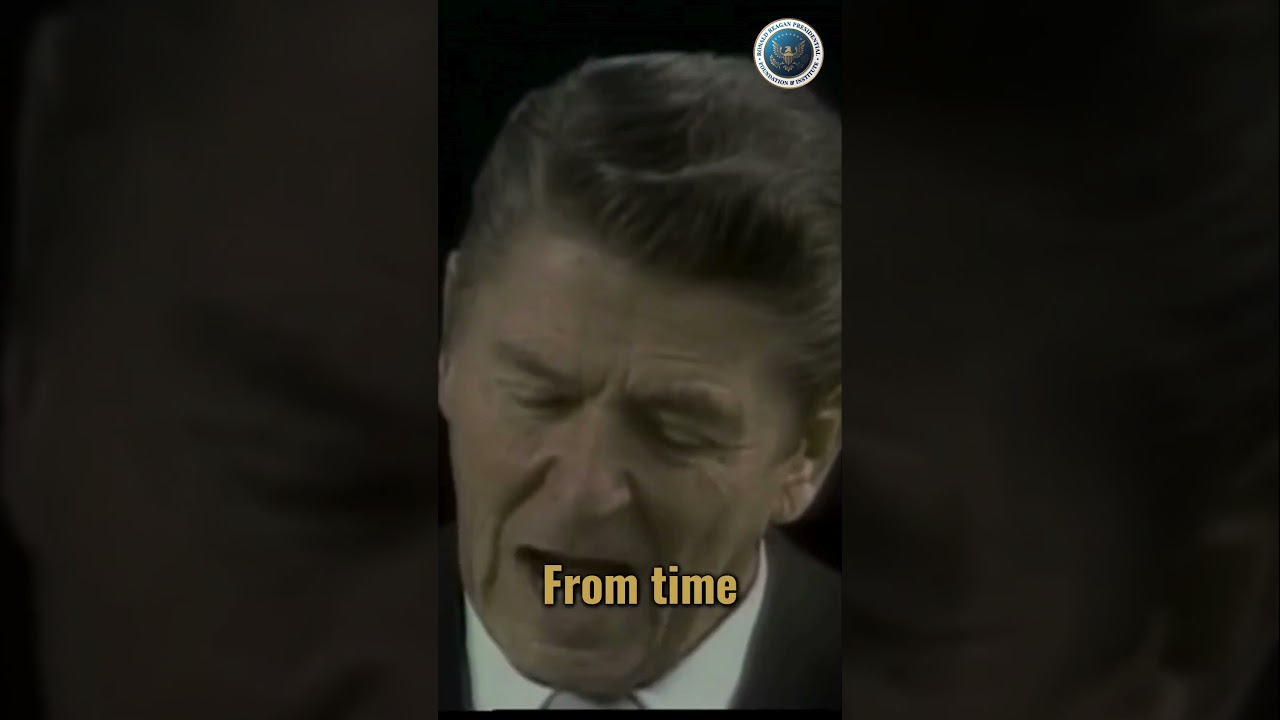 , the problem. The Reagan presidency ushered in the doctrine of supply-side economics, which rests on the premise that tax cuts are key to stimulating economic growth.
Norquist’s emergence
Into this landscape stepped a young Norquist.
He had cut his teeth at the National Taxpayer’s Union, a fiscally conservative taxpayer advocacy group. Then, in 1981, he became the executive director of the College Republican National Committee.
In the first issue of CR Report, a college Republican newsletter, Norquist’s position as executive director was announced, and he provided a list of suggested readings. Among the titles he recommended were Goldwater’s “Conscience,” Milton Friedman’s “Capitalism and Freedom” and Friedrich Hayek’s “The Road to Serfdom.”
In 1985, Norquist founded Americans for Tax Reform to support his tax reduction efforts. As Norquist noted, “The tax issue is one thing everyone agrees on.”
He and his organization effectively institutionalized a permanent tax revolt in Congress supported by his “Taxpayer Protection Pledge,” a promise made starting in 1986 to oppose all efforts to increase marginal tax rates or reduce deductions or credits.
The pledge became a litmus test for fiscally conservative GOP candidates and cemented the party’s anti-tax stance.
Feeling this pressure,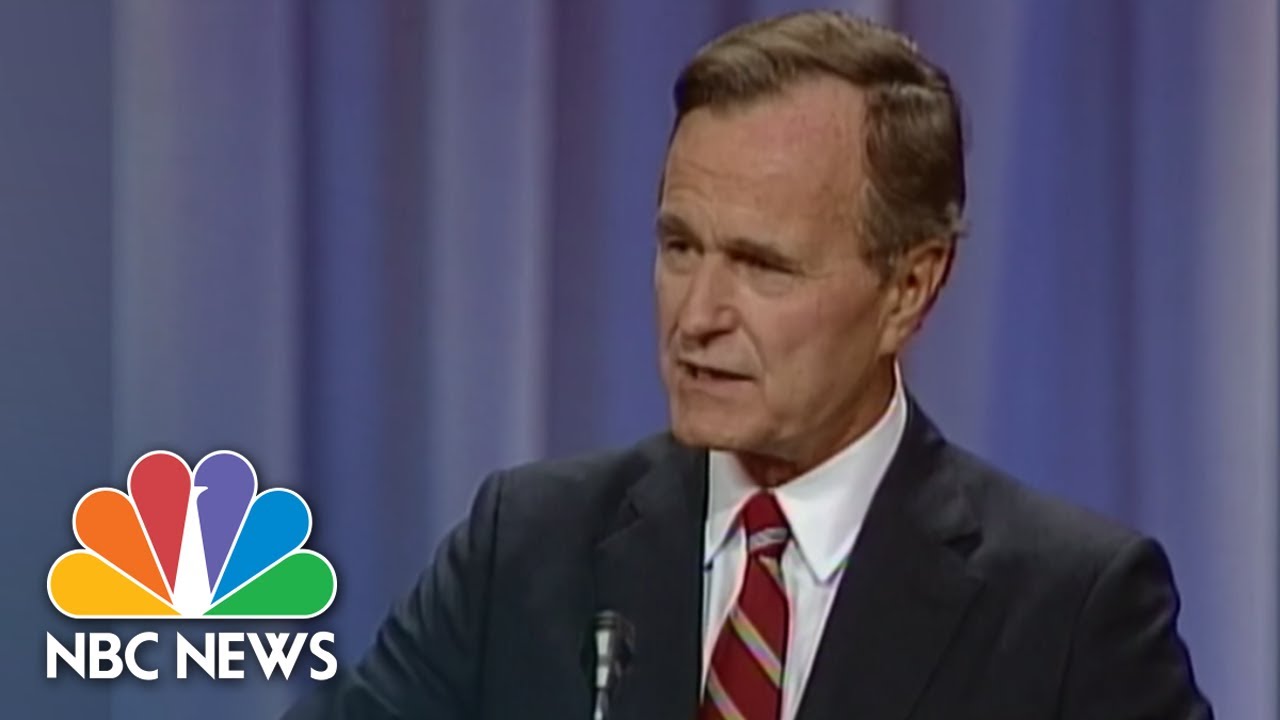 delivered his famous line,
 ,” at the 1988 Republican National Convention. Those six words were repeatedly used by primary challenger Pat Buchanan and Bush’s opponent in the general election, Bill Clinton, to raise questions about Bush’s honesty – since he made a pledge that he was unable to keep.
With Clinton in the White House in 1994, Norquist helped House Minority Whip Newt Gingrich write the “Contract with America” to legislate fiscal conservatism. Weaponizing government shutdowns and setting a more confrontational tone, congressional Republicans successfully rolled back welfare programs, reduced the size of government and cut taxes.
In 1995, they came two votes shy in the Senate of approving an amendment to the Constitution that would have required the federal budget to be balanced – with no borrowing – every year.
Anti-tax conservatism in the 21st century
In 2001, Norquist told a reporter at The Nation: “My goal is to cut government in half in twenty-five years to get it down to the size where we can drown it in the bathtub.”
This objective would have to wait during the George W. Bush presidency. Resulting in part from the Sept. 11 terrorist attacks, the Bush administration saw dramatic expansions of federal power and spending in homeland security, defense and Medicare, as well as a large increase in the budget deficit.
The tea party movement, a fiscally conservative political group, was formed in response to these Bush-era increases and two signature programs of the Barack Obama administration: the massive stimulus package, the American Recovery and Reinvestment Act, and his signature health care reform, the Affordable Care Act.
Norquist reveled in renewed attention to tax policies and the size of government, urging readers of The Guardian to “join the Tea Party movement.”
Norquist’s continuing legacy
For more than four decades, Norquist has been a relentless advocate for fiscal conservatism. He is the living embodiment of an ideological thread that stretches from Goldwater to Reagan to Gingrich to current GOP leadership.
The ongoing debates about the Trump budget are just the latest example of Norquist’s influence. He continues to play an active role in debates about the federal budget and still has considerable sway with Republicans.
However, Norquist’s uncompromising stance on taxes has coincided with increases in federal spending, surging budget deficits and increased national debt.
That additional debt is accumulating because many Republicans have adopted his anti-tax position while simultaneously increasing defense budgets, maintaining or expanding entitlement spending and lowering taxes on the wealthiest Americans.
Nevertheless, Norquist continues to be the fiscal conscience of the Republican Party. Politicians come and go. Powerful ideas, and those who champion them, endure.
Gibbs Knotts, Professor of Political Science, Coastal Carolina University and Drew Kurlowski, Associate Professor of Political Science, Coastal Carolina University
This article is republished from The Conversation under a Creative Commons license. Read the original article.
---
argentine President-elect Javier Milei is becoming a right-wing media darling in the U.S. due to his austere proposed economic policies and conservative ideology. Right-wing media figures have reacted to Milei’s electoral success by praising him, comparing him to former President Donald Trump, and attacking mainstream media for their critical reporting.}:
- ## Argentina's new far-right president has aligned himself with U.S. right-wing politics
- Milei, a self-described “anarcho-capitalist libertarian,” has aggressively pushed conservative positions on issues such as abortion while also promising to gut government ministries relating to issues like education, diversity, and science. Milei also proposed holding a referendum aimed at overturning Argentina’s right to abortion. Rolling Stone, [11/20/23]
- One of Milei’s defining political positions is “dollarisation,” a form of economic shock treatment, to combat Argentina’s rising inflation and ongoing financial woes.Dollarisation involves getting rid of the Argentine peso and replacing it with the U.S. dollar. Mark Weisbrot, the co-director of the Center for Economic and Policy Research, has labeled this as a “crazed, economically suicidal approach” which could majorly backfire for Argentine people. The Guardian, [11/20/23]
- Milei’s mirroring of Trump’s right-wing populist messaging — down to “Make Argentina Great Again” hats and preemptive voter fraud conspiracy theories — has led to direct praise from the former president.After Milei’s victory, Trump personally congratulated him on Truth Social, posting, “The whole world was watching! I am very proud of you. You will turn your Country around and truly Make Argentina Great Again!" The Guardian, [11/17/23; Rolling Stone, 11/20/23]
- Milei has also been linked to infamous anti-tax lobbyist Grover Norquist. In 2021, Milei promised the Argentine Taxpayers Association, sister organization to Norquist’s Americans for Tax Reform, that he would “cut off [his] own arm” if he raised taxes. Norquist has also gotten many Republican politicians to make similar promises by getting them to sign his organization’s “Taxpayer Protection Pledge.” The Nation, [7/21/2011; Semafor, 11/21/23; ABC News, 11/26/12]
- Mainstream media have responded to Milei’s election by pointing out his similarities to Trump and the implications his victory could have in neighboring countries.The New York Times referred to his election as “Argentina’s Donald Trump moment.” The Washington Post, [11/19/23; The New York Times, 11/20/23]
- ## Right-wing media reacted to Milei’s victory by praising him, comparing him to Trump, spreading voter fraud conspiracy theories, and attacking mainstream media for their coverage of him
- Conspiracy theorist Alex Jones called Milei “an anti-globalist through and through” and claimed he was an Infowars listener. Jones also praised Milei as “a follower” of former Fox host Tucker Carlson and argued his election was evidence that “people are seeing through the globalist lies at every front.” Infowars, *The Alex Jones Show*, [11/20/23]
- Newsmax host Rob Schmitt celebrated Milei, praising him for “fighting an ideology that is destroying the world one country at a time.”Schmitt argued Milei was “fighting the same disease that our nation is fighting” and “isn’t afraid to eviscerate the cancerous tumor that is the socialist politician.” Newsmax, *Rob Schmitt Tonight,* [11/20/23]
- Turning Point USA founder Charlie Kirk claimed that Milei’s victory was a “stimulus of hope” for the chances of Trump winning the presidency in 2024. Kirk portrayed the election as evidence that “the Western world is starting to push back against forced globalism” supposedly orchestrated by “a smaller and smaller radical group of people.” Kirk argued, “If Javier Milei can win by 11 points … Donald Trump can win next November.” Salem Media Group, *The Charlie Kirk Show*, [11/20/23]
- Fox News contributor Sara Carter posted that she “love[s] Javier Milei.” Carter posted in response to a video of Milei ripping tags off a whiteboard with the names of various governmental departments, including the Ministry of Education and Ministry of Health. Twitter/X, [11/20/23]
- Right-wing YouTuber Steven Crowder referred to Milei as “the madman geopolitics deserves.” He also called on Milei to “make Argentina great again.” Twitter/X, [11/20/23]
- Fox Business host Charles Payne called Milei’s election “huge and super encouraging on several fronts.” Payne also alleged that “powerful global forces'' tried to prevent Milei’s victory from “happening.” Twitter/X, [11/20/23]
- Right-wing economist Art Laffer argued Milei was “not a kook” or “far-right winger” and bet he would make Argentina “the outstanding, pro-growth economy of Central and South America” as president. Fox host Larry Kudlow concurred, adding that “the socialism they’ve been flirting with almost all over the continent hasn’t worked. … This guy might turn that around.” Fox Business, *Kudlow*, [11/20/23]
- Right-wing X account End Wokeness complained that “Argentina hand-counted all of their ballots in a few hours, but the big blue areas in our swing states take several days with machines?” Twitter/X, [11/20/23]
- Neo-Nazi collaborator Jack Posobiec claimed that the reason Argentina knew “the election result so fast” was because it “banned electronic voting machines.” Posobiec failed to mention that only Buenos Aires City residents were required to use paper ballots, and that was due to “significant delays” during the primary elections because of technical issues with the machines. Twitter/X, [11/20/23; Buenos Aires Herald, 10/21/23]
- Right-wing political operative Roger Stone praised Argentina for voting “with 100% paper ballots unlike, say, Brazil.” Twitter/X, [11/19/23]
- The Daily Wire’s Ben Shapiro bemoaned the “garbage press” for their coverage of Milei, calling them “international Leftist trash.” Shapiro also touted Milei’s economic policies, claiming Milei is planning to “slash spending and restore fiscal responsibility.” Twitter/X, [11/20/23]
- Conservative blog Red State also decried the press “freak-out” over Milei, claiming mainstream media “love it when far-left socialists take power."The “fairly Libertarian” Milei, the author claimed, could not be compared to Trump, and “the press attempt to tie the two together” was therefore “transparent.” Red State, [11/19/23]
- Stone also posted that it was “really enjoyable watching the elitist pukes at the Washington Post and the New York Times melt down over the election of pro-Freedom Anti-Globalist Javier Milei.” Twitter/X, [11/20/23]
---