Twitter Files
oddly orphaned?
see social media bias BS
big tech?
===
DRILLED 9 26 --> ALT RT TECH BRO MUSK ~ DISINFO
//
DK 9 26
X hit by complaints to EU over user data and targeted advertising
-=-=
-=-=
Aug. 25, 2026,
For 17 months, the State Department has promised to deliver proof of a long-promoted conspiracy theory about its own agency: that its officials routinely censored conservative Americans. This week, it failed that mission, as Under Secretary for Public Diplomacy Sarah Rogers released a trove of documents that proved nothing.
The conspiracy theory has grown during President Donald Trump’s second term, providing the State Department with a rationale for dismantling the offices that once studied and countered foreign disinformation campaigns, for firing officials with decades of experience and for shuttering entire departments.
The effort was first led by acting Under Secretary of State for Public Diplomacy Darren Beattie, a former far-right academic who had been fired from the first Trump administration after he attended a white nationalist conference. Beattie claimed the DOGE-style decimation of the State Department was necessary to rid the agency of officials who were tied to a baseless conspiracy theory known as the “censorship-industrial complex.”
Promoters of the censorship-industrial complex — a secret but somehow sprawling partnership between the Biden government, journalists, academics and civil society groups, aimed at silencing conservative Americans — have repeatedly failed to prove their case, in congressional investigations and in the courts, including the Supreme Court. Still, the theory persists.
Beattie had no evidence for his unfounded claims that the State Department had participated in that conspiracy, but in March 2025, he launched an investigation inside the State Department that he said would reveal all. Beattie requested the files, emails and other communications of State Department officials, including any records with seemingly random keywords like “Black Lives Matter,” “great replacement theory” and “Pepe the Frog,” as well as any communications with figures Beattie believed to be part of the conspiracy. (These included The Atlantic’s Anne Applebaum, Bill Gates, disinformation researcher Nina Jankowicz and some 60 others, including this reporter.)
In the official announcement for the closure of the Counter Foreign Information Manipulation and Interference Hub, formerly known as the Global Engagement Center (GEC), Secretary of State Marco Rubio told Mike Benz, a former pseudonymous racist YouTuber and chief architect of the censorship-industrial complex theory, that a reckoning was coming. It would be driven by evidence, disclosed in the model of the “Twitter Files,” a 2022 dump of internal Twitter records that Elon Musk gave to selected writers to show the alleged censorship of conservatives. (It didn’t.)
Rubio said the job now was to “document what happened.”
“Because one thing is to say it in a broadcast like this, another thing is to actually put it on paper,” he said.
This week, Rogers, Beattie’s replacement, finally had something to share.
According to a series of posts on X, some since deleted, Rogers messaged Jennica Pounds, a self-described analyst who goes by the moniker Data Republican, known for creating massive, if amateur, data troves used to allege government waste, fraud and abuse, which made her a favorite of Musk’s.
Pounds said she thought Rogers was handing documents about Cuba, but got “shoved a bunch of hard copy documents to leak” about the GEC.
“I wanted to give you the option of ‘breaking’ the story as sort of a gift,” Rogers told her, according to a direct message that Pounds posted.
Then things got weird. Pounds has been a reliable vector for the Trump administration to push its narrative that a so-called deep state, or shadow government, was operating in secret and against the best interests of its citizens. But when she received the State Department’s “gift,” Pounds determined that it was a plot by Rogers to entrap her into committing a crime, asserting that releasing or reporting on the documents would be illegal.
Rogers responded “lol” and released the documents herself in a series of 35 posts that borrowed the breathless cadence of the Twitter Files, drawing ominous connections between GEC emails, international projects to combat foreign disinformation, and nongovernmental coalitions. It all implied the existence of a censorship-industrial-complex operation — without proving it. Rogers’ document dump got little attention from right-wing media.
More articles
Team Trump turns on contractor after it failed to bolster election conspiracy theory

Resigning labor secretary falsely claims there was a ‘deep state’ conspiracy against her
“There were State Department employees sharing news articles. Diplomats had communicated with foreign governments. And somewhere in the rubble was a project examining ‘gendered disinformation’ that had been — wait for it — announced at the Summit for Democracy and published on the State Department website,” former senior foreign service officer Orna Blum wrote sarcastically on Substack.
Pounds seemed to agree with the former State Department official.
“The actual documents were nothingburgers,” she posted.
Neither the State Department nor Pounds responded to requests for comment.
The debacle may show that the half-decade of unproven censorship claims has exhausted their audience.
“The under secretary is yet again twisting decontextualized snippets of emails and long-public documents to try to propagate a conspiracy theory,” said Renée DiResta, an associate research professor at Georgetown University. As the former research manager for the Stanford Internet Observatory, DiResta has long been a boogeyman of the censorship-industrial complex theory.
“The mass censorship claims were a hoax,” DiResta said.
Over the weekend, some of the State officials pushed out in last year’s purge lit up Signal chats, commenting on Rogers’ rollout of the long-promised proof of the conspiracy that had cost them their jobs and hollowed out the agency where they had spent their careers. One former senior official, granted anonymity to speak candidly, told MS NOW: “In the end, it’s not the greatest consolation on earth to find out that the people who wrecked 10 years of your work and your career are a bunch of galaxy-level dipshits.”
The release did reveal something, however: an unintentional revelation about an undisclosed relationship between a federal agency and Pounds, a professed independent researcher who has often criticized others, without evidence, of being “a fed.”
In her posts, Pounds alleged that Rogers was trying to threaten her employment, revealing along the way that since July she had been a special government employee of the Department of Defense. Before that, Pounds had been provided credentials as a member of the Pentagon’s hollowed-out press corps.
A Defense Department official confirmed her employment but declined to give further details.

Brandy Zadrozny is a senior enterprise reporter for MS NOW.
---
ny post
wASHINGTON — “Twitter Files” journalist Matt Taibbi sparred with former President Joe Biden’s onetime “disinformation czar” Nina Jankowicz during a Tuesday hearing about government censorship on Capitol Hill, ripping the past administration’s content moderation efforts for having undermined Americans’ free speech.
The House Foreign Affairs South and Central Asia Subcommittee heard testimony from both about the State Department’s Global Engagement Center (GEC), which was set up under former President Barack Obama to counter foreign disinformation and misinformation — but had begun targeting US social media users under Biden.
“GEC officials were largely concerned with domestic, English-language accounts — people with no ties to terror groups or relationships with adversary nations like Iran, China or Russia,” Taibbi said about his extensive review of internal Twitter, now X, records in 2023.
“The American government has no role in protecting citizens from speech,” he went on. “The whole idea of the system that was designed by Jefferson and Madison is that the American people view each other as adults who are capable of sorting out the truth for themselves.
“They do not need a nanny state or a guardian or a law enforcement agency to decide for them what’s truth,” he concluded.
“We don’t need a truth squad — and that’s exactly what GEC was designed for.”
Taibbi sparred with former President Joe Biden’s onetime “disinformation czar” Nina Jankowicz during a Tuesday hearing about government censorship on Capitol Hill.house.gov
The “Twitter Files” unearthed emails disclosing an immense pressure campaign to censor The Post’s bombshell scoop on Hunter Biden’s emails introducing his father to foreign business patrons and the lab-leak theory of COVID-19’s origins, which was later corroborated as the most likely explanation for the pandemic by Joe Biden’s FBI, Energy Department and CIA.
Lower federal courts slapped the Biden administration with injunctions for having pressured Facebook and other social media companies into throttling engagement or removing posts on the controversial subjects, but the US Supreme Court, in a 6-3 decision, said the plaintiffs lacked standing.
Benjamin Weingarten, an investigative journalist and columnist at RealClearPolitics, noted that the federal district court judge who first heard the case called it “arguably the most massive attack on free speech in US history.”
“The so-called Censorship Industrial Complex is a fiction that has not only had profound impacts on my life and safety but on our national security,” Nina Jankowicz said.house.gov
Having dubbed the feds’ effort “digital McCarthyism” during a March 2023 congressional hearing, the Racket News founder now said he had delved back into the “Twitter Files” and found more evidence of big tech content moderation.house.gov
“Fifth Circuit Court of Appeals had that same view. Three Supreme Court justices did as well,” Weingarten told members of the subcommittee. “And while it’s been dismissed, that case, the fact of the matter is that the Supreme Court specifically did not rule on the underlying merits — the thousands of pages of discovery which blew the lid open on this entire regime.”
Having dubbed the feds’ effort “digital McCarthyism” during a March 2023 congressional hearing, the Racket News founder now said he had delved back into the “Twitter Files” and found more evidence of big tech content moderators directly engaging with the government-led campaign against disinfo.
In a Feb. 4, 2020, email, one of the Twitter moderators noted that the GEC seeding media reports about Russian influence driving Sen. Bernie Sanders’ popularity during the Democratic primary was “making me worry a little about how good-faith these players will be through the press into 2020.”
:{:{“The idea behind GEC in particular was finding a way to propagandize American citizens and encourage acceptance of official policy, the way we’ve always done to foreign populations,” the “Twitter Files” scribe testified}:
.CQ-Roll Call, Inc via Getty Images}:
Another earlier in the exchange claimed GEC staffers were pushing “sensationalist claims about epidemics of foreign bots.”
“Although many of the most controversial stories about the GEC involve their funding of commercial media-scoring operations that down-ranked conservative news outlets, I also observed the GEC pressuring Twitter about socialist accounts, left-leaning accounts, and independents, as well as conservatives,” Taibbi said.
“They weren’t looking for misinformation and disinformation,” he added. “They were looking for orthodoxy and unorthodoxy, obedience and disobedience. The idea behind GEC in particular was finding a way to propagandize American citizens and encourage acceptance of official policy, the way we’ve always done to foreign populations.”
:{Republican critics have dubbed Jankowicz Biden’s “disinformation czar” and frequently derided her efforts as trying to police Americans’ social media posts.
:
Subcommittee chairman Bill Huizenga (R-Mich.) concurred that as vice chairman of the House finance panel, he often sees government agencies using their regulatory pressure as a “cudgel.”house.gov
Jankowicz, who was tapped but later pulled from running a Disinformation Board under Biden, dismissed the entire “premise of this hearing” in her opening statement. She had called October 2020 reports on Hunter’s laptop a “Russian influence op.”
“The so-called Censorship Industrial Complex is a fiction that has not only had profound impacts on my life and safety but on our national security,” she said. “More alarmingly, this fiction is itself suppressing speech and stymying critical research that protects our country.”
The founder of the misinfo-targeting American Sunlight Project then went a step further and accused the Trump administration of having committed “far more egregious violations of our Constitution” in recent weeks than “the imagined actions of the Biden administration.”
Republican critics have dubbed her Biden’s “disinformation czar” and frequently derided her efforts as trying to police Americans’ social media posts.
The House Foreign Affairs subcommittee also needled her for posting a TikTok video singing a la Mary Poppins about her campaign.
Taibbi countered that even aside from GEC’s efforts, there were further transgressions by Biden’s FBI and White House — the latter of which had a former New York Times reporter kicked off Twitter.
Subcommittee chairman Bill Huizenga (R-Mich.) concurred, saying that as vice chairman of the House finance panel he often sees government agencies using their regulatory pressure as a “cudgel.”
GEC, which was closed down, reportedly went through a “rebranding” effort inside the State Department during the final days of Biden’s term.
---
The Censorship-Industrial Complex | House Judiciary Committee Republicans
YT link 
House Judiciary Committee will hold a hearing on Wednesday, February 12, 2025, at 10:00 a.m. ET. The hearing, "The Censorship-Industrial Complex," will examine the Committee's role in uncovering the Biden-Harris Administration's unconstitutional censorship campaign and will examine upcoming threats to free speech including from AI and foreign governments.
WITNESSES:
- Matt Taibbi, Twitter Files journalist; author; Founder, Racket News
- Michael Shellenberger, Twitter Files journalist; CBR Chair of Politics, Censorship, and Free Speech, University of Austin; Founder, Public News
- Rupa Subramanya, Canada-based journalist, The Free Press
- Craig Aaron, President and Co-CEO,Free Press Action
Subcommittees
Committee on the Judiciary (119th Congress)
---
===
10 24
austin am st
During the Oct. 1 vice presidential debate in New York, Sen. JD Vance, R-Ohio, declined to answer when asked whether he and former President Donald Trump would challenge the results of November’s election if they lost, as Trump did in 2020.
Instead, Vance pivoted to what he said was a much bigger threat to democracy: internet censorship.
"I believe that we actually do have a threat to democracy in this country. … It is the threat of censorship," Vance said.
Vance said Vice President Kamala Harris would "like to censor people who engage in misinformation." He said Harris "is engaged in censorship at an industrial scale. She did it during COVID. She’s done it over a number of other issues."
Then, during a back-and-forth exchange with Democratic vice presidential nominee, Minnesota Gov. Tim Walz, Vance said Harris "wants to use the power of government and big tech to silence people from speaking their minds. That is a threat to democracy that will long outlive this present political moment."
Many PolitiFact readers asked what Vance was talking about when referring to Harris and censorship.
Vance sought to tie Harris to the Biden administration's efforts to push social media platforms to remove what it deemed to be false content about COVID-19 during the pandemic.
The White House declined to comment.
Republicans have long bemoaned social media platforms’ efforts to moderate content, particularly during the COVID-19 pandemic. The "censorship" commentary intensified in August when Meta CEO Mark Zuckerberg told Congress that the Biden administration had pressured the company to censor some posts. But experts have told PolitiFact such pressure doesn’t amount to censorship, and the Supreme Court ruled in Biden’s favor in a lawsuit on the topic. The Trump administration similarly asked Twitter to remove some posts.
Vance’s examples
When contacted for comment, an Republican National Committee spokesperson pointed PolitiFact to several news stories:
- A PBS News story about Zuckerberg’s August letter to the House Judiciary Committee. Zuckerberg wrote that Biden’s administration in early 2021 "repeatedly pressured" Meta to censor certain COVID-19 content, including humor and satire.
The letter did not mention Harris or any other specific person.
The Republican-led committee shared Zuckerberg’s letter on X, calling it a "Big win for free speech." Zuckerberg in his letter said ultimately it was the company’s decision whether to remove content, but that "the government pressure was wrong" and he regretted not speaking up about it at the time. One of Meta’s decisions Zuckerberg cited — to temporarily demote a 2020 New York Post story about Hunter Biden’s laptop after an FBI warning about a potential Russian disinformation operation — happened while Trump was still in office.
- An article about former White House Digital Strategy Director Rob Flaherty, now Harris’ deputy campaign manager, emailing a Facebook employee about a COVID-19 vaccine-related social media post by former Fox News host Tucker Carlson. We found no evidence that Harris had personally contacted Facebook about any posts.
- A Washington Times article about a March 2021 White House meeting with Amazon officials about the visibility on the online retailer’s website of some COVID-19-related books.
Meta’s fact-checking program during the pandemic spanned the Trump and Biden presidencies.
PolitiFact partners with Meta on its fact-checking program to slow misinformation’s spread. As part of the partnership, Meta flags posts that the company believes might be inaccurate or misleading, and fact-checkers provide feedback with published articles. Meta, which owns Facebook, Instagram and Threads, decides what, if any, action to take on its platforms.
The RNC didn’t specify what "other issues" besides COVID-19 Vance was referring to at the debate.
What has Harris said?
Harris has talked about social media platforms’ responsibilities. She said in a May 2019 speech that she would hold them "accountable" for hateful content they shared.
She called for Twitter to suspend Trump’s account in October 2019 because of his posts discussing a whistleblower’s complaint about Trump’s phone call with Ukraine’s president that led to Trump’s first impeachment. This year, X owner Elon Musk and Robert F. Kennedy Jr., a Trump supporter and former independent presidential candidate, seized on Harris’ 2019 comments to amplify a false claim that Harris plans to shut down X if she’s elected.
An 880-page report in May from the House Judiciary Committee and its Select Subcommittee on the Weaponization of the Federal Government detailed what it called the "Censorship-Industrial Complex," referring to what it described as the Biden-Harris administration’s pressure campaign against social media companies.
The report makes no accusations specific to Harris beyond a footnote referring to a September 2019 CNN interview in which she said Twitter should suspend Trump’s account.
Is pressuring social platforms censorship? Experts weigh in
Experts told PolitiFact in April that the Biden administration’s efforts to contact platforms about social media posts weren’t censorship unless they crossed the line into coercion, but that the Supreme Court would ultimately decide.
Sheri Berman, a Barnard College at Columbia University political science professor, said it’s reasonable for citizens and candidates to debate how much social media moderation should happen. But she said attempts to limit the spread of dangerous or false information pertaining to election results or vaccines’ efficacy during a pandemic "is not a threat to democracy."
The Supreme Court in June rejected an effort by Republican-led Missouri and Louisiana to restrict federal employees from pressuring social media companies to remove posts, saying the plaintiffs had no legal standing.
In the court’s 6-3 ruling, Justice Amy Coney Barrett, a Trump appointee, wrote that although the government factored in some of the platforms’ moderation decisions, "The evidence indicates that the platforms had independent incentives to moderate content and often exercised their own judgment."
Trump also pressured social media platforms
Vance’s comments ignore evidence that the Trump administration also talked to social media platforms about removing content.
At a February 2023 House Oversight Committee hearing with then-Twitter executives about the Hunter Biden laptop story, one witness testified that the Trump White House had sought to remove a post from model Chrissy Teigen that criticized Trump.
Teigen had responded to Trump’s Sept. 8, 2019, social media post that called her "filthy-mouthed" by calling the former president a derogatory term.
Rep. Gerry Connolly, D-Va., asked Anika Collier Navaroli, formerly of Twitter’s U.S. safety policy team: "The White House almost immediately thereafter contacted Twitter to demand the tweet be taken down. Is that accurate?"
Navaroli said: "I do remember hearing we'd received a request from the White House to make sure we evaluated this tweet, and they wanted it to come down because it was a derogatory statement directed at the president."
Our sources
---
note tropes lib press silence gag twit files laptop whattaboutism...
greivance projection, note attack dem women
running for trump vp
:{:{alternet- no lnx}:
Home | Marco Rubio shouts over Kristen Welker in cringeworthy interview about election fraud
Marco Rubio shouts over Kristen Welker in cringeworthy interview about election fraud
:{:{David Edwardsand Raw Story May 19, 2024}:
An animated Sen. Marco Rubio (R-FL) raised his voice and refused to say he would accept the outcome of the 2024 election on Sunday.
During an interview on Meet the Press, host Kristen Welker asked the senator if he would accept a loss by former President Donald Trump in this year's presidential election.
"Will you accept the election results of 2024, no matter what happens, Senator?" Welker asked.
"No matter what happens? No," Rubio insisted.
"No matter who wins?" Welker pressed.
"Well, why don't you, I think you're asking the wrong person," Rubio shot back. "The Democrats are the ones that have opposed every Republican victory since 2000."
"It's Hillary Clinton who said it," he continued.
Welker pointed out that "no Democrat has refused to concede," including Clinton.
"Hillary Clinton said the election was stolen from her and that Trump was illegitimate," Rubio asserted.
"Senator, she conceded the election," Welker noted again.
But Rubio raised his voice as he talked over the host.
"She said that the election had been stolen. Kamala Harris agreed," the senator argued. "And you have Democrats now saying they won't certify 2024 because Trump is an insurrectionist and ineligible to hold office."
"So you need to ask them," he complained. "I think you've ever asked the Democrats this question on your show. I bet you you've never asked the Democrat that question."
Welker reminded the lawmaker what he had said after certifying the 2020 election.
"Democracy is held together by people's confidence in the election and their willingness to abide by its results," Welker recalled. "So by your own definition, are Donald Trump's claims undermining Americans' confidence in democracy, given that he has not conceded the last election?"
Rubio, a possible vice presidential nominee, refused to condemn Trump.
"I think what undermines people's confidence in the election is when you have places like Wisconsin with over 500 illegal dropbox locations, when you have places like Georgia where liberal groups are [paying] people, $10 a per vote," he complained. "You couldn't even talk about it on social media. They would deplatform you."
"I have to jump in here, Senator," Welker interrupted. "You voted to certify the election. Nothing has been censored on this program."
Rubio griped about coverage of a laptop belonging to President Joe Biden's son, Hunter.
"We covered the laptop," Welker said.
"You couldn't even talk about it on social media," Rubio replied.
"And just to note that Chris Krebs, who was a top election official, called it the safest and most secure election in recent history," Welker added.
"But I'm telling you that if it's unfair, we are going to do the same thing Democrats do," Rubio pouted. "We're going to use lawyers to go to court and point out the fact that states are not following their own election laws."
Watch the video below from NBC or at the link.
Marco Rubio shouts over NBC host in cringeworthy interview
www.youtube.com
FROM YOUR SITE ARTICLES
How these 6 Republicans are debasing themselves to be 'authoritarian crook' Trump’s VP ›
'Two-faced': Ex-GOP strategist explains why 'you can’t trust' Nikki Haley ›
How Trump’s ongoing feuds with GOP governors could throw a massive wrench in his campaign ›
RELATED ARTICLES AROUND THE WEB
How Marco Rubio navigated Trump as he's favored to keep his seat ... ›
Trump eyes Sen. Marco Rubio as a potential VP pick ›
Why I'm more worried about Marco Rubio than Donald Trump - Vox ›
---==
nation mag
What Were the Twitter Files?
While it’s clear Matt Taibbi made some serious factual errors, criticisms of the disclosures have ignored the role of the FBI and other parts of the national security state.
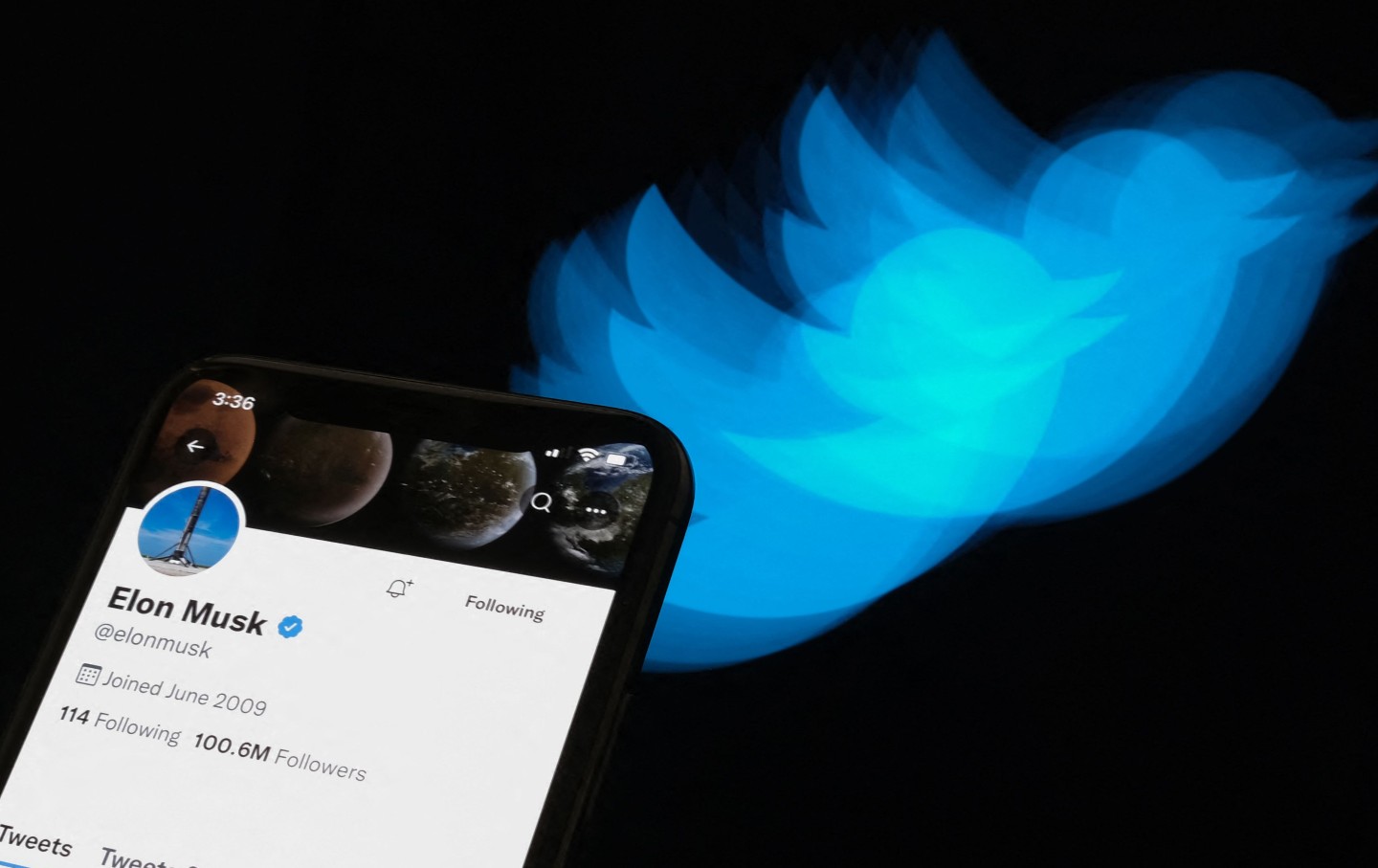
What exactly were “the Twitter Files” about? By now, it’s settled into a near-consensus everywhere but on the right that the disclosures were of little consequence. This view only hardened after MSNBC anchor Mehdi Hasan challenged Matt Taibbi, the journalist most associated with the so-called Files, on several major reporting errors two weeks ago.
Taibbi had mixed up the timeline of the creation of the Election Integrity Partnership (EIP), the public-private project set up to monitor social media misinformation during the election, and had vastly overstated the number of tweets it had flagged for removal, from 2,890 tweets to 22 million—“Taibbi’s most consequential claim,” according to one commentator.
Most seriously, Hasan showed that in charging that the EIP “was partnered with state entities,” Taibbi had erroneously identified the Center for Internet Security (CIS), a private nonprofit—as the CISA, the Department of Homeland Security’s (DHS) Cybersecurity and Infrastructure Security Agency. Adding an “A” to the end of “CIS” allowed Taibbi to make what Hasan called the “false claim” that the EIP was partnered with the government.
As the MSNBC chyron asked whether there was “proof of [a] censorship regime,” viewers were clearly left to think there wasn’t. Since then, Hasan has said that Taibbi’s false identification of the CISA “was key to his thesis.” In a widely circulated post, Techdirt charged that it had been “a key linchpin in the argument that the government was sending tweets for Twitter to remove,” concluding that “there remains no there there.” Various pundits have since repeated these points, charging the entire “scary censorship narrative” has fallen apart.
For many, this was a gratifying end to the saga: A media figure that many viewed as having gone over to the Dark Side of the conservative culture wars was taken down on live television. But reducing the matter to an episode of media comeuppance does a profound public disservice when, despite Taibbi’s errors, the convergence of social media censorship and the national security establishment is both very real and deeply worrying.
And Taibbi’s critics’ overstatements are themselves deeply misleading. Take the issue of the CIS and the CISA. While Taibbi mixed up the two in his tweet, the fact that the CISA works with the EIP isn’t remotely a “false claim”: The EIP itself openly says its “partnership with CISA began under the Trump administration.”
Meanwhile, though the CIS certainly isn’t a government entity, it’s also received a little under $250 million of US government funding since 2008—the vast majority of it from the DHS. By the CIS’s own admission, both its divisions on election security and broader cybersecurity, which work together, are funded by grants from the very same CISA in question.
It openly calls its cybersecurity division a “government entity” and boasts members from “all 50 states, 49 state capitals, as well as hundreds of local governments, tribal governments, and U.S. territories.” The CIS’s president and CEO is a former US Air Force and Department of Energy official who sat on the Cyber Security Commission under Barack Obama, while its other executives and board members hail from government entities like the National Security Agency (NSA), the Pentagon, and of course, the DHS. It even has a handy infographic showing the close relationship between it and the CISA.
There’s no question that the CIS is a private nonprofit. But it’s one so intertwined with the DHS, and so deeply connected to the similarly named CISA, that the lines between private and government are awfully blurry.
But in many ways, the CIS/CISA issue is beside the point, because this was by no means the most important revelation regarding government involvement in tech censorship. The three letters conspicuously missing from criticisms of the Twitter files are “F,” “B,” and “I,” with the disclosures having laid bare the alarming extent of the role that the Federal Bureau of Investigation now plays in the company’s “content moderation” policies.
Among the disclosures were the fact that the FBI was having monthly and even weekly meetings with Twitter executives to coordinate anti-misinformation efforts; that it was doing so in conjunction with entities like the DHS, the Department of Justice (DOJ), and the office of the Director of National Intelligence; that the Central Intelligence Agency and even, at one point, the NSA, were involved in such meetings; that in Twitter’s interactions with the FBI, former Head of Trust and Safety Yoel Roth considered the Bureau a proxy for the entire “intelligence community” as a whole; and that the FBI and Twitter have become closely enmeshed, through the voluminous hiring of former Bureau personnel, offers of temporary security clearances and classified information sharing, and the creation of special portals for it and other government agencies to flag content.
What did they do with this influence? Among other things, the FBI and other government entities regularly sent over lists and Excel spreadsheets of hundreds of problematic accounts and tweets, a deluge of censorship requests that Twitter employees were overwhelmed by; repeatedly pressured Twitter to find evidence of large-scale foreign disinformation that the company officials said didn’t exist; were involved in what one employee called “a sustained (If uncoordinated) effort by the I[ntelligence]C[ommunity] to push us to share more info & change our API policies,” an effort that involved congressional staffers;
and that US officials simultaneously had Twitter exempt from censorship their own propaganda accounts. While critics charge that there’s no evidence of government censorship in the “files,” there are in fact numerous instances of employees acting on government requests, with Twitter’s former public policy chief acknowledging that it identifies misinformation via “the FBI/DHS.”
Twitter employees themselves didn’t share the blasé attitude of critics of the reporting. They were perturbed that the FBI was “just doing keyword searches for [terms of service] violations” when it flagged accounts. Even the company’s former deputy general counsel Jim Baker—himself a former FBI official—found it “odd that they are searching for violations of our policies.” Roth was uncomfortable with the implications of “state-controlled media” the Bureau’s increasingly aggressive demands brought up.
But you don’t need Twitter bigwigs to explain why this is all troubling. Take the FBI, which just in recent years has turned its spying power on Black activists protesting police brutality in ways that the ACLU has said are “built on anti-Black racial stereotypes,” investigated and infiltrated the Standing Rock protest movement, and carried out a nationwide sweep of Muslim households on the eve of the 2016 election. There is alarming evidence of far-right sympathies within the Bureau and its collaboration with far-right extremists for the purpose of targeting anti-fascists. The FBI most recently made headlines for its role in the prosecution of “Cop City” protesters in Atlanta and its surveillance of connected activist groups.
There’s no shortage of scandals in the bloated DHS either, from its surveillance of journalists, activists, and anti-Trump protesters, to the overlap between it and the membership of the far-right Oath Keepers, to the tune of hundreds of its current and former employees. This is all against the backdrop of a wider policy strategy involving the DHS and the DOJ that views left-leaning activist movements like environmentalism, animal rights, and anti-capitalism as potential domestic terrorism.
This bias is evident in the Twitter files. The FBI flagged tweets supporting the George Floyd protests as potentially “driven by foreign-controlled bots.” It likewise incorrectly flagged leftist Catalonian accounts as being of Russian origin, while Taibbi reported that a list of hundreds of supposedly Iranian government-linked accounts included a former newspaper reporter and the left-wing outlet Truthout. Intelligence reports flagged thousands of accounts “propagating anti-Bolsonaro/pro-Lula hashtags,” referring to the far-right former president of Brazil and his leftist challenger, respectively.
That Twitter often resisted the FBI isn’t especially encouraging either, since even it admitted it was fighting a losing battle. Commenting on Twitter’s resistance to one particular censorship request, one employee wrote that “our window on that is closing, given that government partners are becoming more aggressive.” When another employee “found no links to Russia” on a set of flagged accounts, they offered to “try to find a stronger connection” anyway.
Hasan played down these concerns by pointing out that Twitter officially acted on 40 percent of government requests, instead of 100 percent of them. This will be cold comfort to the many left-leaning users who have been on the other side of these requests. That includes the hundreds of Palestinian activists, journalists, and other users who have complained for years about being censored for alleged terms of service and other violations on the platform, which has become integral to Palestinian organizing. An internal report last year from Facebook, another platform that partners with the FBI to fight misinformation, determined that its policies “had an adverse human rights impact” on Palestinians’ democratic rights partly through “greater over-enforcement” against Arabic posts.
Little thought is being given to how such a censorship regime could be misused in the future. Indeed, national security agencies don’t tend to give up power and shrink but to accumulate it and grow. And the Twitter Files show ample evidence of the government already pushing for exactly that.
Since taking over Twitter, Musk has slashed the platform’s content moderation team, that “the censorship bureau was let go.” But there is little reason to sleep soundly. Musk, whose businesses are highly reliant on government contracts, particularly from the Pentagon, has stopped Twitter’s practice of publishing regular transparency reports about government requests, raising the question of whether Musk has not so much ended the company’s cooperation with the national security state as simply hidden it from public view.
Musk’s free speech crusade has not extended to restoring the account of the group responsible for the 2020 “BlueLeaks” disclosures about police misconduct, and he has willingly gone along with the Modi government’s censorship demands against critics in India, in line with his highly questionable definition of free speech as merely meaning censorship in accordance with whatever the law demands. Musk’s words of assurance aren’t credible either: in the same BBC interview in which he claimed to be resisting government censorship, he labeled as “total bullshit” the existence of a family emerald mine that he once openly boasted about.
But even if one holds the utmost faith in Musk’s free speech commitments, the Tesla billionaire won’t own Twitter forever. And the kind of government role in social media censorship laid bare in the Twitter files extends to a variety of other “industry partners” like Facebook, which has shown an equally alarming propensity for censoring content that deviates from official US policy.
Will progressives be comfortable when the speech that’s targeted for censorship doesn’t concern elections and vaccines but instead that which “undermines the public’s trust in the courts” and the financial system, or “provokes violence against key infrastructure”—all of which the CISA has plans to target? And given the cyclical nature of politics, do they trust Donald Trump or whichever other Republican inevitably ends up in the White House someday to use these powers responsibly, let alone to share their views of what constitutes online misinformation? Progressives should remember that objections to War on Terror excesses were largely about how the sprawling, invasive national security state created after 9/11 could easily be hijacked by an unscrupulous, authoritarian leader—a prophecy we got some taste of in Trump’s response to the protests of 2020.
Government control of what’s said on social media and the rest of the Internet is a hallmark of authoritarian systems that exist in countries like Russia and China. There’s good reason to worry that the enmeshment of social media platforms with the national security state outlined in the Twitter Files, if left unchecked, could lay the foundation for exactly that. Progressives will protest in outrage if and when this regime is weaponized by right-wing forces. But by then, it may prove too late.
===
===
===