Drew Ensign
---
politico
on March 15, just weeks into his new job as the Department of Justice lawyer in charge of immigration litigation, Drew Ensign was called into an unusual Saturday evening court hearing.
The government was preparing to whisk Venezuelan immigrants out of the country, giving them no opportunity to challenge their deportations, and send them to El Salvador’s brutal prison that its government calls the Terrorism Confinement Center, or CECOT. When the hearing began at 5 p.m., Ensign said he did not know if the deportations were underway. U.S. District Court Judge James E. Boasberg took a break so Ensign could find out, but when the hearing resumed, Ensign said he still did not know. “I do not have additional details I can provide at this time,” he said.
The judge ordered the government not to deport the immigrants, telling Ensign, “This is something that you need to make sure is complied with immediately.”

Judge James E. Boasberg, pictured above, has ruled that there is probable cause to find the government in criminal contempt of court for its actions during a March hearing in which Ensign represented it. | Carolyn Van Houten/The Washington Post via Getty Images
But it quickly emerged that the government did not comply. Two planes filled with immigrants had taken off from Texas during the break in the hearing, and they landed in El Salvador and discharged their passengers hours after Boasberg issued his order.
As Boasberg investigated whether the government had violated his order, Ensign’s court filings became increasingly combative; he called the judge’s questions a “judicial fishing expedition” and “intrusions into the prerogatives of the Executive Branch.” In a 46-page decision a month later, Boasberg traced the details of the flights, writing that they “were obscured from the Court when the hearing resumed shortly after 6:00 p.m. because the Government” — meaning Ensign — “surprisingly represented that it still had no flight details to share.”
In April, Boasberg ruled that there is probable cause to find the government in criminal contempt of court for what he called its “willful disregard” of his order, an extraordinary rebuke from a judge against a sitting administration. An appeals court issued a stay of Boasberg’s inquiry the same month, and if it eventually moves forward, it remains to be seen who might be found responsible for violating the court order. But one possibility is Ensign.
On June 24, a dismissed Department of Justice whistleblower, Erez Reuveni, shed new light on the Boasberg hearing in a report filed to lawmakers and the Justice Department inspector general. The account, first obtained and published by the New York Times, alleged that Ensign learned the day before the Boasberg hearing that the government would send people to the El Salvador prison that weekend, and that “Ensign willfully misled the court” when he told Boasberg he had no information about the flights.
It’s not yet clear what role Ensign played, if any, in the decision to continue with the deportations despite Boasberg’s order. In a letter he filed to the court on Thursday, Ensign said the government denies the whistleblower account.

Top: A prison officer stands guard in the watchtower with the San Vicente volcano in the background at maximum security penitentiary CECOT (Center for the Compulsory Housing of Terrorism) on April 4, 2025 in Tecoluca, San Vicente, El Salvador. Bottom: Supporters of Kilmar Abrego, who is the Salvadoran legal immigrant mistakenly deported by the Trump administration in March, hold a rally in support of Abrego in front of the U.S. District Court in Greenbelt, Maryland, before a trial hearing on May 16, 2025. | Alex Peña/Getty Images, top; Samuel Corum for POLITICO
If Ensign is ultimately found to be in contempt — a slim but real possibility — he could be fined, lose his law license or even face prison time. The DOJ did not respond to a request for comment about the possibility of contempt proceedings before publication, but after this article was published, Attorney General Pam Bondi wrote in a statement to POLITICO Magazine, “Drew is a talented attorney, outstanding person, and highly respected member of our team at the Department of Justice who has helped us secure historic wins for the American people.” Deputy Attorney General Todd Blanche and Assistant Attorney General Brett Shumate also sent statements of support for Ensign.
Ensign did not respond to requests for comment or interviews for this article.
Ensign, deputy assistant attorney general for immigration litigation at DOJ, has become the legal face of the Donald Trump administration’s unprecedented and highly controversial deportations to CECOT. He is also defending the Kilmar Abrego Garcia case, in which the government admitted to mistakenly deporting Abrego to the El Salvador prison, in defiance of a previous court order. For weeks, Ensign argued that there was nothing the government could do to retrieve the man and that the judge had no power to order the government to do something.In that case, too, the judge, U.S. District Judge Paula Xinis, has raised the possibility of contempt proceedings. (On June 6, the government suddenly returned Abrego to the United States; he is facing federal human smuggling charges in Tennessee.)

Before the Department of Justice, Drew Ensign graduated from Duke University and New York University Law School, then went on to spend a decade at the white-shoe law firm Latham & Watkins. | Department of Justice
All of this — the headlines, the angry judges, the defense of an mistaken deportation, the possibility of contempt — comes as a surprise to people who knew Ensign in earlier stages of his career.
Unlike lawyers who fought for Trump in trying to challenge the results of the 2020 election or justify the Jan. 6 insurrection, Ensign does not have the profile of a MAGA true believer. He has never donated to Trump’s campaigns or to notable Trump acolytes.
A graduate of Duke University and New York University Law School, one of the most selective law schools in the country, Ensign went on to spend a decade at the white-shoe law firm Latham & Watkins, representing major corporations.
Those are institutions not known for Trumpiness. Although Latham recently capitulated to Trump, promising $125 million in free legal services to causes the president favors, it previously had a reputation as a non-ideological firm whose lawyers skewed liberal — in last year’s election, about 90 percent of its lawyers’ political donations went to Democrats. But regardless of their individual politics, lawyers at prestigious law schools and selective firms are expected to uphold the rule of law and their professional ethical obligations above all else — which made Ensign’s defense of Trump’s agenda at any cost even more surprising to two former colleagues.
“It’s shocking to see somebody of his caliber and somebody who has been trained at a firm like Latham out there making these arguments,” said a former colleague at the firm, who, like another former Latham colleague and a former classmate, was granted anonymity because they did not want their name or current employer associated with immigration-related controversies.
By choosing to defend an administration that is “way out on a limb and not following the constitution,” the first former colleague said, Ensign was making decisions that would harm his own career and, potentially, the country. “I don’t think there’s anybody who Drew has worked with, who’s been a mentor to Drew, who cares about Drew’s legal career, who would think that he is making really good decisions personally.”
But teaming up with MAGA-world might not be career-ending at all for Ensign, who never reached the pinnacle of the staid world of big law firms. For one, his allies still see the same hard-working Drew in his role today. “Not only is he just brilliant, but he also just has an unbelievable work ethic,” said Jill Holtzman Vogel, managing partner of Holtzman Vogel, a firm where Ensign later worked in Arizona.
And then there’s the possibility that Ensign may not have damaged his career by joining the Trump administration, as some former colleagues and acquaintances suggest. He may have simply found a different way to the top — a path that is becoming increasingly popular in elite fields in the age of Trump.

Although Latham recently capitulated to Trump, promising $125 million in free legal services to causes the president favors, it previously had a reputation as a non-ideological firm. | Francis Chung/POLITICO
---
---
The Trump administration is waging war on the legal profession on every front.
He’s issued a raft of executive orders aim to punish private lawyers for doing their jobs. Trump has targeted big law firms for crossing him personally and politically, and he’s treated the representation of disfavored clients — be they immigrants, voting right advocates, or LGBTQ+ service members — as working against the national interest.
We love bringing you Law and Chaos four times per week. If you love it too, consider becoming a free or paid subscriber.
Inside the government, he’s fired attorneys who worked on the special counsel investigations and investigated lawyers who prosecuted January 6 defendants. He’s shredded the Justice Department’s prosecutorial independence, demanding politically-motivated prosecutions and firing attorneys who won’t betray their ethics and go along.
And so it’s incumbent upon us to name and shame the lawyers enabling this wholesale assault.
Obviously high-level Trump officials like Attorney General Pam Bondi, Deputy Attorney General Todd Blanche, Principal Associate Deputy Attorney General Emil Bove, Acting Solicitor General Sarah Harris, and soon-to-be Solicitor General John Sauer will live forever in the pantheon of disgrace. And Ed Martin, the acting US Attorney for DC, will surely be remembered for his ignominious conduct.
But the legal foot soldiers who made this era of lawlessness possible should not escape infamy. The Trump administration could not wage this battle without midlevel and line attorneys willing to do the research, draft the pleadings, and sign their names. Put simply, these people had a choice. They chose to participate in these disgraceful actions, rather than resigning, as so many of their colleagues did. They should be shamed and called out, and we will attempt to update and maintain this list during this administration to make sure that they are.
---
Vinita Andrapalliyal is Senior Counsel and the lead line attorney on the briefs inPFLAG v. Trump, a challenge to Trump’s executive order banning gender-affirming care for people 19 and under. The DOJ argued that discriminating against trans people is not discrimination on the basis of sex, and the government’s briefs grossly mischaracterize the science on gender affirming care.
---
Michelle Bennett is Assistant Director of the Federal Programs Branch. She has supervisory authority in PFLAG v. Trump, the challenge to Trump’s executive order banning gender-affirming care for people 19 and under.
---
Marcia Berman is the Assistant Branch Director of the Civil Division. She has line supervisory authority inAFL v. Dep’t of Labor, which seeks to protect government employees’ data from Elon Musk’s DOGE minions.
---
Christian Daniel is a Trial Attorney and is on the briefs in PFLAG v. Trump.
---
Drew Ensign is a Deputy Assistant Attorney General and lead counsel onJ.G.G. v. Trump, where he defended kidnapping Venezuelan nationals and sending them to a Salvadoran gulag prison pursuant to the Alien Enemies Act. The government defied Chief Judge James Boasberg’s direct order to “turn those planes around.” Ensign argued that the court’s order did not count until it was memorialized in a writing and that court had no jurisdiction after the planes left US airspace.
In an effort to hide its non-compliance, the government filed a Notice Invoking State Secrets Privilege, signed by Ensign, in which it refused to answer further questions about the removal of the suspected gang members without due process.
Ensign also has supervisory authority in US v. Illinois,the administration’s challenge to Illinois’s sanctuary jurisdiction laws. Courts have consistently upheld such laws under the Tenth Amendment and the anti-commandeering doctrine, but Ensign argues that the statutes are invalid because they “effectively obstruct” the Trump administration’s draconian immigration policies.
---
August Flentje is a career DOJ official, currently serving as Acting Director of the Federal Programs Branch, Civil Division. He assisted in writing the briefs in J.G.G. v. Trump, described above under the entry for Drew Ensign and US v. Illinois, described above in more detail under the entry for Drew Ensign.
---
Michael Gerardi is Senior Trial Counsel and principal author of the briefs submitted in AFL v. Dep’t of Labor, described above in more detail under the entry for Marcia Berman.
---
Patrick Glen is Senior Litigation Counsel, and assisted with the briefs in JGG v. Trump, described above in more detail under the entry for Drew Ensign.
---
Alexander Haas is Director of the Federal Programs Branch, Civil Division. He has supervisory authority inAIDS Vaccine Advocacy Coalition v. Dep’t of State, the lawsuit challenging the shutdown of USAID. In that case, the government deliberately refused to comply with Judge Amir H. Ali’s order to resume paying contractors and grantees, later claiming that it was unable to comply in the time frame set out by the court.
---
Christoper Hall is a career Justice Department lawyer, currently serving as Assistant Branch Director of the Federal Programs Branch, Civil Division. He has supervisory authority in AIDS Vaccine Advocacy Coalition v. Dep’t of State, described above in more detail under the entry for Alexander K. Haas.
---
Eric Hamilton is a Deputy Assistant Attorney General. He is the lead supervising attorney inNTEU v. Vought, the challenge to President Trump’s efforts to shut down and eliminate the Consumer Financial Protection Bureau. Judge Amy Berman Jackson described the government’s conduct in this case as “so disingenuous that the Court is left with little confidence that the defense can be trusted to tell the truth about anything.”
Hamilton is also a supervising attorney in AIDS Vaccine Advocacy Coalition v. Dep’t of State and U.S. v. Illinois.
---
Liam Holland is a Trial Attorney at the Department of Justice and the principal author of the pleadings filed in NTEU v. Vought.
---
Benjamin Kurland is a Trial Attorney at the Department of Justice and one of the drafters of briefs submitted in AFL v. Dep’t of Labor.
---
Kirk Manhardt, the Director of the Corporate/Financial Litigation Section, has supervisory authority inClimate United Fund v. Citibank. In that suit, “greenbank” fund grantees are fighting the Environmental Protection Agency’s effort to claw back $20 billion allocated under the Inflation Reduction Act based on a deceptively edited Project Veritas video.
The DOJ failed to persuade the court that that the EPA’s terminations arose from a careful, case-by-case analysis, rather than a rightwing smear campaign.
---
Elisabeth Neylan is a Trial Attorney with the Federal Programs Branch. She appears on the briefs in U.S. v. Illinois, described above in more detail under the entry for Drew Ensign.
---
Erez Reuveni, an Assistant Director of the Federal Programs Branch, assisted in writing the briefs in J.G.G. v. Trump and U.S. v. Illinois.
---
Brad P. Rosenberg is Special Counsel assigned to NTEU v. Vought, described above in more detail under the entry for Eric J. Hamilton.
---
Yaakov Roth is the Acting Assistant Attorney General in the Civil Division, and is supervisory counsel on a number of the administration’s cases, including: AFL v. Dep’t of Labor, described above in more detail under the entry for Marcia Berman; AIDS Vaccine Advocacy Coalition v. Dep’t of State, described above in more detail under the entry for Alexander K. Haas; J.G.G. v. Trump, described above in more detail under the entry for Drew Ensign; Climate United Fund v. Citibank,described above in more detail under the entry for Kirk T. Manhardt; PFLAG v. Trump, described above in more detail under the entry for Vinita B. Andrapalliyal; U.S. v. Illinois, described above in more detail under the entry for Drew Ensign.
---
Marc Sacks is the Deputy Director of the Corporate/Financial Litigation Section at the Department of Justice. He is the lead line attorney on the briefs in Climate United Fund v. Citibank,described above in more detail under the entry for Kirk T. Manhardt.
---
Brett Shumate is the Acting Assistant Attorney General for the Civil Division at the Department of Justice. He has supervisory authority in State of Washington v. Trump, the lawsuit challenging Trump's executive order purporting to undo birthright citizenship. He's also the lead attorney of record in two cases brought by the United States against states seeking to force those states to disregard their sanctuary jurisdiction laws, including U.S. v. Illinois and US v. State of New York (challenging New York's so-called "greenlight law"), and several others, including the now-dismissed lawsuit brought by former Special Counsel Hampton Dellinger challenging his illegal termination.
---
Jacqueline Coleman Snead is an Assistant Director of the Federal Programs Branch, Civil Division, and appears on the briefs in U.S. v. Illinois, described above in more detail under the entry for Drew Ensign.
---
Indraneel Sur is the lead line attorney on the briefs and at oral argument in AIDS Vaccine Advocacy Coalition v. Dep’t of State, described above in more detail under the entry for Alexander K. Haas.
---
Kevin VanLandinghamis an Assistant Director of the Corporate/Financial Litigation Section. He appears on the briefs in Climate United Fund v. Citibank,described above in more detail under the entry for Kirk T. Manhardt.
---
Brian C. Ward is an Acting Assistant Director of the Federal Programs Branch, Civil Division and assisted in writing the briefs in J.G.G. v. Trump, described above in more detail under the entry for Drew Ensign.
---
Lauren Wetzler is Deputy Director of the Federal Programs Branch, Civil Division. She has supervisory authority in AIDS Vaccine Advocacy Coalition v. Dep’t of State, described above in more detail under the entry for Alexander K. Haas.
Seriously: the reason why we at Law and Chaos can name and shame these assholes is that we’re supported by you, our readers. Please consider becoming a free or paid subscriber.
---
[### Case 1:25-cv-00418-CJN Document 43 Filed 06/16/ ...

International Refugee Assistance Project
https://refugeerights.org › uploads › 2025/06 › E...](https://refugeerights.org/wp-content/uploads/2025/06/ECF-043-Motion-to-Dismiss.pdf)
Jun 16, 2025 — DREW C. ENSIGN. Deputy Assistant Attorney General. SARAH S. WILSON. Assistant Director. DEVIN BARRETT. Senior Litigation Counsel. MALCOM I ...
30 pages
---
Ensign grew up in Phoenix, the son of a local lawyer, and built a resume fitting a politically moderate over-achiever. After attending a Catholic high school, he went on to Duke, where he was elected to a top student government post with the endorsements of Black, Muslim and Asian student groups and the student newspaper. From there, he went to NYU’s highly ranked law school and earned a spot editing the law review.
Soon, Ensign settled in for a career at Latham & Watkins. Making partner there — which typically happens after a lawyer has worked at the firm for about eight to 10 years — means millions of dollars a year in compensation, multiples more than junior lawyers. Ensign primarily worked on the kinds of corporate defense cases that are a mainstay in the high-paying world of law firms like Latham, representing clients like Monsanto and financial institutions, according to court filings.
Ensign wanted to become a partner at the firm, and he put in long hours to do it, according to the two former colleagues at Latham. But even after a decade, Ensign remained, not a partner but still grinding out his work.
“Drew worked unbelievably hard,” said the first former colleague. So, when his work did not result in partnership, “I think that was just a real disappointment for him.”
This attorney emphasized how difficult it was to make partner at the firm — how, even after devoting years of hard work and commitment to the firm, and doing everything right, a lawyer still might not make it.
“Over time, there was a lot of bitterness on his part about how things had worked out at Latham,” the first former colleague said. The second former colleague agreed, though neither knew why it happened. “He was pretty salty about not being made partner,” the second colleague said. “Definitely resented his circumstances at Latham after a while.”

When Ensign left Latham, he went to work for the Arizona solicitor general’s office under the state’s die-hard conservative attorney general at the time, Mark Brnovich. | Mariam Zuhaib/AP
So when Ensign finally left the firm in 2017, the two former colleagues were not surprised. (Latham did not respond to a request for comment.) But they were when they saw his new job: working in the Arizona solicitor general’s office under the state’s die-hard conservative attorney general at the time, Mark Brnovich. Brnovich did not respond to a request for a comment.
Until then, the two former co-workers had the sense that Ensign was conservative, but he was not vocal about politics, they said. Ensign’s political donations bear that out. He made his first in 2008, giving $250 to Republican John McCain’s presidential campaign. In the coming years, he gave similar small donations to McCain again, to Republican Mitt Romney’s campaign for president and to a handful of other mainstream Republican groups. He never gave larger amounts, and he did not contribute to any of Trump’s campaigns.
But after taking the job in Arizona, his home state, in 2017, Ensign’s career took a much more conservative turn. He argued immigration cases, including a challenge to the Joe Biden administration lifting Covid-era immigration restrictions. He adopted the language of far-right culture warriors. , Ensign complained about the EPA’s “contempt for the limits of its authority” and the Biden administration’s “unmistakable appetite for race-based decisionmaking.”
The two former colleagues POLITICO Magazine spoke to said they were surprised to see him in such prominent political roles, so at odds with his prior life as a reserved, non-political corporate lawyer.
None of the people POLITICO Magazine spoke to who previously knew him could explain the sudden shift. But David Lat, a prominent legal journalist who spent time as a legal recruiter and founded the legal news website Above the Law, noted that Ensign fits a pattern in the Trump administration — “people with very elite backgrounds who are turning on the environment that shaped them.” Lat, who has not met Ensign, pointed to Vice President JD Vance, who has a degree from Yale Law School, and former Trump adviser Steve Bannon, with a degree from Harvard Business School.
After Ensign was passed over for partner in the rarefied world of big law firms, “maybe he decided he’s done with it,” Lat said. “There are a lot of these elites that have decided they’re done with that world, they’re washing their hands of it.”
There’s another possibility, though. Maybe Ensign just found another path to elite success, turning to Trump-aligned politics as another way of making it big in the legal profession.
In 2023, Ensign finally became partner — not at Latham, but at a firm called Holtzman Vogel, where he could continue working on high-profile conservative cases. Holtzman Vogel is a much smaller firm than Latham and best known for its political work. While there, Ensign worked on a case fighting a Biden administration attempt to cancel student debt and another challenging EPA regulations on behalf of a Louisiana’s government, according to court filings. Like at Latham, Ensign stood out at the new firm for his hard work, according to Vogel, the firm’s managing partner.
Vogel saw a different side of Ensign than his Latham colleagues did — a side in which he was more open about his views and more assertive in fighting for them. She said she thinks Ensign moved into political cases because he wanted to do what he believed was right. “I think he chose a lane that lets him advocate for things that he believes in,” she said.
Ensign left the firm in January to join the Trump administration. Vogel said she was sad to see him go, but she understood why he chose the high-profile position.
“He is aligned with this administration 100 percent,” she said. “I think he believes in it.”

Department of Justice headquarters is pictured in Washington on Nov. 11, 2024. | Francis Chung/POLITICO
---
Among the controversial positions Ensign has taken on behalf of the administration: He has argued that after the government mistakenly sends someone to a foreign prison, it cannot be required to correct its mistake. He has claimed that if a judge verbally orders the government to do something, the government does not have to do it. He has dismissed a judge’s effort to enforce a court order as an unlawful intrusion into the president’s authority. A U.S. district judge called his assertions “stunning” and said that his court filings reflected “bad faith.” A conservative judge on the Fourth Circuit Court of Appeals wrote that Ensign’s arguments in the Abrego case should be “shocking” to all Americans’ “intuitive sense of liberty.”
Some of his critics think he has gone too far, and that at some point, there will be consequences for him.
“To the extent that Drew Ensign is saying things that are inconsistent with what the facts are, then when the Trump administration is over and he seeks jobs, that will be something that people will raise: ‘you misled, you deceived, you withheld information,’” said Nancy Gertner, a retired federal judge nominated by President Bill Clinton who teaches at Harvard Law School.
And some of his former acquaintances find his actions disgraceful.
In April, Ensign attended his law school reunion at NYU, where several classmates told him how much they disapproved of his actions. | Stan Honda/AFP via Getty Images
In April, Ensign attended his law school reunion at NYU, where several classmates, including at least one who counted themself as a friend, told him personally how much they disapproved of his actions, according to a classmate who was there and witnessed one such interaction. “His law school colleagues were, as far as I saw, uniformly disgusted at how he’s been willing to deploy his legal skills on behalf a lawless administration,” the classmate said. (Ensign has argued in court filings that the administration has complied with the law and all court orders.)
Most serious is the possibility of contempt or other sanction aimed directly at Ensign.
Recently, after Abrego was brought back to the U.S., Abrego’s lawyers urged the court to impose penalties for the government’s behavior, suggesting civil contempt findings, “monetary sanctions against government attorneys personally” and prohibiting the government from reimbursing its attorneys. Xinis has not yet ruled on the request.
Contempt proceedings aren’t the only tool that can be used when a court order is defied. Judges can discipline attorneys for unbecoming conduct, and sanctions can include fines, suspension or disbarment.
For Ensign specifically to be held in contempt a court would have to find that he, personally, violated a court order willfully, said NYU Law School professor Rachel Barkow.
But Barkow also said that even if someone is held in contempt, Trump could pardon them.
For now, Ensign seems willing to risk it.
- Filed Under:
- Employment & Immigratio
---
off bs
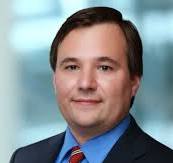
Drew Ensign serves as the Deputy Assistant Attorney General for the Office of Immigration Litigation of the Civil Division. Prior to joining the Department, he was a partner at Holtzman, Vogel, Baran, Torchinsky & Josefiak PLLC, specializing in administrative, appellate, and election law. He previously served as a Deputy Solicitor General and Chief Counsel for the Civil Appeals and Federalism Section at the Arizona Attorney General’s Office from 2017 through 2022. Earlier in his career, he practiced at Latham & Watkins LLP in Washington, D.C.
He is a graduate of New York University School of Law and Duke University. He clerked for Judge J. Clifford Wallace on the U.S. Court of Appeals for the Ninth Circuit.
Dates of Service
2025 - Present
---
whitehouse ltr
Re: Protected Whistleblower Disclosure of Erez Reuveni Regarding Violation of Laws,
Rules & Regulations, Abuse of Authority, and Substantial and Specific Danger to
Health and Safety at the Department of Justice
Dear All:
We, the Government Accountability Project and Gilbert Employment Law, P.C., represent
Mr. Erez Reuveni, formerly the Acting Deputy Director for the Office of Immigration Litigation
(OIL) of the Department of Justice (DOJ), and a whistleblower. Mr. Reuveni presents the
following disclosures to your attention for your respective offices to take appropriate oversight
action.
Between March 14, 2025, and April 5, 2025, Mr. Reuveni, almost immediately after
receiving notice of his promotion to serve as Acting Deputy Director of OIL, became aware of the
plans of DOJ leadership to resist court orders that would impede potentially illegal efforts to deport
noncitizens, and further became aware of the details to execute those plans.
On April 4, 2025, after raising concerns internally to his chain of command for nearly three
weeks regarding the government’s compliance with court orders and candor to the courts, Mr.
Reuveni appeared before Judge Paula Xinis, United States District Court Judge in the District of
Maryland, on behalf of the government in the case of Mr. Kilmar Abrego Garcia. During that
appearance, Mr. Reuveni candidly and truthfully informed the court, based on the evidentiary
record, that Mr. Abrego Garcia’s removal from the United States was a mistake. Later that evening,
Mr. Reuveni refused directions from his superiors to file a brief misrepresenting those facts to the...
---
npr opb
A Maryland federal judge wants to find out if government officials are acting in “bad faith” in the case of Kilmar Armando Abrego Garcia, who was mistakenly sent to a notorious Salvadoran prison.
Judge Paula Xinis on Tuesday called for a two-week process of “expedited discovery,” including questioning government officials under oath, to learn whether the government is doing enough to try to bring him back.
Abrego Garcia, a Salvadoran citizen, had lived in Maryland for about 15 years before he was deported to El Salvador last month, despite being granted protections by an U.S. immigration judge. He is in custody in Salvadoran President Nayib Bukele’s mega-prison, known as CECOT. The Supreme Court said the Trump administration should facilitate his return.
“It is a fact now, of this record: every day he is detained in CECOT is a day of irreparable harm,” Xinis said from the bench on Tuesday. “We have to give process to both sides but we are going to move. No tolerance for gamesmanship and grandstanding.”
Lawyers for the Justice Department and those representing Abrego Garcia have one week to conduct depositions of Joseph Mazzara, the acting general counsel at the Department of Homeland Security, as well as of acting Immigration and Customs Enforcement field office director Robert Cerna, and of other officials who have filed declarations before the court.
The hearing is the first courtroom appearance about Abrego Garcia’s case since Bukele met with President Trump in the Oval Office on Monday, and told reporters that he is not going to “smuggle a terrorist into the United States.”
The U.S. government has accused Abrego Garcia of being a member of the MS-13 gang, which the Trump administration has since designated a Foreign Terrorist Organization. Abrego Garcia’s lawyers dispute that he is a member of the gang, and say he doesn’t have a criminal record.
In a court filing ahead of the hearing, Abrego Garcia’s lawyers argued “the Government should at least be required to request the release of Abrego Garcia” — and that to date it has not done so.
The Department of Homeland Security said it “prepared to facilitate Abrego Garcia’s presence in the United States in accordance with those processes if he presents at a port of entry,” Mazzara said in a declaration filed minutes before the hearing began.
However, Mazarra said that if Abrego Garcia does appear at a port of entry to the U.S., he would be detained by DHS and either removed to a third country, or the government would go through a judicial process to try to send him back to El Salvador.
Oval Office meeting as evidence
The DOJ also filed a transcript of Monday’s press conference in the Oval Office. Drew Ensign, a lawyer for the Justice Department, presented the transcript, arguing that the issue of Abrego Garcia was “raised at the highest level” and provided proof the government was trying to “facilitate” his return.
But Judge Xinis called references to the comments made at the White House “nonresponsive” in court about whether the administration is working to release Abrego Garcia from CECOT and ensure that his case is handled as it would have been in the U.S., were he not improperly sent abroad.
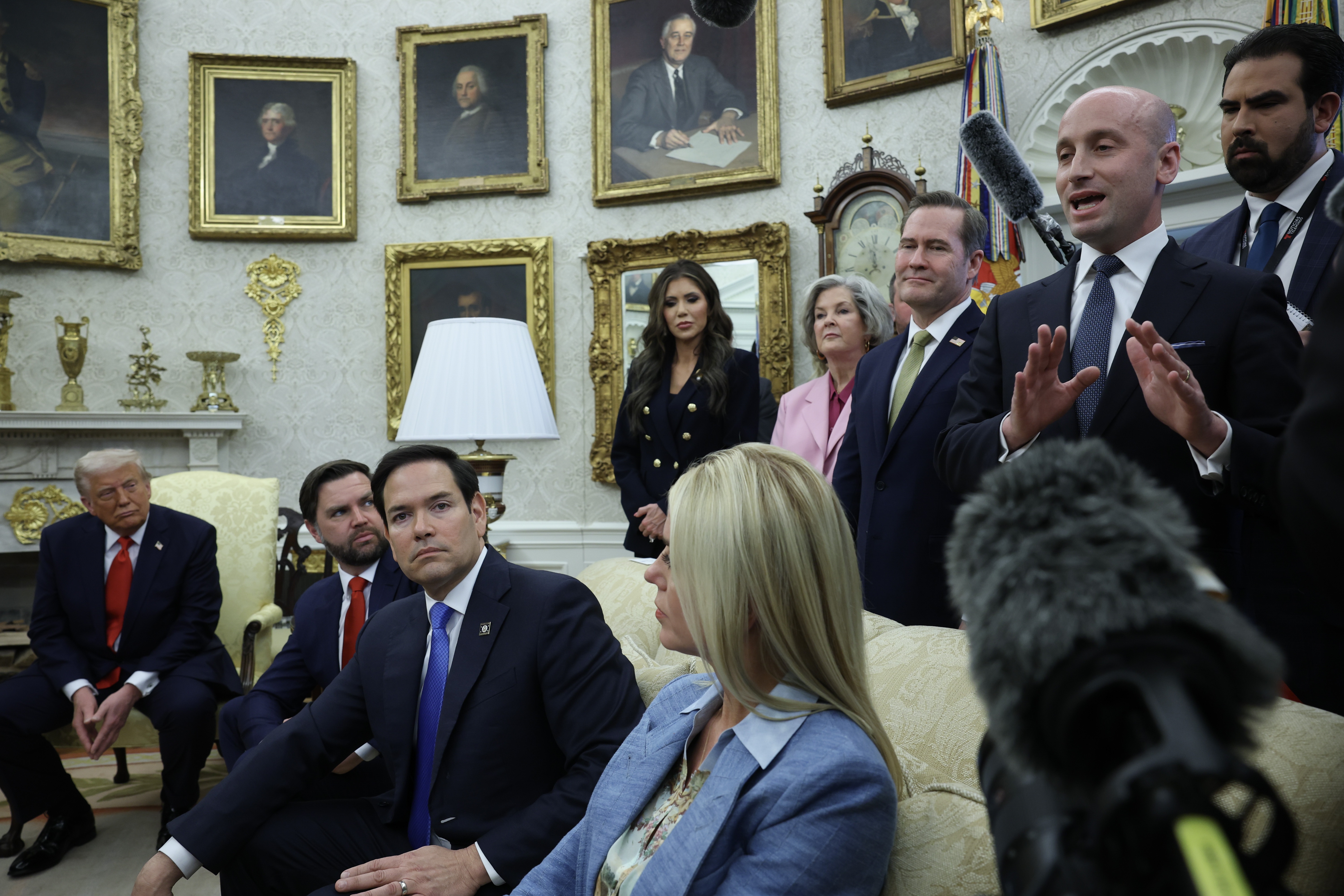
White House Deputy Chief of Staff Stephen Miller speaks as Vice President JD Vance, Secretary of State Marco Rubio and Pam Bondi, U.S. Attorney General, sit nearby as President Trump meets with President Nayib Bukele of El Salvador in the Oval Office on April 14.
“If you were removing domestic barriers then there would be no smuggling, right?” Xinis said, referencing Bukele’s “smuggling terrorists” remark.
“If I make a finding of contempt it will be based on the record before me,” she added. “No, I don’t consider the transcript you gave me to be answering the question.”
The White House has argued its actions align with the court’s orders.
“We’re very confident that every action taken by this administration is within the confines of the law, and we continue to comply with the court’s orders,” White House Press Secretary Karoline Leavitt said on Tuesday.
El Salvador’s Bukele says he lacks power to bring him back
The U.S. Supreme Court last week in an unsigned decision upheld Xinis’ order that the federal government must “facilitate” Abrego Garcia’s release from custody in El Salvador and “to ensure his case is handled as it would have been had he not been improperly sent to El Salvador.”
However, the Supreme Court also said the judge should clarify her decision “with due regard for the deference owed to the Executive Branch in the conduct of foreign affairs.”
Focusing on that line of “deference” over foreign policy, several administration officials have argued it’s up to Bukele whether Abrego Garcia is returned.
“If they [El Salvador] wanted to return him, we would facilitate it – meaning provide a plane,” Attorney General Pam Bondi said during the Oval Office press conference.
But in that same press conference, Bukele said he does not have the power to send Abrego Garcia back to the U.S.
Immigration and Customs Enforcement, as well as White House officials, admitted that an administrative error resulted in Abrego Garcia’s deportation.
An immigration judge granted Abrego Garcia a withholding of removal in 2019, meaning that although he did enter the country illegally, the U.S. could not deport him to El Salvador.
His attorney told NPR he had applied and had been granted a work permit, which had been regularly renewed since then.
---
Judge To DOJ: No, ‘Facilitate’ Doesn’t Mean ‘Do Nothing’ In Abrego Garcia Case
from the something's-gotta-change dept
Wed, Apr 16th 2025 09:30am - Mike Masnick
As the US government trotted out its latest excuses for illegally trafficking Abrego Garcia to a Salvadoran torture camp, the district court overseeing the case has made it clear that she’s had enough of the government defying her orders. In ȧ hearing followed by an order granting discovery, Judge Paula Xinis has made it clear that she knows the government is defying her orders to help bring Abrego Garcia back to the US, and she’s pretty fed up with their tap dancing and stalling.
At issue is the government’s creative interpretation of what it means to “facilitate” Garcia’s return — an interpretation that seems to consist entirely of doing absolutely nothing while claiming their hands are tied. As Judge Xinis points out, contrary to what the administration has been claiming about the Supreme Court siding with them, it did not. She’s simply enforcing what SCOTUS already said was her right to do:
This Court, in turn, ordered no more than what the Supreme Court endorsed: that Defendants “take all available steps to facilitate the return of Abrego Garcia to the United States as soon as possible,” because bound within this remedy is Abrego Garcia’s “release from custody” and the assurance that Abrego Garcia’s “case is handled as it would have been had he not been improperly sent to El Salvador.”
While the Trump admin, led by Pam Bondi and Stephen Miller, keeps falsely claiming that “facilitate” only means providing him with a flight to the US if El Salvador wants to release Garcia, Judge Xinis systematically dismantles this bullshit interpretation:
Notably, to “facilitate” means “to make the occurrence of (something) easier; to render less difficult.” Facilitate, Black’s Law Dictionary (12th ed. 2024). Merriam-Webster defines the term as “to make easier or less difficult: to free from difficulty or impediment.” Facilitate, MerriamWebster Dictionary, https://www.merriam-webster.com/dictionary/facilitate (last visited Apr. 14, 2025). And the Oxford English Dictionary defines “facilitate” as “[t]o assist (a person); to enable or allow (a person) to do something, achieve a particular result, etc., more easily.” Facilitate, Oxford English Dictionary, https://doi.org/10.1093/OED/5808503853 (last visited Apr. 14, 2025). Defendants therefore remain obligated, at a minimum, to take the steps available to them toward aiding, assisting, or making easier Abrego Garcia’s release from custody in El Salvador and resuming his status quo ante. But the record reflects that Defendants have done nothing at all.
Instead, the Defendants obliquely suggest that “facilitate” is limited to “taking all available steps to remove any domestic obstacles that would otherwise impede the alien’s ability to return here.” ECF No. 65 at 3 (emphasis in original). The fallacy in the Defendants’ argument is twofold. First, in the “immigration context” as it were, id., facilitating return of those wrongly deported can and has included more extensive governmental efforts, endorsed in prior precedent and DHS publications. Thus, the Court cannot credit that “facilitating” the ordered relief is as limited as Defendants suggest.
Second, and more fundamentally, Defendants appear to have done nothing to aid in Abrego Garcia’s release from custody and return to the United States to “ensure that his case is handled as it would have been” but for Defendants’ wrongful expulsion of him. Abrego Garcia, 604 U.S.— , slip op. at 2. Thus, Defendants’ attempt to skirt this issue by redefining “facilitate” runs contrary to law and logic.
She also notes that the three “daily” status reports the DOJ delivered (late each day) did not meet what she ordered, which is why she is requiring discovery, even as the DOJ insisted she should not order discovery:
Third, the discovery is necessary in light of Defendants’ uniform refusal to disclose “what it can” regarding their facilitation of Abrego Garcia’s release and return to the status quo ante, or present any legal justification for what they cannot disclose.2 Id. Fourth, the burden on the Government is minimal, particularly because, as the Supreme Court underscored, it “should be prepared to share what it can concerning the steps it has taken and the prospect of further steps.” Id. Fifth, the request for discovery is timely in that Defendants have not yet complied with this Court’s directives, and Abrego Garcia appears to remain inexplicably detained in CECOT. Sixth, discovery must proceed without delay, as Abrego Garcia is indisputably entitled to the due protections that Defendants have denied him—and to be free from the risk of grave injury resulting from his continued detention in CECOT.
As for Stephen Miller’s argument that the Supreme Court sided with the White House and all they have to do is yell “foreign affairs” to get out from under any court judgment, the court’s having none of it:
Again, this Court is ever mindful of the Supreme Court’s directive that the Court’s injunctive relief must be accorded with “due regard for the deference owed to the Executive Branch in the conduct of foreign affairs.” Abrego Garcia, 604 U.S.—, slip op. at 2. But this deference does not mean the Court must ignore the Defendants’ repeated refusal to provide even the most basic information as to any steps they have taken to facilitate “Abrego Garcia’s release from custody in El Salvador and to ensure that his case is handled as it would have been had he not been improperly sent to El Salvador.” Id. Thus far, the Defendants appear to have taken no steps, and provided no explanation, legal or otherwise, for such inaction
And thus, Judge Xinis has set a very aggressive discovery schedule. The lawyers for Abrego Garcia can depose the various administration officials who filed those status reports, including various ICE officials and a State Department official. But also Joseph Mazzara, the acting general counsel for Homeland Security.
During the hearing, DOJ lawyer Drew Ensign tried to protest that Mazzara, as acting general counsel, shouldn’t be deposed as it would raise privilege issues, but Judge Xinis shut that down, noting the DOJ should have considered that before they had him sign declarations in the case.
The depositions should all be completed by next Wednesday, followed by Garcia’s lawyers being able to supplement their motion for relief based on those depositions by Monday, April 28th, and the DOJ able to respond by April 30.
Some observers were annoyed that this represents two more weeks in which Garcia is left rotting in a Salvadoran torture camp, but Xinis appears to know what she’s doing. As some note, two weeks is the minimum required to hold a party in contempt for failure to comply. Others suggest that this aggressive discovery schedule, in which various government officials will have to go on the record explaining how badly they fucked all this up may be designed to just get the DOJ to get Garcia on a plane back to the US to avoid this process.
Of course, others are predicting that the Trump admin will seek to run back to the warm embrace of John Roberts at SCOTUS, seeking to get Judge Xinis off their back (though as Judge Xinis noted, there’s really no basis for that). But also, it gives Roberts the opportunity to point out how the administration is directly lying about what SCOTUS’s original 9-0 ruling said about how the US should help bring Garcia back.
Obviously, this process is tragically slow for Garcia and his family. Garcia’s wife gave an impassioned and heartfelt statement prior to the hearing which is worth watching:
---
---
LI
Deputy Assistant Attorney General - Immigration Litigation
Phoenix, Arizona, United States
689 followers 500+ connections
U.S. Department of Justice
New York University School of Law
Experience
    :{:{U.S. Department of Justice Graphic:(style="font-family:Merriweather"):}::(style="font-family:Merriweather"):}:
    :{:{Deputy Assistant Attorney General - Immigration Litigation:(style="font-family:Merriweather"):}::(style="font-family:Merriweather"):}:
    :{:{U.S. Department of Justice:(style="font-family:Merriweather"):}::(style="font-family:Merriweather"):}:
:{:{Jan 2025 - Present 10 months:(style="font-family:Merriweather"):}::(style="font-family:Merriweather"):}: :{:{Washington, District of Columbia, United States:(style="font-family:Merriweather"):}::(style="font-family:Merriweather"):}: :{:{Serving as the Deputy Assistant Attorney General for Immigration Litigation, leading the Department of Justice's 350-lawyer Office of Immigration Litigation (OIL).:(style="font-family:Merriweather"):}::(style="font-family:Merriweather"):}:
:{:{Holtzman Vogel Graphic:(style="font-family:Merriweather"):}::(style="font-family:Merriweather"):}:
:{:{Partner:(style="font-family:Merriweather"):}::(style="font-family:Merriweather"):}:
:{:{Holtzman Vogel:(style="font-family:Merriweather"):}::(style="font-family:Merriweather"):}: :{:{Nov 2023 - Jan 2025 1 year 3 months:(style="font-family:Merriweather"):}::(style="font-family:Merriweather"):}: :{:{Phoenix, Arizona, United States:(style="font-family:Merriweather"):}::(style="font-family:Merriweather"):}: :{:{Representing clients in administrative, appellate, election, and environmental litigation.:(style="font-family:Merriweather"):}::(style="font-family:Merriweather"):}:
:{:{Owner:(style="font-family:Merriweather"):}::(style="font-family:Merriweather"):}:
:{:{Drew C. Ensign PLLC:(style="font-family:Merriweather"):}::(style="font-family:Merriweather"):}: :{:{Jan 2023 - Nov 2023 11 months:(style="font-family:Merriweather"):}::(style="font-family:Merriweather"):}: :{:{Phoenix, Arizona, United States:(style="font-family:Merriweather"):}::(style="font-family:Merriweather"):}: :{:{Served as outside counsel hired by states, legislators, and political counsel, and as a Special Assistant Solicitor General for Louisiana. Was set to argue Supreme Court merits case on behalf of 19 states in Arizona v. Mayorkas, No. 22-592 (U.S.) until federal government mooted case. Specialized in suits involving administrative, appellate, election, and environmental law.:(style="font-family:Merriweather"):}::(style="font-family:Merriweather"):}:
:{:{Arizona Attorney General's Office:(style="font-family:Merriweather"):}::(style="font-family:Merriweather"):}:
:{:{Arizona Attorney General's Office:(style="font-family:Merriweather"):}::(style="font-family:Merriweather"):}: :{:{5 years 5 months:(style="font-family:Merriweather"):}::(style="font-family:Merriweather"):}:
:{:{Deputy Solicitor General and Chief Counsel, Civil Appeals and Federalism Section:(style="font-family:Merriweather"):}::(style="font-family:Merriweather"):}: :{:{Mar 2019 - Dec 2022 3 years 10 months:(style="font-family:Merriweather"):}::(style="font-family:Merriweather"):}: :{:{Phoenix, Arizona Area:(style="font-family:Merriweather"):}::(style="font-family:Merriweather"):}: :{:{Serving as Chief Counsel for the Civil Appeals and Federalism Section, which is responsible for the bulk of civil appellate filings on behalf of Arizona and its agencies/officers (filing over 400 appellate briefs annually), as well as offensive and defensive actions relating to principles of federalism and federal overreach. Concurrently serving as a Deputy Solicitor General, with lead responsibility for a number of strategic civil appellate matters, and election and statutory defense cases.…:(style="font-family:Merriweather"):}::(style="font-family:Merriweather"):}: Senior Litigation Counsel
Aug 2017 - Mar 2019 1 year 8 months
Phoenix, Arizona Area
Served as officer with principal responsibility for defense of Arizona statutes against constitutional challenges. Led defense of Arizona statutes regarding forfeiture, labor law, availability of parole, and prohibition of public contractors engaging in boycotts of Israel. Led Arizona’s efforts, as one of four lead states, in multi-state investigation of Wells Fargo that culminated in $575 million settlement (the largest settlement to date with a national bank not involving the federal…
    :{:{Latham & Watkins Graphic:(style="font-family:Merriweather"):}::(style="font-family:Merriweather"):}:
    :{:{Counsel:(style="font-family:Merriweather"):}::(style="font-family:Merriweather"):}:
    :{:{Latham & Watkins:(style="font-family:Merriweather"):}::(style="font-family:Merriweather"):}:
:{:{Nov 2006 - Aug 2017 10 years 10 months:(style="font-family:Merriweather"):}::(style="font-family:Merriweather"):}: :{:{Washington D.C. Metro Area:(style="font-family:Merriweather"):}::(style="font-family:Merriweather"):}: :{:{Practiced in a variety of litigation matters, with a primary focus on environmental and appellate litigation. Prepared drafts of petitions for writs of certiorari, Supreme Court merits briefs, appellate briefs in numerous federal circuits, and a wide range of motions in federal district courts. Successful oral argument on behalf of disabled veteran in U.S. Court of Appeals for the Federal Circuit. Named one of the “Best Supervisors of 2012” (awarded to roughly 2% of associates in D.C. office).:(style="font-family:Merriweather"):}::(style="font-family:Merriweather"):}:
:{:{U.S. Court of Appeals for the Ninth Circuit Graphic:(style="font-family:Merriweather"):}::(style="font-family:Merriweather"):}:
:{:{Law Clerk to Hon. J. Clifford Wallace:(style="font-family:Merriweather"):}::(style="font-family:Merriweather"):}:
:{:{U.S. Court of Appeals for the Ninth Circuit:(style="font-family:Merriweather"):}::(style="font-family:Merriweather"):}: :{:{Aug 2005 - Aug 2006 1 year 1 month:(style="font-family:Merriweather"):}::(style="font-family:Merriweather"):}: :{:{Greater San Diego Area:(style="font-family:Merriweather"):}::(style="font-family:Merriweather"):}: :{:{Prepared bench memoranda analyzing the merits of pending appeals involving a wide variety of fields of substantive law. Assisted in the drafting of published opinions and dissents.:(style="font-family:Merriweather"):}::(style="font-family:Merriweather"):}:
:{:{United States Attorney's Office Graphic:(style="font-family:Merriweather"):}::(style="font-family:Merriweather"):}:
:{:{Legal Intern, Southern District of New York:(style="font-family:Merriweather"):}::(style="font-family:Merriweather"):}:
:{:{United States Attorney's Office:(style="font-family:Merriweather"):}::(style="font-family:Merriweather"):}: :{:{Jan 2005 - May 2005 5 months:(style="font-family:Merriweather"):}::(style="font-family:Merriweather"):}: :{:{Greater New York City Area:(style="font-family:Merriweather"):}::(style="font-family:Merriweather"):}: :{:{Intern for the Criminal Division as part of NYU clinical program.:(style="font-family:Merriweather"):}::(style="font-family:Merriweather"):}:
:{:{Perkins Coie LLP Graphic:(style="font-family:Merriweather"):}::(style="font-family:Merriweather"):}:
:{:{Summer Associate:(style="font-family:Merriweather"):}::(style="font-family:Merriweather"):}:
:{:{Perkins Coie LLP:(style="font-family:Merriweather"):}::(style="font-family:Merriweather"):}: :{:{Jul 2004 - Aug 2004 2 months:(style="font-family:Merriweather"):}::(style="font-family:Merriweather"):}: :{:{Phoenix, Arizona Area:(style="font-family:Merriweather"):}::(style="font-family:Merriweather"):}:
:{:{Wilson Sonsini Goodrich & Rosati Graphic:(style="font-family:Merriweather"):}::(style="font-family:Merriweather"):}:
:{:{Summer Associate:(style="font-family:Merriweather"):}::(style="font-family:Merriweather"):}:
:{:{Wilson Sonsini Goodrich & Rosati:(style="font-family:Merriweather"):}::(style="font-family:Merriweather"):}: :{:{May 2004 - Jul 2004 3 months:(style="font-family:Merriweather"):}::(style="font-family:Merriweather"):}: :{:{San Francisco Bay Area:(style="font-family:Merriweather"):}::(style="font-family:Merriweather"):}:
:{:{US Courts Graphic:(style="font-family:Merriweather"):}::(style="font-family:Merriweather"):}:
:{:{Judicial Intern to Hon. Shira A. Scheindlin (S.D.N.Y.):(style="font-family:Merriweather"):}::(style="font-family:Merriweather"):}:
:{:{US Courts:(style="font-family:Merriweather"):}::(style="font-family:Merriweather"):}: :{:{Jan 2004 - May 2004 5 months:(style="font-family:Merriweather"):}::(style="font-family:Merriweather"):}: :{:{Greater New York City Area:(style="font-family:Merriweather"):}::(style="font-family:Merriweather"):}:
:{:{United States Attorney's Office Graphic:(style="font-family:Merriweather"):}::(style="font-family:Merriweather"):}:
:{:{Legal Intern, Eastern District of New York:(style="font-family:Merriweather"):}::(style="font-family:Merriweather"):}:
:{:{United States Attorney's Office:(style="font-family:Merriweather"):}::(style="font-family:Merriweather"):}: :{:{Aug 2003 - Dec 2003 5 months:(style="font-family:Merriweather"):}::(style="font-family:Merriweather"):}: :{:{Intern for the Civil Division as part of NYU clinical program.:(style="font-family:Merriweather"):}::(style="font-family:Merriweather"):}:
:{:{United States Department of Defense Graphic:(style="font-family:Merriweather"):}::(style="font-family:Merriweather"):}:
:{:{Legal Intern, Office of General Counsel:(style="font-family:Merriweather"):}::(style="font-family:Merriweather"):}:
:{:{United States Department of Defense:(style="font-family:Merriweather"):}::(style="font-family:Merriweather"):}: :{:{May 2003 - Aug 2003 4 months:(style="font-family:Merriweather"):}::(style="font-family:Merriweather"):}:Education
    :{:{New York University School of Law Graphic:(style="font-family:Merriweather"):}::(style="font-family:Merriweather"):}:
    :{:{New York University School of Law:(style="font-family:Merriweather"):}::(style="font-family:Merriweather"):}:
    :{:{J.D.:(style="font-family:Merriweather"):}::(style="font-family:Merriweather"):}:
:{:{2002 - 2005:(style="font-family:Merriweather"):}::(style="font-family:Merriweather"):}: :{:{Activities and Societies: Notes Editor, NYU Law Review:(style="font-family:Merriweather"):}::(style="font-family:Merriweather"):}: :{:{Graduated magna cum laude (top 10% of class):(style="font-family:Merriweather"):}::(style="font-family:Merriweather"):}:
:{:{Member, Order of the Coif:(style="font-family:Merriweather"):}::(style="font-family:Merriweather"):}:
:{:{Butler Scholar (awarded to top ten students in class after four semesters):(style="font-family:Merriweather"):}::(style="font-family:Merriweather"):}:
:{:{Dean's Scholarship Recipient:(style="font-family:Merriweather"):}::(style="font-family:Merriweather"):}:
:{:{Duke University Graphic:(style="font-family:Merriweather"):}::(style="font-family:Merriweather"):}:
:{:{Duke University:(style="font-family:Merriweather"):}::(style="font-family:Merriweather"):}:
:{:{B.S., magna cum laude Economics and Public Policy Studies:(style="font-family:Merriweather"):}::(style="font-family:Merriweather"):}: :{:{1998 - 2002:(style="font-family:Merriweather"):}::(style="font-family:Merriweather"):}: :{:{Activities and Societies: Duke Student Government (Executive Vice President):(style="font-family:Merriweather"):}::(style="font-family:Merriweather"):}: :{:{Best Honors Thesis (Public Policy Studies Department):(style="font-family:Merriweather"):}::(style="font-family:Merriweather"):}:
:{:{Paul Edwin Harner Award (“Four Year” Student Leadership Award):(style="font-family:Merriweather"):}::(style="font-family:Merriweather"):}:scrape
More profiles for you
August Flentje
August Flentje
August Flentje
· 3rdThird degree connection
Deputy Director, Office of Immigration Litigation, Civil Division at U.S. Department of JusticeDeputy Director, Office of Immigration Litigation, Civil Division at U.S. Department of Justice
Henry Whitaker
Henry Whitaker
Henry Whitaker
· 3rdThird degree connection
Counselor to the Attorney GeneralCounselor to the Attorney General
Chad Mizelle
Chad Mizelle
Chad Mizelle
· 3rdThird degree connection
Lawyer, Entrepreneur, Problem SolverLawyer, Entrepreneur, Problem Solver
John Eisenberg
John Eisenberg
John Eisenberg
· 3rdThird degree connection
Assistant Attorney General for National SecurityAssistant Attorney General for National Security
Jonathan Guynn
Jonathan Guynn
Jonathan Guynn
· 3rdThird degree connection
Deputy Assistant Attorney General, Civil Division at U.S. Department of JusticeDeputy Assistant Attorney General, Civil Division at U.S. Department of Justice
Rachel Cohen
Rachel Cohen
Rachel Cohen
· 3rdThird degree connection
Attorney. Opinions are loud and my own.Attorney. Opinions are loud and my own.
Patrick D.
Patrick D.
Patrick D.
· 3rdThird degree connection
Acting Assistant Attorney General at the Department of JusticeActing Assistant Attorney General at the Department of Justice
Jill Vogel
Jill Vogel
Jill Vogel
· 3rdThird degree connection
Managing Partner | Holtzman VogelManaging Partner | Holtzman Vogel
Follow
Erica Leavitt
Erica Leavitt
Erica Leavitt
· 3rdThird degree connection
Senior Associate at Holtzman VogelSenior Associate at Holtzman Vogel
Brett Shumate
Brett Shumate
Brett Shumate
· 3rdThird degree connection
Assistant Attorney General, Civil DivisionAssistant Attorney General, Civil Division
Tarra DeShields
Tarra DeShields
Tarra DeShields
· 3rd+3rd+ degree connection
Emily Gould
Emily Gould
Emily Gould
· 3rd+3rd+ degree connection
Associate Attorney at Holtzman VogelAssociate Attorney at Holtzman Vogel
Abhishek Kambli
Abhishek Kambli
Abhishek Kambli
· 3rdThird degree connection
Litigator and leader. Former Deputy AG in Kansas and federal prosecutor. Major in the Air Force Reserves. Litigator and leader. Former Deputy AG in Kansas and federal prosecutor. Major in the Air Force Reserves.
Follow
Erielle Azerrad
Erielle Azerrad
Erielle Azerrad
· 3rdThird degree connection
Litigation Counsel at NJACLitigation Counsel at NJAC
Erez Reuveni
Erez Reuveni
Erez Reuveni
· 3rdThird degree connection
Former Acting Deputy Director, Office of Immigration Litigation and Senior Counselor, Office of the Assistant Attorney General, Civil DivisionFormer Acting Deputy Director, Office of Immigration Litigation and Senior Counselor, Office of the Assistant Attorney General, Civil Division
Yaakov Roth
Yaakov Roth
Yaakov Roth
· 3rdThird degree connection
Principal Deputy Assistant Attorney GeneralPrincipal Deputy Assistant Attorney General
Andrew Gould
Andrew Gould
Andrew Gould
· 3rdThird degree connection
Former Arizona Supreme Court JusticeFormer Arizona Supreme Court Justice
Brian Ward
Brian Ward
Brian Ward
· 3rdThird degree connection
Senior Litigation Counsel at U.S. Department of JusticeSenior Litigation Counsel at U.S. Department of Justice
Ernesto Molina
Ernesto Molina
Ernesto Molina
· 3rd+3rd+ degree connection
Deputy Director at U.S. Department of JusticeDeputy Director at U.S. Department of Justice
Dallin Holt
Dallin Holt
Dallin Holt
· 3rdThird degree connection
Partner at Holtzman VogelPartner at Holtzman Vogel
Follow
---
[
Department of Justice (.gov)
https://www.justice.gov › civil › staff-profile › deputy-a...](https://www.justice.gov/civil/staff-profile/deputy-assistant-attorney-general-office-immigration-litigation)
May 20, 2025 — Drew Ensign serves as the Deputy Assistant Attorney General for the Office of Immigration Litigation of the Civil Division.
[### Drew Ensign - Deputy Assistant Attorney General

LinkedIn · Drew Ensign
680+ followers](https://www.linkedin.com/in/drew-ensign-43383b11)
Phoenix, Arizona, United States · Deputy Assistant Attorney General - Immigration Litigation · U.S. Department of Justice
Representing clients in administrative, appellate, election, and environmental litigation. Owner Drew C. Ensign PLLC
[### The Lawyer Who Became the Face of Trump's Deportation ...

Politico
https://www.politico.com › magazine › 2025/07/01 › dr...](https://www.politico.com/news/magazine/2025/07/01/drew-ensign-trump-deportations-abrego-garcia-venezuela-migrants-00382197)
Jul 1, 2025 — Ensign, deputy assistant attorney general for immigration litigation at DOJ, has become the legal face of the Donald Trump administration's ...
[### Drew Curtis Ensign # 243956

Attorney Search - The State Bar of California (.gov)
https://apps.calbar.ca.gov › attorney › Licensee › Detail](https://apps.calbar.ca.gov/attorney/Licensee/Detail/243956)
Drew Curtis Ensign #243956, License Status: Active, Address: US Department of Justice, 950 Pennsylvania Ave NW, Washington, DC 20004.
[### National Political, Regulatory & Litigation Law Firm ...

Holtzman Vogel Law Firm
https://www.holtzmanvogel.com › news-insights › natio...](https://www.holtzmanvogel.com/news-insights/national-political-regulatory-litigation-law-firm-holtzman-vogel-adds-six-attorneys)
Feb 3, 2025 — Partner Drew Ensign, who was recently appointed Deputy Assistant ... Drew C. Marvel. Associate 202-737-8808 · dmarvel@holtzmanvogel.com.
[### Drew C. Ensign > Latham & Watkins LLP > United States

Legal 500
https://www.legal500.com › 614909-drew-c-ensign](https://www.legal500.com/firms/50571-latham-watkins-llp/c-united-states/lawyers/614909-drew-c-ensign)
Drew Ensign is counsel in the Washington, DC office. He is a member of the Litigation & Trial and Environment, Land & Resources Departments.
Images
Holtzman Vogel Adds Former Arizona Deputy Solicitor General ...

Holtzman Vogel
National Political, Regulatory & Litigation Law Firm ...

Holtzman Vogel
Civil Division | Deputy Assistant Attorney General | United ...

Civil Division | Deputy Assistant Attorney General | United ...
---
Show more images
[### Drew Ensign

C-SPAN
https://www.c-span.org › person › drew-ensign](https://www.c-span.org/person/drew-ensign/143976/)
Mar 24, 2025 — On the C-SPAN Networks: Drew Ensign is a Deputy Assistant Attorney General for the Department of Justice with two videos in the C-SPAN Video ...
[### Civil Division Leadership

Department of Justice (.gov)
https://www.justice.gov › civil › civil-division-leadership](https://www.justice.gov/civil/civil-division-leadership)
Drew Ensign serves as the Deputy Assistant Attorney General for the Office of Immigration Litigation of the Civil Division. Drew Ensign. Staff Profile: Drew ...
Missing: c. | Show results with: c.
[### Proof of Service

supremecourt.gov
https://www.supremecourt.gov › DocketPDF](https://www.supremecourt.gov/DocketPDF/21/21A240/206956/20211230141240411_CMS%20Stay%20Opp%20CoS.pdf)
By s/ Drew C. Ensign. Drew C. Ensign. OFFICE OF THE ARIZONA ATTORNEY. GENERAL. 2005 N. Central Ave. Phoenix, AZ 85004. (602) 542-5025. Drew.Ensign@azag.gov.
2 pages
---