DARPA
Defense_Advanced_Research_Projects_Agency

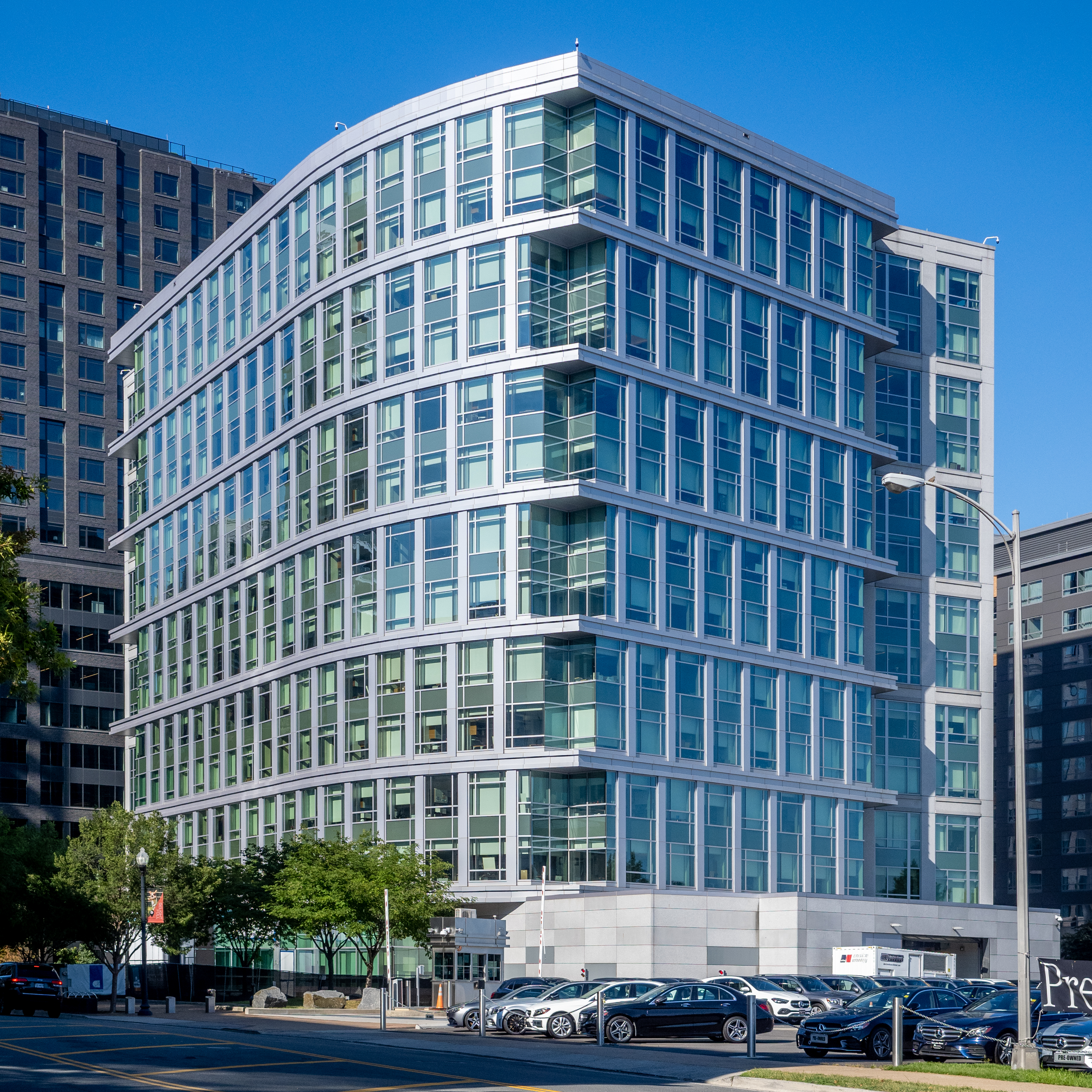
DARPA's former headquarters in the Virginia Square neighborhood of Arlington County, Virginia. The agency is currently located in a new building at 675 North Randolph St.
The Defense Advanced Research Projects Agency (DARPA) is a research and development agency of the United States Department of Defense responsible for the development of emerging technologies for use by the military.[3][4] Originally known as the Advanced Research Projects Agency (ARPA), the agency was created on February 7, 1958, by President Dwight D. Eisenhower in response to the Soviet launching of Sputnik 1 in 1957. By collaborating with academia, industry, and government partners, DARPA formulates and executes research and development projects to expand the frontiers of technology and science, often beyond immediate U.S. military requirements.[5] The name of the organization first changed from its founding name, ARPA, to DARPA, in March 1972, changing back to ARPA in February 1993, then reverted to DARPA in March 1996.[6]
The Economist has called DARPA "the agency that shaped the modern world", with technologies like "Moderna's COVID-19 vaccine ... weather satellites, GPS, drones, stealth technology, voice interfaces, the personal computer and the internet on the list of innovations for which DARPA can claim at least partial credit".[7] Its track record of success has inspired governments around the world to launch similar research and development agencies.[7]
DARPA is independent of other military research and development and reports directly to senior Department of Defense management. DARPA comprises approximately 220 government employees in six technical offices, including nearly 100 program managers, who together oversee about 250 research and development programs.[8] Stephen Winchell is the current director.[9]
History
Duration: 6 minutes and 2 seconds.6:02
DARPA achievements for the past 50 years
Early history (1958–1969)
DARPA's former headquarters in the Virginia Square neighborhood of Arlington County, Virginia. The agency is currently located in a new building at 675 North Randolph St.
The Advanced Research Projects Agency (ARPA) was suggested by the President's Scientific Advisory Committee to President Dwight D. Eisenhower in a meeting called after the launch of Sputnik.[10] ARPA was formally authorized by President Eisenhower in 1958 for the purpose of forming and executing research and development projects to expand the frontiers of technology and science, and able to reach far beyond immediate military requirements.[5] The two relevant acts are the Supplemental Military Construction Authorization (Air Force)[11] (Public Law 85-325) and Department of Defense Directive 5105.15, in February 1958. It was placed within the Office of the Secretary of Defense (OSD) and counted approximately 150 people.[12] Its creation was directly attributed to the launching of Sputnik and to U.S. realization that the Soviet Union had developed the capacity to rapidly exploit military technology. Initial funding of ARPA was $520 million.[13] ARPA's first director, Roy Johnson, left a $160,000 management job at General Electric for an $18,000 job at ARPA.[14][15] Herbert York from Lawrence Livermore National Laboratory was hired as his scientific assistant.[16]
Johnson and York were both keen on space projects, but when NASA was established later in 1958 all space projects and most of ARPA's funding were transferred to it. Johnson resigned and ARPA was repurposed to do "high-risk", "high-gain", "far out" basic research, a posture that was enthusiastically embraced by the nation's scientists and research universities.[17] ARPA's second director was Brigadier General Austin W. Betts, who resigned in early 1961 and was succeeded by Jack Ruina who served until 1963.[18] Ruina, the first scientist to administer ARPA, managed to raise its budget to $250 million.[19] It was Ruina who hired J. C. R. Licklider as the first administrator of the Information Processing Techniques Office, which played a vital role in creation of ARPANET, the basis for the future Internet.[20]
Additionally, the political and defense communities recognized the need for a high-level Department of Defense organization to formulate and execute R&D projects that would expand the frontiers of technology beyond the immediate and specific requirements of the Military Services and their laboratories. In pursuit of this mission, DARPA has developed and transferred technology programs encompassing a wide range of scientific disciplines that address the full spectrum of national security needs.
From 1958 to 1965, ARPA's emphasis centered on major national issues, including space, ballistic missile defense, and nuclear test detection.[21] During 1960, all of its civilian space programs were transferred to the National Aeronautics and Space Administration (NASA) and the military space programs to the individual services.[22]
This allowed ARPA to concentrate its efforts on the Project Defender (defense against ballistic missiles), Project Vela (nuclear test detection), and Project AGILE (counterinsurgency R&D) programs, and to begin work on computer processing, behavioral sciences, and materials sciences. The DEFENDER and AGILE programs formed the foundation of DARPA sensor, surveillance, and directed energy R&D, particularly in the study of radar, infrared sensing, and x-ray/gamma ray detection.
ARPA at this point (1959) played an early role in Transit (also called NavSat) a predecessor to the Global Positioning System (GPS).[23] "Fast-forward to 1959 when a joint effort between DARPA and the Johns Hopkins Applied Physics Laboratory began to fine-tune the early explorers' discoveries. TRANSIT, sponsored by the Navy and developed under the leadership of Richard Kirschner at Johns Hopkins, was the first satellite positioning system."[24][25]
During the late 1960s, with the transfer of these mature programs to the Services, ARPA redefined its role and concentrated on a diverse set of relatively small, essentially exploratory research programs. The agency was renamed the Defense Advanced Research Projects Agency (DARPA) in 1972, and during the early 1970s, it emphasized direct energy programs, information processing, and tactical technologies.[citation needed]
Concerning information processing, DARPA made great progress, initially through its support of the development of time-sharing. All modern operating systems rely on concepts invented for the Multics system, developed by a cooperation among Bell Labs, General Electric and MIT, which DARPA supported by funding Project MAC at MIT with an initial two-million-dollar grant.[26]
DARPA supported the evolution of the ARPANET (the first wide-area packet switching network), Packet Radio Network, Packet Satellite Network and ultimately, the Internet and research in the artificial intelligence fields of speech recognition and signal processing, including parts of Shakey the robot.[27] DARPA also supported the early development of both hypertext and hypermedia. DARPA funded one of the first two hypertext systems, Douglas Engelbart's NLS computer system, as well as The Mother of All Demos. DARPA later funded the development of the Aspen Movie Map, which is generally seen as the first hypermedia system and an important precursor of virtual reality.
Later history (1970–1980)
The Mansfield Amendment of 1973 expressly limited appropriations for defense research (through ARPA/DARPA) only to projects with direct military application.
The resulting "brain drain" is credited with boosting the development of the fledgling personal computer industry. Some young computer scientists left the universities to startups and private research laboratories such as Xerox PARC.
Between 1976 and 1981, DARPA's major projects were dominated by air, land, sea, and space technology, tactical armor and anti-armor programs, infrared sensing for space-based surveillance, high-energy laser technology for space-based missile defense, antisubmarine warfare, advanced cruise missiles, advanced aircraft, and defense applications of advanced computing.
Many of the successful programs were transitioned to the Services, such as the foundation technologies in automatic target recognition, space-based sensing, propulsion, and materials that were transferred to the Strategic Defense Initiative Organization (SDIO), later known as the Ballistic Missile Defense Organization (BMDO), now titled the Missile Defense Agency (MDA).
Recent history (1981–present)
During the 1980s, the attention of the Agency was centered on information processing and aircraft-related programs, including the National Aerospace Plane (NASP) or Hypersonic Research Program. The Strategic Computing Program enabled DARPA to exploit advanced processing and networking technologies and to rebuild and strengthen relationships with universities after the Vietnam War. In addition, DARPA began to pursue new concepts for small, lightweight satellites (LIGHTSAT) and directed new programs regarding defense manufacturing, submarine technology, and armor/anti-armor.
In 1981, two engineers, Robert McGhee and Kenneth Waldron, started to develop the Adaptive Suspension Vehicle (ASV) nicknamed the "Walker" at the Ohio State University, under a research contract from DARPA.[28] The vehicle was 17 feet long, 8 feet wide, and 10.5 feet high, and had six legs to support its three-ton aluminum body, in which it was designed to carry cargo over difficult terrains. However, DARPA lost interest in the ASV, after problems with cold-weather tests.[29]
On February 4, 2004, the agency shut down its so called "LifeLog Project". The project's aim would have been, "to gather in a single place just about everything an individual says, sees or does".[30]
On October 28, 2009, the agency broke ground on a new facility in Arlington County, Virginia a few miles from The Pentagon.[31]
In fall 2011, DARPA hosted the 100-Year Starship Symposium with the aim of getting the public to start thinking seriously about interstellar travel.[32]
On June 5, 2016, NASA and DARPA announced that it planned to build new X-planes with NASA's plan setting to create a whole series of X planes over the next 10 years.[33]
Between 2014 and 2016, DARPA shepherded the first machine-to-machine computer security competition, the Cyber Grand Challenge (CGC), bringing a group of top-notch computer security experts to search for security vulnerabilities, exploit them, and create fixes that patch those vulnerabilities in a fully automated fashion.[34][35] It is one of DARPA prize competitions to spur innovations.
In June 2018, DARPA leaders demonstrated a number of new technologies that were developed within the framework of the GXV-T program. The goal of this program is to create a lightly armored combat vehicle of not very large dimensions, which, due to maneuverability and other tricks, can successfully resist modern anti-tank weapon systems.[36]
In September 2020, DARPA and the US Air Force announced that the Hypersonic Air-breathing Weapon Concept (HAWC) are ready for free-flight tests within the next year.[37]
Victoria Coleman became the director of DARPA in November 2020.[38]
In recent years, DARPA officials have contracted out core functions to corporations. For example, during fiscal year 2020, Chenega ran physical security on DARPA's premises,[39] System High Corp. carried out program security,[40] and Agile Defense ran unclassified IT services.[41] General Dynamics runs classified IT services.[42] Strategic Analysis Inc. provided support services regarding engineering, science, mathematics, and front office and administrative work.[43]
Organization
Current program offices
DARPA has six technical offices that manage the agency's research portfolio, and two additional offices that manage special projects.[44][45] All offices report to the DARPA director, including:
The Defense Sciences Office (DSO): DSO identifies and pursues high-risk, high-payoff research initiatives across a broad spectrum of science and engineering disciplines and transforms them into important, new game-changing technologies for U.S. national security. Current DSO themes include novel materials and structures, sensing and measurement, computation and processing, enabling operations, collective intelligence, and global change.[46][47]
The Information Innovation Office (I2O) aims to ensure U.S. technological superiority in all areas where information can provide a decisive military advantage.
The Microsystems Technology Office (MTO) core mission is the development of high-performance, intelligent microsystems and next-generation components to ensure U.S. dominance in Command, Control, Communications, Computer, Intelligence, Surveillance, and Reconnaissance (C4ISR), Electronic Warfare (EW), and Directed Energy (DE). The effectiveness, survivability, and lethality of systems that relate to these applications depend critically on microsystems and components.[48]
The Strategic Technology Office (STO) mission is to focus on technologies that have a global theater-wide impact and that involve multiple Services.[49]
The Tactical Technology Office (TTO) engages in high-risk, high-payoff advanced military research, emphasizing the "system" and "subsystem" approach to the development of aeronautic, space, and land systems as well as embedded processors and control systems
The Biological Technologies Office (BTO) fosters, demonstrates, and transitions breakthrough fundamental research, discoveries, and applications that integrate biology, engineering, and computer science for national security. Created in April 2014 by then Director Arati Prabhakar, taking programs from the MTO and DSO offices.[50]
Former offices
The Adaptive Execution Office (AEO) was created in 2009 by the DARPA Director, Regina Dugan. The office's four project areas included technology transition, assessment, rapid productivity and adaptive systems. AEO provided the agency with robust connections to the warfighter community and assisted the agency with the planning and execution of technology demonstrations and field trials to promote adoption by the warfighter, accelerating the transition of new technologies into DoD capabilities.
Information Awareness Office: 2002–2003
The Advanced Technology Office (ATO) researched, demonstrated, and developed high payoff projects in maritime, communications, special operations, command and control, and information assurance and survivability mission areas.[51]
The Special Projects Office (SPO) researched, developed, demonstrated, and transitioned technologies focused on addressing present and emerging national challenges. SPO investments ranged from the development of enabling technologies to the demonstration of large prototype systems. SPO developed technologies to counter the emerging threat of underground facilities used for purposes ranging from command-and-control, to weapons storage and staging, to the manufacture of weapons of mass destruction. SPO developed significantly more cost-effective ways to counter proliferated, inexpensive cruise missiles, UAVs, and other platforms used for weapon delivery, jamming, and surveillance. SPO invested in novel space technologies across the spectrum of space control applications including rapid access, space situational awareness, counterspace, and persistent tactical grade sensing approaches including extremely large space apertures and structures.
The Office of Special Development (OSD) in the 1960s developed a real-time remote sensing, monitoring, and predictive activity system on trails used by insurgents in Laos, Cambodia, and the Republic of Vietnam. This was done from an office in Bangkok, Thailand, that was ostensibly established to catalog and support the Thai fishing fleet, of which two volumes were published. This is a personal recollection without a published citation. A report on the ARPA group under which OSD operated is found here.[52]
A 1991 reorganization created several offices which existed throughout the early 1990s:[53]
The Electronic Systems Technology Office combined areas of the Defense Sciences Office and the Defense Manufacturing Office. This new office will focus on the boundary between general-purpose computers and the physical world, such as sensors, displays and the first few layers of specialized signal-processing that couple these modules to standard computer interfaces.
The Software and Intelligent Systems Technology Office and the Computing Systems office will have responsibility associated with the Presidential High-Performance Computing Initiative. The Software office will also be responsible for "software systems technology, machine intelligence and software engineering."
The Land Systems Office was created to develop advanced land vehicle and anti-armor systems, once the domain of the Tactical Technology Office.
The Undersea Warfare Office combined areas of the Advanced Vehicle Systems and Tactical Technology offices to develop and demonstrate submarine stealth and counter-stealth and automation.
A 2010 reorganization merged two offices:
The Transformational Convergence Technology Office (TCTO) and the Information Processing Techniques Office (IPTO) were combined in 2010 to form the Information Innovation Office (I2O).
TCTO's mission was to develop new crosscutting capabilities from a broad range of emerging technological and social trends, particularly in areas related to computing and computing-reliant subareas of the life sciences, social sciences, manufacturing, and commerce.[49][54]
IPTO focused on inventing the sensing, networking, computing, and software technologies vital to ensuring DOD military superiority.[55]\
DOWNLOADED FROM WIKIPEDIA
Thursday, December 25, 2025 08:29PM