CMMC 2.0
Preview
Open in TheBrain
NIST SP800-171r2
CMMC 2.0
Reference Material
Regulations & Standards
NIST SP800-53r5
System and Communications Protection (SC)
Parents
NIST SP800-53r5
Children
SC-1 Policy and Procedures
SC-10 Network Disconnect
SC-11 Trusted Path
SC-12 Cryptographic Key Establishment and Management
SC-13 Cryptographic Protection
SC-14 Public Access Protections
SC-15 Collaborative Computing Devices and Applications
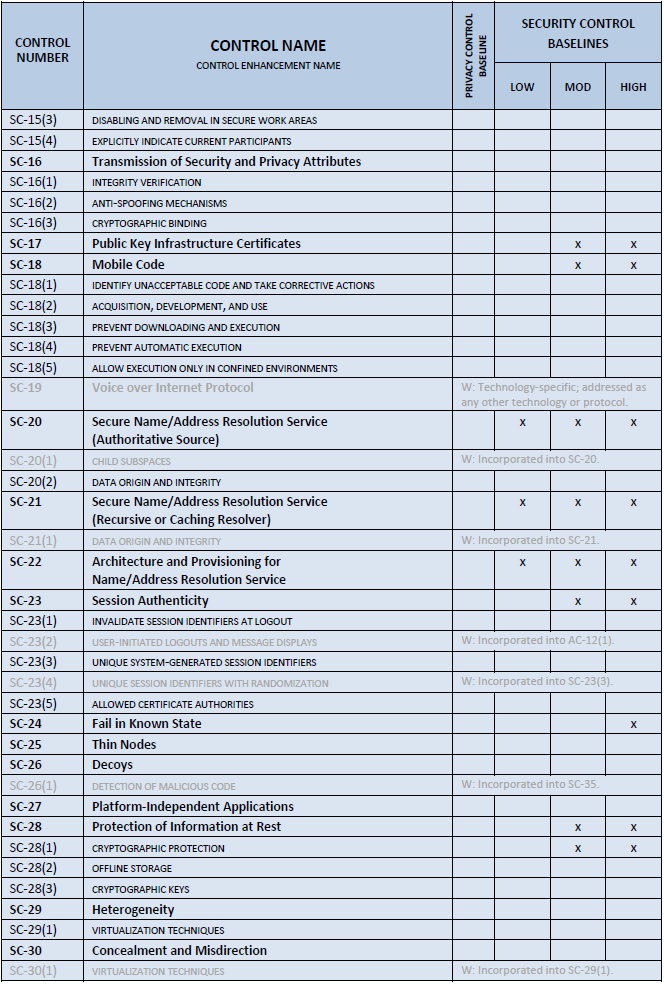
SC-16 Transmission of Security and Privacy Attributes
SC-17 Public Key Infrastructure Certificates
SC-18 Mobile Code
SC-19 Voice Over Internet Protocol
SC-2 Separation of System and User Functionality
SC-20 Secure Name/Address Resolution Service (Authoritative Source)
SC-21 Secire Name/Address Resolution Service (Recursive or Caching Resolver)
SC-22 Architecture and Provisioning for Name/Address Resolution Service
SC-23 Session Authenticity
SC-24 Fail in Known State
SC-25 Thin Nodes
SC-26 Decoys
SC-27 Platform-Independent Applications
SC-28 Protection of Information at Rest
SC-29 Heterogeneity
SC-3 Security Function Isolation
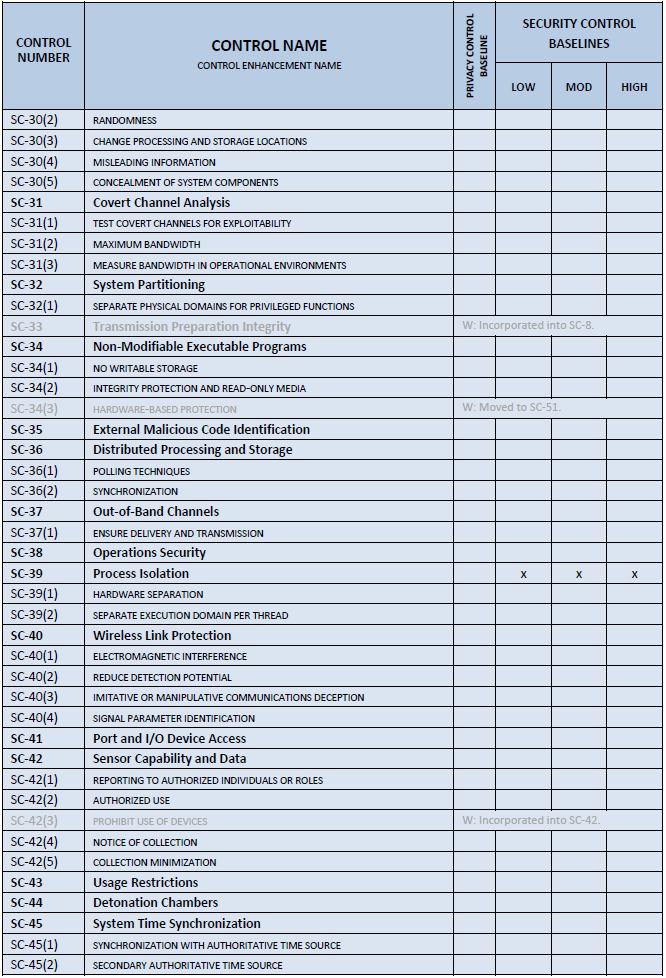
SC-30 Concealment and Misdirection
SC-31 Covert Channel Analysis
SC-32 System Partitioning
SC-33 Transmission Preparation Integrity
SC-34 Non-Modifiable Executable Programs
SC-35 External Malicious Code Certification
SC-36 Distrbuted Processing and Storage
SC-37 Out-of-Band Channels
SC-38 Operations Security
SC-39 Process Isolation
SC-4 Information in Shared System Resources
SC-40 Wireless Link Protection
SC-41 Port and I/O Device Access
SC-42 Sensor Capability and Data
SC-43 Usage Restrictions
SC-44 Detonation Chambers
SC-45 System Time Synchronization
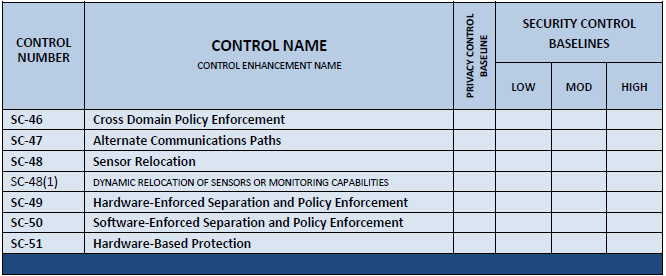
SC-46 Cross Domain Policy Enforcement
SC-47 Alternate Communications Paths
SC-48 Sensor Relocation
SC-49 Hardware-Enforced Separation and Policy Enforcement
SC-5 Denial-of-Service Protection
SC-50 Software-Enforced Separation and Policy Enforcement
SC-51 Hardware-Based Protection
SC-6 Resource Availability
SC-7 Boundary Protection
SC-8 Transmission Confidentiality and Integration
SC-9 Transmission Confidentiality