Chestnut Tree
I would like as many as possible of each:
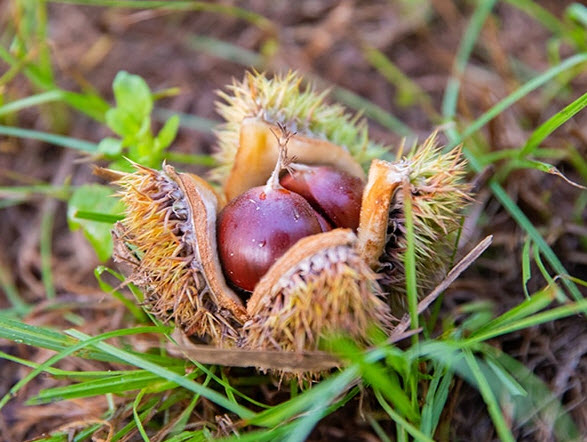
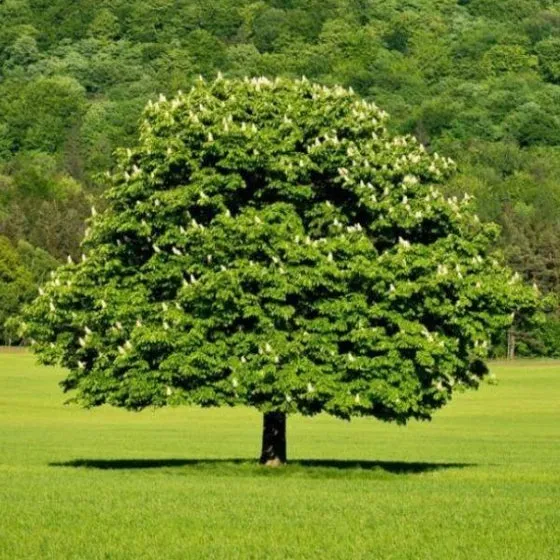
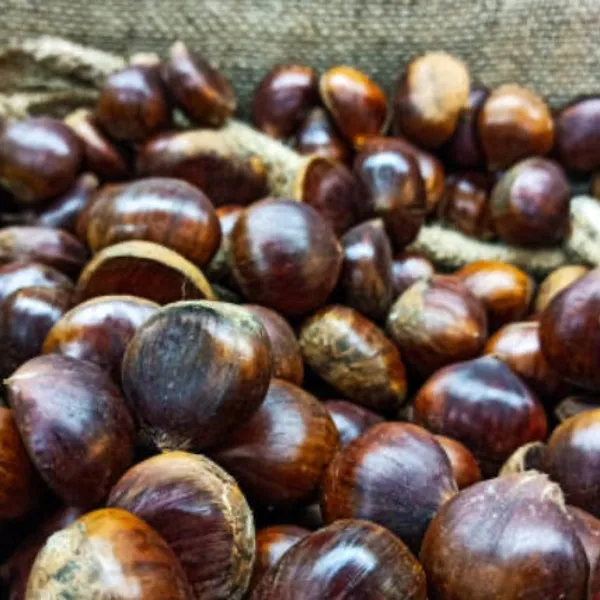
The American chestnut (Castanea dentata) is a large, fast-growing deciduous tree of the beech family native to eastern North America.[3] As is true of all species in genus Castanea, the American chestnut produces burred fruit with edible nuts. The American chestnut was one of the most important forest trees throughout its range.[4][5]
During the early to mid 20th century, American chestnut trees were devastated by chestnut blight, a fungal disease that came from Chinese chestnut trees that were introduced into North America from East Asia. It is estimated that the blight killed between 3 and 4 billion American chestnut trees in the first half of the 20th century, beginning in 1904.[6][7][8] Very few mature specimens of the tree exist within its historical range, although many small shoots of the former live trees remain. There are hundreds of large (2 to 5 ft diameter) American chestnuts outside its historical range, some in areas where less virulent strains of the pathogen are more common, such as the 600 to 800 large trees in Northern Michigan.[9][10] The species is listed as endangered in the United States and Canada.[11][12] American chestnuts are also susceptible to ink disease, particularly in the southern part of its native range; this likely contributed to the devastation of the species.
Home | The American Chestnut Foundation
Dunstan Chestnut – Chestnut Hill Nursery
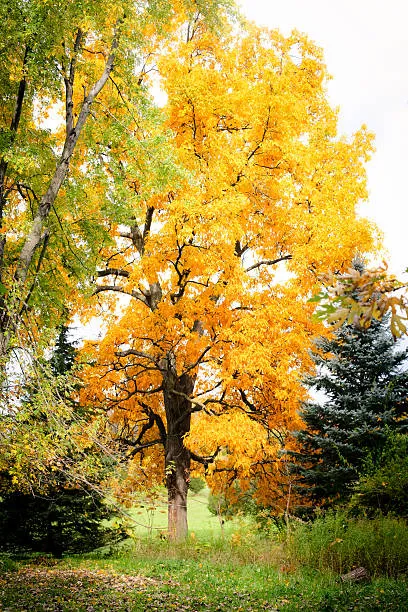
Wisconsin has a stand of American Chestnut trees that are slowly declining in numbers, with approximately 600 infected with the virulent fungus as of 2002.2 However, the risk of the tree becoming infected is far outweighed by the benefits the tree provides. There are very few mature American Chestnuts, and they are isolated so there are no other trees in their area that could expose them to the fungus. Wisconsin is slightly off the beaten path of the American Chestnut’s historic range, which roughly followed the Appalachian Mountains.1Dunstan Chestnuts are the hardiest and most blight-resistant chestnut trees, with a vast growing range that stretches from Florida to Wisconsin.