Cabin Pressurization
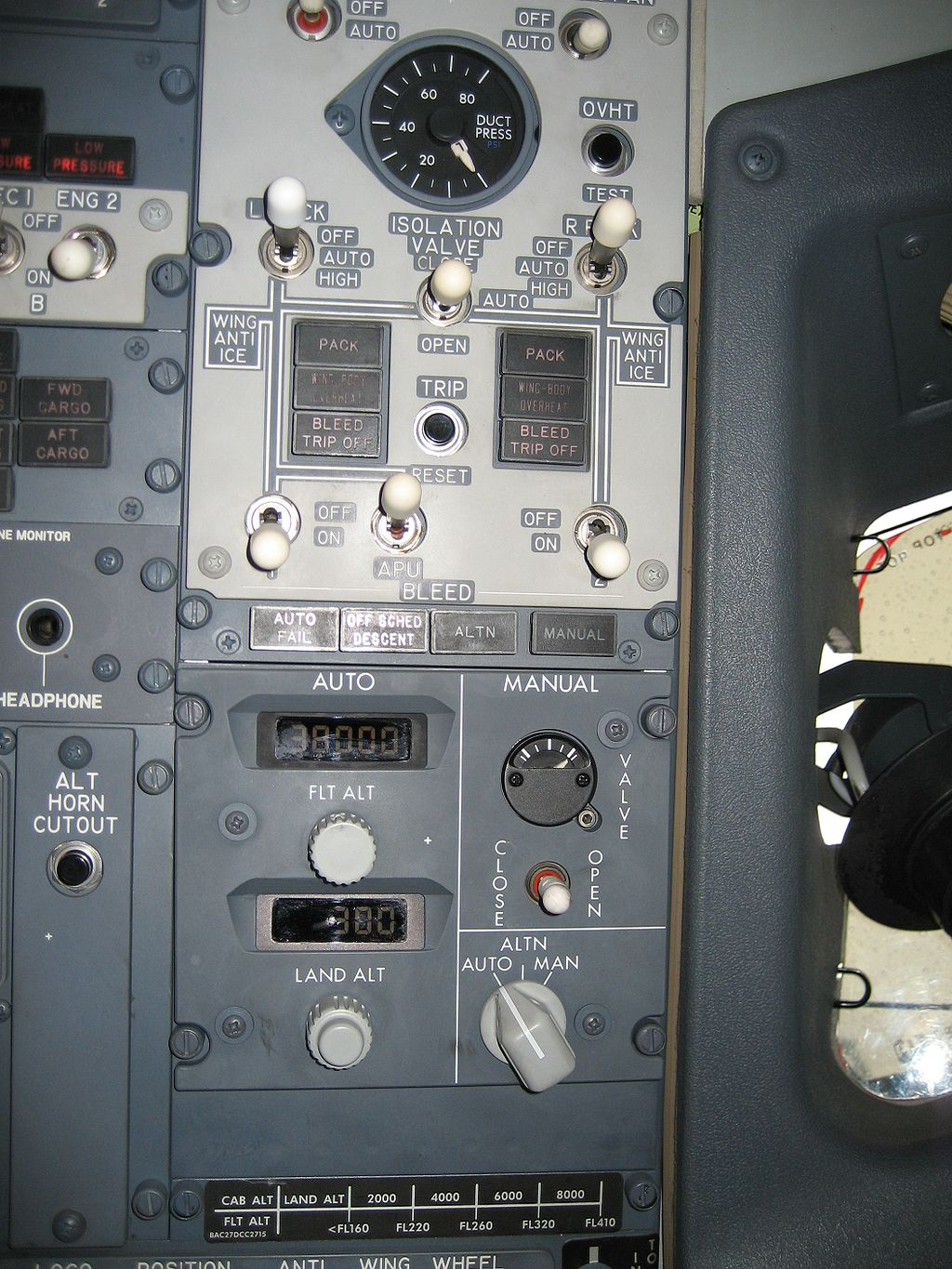
The pressurization controls on a Boeing 737-800
Cabin pressurization is a process in which conditioned air is pumped into the cabin of an aircraft or spacecraft in order to create a safe and comfortable environment for passengers and crew flying at high altitudes. For aircraft, this air is usually bled off from the gas turbine engines at the compressor stage, and for spacecraft, it is carried in high-pressure, often cryogenic tanks. The air is cooled, humidified, and mixed with recirculated air if necessary before it is distributed to the cabin by one or more environmental control systems.[1] The cabin pressure is regulated by the outflow valve.
While the first experimental pressurization systems saw use during the 1920s and 1930s, it was not until 1938 that the Boeing 307 Stratoliner, the first commercial aircraft to be equipped with a pressurized cabin, was introduced. The practice would become widespread a decade later, particularly with the introduction of the British de Havilland Comet in 1949, the world's first jetliner. While initially a success, two catastrophic failures in 1954 temporarily grounded the worldwide fleet; the cause was found to be a combination of progressive metal fatigue and aircraft skin stresses, both of which aeronautical engineers only had a limited understanding of at the time. The key engineering principles learned from the Comet were applied directly to the design of all subsequent jet airliners, such as the Boeing 707.