Yahweh
Monday, November 03, 2025 09:37AM
Monday, November 03, 2025 09:41AM
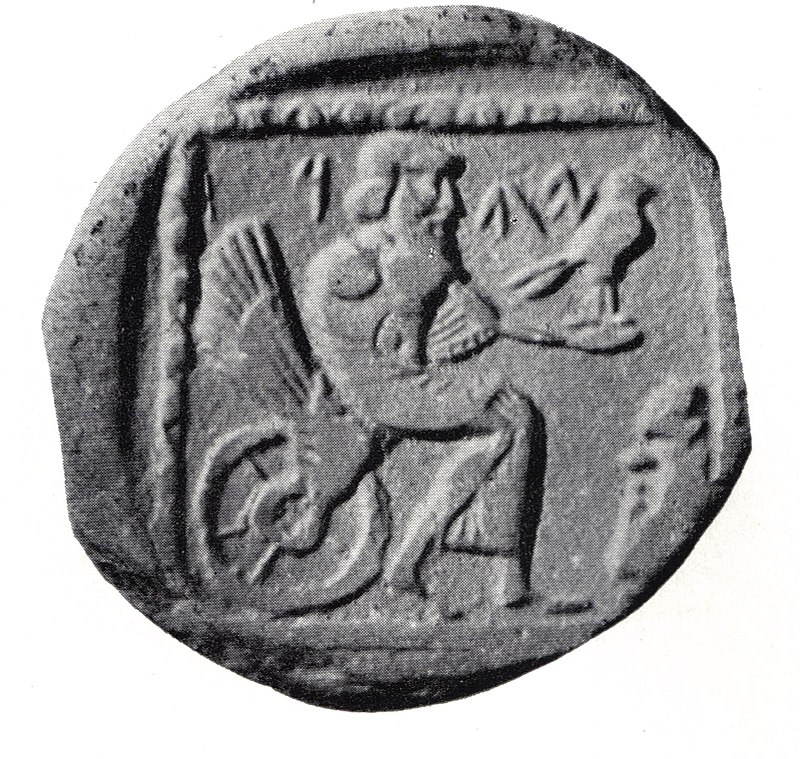
Yahweh[b] was an ancient Semitic deity of weather and war in the southeastern ancient Levant, and the national god of the iron age kingdoms of Israel and Judah.
Although there is no clear consensus regarding the geographical origins of the deity,[9] scholars generally hold that Yahweh was associated with Seir, Edom, Paran, and Teman,[10][improper synthesis?] and later with Canaan. The worship of the deity reaches back to at least the early Iron Age, and likely to the late Bronze Age, if not somewhat earlier.[11]
In the oldest biblical texts, Yahweh possesses attributes that were typically ascribed to deities of weather and war, fructifying the Land of Israel and leading a heavenly army against the enemies of the Israelites.[12] The early Israelites engaged in polytheistic practices that were common across ancient Semitic religion,[13] because the Israelite religion was a derivative of the Canaanite religion and included a variety of deities from it, including El, Asherah, and Baal.[14]
Initially a lesser deity among the Canaanite pantheon,[4][15] Yahweh became conflated with El in later centuries, taking his place as the head of the pantheon in the Israelite religion. El's consort Asherah became associated with Yahweh, and El-linked epithets, such as ʾĒl Šadday (אֵל שַׁדַּי), came to be applied to him alone.[16][17] Characteristics of other deities, such as Asherah and Baal, were also selectively absorbed in conceptions of Yahweh.[18][19][20]
As Israelite Yahwism eventually developed into Judaism and Samaritanism, and eventually transitioned from polytheism to monotheism, the existence of other deities was denied outright, and Yahweh was proclaimed the creator deity and the sole deity to be worthy of worship. During the Second Temple period, Jews began to substitute other Hebrew words, primarily ăḏōnāy (אֲדֹנָי, lit. 'My Lords'), in place of the name Yahweh. By the time of the Jewish–Roman wars—namely following the Roman siege of Jerusalem and the concomitant destruction of the Second Temple in 70 CE—the original pronunciation of the name of the deity was forgotten entirely.[21]
Additionally, Yahweh is invoked in the Aramaic-language Papyrus Amherst 63 from ancient Egypt, and also in Jewish or Jewish-influenced ancient Greek-language Greek Magical Papyri in Roman Egypt dated to the 1st to 5th centuries CE.[22]
Name
The deity's name was written in Paleo-Hebrew as (יהוה in block script), transliterated as YHWH; modern scholarship has reached consensus to transcribe this as "Yahweh".[23] The shortened forms Yeho-, Yahu-, Yah- and Yo- appear in personal names and in phrases such as "Hallelujah!"[24] The sacrality of the name, as well as the Commandment against "taking the name 'in vain' ", led to increasingly strict prohibitions on speaking or writing the term. Rabbinic sources suggest that, by the Second Temple period, the name of God was officially pronounced only once a year by the High Priest on the Day of Atonement.[25] After the destruction of Jerusalem in 70 CE, the original pronunciation of the name was forgotten entirely.[21]
The four-letter form of the name is commonly called the Tetragrammaton.[26]
History
Uriyahu inscription, Khirbet el-Qom, 8th c. BCE, "Blessed is/be Uriyahu by Yahweh"
Periods
Philip King and Lawrence Stager place the history of Yahweh into the following periods:
Late Bronze: 1550–1200 BCE
Iron Age I: 1200–1000 BCE
Iron Age II: 1000–586 BCE
Neo-Babylonian: 586–539 BCE
Persian: 539–332 BCE[27]
Other academic terms often used include First Temple period, from the construction of the Temple in 957 BCE to its destruction in 586 BCE, exilic for the period of the Exile from 586 to 539 BCE (identical with Neo-Babylonian above), post-Exilic for later periods and Second Temple period from the reconstruction of the Temple in 515 BCE until its destruction in 70 CE.
Monday, November 03, 2025 09:46AM
rk