Integer Overflow
Integer Overflow
In computer programming, an integer overflow occurs when an arithmetic operation attempts to create a numeric value that is outside of the range that can be represented with a given number of digits – either higher than the maximum or lower than the minimum representable value.
The most common result of an overflow is that the least significant representable digits of the result are stored; the result is said to wrap around the maximum (i.e. modulo a power of the radix, usually two in modern computers, but sometimes ten or another radix).
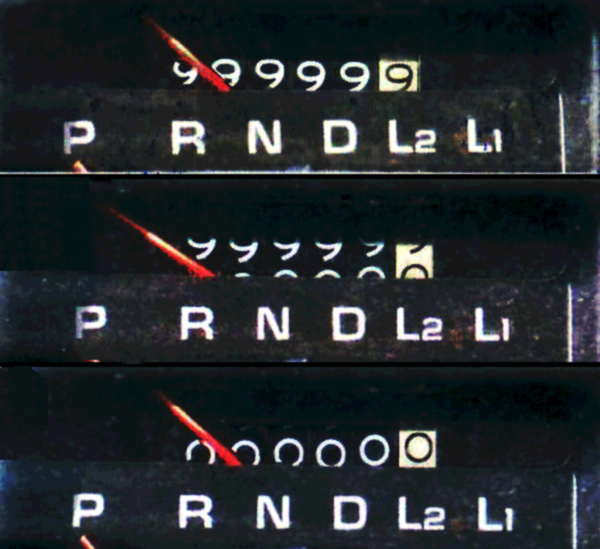
Integer overflow can be demonstrated through an odometer overflowing, a mechanical version of the phenomenon. All digits are set to the maximum 9 and the next increment of the white digit causes a cascade of carry-over additions setting all digits to 0, but there is no higher digit (1,000,000s digit) to change to a 1, so the counter resets to zero.
An overflow condition may give results leading to unintended behavior. In particular, if the possibility has not been anticipated, overflow can compromise a program's reliability and security.