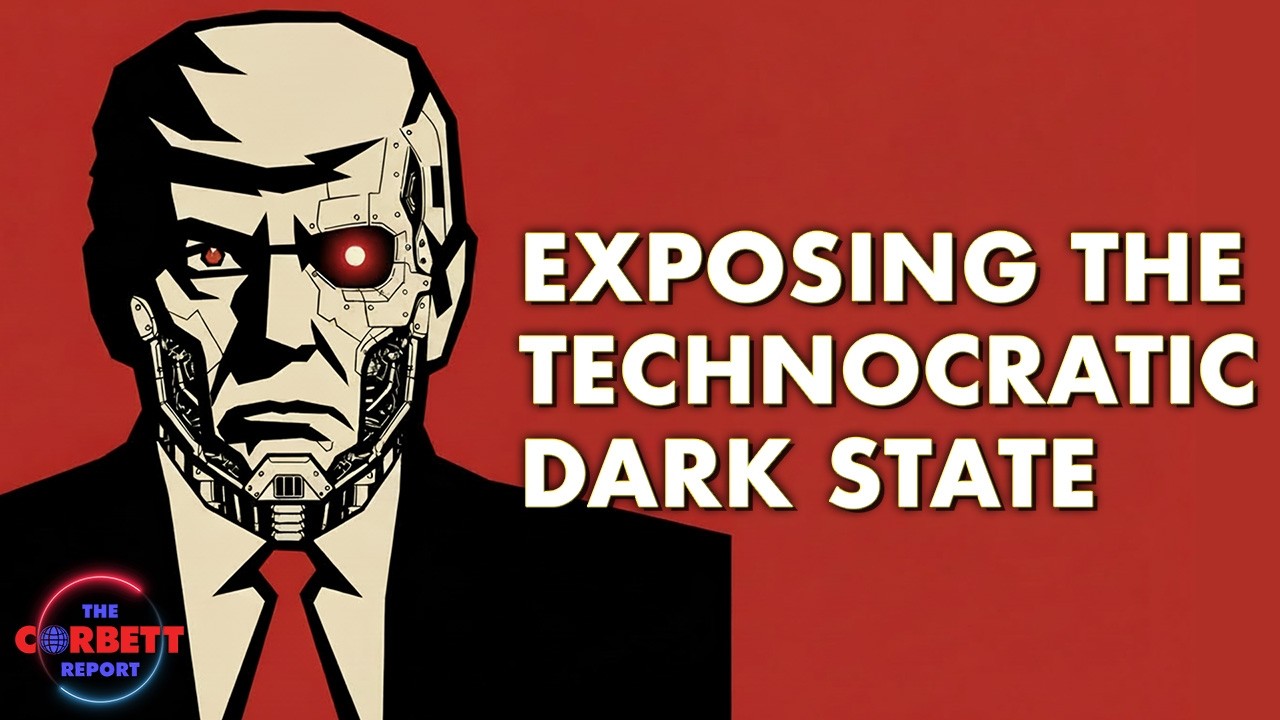
Technocracy
GEMATRIA:
"Government" = 52 (Full Reduction)
"Law and Order" = 52 (Full Reduction)
"Capricorn" = 52 (Full Reduction)
"Technocracy" = 52 (Full Reduction)
"Number Nine" = 52 (Full Reduction)
"Authority" = 52 (Reverse Full Reduction)
"Rebellion" = 52 (Reverse Full Reduction)
"Capricorn" = 56 (Reverse Full Reduction)
"Number Nine" = 56 (Reverse Full Reduction)
"Technocracy" = 56 (Reverse Full Reduction)
"Authority" = 47 (Full Reduction)
"Rebellion" = 47 (Full Reduction
"Number Nine" = 51 (Keypad)
"Technocracy" = 51 (Keypad)
wikipedia:
"Technocracy is a proposed system of government in which the decision-maker or makers are selected on the basis of their expertise in a given area of responsibility, particularly with regard to scientific or technical knowledge. This system explicitly contrasts with representative democracy, the notion that elected representatives should be the primary decision-makers in government,[1] though it does not necessarily imply eliminating elected representatives. Decision-makers are selected on the basis of specialized knowledge and performance, rather than political affiliations, parliamentary skills, or popularity.[2]
The term technocracy was originally used to signify the application of the scientific method to solving social problems. In its most extreme form, technocracy is an entire government running as a technical or engineering problem and is mostly hypothetical. In more practical use, technocracy is any portion of a bureaucracy that is run by technologists. A government in which elected officials appoint experts and professionals to administer individual government functions and recommend legislation can be considered technocratic.[3][4] Some uses of the word refer to a form of meritocracy, where the ablest are in charge, ostensibly without the influence of special interest groups.[5] Critics have suggested that a "technocratic divide" challenges more participatory models of democracy, describing these divides as "efficacy gaps that persist between governing bodies employing technocratic principles and members of the general public aiming to contribute to government decision making".[6]"
via The Evil Twins Of Transhumanism And Technocracy by Patrick Wood:
"The dots between Technocracy and Transhumanism are easily connected once its understood that both sit atop the pseudo-science religion of Scientism, which posits that science is god and scientists and engineers are its priesthood. This article provides the current framework to understand this nexus.
Technocracy is to the transformation of society as Transhumanism is to the transformation of the human condition of people who would live in that society.
Both are underpinned by a religious belief known as Scientism that says that science is a god and that scientists, engineers and technologists are the priesthood that translates findings into practice.
It is a fatal error to equate Scientism with science. True science explores the natural world using the time-tested scientific method of repeated experimentation and validation. By comparison, Scientism is a speculative, metaphysical worldview about the nature and reality of the universe and man’s relation to it.
Scientism refutes traditional religious views, morals and philosophy and instead looks to science as the source for personal and societal moral value."
source: https://www.activistpost.com/2021/07/the-evil-twins-of-transhumanism-and-technocracy.html
“Technocracy is a form of government in which decision-makers are selected based on their expertise in a given area of responsibility, particularly with regard to scientific or technical knowledge¹. Here are some examples of technocracies:
- Soviet Union: The former government of the Soviet Union has been referred to as a technocracy. Soviet leaders like Leonid Brezhnev often had a technical background. In 1986, 89% of Politburo members were engineers¹.
- Chinese Communist Party: Leaders of the Chinese Communist Party used to be mostly professional engineers¹.
- Technocracy Movement: This was a social movement active in the United States and Canada in the 1930s which favored technocracy as a system of government over representative democracy and concomitant partisan politics².
- Nazi Germany and the People’s Republic of China: These are also often cited as examples of technocratic states³.
In a technocratic system, decision-makers are selected based on specialized knowledge and performance in a given domain rather than personal charisma, social networking, political affiliations, parliamentary skills, or popularity¹..”
Source: Conversation with Bing, 11/11/2023
(1) Technocracy - Wikipedia. https://en.wikipedia.org/wiki/Technocracy
(2) Technocracy movement - Wikipedia. https://en.wikipedia.org/wiki/Technocracy_movement
(3) Technocracy 101 – The Good, The Bad, and The Ugly. https://www.technocracy.media/resources/technocracy-101/
(4) Getty. https://media.gettyimages.com/vectors/vector-historical-flag-vector-id1062788804?b=1&k=20&m=1062788804&s=612x612&w=0&h=ypsM1n70eHdlewc7kLGMPzoaITy-GDHjoFZwIA2wJgU=
(5) Getty. https://media.gettyimages.com/photos/technocracy-background-wordcloud-concept-illustration-glowing-picture-id471828066?b=1&k=20&m=471828066&s=612x612&w=0&h=NBX2J38ZFqy1kwJygaYscPnlZqAY9PFdHueoWXF8GLs=
12/16/2025 VIDEO -- “Inside the Technocratic Dark State”: