1. Tony Blair
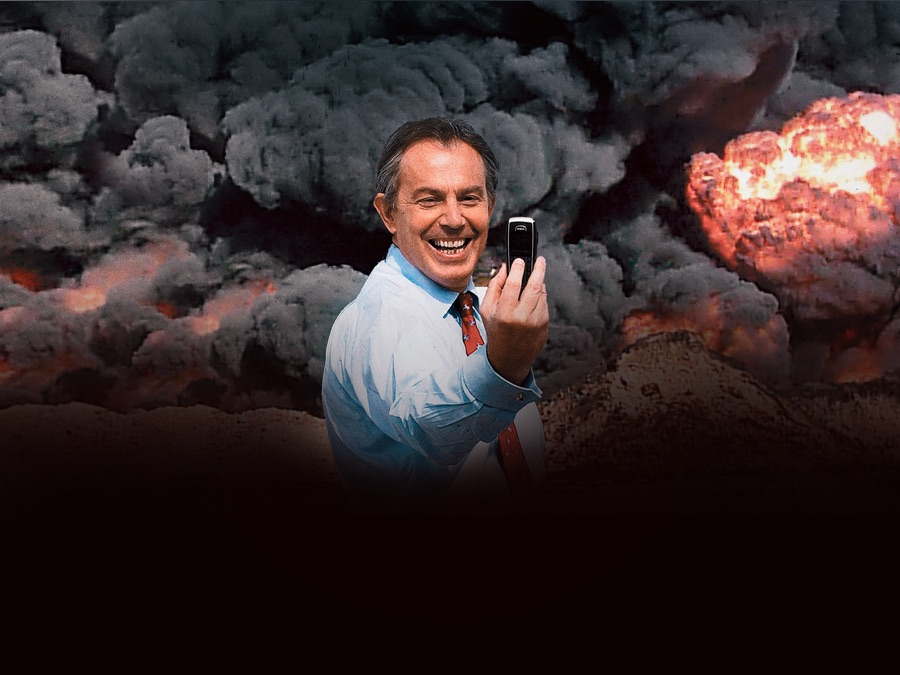
Tony Blair's Policies and Lasting Legacy: A Critical Assessment
Tony Blair's decade-long tenure as Prime Minister (1997-2007) left a complex and controversial legacy, with numerous policies that negatively impacted the British public despite some acknowledged achievements. This analysis examines his government's legislation, the use of spin to manipulate public opinion, and the lasting consequences for Britain.
Major Economic and Financial Policies
Private Finance Initiative (PFI) Expansion
Blair's government significantly expanded the Private Finance Initiative, originally introduced by the Conservative government in 1992 1. This policy allowed private companies to finance public infrastructure projects, particularly in healthcare and education, but stored up massive debts for future generations 2. The PFI deals turned out to be extortionate, with hospitals and schools locked into long-term contracts that cost taxpayers far more than traditional public financing 3.
Economic Mismanagement and Debt Accumulation
Under Blair and Chancellor Gordon Brown, the UK economy became dangerously reliant on private sector debt and financial services 4. Brown's policies led to over £800 billion being added to UK household private debt during his tenure as Chancellor 5. The government's light-touch regulation of the banking sector left Britain highly exposed to the 2008 financial crisis 5. This approach was based on the false premise that boom and bust had been abolished, when in reality it created an unsustainable economic bubble 6.
Housing Crisis
Blair's most overwhelming negative legacy affecting ordinary Britons is the housing crisis 6. Between 1997 and 2007, while average income rose from £15,000 to £20,000, house prices surged from £65,000 to £190,000 6. This meant that relative to wages, housing costs doubled under Blair's leadership, fundamentally damaging home ownership prospects for an entire generation 6. Now in the 2020s few young adults can hope to buy a house without assistance from parents They are unable to step onto the property ladder adding to the misery of a whole generation.
Constitutional and Civil Liberties Violations
Anti-Social Behaviour Orders (ASBOs)
Introduced in 1998, ASBOs were designed to address anti-social behaviour but instead criminalized entire regions and generations of people who were already suffering from previous government policies 7. The orders were controversial because they used civil rather than criminal standards of proof but could lead to imprisonment for breach 8. Critics argued that ASBOs targeted the symptoms of socio-economic inequality rather than addressing underlying causes 3.
Terrorism Legislation and Detention Powers
Blair's government introduced increasingly draconian terrorism laws that eroded civil liberties 9. The Terrorism Bill proposed 90-day detention without charge for terror suspects, which was ultimately defeated in Parliament by a majority of just 14 votes 9. This represented the first major defeat of Blair's premiership and highlighted growing concerns about his authoritarian tendencies 9.
Control Orders
The Prevention of Terrorism Act 2005 introduced Control Orders, which allowed the government to impose severe restrictions on individuals suspected of terrorism-related activities without trial 10. These orders could include 18-hour daily curfews, geographic restrictions, and communication limitations 11. The regime was criticized as incompatible with human rights, effectively amounting to house arrest without proper judicial oversight 10.
Identity Cards Scheme Blunder
Blair's government introduced legislation for compulsory biometric identity cards at an estimated cost of £93 per person 12. The scheme was widely opposed as an expensive intrusion into civil liberties that would have cost £584 million annually to operate 12. The program was ultimately scrapped by the subsequent coalition government, representing a significant waste of public resources 13.
Education and Public Service Reforms
Tuition Fees Introduction
Blair's government introduced university tuition fees and later trebled them to £3,000 per year 14. This policy fundamentally changed higher education from a public good to a market commodity, burdening students with debt and potentially deterring working-class participation in higher education 14.
Academy Schools Program
The controversial academy program, championed by Blair, was criticized for creating a two-tier education system 15. Early academies showed poor results, with Unity City Academy in Middlesbrough becoming the first to fail Ofsted inspection despite its £22 million budget 15. Critics argued the program diverted resources from existing schools while failing to improve educational outcomes 15.
NHS Foundation Trusts
Blair's NHS foundation trust reforms were opposed by many within his own party as potentially creating inequality in healthcare provision 16. The policy was seen as introducing market mechanisms into the NHS that could undermine its universal principles 16.
Immigration and Social Policy
Mass Immigration Policy
Blair's government actively encouraged mass primary immigration for the first time in modern British history 17. This policy was implemented without adequate planning for infrastructure, housing, or integration 4. The Office for National Statistics estimated that by 2035, the UK population would reach 73.2 million, an increase of almost nine million, raising serious questions about housing and resource allocation 4.
Human Rights Act Misuse
Parliamentary committees criticised Blair's government for using the Human Rights Act as a "convenient scapegoat" for administrative failings 18. Senior ministers, including Blair, made unfounded claims about the Act's effects and failed to correct misconceptions when their assertions were proven wrong 18.
The Use of Spin to Manipulate Public Opinion
Blair's government became synonymous with the systematic use of "spin" - the manipulation of information to present a biased interpretation of events 19. This was orchestrated primarily by Alastair Campbell, Blair's Director of Communications, who was described as "ruthless in his management of the media in favour of Blair's message" 20.
Key Spin Techniques
Timing and Presentation
The Blair government perfected the art of timing announcements to maximize favourable coverage while burying negative news 19. They employed careful selection of words and phrases designed to invoke specific responses, strategic use of sound bites, and selective presentation of facts 20.
The Announcement as Reality
Blair himself admitted that his government had been "too preoccupied with spin and presentation" 21. He acknowledged that in opposition, there was "a tendency to believe that the announcement is the reality" and that this approach initially continued in government 21. Blair later admitted that "for Government, the announcement is merely the intention — the reality is that you have to deliver on the ground" 22.
Media Manipulation
Blair's government maintained an "army of spin doctors" who systematically manipulated media coverage 23. Campbell and his team were accused of "burying bad news," creating "dodgy dossiers," and spreading "manipulation and misinformation" 23. The government's approach was so controversial that it became a central criticism of the Blair era 23.
The Iraq War and Information Manipulation
Tony Blair drove Britain to a disastrous and unnecessary war in Iraq, ignoring clear warnings and with “wholly inadequate” planning for the bloody consequences, the Chilcot inquiry concluded. In a devastating series of verdicts, the inquiry ruled that the 2003 invasion to topple Saddam Hussein failed in all its key objectives. In Iraq, there were 189,000 deaths caused directly by the war. An estimated 600,000 Iraqis died from other hardships, such as disease, in the chaos that followed. Tony Blair’s ‘I’d do it again’ attitude shows a complete lack of remorse.
There are substantial grounds for considering Tony Blair politically and morally responsible for the catastrophic consequences of the Iraq War, but whether this constitutes legal complicity in "mass murder" is a matter of intense debate and has not been established in a court of law.
The Dodgy Dossier
The most damaging example of Blair's spin operation was the September 2002 dossier on Iraq's weapons of mass destruction 24. The dossier was "sexed up" by Campbell and his team to make the case for war more compelling 25. The infamous "45-minute claim" - that Iraq could deploy biological weapons within 45 minutes - was given undue prominence despite referring only to battlefield munitions, not long-range missiles 26.
Deliberate Deception
Intelligence experts later revealed that whole sections of the February 2003 "Iraq Dossier" were plagiarized from academic sources without attribution 24. The dossier became known as the "Dodgy Dossier" and severely undermined the government's credibility 24. Blair later admitted the dossier was a mistake and that he would now "take government out of it" 26.
Media Warfare
Blair's government launched a sustained attack on the BBC and journalist Andrew Gilligan for reporting that the government had "sexed up" intelligence 27. This campaign culminated in the tragic death of government scientist Dr. David Kelly, who was identified as Gilligan's source 27.
Moral Responsibility: The scale of death, destruction, and displacement caused by the war, combined with the misrepresentation of intelligence and failure to plan for the aftermath, has led many to argue that Blair bears significant moral responsibility for the suffering that ensued.
Public and Scholarly Opinion: There is widespread public and academic consensus that Blair's actions were reckless and resulted in enormous human suffering, with calls for him to be held accountable, including campaigns to strip him of honors and demands for legal action.
Blair's Lasting Legacy
Constitutional Damage
Devolution Problems
Blair's "asymmetrical devolution" to Scotland and Wales, without corresponding arrangements for England, created serious constitutional imbalances 4. This policy put Scotland on what Tam Dalyell called "a motorway to independence with no exits," contributing to ongoing constitutional instability 4.
Institutional Weakening
Blair's approach to constitutional reform was described as "ahistorical" with his attempts to effectively abolish the office of Lord Chancellor demonstrating a lack of understanding of constitutional principles 4. His reforms were implemented without proper consideration of their long-term consequences 4.
Economic Legacy
Structural Economic Problems
Blair's government failed to address Britain's fundamental economic imbalances, allowing the economy to become increasingly dependent on financial services and consumer debt 6. This approach left Britain badly exposed to the 2008 financial crisis and created lasting economic vulnerabilities 5.
Housing Crisis
The housing crisis that began under Blair continues to affect millions of Britons daily 6. The doubling of house prices relative to wages during his tenure created a permanent affordability crisis that subsequent governments have failed to resolve 6.
Political and Social Division
Trust in Politics
Blair's government "destroyed trust in politics through spin and massive amounts of dishonesty" 3. The culture of spin and media manipulation pioneered by Blair's team fundamentally altered the relationship between government and citizens 3.