triceratops
Triceratops: An Overview
Triceratops is a genus of herbivorous dinosaurs that lived during the Late Cretaceous period, approximately 68 to 66 million years ago. It was one of the last non-avian dinosaurs to live before the mass extinction event that wiped out the dinosaurs.
Physical Characteristics
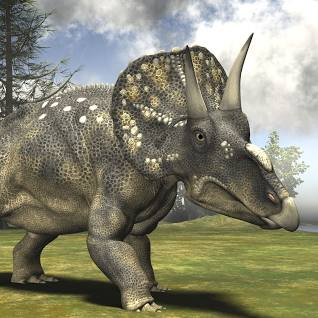
Triceratops is easily recognizable due to its distinctive frill and three horns on its face. The frill was made of solid bone and was used for protection and display. The two longer horns above the eyes were about 3 feet long in some species, while the shorter horn on the nose was typically less than a foot long.
Triceratops was a large dinosaur, with the largest species estimated to have a length of up to 30 feet and a weight of up to 12 tons. Its body was heavily built, with four sturdy legs and a broad, powerful tail. Its head was also large and powerful, with a beak-like mouth that was used to crop vegetation.
Habitat and Diet
Triceratops lived in what is now North America, during a time when the continent was split into two landmasses by a shallow sea. It likely inhabited floodplain and forest habitats, where it would have had access to a variety of vegetation.
As a herbivore, Triceratops primarily ate plants. Its diet likely consisted of low-growing ferns, cycads, conifers, and other vegetation that was abundant in its habitat. Triceratops had a unique dental arrangement that allowed it to slice through tough plant material. Its teeth were arranged in a dental battery, where several rows of teeth were constantly growing and being replaced.
Behavior and Reproduction
Triceratops likely lived in herds, which would have provided protection against predators such as Tyrannosaurus rex. It had a relatively small brain compared to its body size, but it likely had a good sense of smell and vision.
Little is known about Triceratops reproduction, but it is believed to have laid eggs. Fossilized nests have been found that may belong to Triceratops, although it is difficult to confirm this with certainty.
Discovery and Naming
The first fossils of Triceratops were discovered in 1887 by two American paleontologists, Othniel Charles Marsh and John Bell Hatcher. The name Triceratops means "three-horned face" in Greek, and it was named for the three horns on its face.
Since its discovery, many fossils of Triceratops have been unearthed, providing scientists with a wealth of information about this fascinating dinosaur. However, there is still much to learn about Triceratops and its relatives, and new discoveries are constantly being made.
Conclusion
In summary, Triceratops was a large, herbivorous dinosaur that lived during the Late Cretaceous period in what is now North America. It is easily recognizable due to its frill and three horns on its face, and it likely lived in herds for protection. Triceratops primarily ate plants and had a unique dental arrangement that allowed it to slice through tough vegetation. While much is known about Triceratops, there is still much to learn about this fascinating dinosaur and its relatives.