Cultural considerations
p. 15
At Giza, the factors determining the differences and
similarities seen between the funerary structures,
including the three royal pyramids, are many and varied.
The reasons for the particular choice of locations for each pyramid, and the relative positions of them, have
remained a matter of enthusiastic speculation for many
centuries. It is only in the last few years that serious and
systematic efforts have been made to explain the
decisions taken by the Egyptian rulers and architects in a
more academic way, and with reference to their culture,
religion, technologies and traditions [Figure 16]. Aspects
of landscape archaeology have also become prominent
recently, and can be applied usefully at Giza, where
practical concerns due to the terrain available were
certainly influential, as will be discussed.
Nevertheless, ritual, symbolism and tradition also played
a major role in determining pyramid location choices on
the site. In fact, as one studies the factors that were
considered, it becomes apparent that many different
issues were of importance, and that the symbolic and
practical concerns relating to the site were all interrelated.
This sort of multi-layered symbolism is something that is
seen widely in early Egyptian material culture and
iconography, and in the culture as a whole. It is possible
that this multi-layering of ideas was in part a hangover
from pre- and proto-literate Egyptian society. In a
community without paper or records, preservation and
communication of information would have been carried
out through people’s living memories, and in conjunction
with the changing ritualised landscape and traditional
materials and myths, rather than as issues recorded on
paper in isolation from a wider context.
The way in which we subdivide, categorise and record
knowledge systematically today seems quite normal, but
in the past it may have been more usual to integrate
important knowledge with reference to existing
traditional symbolism. As a result of this older method of
information communication, older traditions heavily
influenced the iconography and theology of the new
dynastic Egypt, despite the importance of the new
technical developments and growing literacy.
p. 16
It is well known that the multi-layering of different ideas
enables them to be memorised more easily, so that it is
possible that the complexity of symbolism observed in
the Old Kingdom iconography was a characteristic of
pre-literate society.
The intertwining of practical and religious concerns is
one of the reasons that the Giza site, and other sites of
Old Kingdom Egypt, are so fascinating to study, and
difficult to interpret. This may also be the reason why
people today are so ready and able to project their own
technical and religious ideas back onto the site, adding
yet more layers to the multi-layered ideology associated
with this ancient project. Nevertheless, we now have to
hand enough evidence and data to finally synthesise the
architectural, archaeological, cultural and textual
evidence into one historical narrative.
The royal cubit was an integral part of the early state
development that assisted the expansion of industrial
scale agriculture, the growth of the administrative class of scribes [Figure 16], surveyors, tax collectors, overseers of surplus, and the evolution of monumental architecture.
The architecture that it enabled symbolically legitimised
the centralised pharaonic rule that kept the country
unified, and so underpinned the stability of the society.
Standardised measurement became part of the
monumental, architectural, pharaonic preservation
system.
As noted, there is no record of when or why the
standardised measurement system that was the royal cubit was subdivided into its curious 7 parts, but there are several natural characteristic of this setup that strongly suggest that the reason was linked to the cultural context in which it first developed, and to facilitating practical problem solving.
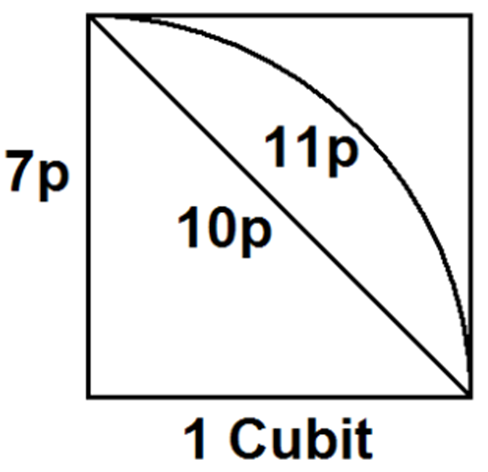
Figure 17 Basis for the 7-palm cubit: diagonals and
circles made easy
The important diagram above shows how the 7 palm
cubit is particularly well suited to measuring out square
diagonals as well as circular circumferences. Neither of
the approximations in the middle of the square is exact,
but the diagonal is very close to being exactly 10 palms
(only 1.02 % from being the true length of the diagonal),
whilst the quarter-circumference is almost exactly 11
palms (only a tiny 0.04% in error from being the true
length of the quarter circumference). This means that the
circumference of a full circle, swept out by a 7 palm
cubit, is very precisely 44 palms in length.
In fact, a 7-part subdivision of the cubit is the only
number of subdivisions (i.e. into 4 or 5 or 8 or 9 etc) of a
rule that can offer approximations of this total accuracy,
until we reach 14 subdivisions, which is simply the 7
doubled up again.
From textual evidence we know that the Egyptians were
indeed occupied with geometry related to square and
rectangular diagonals, and measuring square areas and
circular structures, so it is quite plausible that the 7 palm
subdivision was a conscious and deliberate choice based
on the useful approximations that fall naturally to this
setup. Calculations involving circular granary capacities
and cuboid block volumes, for example, are known from
the mathematic papyri.
Squares and square roots were certainly calculated by the
Egyptians by the time the Rhind Papyrus was written
(Gillings 1982: 214), and the diagonal of a square was
used so often that it was even allocated its own name
which was the ‘double remen’, the remen being the half
diagonal (Gillings 1982: 208).
From the simple diagram above [Figure 17], we can see
that the quarter circumference of a 7 palm cubit is almost
exactly 11 palms, when a right angle is swept out, and so
a full circumference is 44 palms. Given the widespread
use of the cubit and its application to geometric problems
including circular calculations, it seems highly likely that
the 7 palms were closely related to facilitating
approximations of circular circumferences and square
diagonals.
It is also interesting to note at this point the circular
symbol of the god Re which is almost always assigned to
the first digit of the royal cubits [Figure 18]. This was the
case when the symbols for the pantheon of Egyptian gods
were included alongside the digits on the rules as ‘finger
protectors’. The clear association of this circular symbol
for the major Egyptian solar god certainly fits with a
royal cubit system that originated with respect to circles
as well as linear measurement.
When we look at the pharaonic funerary architecture in
the following chapter, we will also find clear evidence of
circular proportions being applied into rectilinear
buildings. Not only that, but the relevant numerical
multiples of royal cubits associated with circular forms,
44, 22, 7 and 11, are measurable and observable within
the structures, to an extremely high degree of accuracy,
time and time again.
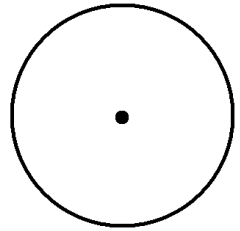
Figure 18 Symbol of the sun god Re from digit 1 of the
royal cubit
It was these characteristics of circular proportions and
their arithmetic relationships, first found in the Great
Pyramid, that first stimulated serious interest in the
geometry of the pharaonic monuments.
Nevertheless, it was not until 1883 when the first accurate
theodolite survey of the plateau was carried out, by the
grandfather of Egyptology, William Matthew Flinders
Petrie, that the ‘true facts of the matter’ started to become
apparent.
The next chapter outlines the facts of the matter, as they
have been uncovered from pharaonic funerary
architecture.