YANKEE
The term Yankee and its contracted form Yank have several interrelated meanings, all referring to people from the United States.
Their various meanings depend on the context, and may refer to New Englanders, the Northeastern United States, the Northern United States, or to Americans in general.[2][3][4]
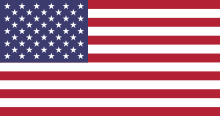
Outside the United States, Yank is used informally to refer to an American person or thing.
It has been especially popular in the United Kingdom, Ireland, South Africa, Australia, and New Zealand where it may be used variously with uncomplimentary overtone, endearingly, or cordially.[5][6]
In the Southern United States, Yankee is a derisive term which refers to all Northerners, and during the American Civil War it was applied by Confederates to soldiers of the Union army in general.
Elsewhere in the United States, it largely refers to people from the Northeastern states, but especially those with New England cultural ties, such as descendants of colonial New England settlers, wherever they live.[7]
Its sense is sometimes more cultural than geographical, emphasizing the Calvinist Puritan Christian beliefs and traditions of the Congregationalists who brought their culture when they settled outside New England.
The speech dialect of Eastern New England English is called "Yankee" or "Yankee dialect".[8]
Etymology and historical usage of the term
New England origin
[ ]

Map of New England
British General James Wolfe made the earliest recorded use of the word "Yankee" in 1758 when he referred to the New England soldiers under his command. "I can afford you two companies of Yankees, and the more, because they are better for ranging and scouting than either work or vigilance".[9]
Later British use of the word was in a derogatory manner, as seen in a cartoon published in 1775 ridiculing "Yankee" soldiers.[9]
New Englanders themselves employed the word in a neutral sense; the "Pennamite–Yankee War", for example, was a series of clashes in 1769 over land titles in Pennsylvania between settlers from Connecticut Colony and "Pennamite" settlers from Pennsylvania.
The meaning of Yankee has varied over time. In the 18th century, it referred to residents of New England descended from the original English settlers of the region.
Mark Twain used the word in this sense the following century in his 1889 novel A Connecticut Yankee in King Arthur's Court.
As early as the 1770s, British people applied the term to any person from the United States.
In the 19th century, Americans in the southern United States employed the word in reference to Americans from the northern United States, though not to recent immigrants from Europe.
Thus, a visitor to Richmond, Virginia commented in 1818,
"The enterprising people are mostly strangers; Scots, Irish, and especially New England men, or Yankees, as they are called".[10]
Historically, it has also been used to distinguish American-born Protestants from later immigrants, such as Catholics of Irish descent.[11][12]
Rejected etymologies
Many etymologies have been suggested for the word Yankee, but modern linguists generally reject theories which suggest that it originated in any Indian languages.[13] This includes a theory put forth by a British officer in 1789, who said that it was derived from the Cherokee word eankke meaning "coward"—despite the fact that no such word existed in the Cherokee language.[13] Another theory surmised that the word was borrowed from the Wyandot[18] pronunciation of the French l'anglais, meaning "the Englishman" or "the English language", which was sounded as Y'an-gee.[13][19]
American musicologist Oscar Sonneck debunked a romanticized false etymology in his 1909 work Report on "The Star-Spangled Banner", "Hail Columbia", "America", "Yankee Doodle".
He cited a popular theory which claimed that the word came from a tribe who called themselves Yankoos, said to mean "invincible". The story claimed that New Englanders had defeated this tribe after a bloody battle, and the remaining Yankoo Indians transferred their name to the victors—who were "agreeable to the Indian custom". Sonneck notes that multiple American writers since 1775 had repeated this story as if it were fact, despite what he perceived to be holes in it. It had never been the tradition of any Indian tribe to transfer their name to other peoples, according to Sonneck, nor had any settlers ever adopted an Indian name to describe themselves.[20] Sonneck concludes by pointing out that there was never a tribe called the Yankoos.[21]