PUBLIC
relating to or involving people in general, rather than being limited to a particular group of people:
Public opinion (= the opinions of most people) has turned against him.
Is it really in the public interest (= useful to people) to publish this information?
We need to increase public awareness of the disease.
Peaceful demonstrations that do not cause a public nuisance (= do not harm other people) are a fundamental right in any truly democratic country.
The government has had to bow to public pressure on the issue.
The information only became public after his death.
The results will not be made public (= told to everyone) until tomorrow.
https://publiclawproject.org.uk/what-is-public-law/
Public bodies, such as central and local government, have to obey the law. The type of law governing the conduct of public bodies is known as ‘public law’. Public law should ensure that public bodies act lawfully, rationally, fairly, and compatibly with the human rights of those affected by their actions.
Where a public body acts unlawfully, there are a number of ways that those affected can challenge that behaviour or decision. These include:
- Complaining using public bodies’ complaints procedures or Ombudsmen
- Exercising rights of appeal to a tribunal (if such rights exist in relation to the particular decision to be challenged, such as in welfare benefits cases)
- Asking a public body to review its decision
- Through a process called judicial review
Judicial review is a particularly important aspect of the constitutional settlement in the UK. It is a process, a court case, where a judge or judges decide whether a public body has behaved lawfully. It performs an essential task in that it allows the courts and judiciary oversight of the government. The diagram below shows the ‘separation of powers’ model and the relationship between Parliament, the courts and judiciary, and the executive.
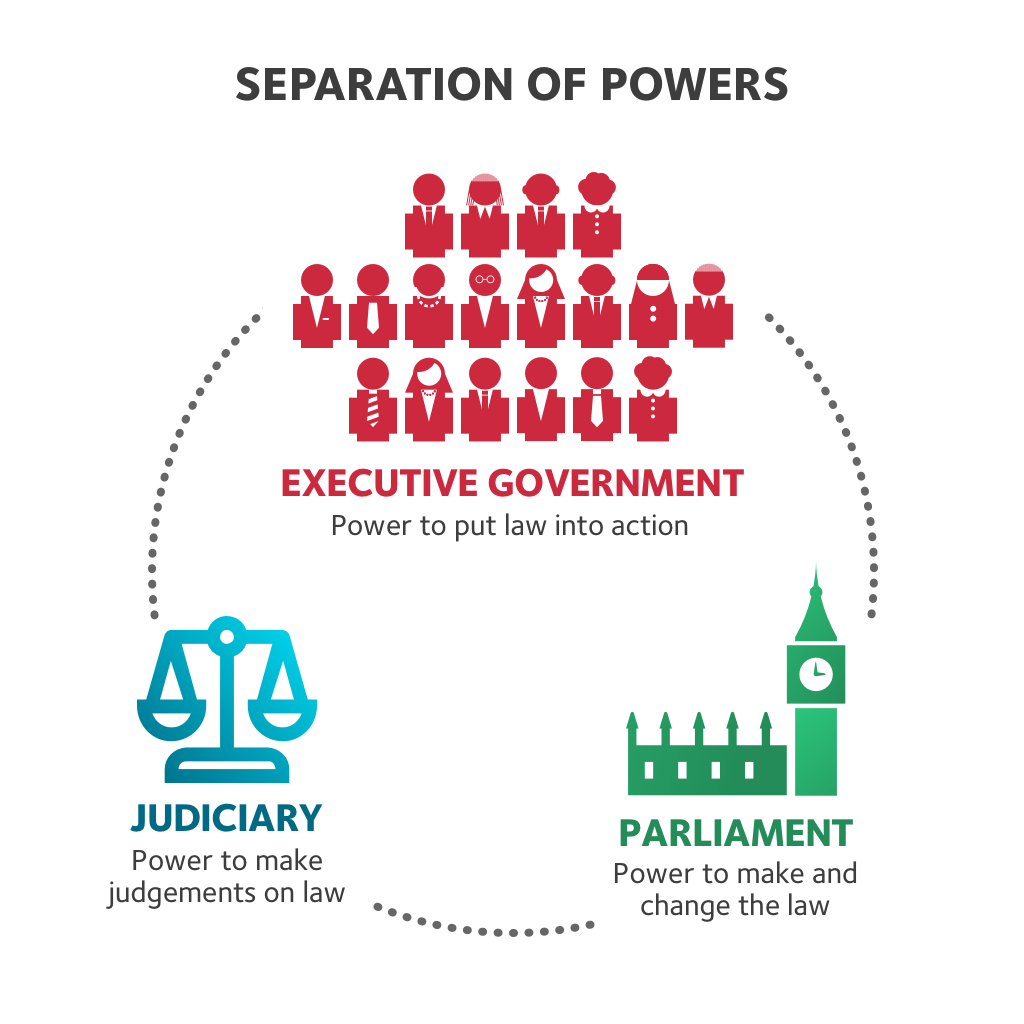
This constitutional model exists to prevent the abuse of power. For instance, if the executive implements a Government policy that turns out to be unlawful the courts can, if a case is brought to them showing that the policy is unlawful, give a judgment holding the policy unlawful. We explain more about what the courts can do in our guides to public law and judicial review. The important thing is that government power cannot be exercised in the UK without the proper checks and balances in place.
Public Law Project’s charitable aims are, broadly, to ensure that the courts, and therefore public law remedies, are accessible to people affected by public bodies’ actions, and inaction.
The guides to public lawpage provide links to our more in depth guides to public law and processes such as judicial review, complaints and tribunals.
You can also read all our guides in the resources section of the website.