AZTEC
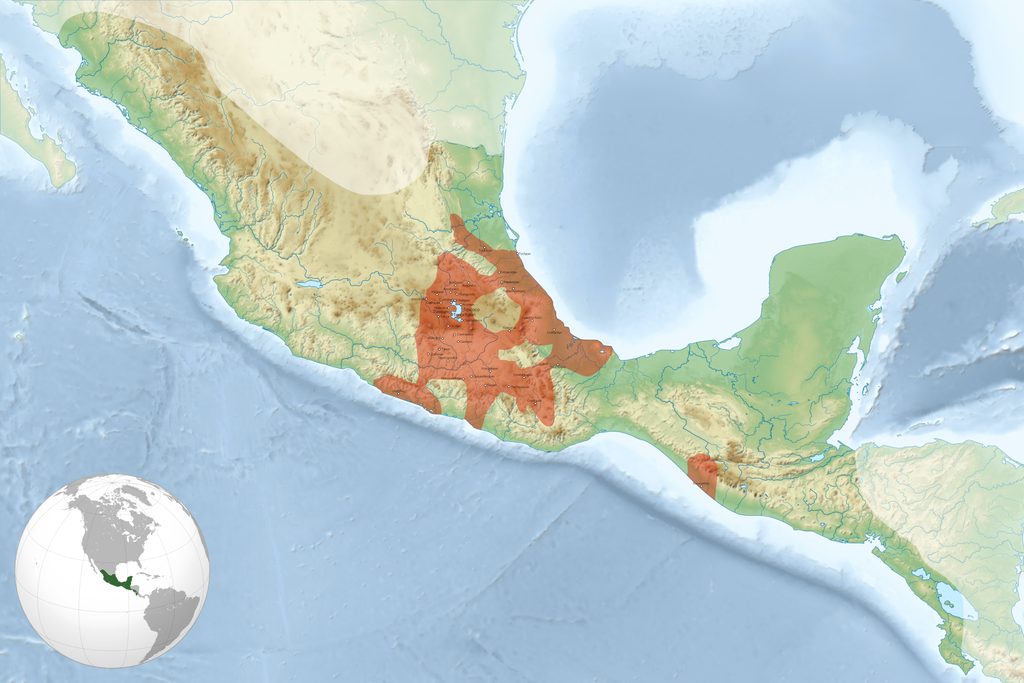
The Aztec Empire in 1519 within Mesoamerica
The Nahuatl words aztēcatl (Nahuatl pronunciation: [asˈteːkat͡ɬ], singular)[10] and aztēcah (Nahuatl pronunciation: [asˈteːkaʔ], plural)[10] mean "people from Aztlan",[11] a mythical place of origin for several ethnic groups in central Mexico. The term was not used as an endonym by Aztecs themselves, but it is found in the different migration accounts of the Mexica, where it describes the different tribes who left Aztlan together. In one account of the journey from Aztlan, Huitzilopochtli, the tutelary deity of the Mexica tribe, tells his followers on the journey that "now, no longer is your name Azteca, you are now Mexitin [Mexica]".[12]
In today's usage, the term "Aztec" often refers exclusively to the Mexica people of Tenochtitlan (now the location of Mexico City), situated on an island in Lake Texcoco, who referred to themselves as Mēxihcah (Nahuatl pronunciation: [meːˈʃiʔkaʔ], a tribal designation that included the Tlatelolco), Tenochcah (Nahuatl pronunciation: [teˈnot͡ʃkaʔ], referring only to the Mexica of Tenochtitlan, excluding Tlatelolco) or Cōlhuah (Nahuatl pronunciation: [ˈkoːlwaʔ], referring to their royal genealogy tying them to Culhuacan).[13][14][nb ^1][nb ^2]
Sometimes the term also includes the inhabitants of Tenochtitlan's two principal allied city-states, the Acolhuas of Texcoco and the Tepanecs of Tlacopan, who together with the Mexica formed the Aztec Triple Alliance that controlled what is often known as the "Aztec Empire".
The usage of the term "Aztec" in describing the empire centered in Tenochtitlan, has been criticized by Robert H. Barlow who preferred the term "Culhua-Mexica",[13][15] and by Pedro Carrasco who prefers the term "Tenochca empire".[16]
Carrasco writes about the term "Aztec" that "it is of no use for understanding the ethnic complexity of ancient Mexico and for identifying the dominant element in the political entity we are studying".[16]