Vernacular
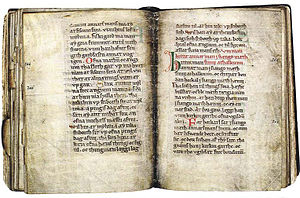
The oldest known vernacular manuscript in Scanian (Danish, c. 1250). It deals with Scanian and Scanian Ecclesiastical Law.
Etymology
First usage of the word "vernacular" is not recent. In 1688, James Howell wrote:
Concerning Italy, doubtless there were divers before the Latin did spread all over that Country; the Calabrian, and Apulian spoke Greek, whereof some Relicks are to be found to this day; but it was an adventitious, no Mother-Language to them: 'tis confess'd that Latium it self, and all the Territories about Rome, had the Latin for its maternal and common first vernacular Tongue; but Tuscany and Liguria had others quite discrepant, viz. the Hetruscane and Mesapian, whereof though there be some Records yet extant; yet there are none alive that can understand them: The Oscan, the Sabin and Tusculan, are thought to be but Dialects to these.
Here, vernacular, mother language and dialect are already in use in a modern sense.[6]
According to Merriam-Webster,[7] "vernacular" was brought into the English language as early as 1601 from the Latin vernaculus ("native") which had been in figurative use in Classical Latin as "national" and "domestic", having originally been derived from verna, a slave born in the house rather than abroad.
The figurative meaning was broadened from the diminutive extended words vernaculus, vernacula. Varro, the classical Latin grammarian, used the term vocabula vernacula, "termes de la langue nationale" or "vocabulary of the national language" as opposed to foreign words.[8]