Caveolae

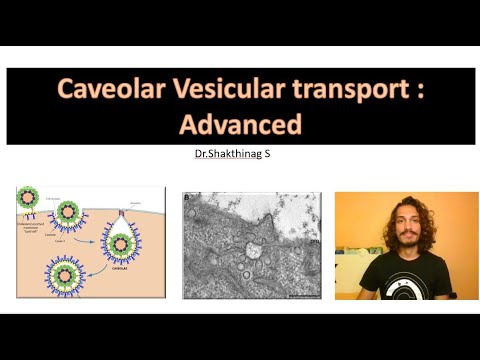
Caveolae, Latin for "little caves," are fascinating flask-shaped invaginations of the plasma membrane found in many vertebrate cells. They aren't just passive dents; they're dynamic microdomains with essential roles in diverse cellular processes.
Structure and Composition:
- Caveolae are about 50-80 nm in diameter and are enriched in cholesterol and specific proteins called caveolins and cavins.
- Caveolins and cavins form a "coat" on the cytoplasmic side of caveolae, stabilizing their structure and regulating their functions.
Functions:
- Caveolae act as platforms for various cellular activities, including:
- Signal transduction: They concentrate signaling molecules and receptors, facilitating signal relay from outside the cell to the interior. This plays a role in processes like cell growth, differentiation, and migration.
- Endocytosis: Caveolae mediate the uptake of certain molecules (lipids, cholesterol, toxins) from the extracellular space into the cell.
- Lipid trafficking: They participate in the transport of lipids within the cell and across the plasma membrane.
- Pathogen entry: Unfortunately, some viruses and bacteria can hijack caveolae to gain entry into host cells.
Diversity of Caveolae:
- Caveolae are not all created equal. They exhibit different properties and functions depending on the cell type and tissue.
- For example, caveolae in endothelial cells (lining blood vessels) are crucial for regulating blood flow and vascularization, while those in adipocytes (fat cells) play a role in lipid metabolism.
Significance in Health:
- Dysfunctions in caveolae can contribute to various human diseases, including:
- Cardiovascular diseases: Abnormal caveolae function in endothelial cells can affect blood vessel function and contribute to atherosclerosis.
- Muscular dystrophies: Mutations in caveolin genes can lead to muscle weakness and wasting.
- Cancer: Caveolae can be involved in tumor progression and metastasis.
Research and Applications:
- Understanding caveolae function holds promise for developing new therapies for various diseases.
- Researchers are exploring ways to target caveolae pathways for the treatment of cardiovascular diseases, muscle disorders, and even cancer.
Those subdomains in the plasma membrane related to rafts and termed ‘caveolae’ lack glycosyl phosphatidylinositol-anchored proteins and are stabilized by particular membrane-spanning scaffolding proteins, the caveolins, a family of three palmitoylated hairpin-like proteins of which caveolin-1, a 24 kDa integral membrane protein with three palmitoylation sites at the C-terminal domain, is the main structural component. These aggregate into large complexes and organize flask-shaped invaginations 50 to 100 nm in diameter in membranes. In addition to the caveolins, caveolae are known to contain some specific signalling proteins, including Ras proteins, G-proteins and growth factor receptors, not present in other raft microdomains. The presence of caveolins rather than invaginations is now considered the defining property of caveolae.
Other than the content of glycosyl phosphatidylinositol, the lipid composition of caveolae is similar to that of rafts in general in that they contain appreciable amounts of sphingolipids and cholesterol. However, the gangliosides GM1 and to some extent GM3 appear to be concentrated in caveolae. One hypothesis that cannot as yet be tested is that the neck region of caveolae with a strong positive curvature may be highly enriched in glycosphingolipids, which may be largely absent from their lumen. There is evidence that the caveolins interact directly with glycosphingolipids especially, and that the latter may have regulatory effects in the signalling functions of caveolae. It has been argued that caveolae best meet the accepted definition of a raft and should be used as a provisional standard against which other proposed raft structures should be judged, and it is believed that there may be different classes of caveolae with different compositions, physical forms and metabolic functions.
A general picture has emerged of caveolin-1 and sphingolipids forming the scaffold for an integrated network of interactions, which contribute to the regulation of cellular functions via their influence upon receptor molecules in the plasma membrane. Caveolae appear to have a role in controlling the level of free cholesterol in cells, and thence may affect signalling processes. They are especially abundant in endothelial cells, adipocytes, smooth muscle cells and fibroblasts, but have not been found in lymphocytes or mature neurons. In adipocytes, they may regulate the flux of fatty acids across the plasma membrane. Also in adipocytes, insulin is the main hormone that affects metabolism, and the receptor at the plasma membrane is located in caveolae with possible implications for diabetes, obesity and other metabolic disorders. In addition, caveolae function as an important route by which nutrients, such as folate and glucose, are able to cross the plasma membrane, although the mechanism is still obscure.