Fourleaf Yam
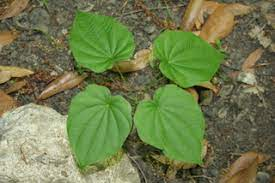
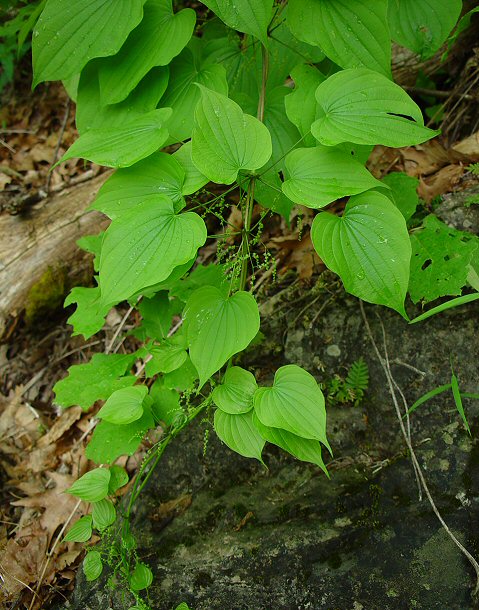
The Fourleaf Yam, scientifically known as Dioscorea quaternata, is a fascinating plant species belonging to the Dioscoreaceae family. This perennial vine is native to North America and is particularly prevalent in the eastern United States. It is known for its distinctive four-lobed leaves and its historical significance as a food source for indigenous peoples.
Botanical Characteristics
Leaves and Stems
The Fourleaf Yam is easily recognizable by its unique foliage. Each leaf is divided into four lobes, which is a distinguishing feature among yams. The leaves are arranged in an opposite pattern along the vine, which can grow to considerable lengths, often climbing over other vegetation for support. The stems are slender and twining, allowing the plant to navigate through its environment effectively.
Flowers and Fruits
The plant produces small, inconspicuous flowers that are typically greenish-yellow. These flowers are dioecious, meaning that individual plants are either male or female. The fruit of the Fourleaf Yam is a capsule containing winged seeds, which are dispersed by the wind.
Tubers
One of the most notable features of the Fourleaf Yam is its tubers. These underground storage organs are rich in starch and have been used historically as a food source. The tubers are typically elongated and can vary in size. They are covered in a rough, brown skin that protects the nutritious flesh inside.
Habitat and Distribution
The Fourleaf Yam thrives in a variety of habitats, including forests, woodlands, and thickets. It prefers well-drained soils and can often be found in areas with rich, loamy soil. The plant is adaptable and can tolerate a range of light conditions, from full sun to partial shade.
Geographically, Dioscorea quaternata is found throughout the eastern United States, from New York and Pennsylvania in the north, down to Florida and Texas in the south. It is also present in parts of the Midwest, including Ohio and Indiana.
Ecological Role
The Fourleaf Yam plays a significant role in its ecosystem. As a climbing vine, it provides habitat and support for various insects and small animals. The flowers attract pollinators, including bees and butterflies, which are essential for the reproduction of many plant species. Additionally, the tubers serve as a food source for wildlife, including rodents and other small mammals.
Historical and Cultural Significance
Indigenous Uses
Indigenous peoples of North America have long utilized the Fourleaf Yam for its edible tubers. The tubers were often harvested in the fall and could be eaten raw or cooked. They were a valuable source of carbohydrates and were sometimes dried and ground into flour for use in various dishes.
Medicinal Uses
In addition to its nutritional value, the Fourleaf Yam has been used in traditional medicine. The tubers were believed to have various health benefits, including anti-inflammatory properties. They were sometimes used to treat ailments such as arthritis and digestive issues.
Modern Uses and Research
While the Fourleaf Yam is not as commonly used today as it was in the past, it still holds potential for modern applications. Researchers are exploring the plant's nutritional properties and its potential as a sustainable food source. The tubers are rich in starch and could be used in the production of biofuels or as a gluten-free alternative in food products.
Conservation and Challenges
Threats
Despite its adaptability, the Fourleaf Yam faces several threats. Habitat loss due to urbanization and agricultural expansion is a significant concern. Invasive species can also outcompete the Fourleaf Yam for resources, leading to a decline in its population.
Conservation Efforts
Conservation efforts are underway to protect and preserve the Fourleaf Yam. These include habitat restoration projects and the establishment of protected areas. Additionally, there is ongoing research into the plant's ecological role and its potential benefits, which could help raise awareness and support for its conservation.