Chickweed
See also Stellaria (genus)
Videos
Overview
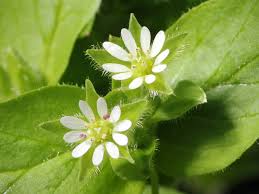
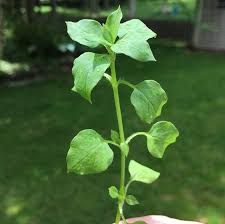
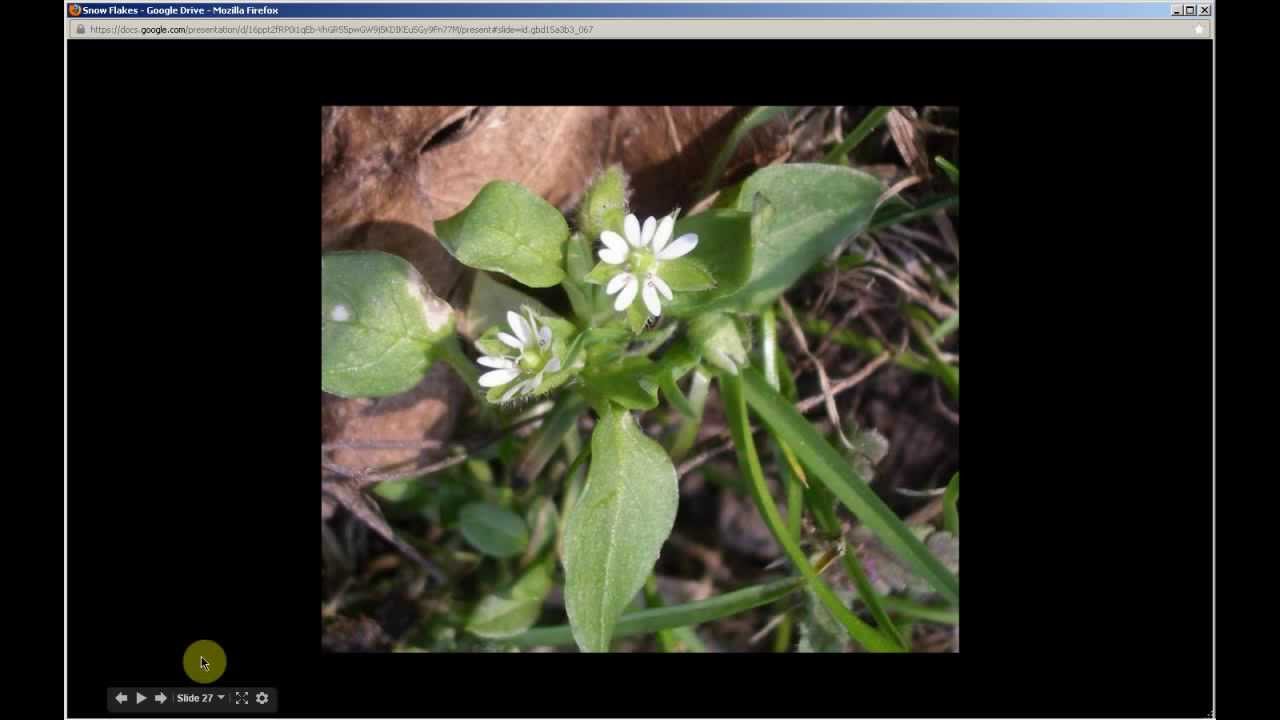
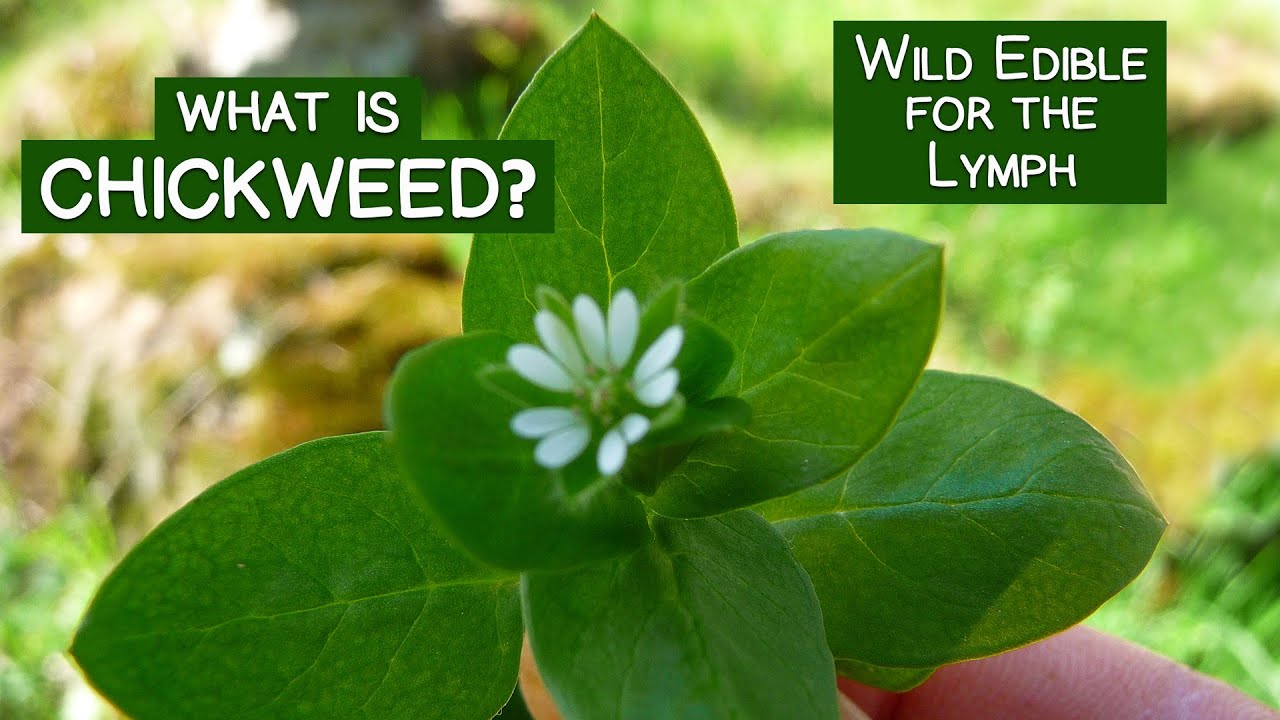
This common weed is native to Eurasia but now naturalized world-wide and found in lawns, road sides and open fields. Chickweed is low growing with small oval opposite leaves and sparse hairs, but the hairs line up along the stem (this is a distinguishing feature), and white flowers with five deeply lobed petals. Though maligned as a weed, Chickweed is edible and nutritious and enjoyed both by birds and humans! Chickweed is used in salads raw or can be cooked and enjoyed like spinach. Although the leaves contain saponins and could have toxicity concerns a large quantities, the saponins are mostly lost on cooking and are also poorly absorbed in humans.
Chickweed is a mucilaginous herb thought to break down fats and fatty tumors in the body. It acts as a mild appetite suppressant and weight loss aid when taken 1 hour before mealtimes. It can be used in poultices for skin irritations, and the tea can be used as an eyewash for soothing irritated eye. Applied topically, it is helpful for relieving itchy skin.
Part used: the herb
Qualities: a bit sweet and salty, cool, moist, restoring, nourishing, softening
- Temperature: Cooling
- Moisture: Moistening
- Direction: Inward + softening
- Primary Tissue State: Hot • Dry • Irritated
- Key Actions: Moistening, soothing, dissolving, relieving
Properties demulcent, emollient
Tropism: stomach, intestines, heart, lungs, kidneys, blood
Ground: Choleric krasis. Tough/Shao Yang and Industrious/Tao Yan biotypes. All three constitutions
Constituents:
Saponins, fixed oil (incl. linoleic, silicic and other acids), flavonoids, rutin, triterpenoids, coumarins, hydroxycoumarins, carboxylic acids, phytosterols, essential oil, proteins, resin, starch, mucilage, minerals (incl. calcium potassium, magnesium, iron, silicon, zinc, molybdenum, phosphorus, manganese), ferrous phosphate, vitamins C,A,B complex.
- Amino-acid and mineral composition of Stellaria media
- Isolation and Characterization of a Pentasaccharide from *Stellaria media*
- Phytochemical and Gas Chromatography-Mass Spectrometry Analysis of Chenopodium album and Stellaria media
- New triterpenoid from *Stellaria media* (L.) Cyr
- Quantification of Quercetin and Kaempferol in Leaves of *Stellaria media**Linn and Chenopodium album Linn by HPTLC
Identification Cues
(Common chickweed — Caryophyllaceae)
Growth Habit
- Low, mat‑forming plant that sprawls along the ground.
- Branching stems that root wherever they touch soil (very easy to reroot).
- Stems are light green and fragile, often detaching easily from the roots. Cornell University Blog Service
Stem Characteristics
- One single line of hairs running along one side of each internode.
- This is the most diagnostic feature.
- Stems otherwise smooth.
- Mouse‑ear chickweed (Cerastium fontanum) differs by being hairy all over. Cornell University Blog Service Vegetable Crops Hotline
Leaves
- Opposite leaf arrangement.
- Ovate, pointed, and light green.
- Lower leaves have petioles (leaf stalks).
- Upper leaves are sessile (no petiole).
- Leaves often fold slightly along the midvein. Cornell University Blog Service
Flowers
- Tiny white flowers, 3–6 mm wide.
- Five petals, each deeply split, giving the appearance of ten petals.
- Petals are shorter than the sepals.
- Flowers arise from leaf axils near the top of the plant. Cornell University Blog Service
Fruit & Seeds
- Oval capsules containing 8–10 seeds.
- Seeds are small, dark, and numerous. Cornell University Blog Service
Habitat & Seasonality
- A winter annual that can emerge in any season, especially spring and fall.
- Prefers moist, cool soils: gardens, lawns, shaded beds, disturbed ground. Vegetable Crops Hotline
Fast Field Checklist
Use these three cues to confirm Stellaria media quickly:
- Single line of hairs on the stem.
- Opposite ovate leaves, lower petiolate, upper sessile.
- Five deeply split petals that look like ten.
If all three are present, you have common chickweed.
CHICKWEED — COOLING + MOISTENING + DOWNWARD + INWARD
Chickweed is the softest, most demulcent of the cooling movers. Its downward action is gentle: it settles heat by moistening and softening, not by purging or dispersing.
Core axes
- Cooling — reduces irritation, redness, and “hot dryness” in tissues.
- Moistening — demulcent, softens tight or inflamed membranes.
- Downward — guides heat and irritation down and into tissues rather than letting it rise or flare outward.
- Inward — draws the system toward quiet, depth, and repair.
Physiological signature
- Softens hot, dry, irritated tissues (skin, mucosa, joints).
- Settles upward-rising irritation (itching, redness, heat in the face).
- Encourages gentle lymphatic settling rather than outward venting.
Somatic feel
- A cool, moist “sigh” downward into the tissues.
- Irritation melts; tension softens.
- Awareness drops from the surface into depth.
One‑line signature
“The Moistening Descent” — soft, soothing, cooling relief that settles heat inward and downward.
Tissue State Relevance
(Common chickweed — cooling, moistening, anti‑excitation vulnerary)
Cooling • Moistening • Soothing • Anti‑excitation • Anti‑inflammatory • Vulnerary
Chickweed is a classic cool‑moist vulnerary: it calms hot, irritated, inflamed, or dry tissues and restores moisture and comfort.
1. Heat / Excitation
Strong affinity — one of the best gentle cooling herbs for irritated tissues
Why:
- High mucilage → cools and soothes inflamed surfaces
- Anti‑inflammatory + anti‑itch actions
- Reduces metabolic “over‑activity” in hot, irritated skin and mucosa
Presentation match:
- Hot rashes
- Inflamed eyes
- Irritated mucosa
- Heat‑driven itch
- Hot, irritated gut or urinary tissues
Energetic action:
Cooling, calming, anti‑excitation.
2. Dry / Atrophy
Strong affinity — moistening and restorative to thin, depleted tissues
Why:
- Mucilage → restores moisture
- Soothing polysaccharides → protect and rebuild irritated surfaces
- Supports healing of thin, atrophic skin and mucosa
Presentation match:
- Dry, itchy skin
- Atrophic eczema
- Thin mucosa with irritation
- Dry eyes
- Dry cough with irritation
Energetic action:
Moistening, protective, vulnerary.
3. Wind / Tension
Moderate affinity — reduces tension when driven by irritation or dryness
Why:
- Soothing moistening action reduces irritation‑driven spasms
- Cooling reduces inflammatory tension
Presentation match:
- Itchy, restless skin
- Irritated cough
- Tension from dryness or heat
Energetic action:
Calming, soothing.
4. Damp / Stagnation
Low affinity — can worsen dampness if misapplied
Why:
- Moistening nature can add fluid to already boggy tissues
- Best avoided in damp, heavy, congested constitutions
Presentation match (avoid):
- Damp, boggy skin eruptions
- Heavy, mucous‑laden respiratory states
- Damp gut stagnation
Energetic action:
Too moistening for damp stagnation.
5. Cold / Depression
Neutral to mildly cooling — safe unless cold is dominant
Why:
- Cooling nature may aggravate cold constitutions
- Moistening can feel heavy in cold‑sluggish digestion
Presentation match:
- Cold tissues with irritation → helpful
- Cold tissues with stagnation → avoid
Energetic action:
Cooling; pair with warm allies if constitution is cold.
Summary Table
| Tissue State | Chickweed Effect | Notes |
|---|---|---|
| Heat / Excitation | ⭐ Strongly improves | Cooling, anti‑inflammatory |
| Dry / Atrophy | ⭐ Strongly improves | Moistening, vulnerary |
| Wind / Tension | Moderate | Calms irritation‑driven tension |
| Damp / Stagnation | ❌ Can worsen | Too moistening |
| Cold / Depression | Mixed | Cooling; use cautiously |
Stellaria media is a cooling, moistening vulnerary that excels in hot, irritated, dry, or atrophic tissue states and should be avoided in damp or cold‑sluggish constitutions.
TCM & Western Herbal Uses
Chickweed also has a long history of use as an herbal medicine, and is considered a “cooling” herb. Externally it is used for almost any kind of itchy skin condition. The plant is traditionally applied as a poultice or taken as an infusion and then applied to the skin (such as for boils, eczema, or ulcers, psoriasis) or also to aching joints. Internally, Chickweed is mainly used for respiratory complaints, such as asthma and allergies, and sometimes also for aiding digestion. Through scientific investigation, Chickweed has exhibited anti-allergic, anti-inflammatory, anti-cancer, antioxidant, antibacterial, antifungal antiviral, hypoglycemic and weight-loss promoting activities. (Source)
1. NOURISHES THE YIN, MOISTENS DRYNESS, GENERATES FLUIDS AND CLEARS DEFICIENCY HEAT: REDUCES GASTRIC SECRETIONS AND RELIEVES CONSTIPATION
Yin and fluids deficiency: thirst, dry throat and mouth, hot spells
HEAT EXHAUSTION, dehydration
lung Yin deficiency/dryness: dry unproductive cough, low-grade fever, blood-streaked sputum
LUNG TB, whooping cough, hemoptysis
lung phlegm dryness; hard dry cough with scanty sticky sputum
BRONCHITIS (esp. acute)
stomach dryness: worry, inordinate hunger and thirst
GASTRIC HYPERACIDITY with ACID DYSPEPSIA, peptic ulcer, colitis
intestines dryness (heat); small, dry hard stools, constipation
heart Yin deficiency; palpitations, dry mouth and throat
CARDIAC DEFICIENCY
2. TONIFIES DIGESTIVE QI, PROMOTES ABSORPTION, NOURISHES THE BLOOD AND RELIEVES FATIGUE
blood deficiency: fatigue, palpitations, pale complexion
ANEMIA
stomach and intestines (Spleen) Qi deficiency: fatigue, loose stool, weight loss
MALABSORPTION syndrome, malnutrition, metabolic acidosis
FATIGUE from overwork, stress, illness, anemia, trauma
3. PROMOTES URINATION, RESOLVES TOXICOSIS, REMOVES LYMPH CONGESTION AND BENEFITS THE SKIN; REDUCES SWELLING AND TUMORS; STIMULATES THE THYROID AND PROMOTES WEIGHT LOSS
kidney Qi stagnation with metabolic toxicosis; skin eruptions, malaise, muscle and joint pains, hemorrhoids
As a diuretic, chickweed is a valuable friend to patients who struggle with congestive heart failure or obesity. Water retention as witnessed by swollen ankles or bloating is eased by this herb.
SKIN ERUPTIONS with dryness or irritation (incl. eczema, scabies, diaper rash)
LYMPHADENITIS
TESTICLE SWELLING
TUMORS and CYSTS (incl. dermal, ovarian, gastric); early cancer
THYROID DEFICIENCY, adiposity, weight gain, goiter
4. CLEARS TOXIC HEAT AND REDUCES INFLAMMATION; SOFTENS BOILS, DRAWS PUS AND PROMOTES TISSUE REPAIR; BENEFITS THE EYES AND MUSCLES
fire toxin; boils, furuncles, abscesses and other pyoderma
LOCAL BLOOD CONGESTION (incl. hemorrhoids)
INFLAMMATION with toxic heat (incl. laryngitis, bronchitis, conjunctivitis, nephritis, cystitis, mastitis, arthritis)
CONJUNCTIVITIS, sties, eye irritation
MUSCLE TENSION, cramps
WOUNDS, scrapes, infected cuts and sores, splinters, pruritis
ITCHING
Anti-Hepatitis B Virus Activity of Chickweed
Quality assessment and anti-obesity activity of *Stellaria media* (Linn.) Vill
In China, Chickweed relative Stellaria alsine is used to cool fevers and treat acne. It is also commonly given to women after giving birth to ensure rapid recovery for the mother and healthy milk flow for the baby. In some parts of Asia, women include chickweed in their diet to help regulate their menstrual cycle. With the amount of nutrition chickweed offers, it would be wise for Western women to follow this practice as well.- Source
Physio-Medical Therapeutics, Materia Medica and Pharmacy BY T. J. LYLE, A.M.M. 1897
This agent is stimulating to the mucous and serous membranes, improving digestion, increasing the appetite maintaining a good arterial circulation. It is of value in debilitated conditions, anaemia, consumption, rheumatism. Dr. F. G. Hoener reports the case of a young lady believed to be suffering from incurable chlorosis who was cured by an infusion of this agent and vapour baths.