Coral Root
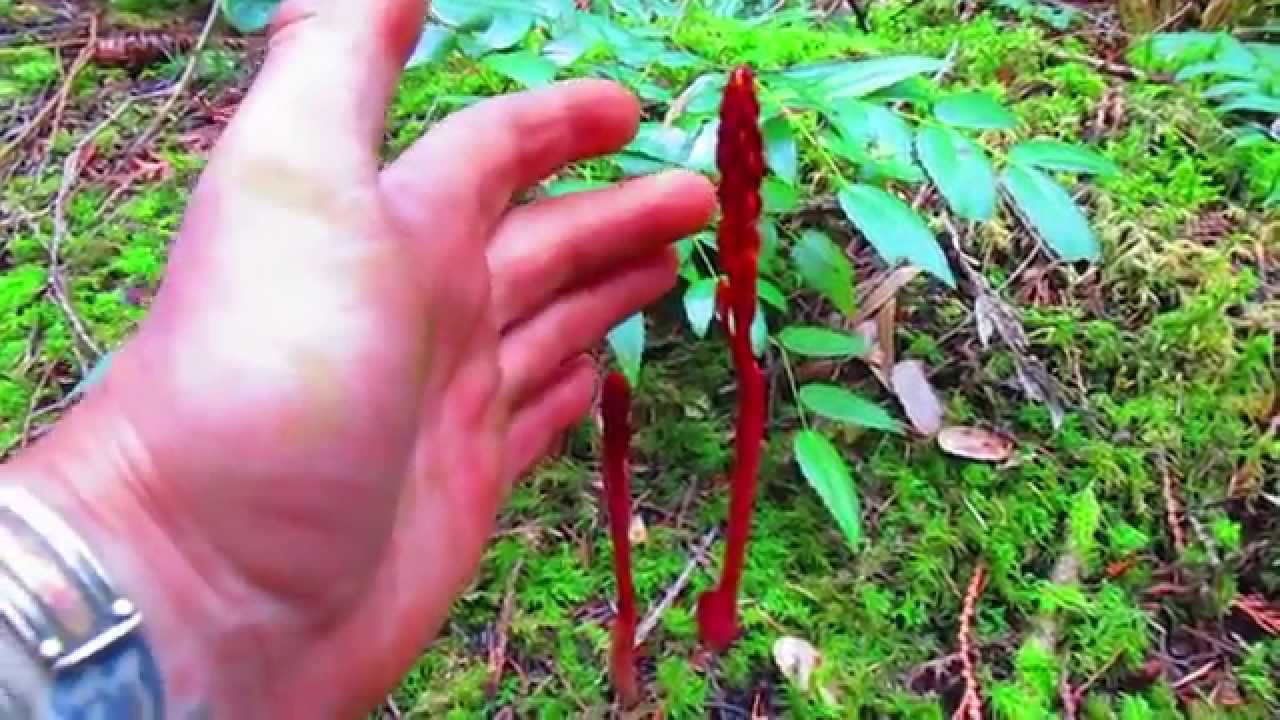
Ryan Drum: "Three Herbs: Yarrow, Indian Consumption Plant, Coral Root"
Wikipedia:
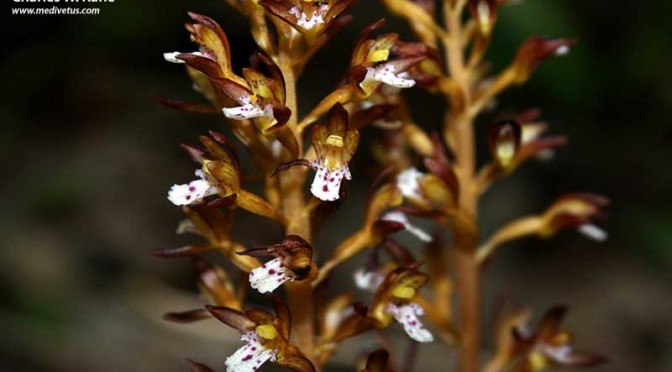
Corallorhiza maculata, or spotted coralroot, is a North American coralroot orchid flower. Varieties are also known as western coralroot and summer coralroot. It is found from Mexico and Baja California, through California and most of the United States except the Southeast, and across Canada. It grows mostly in montane woodlands.
An effective remedy for skin diseases, scrofula, boils, tumors, fever, acute erysipelas, cramps, pleurisy, night sweats, and highly recommended for cancer. Good for varicose veins. Dip a cloth in the tea and apply externally.
Valuable in typhus and inflammatory diseases. Combined with blue cohosh for scanty or painful menstruations. For insomnia take the tea before retiring for the night. Native Americans used the tea as a blood thinner.
The Physiomedical Dispensatory by William Cook, M.D., 1869
This peculiar and rare plant is somewhat parasitic on the roots of pines, on hard dry soils, from Vermont westward and northward. The root is medicinal. It is of medium size, grayish yellow or yellowish brown, wrinkled transversely, yellowish white within, and of a peculiar odor when fresh, but almost without smell when dried. Water and diluted alcohol extract its properties readily; and heat and age impair it greatly.
Properties and Uses: This root is a pleasant-tasting and nearly pure relaxant, with only a modicum of stimulating action, and a little demulcent property. Very diffusive in action, and perhaps unsurpassed for the promptness with which it secures a profuse perspiration. As a diaphoretic, it is of the first value in all febrile cases–relieving arterial excitement and abating nervous irritability. It is of equal service in erysipelas, measles, pneumonia, pleurisy, phrenitis, and other acute inflammations; soothing the patient and restoring the capillary circulation without depressing the system. The uterine organs feel its action promptly; and it promotes the catamenia and lochia, relieves painful menstruation, acts to fine effect in acute ovarian and uterine inflammation, and is of value in after-pains and puerperal fever. Dose, ten to twenty grains every two hours or oftener; usually given in warm water, but not often made in infusion because of the great loss of strength occasioned by heat. The great scarcity of the plant prevents that general introduction which the article so richly deserves.
Formulas or Dosages
Infusion: steep 1 tsp. rootstock in 1 cup water. Take hot or cold, 1 to 2 cups a day.
Tincture: take 10-20 drops at a time.