Branching Sundew
The plant is a protected species and is in danger of extinction.
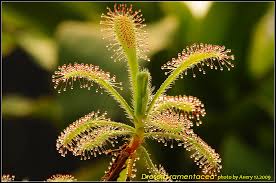
Drosera ramentacea, also known as the Sundew, is a carnivorous plant that belongs to the Droseraceae family. This unique plant has garnered attention for its ability to attract, capture, and digest insects as a source of nutrients.
Native to various regions around the world, including Australia, New Zealand, and New Caledonia, Drosera ramentacea thrives in wet and marshy habitats. It typically grows in areas with acidic soils, such as bogs and wetlands, where other plants may struggle to survive. The Sundew's ability to adapt to such environments is a testament to its remarkable resilience.
One of the most distinctive features of Drosera ramentacea is its leaves, which are adorned with glandular hairs that secrete a sticky substance. These hairs, known as tentacles, serve as traps for unsuspecting insects. The glistening droplets on the tentacles act as a lure, attracting small creatures in search of food or moisture. Once an insect lands on a leaf, it becomes entangled in the sticky substance, making escape nearly impossible.
As the insect struggles to break free, the leaf's tentacles gradually bend inward, enveloping the prey further. This process is referred to as thigmotropism, whereby the plant responds to touch by moving its parts. The Sundew's leaf then releases digestive enzymes that break down the insect, allowing the plant to absorb the vital nutrients it needs to survive. This fascinating mechanism sets Drosera ramentacea apart from other plants and showcases its captivating carnivorous nature.
Beyond its captivating trapping mechanism, Drosera ramentacea also exhibits remarkable adaptability to different environments. The Sundew has evolved various morphological adaptations to maximize its chances of capturing prey. For instance, some populations of Drosera ramentacea have developed elongated leaves, allowing them to better capture flying insects. In contrast, populations in areas with a scarcity of flying insects have shorter leaves, adapting to their specific ecological niche.
In addition to its captivating features, Drosera ramentacea also holds potential medicinal value. Traditional healers have long recognized the plant's therapeutic properties and have utilized it to treat various ailments. The Sundew's leaves contain compounds with anti-inflammatory and anti-microbial properties, making them a valuable resource in traditional medicine.
Moreover, recent scientific studies have begun to explore the potential of Drosera ramentacea in modern medicine. Researchers have identified unique compounds within the plant that show promise in combating certain diseases. These compounds have exhibited anti-cancer properties, inhibiting the growth of cancer cells in laboratory settings. While further research is needed, these findings highlight the untapped potential of Drosera ramentacea as a source of valuable pharmaceutical compounds.