Spring Avens
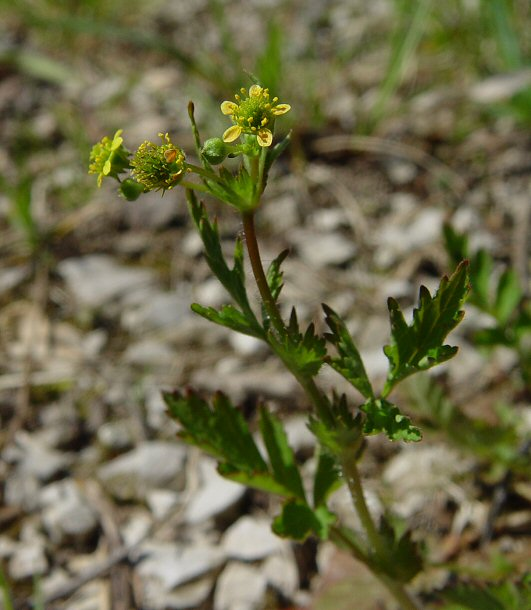
Spring Avens, scientifically known as Geum vernum, is a perennial herbaceous plant that belongs to the Rosaceae family. This plant is native to North America and is commonly found in the eastern and central regions of the United States. It thrives in moist, shaded environments such as woodlands, stream banks, and forest edges. The plant is notable for its early blooming period, which typically occurs in the spring, hence the name "Spring Avens."
Botanical Description
Appearance
- Height: Spring Avens typically grows to a height of 12 to 18 inches.
- Leaves: The leaves are basal, meaning they grow at the base of the plant. They are pinnately compound with 3 to 5 leaflets, and the margins are serrated.
- Flowers: The flowers are small, about 1/2 inch in diameter, and have five yellow petals. They are borne on slender, hairy stems that rise above the foliage.
- Fruit: The fruit is a cluster of small, dry achenes, each with a hooked style that aids in seed dispersal.
Root System
The root system of Spring Avens is fibrous and shallow, which allows it to quickly absorb moisture from the soil. This characteristic makes it well-suited for the moist environments it typically inhabits.
Habitat and Distribution
Spring Avens is predominantly found in the eastern and central United States, from New York and Pennsylvania in the north to Georgia and Alabama in the south, and westward to Missouri and Arkansas. It prefers:
- Soil: Moist, well-drained soils rich in organic matter.
- Light: Partial to full shade, although it can tolerate some sunlight.
- Moisture: Consistently moist conditions, often found near streams or in damp woodlands.
Ecological Role
Spring Avens plays a significant role in its ecosystem. It provides early-season nectar and pollen for a variety of pollinators, including bees and butterflies. The plant also serves as a host for several species of caterpillars, which in turn are a food source for birds and other wildlife.
Cultivation and Care
Planting
- Timing: The best time to plant Spring Avens is in the early spring or fall.
- Spacing: Space plants about 12 to 18 inches apart to allow for adequate air circulation and growth.
- Soil Preparation: Enrich the soil with compost or organic matter to improve moisture retention and fertility.
Maintenance
- Watering: Keep the soil consistently moist, especially during dry periods.
- Mulching: Apply a layer of mulch around the base of the plant to help retain moisture and suppress weeds.
- Pruning: Remove spent flowers to encourage new blooms and prevent self-seeding.
Propagation
Spring Avens can be propagated by seed or division.
- Seed: Sow seeds in a cold frame in the fall or early spring. Germination typically occurs within a few weeks.
- Division: Divide clumps in the spring or fall, ensuring each division has several healthy roots and shoots.
Uses and Benefits
Ornamental Use
Spring Avens is valued for its early spring blooms and attractive foliage, making it a popular choice for woodland gardens, shaded borders, and naturalized areas. Its ability to thrive in moist, shaded conditions makes it an excellent ground cover for challenging garden spots.
Medicinal Use
While not as commonly used as some other members of the Rosaceae family, Spring Avens has been used in traditional medicine. The roots contain tannins and have been used as an astringent to treat diarrhea and other digestive issues.
Wildlife Support
By providing early-season nectar and pollen, Spring Avens supports a variety of pollinators. Its foliage also offers habitat and food for caterpillars, which are crucial for the diet of many bird species.