False Turkey-Tail
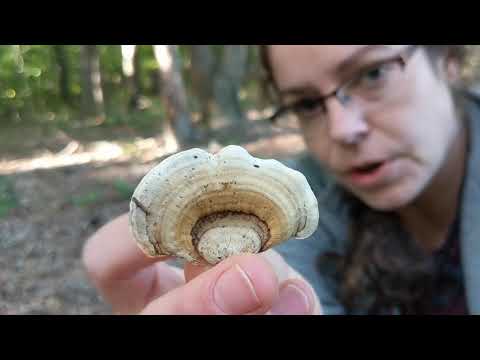
False Turkey-Tail, scientifically known as Stereum ostrea, is a species of fungus that is often mistaken for the true Turkey-Tail mushroom (Trametes versicolor).
Identification and Characteristics
False Turkey-Tail is a saprophytic fungus, meaning it feeds on decaying wood. It is commonly found on dead hardwoods, particularly oak, and is known for its striking appearance. Here are some key features to help identify Stereum ostrea:
- Cap: The cap of False Turkey-Tail is thin, leathery, and fan-shaped, typically ranging from 2 to 8 cm in width. It displays concentric zones of varying colors, including shades of brown, orange, yellow, and gray, which give it a striking, banded appearance.
- Surface Texture: The upper surface of the cap is smooth to slightly hairy, while the underside is smooth and lacks the pores found in true Turkey-Tail mushrooms.
- Spore Print: The spore print of Stereum ostrea is white, which can be a useful identification feature.
- Growth Pattern: This fungus grows in overlapping clusters, often forming dense, shelf-like structures on the wood it colonizes.
Habitat and Distribution
False Turkey-Tail is widely distributed across North America, Europe, and Asia. It thrives in temperate forests and is commonly found on fallen logs, stumps, and dead branches. The fungus plays a crucial role in the ecosystem by breaking down dead wood, recycling nutrients, and contributing to the decomposition process.
Ecological Role
As a saprophyte, Stereum ostrea is an essential component of forest ecosystems. By decomposing dead wood, it helps recycle nutrients back into the soil, promoting the growth of new plants and maintaining the health of the forest. Additionally, it provides habitat and food for various invertebrates and microorganisms, further supporting biodiversity.
Differences Between False Turkey-Tail and True Turkey-Tail
While Stereum ostrea and Trametes versicolor share some similarities, there are distinct differences that can help in their identification:
- Pore Surface: True Turkey-Tail has a porous underside, whereas False Turkey-Tail has a smooth underside.
- Texture: The cap of Trametes versicolor is more velvety and has a distinct, fuzzy texture, while Stereum ostrea is smoother.
- Coloration: Although both fungi exhibit concentric color zones, the colors in Trametes versicolor are often more vibrant and varied.
Medicinal and Cultural Significance
Unlike true Turkey-Tail, which is renowned for its medicinal properties, False Turkey-Tail does not have a significant history of use in traditional medicine. However, it is still of interest to mycologists and naturalists due to its ecological role and striking appearance.
Observing and Studying False Turkey-Tail
For those interested in observing or studying Stereum ostrea, here are some tips:
- Location: Look for False Turkey-Tail on dead hardwoods, especially oak, in temperate forests. It is often found on fallen logs, stumps, and dead branches.
- Season: This fungus can be found year-round, but it is most noticeable in the fall and winter when other fungi are less prevalent.
- Documentation: When documenting your findings, take clear photographs of the cap's upper and lower surfaces, noting the color zones and texture. A spore print can also be helpful for identification.