Florida Mudmidget
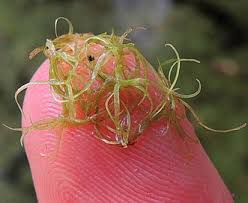
The Florida Mudmidget, scientifically known as Wolffiella gladiata, is an aquatic plant that belongs to the family Araceae. This tiny, free-floating plant is often overlooked due to its diminutive size, but it plays a significant role in its ecosystem.
Characteristics
Wolffiella gladiata is one of the smallest flowering plants in the world. It lacks roots and has a simple, thalloid structure, which means it has a flattened, leaf-like body. The plant typically measures between 1 to 2 millimeters in length, making it almost microscopic. Despite its small size, it is a flowering plant, although its flowers are rarely seen due to their minuscule size and the plant's preference for vegetative reproduction.
The plant's body is green and somewhat translucent, allowing it to efficiently absorb sunlight for photosynthesis. It floats on the surface of the water, often forming dense mats that can cover large areas. These mats are not only important for the plant's survival but also provide habitat and food for various aquatic organisms.
Habitat
The Florida Mudmidget is native to the southeastern United States, particularly Florida, as its common name suggests. It thrives in slow-moving or stagnant freshwater bodies such as ponds, marshes, and ditches. The plant prefers warm, nutrient-rich waters and can often be found in areas with abundant organic matter.
Due to its preference for calm waters, Wolffiella gladiata is often found in environments that are relatively undisturbed by human activity. However, it can also be found in man-made habitats such as agricultural ditches and stormwater retention ponds, where conditions are suitable for its growth.
Ecological Importance
Despite its small size, the Florida Mudmidget plays a crucial role in its ecosystem. Here are some of the key ecological functions it serves:
- Primary Production: As a photosynthetic organism, Wolffiella gladiata contributes to primary production in aquatic ecosystems. It converts sunlight into energy, forming the base of the food web and supporting various aquatic organisms.
- Habitat Provision: The dense mats formed by the plant provide habitat and shelter for small aquatic invertebrates, fish, and amphibians. These mats can also serve as breeding grounds for certain species.
- Nutrient Cycling: The plant helps in nutrient cycling by absorbing nutrients from the water and incorporating them into its biomass. When the plant dies and decomposes, these nutrients are released back into the ecosystem, supporting other forms of life.
- Water Quality Improvement: By absorbing excess nutrients, Wolffiella gladiata can help improve water quality and reduce the risk of algal blooms, which can be harmful to aquatic life.
Conservation Status
The conservation status of the Florida Mudmidget is not well-documented, primarily due to its small size and the difficulty in monitoring its populations. However, like many aquatic plants, it faces threats from habitat destruction, pollution, and invasive species.
- Habitat Destruction: Urbanization, agricultural expansion, and drainage of wetlands can lead to the loss of suitable habitats for Wolffiella gladiata. Protecting and restoring wetland habitats is crucial for the conservation of this species.
- Pollution: Runoff from agricultural fields and urban areas can introduce pollutants and excess nutrients into water bodies, potentially harming the plant. Efforts to reduce pollution and manage nutrient levels are important for its survival.
- Invasive Species: Invasive aquatic plants can outcompete native species like Wolffiella gladiata for resources. Managing invasive species and promoting native plant growth can help protect this tiny but important plant.