Anisakiasis
Wikipedia
Anisakiasis is a human parasitic infection of the gastrointestinal tract caused by the consumption of raw or undercooked seafood containing larvae of the nematode Anisakis simplex. The first case of human infection by a member of the family Anisakidae was reported in the Netherlands by Van Thiel, who described the presence of a marine nematode in a patient suffering from acute abdominal pain.[10] It is frequently reported in areas of the world where fish is consumed raw, lightly pickled or salted. The areas of highest prevalence are Scandinavia (from codlivers), Japan (after eating sushi and sashimi), the Netherlands (by eating infected fermented herrings (maatjes)), and along the Pacific coast of South America (from eating ceviche). Fewer than ten cases occur annually in the United States.[11] Development of better diagnostic tools and greater awareness has led to more frequent reporting of anisakiasis.
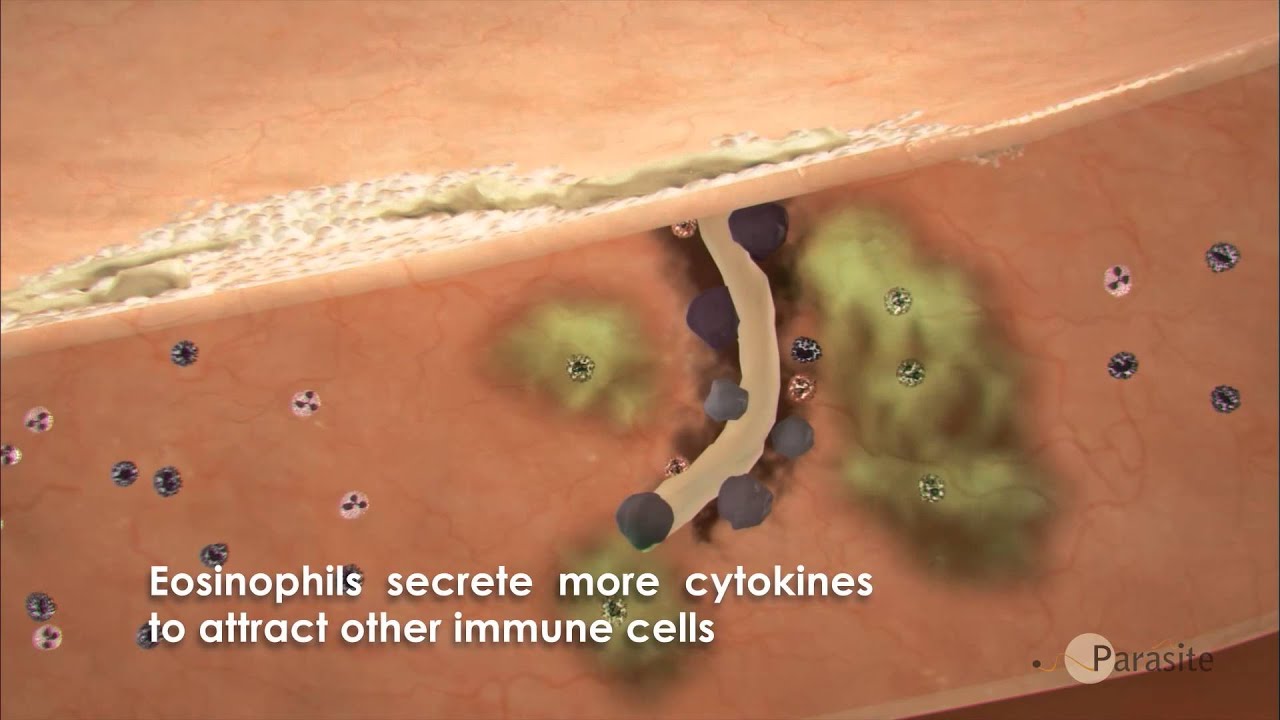
Within a few hours of ingestion, the parasitic worm tries to burrow though the intestinal wall, but since it cannot penetrate it, it gets stuck and dies. The presence of the parasite triggers an immune response; immune cells surround the worms, forming a ball-like structure that can block the digestive system, causing severe abdominal pain, malnutrition and vomiting. Occasionally, the larvae are regurgitated. If the larvae pass into the bowel or large intestine, a severe eosinophilic granulomatous response may also occur one to two weeks following infection, causing symptoms mimicking Crohn's disease.
Diagnosis can be made by gastroscopic examination, during which the 2-cm larvae are visually observed and removed, or by histopathologic examination of tissue removed at biopsy or during surgery.
Raising consumer and producer awareness about the existence of anisakid worms in fish is a critical and effective prevention strategy. Anisakiasis can be easily prevented by adequate cooking at temperatures greater than 60°C or freezing. The FDA recommends all shellfish and fish intended for raw consumption be blast frozen to -35°C or below for 15 hours or be regularly frozen to -20°C or below for seven days.[11] Salting and marinating will not necessarily kill the parasites. Humans are thought to be more at risk of anisakiasis from eating wild fish rather than farmed fish. Many countries require all types of fish with potential risk intended for raw consumption to be previously frozen to kill parasites. The mandate to freeze herring in the Netherlands has virtually eliminated human anisakiasis.
Allergic reactions
Even when the fish is thoroughly cooked, Anisakis larvae pose a health risk to humans. Anisakids (and related species such as the sealworm, Pseudoterranovaspecies, and the codworm Hysterothylacium aduncum) release a number of biochemicals into the surrounding tissues when they infect a fish. They are also often consumed whole, accidentally, inside a fillet of fish.
Acute allergic manifestations, such as urticaria and anaphylaxis, may occur with or without accompanying gastrointestinal symptoms. The frequency of allergic symptoms in connection with fish ingestion has led to the concept of gastroallergic anisakiasis, an acute IgE-mediated generalized reaction.[10] Occupational allergy, including asthma, conjunctivitis, and contact dermatitis, has been observed in fish processing workers.[13] Sensitivization and allergy are determined by skin-prick test and detection of specific antibodies against Anisakis. Hypersensitivity is indicated by a rapid rise in levels of IgE in the first several days following consumption of infected fish.[10]
Treatment
For the worm, humans are a dead-end host. Anisakis and Pseudoterranova larvae cannot survive in humans, and will eventually die. In some cases, the infection will resolve with only symptomatic treatment.[14] In other cases, however, infection can lead to small bowel obstruction, which may require surgery,[15] although treatment with albendazole alone (avoiding surgery) has been reported to be successful. Intestinal perforation (an emergency) is also possible.[16]
Occurrence
Larval anisakids are common parasites of marine and anadromous fish (e.g. salmon, sardine), and can also be found in squid and cuttlefish. In contrast, they are absent from fish in waters of low salinity, due to the physiological requirements of euphausiids, which are needed to complete their life cycle. Anisakids are also uncommon in areas where cetaceans are rare, such as the southern North Sea.[17]
Similar parasites
- Cod or seal worm Pseudoterranova (Phocanema, Terranova) decipiens
- Contracaecum spp.
- Hysterothylacium (Thynnascaris) spp.