Vellozia declinans
Constituents
This plant is native to the rocky outcrops and mountainous regions of Brazil, particularly in the states of Minas Gerais and Bahia. Known for its resilience and unique adaptations, Vellozia declinans thrives in harsh environments where few other plants can survive.
Botanical Characteristics
Morphology
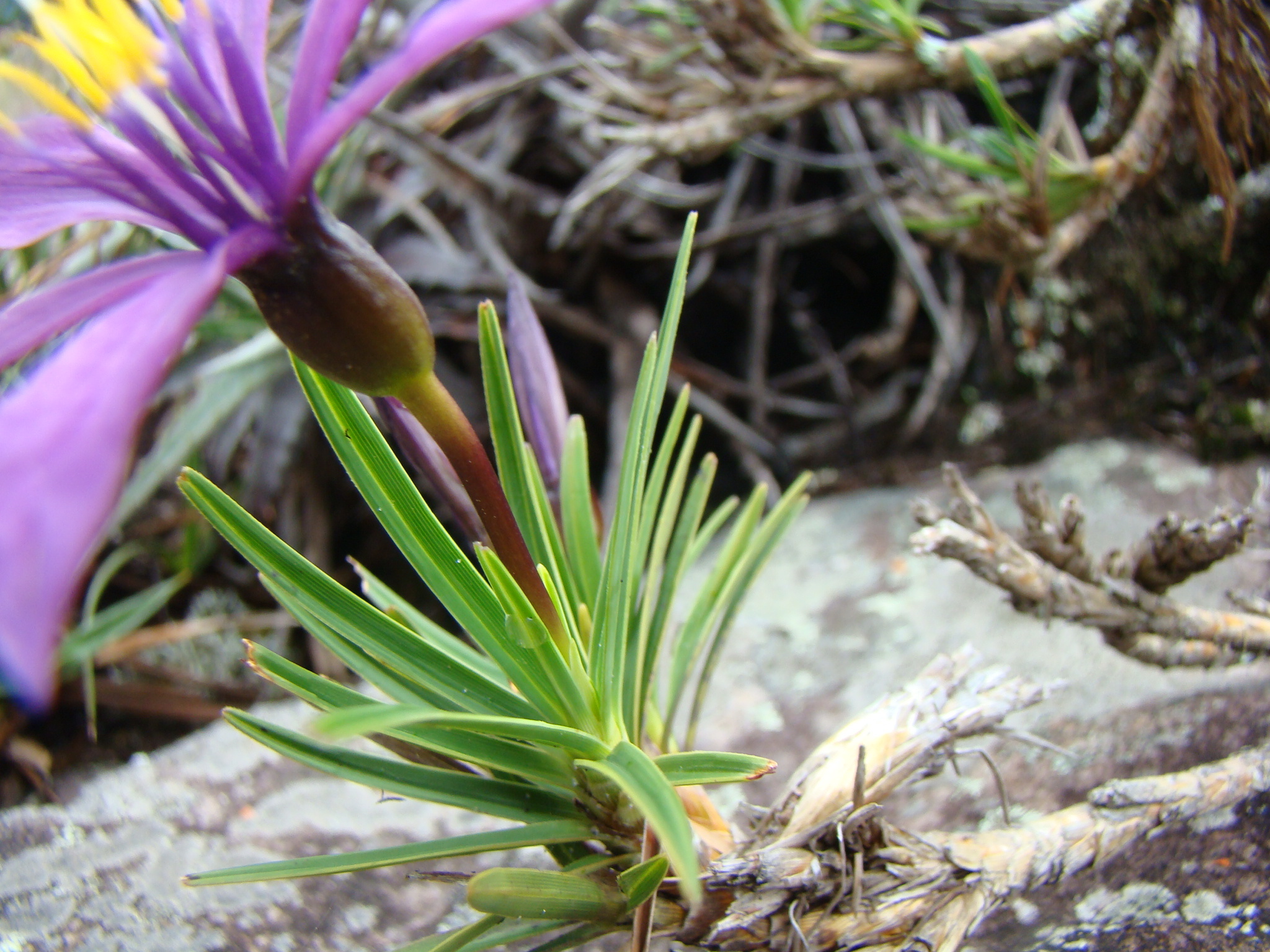
Vellozia declinans is a perennial herbaceous plant that typically grows to a height of 30-60 cm. It features a rosette of stiff, linear leaves that are often covered with a waxy coating to reduce water loss. The leaves are arranged in a spiral pattern, which helps the plant maximize sunlight capture and minimize water loss.
Flowers
The flowers of Vellozia declinans are one of its most striking features. They are usually white or pale yellow and have a tubular shape. The flowers are borne on long, slender stalks that rise above the foliage, making them highly visible to pollinators. Each flower has six tepals (petals and sepals that are similar in appearance) and numerous stamens, which are the male reproductive organs.
Root System
The root system of Vellozia declinans is adapted to its rocky habitat. It has a combination of deep taproots and fibrous roots that anchor the plant securely in crevices and cracks. This root system allows the plant to access water and nutrients from deep within the rock, enabling it to survive in nutrient-poor soils.
Habitat and Distribution
Vellozia declinans is endemic to Brazil, meaning it is found nowhere else in the world. It primarily grows in the campos rupestres, a type of rocky savanna ecosystem characterized by high altitudes, poor soils, and extreme weather conditions. These habitats are often subject to intense sunlight, strong winds, and limited water availability.
Adaptations to Environment
To survive in such a challenging environment, Vellozia declinans has developed several adaptations:
- Waxy Leaf Coating: Reduces water loss by minimizing transpiration.
- Spiral Leaf Arrangement: Maximizes sunlight capture and reduces wind damage.
- Deep Root System: Accesses water and nutrients from deep within the rock.
- Resilient Flowers: Attract pollinators even in harsh conditions.
Ecological Importance
Vellozia declinans plays a crucial role in its native ecosystem. It provides habitat and food for various insects, birds, and small mammals. The flowers are particularly important for pollinators such as bees and butterflies, which rely on them for nectar. Additionally, the plant helps stabilize the rocky soil, preventing erosion and promoting the growth of other plant species.
Conservation Status
The conservation status of Vellozia declinans is currently not well-documented, but like many endemic species, it is likely vulnerable to habitat loss and environmental changes. The campos rupestres are increasingly threatened by mining, agriculture, and urbanization, which can lead to the destruction of these unique ecosystems. Conservation efforts are needed to protect Vellozia declinans and its habitat to ensure its survival for future generations.
Cultivation and Uses
While Vellozia declinans is not commonly cultivated, it has potential as an ornamental plant due to its attractive flowers and unique foliage. It could be used in rock gardens, xeriscaping, and other low-water-use landscapes. However, cultivating this plant outside its native habitat can be challenging due to its specific environmental requirements.
Growing Conditions
For those interested in cultivating Vellozia declinans, it is essential to replicate its natural growing conditions as closely as possible:
- Soil: Well-draining, rocky soil with low nutrient content.
- Water: Minimal watering, allowing the soil to dry out completely between waterings.
- Light: Full sun to partial shade.
- Temperature: Tolerant of a wide range of temperatures but prefers warm conditions.
Biological activities
| Anthelmintic | Betulinic-acid found in Shoot ;found in Stem | |
|---|---|---|
| AntiHIV | Betulinic-acid found in Shoot ;found in Stem | |
| Antibacterial | Betulinic-acid found in Shoot ;found in Stem | |
| Anticancer | Betulinic-acid found in Shoot ;found in Stem | |
| Anticarcinomic | Betulinic-acid found in Shoot ;found in Stem | |
| Antiedemic | Betulinic-acid found in Shoot ;found in Stem | |
| Antiinflammatory | Betulinic-acid found in Shoot ;found in Stem | |
| Antileukemic | Betulinic-acid found in Shoot ;found in Stem | |
| Antimalarial | Betulinic-acid found in Shoot ;found in Stem | |
| Antimelanomic | Betulinic-acid found in Shoot ;found in Stem | |
| Antinociceptive | Betulinic-acid found in Shoot ;found in Stem | |
| Antiplasmodial | Betulinic-acid found in Shoot ;found in Stem | |
| Antitumor | Betulinic-acid found in Shoot ;found in Stem | |
| Antiviral | Betulinic-acid found in Shoot ;found in Stem | |
| Apoptotic | Betulinic-acid found in Shoot ;found in Stem | |
| Cytotoxic | Betulinic-acid found in Shoot ;found in Stem | |
| Phospholipase-A2-Inhibitor | Betulinic-acid found in Shoot ;found in Stem | |
| Prostaglandin-Synthesis-Inhibitor | Betulinic-acid found in Shoot ;found in Stem | |