Cinnamon Willowherb
The plant is said to be used for making bread. The part of the plant is not specified.
For medicinal info see Epilobium (genus) (Willow Herb spp.)
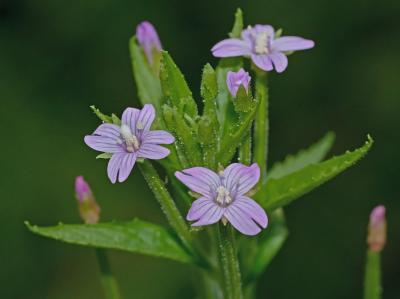
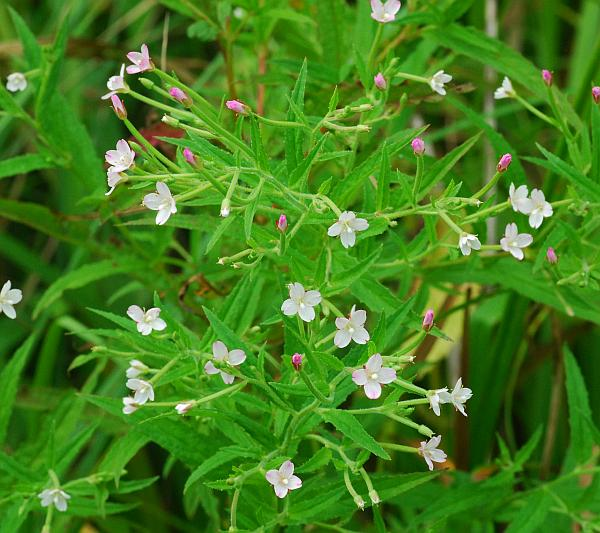
Epilobium coloratum Biehler, commonly known as Purple-leaf Willowherb, is a perennial herbaceous plant belonging to the Onagraceae family. This plant is native to North America and is often found in wetland areas, such as marshes, stream banks, and wet meadows. It is known for its distinctive reddish-purple stems and leaves, which make it easily identifiable in its natural habitat.
Botanical Description
Stems and Leaves
Epilobium coloratum typically grows to a height of 1 to 3 feet. The stems are erect, slender, and often tinged with a reddish-purple hue. The leaves are lanceolate to ovate, with serrated margins and a similar reddish-purple coloration. The leaves are arranged oppositely on the lower part of the stem and alternately on the upper part.
Flowers
The flowers of Epilobium coloratum are small, measuring about 1/4 inch in diameter. They have four petals that are usually pink to light purple in color. The flowers are borne in terminal racemes and bloom from mid-summer to early fall. Each flower has eight stamens and a four-lobed stigma, which is characteristic of the Onagraceae family.
Fruits and Seeds
The fruit is a slender, elongated capsule that can be up to 2 inches long. When mature, the capsule splits open to release numerous tiny seeds. Each seed is equipped with a tuft of silky hairs, which aids in wind dispersal.
Habitat and Distribution
Epilobium coloratum is commonly found in wetland habitats across North America, from Canada to the United States. It thrives in moist, nutrient-rich soils and can often be found in areas that are periodically flooded. This plant is well-adapted to a variety of wetland conditions, including marshes, swamps, and along the edges of streams and ponds.
Ecological Importance
Pollinators
Epilobium coloratum plays a significant role in supporting local ecosystems. Its flowers attract a variety of pollinators, including bees, butterflies, and other insects. These pollinators are essential for the reproduction of many plant species and contribute to the overall health of the ecosystem.
Soil Stabilization
The extensive root system of Epilobium coloratum helps to stabilize soil in wetland areas, reducing erosion and improving water quality. This makes it an important plant for maintaining the integrity of wetland habitats.
Uses and Applications
Traditional Medicine
Historically, various parts of Epilobium coloratum have been used in traditional medicine by Indigenous peoples. The plant has been used to treat a variety of ailments, including gastrointestinal issues, skin conditions, and respiratory problems. However, it is important to note that scientific research on the medicinal properties of this plant is limited, and its use should be approached with caution.
Ornamental Use
Due to its attractive reddish-purple foliage and delicate flowers, Epilobium coloratum is sometimes used in ornamental gardening. It can be a striking addition to wetland gardens and naturalized areas, providing both aesthetic appeal and ecological benefits.