Fly Poison
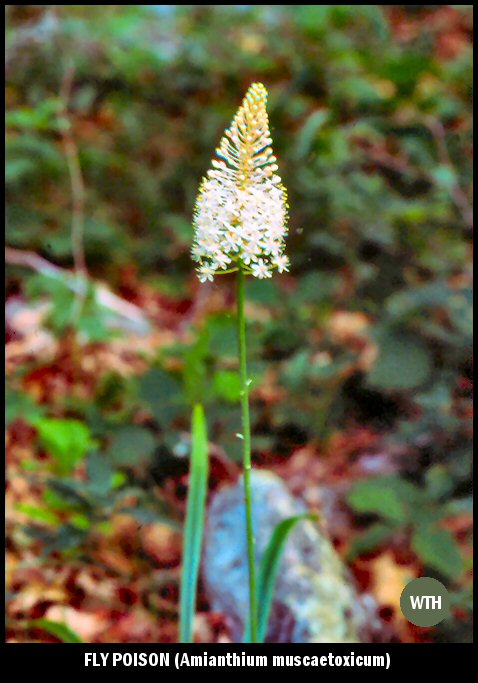
Fly Poison, scientifically known as Amianthium muscaetoxicum, is a perennial plant native to the eastern United States. It belongs to the Melanthiaceae family and is known for its striking appearance and toxic properties. This plant is often found in open woods, meadows, and along streams, thriving in moist, well-drained soils.
Identification
Fly Poison is easily recognizable by its unique features:
- Leaves: The plant has long, narrow, grass-like leaves that grow in a basal rosette. These leaves can reach up to 2 feet in length and are typically a vibrant green.
- Flowers: The plant produces a tall, erect flower stalk that can grow up to 3 feet high. At the top of this stalk, a dense cluster of small, white, star-shaped flowers blooms in late spring to early summer.
- Fruit: After flowering, the plant produces small, green capsules that contain seeds.
Habitat and Distribution
Fly Poison is predominantly found in the southeastern United States, ranging from New Jersey to Florida and west to Texas. It prefers habitats such as:
- Open woodlands
- Meadows
- Stream banks
- Moist, acidic soils
The plant is well-adapted to these environments and can often be found in areas with partial shade.
Toxicity
As its name suggests, Fly Poison is highly toxic. All parts of the plant contain toxic alkaloids, with the highest concentration found in the bulbs. The primary toxic compound is amianthine, which can cause severe symptoms if ingested.
Symptoms of Poisoning
Ingestion of Fly Poison can lead to:
- Nausea and vomiting
- Diarrhea
- Abdominal pain
- Weakness
- Dizziness
- Respiratory distress
In severe cases, ingestion can be fatal. It is crucial to handle this plant with care and ensure that it is not consumed by humans or animals.
Historical and Cultural Significance
Historically, Native American tribes used Fly Poison for various purposes, despite its toxicity. The plant was used as an insecticide, particularly for killing flies, which is how it earned its common name. The bulbs were crushed and mixed with sugar or other sweet substances to attract and poison flies.
Ecological Role
Despite its toxicity, Fly Poison plays a role in its ecosystem:
- Pollinators: The flowers attract a variety of pollinators, including bees and butterflies, which are crucial for the plant's reproduction.
- Wildlife: While toxic to many animals, some wildlife species have adapted to tolerate the plant's toxins and may feed on its leaves or bulbs.
Cultivation and Uses
Due to its striking appearance, Fly Poison is sometimes cultivated as an ornamental plant. However, caution is advised due to its toxic nature. When cultivating Fly Poison, consider the following:
- Plant in a location with partial shade and moist, well-drained soil.
- Ensure the area is not accessible to pets or children.
- Wear gloves when handling the plant to avoid skin irritation.
Conservation Status
Fly Poison is not currently listed as threatened or endangered. However, habitat destruction and changes in land use can impact its populations. Conservation efforts focus on preserving its natural habitats and promoting awareness of its ecological importance.