Dendrobium huoshanense
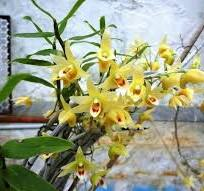
Native to the mountainous regions of China, this orchid is not only admired for its beauty but also revered in traditional Chinese medicine.
Botanical Characteristics
Dendrobium huoshanense belongs to the Orchidaceae family, which is one of the largest families of flowering plants. This particular species is characterized by its slender, cylindrical stems and delicate, pale yellow flowers. The plant typically grows in the crevices of rocks or on tree trunks, thriving in humid, shaded environments.
Key Features
- Stems: Slender and cylindrical, often reaching lengths of up to 60 cm.
- Leaves: Alternately arranged, lanceolate, and leathery in texture.
- Flowers: Pale yellow, with a distinctive lip that is often marked with red or purple spots.
- Roots: Aerial and covered with a spongy tissue called velamen, which helps in water absorption.
Habitat and Cultivation
Dendrobium huoshanense is predominantly found in the Huoshan region of Anhui Province in China. The plant thrives in subtropical climates, preferring altitudes between 300 to 1,500 meters. It requires a specific set of conditions to grow, including:
- Temperature: Moderate temperatures ranging from 15°C to 25°C.
- Humidity: High humidity levels, often above 70%.
- Light: Indirect sunlight or partial shade.
- Soil: Well-draining, often composed of a mix of bark, perlite, and sphagnum moss.
Cultivating Dendrobium huoshanense outside its natural habitat can be challenging due to its specific environmental needs. However, advancements in horticultural techniques have made it possible to grow this orchid in controlled environments.
Medicinal Uses
Dendrobium huoshanense has been used in traditional Chinese medicine for centuries. It is believed to possess a range of health benefits, primarily due to its rich content of bioactive compounds such as polysaccharides, alkaloids, and flavonoids.
Dendrobium huoshanense is a perennial orchid species that has been used in Chinese folk medicine for centuries. It is a traditional medicinal and food plant that belongs to the Orchidaceae family.
The stem of Dendrobium huoshanense contains many bioactive ingredients, including: Polysaccharides, Flavonoids, Sesquiterpenes, Phenols.
Dendrobium huoshanense has many activities, including:
Immunoregulation, Anti-oxidation, Anti-cataract, Anti-glycation, Anti-aging, Antitumor, Anti-rheumatoid arthritis, Anti-atherosclerosis, Anti-inflammation.
The stem polysaccharide (DHP) of Dendrobium huoshanense can help with liver injury.
Health Benefits
- Immune System Support: The polysaccharides found in Dendrobium huoshanense are known to enhance immune function by stimulating the activity of macrophages and lymphocytes.
- Anti-inflammatory Properties: The plant's extracts have been shown to reduce inflammation, making it useful in treating conditions like arthritis and other inflammatory diseases.
- Antioxidant Activity: The flavonoids present in the orchid act as antioxidants, neutralizing free radicals and reducing oxidative stress.
- Gastrointestinal Health: Dendrobium huoshanense is often used to improve digestion and treat gastrointestinal disorders such as gastritis and ulcers.
- Anti-aging Effects: The orchid's compounds are believed to promote cellular regeneration and reduce the signs of aging.
Research and Studies
Recent scientific studies have begun to validate many of the traditional uses of Dendrobium huoshanense. Research has focused on isolating and characterizing the bioactive compounds within the plant, as well as understanding their mechanisms of action.
Notable Studies
- A study published in the Journal of Ethnopharmacology demonstrated the immunomodulatory effects of Dendrobium huoshanense polysaccharides in mice.
- Research in the International Journal of Molecular Sciences highlighted the antioxidant properties of the orchid's flavonoids and their potential in preventing oxidative stress-related diseases.
- Clinical trials are ongoing to explore the efficacy of Dendrobium huoshanense extracts in treating various inflammatory and gastrointestinal conditions.
Conservation and Sustainability
Due to its medicinal value and overharvesting, Dendrobium huoshanense is considered a vulnerable species. Conservation efforts are crucial to ensure its survival and sustainable use. These efforts include:
- Cultivation Programs: Developing sustainable cultivation practices to reduce the pressure on wild populations.
- Legal Protection: Implementing regulations to control the harvesting and trade of Dendrobium huoshanense.
- Research and Development: Investing in research to improve cultivation techniques and discover new medicinal applications.