Engelmann's arrowhead
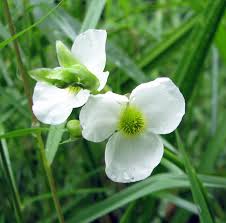
Engelmann's arrowhead, scientifically known as Sagittaria engelmanniana, is an aquatic plant that belongs to the Alismataceae family. This perennial herb is native to North America and is commonly found in wetland habitats such as marshes, swamps, and the shallow edges of ponds and streams.
Physical Description
Engelmann's arrowhead is easily recognizable by its distinct arrow-shaped leaves, which is a common trait among plants in the Sagittaria genus. The leaves are typically lanceolate to ovate, with a pointed tip and a broad base, resembling the shape of an arrowhead. These leaves can grow up to 30 cm in length and are usually bright green in color.
The plant produces small, white flowers that are arranged in whorls along a central stalk. Each flower has three petals and three sepals, and they bloom from late spring to early fall. The flowers are followed by small, green, beaked fruits that contain numerous seeds. The root system of Engelmann's arrowhead consists of rhizomes and tubers, which help the plant anchor itself in the soft, muddy substrate of its aquatic environment.
Habitat and Distribution
Engelmann's arrowhead is predominantly found in the eastern and central regions of the United States, extending into parts of Canada. It thrives in freshwater wetlands, where it can grow in both standing and slow-moving water. The plant prefers full sun to partial shade and can tolerate a range of water depths, from shallow margins to deeper waters up to 1 meter.
The presence of Engelmann's arrowhead in a wetland ecosystem is often an indicator of good water quality, as the plant is sensitive to pollution and changes in water chemistry. Its ability to grow in a variety of wetland habitats makes it an important species for maintaining biodiversity and supporting the health of aquatic ecosystems.
Ecological Importance
Engelmann's arrowhead plays a crucial role in wetland ecosystems. Its dense foliage provides habitat and shelter for a variety of aquatic organisms, including insects, amphibians, and small fish. The plant's flowers attract pollinators such as bees and butterflies, which are essential for the reproduction of many wetland plants.
The root system of Engelmann's arrowhead helps stabilize the soil and prevent erosion, which is particularly important in wetland areas that are prone to flooding. Additionally, the plant's ability to absorb nutrients from the water helps improve water quality by reducing the levels of nitrogen and phosphorus, which can contribute to harmful algal blooms.