Endothelium-Derived Hyperpolarizing Factor (EDHF)
Return to Vascular System Menu
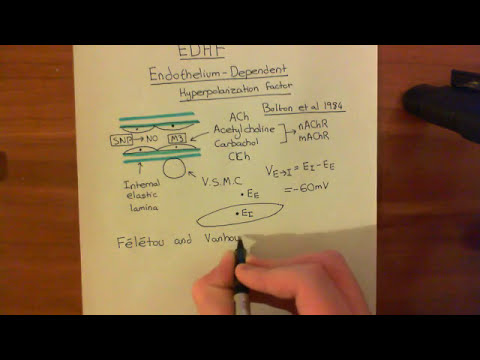
In blood vessels Endothelium-Derived Hyperpolarizing Factor or EDHF is proposed to be a substance and/or electrical signal that is generated or synthesized in and released from the endothelium; its action is to hyperpolarize vascular smooth muscle cells, causing these cells to relax, thus allowing the blood vessel to expand in diameter.
Videos
Part 1
Part 2
Part 3
Loss of nitric oxide and endothelial-derived hyperpolarizing factor-mediated responses in aging - Aging has considerable structural and functional effects on the vascular system of the kidney. One such effect is an alteration in vascular tone which potentially will initiate renal damage. Vascular tone is determined by the balance between vasoconstrictors and vasodilators. Therefore, we hypothesized that aging attenuates vasodilatory responses in the kidney. These changes may be mediated by a loss of nitric oxide and endothelial-derived hyperpolarizing factor (EDHF).
Endothelium-derived hyperpolarizing factor and hypertension - Hypertension is highly prevalent worldwide including Japan and is one of the major cardiovascular risk factors. Regulation of vascular tone is essential to maintain organ perfusion and cardiovascular homeostasis. Vasodilation in response to increased flow is the function of the normal endothelium through the secretion of nitric oxide (NO), prostacyclin (PGI2) and endothelial-derived hyperpolarizing factor (EDHF) to promote the relaxation of vascular smooth muscle cells. Reduction in these mechanisms contributes to aspects of endothelial dysfunction in several diseases, including hypertension, atherosclerosis and diabetes. Increased levels of reactive oxygen species including superoxide anions and hydrogen peroxide are recognized in patients with hypertension and contribute to vascular damages and dysfunction. Therefore, impaired endothelial function results in impaired vasodilation and increased blood pressure and may be a common pathway to hypertension, which is influenced by the imbalance of oxidative stress and endothelial bioactivity. EDHF is known to have an important role predominantly in modulating vasomotor tone, especially in resistance microvessels, whereas in the large conduit vessels, such as the aorta, endothelium-dependent responses are selectively mediated by NO.5 As small resistance vessels contribute to regulate vascular resistance, EDHF is supposed to be important in pathogenesis of hypertension. As loss of NO was compensated by the upregulation of EDHF in hypertensive rats, the role of EDHF might be much more important for the patients with hypertension. Prysyazhna et al. revealed that single atom mutation in protein kinase G (PKG) eliminated oxidant sensing induced by hydrogen peroxide (H2O2), a major component of EDHF, which leads to hypertension.
K+ is an endothelium-derived hyperpolarizing factor in rat arteries