False Goat's Beard
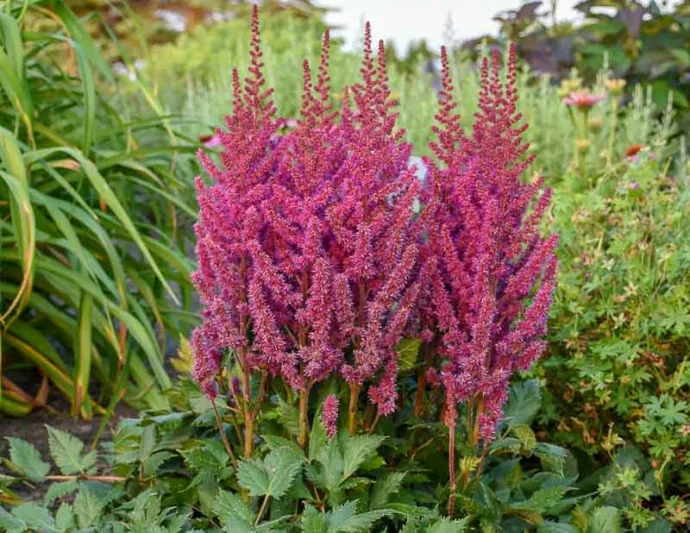

False Goat's Beard, scientifically known as Astilbe chinensis, is a perennial flowering plant that belongs to the Saxifragaceae family. This plant is highly valued in gardens and landscapes for its attractive, feathery plumes and lush foliage. Native to East Asia, particularly China and Japan, Astilbe chinensis has become a popular choice for gardeners around the world due to its hardiness and aesthetic appeal.
Description
Astilbe chinensis is characterized by its dense, fern-like foliage and tall, plume-like flower clusters. The leaves are typically dark green and deeply divided, giving the plant a delicate, airy appearance. The flowers, which bloom in late spring to early summer, come in a variety of colors including white, pink, red, and purple. These flowers are arranged in dense, upright panicles that can reach up to 2 feet in height, creating a striking visual display.
Growing Conditions
Light Requirements
False Goat's Beard thrives in partial to full shade, making it an excellent choice for shaded garden areas where many other plants might struggle. While it can tolerate some morning sun, too much direct sunlight can scorch the leaves and reduce the plant's overall vigor.
Soil Preferences
This plant prefers moist, well-drained soil that is rich in organic matter. It thrives in slightly acidic to neutral pH levels. Consistent moisture is crucial for Astilbe chinensis, as it does not tolerate drought well. Mulching around the base of the plant can help retain soil moisture and keep the roots cool.
Watering Needs
Regular watering is essential, especially during dry periods. The soil should be kept consistently moist but not waterlogged. Overwatering can lead to root rot, so it's important to ensure good drainage.
Planting and Care
Planting
When planting Astilbe chinensis, space the plants about 1 to 2 feet apart to allow for adequate air circulation and growth. Dig a hole that is twice the width of the root ball and just as deep. Place the plant in the hole, backfill with soil, and water thoroughly.
Fertilization
To promote healthy growth and abundant flowering, apply a balanced, slow-release fertilizer in the spring. Alternatively, you can amend the soil with compost or well-rotted manure to provide essential nutrients.
Pruning and Maintenance
Deadheading spent flowers can encourage a second flush of blooms and prevent the plant from self-seeding. In late fall, after the first frost, cut back the foliage to the ground to prepare the plant for winter. This also helps to reduce the risk of disease and pest infestations.
Pests and Diseases
Astilbe chinensis is relatively pest and disease-resistant. However, it can occasionally be affected by:
- Powdery Mildew: This fungal disease appears as a white, powdery coating on the leaves. To prevent it, ensure good air circulation and avoid overhead watering.
- Root Rot: Caused by overly wet soil, root rot can be prevented by ensuring proper drainage and avoiding overwatering.
- Aphids: These small, sap-sucking insects can be controlled with insecticidal soap or by introducing natural predators like ladybugs.
Propagation
False Goat's Beard can be propagated through division or from seed. Division is the most common method and is best done in early spring or late fall. To divide the plant, dig up the clump and carefully separate the roots into smaller sections, each with at least one growing point. Replant the divisions immediately and water well.
Uses in Landscaping
Astilbe chinensis is a versatile plant that can be used in various landscaping applications:
- Shade Gardens: Its ability to thrive in low-light conditions makes it ideal for shaded garden areas.
- Borders and Edges: The plant's tall, feathery plumes add height and texture to garden borders and edges.
- Woodland Gardens: Its natural habitat makes it a perfect addition to woodland garden settings.
- Containers: Smaller varieties of Astilbe chinensis can be grown in containers for patios and balconies.