Eastern Prickly Pear
Appearance and Habitat
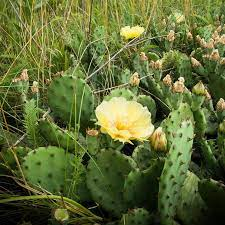
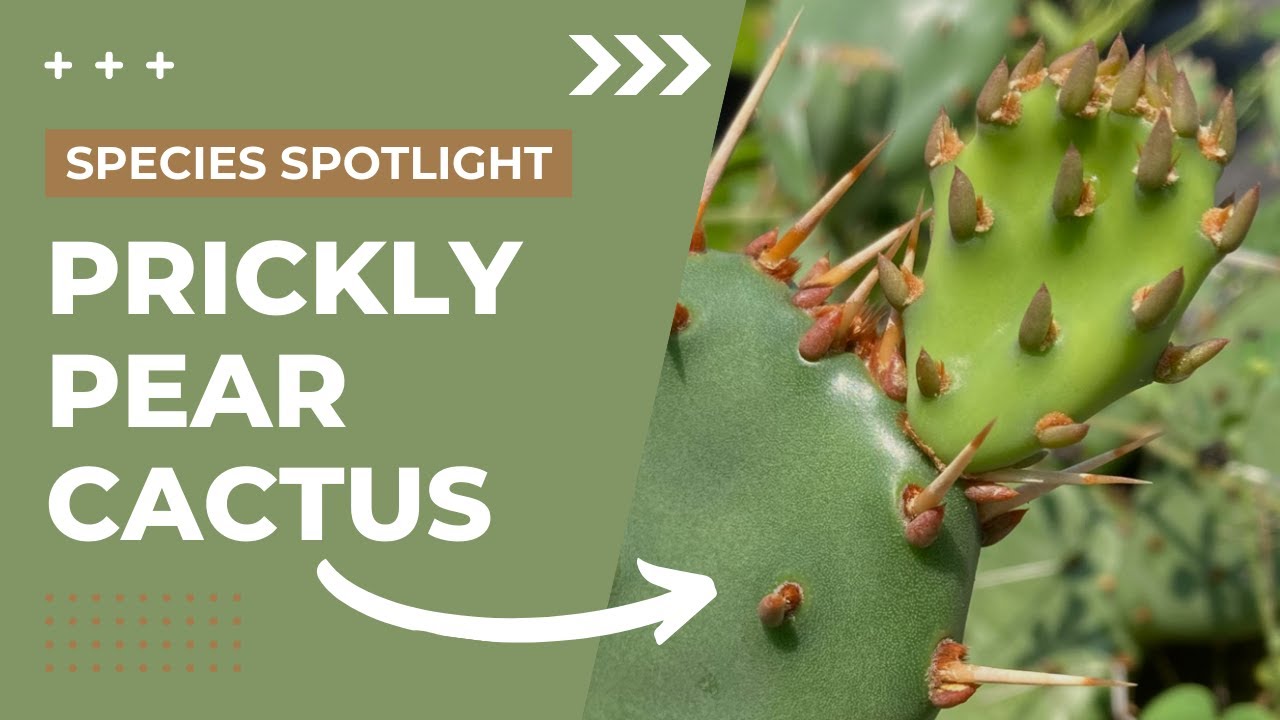
* Opuntia humifusa is characterized by its low-growing, sprawling habit. Its segmented stems, known as cladodes, are flat and oval-shaped, covered in sharp spines and tiny glochids. These glochids, which resemble fine hairs, can cause irritation upon contact with the skin.
* This cactus species is widely distributed across the eastern and central parts of North America, thriving in a variety of habitats. It is commonly found in dry, rocky areas, sandy soils, and open woodlands.
Flowering and Fruiting
* Opuntia humifusa produces showy yellow flowers that bloom from late spring to early summer. These flowers, which are around 2-3 inches in diameter, attract various pollinators, including bees and butterflies.
* After successful pollination, the plant develops fruits known as prickly pears. These fleshy fruits are oval-shaped and range in color from green to orange. Prickly pears are not only visually appealing but also have a sweet, juicy flavor. They are a favorite food source for wildlife, including birds and small mammals.
Ecological Benefits
* Opuntia humifusa plays an important ecological role in its native habitat. Its dense, sprawling growth provides shelter and nesting sites for small animals and birds. The spines and glochids on its cladodes act as a deterrent, protecting them from herbivores and providing a safe haven for wildlife.
* Additionally, this cactus species is highly drought-tolerant and can survive in harsh conditions. Its extensive root system helps stabilize soil, preventing erosion in areas prone to erosion.
Cultural Significance
* Opuntia humifusa has cultural significance among Native American tribes. Various tribes, such as the Navajo and Apache, have traditionally used different parts of the plant for medicinal purposes. The fruits, in particular, were consumed for their nutritional value.
* In modern times, Opuntia humifusa has gained popularity in landscaping and gardening. Its unique appearance, vibrant flowers, and ability to withstand challenging conditions make it an attractive choice for xeriscaping and rock gardens.
USES
Medicinal Uses:
- Anti-nociceptive: Anti-nociceptive and anti-inflammatory effects of the methanolic extract of *Opuntia humifusa* stem.
- Asthma *Opuntia humifusa* modulates morphological changes characteristic of asthma via IL-4 and IL-13 in an asthma murine model.
- Antioxidant: Beneficial Effects of *Opuntia humifusa* (Korean Cheonnyuncho) on Human Health Based on Antioxidant Properties: Systematic Review and Meta-Analysis.
Culinary Uses
Opuntia humifusa (Eastern Prickly Pear) has multiple edible parts:pads (nopales), fruits (tunas), flowers, and seeds
1. Pads (stem segments / nopales)
- Edible raw or cooked
- Texture is watery and mucilaginous, similar to okra.
- Used in soups, stews, salads, marmalades, or simply fried/roasted.
- Must be stripped of the outer layer to remove glochids (tiny barbed spines).
2. Fruits (tunas)
- Edible raw, cooked, or dried
- Sweet, gelatinous flesh; ruby‑red when ripe.
- Used for jams, desserts, or eaten fresh.
- Unripe fruits can be added to soups for an okra‑like mucilage.
3. Flowers
- Edible fresh, with a juicy, mucilaginous texture.
- Can be added directly to salads.
4. Seeds
- Edible when roasted and ground into flour or paste.
- Historically used as a thickener.
⚠️ IMPORTANT HANDLING NOTE
All above‑ground parts are edible only after removing spines and glochids, which can cause significant skin irritation.
SUMMARY TABLE
| Part | Edible? | Notes |
|---|---|---|
| Pads (nopales) | ✔️ | Raw or cooked; mucilaginous; remove outer layer & glochids |
| Fruits (tunas) | ✔️ | Sweet; raw, cooked, dried; used in jams/desserts |
| Flowers | ✔️ | Juicy; eaten fresh; salad ingredient |
| Seeds | ✔️ | Roasted & ground; used as flour/thickener |
| Glochids/spines | ❌ | Must be removed; cause irritation |
Cultivation and Care
* Growing Opuntia humifusa can be a rewarding experience for gardeners. It thrives in well-draining soil and prefers full sun exposure. The plant is highly adaptive and can tolerate a wide range of soil types, including sandy and rocky soils.
* When cultivating Opuntia humifusa, it is important to handle the plant with care due to its spines and glochids. Wearing protective gloves and using tools like tongs or tweezers can help avoid injury.
* Propagation of Opuntia humifusa can be done through stem cuttings. After removing a segment from the main plant, it should be left to callus for a few days before planting in well-draining soil. The new cutting will root and establish itself over time.
Conservation Status
* Opuntia humifusa is considered a species of least concern in terms of conservation status. Its ability to adapt to various habitats and its wide distribution across North America contribute to its overall resilience.
* However, as with many native species, habitat loss and invasive species pose a threat to its populations. It is important to protect and preserve the natural habitats where Opuntia humifusa thrives to ensure its continued survival.
STUDIES
Asthma
GC/MS-Based Metabolomics Reveals Biomarkers in Asthma Murine Model Modulated by Opuntia humifusa*.
Cancer
- Inhibitory effects of *Opuntia humifusa* on 7, 12-dimethyl- benz[a]anthracene and 12-O-tetradecanoylphorbol-13- acetate induced two-stage skin carcinogenesis.
- Dietary feeding of *Opuntia humifusa* inhibits UVB radiation-induced carcinogenesis by reducing inflammation and proliferation in hairless mouse model.
- *Opuntia humifusa* partitioned extracts inhibit the growth of U87MG human glioblastoma cells.
- Chemopreventive effect of cactus (*Opuntia humifusa*) extracts: radical scavenging activity, pro-apoptosis, and anti-inflammatory effect in human colon (SW480) and breast cancer (MCF7) cells.
Gastrointestinal
- Effect of a Synbiotic Containing *Lactobacillus paracasei* and **Opuntia humifusa** on a Murine Model of Irritable Bowel Syndrome.
- Efficacy of a Synbiotic Containing *Lactobacillus paracasei* DKGF1 and ***Opuntia humifusa*** in Elderly Patients with Irritable Bowel Syndrome: A Randomized, Double-Blind, Placebo-Controlled Trial.
High-fat Diet
Pancreatitis
*Opuntia humifusa* ameliorated cerulein-induced acute pancreatitis.