Caesarweed / Congo jute
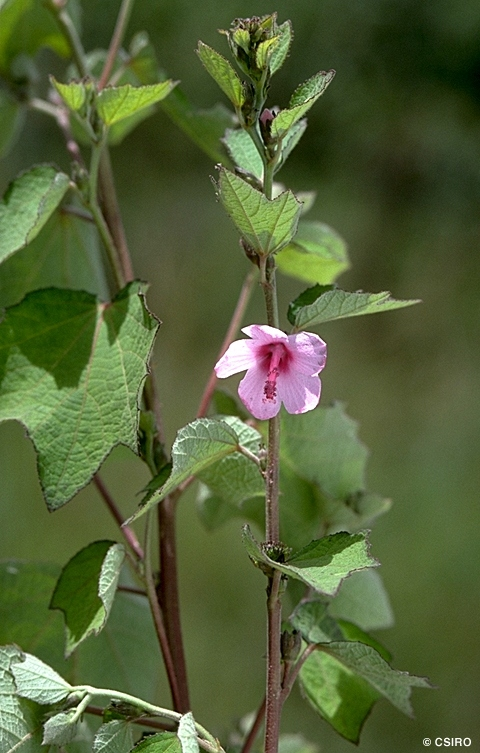
Urena lobata, commonly known as Caesarweed, is a flowering plant belonging to the Malvaceae family. This plant is native to tropical and subtropical regions around the world, including Africa, Asia, and the Americas. It is often found in disturbed areas such as roadsides, fields, and open forests. Despite being considered a weed in many regions, Urena lobata has a variety of uses and holds significant ecological and medicinal value.
Botanical Description
Urena lobata is a perennial shrub that can grow up to 2 meters in height. The plant has a woody base and produces numerous branches. Its leaves are simple, alternate, and lobed, typically measuring between 5 to 15 centimeters in length. The leaves are covered with fine hairs, giving them a rough texture. The flowers of Urena lobata are small, pink to purple in color, and have five petals. They are usually borne singly or in small clusters in the leaf axils.
The fruit of Urena lobata is a schizocarp, which splits into five segments when mature. Each segment contains a single seed and is covered with hooked bristles that facilitate dispersal by attaching to the fur of animals or clothing of humans.
Ecological Significance
Urena lobata plays a crucial role in its native ecosystems. It provides habitat and food for various insects, including pollinators such as bees and butterflies. The plant's ability to grow in disturbed areas makes it an important pioneer species that can help in the restoration of degraded lands. Additionally, its dense foliage can help prevent soil erosion.
Medicinal Uses
Urena lobata has been used in traditional medicine for centuries. Different parts of the plant, including the leaves, roots, and seeds, are used to treat a variety of ailments. Some of the medicinal uses of Urena lobata include:
- Anti-inflammatory: The leaves and roots are used to reduce inflammation and treat conditions such as arthritis and rheumatism.
- Antimicrobial: Extracts from the plant have been shown to possess antimicrobial properties, making them useful in treating infections.
- Antidiabetic: Some studies suggest that Urena lobata may help in managing blood sugar levels, making it beneficial for people with diabetes.
- Wound Healing: The leaves are often applied topically to wounds and ulcers to promote healing.
- Digestive Health: The plant is used to treat digestive issues such as diarrhea and dysentery.
Agricultural and Economic Importance
In addition to its medicinal uses, Urena lobata has several agricultural and economic applications:
- Fiber Production: The stems of Urena lobata contain strong fibers that can be used to make ropes, sacks, and other products. In some regions, the plant is cultivated specifically for its fiber.
- Animal Fodder: The leaves and young shoots of Urena lobata are used as fodder for livestock, particularly in regions where other forage options are limited.
- Soil Improvement: The plant's ability to grow in poor soils and its role in preventing erosion make it valuable for soil conservation and improvement projects.