Proteolytic Fermentation
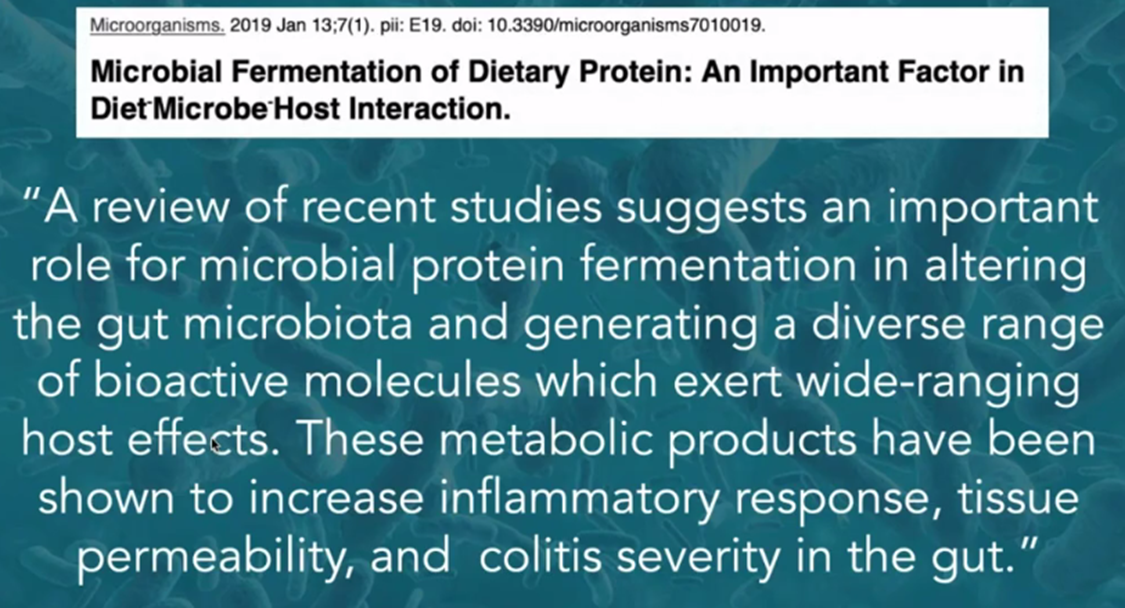
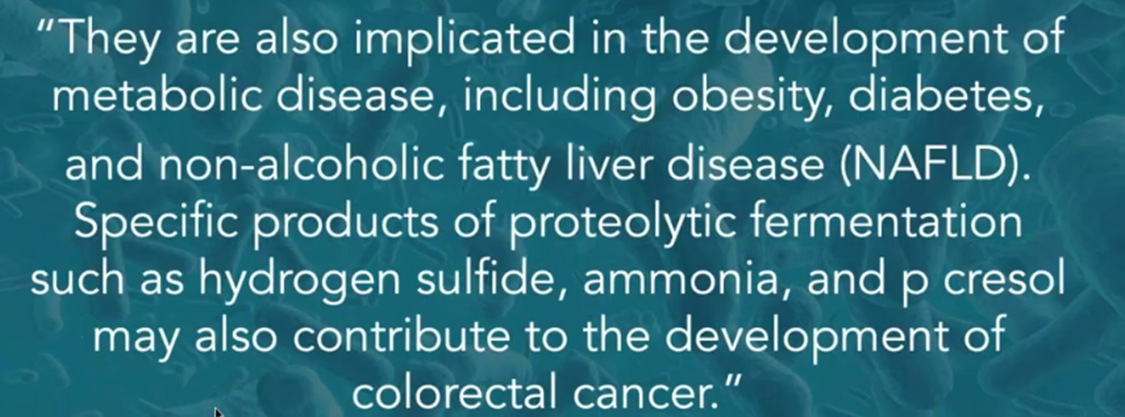
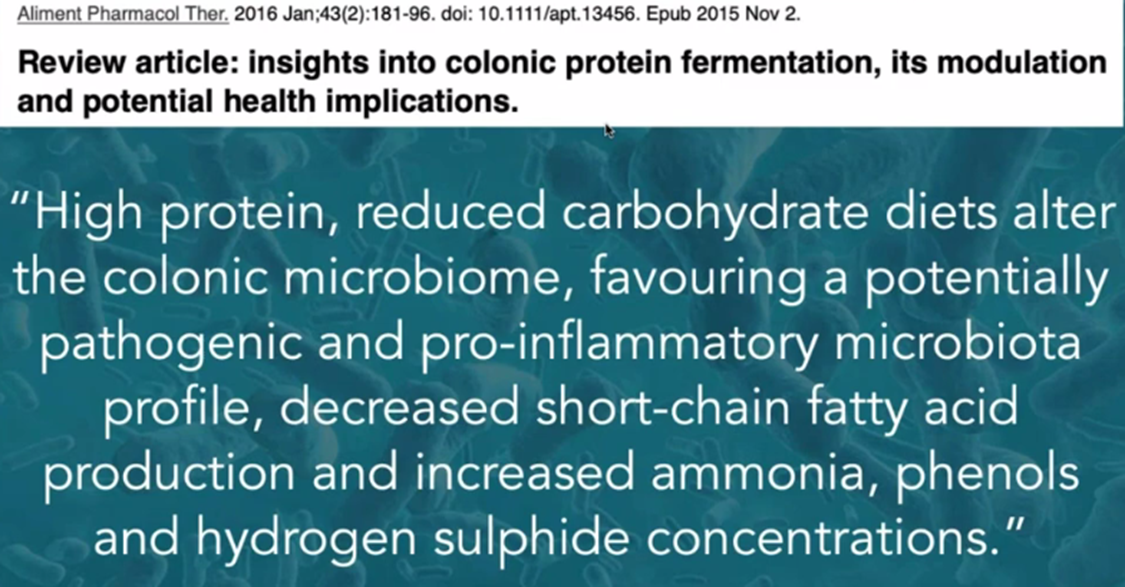
Proteolytic fermentation involves many metabolic pathways. This collaboration of host and microbial reactions determines the fate of dietary protein in the gut, and the overall effects on host amino acid balance and metabolism. Many of the products of protein fermentation can be used by beneficial gut flora, but if over-produced, these products can lead to inflammation and then cell proliferation.
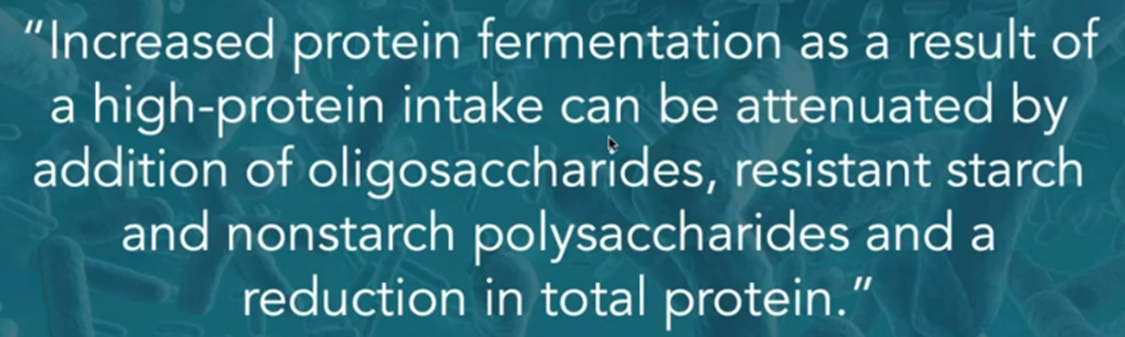
Fiber fermentation tends to reduce or block this process.
Diet, microbiota, and metabolic health: trade-off between saccharolytic and proteolytic fermentation
Microbial fermentation of dietary protein: an important factor in diet–microbe–host interaction
Relevance of protein fermentation to gut health
Fermentative metabolism by the human gut microbiota